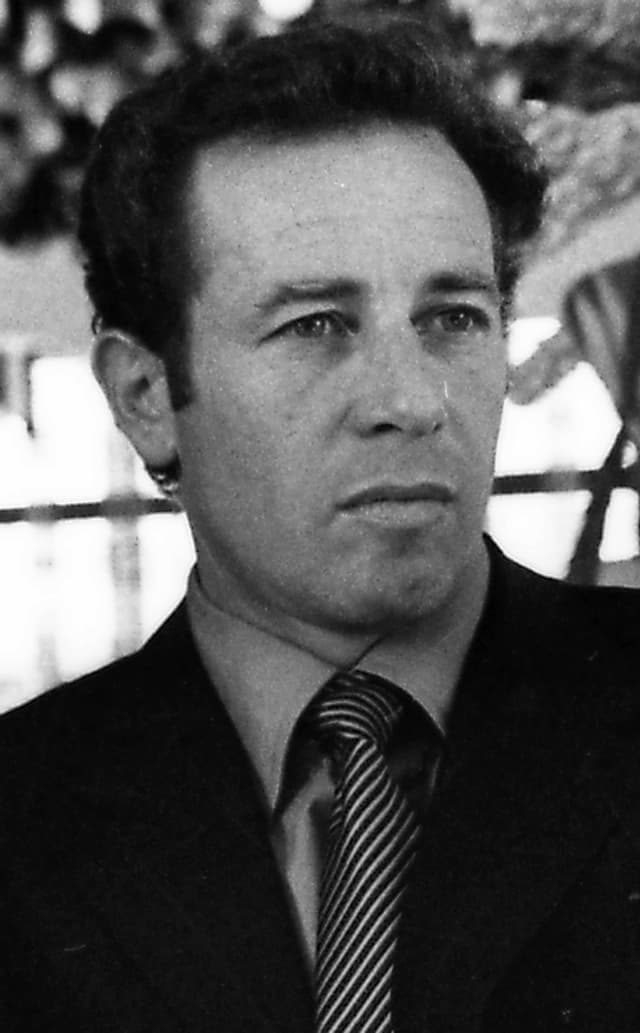
Isadore Sharp
Four Seasons Hotels and Resorts
A visionary in the hospitality industry, Isadore Sharp founded Four Seasons Hotels and Resorts in 1961, transforming the landscape of luxury accommodation. Inspired by a subpar experience during his honeymoon, Sharp emphasized understanding customer needs, prioritizing service excellence, and fostering a culture that values people over profits. Under his leadership, Four Seasons grew to include over 100 properties worldwide, becoming synonymous with luxury and personalized service. He firmly believed that long-term success hinges on investing in intangible values, stating, "So much of long-term success is based on intangibles, beliefs and ideas, invisible concepts." Sharp's principles continue to resonate with entrepreneurs today, showcasing the importance of a customer-centric approach in building enduring businesses.
Core Principles
competitive advantage
Identify where mediocrity is standard in your industry and do the opposite. Most businesses run poorly, so exceptional execution creates enormous competitive advantage.
Sharp observed that hotel restaurants were typically mediocre traps for tired travelers. By partnering with world-class chefs and focusing on restaurant quality, he transformed Four Seasons restaurants into destinations. Restaurant revenue increased 30-50 percent, proving that doing the right thing was also profitable.
“What really counted was doing the right thing in the right way, which should have been done long before.”
culture
Culture cannot be mandated as policy. It must grow from within based on the actions of the company's people over a long period of time.
Sharp recognized that while competitors could copy individual service innovations, they could not replicate Four Seasons' culture because culture emerges from consistent daily actions by employees. This became one of his four pillars: quality, service, culture, and brand.
“The consistent quality of our exceptional service is based on a corporate culture, and a culture cannot be mandated as a policy. It must grow from within, based on the actions of the company's people over a long period of time.”
customer obsession
Start with the customer's perspective, not the business's convenience. Ask what customers consider important and what they recognize as value, then deliver it.
Sharp approached innkeeping as a host welcoming houseguests, not as a real estate developer. He examined existing hotels on his honeymoon and identified why inferior experiences still made money, concluding that a great business would far outperform a mediocre one. This customer-first thinking led him to innovations like non-smoking floors and high-quality showerheads.
“I approached the business of innkeeping from a customer's perspective. I was the host, and the customers were my houseguests. I decided what to build and how to operate by asking myself, what would the customers consider important? What would the customers recognize as value?”
Create systems that anticipate customer needs rather than forcing customers to ask. Automate delight by studying what guests want and building workflows around it.
Four Seasons' guest history system tracked preferences from the first visit so that returning guests automatically received their preferred room, drinks, and dining without requesting. This invisible service created the impression of magic but was actually the result of systematic attention to detail.
“We computerized their preferences in rooms, food, drink, and anything else our employees noted, so that when they returned, we could give them, without them having to ask, whatever they wanted and liked best.”
finance
Create equity through growing value on assets you don't own. Present appreciation as collateral to bankers before making the investment.
At age 21, Sharp approached a banker explaining that while he had no down payment, he had optioned land that had appreciated significantly. He presented this appreciation as his equity contribution, securing the loan. This understanding of financial leverage allowed him to build without personal capital.
“You may say I'm putting no money down, but that's not true. What I've gained on my land is my equity.”
Limit your financial risk through the business model, not by being conservative in execution. Cap equity investment at an amount you can recover through management fees.
After a near-bankrupt experience as a real estate developer, Sharp restructured Four Seasons from a development company to a management company. He limited equity per property to 3-6 million dollars, an amount that management fees would recover in five years. This protected the company from financial ruin while allowing growth.
“Invest no more than our hotel fees would give us over the first five years. An amount we could easily borrow on our management contract.”
focus
Narrow your focus to what you can be best at. Specialization allows you to dominate a segment rather than be mediocre across many segments.
Sharp's competitors operated three, four, and five-star hotels across multiple brands. Sharp decided to offer only five-star, mid-size luxury hotels. This narrowing was criticized as leaving money on the table, but it allowed Four Seasons to be recognized as the best anywhere it operated.
“We will no longer be all things to all people. We will specialize. We will offer only midsize hotels of exceptional quality.”
Growth can become addictive. Avoid adding volume without value. Do fewer things better rather than more things adequately.
Even when Four Seasons had capital available and could have expanded faster, Sharp limited growth to five or seven new hotels per year. He refused to sacrifice quality for volume, believing that modest, high-quality growth protected the brand.
“Over is the beginning of under. If quality is your edge, you can't compromise it.”
innovation
Learn from every person around you, regardless of their field. Great founders are remixers who synthesize ideas from multiple disciplines.
Sharp studied McDonald's service systems, researched hotel chains in different countries, learned from Sir Gerald Glover about trust-based relationships, and studied Cesar Ritz's partnership model with great chefs. He never assumed hotels could only learn from hotels.
“He applauds Izzy's capacity for holding two opposing ideas while simultaneously producing a synthesis that is superior to either idea.”
leadership
Never put profit ahead of people. Long-term success depends on investing in people and culture, not extracting short-term gains.
Throughout his career, Sharp refused numerous offers to sell the company or take quick profits, even when facing financial pressure. He believed that protecting and developing his team was more important than maximizing quarterly returns. This principle shaped every major decision he made.
“I never made the mistake of putting profit ahead of people.”
Actions express priority far more clearly than words. You are only what you do, not what you say. Consistency between stated values and daily behavior builds credibility.
Sharp continuously reinforced that employees must understand that only their actions matter, not their intentions or promises. When executives suggested using cheaper materials because customers 'couldn't tell the difference,' he insisted on quality. His actions communicated that quality was non-negotiable.
“We are only what we do, not what we say we are.”
Use trustworthy relationships as the foundation of business. Over time, develop judgment about people and build deals on trust, not just contract terms.
Sir Gerald Glover taught Sharp that successful business relationships require many meetings and genuine connection, not just transaction finalization. When Sharp asked how Glover could trust him with such a large project given his limited resources, Glover explained that business relationships are founded on trust developed over time.
“Over time, you make a judgment about people. You develop a belief and a trust. Those many meetings were about the foundation of business, trustworthy relationships.”
Don't profess values you don't live. It's better to have no stated values than to claim values and violate them through your actions.
When Sharp enforced his quality standards, he had to remove employees who didn't meet them, even as he publicly stated that people come first. He recognized that claiming to value employees while tolerating poor performance would destroy management credibility faster than any other action.
“Better to not profess any values than to not live up to them.”
mindset
Do what you really want to do because that is what you will be best at. Align your work with your authentic passion, not external pressure.
Sharp spent years as a real estate developer while building hotels. Only after a near-bankrupt experience did he commit fully to hotels. He recognized that his true passion was creating the world's best hotel group, not maximizing real estate profits. Once he aligned his work with his passion, he became unstoppable.
“Do what you really want to do because that is what you'll be best at.”
Believe first, then build. Your conviction must precede evidence of success. Subconscious belief in possibility creates the energy to overcome obstacles.
Before the first Four Seasons was successful, Sharp was already seeking a location for the second hotel. He recognized the drawbacks but envisioned the possibilities, creating a subconscious belief in success that compelled him forward. This belief came before market validation.
“I recognized the drawbacks while envisioning the possibilities, which created a subconscious belief in success.”
The only thing you can control is your attitude. Master this, and you master your ability to overcome obstacles.
Sharp faced constant rejection when pitching his hotel ideas. Every experienced investor and businessman told him it was impossible. His attitude that he could figure it out regardless of others' opinions allowed him to persist through decades of setbacks.
“The only thing you can control is your attitude.”
When facing consequential decisions, take time alone with pencil and paper. Let your thoughts settle before deciding. Clarity emerges from stillness, not activity.
When ITT offered to buy Four Seasons, Sharp woke at 3-4 a.m., sat at his desk with pencil and paper for a couple hours, and thought without writing. By dawn, without further deliberation, he knew exactly what to do. This became his practice for major decisions throughout his life.
“Between 3 or 4 a.m., nothing stirred. I sat down at my desk with pencil and paper and thought for a couple hours, not writing a single sentence. By dawn, I knew, without further thought, exactly what my answer would be.”
Don't mistake short-term success for reaching the pinnacle. There is always more to build. Use achievements as fuel for the next vision.
When Cecil, Sharp's early investor, congratulated him for reaching the pinnacle of success with the first hotel, Sharp disagreed. He immediately began planning the second and larger hotel. He viewed each success not as a destination but as a stepping stone.
“The hotel was so successful that Cecil congratulated me for reaching the pinnacle of success. But nothing could have been further from the truth.”
operations
Excellence is often just a capacity for taking pains. Invisible automatic service happens when you pay attention to details others overlook and implement them systematically.
Sharp created one of the first guest history systems, computerizing preferences so returning guests received their preferred room type, drinks, and dining options without asking. This level of detail created the perception of magical service that was actually the result of meticulous systems.
“Excellence is often just a capacity for taking pains.”
resilience
Face hardship by pledging everything you have. Desperation often clarifies thinking and reveals your true commitment to the mission.
During multiple recessions, Sharp pledged all his Four Seasons stock to secure loans necessary to survive. Rather than paralyze him with fear, this forced commitment removed doubt and focused all his energy on making the business succeed.
“I had to pledge all of my Four Seasons stock knowing that I had to succeed or lose everything. It's strange but I can't recall being deeply concerned.”
strategy
Leverage existing expertise and partnerships instead of building everything from scratch. Hire world-class people for specific domains rather than trying to be expert at everything.
Sharp partnered with Lloyd Percival to operate the first health club in a hotel, and brought renowned chefs into Four Seasons restaurants following Cesar Ritz's model. These partnerships allowed him to offer exceptional experiences in areas outside his core expertise.
“I exercise to keep in shape every morning. So I asked Lloyd if he'd operate a fitness club in the hotel.”
Ask for help. Most people never ask, which separates those who build things from those who dream about them. Rejection is just a no, and you move to someone else.
When Sharp needed to learn about the hotel business, he researched successful motel operators, called them directly, and asked to visit. Mike Robinson welcomed him, introduced him to Al Parvin, who invited him to Las Vegas. None of these influential people said no. Most people never pick up the phone.
“I've never found anybody who didn't want to help me when I've asked them for help.”
Build your strategy on things that will never change. Identify timeless customer needs and invest all resources into excelling at those things.
Sharp identified that customers would always want a quiet room, a good night's sleep, and an invigorating shower, regardless of economic conditions or technological change. He tested hundreds of mattresses, found the perfect showerhead, and sourced the best towels. This allowed Four Seasons to build lasting competitive advantage.
“I approached the business of innkeeping from a customer's perspective. I knew that what most people wanted was a quiet room, a good night's sleep, and an invigorating morning shower.”
Embrace barbell thinking when constrained by resources. Either spend zero or one hundred on different experiences. Avoid the middle ground.
When researching world-class hotels but lacking budget, Sharp and his wife alternated nights between the cheapest and most expensive hotels available. This gave them learning experiences from both extremes while staying within budget, rather than staying in mediocre mid-range hotels.
“We decided to average costs. We spent every other night in the cheapest lodging available and every other night in the best hotels in the world.”
Don't copy what successful people do. Copy how they do it. Transfer the operating system, not the surface details.
When building Four Seasons' service excellence, Sharp studied McDonald's training methods, not because he was copying hamburger sales, but because he wanted to understand how McDonald's maintained consistent quality across thousands of locations. He took their service discipline and applied it to luxury hotels.
“I know what we're selling. I'm talking about how we sell it.”
Frameworks
Four Pillars of Business Model
Quality, service, culture, and brand form the rock-solid foundation of the business. These four pillars evolved over 25 years of decision-making, with each supporting the one before. They represent the most fundamental objectives that should rarely change. Most new initiatives should reinforce these pillars rather than add new directions.
Use case: Use when evaluating whether to pursue new initiatives. Ask if the initiative reinforces one or more of the core pillars. If not, consider whether it's worth doing.
Customer-First Operating System
Start with what the customer considers important and recognizes as value. Work backward from ideal customer experience to identify required capabilities and resources. Test assumptions against the customer perspective at every step. This reverses the typical company-first thinking that leads to efficiency for the business rather than value for the customer.
Use case: Use this when designing new products, services, or operational changes. Begin every project by asking what the ideal customer experience would be, then design to deliver it.
Equity Through Appreciation Framework
Identify assets with growth potential that you can control without owning. Document and present the appreciation as equity collateral to secure financing. This allows value creation from optioning land, identifying undervalued businesses, or other opportunities where appreciation can be achieved before full capital commitment.
Use case: Use when you've identified an opportunity with significant upside but lack capital. Calculate the appreciation potential and present it as your equity contribution to secure financing for the balance.
Barbell Strategy for Resource Constraints
When budget is limited but learning is needed, allocate spending to either zero or maximum on different experiences rather than spreading budget evenly. For example, alternate between the cheapest and best available options. This maximizes learning across the full spectrum while staying within total budget.
Use case: Use when researching high-end markets but facing budget constraints. Spend zero or maximum on different experiences to learn from both extremes of the market.
Consequential Decision Framework
When facing a major decision, wake early and spend 2-3 hours alone with only pencil and paper. Think without writing, letting thoughts settle naturally. By dawn, clarity typically emerges without formal analysis. This leverages subconscious processing and removes decision stress by separating thinking from deciding.
Use case: Use before making decisions with significant consequences. Allow adequate time and solitude for thinking to settle before committing to action.
Three-Year Persistence Rule
When pursuing a major opportunity, continue approaching decision-makers with patience and consistency over multiple years. Every rejection contains information. Sustained presence and repeated requests eventually exhaust objections. Cecil took three years of rejection before supporting Sharp's hotel vision.
Use case: Use when pursuing a major partnership or investment that requires cultural or mindset shift from the decision-maker. Plan to invest 2-3 years of consistent engagement.
Guest History System
Systematically collect data about customer preferences from the first interaction. Codify this data in a way that enables automatic delivery of preferences on subsequent interactions without the customer needing to ask. This creates invisible, automatic service that feels magical but is the result of disciplined systems.
Use case: Use for any business with repeat customers. Build systems to remember and automatically deliver on customer preferences, turning one-time exceptional service into systematic excellence.
Management Credibility Enforcement
The fastest way to destroy management credibility is to state values and then violate them through your actions. Therefore, when a value conflicts with short-term interests (like keeping employees who underperform), choose the value. This demonstrates that stated values are non-negotiable principles, not marketing language.
Use case: Use before making people decisions that test your stated values. Choose the action that reinforces values even if it creates short-term difficulty.
Stories
On his honeymoon, Sharp stayed at an airport hotel in Toronto. The room was small and noisy, and someone from an adjacent room came through their bathroom door in the middle of the night. Despite these problems, he learned the hotel was highly profitable. This insight sparked the realization that if a mediocre hotel could make good money, an exceptional one could make much more.
Lesson: Identify opportunities by observing where your industry delivers poor quality while still making money. Excellence in a mediocre industry creates disproportionate advantage.
Sharp's father was watching him build concrete steps incorrectly. Rather than tell him beforehand, his father handed him a sledgehammer after the concrete was poured and said, 'break it and do it the right way next time.' The mistake was expensive and time-consuming to fix, but the lesson was unforgettable.
Lesson: Experience is the best teacher. Sometimes people need to experience consequences to truly learn. This method builds resourcefulness and accountability.
Sharp's mother, noticing blood on his cheek from being hit with a stone, slapped him and scolded him about getting blood on his shirt. She had quickly assessed he wasn't badly hurt and treated the incident as a practical matter, not a tragedy. This tough love approach built his resilience.
Lesson: Practical parenting that builds self-sufficiency creates resourceful adults who can handle adversity without becoming victims.
Sharp's father taught him to swim by throwing him in a boat and telling him to swim. His father never took him fishing or on leisure outings, but he did work alongside him on construction projects. Every experience was a lesson in work and self-reliance.
Lesson: Tough love and high expectations build competence and self-belief. Children become capable when treated as capable.
For three years, Sharp repeatedly approached Cecil for financing to build a motel downtown. Each time, Cecil explained why it was a bad idea. After three years of patient rejection, Cecil finally said, 'Stop bothering me. Get all the other financing and I'll give you 50% to match it.' Sharp did exactly that and succeeded.
Lesson: Persistence through rejection eventually leads to yes. Decision-makers often need time to shift their thinking. Consistent, non-aggressive follow-up demonstrates commitment.
Sharp met with world-class hotel operators and business leaders, including Mike Robinson in Phoenix and Al Parvin in Los Angeles. Rather than trying to figure everything out alone, he asked for help and followed their introductions. When Parvin invited him to Las Vegas to see the new casino hotel concept, Sharp accepted immediately.
Lesson: Most people never ask for help because they fear rejection. Those who do ask find that successful people often enjoy helping and opening doors for those with genuine ambition.
Sharp had lunch with Sir Gerald Glover overlooking his lawn. When Sharp asked how he maintained it so beautifully, Glover replied, 'My dear boy, it's very simple. You just cut it every week for 300 years.' Later, when Sharp asked how Glover could trust him with such a large London hotel project, Glover explained that trust is built over time through many meetings, not just transactions.
Lesson: Excellence and trust are built through consistent daily effort over extended periods. Seemingly magical outcomes are the result of compounded, unglamorous work.
When IT&T offered to buy Four Seasons at a substantial profit and hire Sharp at any salary he requested, Sharp refused. He woke at 3-4 a.m., thought alone with pencil and paper for hours, and by dawn knew he would decline. He valued his independence and vision more than wealth.
Lesson: Know why you are here. When clear about your purpose, turning down life-changing money becomes obvious rather than agonizing.
Sharp proposed building only five-star, mid-size hotels instead of the industry-standard approach of operating three, four, and five-star properties. His partners and executives said he was delusional. His competitors laughed. But this focus allowed Four Seasons to be recognized as the best anywhere it operated.
Lesson: Narrowing focus to excellence in one category allows you to dominate. Most competitors spread resources across multiple categories, leaving the top position available.
Sharp's son Chris developed melanoma as a teenager and died after three months. Sharp and his wife held his hands as he died. This tragedy became a turning point that led Sharp to support cancer research and the Terry Fox Hope Run, ultimately raising tens of millions for cancer research.
Lesson: Life's greatest tragedies can be transformed into meaning through contribution to causes larger than yourself. This transforms personal loss into service to others.
Notable Quotes
“So much of long-term success is based on intangibles, beliefs and ideas, invisible concepts.”
Opening reflection on what drives sustainable business success
“I approached the business of innkeeping from a customer's perspective. I was the host, and the customers were my houseguests.”
Explaining his core operating philosophy
“If we give them good value, they will pay what they think it's worth.”
First strategy for Four Seasons that continues to this day
“I never made the mistake of putting profit ahead of people.”
Looking back on 40 years of decisions
“Culture cannot be mandated as a policy. It must grow from within, based on the actions of the company's people over a long period of time.”
Explaining why competitors cannot copy Four Seasons' culture
“The only thing you can control is your attitude.”
Personal philosophy on resilience
“Do what you really want to do because that is what you'll be best at.”
Career philosophy
“I recognized the drawbacks while envisioning the possibilities, which created a subconscious belief in success.”
Describing his mindset before the second hotel
“I know what we're selling. I'm talking about how we sell it.”
Responding to executive questioning why they should study McDonald's
“We are only what we do, not what we say we are.”
On the importance of consistent action
Frequently Asked Questions
What are Isadore Sharp's key business principles?▼
Isadore Sharp's core principles include: Identify where mediocrity is standard in your industry and do the opposite. Most businesses run poorly, so exceptional execution creates enormous competitive advantage.. Culture cannot be mandated as policy. It must grow from within based on the actions of the company's people over a long period of time.. Start with the customer's perspective, not the business's convenience. Ask what customers consider important and what they recognize as value, then deliver it.. Founder Almanac has cataloged 27 total principles from Isadore's career.
What can entrepreneurs learn from Isadore Sharp?▼
Key lessons from Isadore Sharp include: Identify opportunities by observing where your industry delivers poor quality while still making money. Excellence in a mediocre industry creates disproportionate advantage.. Explore 10 stories and 8 frameworks from Isadore's experience.
What is Isadore Sharp known for in business?▼
A visionary in the hospitality industry, Isadore Sharp founded Four Seasons Hotels and Resorts in 1961, transforming the landscape of luxury accommodation. Inspired by a subpar experience during his honeymoon, Sharp emphasized understanding customer needs, prioritizing service excellence, and fostering a culture that values people over profits. Under his leadership, Four Seasons grew to include over 100 properties worldwide, becoming synonymous with luxury and personalized service. He firmly believed that long-term success hinges on investing in intangible values, stating, "So much of long-term success is based on intangibles, beliefs and ideas, invisible concepts." Sharp's principles continue to resonate with entrepreneurs today, showcasing the importance of a customer-centric approach in building enduring businesses.
More Hospitality Founders
Want Isadore's advice on your business?
Our AI has studied Isadore Sharp's biography, principles, and decision-making frameworks. Ask any business question.
Start a conversation