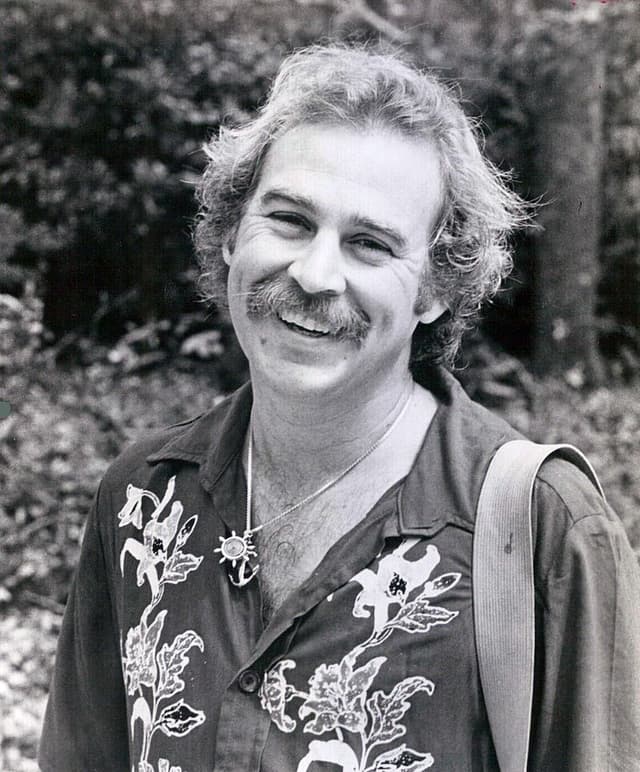
Jimmy Buffett
Margaritaville Holdings
A pioneering figure in the music and entertainment industry, Jimmy Buffett founded Margaritaville Holdings, a brand that has grown into a multi-faceted empire encompassing restaurants, hotels, and merchandise. With a philosophy of embracing geographic isolation to cultivate unique offerings, he built his identity around being the only one of his kind rather than trying to compete on quality alone. Known for his laid-back lifestyle and distinctive sound, Buffett achieved remarkable success, amassing over $1 billion in revenue from his ventures. His belief in the power of imagination, instilled by his grandfather, guided him to create a lasting cultural phenomenon that resonates with entrepreneurs today. Reflecting on his journey, he once noted, "Live a pretty interesting one. I have been called a lot of things in these 50 years on earth, but the thing I believe I am the most is lucky."
Core Principles
customer obsession
Build your business model around customer lifetime value, not one-time transactions. Repeat visits and generational loyalty create exponential growth.
Customers attended Jimmy's shows for decades, then brought their children. He built Margaritaville cruises and resorts that people returned to annually. This created compounding customer value similar to Warren Buffett's investment approach.
Listen to your customers, not your advisors. If customers are pulling a product out of you, that signal is more reliable than expert opinion.
A store owner told Jimmy that customers bought every Hawaiian shirt he wore. Jimmy launched his own merchandise line. When fans requested he perform the Miller Beer commercial more than his own songs, he obliged. This customer obsession became the foundation for Margaritaville licensing.
“If you listen to your customer base, they will pull the next product out of you.”
finance
Keep costs low and maintain infinite runway. Low burn rate gives you the freedom to practice, experiment, and stay in the game long enough to get lucky.
Jimmy rented a $150 per month apartment in Key West and played for tips at bars. His low cost of living meant he could turn down compromises and focus entirely on improving his craft. This low-cost model sustained him through 15+ years of rejection before his breakthrough.
focus
Keep the main thing the main thing. Focus ruthlessly on the one or two activities that create the most value. Everything else is secondary.
Jimmy told his band the only thing that mattered was the 90 minutes they were on stage each night. Personal problems, hangovers, or bad days didn't excuse poor performance. This relentless focus on output quality became the cornerstone of his reputation.
“I don't give a shit what happens 22 and a half hours of the day. The only thing that matters is the 90 minutes that we're on stage.”
leadership
Choose your inner circle carefully. Refine your associations and seek out people of superior character and intellect. Never affiliate with those who will drag you down.
As Jimmy became successful, he developed a strong preference for being around people who had their act together. He avoided people who wanted to show him how much they could party. He chose partners like Irving Ashoff and Kevin Boucher who understood business and shared his vision.
“Buffett had developed a disinclination to hang around with fucked up people.”
learning
A conventional education is less important than relentless practice and learning from practitioners. Street education beats classroom education for entrepreneurs.
Jimmy never graduated from a traditional music program. Instead, he studied musicians on Bourbon Street, worked at Billboard Magazine, and learned the business from practitioners. His education was direct observation and hands-on experience.
“New Orleans was school. He studied the way musicians work the crowds.”
mindset
An addiction to your craft can be a business asset. If your core business depends on relentless execution, find people addicted to doing it well.
Jimmy admitted he was addicted to applause and the road. This addiction meant he performed 30-35 shows per year for 50+ years without missing. What seemed like a personal quirk became the engine of his touring empire.
“I have a thing for applause. I'm addicted to applause.”
Maintain standards higher than your audience expects. Your internal expectations should exceed external demands, or you will eventually disappoint both.
Jimmy played a show at Red Rocks while hungover and was furious at himself for not delivering the quality he knew he was capable of, even though the audience noticed nothing. This internal standard kept him continuously improving.
“I made it through the show, but I was mad at myself for not giving the crowd its money's worth.”
Believe your own opinion of your work is more important than the opinions of industry gatekeepers. When nobody else believes in you, your self-belief becomes the fuel that sustains you.
Jimmy was rejected by every major label and radio station for nearly two decades. Instead of accepting their verdict, he treated their rejection as validation that he was doing something different. His self-belief, which he called narcissism, was what kept him creating and performing despite no industry support.
“There was nobody back there but you. And so multiple decades later, he's defending himself, he says, against charges of narcissism. Yes, I'm a confirmed narcissist because there was nobody back there who gave a shit at the time.”
operations
Pay meticulous attention to details others ignore. Excellence in small things compounds into excellence in everything.
Jimmy controlled details like which pillows went on Margaritaville resort beds, the exact design specifications for restaurants, and sound systems at concert venues. He retained vendor relationships when they performed well and immediately noticed when they started to slack.
“He was very detail-oriented. He just paid attention to shit.”
resilience
Build mythology, not fast food. Real success takes time and cannot be rushed. Accept that compounding requires decades of patience.
Jimmy's breakthrough took 30 years. His first number one album came after 3 decades in the business. His biggest surge in business came after he was already successful. This long time horizon allowed him to build something legendary rather than flash-in-the-pan.
“Mythology is not fast food.”
Be prolific and obsessed with reps. There is no substitute for experience, and the only way to get it is through relentless practice and repetition.
Jimmy played every venue available to him: bars, coffee shops, student unions, street corners. He recorded 8-9 albums in his first 10 years and played hundreds of shows annually across multiple states. This relentless repetition built his skill and grew his audience organically.
“There's no substitute for experience, and there's only one way to get it.”
strategy
Build your business around a person and a lifestyle, not a product. A genre can become obsolete, but a brand built on personality and values is immune to changing tastes.
Jimmy was immune to shifting musical trends because his fans weren't there for a genre, they were there for him and the Margaritaville lifestyle he represented. While disco, punk, and country trends came and went, his audience remained loyal and actually grew younger.
“Buffett was the genre.”
Build your identity around being the only, not the best. Differentiation through uniqueness creates more lasting value than trying to compete on quality alone.
Jimmy moved to Key West instead of competing in Nashville because he understood that he would never be the best country singer. Instead, he became the only Jimmy Buffett by creating his own genre called tropical rock. This differentiation became the foundation of his billion-dollar brand.
“You should not try to be the best. You should try to be the only.”
Control your own distribution. Relying on intermediaries who profit from gatekeeping will limit your growth. Build direct relationships with customers.
Jimmy learned early that musicians get stiffed by record labels and radio stations. He created the Coconut Telegraph newsletter, owned his merchandise, and eventually built Margaritaville restaurants and resorts. Direct ownership meant capturing the full value.
“I need to have control of my own distribution.”
Transition from artist to businessman. Artists are disposable commodities, but people who understand business build lasting wealth. Learn the economics of your industry.
Bill Williams at Billboard taught Jimmy that owning publishing rights was more valuable than having hit songs. This lesson shaped Jimmy's entire business model. He realized he needed to think like an entrepreneur, not just a musician.
“A hit song was nice, but owning the publishing on a hit song was even better.”
Move to a place with lower competition and greater cultural fit for your vision. Geographic isolation can be an advantage if it forces you to create your own category.
Jimmy's move to Key West was counterintuitive for a musician, but it isolated him from Nashville's gatekeepers and surrounded him with kindred spirits. This enabled him to develop tropical rock without industry pressure to conform.
Frameworks
The Benevolent Dictator Model
Lead with clear, non-negotiable standards for the one thing that matters most. Be hands-on with execution details but give people freedom in how they achieve the standard. Maintain high expectations while treating people with respect. Jimmy applied this by focusing his entire team on the 90-minute stage performance, while letting them handle logistics however they chose.
Use case: When leading a service business or touring operation where quality execution in a defined moment is everything else is secondary.
The Infinite Runway Strategy
Keep your cost of living and business costs extremely low relative to your income. This gives you unlimited runway to practice, experiment, and wait for your breakthrough. Low costs enable you to say no to compromises and accept only opportunities that align with your vision.
Use case: Early-stage startups and creators who need freedom from financial pressure to stay true to their vision while building.
The World Building Model
Move beyond selling a single product or service. Build an entire ecosystem of products, experiences, and services that reinforce a central lifestyle or philosophy. Each product should pull the next product from the market, creating compounding demand.
Use case: Scaling successful lifestyle or personality-driven brands into multi-billion dollar enterprises with diverse revenue streams.
The Customer-Pull Product Development
Instead of pushing your vision to customers, listen to what customers are already demanding from you. Observe what they buy, what they request, what they talk about. Let them pull the next product out of you rather than you pushing products at them.
Use case: Product development when you have an audience or customer base but are unsure what to build next.
The Personality as Distribution Channel
Build your brand around your personality and lifestyle rather than around a product. This makes you immune to changing tastes and trends. People come for the person, not the genre or product category, creating a moat against competition.
Use case: Creator economy, personal brands, and any business where the founder is inseparable from the value proposition.
The Long-Term Compounding Strategy
Accept that most of your success will come decades into your career, not in the first few years. Build for generational loyalty where customers age with you and bring their families. Use decades of runway to build something legendary rather than chasing quick wins.
Use case: Founders willing to take a 20-30 year view on building lasting businesses rather than seeking quick exits.
Stories
Jimmy's grandfather, Captain Buffett, took young Jimmy to a nautical chart on the pier and showed him that from where they stood, the only thing between him and the world was a lack of imagination or caution. At the bottom of the map, the captain had written 'start here.' This moment shaped Jimmy's entire approach to life and business.
Lesson: The decisions we make about embracing adventure and possibility ripple through generations. A single moment of mentorship can redirect an entire family's trajectory away from convention.
When Jimmy had his first hit song 'Why Don't We Get Drunk,' people around him begged him to remove the line 'and screw' to appease radio stations. He refused, saying 'I don't even have a career yet. How can it destroy it? This could make it.' The song and album became his breakthrough.
Lesson: The thing you think will disqualify you might be the exact thing that qualifies you. Your audience is attracted to your authenticity, not your marketability.
Jimmy played a concert at noon on a Monday at Purdue University's student union center for free admission. This was not a gig for fame or money, but because it was his job. He played any venue that would have him, from bars to coffee shops to street corners, year after year.
Lesson: Willingness to show up in unglamorous places for tiny audiences is what builds a career. Success is the accumulation of thousands of small decisions to execute well when nobody is watching.
A store owner in Key West told Jimmy that customers bought every Hawaiian shirt he wore, and they couldn't keep them in stock. Jimmy then noticed that bootleg merchandise with his misspelled name was also flying off shelves. This simple observation led to the creation of Jimmy Buffett merchandise, which eventually became Margaritaville.
Lesson: Your customers are screaming what they want to buy. Pay attention to what they're already pulling out of you, even if it seems tangential to your main business.
Jimmy was on stage at Red Rocks playing while still hungover from the night before. He made it through the show, but was furious at himself because he knew he hadn't given the crowd its money's worth. The audience noticed nothing, but Jimmy's internal standard was higher than what the market demanded.
Lesson: Your expectations for yourself should exceed your audience's expectations. This gap between internal standards and external demands is what drives continuous improvement.
When the song 'Margaritaville' started getting radio play, Jimmy was in the Bahamas fishing and drinking. He immediately left his vacation to get back on the road and capitalize on the momentum. He then spent nearly 50 years touring the same cities year after year.
Lesson: When you get a break, you must be willing to work. Opportunity requires sacrifice, and compounding only happens if you show up relentlessly.
In the documentary, Jimmy reflected on his career and said he wasn't categorizable, which was his biggest problem for two decades. By the time the industry realized they couldn't put him in a box, he had already become a category himself. His uniqueness became his greatest asset.
Lesson: What the industry calls a flaw might be your greatest strength. Stay committed to your differentiation long enough to watch the market come around.
Jimmy and his partner opened a 500-square-foot t-shirt shop in Key West in 1985 as a modest business move. From that single store evolved restaurants, resorts, hotels, casinos, cruises, and hundreds of licensed products. The business grew organically based on what customers wanted.
Lesson: Great empires often start with small, humble beginnings. One good idea in the hands of someone who listens to customers can compound into something massive over decades.
Notable Quotes
“Live a pretty interesting one. I have been called a lot of things in these 50 years on earth, but the thing I believe I am the most is lucky.”
From his autobiography when asked what he would do with his life. It reflects his gratitude and perspective on his journey.
“My voyage was never a well-conceived plan, nor will it ever be. I have made it up as I went along.”
From his autobiography, describing his approach to life and career as improvisation rather than rigid planning.
“There's nothing normal about me. My drive was not normal. My vision of where I wanted to go in life was not normal. The whole idea of a conventional existence was like kryptonite to me.”
Reflecting on his early life and his aversion to conventional paths, similar to observations about Arnold Schwarzenegger's mindset.
“I wanted to be a bohemian. I wanted to be free. I wanted to be unfettered.”
Explaining his motivations as a young musician, why he rejected conventional expectations.
“You cannot connect the dots looking forward. You can only connect them looking backwards in life. You have to trust that the dots will somehow connect in your future.”
Referencing Steve Jobs' philosophy, explaining how he had to trust his instincts even when moving to Key West seemed like a bad career move.
“It is ironic that I was never categorizable. That's what they would tell him. It is ironic that I was never categorizable and now I'm a category.”
Reflecting on how what the industry saw as a flaw became his greatest strength over time.
“I don't give a shit what happens 22 and a half hours of the day. The only thing that matters is the 90 minutes that we're on stage.”
His ground rules for his band, keeping the main thing the main thing and maintaining ruthless focus on what mattered most.
“Mythology is not fast food.”
On why true success takes time and cannot be rushed, explaining his long-term approach to building something legendary.
“You'd better be good.”
His response to the reality that when you're on your own with nobody backing you, you have to execute at the highest level or fail.
“I don't even have a career yet. How can it destroy it? This could make it.”
When advisors told him to remove 'and screw' from his song 'Why Don't We Get Drunk.' He refused to compromise.
Frequently Asked Questions
What are Jimmy Buffett's key business principles?▼
Jimmy Buffett's core principles include: Build your business model around customer lifetime value, not one-time transactions. Repeat visits and generational loyalty create exponential growth.. Listen to your customers, not your advisors. If customers are pulling a product out of you, that signal is more reliable than expert opinion.. Keep costs low and maintain infinite runway. Low burn rate gives you the freedom to practice, experiment, and stay in the game long enough to get lucky.. Founder Almanac has cataloged 20 total principles from Jimmy's career.
What can entrepreneurs learn from Jimmy Buffett?▼
Key lessons from Jimmy Buffett include: The decisions we make about embracing adventure and possibility ripple through generations. A single moment of mentorship can redirect an entire family's trajectory away from convention.. Explore 8 stories and 6 frameworks from Jimmy's experience.
What is Jimmy Buffett known for in business?▼
A pioneering figure in the music and entertainment industry, Jimmy Buffett founded Margaritaville Holdings, a brand that has grown into a multi-faceted empire encompassing restaurants, hotels, and merchandise. With a philosophy of embracing geographic isolation to cultivate unique offerings, he built his identity around being the only one of his kind rather than trying to compete on quality alone. Known for his laid-back lifestyle and distinctive sound, Buffett achieved remarkable success, amassing over $1 billion in revenue from his ventures. His belief in the power of imagination, instilled by his grandfather, guided him to create a lasting cultural phenomenon that resonates with entrepreneurs today. Reflecting on his journey, he once noted, "Live a pretty interesting one. I have been called a lot of things in these 50 years on earth, but the thing I believe I am the most is lucky."
More Music & Entertainment Founders
Want Jimmy's advice on your business?
Our AI has studied Jimmy Buffett's biography, principles, and decision-making frameworks. Ask any business question.
Start a conversation