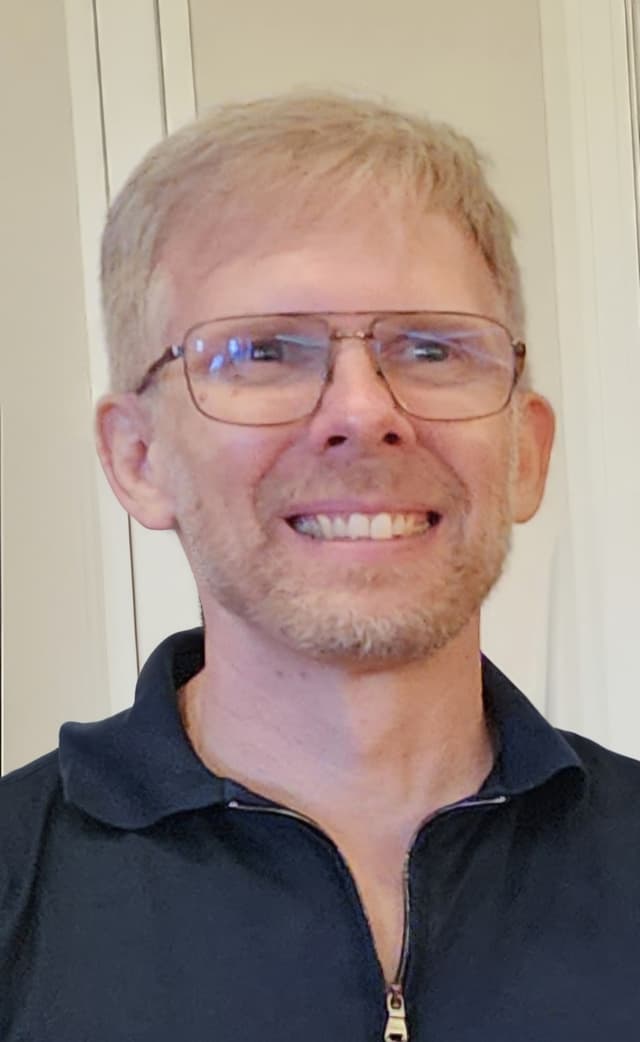
John Carmack
id Software
A pioneer in the video game industry, John Carmack co-founded id Software in the early 1990s, where he revolutionized 3D graphics with the creation of groundbreaking titles like Doom and Quake, which sold millions of copies and laid the foundation for modern first-person shooters. Driven by a philosophy of self-education and resourcefulness, Carmack exemplified the power of independent study, famously teaching himself programming in his youth after breaking into his school to access computers he could not afford. His innovative approach not only transformed gaming but also inspired countless entrepreneurs to embrace creativity over conventional paths. With a relentless pursuit of excellence, he once stated, "He wants an empire. I just want to create good programs," reflecting his focus on craftsmanship and impact rather than mere commercial success.
Core Principles
finance
Create frugal operations with minimal overhead. Keep expenses low while you build, so that high margins fund growth and give you options.
id Software operated from a lake house where everyone lived and worked. They had no advertising, no HR department, no management structure. Their only expenses were food, computers, and Diet Coke. This allowed them to reinvest profits and maintain independence rather than needing external funding.
focus
Minimize distractions and eliminate anything that doesn't serve your core purpose. Practice extreme intentionality in how you spend your time and energy.
Carmack owned nothing but a lamp, pillow, blanket, and books. He adjusted his sleep schedule to work 4 p.m. to 4 a.m. to minimize interruptions. When his cat Mitzi interfered with his ability to program, he got rid of her. This monastic approach gave him the mental clarity and focus needed to solve the hardest technical problems.
“The problem he found was that the PC was not powerful enough to handle such a game...Try the obvious approach first. If that fails, think outside the box.”
Protect your personal time and energy with the same vigilance you protect your code. Structure your life around your peak hours and eliminate interruptions.
When Carmack noticed that Romero's social commitments and celebrity activities were interfering with his level design productivity, he recognized the pattern from his own experience. He had already begun working 4 p.m. to 4 a.m. to create optimal conditions for deep work. This philosophy eventually led to Romero's removal.
“Beginning with Doom, he had decided to adjust his biological clock to accommodate a more monkish and solitary work schedule.”
Beware of losing focus as company success grows. Involvement in interviews, promotion, and corporate activities can subtly erode your core contributions.
Romero's involvement in death matching competitions, interviews, and advisory work for other studios gradually reduced his level design output from all levels in a game to only six of 32. Carmack noticed this shift and recognized it as a fundamental misalignment. The company eventually chose Carmack's vision of focus over Romero's broader empire building.
“Of the 32 levels of Doom 2, Carmack noted, only 6 were shaping up to be Romero's.”
innovation
Embrace obsession with problem-solving as your competitive advantage. Focus on understanding how systems work at the deepest level and find elegant solutions to technical challenges.
Carmack's defining characteristic was his ability to immerse completely in programming problems. He would work overnight until he solved technical problems that others thought impossible. His discovery of Adaptive Tile Refresh proved that seemingly insurmountable technical barriers could be overcome with deep focus and creative thinking.
“Try the obvious approach first. If that fails, think outside the box.”
Self-education and resourcefulness matter more than formal credentials. Teaching yourself what you need to know, often through independent study and experimentation, can accelerate your capabilities beyond what institutions provide.
Carmack learned programming through encyclopedias, books, and hands-on practice rather than formal education. He broke into schools to access computers when he couldn't afford them. He taught himself new programming languages in half the time it would take normal programmers, eventually becoming the industry's top talent without a degree.
“He read the passage about computers in the encyclopedia a dozen times.”
Do not attempt to milk existing technology beyond its peak. Innovate and move forward to the next technological breakthrough rather than extending mature products.
Carmack continuously pushed for technological innovation rather than making sequels or extensions of successful games. While Romero wanted to license the Doom engine to other developers to milk revenue, Carmack wanted to move on to Quake and new engines. This tension reflected their fundamental difference in philosophy.
leadership
Cut underperforming people and projects ruthlessly when they impede your core mission. Sentiment should not override business logic.
Carmack applied his programming philosophy of deletion to people. When Romero's level design output dropped due to his growing focus on interviews and promotion, Carmack voted to remove him. He also had no qualms about ending relationships with Scott Miller and other contributors when they ceased adding value.
“The same rule applied to a cat, a computer program, or for that matter, a person. When something becomes a problem, let it go, or if necessary, have it surgically removed.”
Seek founders and partners who are different from you but share your core values. Complementary skills create better outcomes than identical perspectives.
Carmack and Romero succeeded together precisely because they were opposites. Carmack provided technological brilliance while Romero provided creative vision and business instinct. However, they shared a passion for making great games. When their core values diverged, the partnership failed.
Success can reveal fundamental misalignment in founder values and visions. Two people can be perfect partners in building, but terrible partners in running a mature business.
The breakup between Carmack and Romero wasn't caused by failure, incompetence, or conflict. It was caused by their radically different philosophies about what to do with success. Romero wanted to enjoy it and build an empire. Carmack wanted to keep pushing technology forward. Both were rational, but incompatible.
“He wants an empire. I just want to create good programs.”
mindset
Books and ideas from thought leaders can fundamentally redirect your life trajectory. Read widely in your field to understand what is possible and who is pushing boundaries.
Reading Stephen Levy's Hackers book was transformative for Carmack. It showed him a lineage of programmer-visionaries from MIT through Silicon Valley and convinced him he was meant to be among them. This single book catalyzed his determination to pursue programming at the highest level.
“When Carmack finished the book one night in bed, he had one thought. I'm supposed to be in there.”
Create your own world when the external world doesn't fit you. Building a company or product allows you to have meaningful control over your environment and circumstances.
Both Johns felt like outsiders in their early lives, pressured to conform by parents and institutions. They found freedom and power through creating video game worlds where they controlled the rules and outcomes. This desire to build their own world manifested in id Software as their vehicle for personal and creative control.
Question and reject systems that don't make sense, even when they have institutional backing. Challenge dogma and authority when evidence contradicts them.
Carmack hated the structure of formal education and challenged teachers' beliefs in class. He rejected his mother's attempts to enforce extra credit through punishment. This willingness to question authority extended to his rejection of patents and intellectual property restrictions, which he saw as fundamentally antithetical to innovation.
“Why can't you just give us a project and let us perform it?”
strategy
Reject patents and intellectual property restrictions. Knowledge and innovation are built on the work of predecessors, and restricting ideas slows human progress.
When his employer Al suggested patenting the Adaptive Tile Refresh technology, Carmack became angry and threatened to quit. He believed all science and technology are built on prior work, and claiming ownership of ideas prevents others from building upon them. This hacker ethic shaped his entire philosophy toward innovation.
“All of science and technology and culture and learning and academics is built upon using the work that others have done before...If the world became a place in which he couldn't solve a problem without infringing on someone else's patents, he would be very unhappy living there.”
Maintain creative control and ownership of intellectual property in all partnerships. These assets are more valuable long-term than quick payment from distributors.
When Ron from Good Times Interactive offered $2.5 million for id Software, they initially refused because the deal didn't include creative control and IP ownership. They eventually negotiated terms where id owned the IP and appeared prominently on all merchandise. This preserved their long-term value.
Scale a company only to the size needed for your core mission. Adding management, overhead, and complexity dilutes focus and slows innovation.
After Romero was pushed out, Carmack downsized id intentionally. He stated they could make the best games in the world with three programmers, three artists, and three level designers. He scaled back publishing to focus solely on development. This ran counter to Romero's empire-building vision.
“I believe that three programmers, three artists and three level designers can still create the best games in the world.”
Frameworks
Innovate, Optimize, Jettison
A three-step approach to business and product development: innovate in your core area, optimize what works, and ruthlessly jettison anything that impedes progress. This principle applies to code, products, people, and processes equally. It reflects Carmack's philosophy that nothing should be preserved for sentimental reasons if it hinders the mission.
Use case: When deciding what to keep and what to cut as a company scales, or when evaluating whether to maintain backward compatibility, legacy systems, or people who are no longer contributing.
Monastic Focus Schedule
Restructure your personal daily schedule to align with your peak cognitive hours and minimize interruptions. Carmack shifted to working 4 p.m. to 4 a.m. to reduce meetings, calls, and distractions. This involves sleeping in, starting work after most people leave, and working through the quiet night hours.
Use case: For highly technical roles requiring deep focus and creative problem-solving. Best implemented in organizations that can accommodate flexible schedules and value output over presence.
Stories
At age 14, Carmack broke into a school to access Apple II computers he couldn't afford, using thermite paste to melt glass. He was caught, arrested, and sent for psychiatric evaluation. The psychiatrist told him it wasn't smart to tell people you'd commit crimes again. Carmack replied directly, 'If I hadn't been caught, goddammit, I would have.'
Lesson: Obsessive drive to access the tools you need to learn and create can push you to break rules. This same relentless focus and honesty that got him arrested would later define his success. The willingness to accept consequences for pursuing your mission is a marker of founders.
Carmack discovered how to make Super Mario Brothers work on a PC using Adaptive Tile Refresh, the technology no one thought possible. He left a floppy disk on Romero's desk with a note saying 'type Dave 2.' When Romero loaded the game, he saw his character smoothly scrolling across the Mario landscape. He could barely breathe and sat unable to move, realizing they had just solved what the entire gaming industry thought impossible.
Lesson: Technological breakthroughs that solve seemingly impossible problems can immediately reveal the massive business opportunity ahead. The ability to perceive immediately what a breakthrough means for the market is as important as the breakthrough itself.
When Romero's boss suggested patenting the Adaptive Tile Refresh technology that Carmack created, Carmack turned red and said he would quit if asked to patent anything again. He explained that all science builds on prior work, and patents prevent others from extending ideas. Later in life, when offered the chance to restrict his technology, he remained fundamentally opposed to intellectual property restrictions.
Lesson: A founder's core values about knowledge sharing and innovation are not negotiable, even when intellectual property could be financially valuable. These values stem from a deeper philosophy that should be understood and respected by partners and investors.
id Software operated from a lake house with five young men living and working in the same space. They had virtually no overhead, minimal salaries, and spent most of their revenue on computers and Diet Coke. This frugal operation generated tens of thousands in monthly revenue with 80-95% margins, giving them complete independence and the ability to reject acquisition offers.
Lesson: Extreme frugality in the early stages of a high-margin business creates financial optionality. With minimal fixed costs, even modest revenue becomes significant profit, eliminating the pressure to take unfavorable deals or outside funding.
The day after Doom released, id was generating $100,000 per day in revenue. Their first month brought in so much money that they lost focus on why they built the company in the first place. Romero wanted to enjoy the success, do interviews, compete in death matching tournaments, and pursue business growth. Carmack wanted to keep programming and pushing technology forward. This fundamental mismatch in values about what success meant led to their partnership breakdown.
Lesson: Success can expose misalignment between founders about their fundamental goals. Two people can be perfect complements in building, but terrible complements in running. These values misalignments usually trace back to the founders' personal histories and childhoods.
Notable Quotes
“He wants an empire. I just want to create good programs.”
Carmack's explanation of why he and Romero could not continue as partners. While Romero wanted to build a bigger business, Carmack wanted to focus exclusively on programming and making the best products possible.
“All of science and technology and culture and learning and academics is built upon using the work that others have done before. But to take a patenting approach and say, well, this idea is my idea. You cannot extend this idea in any way because I own this idea. It just seems so fundamentally wrong.”
Carmack's explanation of why he refuses to patent technology, rooted in the hacker ethic of building on prior work. This reflects his belief that restrictive intellectual property slows human progress.
“If I hadn't been caught, goddammit, I would have done that again.”
Carmack's response to a psychiatrist's question about whether he would break into the school again if he hadn't been caught. It reflects his straightforward honesty and commitment to his goals regardless of external judgment.
“Try the obvious approach first. If that fails, think outside the box.”
Carmack's problem-solving methodology when facing technical challenges. It represents his practical approach to innovation that starts with simple solutions before attempting more complex ones.
“I'm supposed to be in there.”
Carmack's reaction after reading Stephen Levy's Hackers book, which traced the history of computer visionaries. He recognized himself as part of that lineage and committed to achieving that level of impact.
“When something becomes a problem, let it go, or if necessary, have it surgically removed.”
Carmack's principle of ruthlessly eliminating anything that impedes his core mission, whether it's his cat, people, or processes. This reflects his systematic approach to maintaining focus.
Frequently Asked Questions
What are John Carmack's key business principles?▼
John Carmack's core principles include: Create frugal operations with minimal overhead. Keep expenses low while you build, so that high margins fund growth and give you options.. Minimize distractions and eliminate anything that doesn't serve your core purpose. Practice extreme intentionality in how you spend your time and energy.. Protect your personal time and energy with the same vigilance you protect your code. Structure your life around your peak hours and eliminate interruptions.. Founder Almanac has cataloged 16 total principles from John's career.
What can entrepreneurs learn from John Carmack?▼
Key lessons from John Carmack include: Obsessive drive to access the tools you need to learn and create can push you to break rules. This same relentless focus and honesty that got him arrested would later define his success. The willingness to accept consequences for pursuing your mission is a marker of founders.. Explore 5 stories and 2 frameworks from John's experience.
What is John Carmack known for in business?▼
A pioneer in the video game industry, John Carmack co-founded id Software in the early 1990s, where he revolutionized 3D graphics with the creation of groundbreaking titles like Doom and Quake, which sold millions of copies and laid the foundation for modern first-person shooters. Driven by a philosophy of self-education and resourcefulness, Carmack exemplified the power of independent study, famously teaching himself programming in his youth after breaking into his school to access computers he could not afford. His innovative approach not only transformed gaming but also inspired countless entrepreneurs to embrace creativity over conventional paths. With a relentless pursuit of excellence, he once stated, "He wants an empire. I just want to create good programs," reflecting his focus on craftsmanship and impact rather than mere commercial success.
More Video Games Founders



Want John's advice on your business?
Our AI has studied John Carmack's biography, principles, and decision-making frameworks. Ask any business question.
Start a conversation