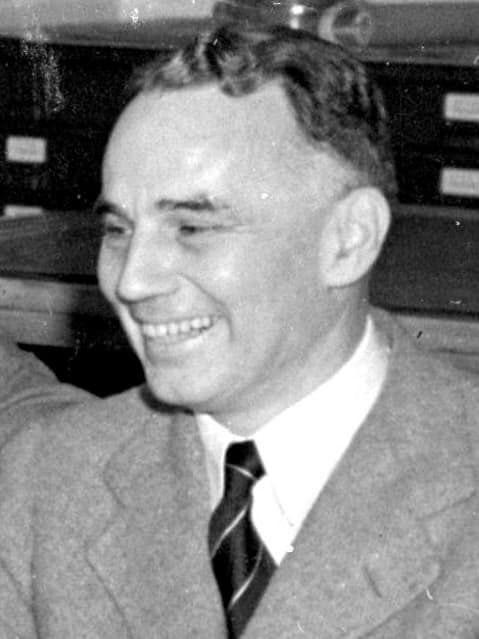
Alfred Lee Loomis
Bonbright and Company (later Rad Lab at MIT)
A pioneer in the finance and investing sector, Alfred Lee Loomis founded Bonbright and Company, which later evolved into the Rad Lab at MIT, playing a crucial role in the development of radar technology during World War II. By February 1942, Loomis's leadership and innovative vision enabled the introduction of microwave-based ASV radar, which reversed the tide against German U-boats, resulting in the sinking of 82 American ships in just two months. His principles of decisive action, independent wealth accumulation, and strategic resource positioning continue to inspire entrepreneurs today, emphasizing the importance of recognizing when a life phase is complete and seizing opportunities in times of change. Notably, Loomis's approach exemplifies the combination of determination and foresight needed to navigate complex challenges in business.
Core Principles
finance
Build independence through wealth accumulation so you can pursue meaningful work without external constraints or approval.
Loomis deliberately made his fortune in finance through the utilities industry, not because he loved finance, but because he wanted to buy his freedom from having to answer to others. Once wealthy, he left Wall Street entirely to pursue physics and science.
“I have to buy my independence”
Develop conviction about inevitable future events and position yourself with liquid resources to capitalize on them.
Loomis and his partner Thorne converted their portfolio to cash and treasury bonds around 1928, before the crash, because they believed it was inevitable. They refused to bet on it being delayed. When the crash came, they had the liquidity to buy assets at depressed prices, minting a second fortune during the Depression.
“Everybody in the street knew the crash was coming. The only difference was that he and Thorne refused to bank on it being inevitably delayed.”
focus
Focus all resources on one pressing problem once you identify it, abandoning secondary projects regardless of their merit.
When Loomis determined radar was the critical problem, he shut down all other research at Tuxedo Park and committed completely. He abandoned preliminary explorations that might have been interesting but couldn't yield results in months or years.
“It would focus on one pressing problem and work to find a practical and efficient solution.”
Separate your worlds completely to prevent dilution of focus or conflicting loyalties.
Loomis maintained a strict separation between his Wall Street business life and his scientific research at Tuxedo Park. He never introduced a single Wall Street associate to his laboratory scientists, keeping the worlds insulated from each other.
“He erected a wall between his two worlds, completely insulating his scientific Valhalla from his business life.”
hiring
When you've mastered one domain, hire world-class mentors in new domains rather than trying to learn alone.
Rather than learning physics through books alone, Loomis hired R.W. Wood, one of the world's leading physicists, as his private tutor. Wood spent every summer at Tuxedo Park conducting experiments he couldn't do elsewhere, teaching Loomis directly.
leadership
Influence influencers rather than trying to convince everyone directly.
Instead of recruiting Ernest Lawrence directly, Loomis put Lawrence on the microwave committee and let Lawrence pick the lab head. Lawrence's endorsement then drew every physicist he knew to the project, multiplying Loomis's reach exponentially.
mindset
Be willing to work in obscurity if the mission matters, and don't expect recognition.
Loomis's contribution to winning World War II was unknown to the public. He operated in secrecy, disdained the glamorous social world he could have dominated, and seemed satisfied to be known only in closed circles.
“Of course he was known in closed circles, but not widely known. After the war, history forgot him.”
Understand human nature and the psychology of mistakes to avoid repeating historical errors.
Loomis drew a parallel between the financial mistakes of 1928 (believing the crash wouldn't come) and the 1938-1940 military mistakes (denying America would enter the war). He realized both reflected human denial of inevitable events.
“Of first importance is the admission that we are going to get in, and our action accordingly should be that of preparing just as though we were actually in the war.”
Don't require external validation or credit; focus on the work and its impact.
Loomis was virtually unknown outside scientific circles despite being one of the most powerful figures in banking and directing research that won the war. He was content with this obscurity, not seeking publicity or historical credit.
“He didn't take credit for things. That was very characteristic of him.”
Design your life broadly rather than following conventional tracks laid out for you.
Loomis began as a lawyer, became a banker, then became a physicist, and eventually a military strategist. He rejected the idea that life must follow one predetermined path, instead creating his own world and following his interests.
Recognize when a life phase is complete and exit decisively without looking back.
After making his fortune in law, Loomis quit without hesitation. After making his fortune in finance, he left Wall Street entirely when spring came. After the war ended and the Rad Lab had succeeded, he insisted it be shut down. He never held onto past roles.
“Without so much as a backward look, Loomis quit Wall Street for good.”
operations
Recognize when an organization has achieved its purpose and wind it down rather than allowing it to stagnate.
Multiple stakeholders wanted the Rad Lab to continue producing innovations after the war. Loomis called President Roosevelt to ensure termination, understanding that peacetime bureaucracy would inevitably stagnate the organization that had thrived under wartime pressure.
“Loomis felt the Rad Lab would surely stagnate and falter.”
resilience
Extreme external circumstances can enable achievements impossible in normal conditions, but don't attempt to recreate them artificially.
The Rad Lab grew from dozens to 4,000 people and spent four million dollars monthly during wartime. Loomis insisted on dismantling it after victory, recognizing that the pressure of war had enabled extraordinary productivity, but that peacetime couldn't replicate it.
“War was a great stimulus to science, but it was not a stunt that could be repeated in peacetime.”
strategy
Use wealth as a tool for leverage and capability, not as a marker of status.
Loomis built a private laboratory at Tuxedo Park and funded world-class physicists to work there, not to display his wealth but to access the frontiers of science. His spending was directed toward capability, not consumption.
“He used his wealth very effectively in the way of entertaining the right people and making things easy to accomplish.”
Be early in recognizing threats that others deny, and prepare as if the threat is already here.
By the late 1930s, Loomis recognized Nazi Germany's scientific advantage while the US military remained unprepared. He began mobilizing resources before America entered the war, treating American entry as inevitable rather than hypothetical.
“He felt obliged to dedicate himself to overcoming Germany's scientific advantage.”
Borrow proven ideas from history and adapt them to current circumstances.
When facing Germany's scientific advantage, Loomis adapted Thomas Edison's recommendation from World War I: create a great research laboratory to develop new weaponry before war arrives. He took an idea from 25 years prior and applied it to his situation.
Identify emerging industries early and dominate through specialized expertise and capital.
Loomis recognized rural electrification as the future and specialized in financing utilities companies. He and Thorne bundled smaller operators into larger integrated systems called 'superpowers,' creating better investment vehicles and raising capital for expansion.
“What appealed to Loomis was the challenge of shaping the nascent industry. He had no respect for the old school Wall Street capitalist skills.”
Frameworks
The Liquidity Advantage in Crashes
Recognize that market crashes are inevitable. Before they occur, convert assets to cash and treasury bonds. When everyone else is illiquid and unable to act, deploy your capital to buy assets at depressed prices. This generates extraordinary returns while others suffer losses.
Use case: Finance, investing, acquisitions during economic downturns
The Double Life Strategy
Maintain two completely separate professional lives with strict boundaries between them. Allow each domain to develop its own culture, relationships, and standards without contamination from the other. This prevents conflicts of interest and allows you to be fully committed to whichever domain requires your attention.
Use case: Managing multiple careers, business ventures, or organizational roles with different objectives
Influencer Recruitment
Rather than trying to convince everyone directly, identify and recruit the most influential person in your target domain. Give them meaningful responsibility and let them recruit others based on their credibility. This creates exponential reach and attracts higher-quality talent.
Use case: Building organizations, assembling teams, mobilizing resources for large projects
The Inevitable Event Preparation
Identify inevitable future events (crashes, wars, industry disruptions) and prepare as if they have already occurred rather than betting they will be delayed. Position yourself with the resources and capabilities needed to act when the inevitable arrives.
Use case: Strategy, risk management, competitive positioning
The Focus Pivot
Once you've identified the single most critical problem, abandon all other projects regardless of their merit or earlier investment. Redirect all resources toward that one objective. Secondary projects, no matter how interesting, will dilute your impact.
Use case: Product development, research organizations, wartime or crisis management
Historical Idea Adaptation
Study solutions from history (100+ years ago) to current problems. Identify proven frameworks, strategies, or ideas that worked in analogous situations and adapt them to your circumstances. This gives you access to centuries of tested wisdom.
Use case: Strategy development, problem-solving, organizational design
Wartime Productivity Harnessing
Recognize that extreme external circumstances (existential threats, crises) enable productivity and coordination impossible in peacetime. Create organizational structures that leverage this under crisis conditions. Do not attempt to recreate wartime productivity artificially or expect it to persist once the crisis ends.
Use case: Crisis management, organizational transformation, product development during existential threats
Stories
In February 1942, German U-boats sank 82 American ships. By the end of April, the situation had completely reversed as Loomis-led radar innovations came online. The new microwave-based ASV radar was 1,000 times more effective than prior technology and detected threats the older systems couldn't sense, turning strategic defeat into victory in weeks.
Lesson: The right technology deployed quickly can reverse seemingly inevitable defeat. Innovation in crisis situations has exponential impact.
During World War I, Loomis became so expert in tank design that he built a scaled-down model in his garage to test improvements. When his cousin Colonel Stimson came to visit, Loomis picked him up at the train station in a full-sized homemade light armored tank, kicking up dust and causing quite a scene. This illustrated Loomis's combination of deep technical knowledge and willingness to test ideas unconventionally.
Lesson: Expertise combined with hands-on experimentation and a willingness to be unconventional can solve problems others overlook. Don't just theorize; build and test.
Loomis recognized Germany's scientific advantage in the late 1930s through direct relationships with expelled Jewish scientists who fled Nazi persecution. These scientists brought him intelligence about German capabilities that even the U.S. government didn't yet understand, giving him the foresight to begin preparations years before America entered the war.
Lesson: Build diverse networks and relationships that give you intelligence others lack. Relationships with people who have direct experience are more valuable than official channels.
Ernest Lawrence's brother was aboard a merchant ship torpedoed by a German U-boat. Although the brother survived, Lawrence was uncertain for days whether he was alive. When Loomis and Lawrence later focused radar development on defeating U-boats, Lawrence brought not just scientific brilliance but personal motivation to the mission.
Lesson: Personal stakes and emotional connection to a mission create extraordinary commitment. Circumstance sometimes aligns motivation with capability in powerful ways.
After the war, multiple stakeholders wanted the Rad Lab to continue producing innovations. Instead of allowing it to persist, Loomis called President Roosevelt to ensure the laboratory was shut down. He understood that the exceptional productivity had come from wartime pressure and that peacetime bureaucracy would inevitably stagnate the organization.
Lesson: Know when to end something even when it's successful. External circumstances change what works. Don't force-fit successful crisis structures into peacetime.
Notable Quotes
“Ward was smiling, but that did not mean that he was amused. The smile was a velvet glove covering his iron determination to get underway without any lost motion.”
Description of Loomis's personality and work ethic, showing his focus on efficiency and his determination beneath an polite exterior
“He would dedicate himself to overcoming Germany's scientific advantage.”
His stated objective when recognizing the threat of Nazi Germany's scientific capabilities
“Ward carried himself with composure, but his politeness was merely a habit. He was preoccupied.”
Describing his single-minded focus and detachment from social niceties
“Everybody in the street knew the crash was coming. The only difference was that he and Thorne refused to bank on it being inevitably delayed.”
On his investment strategy before the 1929 crash, explaining how he maintained liquidity while others remained exposed
“I have to buy my independence.”
His motivation for pursuing wealth in finance and utilities, not because he cared about finance but to escape the need for others' approval
“What appealed to Loomis was the challenge of shaping the nascent industry. He had no respect for the old school Wall Street capitalist skills. He relished the opportunity to reinvent their creaky methods and along the way rewrite the rules as he saw fit.”
His approach to the utilities industry, focusing on innovation and improvement rather than traditional finance
“He was a person who loved to be with the leaders of any one particular enterprise. As such, he was called a dilettante by people who thought that he was that that was a good name for him. So you had to work for him and talk to him a bit. And then you found out there wasn't anything phony about him. He was a first class scientific person. And he had a lot of money.”
Bush's description of why Loomis was misunderstood by some, and what made him effective
“Without so much as a backward look, Loomis quit Wall Street for good.”
Describing his complete departure from finance once he determined he had sufficient resources
“It would focus on one pressing problem and work to find a practical and efficient solution.”
His directive for the Rad Lab, explaining how he abandoned secondary research projects to focus completely on radar
“Of first importance is the admission that we are going to get in, and our action accordingly should be that of preparing just as though we were actually in the war.”
On treating inevitable American entry into WWII as certain and preparing accordingly, drawing a parallel to his pre-crash investment strategy
Frequently Asked Questions
What are Alfred Lee Loomis's key business principles?▼
Alfred Lee Loomis's core principles include: Build independence through wealth accumulation so you can pursue meaningful work without external constraints or approval.. Develop conviction about inevitable future events and position yourself with liquid resources to capitalize on them.. Focus all resources on one pressing problem once you identify it, abandoning secondary projects regardless of their merit.. Founder Almanac has cataloged 17 total principles from Alfred's career.
What can entrepreneurs learn from Alfred Lee Loomis?▼
Key lessons from Alfred Lee Loomis include: The right technology deployed quickly can reverse seemingly inevitable defeat. Innovation in crisis situations has exponential impact.. Explore 5 stories and 7 frameworks from Alfred's experience.
What is Alfred Lee Loomis known for in business?▼
A pioneer in the finance and investing sector, Alfred Lee Loomis founded Bonbright and Company, which later evolved into the Rad Lab at MIT, playing a crucial role in the development of radar technology during World War II. By February 1942, Loomis's leadership and innovative vision enabled the introduction of microwave-based ASV radar, which reversed the tide against German U-boats, resulting in the sinking of 82 American ships in just two months. His principles of decisive action, independent wealth accumulation, and strategic resource positioning continue to inspire entrepreneurs today, emphasizing the importance of recognizing when a life phase is complete and seizing opportunities in times of change. Notably, Loomis's approach exemplifies the combination of determination and foresight needed to navigate complex challenges in business.
More Finance & Investing Founders
Want Alfred's advice on your business?
Our AI has studied Alfred Lee Loomis's biography, principles, and decision-making frameworks. Ask any business question.
Start a conversation