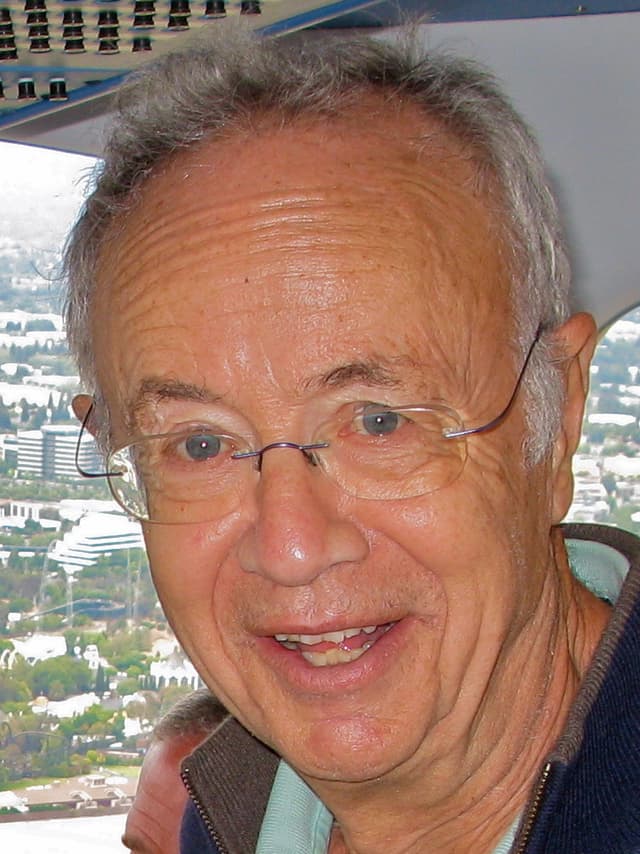
Andy Grove
Intel Corporation
A pivotal figure in the semiconductor industry, Andy Grove co-founded Intel Corporation in 1968, transforming it into a leader in microprocessor manufacturing. Under his stewardship, Intel's annual revenue soared from $1.9 billion in 1985 to over $26 billion by 1995, showcasing his commitment to innovation and operational excellence. Known for his principles of brutal honesty and resilience, Grove emphasized the importance of clear focus and demanding excellence, which helped the company navigate challenges and maintain its market dominance. His experiences of hardship in his early life instilled a profound understanding of adaptability and the power of a rich inner life, lessons that continue to resonate with entrepreneurs today. Grove's insights on engagement and performance have left a lasting imprint on management practices, making him a relevant figure in the contemporary business landscape.
Core Principles
leadership
Small acts of confidence and encouragement from mentors can reshape an entire life trajectory. Never underestimate the power of telling someone you believe in them.
Grove's physics teacher, Mr. Valensky, told assembled parents that Grove would 'swim across the lake' of life. This phrase gave Grove confidence through the darkest years. His American professor Schmidt suggested San Francisco. These moments of belief sustained him.
“Life is like a big lake. All the boys get in the water at one end and start swimming. Not all of them will swim across. But one of them I sure will. And that is Grove.”
Totalitarian control and centralized decision-making destroy organizational competence. Decentralized authority and distributed decision-making are essential to organizational health.
Grove witnessed the communist government's catastrophic mismanagement of Hungary's economy and basic services. Later, he applied the opposite principle at Intel, eliminating rigid hierarchy, encouraging vigorous debate, accepting ideas from any level, and refusing executive perks.
“The communist government called all the shots.”
Information control precedes tyranny. The ability to speak truth, listen to truth, and share information freely is the foundation of human dignity and economic health.
Under both Nazi and Soviet rule, Grove's family had to hide their true thoughts and limit access to independent information. The government controlled radio, newspapers, and even what people could discuss with neighbors. This observation informed his approach to transparency at Intel.
“For the very first time when he gets to America, he feels like he can be who he is. Like I can actually express my thoughts. I don't have to hide. I don't have to pretend anymore.”
Brutal honesty, clear focus, and demanding excellence create effective leadership. This approach works when it comes from genuine commitment to the mission rather than personal ego.
Andy Grove, Intel's greatest leader, applied what Steve Jobs would later echo: no-bullshit clarity about reality, relentless focus on what matters, and refusal to accept mediocrity. Unlike Shockley's destructive intensity, Grove's intensity served the company's mission. His mantra, 'only the paranoid survive,' drove the organization to continuously improve rather than rest on past success.
“Success breeds complacency. Complacency breeds failure, and only the paranoid survive.”
mindset
Maintain multiple interests as emotional and psychological counterbalance. If one area of life deteriorates, having another focus prevents total collapse of morale.
Grove struggled with chemistry coursework at university but sustained himself through singing lessons and opera. When singing went well, it lifted his mood about everything else. He realized this principle was critical to psychological resilience.
“I realized that it's good to have at least two interests in your life. If you only have one interest and that goes sour, there's nothing to act as a counterbalance to lift your mood. But if you have more than one interest, chances are something will always be going okay.”
The foundation of opportunity abundance is often invisible until you experience scarcity. Recognizing and being grateful for basic goods and freedoms prevents complacency.
When Grove arrived in America, simple things astounded him: real coffee made from beans, bananas, vaccines for preventable diseases, ships built for single purposes, reliable trains, TV, and functioning infrastructure. This perspective of abundance shaped his drive.
Seize opportunities through aggressive persistence, not resignation. When doors close, find other doors immediately and push through with intensity.
Grove didn't accept the IRC rejection. He tracked down another interview location, ran through Vienna's streets, interrupted the queue, and overwhelmed the interviewers with his determination. His intensity and refusal to accept 'no' changed his entire life.
“I almost didn't dare stop talking, but finally I ran out of things to say. I stood there, panting slightly and still sweating profusely. The students looked at each other and smiled. Then one said, okay, you can go to the United States.”
Create a rich inner life independent of external circumstances. When you cannot control your environment, you can always control your thoughts, imagination, and personal development.
As a teenager under communist rule, Grove found strength by identifying with fictional characters like Horatio Hornblower and immersing himself in imaginary adventures. He read opera, studied chemistry, and developed interests the regime could not control or suppress.
“The thought really appealed to me to be able to display what I was really like by transposing myself into an imaginary person set in an imaginary scene undertaking imaginary adventures.”
Suppress urgency and pride when survival depends on help. The willingness to abandon dignity and ask directly for what you need determines outcomes.
Grove was rejected by the IRC for immigration to America. Rather than accept the decision, he ran through Vienna's streets in the cold, pushed past the waiting line at a second interview, interrupted the process, and poured out his case with such intensity that officials reversed their decision.
“I couldn't afford luxuries like embarrassment.”
resilience
Resilience through adversity builds unshakeable character and perspective. Experiencing extreme hardship teaches you to endure, adapt, and maintain focus on what matters.
Grove survived Nazi occupation, communist rule, war, and forced deportation before age 20. These experiences shaped his management philosophy and approach to business challenges. He later applied this resilience to navigate Intel through existential crises.
“The power to endure is a great way to think about this book.”
strategy
Oppressive regimes escalate restrictions incrementally until they become normalized. Each concession trains people to accept the next. The only way to stop escalation is early, decisive action.
Grove documents how Nazi and Soviet authorities introduced restrictions step-by-step: first radio confiscation, then mandatory yellow stars, then movement restrictions, then deportations. Each step seemed survivable in isolation but led inexorably to genocide.
“Once it starts, it's just not going to stop. The only way to make it stop is usually through violence.”
Frameworks
The Paranoid Vigilance Framework
A leadership framework where success is treated as a threat because it breeds complacency and lazy thinking. Implementation involves constant questioning of current approaches, refreshing strategy regularly despite short-term success, viewing competition as information rather than threat, and maintaining vigilant oversight of operations. The framework combats the tendency of successful organizations to ossify.
Use case: Leading through growth phases, preventing organizational complacency, maintaining strategic agility, and creating cultures of continuous improvement
The Dual-Interest Resilience Model
Maintain at least two separate areas of genuine interest or achievement. When one domain encounters setback or stress, the other provides psychological counterbalance and maintains overall morale. This prevents total collapse when one life area deteriorates. The two interests must be genuinely engaging, not obligations.
Use case: Personal resilience during extended periods of stress, career transitions, or sustained difficult work. Applicable to individuals facing sustained pressure or uncertainty.
The Incremental Encroachment Pattern
Recognize that oppressive or restrictive systems typically don't appear suddenly. They advance through graduated steps, each one seemingly bearable. Each concession or normalization trains acceptance of the next restriction. The pattern: small restrictions, then larger restrictions, then irreversible ones.
Use case: Political analysis, organizational health monitoring, risk assessment. Applicable when evaluating whether a system is beginning a slow drift toward authoritarianism or dysfunction. Each small encroachment should be treated as a warning signal.
Stories
At age seven, Grove overheard his mother and other women discussing that Jews would be put into ghettos. The phrase fascinated him. Months later, at kindergarten, he recreated this concept by building an enclosure with tables and chairs, declaring it the ghetto and chanting with classmates about putting Jews inside. A year later, the bombing of Budapest began.
Lesson: Children absorb and act out the fears and realities adults discuss around them, even when adults try to shield them. The prophetic nature of children's play often precedes historical reality.
Grove's mother was arrested by a policeman because a non-Jewish neighbor had given Grove chicken soup and mashed potatoes. The policeman told her she'd probably never see her son again. A former business partner of Grove's father happened to see her being escorted to the police station, recognized her, called a friend in the police force, and had her released within hours.
Lesson: Survival often depends on the chance intersection of past relationships and present need. A single act of recognition or kindness from someone with influence can mean the difference between life and death.
Grove's father wrote goodbye letters on the backs of small photographs of his wife and son while imprisoned in a Russian labor camp. He wrote one letter in April 1945, describing his skin ulcers, lack of medicine, and slow death. He thought he would never see his family again. Five months later, he appeared at their apartment door, emaciated but alive.
Lesson: Love and the hope of reunion can sustain survival through seemingly impossible circumstances. Written words and photographs become lifelines in darkest moments.
While fleeing Hungary for Austria at night, a hunchback smuggler guided Grove and other refugees through dark woods by repeatedly appearing from the darkness to redirect them, then vanishing. He guided them silently without being seen, materializing every few minutes with the next instruction. When they finally saw the lights of Austria, he whispered 'Head toward them and don't take your eyes off them' and disappeared.
Lesson: Some people risk their lives for strangers asking nothing in return. The greatest acts of courage often go unwitnessed and unrewarded.
Grove was rejected by the International Rescue Committee for immigration to America. Rather than accept this, he tracked down the IRC conducting a second round of interviews at a distant school. He ran through Vienna's cold streets in pain, pushed past people in the waiting line, interrupted the interview process, and spoke with such intensity and passion about why he belonged in America that the interviewers changed their decision on the spot.
Lesson: Refusal to accept rejection combined with direct action and authentic passion can reverse bureaucratic decisions. Sometimes the willingness to disrupt normal processes and risk embarrassment determines outcomes.
Notable Quotes
“Humans, particularly those who build things, only listen to leading indicators of good news... On the other hand, if engagement decreases 25%, she will be equally intense and urgent in explaining it away. The site was slow that month. There were four holidays. We made a UI change that caused all the problems.”
Explaining CEO bias in interpreting data and why companies miss warning signs
“Training is, quite simply, one of the highest leverage activities a manager can perform. If your training efforts result in a 1% improvement in your subordinate's performance, your company will gain the equivalent of 200 hours of work as a result of your expenditure of 12 hours.”
Explaining the multiplier effect of manager training and teaching
“Success breeds complacency. Complacency breeds failure, and only the paranoid survive.”
His mantra as Intel's leader, summarizing his philosophy of vigilant continuous improvement
“The power to endure”
The New York Times book review's description of the central theme of Swimming Across. Grove sees this as the core insight of his own story.
“To my mother who gave me the gift of life more than once.”
Dedication of Swimming Across. References his mother's repeated acts of heroism in saving his life during Nazi occupation and Soviet rule.
“I understood that I had to memorize it to the point where it was part of me. I couldn't make a mistake.”
Describing his mother giving him a false Hungarian Christian identity as he left Budapest, forcing him to learn a new name (Andres Melsivik instead of Andras Groff) for survival.
“After all the years of pretending to believe things that I didn't, of acting the part of someone I wasn't, maybe I would never have to pretend again.”
Moment of realization when accepted to America, understanding that he would finally be able to be himself without fear of persecution or surveillance.
“I couldn't afford luxuries like embarrassment.”
Explaining his decision to approach strangers for help while in Vienna as a refugee, recognizing that pride or dignity were irrelevant to survival.
“The communist government called all the shots.”
Observation about Hungarian communist government's complete centralization of economic and political control.
“Once it starts, it's just not going to stop. The only way to make it stop is usually through violence.”
Reflection on the pattern of incremental restrictions placed on Jews first by Nazis, then by communists, drawing a lesson about escalating oppression.
Frequently Asked Questions
What are Andy Grove's key business principles?▼
Andy Grove's core principles include: Small acts of confidence and encouragement from mentors can reshape an entire life trajectory. Never underestimate the power of telling someone you believe in them.. Totalitarian control and centralized decision-making destroy organizational competence. Decentralized authority and distributed decision-making are essential to organizational health.. Information control precedes tyranny. The ability to speak truth, listen to truth, and share information freely is the foundation of human dignity and economic health.. Founder Almanac has cataloged 12 total principles from Andy's career.
What can entrepreneurs learn from Andy Grove?▼
Key lessons from Andy Grove include: Children absorb and act out the fears and realities adults discuss around them, even when adults try to shield them. The prophetic nature of children's play often precedes historical reality.. Explore 5 stories and 3 frameworks from Andy's experience.
What is Andy Grove known for in business?▼
A pivotal figure in the semiconductor industry, Andy Grove co-founded Intel Corporation in 1968, transforming it into a leader in microprocessor manufacturing. Under his stewardship, Intel's annual revenue soared from $1.9 billion in 1985 to over $26 billion by 1995, showcasing his commitment to innovation and operational excellence. Known for his principles of brutal honesty and resilience, Grove emphasized the importance of clear focus and demanding excellence, which helped the company navigate challenges and maintain its market dominance. His experiences of hardship in his early life instilled a profound understanding of adaptability and the power of a rich inner life, lessons that continue to resonate with entrepreneurs today. Grove's insights on engagement and performance have left a lasting imprint on management practices, making him a relevant figure in the contemporary business landscape.
More Semiconductors Founders
Want Andy's advice on your business?
Our AI has studied Andy Grove's biography, principles, and decision-making frameworks. Ask any business question.
Start a conversation