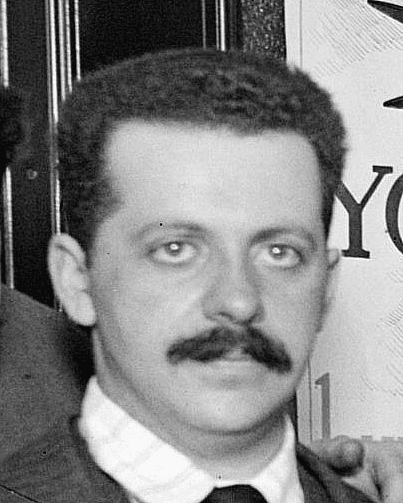
Edward L. Bernays
Bernays Public Relations
A pioneer in public relations, Edward L. Bernays transformed the advertising landscape through his innovative strategies and unconventional thinking. He famously promoted a controversial play about syphilis in a city that had recently banned a production on prostitution, reframing the narrative to highlight the importance of public awareness rather than mere entertainment. Bernays believed that obstacles could be reframed as opportunities, a principle that enabled him to navigate complex challenges throughout his career. His emphasis on thorough research and knowledge accumulation positioned him as a leading figure in the industry, demonstrating that informed decision-making can create a substantial competitive advantage. With his work, Bernays not only shaped the field of public relations but also left enduring lessons for entrepreneurs and business builders today.
Core Principles
leadership
Build relationships with key decision makers and influencers before you need them. Maintain contact, write thank you notes, and stay memorable. When you later need their support or platform, the relationship makes it easier to secure coverage or cooperation.
Bernays cultivated relationships with publishers like Arthur Sulzberger at the New York Times, editors at major magazines, and journalists before launching campaigns. These established relationships made it easier to pitch stories and ensure sympathetic coverage when he needed it.
Write frequently and establish your thinking in public through books, articles, and essays. Document your theories, methods, and lessons so they shape how people think about your field. Prolific writing establishes authority and ensures your ideas outlast your direct client work.
Bernays wrote or edited 15 books, 300 articles, and 125+ letters to editors while managing hundreds of clients simultaneously. This output established him as the intellectual authority on public relations and ensured his methods and philosophy shaped an entire generation of practitioners.
marketing
Do not sell products. Sell new ways of behaving, new values, and new aspirations that happen to require your client's product for fulfillment. People buy meaning and identity, not merely goods and services.
Bernays did not sell cigarettes to women. He sold women's equality and freedom. He did not sell bananas. He sold health and national defense. In each case, the product became the vehicle for a larger narrative about values and identity.
“Hired to sell a product or service, he instead sold whole new waves of behaving, which appeared obscure, but over time reached huge rewards for his clients.”
Tie your private commercial interests to public causes or societal issues. This reframes what you are selling as serving a larger purpose, generating media attention and public support for free while advancing your business objectives.
Bernays promoted the play 'Damaged Goods' about syphilis not as entertainment but as a public health education tool. He promoted cigarettes to women not as a product but as torches of freedom and women's equality. He framed bananas for United Fruit not merely as food but as national health and defense.
Attack your objective from multiple angles simultaneously and relentlessly. Never rely on a single strategy or promotional vector. Test many approaches concurrently, knowing that some will fail but enough will succeed to drive results at scale.
For the American Tobacco Company's cigarette campaign targeting women, Bernays deployed testimonials from doctors, magazine articles, hotel menu changes, kitchen cabinet modifications, container makers, news stories, and staged public events simultaneously. Each vector reinforced the others, creating an overwhelming cultural shift.
“Seldom, if ever, had a publicity campaign been carried out on so many fronts and seldom, if ever again, will those responsible make public the details of their orchestrations.”
In an era of mass communications, modesty is a private virtue and a public fault. You must relentlessly promote your own work, ideas, and accomplishments or others will not know about them. Document everything and make your contributions visible.
Bernays meticulously saved every piece of correspondence from his 80-year career and promoted his own role in his successes through writing, speeches, and storytelling. He understood that in a world of mass communication, silence means invisibility.
“In an era of mass communications, modesty is a private virtue and a public fault.”
Understand that fame and public visibility have little to do with real value. People will accept impressions fashioned from wisps of information and imagination, building them into flesh-and-blood icons. This is true for products, performers, and political figures alike.
After successfully making an unknown ballerina a national celebrity by staging her with a python at the Bronx Zoo, Bernays realized the public would accept almost any impression if properly orchestrated. He learned that without a gimmick or media amplification, someone might wait years for recognition.
“Public visibility had little to do with real value. That was true back then. It is even more true today.”
mindset
Unconventional thinking becomes a competitive advantage when you do not fit conventional paths. Recognize when you are different from your environment as an asset that trains you to operate at the edge and push boundaries throughout your career.
Bernays hated agriculture at Cornell University despite his father's insistence he study farming. Rather than view this mismatch as failure, he recognized that not fitting in with conventional thinking on campus taught him to think unconventionally. This became his trademark approach to solving problems for over 80 years.
“Perhaps Cornell was the right place for me after all. I was looking for something that was not there and I found something better.”
View problems as opportunities in work clothes. Obstacles are not barriers but chances to demonstrate value. Anything can be accomplished if people can be made to see what looks like an obstacle as an opportunity.
When faced with the challenge of promoting a controversial play about syphilis that the city was unlikely to approve, Bernays transformed the obstacle into an opportunity by reframing it as a public health issue rather than entertainment promotion.
Recognize that belief in what you sell is the most powerful sales tool. If you do not believe in your product's value, that lack of belief will undermine your effectiveness and create internal conflict that affects your work and life.
Bernays successfully promoted cigarettes he did not believe were healthy and did not personally use. He admitted he never smoked and preferred chocolate. This disconnect between his public advocacy and private beliefs created a hollow quality to his work and contributed to his personal dissatisfaction despite professional success.
“The man who helped persuade tens of thousands of Americans to give up sweets in favor of cigarettes admitted later he did not like the taste of tobacco.”
Understand that family patterns repeat across generations until someone consciously breaks the cycle. If you experienced an unhappy home, recognize that marrying and having children does not automatically repeat those patterns. The right person makes all the difference.
Bernays' father Eli was a moody, strident man who worked endless hours and was rarely home. Bernays told himself he would never marry or have children. But he did marry and have children, and he unconsciously repeated his father's absent, temperamental pattern with his own family.
resilience
Separate ambition and work drive from family and personal relationships. Career obsession, while producing professional success, creates profound failures in marriage, parenting, and friendships. Excellence in one area does not compensate for damage in another.
Bernays achieved extraordinary professional success but was regarded by his daughters as an absent, cold father. His wife endured his infidelities and domineering treatment. Friends and colleagues he fell out with were permanently exiled from his life. His personal life was a cautionary tale despite his professional mastery.
sales
Gain acceptance for your viewpoint by quoting respected authorities, outlining logical reasons for your outlook, and referring to tradition rather than telling someone directly they are wrong. Indirect persuasion is more effective than confrontation.
Bernays cited doctors, referenced historical precedent, and quoted authorities to make his case rather than arguing directly. This approach made people more receptive to his ideas and less defensive.
“It is easier to gain acceptance for your viewpoint by quoting respected authorities, outlining the reasons for your outlook, and referring to tradition than by telling someone that he's wrong.”
Charge premium fees for your services. Higher fees signal quality and make clients more likely to implement your recommendations. This is especially true when selling expertise, counsel, and strategic guidance.
Bernays repeatedly advised corporations and individuals to charge high fees rather than low ones. He believed clients viewed expensive counsel as more valuable and were more likely to act on it. He applied this principle throughout his career and taught it to others.
“The man or the corporation is much more likely to do what you suggest if you charge a high fee than if you charge very little.”
strategy
Become the best informed person on your assignment by conducting thorough research before taking action. Collect information from libraries, trade journals, experts, and direct observation. Knowledge accumulation compounds competitive advantage.
When hired to promote ballet, Bernays admitted he knew nothing about dance. He then systematically gathered information from libraries, secondhand bookstores, the Metropolitan Opera Company, arts editors, and dancers themselves. This approach mirrors David Ogilvy's later advice to young ad men.
“Eddie began by acknowledging that he was as ignorant about ballet as the public he sought to enlighten. Then he set out towards self-enlightenment.”
Use indirection and the roundabout path to accomplish objectives. Chart a circuitous route that removes underlying and immediate impediments rather than attacking the goal directly. The indirect approach is often infinitely more effective than the straightest course.
Instead of running ads saying 'buy more books,' Bernays convinced real estate developers to build bookshelves into homes. His reasoning: where there are bookshelves, there will be books. This principle became the foundation of his entire career across dozens of different industries and clients.
Frameworks
Indirection and the Roundabout
Rather than attacking an objective directly, chart a circuitous path that removes underlying and immediate impediments to achieving the goal. This approach is infinitely more effective than the shortest route because it addresses root causes and cultural resistance. The principle applies across industries: where you want books to proliferate, build bookshelves first; where you want women to smoke publicly, frame it as freedom and equality; where you want support for military intervention, emphasize the communist threat.
Use case: Marketing, public relations, social change campaigns where direct appeals face cultural resistance or where the true objective must be obscured to gain buy-in from key stakeholders and the public.
Tieing Private Interests to Public Causes
Identify a legitimate public cause, social issue, or widely held value that aligns with your commercial objective. Structure your campaign so that advancing the public cause requires or naturally includes consumption of your product or service. This makes your marketing appear to serve society rather than purely profit motive, generating earned media and public support at no cost.
Use case: Long-term brand building, scaling consumer products, entering new markets, overcoming cultural taboos, and gaining government or institutional support for business objectives.
Multi-Vector Attack Strategy
Never rely on a single promotional or persuasion strategy. Instead, attack your objective from numerous angles simultaneously: testimonials from authorities, magazine articles, editorial partnerships, event sponsorships, expert endorsements, infrastructure changes, and grassroots organizing. Some vectors will fail, but enough will succeed to create overwhelming momentum. Maintain this relentless pressure across multiple fronts without pause.
Use case: Market entry, scaling consumer adoption, shifting cultural attitudes, launching brands into new categories, and overcoming entrenched competition or social resistance.
Event Generation and News Amplification
Create staged events designed to be newsworthy. Ensure the event is surrounded by controversy, celebrity participation, or surprising elements. Alert media in advance but make coverage appear organic. The formula: generated event produces news story, news story generates demand for your product, and all the publicity is free earned media rather than paid advertising.
Use case: Product launches, brand repositioning, overcoming social taboos, entering mainstream markets, and generating awareness without large advertising budgets.
Front Group Messaging
Do not communicate directly from your company. Instead, create or partner with third-party organizations, expert committees, grassroots movements, or professional associations that can deliver your message as if it comes from neutral parties. Messaging appears more credible and faces less skepticism when attributed to physicians, educators, feminists, or civic organizations rather than to corporations with financial stakes.
Use case: Advocacy campaigns, product promotion in sensitive categories, political influence, regulatory policy shifts, and situations where direct corporate messaging would face suspicion or resistance.
Journalist Facilitation
Make the journalist or editor's job easier by providing research, verified facts, pre-written story angles, and comprehensive background information. Journalists and editors have limited time and must fill space. If you provide them with content that is factually sound and easy to adapt, they will use it. This transforms earned media from hoping for coverage to facilitating it.
Use case: Generating earned media coverage, scaling PR across many publications, ensuring consistent messaging across multiple news outlets, and building relationships with reporters and editors.
Stories
Bernays was hired to promote a controversial play about syphilis in a city that had recently shut down another play about prostitution. Rather than promote the play directly as entertainment, he reframed it as a public health education tool about disease and recovery. He recruited prominent women, doctors, and civic leaders to endorse it as an important public health initiative. The play opened to standing room only crowds.
Lesson: Obstacles become opportunities when reframed as serving a larger cause. Direct appeals fail where indirect appeals tied to public interest succeed. Third-party endorsements from respected figures carry far more weight than corporate promotion.
Bernays discovered he knew nothing about ballet when hired to promote a tour. Rather than fake expertise, he systematically educated himself by visiting libraries, interviewing experts, and consulting with the Metropolitan Opera Company. Armed with genuine knowledge, he crafted a campaign that made an unknown ballerina a national celebrity within months. He later reflected that if he could create a national celebrity without the proper apparatus, she had no real fame.
Lesson: Becoming the best informed person on an assignment compounds your competitive advantage. Thorough research before action beats instinct or guessing. Knowledge allows you to recognize what is real versus fabricated.
In 1929, George Washington Hill asked Bernays how to get women to smoke cigarettes in public. Smoking in public was considered improper for women at the time. Rather than advertise cigarettes, Bernays organized an Easter Sunday parade of prominent women on Fifth Avenue where they would light cigarettes while marching for women's equality. He disguised the cigarettes as torches of freedom. The event generated front-page newspaper coverage nationwide with no paid advertising and no one realized American Tobacco orchestrated it.
Lesson: The most powerful marketing appears organic and serves a purpose beyond the product. Public movements, social causes, and individual choice are more persuasive than corporate messaging. Stage your event properly and media coverage takes care of itself.
When promoting a ballet, Bernays reshaped promotional photos to add length to ballerina skirts to comply with magazine standards. He then took an unconventional photo of the ballerina with a giant python wrapped around her body at the Bronx Zoo. Newspapers, struck by the surprising juxtaposition, ran the photo prominently on page one. The unexpected image cut through clutter far more effectively than conventional dance photography would have.
Lesson: Surprise and incongruity break through mental clutter. Expected images are ignored. Unexpected juxtapositions force attention even in crowded information environments.
Bernays' father was a moody, temperamental man rarely home due to endless work hours. Bernays told himself he would never marry or have children. Years later, after marrying and having children, he unconsciously repeated his father's pattern of absence, infidelity, and emotional coldness with his own family. His daughters recall that he was unsuited for fatherhood.
Lesson: Negative family patterns repeat across generations unless consciously broken. Telling yourself you will be different is not the same as being different. The right person and deliberate choice matter more than personal intention.
Bernays' wife Doris caught him in bed with another woman early in their marriage and left him. He followed her and brought her back. Years later, when her children were grown, she approached a young woman with a small child at a party and said: 'Be certain to keep a balance where that little girl is concerned. Be sure not to let her get lost in your busy life.' This was advice born from her own experience of being neglected by a husband consumed by work.
Lesson: Family relationships require deliberate balance and attention. Success in career at the expense of family creates lasting damage. Wisdom from suffering should be heeded by those who come after.
Bernays had a close friendship with Edmund Whitman, the publicity chief for United Fruit Company. They spoke on the phone for an hour every night and spent vacations together for years. When United Fruit's new leadership terminated Bernays' contract, Whitman had to deliver the news. After this falling out, Bernays never spoke to Whitman again and acted as though he had never existed.
Lesson: Professional relationships can end friendships instantly if one party feels used or betrayed. Burning bridges for pride or disappointment creates isolation over time. Loyalty and grace matter more than vindication.
Notable Quotes
“Perhaps Cornell was the right place for me after all. I was looking for something that was not there and I found something better.”
Reflecting on his unhappy time studying agriculture at Cornell University and how his alienation from conventional thinking taught him unconventional thinking that became his career strength.
“If where there is bookshelves, there will be books.”
Explaining his indirect approach to promoting books for publishers. Rather than advertise books directly, he convinced developers to build bookshelves into homes, reasoning that the physical infrastructure would create demand for the product.
“The overwhelming majority of the people who reacted so spontaneously to Caruso had never heard of him before. The public's ability to create its own heroes from wisps of impressions and its own imagination and to build them almost into flesh and blood gods fascinated me.”
Reflecting on how the public accepts and elevates celebrities based on manufactured impressions rather than genuine familiarity, a realization that shaped his approach to creating fame and demand.
“Public visibility had little to do with real value. That was true back then. It is even more true today.”
Lesson learned after making an unknown ballerina a national celebrity through orchestrated publicity, recognizing that fame can be fabricated independently of actual talent or worth.
“When I saw how easy it was for the ballerina to become a national celebrity, I recognized how necessary it was to look behind a person's fame to ascertain whether the basis was real or fictitious.”
Understanding that the apparatus of publicity can create fame without foundation, requiring critical thinking about whether public figures deserve their status.
“These stories will take care of themselves as legitimate news if the staging is done right.”
Explaining the mechanics of the Easter Sunday parade of women smoking torches of freedom, noting that if an event is orchestrated correctly, media will cover it without needing to be told the story.
“The man or the corporation is much more likely to do what you suggest if you charge a high fee than if you charge very little.”
Advice on pricing professional services, advocating for premium fees because high cost signals quality and makes clients more likely to take recommendations seriously.
“In an era of mass communications, modesty is a private virtue and a public fault.”
Justifying his relentless self-promotion and prolific writing output, arguing that silence in a mass communication era means invisibility and loss of influence.
“It is easier to gain acceptance for your viewpoint by quoting respected authorities, outlining the reasons for your outlook, and referring to tradition than by telling someone that he's wrong.”
Advice on persuasion techniques, emphasizing indirect approaches that avoid confrontation and defensiveness by appealing to authority and precedent.
“Hired to sell a product or service, he instead sold whole new waves of behaving, which appeared obscure, but over time reached huge rewards for his clients.”
Summary of his fundamental approach: rather than promoting products directly, he sold new behaviors, values, and aspirations that required his client's product for fulfillment.
Frequently Asked Questions
What are Edward L. Bernays's key business principles?▼
Edward L. Bernays's core principles include: Build relationships with key decision makers and influencers before you need them. Maintain contact, write thank you notes, and stay memorable. When you later need their support or platform, the relationship makes it easier to secure coverage or cooperation.. Write frequently and establish your thinking in public through books, articles, and essays. Document your theories, methods, and lessons so they shape how people think about your field. Prolific writing establishes authority and ensures your ideas outlast your direct client work.. Do not sell products. Sell new ways of behaving, new values, and new aspirations that happen to require your client's product for fulfillment. People buy meaning and identity, not merely goods and services.. Founder Almanac has cataloged 21 total principles from Edward's career.
What can entrepreneurs learn from Edward L. Bernays?▼
Key lessons from Edward L. Bernays include: Obstacles become opportunities when reframed as serving a larger cause. Direct appeals fail where indirect appeals tied to public interest succeed. Third-party endorsements from respected figures carry far more weight than corporate promotion.. Explore 7 stories and 6 frameworks from Edward's experience.
What is Edward L. Bernays known for in business?▼
A pioneer in public relations, Edward L. Bernays transformed the advertising landscape through his innovative strategies and unconventional thinking. He famously promoted a controversial play about syphilis in a city that had recently banned a production on prostitution, reframing the narrative to highlight the importance of public awareness rather than mere entertainment. Bernays believed that obstacles could be reframed as opportunities, a principle that enabled him to navigate complex challenges throughout his career. His emphasis on thorough research and knowledge accumulation positioned him as a leading figure in the industry, demonstrating that informed decision-making can create a substantial competitive advantage. With his work, Bernays not only shaped the field of public relations but also left enduring lessons for entrepreneurs and business builders today.
More Advertising & Marketing Founders

Want Edward's advice on your business?
Our AI has studied Edward L. Bernays's biography, principles, and decision-making frameworks. Ask any business question.
Start a conversation