Francis J. Greenburger
Time Equities
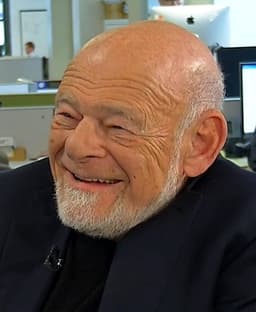
A pioneer in the real estate industry, Francis J. Greenburger founded and led Time Equities, transforming it into a significant player with a portfolio that includes over 30 million square feet of property. His early experience negotiating a fee increase at age 12 set the tone for his career, demonstrating his dogged determination and ability to navigate resistance. Greenburger's principles emphasize the importance of prioritizing independent judgment over client demands, fostering an environment where listening to diverse ideas accelerates innovation. Under his leadership, Time Equities exemplified resilience and adaptability, proving that pursuing one's instincts, even in the face of rejection, can lead to remarkable success. His notable quote, "Logic is no match for bureaucracy," reflects his belief in the power of creativity and tenacity in overcoming institutional challenges.
Core Principles
customer obsession
Discover unmet market needs by examining your own customer experience. The best business opportunities often solve problems you yourself have experienced.
Greenburger discovered the one-room office market by looking for office space for his own book business and finding that commercial landlords only offered large spaces. He identified landlords were leaving money on the table and built a business filling this gap.
“I was filling a gap in the rental market for one room offices that I had discovered when I looked for one for myself. I knew there would be demand because I knew there were many other people just like me.”
finance
To survive financial crises, maintain a substantial cash fortress proportional to your risk exposure. Adequate liquidity is more valuable than maximizing returns when crisis strikes.
After the 1987 crash, Greenburger made a commitment to maintain at least $100 million in cash across his entities. When the 2008 crisis hit, this fortress allowed him to survive while competitors without reserves failed. He cites Goldman Sachs maintaining over $100 billion in cash as the model to follow.
“I follow their example and maintain cash of over 100 million throughout our various entities, properties, and accounts.”
Evaluate investment managers primarily on personal integrity and intelligence rather than track record or popularity. Invest alongside managers who have substantial personal capital at risk.
Greenburger met Fred Wilson at his children's school and committed millions to his fund based on personal conviction about Wilson's intelligence, only later learning Wilson was already famous. He also requires that fund managers have significant personal capital in their investments.
“I don't pick investments. I pick jockeys, not horses. I have to be personally convinced of their intelligence and integrity.”
Most entrepreneurs underestimate expenses when entering new domains. Expect to underestimate costs and build in buffers accordingly.
Greenburger acknowledges he consistently underestimated expenses throughout his career. However, he notes this is not unique to him but rather a universal mistake that only becomes avoidable through experience or learning from others' mistakes.
“I had underestimated the expenses, something everyone always does, but that I didn't have the experience to know.”
Never interrupt compounding in quality assets. Hold properties through market cycles and let appreciation accumulate over decades rather than selling prematurely.
Greenburger consistently resisted selling buildings even when facing cash shortages. Buildings he bought for under $20,000 in the 1970s appreciated 200-500x over 35 years. His patience with compound growth built his fortune far more than trading.
“I preferred to remain on the edge as I kept my buildings running rather than sell any of them before they grew to the much higher value that I had a hunch they would one day achieve.”
Real estate economics shift dramatically with interest rate changes. Never accept current return expectations as sustainable across rate cycles.
Greenburger cautions against accepting low returns like 4% when interest rates are at 3%, because if rates rise to 6%, the investment becomes unviable. What works at one price and rate environment fails at another.
“What works at one price doesn't work at another. If you accept a 4% return today because interest rates are at 3%, you will have a disaster on your hands if interest rates go to 6%.”
leadership
Prioritize your own judgment and independence over client demands, even when they represent significant revenue. Control of your business is worth more than any single client relationship.
When James Patterson, who would become one of the most successful authors ever, demanded that Francis give up his real estate business to focus solely on being his agent, Francis immediately declined. He chose to pursue his passion for real estate rather than let even a blockbuster client dictate his career path.
“I didn't even need two seconds to think about my answer. There was no contest. I wasn't going to let any author, not even James Patterson, put an end to my real estate ventures.”
Seek out older, experienced mentors who can compress decades of learning into direct guidance. The value of accelerated learning from mentors far exceeds any cost of access.
Milton, a mentor roughly 25 years older than Greenburger, provided critical guidance on managing debt, understanding market cycles, and maintaining ethical standards. These teachings directly shaped every major decision Greenburger made for the next 50 years.
“I love this idea because I like the idea of having something to puzzle over, something that the answer is not at all obvious.”
Partner selection requires extreme care, as poorly chosen partnerships can create existential threats to your business. Treat partner selection with the same gravity as spouse selection.
Greenburger had a devastating partnership with Phil that led to intense litigation and nearly destroyed his company. He later reflects that picking a business partner is just as difficult and important as picking the right spouse.
“Picking a business partner is just as important and just as difficult as picking the right spouse.”
Ethical business practices protect long-term wealth better than corner-cutting shortcuts. Ignoring regulations may provide temporary advantage but ultimately destroys accumulated value.
Greenburger's mentor Milton taught him that landlords tempted to cut corners and bend rules always face eventual consequences. Those who ignore regulations lose their properties entirely. Legitimacy is the foundation of lasting wealth.
“You might get away with bending the rules for a little while, but eventually you destroy what you have.”
As your business grows, deliberately allocate time to activities you love and hire to reclaim those roles. Shifting from doer to teacher creates burnout if not rebalanced.
As Time Equities exploded, Greenburger found himself shifting from project conception and execution to teaching others. He hired a COO, Bob, which allowed him to refocus on the work he loved while maintaining strategic direction.
“My advice to those with expanding businesses is that they must first make a decision about how they want to allocate their time and structure their business so that the balance reflects that.”
mindset
Passion for work drives longevity and success more than any external reward. Love what you do or the compounding effort will destroy you.
Greenburger's entire career was driven by genuine love for real estate and building. This passion sustained him through multiple crises and allowed him to work at peak intensity for decades without burnout.
“If you find what you truly love to do in life, the only extra strategy is death.”
Always listen to other people's ideas because that is how you discover the good ones. Openness to input accelerates learning and discovery.
Throughout his career, Greenburger credits his success to remaining receptive to others' perspectives and advice, allowing him to identify opportunities and refine his strategies across multiple business domains.
“I always listen to other people's ideas because that is how you happen upon the good ones.”
Money serves as psychological security more than a tool for ambition. Early financial instability in family creates lasting drive for stability over opulence.
Growing up with a father who mismanaged finances and constantly struggled with cash flow, Greenburger developed an obsession with building wealth. He states his dream was never wild opulence but rather the luxury of stability, driven by the constant uncertainty of his parents' financial position.
“Money was my security blanket. Working gave me a purpose. Money for me was never about ambition. Success meant not having to worry.”
Naivete about industry conventions can be an asset when entering competitive fields. Inexperience can free you from conventional thinking that constrains established players.
Greenburger's competitors in the 1970s who grew up in real estate dynasties knew not to buy buildings in Soho. Greenburger, being new and ignorant of convention, kept buying when prices were absurdly low. His naivete became his advantage.
“Making my own way meant there was no one to tell me to stop buying.”
Independent thinking means questioning whether the status quo is truly optimal. Unconventional approaches often succeed precisely because competitors ignore them.
Greenburger's biggest wins came from approaches others considered foolish: buying buildings in Soho when no one else would, co-opping lower-income buildings, creating one-room offices. Each succeeded because he thought independently.
“Independent thinking in its simplest forms means not assuming that the status quo is the best answer, the right answer, or the most effective answer.”
operations
Maintain control over critical business processes rather than outsourcing to external professionals. Doing so ensures alignment with company priorities and reduces exposure to misaligned incentives.
During the 1980s boom, Greenburger kept sales, marketing, construction, design, legal, and accounting functions in-house rather than using external vendors. This allowed him to control priorities and avoid paying extraordinary fees to outside professionals with different agendas.
“I didn't want to go outside to professionals who might have different priorities, different agendas, and also frankly, in some cases, extraordinary high fees.”
Once you validate a business model, move quickly to scale it without excessive testing. Speed in scaling proven concepts compounds advantage faster than incremental optimization.
When Greenburger proved the one-room office concept worked by renting space at double his cost, he immediately repeated the formula across multiple locations rather than spending time perfecting individual deals. He applied this same principle to co-ops and condos, rapidly scaling when a model validated.
“When I found someone willing to pay double what I had paid, I declared my concept a success and repeated the formula again and again and again.”
resilience
Dogged determination and refusal to give up can ultimately overcome resistance. Pursuing a hunch despite repeated rejection often leads to breakthrough success.
Francis discovered James Patterson's manuscript in a slush pile and submitted it 38 times before finding a publisher, despite 37 rejections. The book won the Edgar Award for Best First Mystery and launched Patterson's career, which would eventually result in over 350 million books sold.
“Most agents would have certainly given up at this point, but I can be extremely stubborn when I have a hunch about something.”
Survival through crises requires continuous effort and discipline. When facing financial devastation, each daily decision to persist compounds into eventual recovery.
During the 1987-1991 period, Greenburger faced constant pressure from overleveraged projects and dried-up lending. He estimated his survival odds at 1 in 100. Yet he persisted daily, restructuring deals and negotiating with banks until conditions eventually improved.
“I made a fortune by the time I was 30 and at 40 I was facing ruin.”
Real security comes from adaptability, not rigid adherence to a single strategy. The ability to pivot and adjust to changing circumstances preserves wealth across cycles.
Greenburger survived multiple crises partly because he remained willing to restructure deals, negotiate with creditors, and adjust his business model. Fixed strategies fail; adaptive ones survive.
“Real security comes from adaptability.”
When facing financial problems, run toward them with transparency rather than avoiding or delaying. Direct communication with stakeholders about challenges often yields creative solutions.
During the 1987 crash, when banks threatened to foreclose on projects mid-construction, Greenburger called banks and explained the situation directly. He proposed continuing to lend on existing projects to avoid mutual destruction. Banks that might have otherwise foreclosed agreed to work with him.
“I find when you confront problems and are transparent about them with others who are involved, you can sometimes resolve things in a way you never imagined.”
sales
Develop early confidence and willingness to be bold in negotiations. Greater boldness in requests often succeeds where timidity fails.
At age 12, while working in his father's agency, Greenburger negotiated a client fee increase from $300 to $1,500 per month while his father was only willing to ask for $350. His father recognized that Francis understood business in a way he did not, and the client agreed to the higher rate once presented with proper justification.
“He knew I was serious and that I understood things he didn't.”
strategy
The problems of real estate are fundamentally the problems of people. Understanding human behavior is as important as understanding property mechanics.
Throughout his career, Greenburger repeatedly encountered situations where human irrationality, fear, or self-interest drove outcomes more than economic logic. Success required understanding and anticipating human behavior.
“I realized the problems of buildings are the problems of people. That is the same for business. The problems of business are the problems of people.”
Real estate markets are ultimately driven by human behavior, which is often irrational and unpredictable. Understanding human nature is as important as understanding market mechanics.
Greenburger repeatedly demonstrates that seemingly illogical decisions by banks, developers, and buyers often determine market outcomes. During the 1987 crash, banks pulled lending despite having no logical reason to do so, showing how bureaucratic thinking can override rational self-interest.
“Logic is no match for bureaucracy.”
In real estate, higher acquisition costs are justified if your business model creates value through conversion or repositioning. Willingness to pay more for the right assets can yield competitive advantage.
Greenburger's insight was that he could afford to pay 9-10 times gross rents for buildings while competitors only paid 5-7 times. His co-op conversion model justified higher acquisition prices, giving him pick of available properties.
“I could pay a higher price for buildings than most people looking at them as rental properties. With my strategy, I could afford to pay nine or ten times that.”
In competitive markets with low barriers to entry, inexperienced money drives up prices beyond sustainable levels. Saying no to bad deals is the most important judgment you can make.
Greenburger observed that wealthy but inexperienced investors entering real estate simply want to get in on the action, bidding up prices irrationally. He notes this mirrors a pattern Rockefeller identified 150 years ago, where the most dangerous competitors are those with money but no knowledge, coupled with ignorance of their costs.
“One of the dangers of the real estate business is that often you are competing against people who have money but are not that knowledgeable. If you pay a certain account simply because the guy next door has paid it, you will not survive this ruthless industry.”
Market timing is impossible, but market presence is essential. Being in position when conditions improve compounds far more than timing entry perfectly.
Greenburger entered real estate in the 1970s when it was least attractive and most cheap. He survived through crashes and downturns. By being present across multiple cycles, he captured enormous gains during recoveries others missed.
“Real estate was in a terrible state, but it was also very, very cheap. Without any basis for my certainty, I was convinced the situation had to get better.”
Frameworks
The Unmet Need Discovery Framework
Identify market gaps by examining your own customer experience. Look for problems you personally encountered that larger competitors ignore. Test the concept once at small scale, then immediately scale the proven model across the market without excessive optimization between iterations.
Use case: Finding new market opportunities and business ideas in competitive industries where larger players overlook niches
The Co-op Conversion Model
Acquire lower-value rental properties that larger competitors dismiss, then convert them to ownership models (co-ops or condos). Offer tenants the option to buy their unit, using the capital from purchases to subsidize remaining rentals. Over time, as tenants move, sell vacant units at higher prices. This model justified paying 9-10x gross rents when competitors only paid 5-7x.
Use case: Real estate development and value creation through repositioning assets others undervalue
The Financial Fortress Strategy
Maintain cash reserves equal to approximately 10% of your total leveraged exposure or between $100-140 million depending on size. This buffer allows survival through unpredictable crises while competitors without reserves fail. Model behavior on Goldman Sachs ($100 billion) and Warren Buffett ($140+ billion) during normal operations.
Use case: Surviving financial crises and market downturns without forced asset sales or bankruptcy
The Jockey, Not Horse Investment Framework
Evaluate investments primarily on the integrity and intelligence of the manager rather than their track record or popularity. Require managers to have substantial personal capital at risk alongside yours. Commit capital quickly once personal conviction is achieved.
Use case: Selecting venture funds, private equity, or delegated investment managers with whom to partner capital
The Transparent Crisis Communication Model
When facing financial problems, immediately contact creditors and stakeholders with transparent explanations of the situation. Propose solutions that acknowledge mutual interests. This approach often yields creative restructuring alternatives that foreclosure proceedings would not.
Use case: Negotiating workout agreements during financial crises rather than defaulting or litigating
Stories
At age 12, working in his father's literary agency, Greenburger negotiated a fee increase from $300 to $1,500 per month for a difficult client. His father initially proposed only $350. When the client received the justification showing business costs, he agreed to the five-fold increase.
Lesson: Greater boldness in asks, backed by clear reasoning, succeeds where timidity fails. Understanding business mechanics allows confidence in negotiations that would otherwise seem impossible.
Greenburger spent 38 attempts to place James Patterson's debut manuscript after finding it in the agency's slush pile. 37 publishers rejected it. The 38th publisher agreed to take it conditionally if Patterson rewrote it. Despite another rejection, Greenburger submitted again and finally won a $10,000 advance. The book won the Edgar Award and launched Patterson's career of 350+ million books sold.
Lesson: Persistence against overwhelming odds compounds into extraordinary results. Stubbornness about hunches and refusal to accept rejection are entrepreneurial superpowers.
At age 22, days after his father died of a stroke, Greenburger took a shovel and shoveled earth onto his father's casket until breaking through his emotional protective shell. As the earth accumulated, he felt lighter, recognizing he was now fully independent. Despite their difficult relationship, he credits his father's pride and approval as the foundation of his self-confidence.
Lesson: Difficult family relationships can paradoxically build self-reliance and confidence. Grief and independence are intertwined; sometimes freedom requires loss.
Greenburger purchased buildings in Soho in the 1970s for $10,000-$20,000 each while experienced competitors considered it insane. Being new to the industry, he lacked the conventional wisdom telling him not to buy. He held these buildings for 35 years, seeing them appreciate 200-500x. His naivete became his greatest advantage.
Lesson: Inexperience in an industry can be an asset if you remain independent-minded. Conventional wisdom often constrains opportunity for those who know to fear it.
During the 1987 financial crash, Greenburger placed substantial money in his wife Judy's name as protection from creditors. That money was invested in a private company fund that went public, soaring from $2 to $60 per share. He sold at $60, netting $15 million before the stock collapsed back to $2 and went bankrupt. This $15 million windfall was critical to surviving the crash that nearly destroyed his business.
Lesson: Diversification and luck are both essential to surviving systemic crises. Financial structures and offshore protections matter less than having capital outside the core business.
At age 19, Greenburger was running multiple book export businesses and the literary agency while his father pressured him to commit fully to the agency. Francis recognized he couldn't impose commitment on himself and broke free from parental obligation. Days later, his father had a stroke and died, forcing Francis to take over the agency. His father's death released him from the burden of seeking approval.
Lesson: Breaking free from parental expectations to pursue your own direction is essential to building authentic success. Independence must be chosen before circumstances force it.
Greenburger's two-year-old son Alexander drowned in the family's pool after unlatching a locked gate while Greenburger played tennis. The accident transformed Greenburger's marriage and led to depression lasting years. Later, his ex-wife Judy died of terminal cancer at 50. These tragedies forced Greenburger to confront the gap between the wealth he accumulated and the life satisfaction he sought.
Lesson: Personal tragedy reveals what actually matters. No amount of financial success compensates for loss of loved ones. Relationships are the true currency of life.
Greenburger discovered the one-room office market by looking for office space for his own book business. Commercial landlords only offered large spaces, leaving money on the table. Greenburger rented a whole space, divided it, and rented the second room at double his cost. When this proved profitable, he immediately scaled the model across New York.
Lesson: Your own customer pain points are the best source of business ideas. Test the model once, then scale fast rather than optimizing incrementally.
After the 1987 crash, banks threatened to foreclose on Greenburger's projects despite him being current on payments. He called the banks directly and explained: 'You're not late on any of your payments. Why are you pulling the plug? If you do, you'll destroy value on your own books.' Some banks restructured rather than foreclose, allowing Greenburger to survive.
Lesson: Confronting problems transparently with stakeholders often yields creative solutions unavailable through formal proceedings. People sometimes behave irrationally until reminded of their own interest.
Milton, Greenburger's mentor, posed a parable: 'If you have a bag of gold and throw it at a man's head to kill him but the gold falls at his feet and he becomes wealthy, have you done good or bad?' Milton taught Greenburger not through direct answers but through puzzles requiring reflection. This method expanded Greenburger's thinking far more than conventional advice.
Lesson: Great mentors teach through provocative questions rather than direct instruction. The questions become more valuable than answers because they develop independent thinking.
Notable Quotes
“Logic is no match for bureaucracy.”
Describing the irrational behavior of banks during financial crises
“I didn't even need two seconds to think about my answer. There was no contest. I wasn't going to let any author, not even James Patterson, who would go on to sell over 350 million books, put an end to my real estate ventures.”
When James Patterson demanded he give up his real estate business to focus solely on being his agent
“Most agents would have certainly given up at this point, but I can be extremely stubborn when I have a hunch about something.”
Explaining his persistence in submitting James Patterson's manuscript 38 times despite 37 rejections
“I always listen to other people's ideas because that is how you happen upon the good ones.”
Philosophy underlying his approach to discovering market opportunities
“One of the dangers of the real estate business is that often you are competing against people who have money but are not that knowledgeable. If you pay a certain account simply because the guy next door has paid it, you will not survive this ruthless industry that has created far more bankruptcies than it has billionaires.”
Warning about inexperienced competitors with capital driving up prices irrationally
“He knew I was serious and that I understood things he didn't.”
His father's recognition that young Francis understood business dynamics the father did not
“Money was my security blanket. Working gave me a purpose. Money for me was never about ambition. Success for me meant not having to worry.”
Explaining his fundamental psychological relationship with wealth and financial security
“I was filling a gap in the rental market for one room offices that I had discovered when I looked for one for myself. I knew there would be demand because I knew there were many other people just like me.”
Describing how personal customer experience led to discovering the one-room office market
“When I found someone willing to pay double what I had paid, I declared my concept a success and repeated the formula again and again and again.”
Explaining his approach to scaling validated business models rapidly
“I didn't want to go outside to professionals who might have different priorities, different agendas, and also frankly, in some cases, extraordinary high fees.”
Justifying his decision to keep sales, marketing, construction, and legal functions in-house
Frequently Asked Questions
What are Francis J. Greenburger's key business principles?▼
Francis J. Greenburger's core principles include: Discover unmet market needs by examining your own customer experience. The best business opportunities often solve problems you yourself have experienced.. To survive financial crises, maintain a substantial cash fortress proportional to your risk exposure. Adequate liquidity is more valuable than maximizing returns when crisis strikes.. Evaluate investment managers primarily on personal integrity and intelligence rather than track record or popularity. Invest alongside managers who have substantial personal capital at risk.. Founder Almanac has cataloged 29 total principles from Francis's career.
What can entrepreneurs learn from Francis J. Greenburger?▼
Key lessons from Francis J. Greenburger include: Greater boldness in asks, backed by clear reasoning, succeeds where timidity fails. Understanding business mechanics allows confidence in negotiations that would otherwise seem impossible.. Explore 10 stories and 5 frameworks from Francis's experience.
What is Francis J. Greenburger known for in business?▼
A pioneer in the real estate industry, Francis J. Greenburger founded and led Time Equities, transforming it into a significant player with a portfolio that includes over 30 million square feet of property. His early experience negotiating a fee increase at age 12 set the tone for his career, demonstrating his dogged determination and ability to navigate resistance. Greenburger's principles emphasize the importance of prioritizing independent judgment over client demands, fostering an environment where listening to diverse ideas accelerates innovation. Under his leadership, Time Equities exemplified resilience and adaptability, proving that pursuing one's instincts, even in the face of rejection, can lead to remarkable success. His notable quote, "Logic is no match for bureaucracy," reflects his belief in the power of creativity and tenacity in overcoming institutional challenges.
More Real Estate Founders
Want Francis's advice on your business?
Our AI has studied Francis J. Greenburger's biography, principles, and decision-making frameworks. Ask any business question.
Start a conversation