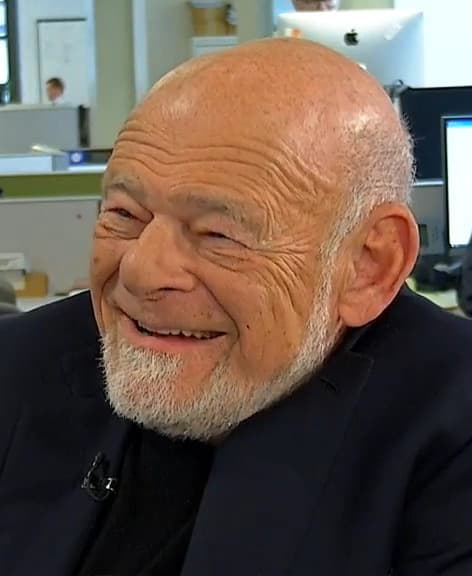
Sam Zell
Equity Office Properties
A visionary in the real estate industry, Sam Zell founded and led Equity Office Properties, which became the largest owner of office buildings in the United States, managing over 100 million square feet of space by the time he sold the company in 2007 for $39 billion. Known for his contrarian approach, Zell believed that entrepreneurs should embrace challenges as opportunities and often sought to look in the opposite direction of prevailing trends. His philosophy of fostering long-term relationships led him to prioritize collaboration, famously stating, "You cannot make a bad deal with good people." Zell's early entrepreneurial spirit was evident when, as a teenager, he turned a modest investment in a Playboy magazine into a profitable venture, a testament to his knack for identifying value where others might not.
Core Principles
culture
If you're genuinely excellent at what you do, you have the freedom to be authentically yourself rather than conform to social convention.
Zell wore jeans to the office since the 1960s, used profanity openly, and rejected the formal dress codes of finance. Rather than damage his credibility, this authenticity reinforced it because his results were undeniable. Excellence gave him permission to be a maverick.
“The bottom line is if you're really good at what you do, you have the freedom to be who you really are.”
Build a culture of informality and speed. Eliminate office doors, eliminate memos, eliminate hierarchy. Fast decision-making is oxygen to high performers.
Zell and his partner Bob Lurie rejected the formal corporate structure of 1970s finance. They wore jeans, kept offices open, and made decisions in minutes rather than weeks. When a senior manager left for more money and power elsewhere but returned years later, he cited the absence of memo chains and instant access to leadership as irreplaceable.
“We invented business casual.”
execution
When you identify an opportunity in front of you, execute it excellently. Excellence in one opportunity unlocks predictable opportunities you cannot yet foresee.
Zell's first student housing project succeeded because he focused entirely on doing that one thing well. The landlord then gave him a second project, then a third. This pattern of excellence creating optionality repeated throughout his career, turning small wins into massive advantages.
“Just focus on being, you have one opportunity right in front of your face. Do that the best you can, and it will unlock opportunities you cannot possibly predict.”
finance
Liquidity equals value. In a crisis, being cash-poor and asset-rich means you're insolvent. Control your leverage.
During the early 1990s recession, Zell's billion-dollar company struggled to make payroll because it was asset-rich but cash-poor with massive debt service requirements. This experience taught him that net worth on paper means nothing if you can't service obligations. He later mocked tech billionaires whose valuations weren't backed by actual cash.
“Liquidity equals value.”
When you don't have staying power, even the best opportunities disappear. To win, you must first survive.
During the early 1990s real estate crisis, many smart investors lost everything because they ran out of capital. Zell survived because he had maintained financial flexibility. This taught him that financial survival is the prerequisite for capturing opportunities others can't.
“It did not matter how smart you were if you didn't have staying power, if you were not able to hang on to your assets.”
Obsessive cost control is a strategic imperative, not just a tactical choice. Diligent management of expenses underpins sustainable growth, competitive pricing, and long-term resilience.
Zell's partner Bob would literally walk into offices and retrieve paperclips from trash cans while continuing conversations, embodying the principle that no expense is too small to monitor. This focus on waste prevention allowed Zell's companies to maintain margins when competitors couldn't.
“Diligent cost management is not just a tactical choice, but a strategic imperative that underpins sustainable growth, competitive pricing, and long-term resilience.”
Everything in business ultimately comes down to cash flow. Focus on understanding real cash flows and how you can impact them, because that is what creates value.
Zell constantly repeated this principle across all his investments and business dealings. Whether evaluating real estate, companies, or any asset, he would drill down to the cash flow dynamics because that is the true driver of value.
“Ultimately, everything is driven by cash flow. If you focus on what the real cash flows are and what you can do to impact those cash flows, that ultimately is what creates value.”
Liquidity equals value. Maintain flexibility and the ability to act quickly when opportunities arise. Avoid being locked into illiquid positions.
Zell emphasized liquidity as one of his key principles, understanding that cash and flexibility give you power and optionality in business.
“Liquidity equals value.”
focus
Do not pursue a path that bores you, even if others expect it. Your natural talents and interests are your guide.
Zell found law school unbearably boring despite his father's insistence he have a profession to fall back on. Rather than force himself, he left law school to focus full-time on real estate, the field that energized him. His willingness to disappoint others' expectations led to his greatest success.
“Law school was boring beyond belief. I just wasn't built for the arcane attention to detail and the endless rules.”
Have the conviction to shut out the noise and stay focused on your core strategy. True entrepreneurs follow their instincts based on what they see and take a common sense approach.
Zell remained focused on his principles of cash flow, competition, and rationality regardless of market trends or what others were doing. He didn't get distracted by what was popular, he stuck to what worked.
“Having conviction means that you can shut out the noise.”
innovation
Invent new structures when existing markets don't serve your needs. The modern REIT was created to solve a specific problem: making real estate liquid for institutional investors.
After decades in real estate, Zell recognized that institutional capital couldn't flow into the industry because there was no liquid, transparent vehicle. He helped design and champion the REIT structure, which transformed $7 billion in assets in the 1990s into over a trillion dollars by 2016. He didn't just operate in markets, he created them.
“I did not invent the modern REIT industry, but I helped make it dance.”
Approach all new domains with the same principles regardless of whether you have prior expertise. Being an outsider with no preconceived notions can be an asset rather than a liability.
When Zell and his partner moved from real estate into buying distressed companies, they had no conventional knowledge of how to buy and sell companies. They viewed this as an advantage because they weren't constrained by industry orthodoxy and could apply common sense and their core principles.
“It has never occurred to me to question whether I should do something simply because I hadn't done it before.”
Nonconformity is wonderful. Set your own agenda and don't do things simply because that's how they've always been done. Challenge conventional wisdom.
Zell repeatedly questioned why things were done a certain way and was willing to do things completely differently. This contrarian approach allowed him to see opportunities others missed.
“Nonconformity is wonderful.”
leadership
Build for long-term relationships by leaving money on the table in every deal and sharing the upside with partners.
Zell structured deals to ensure all parties benefited over decades, not just on a single transaction. Many of his business relationships lasted 20, 30, or even 40 years because he prioritized the health of the relationship over maximizing short-term profit. This approach built a network of trust that accelerated deal flow throughout his career.
“When you're a repeat player, when your world is your business and your business is your world, it is all about long-term relationships. In any negotiation, I believe in leaving a little bit on the table. And in any relationship, I believe in sharing the stakes.”
Learn from mentors by osmosis, not instruction. Observe how exceptional people think and make decisions, then adopt their mental models.
Zell spent enormous time with Jay Pritzker, watching how he analyzed deals and made decisions. Rather than ask for formal teaching, he absorbed Pritzker's intellectual rigor, his focus on the one critical variable, and his trust-based approach to partnerships. This observation-based learning shaped his entire career.
“Jay was the smartest financial guy I ever met.”
You cannot make a good deal with bad people. You cannot make a bad deal with good people. Bet on the person, not the deal.
Pritzker taught Zell that deal quality was secondary to partner quality. Once Pritzker trusted someone, he'd commit massive capital with a handshake and no formal documentation. Zell adopted this principle and it allowed him to move faster and take bigger risks because he knew his partners would act with integrity.
“You cannot make a bad deal with good people.”
Your primary obligation is to shareholders. Don't let personal attachment to a company override fiduciary responsibility.
Zell initially had no intention of selling Equity Office. But once he took it public, he accepted a fiduciary obligation to shareholders to maximize their returns. When the Blackstone offer came, he set aside his emotional attachment and accepted it because it was the right decision for shareholders.
“In exchange for their capital, I made a commitment to give them the best return on their investment. That was my primary obligation, and nothing stood before that.”
You are the chairman of direction, vision, and strategy. Pick great people to execute and stay close, but don't micromanage operations.
Zell defined his value as strategic and visionary. He hired excellent operators to handle day-to-day management but maintained close relationships so he stayed informed. This clarity about his role prevented him from becoming a bottleneck and allowed the organization to scale.
“I often say I'm chairman of everything and the CEO of nothing. I stick to what I'm good at, vision, direction, strategy.”
marketing
Capitalize on visibility and media coverage for business advantage. High-profile dealmaking creates brand awareness that opens unexpected opportunities.
While negotiating for Rockefeller Center, Zell's name appeared constantly in the Wall Street Journal and New York Times. This visibility led to an invitation to invest in the Chicago Bulls before they drafted Michael Jordan, which became one of his best investments, returning 400x.
mindset
An entrepreneur is someone who sees problems as opportunities wrapped in work clothes, not obstacles to avoid.
Zell defines entrepreneurship not by what people do, but by how they perceive the world. Rather than viewing challenges as barriers, the best entrepreneurs reframe them as puzzles to solve and chances to create value. This mindset shaped every major decision in his career, from college housing projects to building a trillion-dollar real estate industry.
“An entrepreneur is someone who doesn't just see the problems, but also sees the solutions, the opportunities.”
Your reputation is your most important asset. Everything you do and say becomes a permanent record that reflects your character.
Zell's father, who escaped Poland before the Holocaust, instilled in him that nothing matters more than honor and a good name. This principle informed every business decision, every negotiation, and every interaction. Even when facing financial crisis or temptation to cut corners, Zell maintained this standard because he understood the long-term cost of losing credibility.
“Nothing was more important than a man's honor, than a good name. Reputation is your most important asset. Everything you do, everything you say is part of the permanent record.”
Entrepreneurship is a calling and an obsession driven by fun and intellectual challenge, not primarily by money. Money is just how you keep score.
After decades of building and selling billion-dollar companies, Zell recognized that what sustained him was not wealth accumulation but the thrill of solving complex puzzles, testing his limits, and constantly learning. At 75, he still worked 4:45 a.m. workouts and long days because the work itself was enthralling, not because he needed more money.
“I'm not solely motivated by the accumulation of wealth. Money is just a way of keeping the score. I've always been much more drawn to the experience. My life is about testing my limits and having fun in the process.”
Business is a puzzle to be solved, not a battle to be waged. The goal is intellectual challenge, creativity, and constant learning.
Zell framed every business challenge as a problem-solving exercise rather than a competitive war. This perspective freed him from zero-sum thinking and allowed him to focus on creating value rather than destroying competitors. It also made work genuinely fun, which sustained his energy for over 50 years.
“Business is not a battle to be waged. It's a puzzle to be solved.”
Frameworks
The Contrarian Positioning Framework
Systematically identify where the crowd is flowing capital and do the opposite. Rather than competing in markets with abundant capital and low returns, target ignored markets with scarcity-driven pricing. As everyone flows into major cities seeking 4-6% returns, buy in smaller markets where no institutional capital exists and earn 18-30% returns with no competition.
Use case: Early stage capital deployment when you cannot compete on resources but can compete on market selection
The One Variable Framework
When analyzing a complex deal or problem, identify the single critical variable that determines success or failure. If that variable can be solved, all other assumptions fall into place. If not, the entire deal collapses. This breaks decision-making down from dozens of considerations into focused clarity on what actually matters.
Use case: Strategic decision-making in complex business situations with multiple interdependent variables
The Sum of Parts Valuation
Rather than valuing an asset as a whole, deconstruct it into separate components: title, land, leases, mortgages, equipment. Different buyers value different pieces differently. By understanding the discrete value of each component, you can structure deals where 1+1 equals 3 by selling pieces to buyers who value them most.
Use case: Asset acquisition and deal structuring to unlock hidden value
The Grave Dancing Strategy
During economic downturns when prices are depressed, acquire assets using fixed-rate financing. If you can borrow at 6% while inflation runs 9-10%, you capture the arbitrage spread immediately. The key is having capital and staying power when others are forced to sell at distressed prices.
Use case: Capital deployment during recessions and financial crises
The Optionality Ladder
Execute the opportunity directly in front of you with excellence. This success attracts similar opportunities, which you execute equally well. Each success creates optionality for bigger opportunities downstream. You don't need to predict the future, just do the next thing better than anyone else.
Use case: Startup and early growth phase when you lack predictable opportunity flow
The Intellectual Rigor Filter
When presented with multiple reasons to do a deal, eliminate everything except what actually matters. Cut through complexity by asking simple questions: Can we rent this space? Will the numbers work? Ignore the noise and focus on the few variables that determine success or failure.
Use case: Deal evaluation and investment decision-making
The Long-Term Relationship Economics
Structure every deal to ensure all parties benefit over decades, not just on the current transaction. Leave money on the table in the short term to build trust that accelerates decision-making in the long term. 20-year relationships with shared upside create more wealth than maximizing every single deal.
Use case: Partnership structure and stakeholder alignment in recurring business models
The Holding Decision Framework
Each day you hold an asset, you are choosing to buy it at today's market price. Ask yourself: Would I buy this asset today at its current valuation? If the answer is no, you should sell it. This removes emotion and prevents holding through market peaks.
Use case: Portfolio management and exit timing decisions
The Lead Dog Principle
Always strive to be the leader in your industry or space. Unless you're the lead dog, the scenery never changes because you're always following someone else's path. Zell believed in dominating industries where you could gain an unfair advantage and avoiding second place at all costs.
Use case: When deciding whether to enter or stay in a market, assess whether you can realistically become the lead competitor. If not, find a different market where you can.
The Puzzle Solving Framework
Approach business as puzzles to be solved rather than battles to be won. This shifts mindset from competition and conflict to intellectual challenge and problem-solving. It attracts the kind of thinking and energy needed for creative solutions.
Use case: When facing a complex business problem, reframe it as a puzzle with interconnected parts that need to be understood and optimized rather than an adversarial situation.
Stories
As a teenager, Zell bought a single copy of Playboy magazine in the city for 50 cents. He showed it to friends in his suburban neighborhood, where it was unavailable, and sold it for three dollars. This experience taught him that scarcity creates pricing power. He later expanded this to a magazine import business, proving that where supply is constrained, price becomes secondary.
Lesson: Identify where your product or information is scarce and unavailable. Scarcity is more powerful than quality when supplies are limited. This principle scaled from magazines to a $38 billion real estate empire.
In college, Zell's friend mentioned needing a manager for a new student housing building. Rather than suggest someone else, Zell immediately said, 'Who's better than us? We're students, we know what students want.' He and his friend negotiated for free apartments in exchange for managing the building. They had never managed an apartment in their lives.
Lesson: Don't wait for credentials or experience to take on a challenge. If the opportunity is in front of you and you understand the basic problem, assume you can figure out the rest. This reflexive confidence is what separates entrepreneurs from employees.
When Zell met Jay Pritzker for the first time, he went to the meeting intending not to take a job offer. But Pritzker was so engaging and trusted Zell so completely that they spent an entire day in conversation. At the end, Zell said, 'I won't work for you, but why don't we do a deal together?' Pritzker said, 'Fine.' This relationship became the most influential of his career.
Lesson: Sometimes the best outcomes come from redefining the terms. Zell didn't accept the hierarchy Pritzker was offering, but he opened himself to partnership. Don't accept others' framing of what's possible in a relationship.
Zell's partner Bob Lurie would casually rummage through employees' trash cans while continuing conversations, pulling out reusable paperclips and stacks of clean paper, handing them back without comment. This wasn't penny-pinching, it was a test of culture and a demonstration that waste signals carelessness throughout an organization.
Lesson: The way you handle small things reveals your values. Waste in small things indicates carelessness in large things. Set the example by watching costs obsessively, and people will understand what you actually care about.
During the 1990s recession, Zell's billion-dollar company was so asset-rich and cash-poor that it struggled to make payroll. He had built an enormous real estate portfolio during the 1974-1977 downturn, but when leverage became dangerous, he had no flexibility. This painful experience taught him that on paper net worth is meaningless without liquidity.
Lesson: Liquidity is more valuable than net worth during crises. No matter how valuable your assets are, if you can't service debt or meet obligations, you're insolvent. Always maintain financial flexibility for downturns.
Zell's father escaped Poland on the last train before the Nazis invaded, taking only his wife and daughter. All 18 of his siblings and both parents were killed in the Holocaust. The escape required his father to move money out of the country in advance and make a rapid, autonomous decision when everyone else said stay. Decades later, Zell's mother still took buses instead of taxis despite being a billionaire's mother, unable to shake the refugee mindset.
Lesson: The formative experiences of your parents become embedded in your approach to risk, money, and decision-making. Zell's obsessive focus on understanding numbers and watching costs came directly from having a father who made decisive moves others wouldn't make. A refugee never forgets.
A senior manager left Zell's company after 20 years for another job that offered twice the salary and more power. Years later, he returned. When asked why he gave up the money and title, he said, 'When I was here, if I had a problem, I walked down to your office and asked a question and you'd answer it. In my new company, every issue involved writing memos to half a dozen people. By the time we got to the end, all creativity had been stifled.'
Lesson: Fast decision-making and direct access to leadership are irreplaceable to talented people. Formality and bureaucracy drain creativity. If you want to retain great people, give them autonomy and quick decisions, not titles and money.
Zell read William Zeckendorf's autobiography about how he viewed real estate as a sum of parts and could increase overall value by selling pieces to different buyers. This single idea changed Zell's approach to every deal for the rest of his career. He immediately began analyzing buildings by separating title, land, leases, and mortgages, discovering hidden value others missed.
Lesson: A single idea from a great entrepreneur can reshape your entire approach. Don't just read biographies passively, actively extract mental models and implement them immediately. The value compounds over decades.
When Blackstone offered $47.50 per share for Equity Office in 2007, Zell asked himself a simple question: Would I buy this company at this price today? The answer was no. So he sold. Months later, the real estate market collapsed. The deal turned out to be perfectly timed, though Zell didn't know it at the time.
Lesson: Develop a framework for exit decisions that removes emotion. Would you buy at today's price? If no, sell. Don't wait for perfect visibility, just make the best decision with available information.
Sam Zell's father recognized the danger of Nazi-controlled Europe and made the difficult decision to escape, leaving behind family, friends, and his entire life. He had to convince his wife and family to leave everything with no guarantee of safety. Sam's father's ability to recognize and act on valuable information saved his family's lives and shaped Sam's lifelong obsession with learning.
Lesson: Access to valuable information can literally be lifesaving. Cultivating awareness of what is happening in the world around you and acting decisively on that information is a survival mechanism that also creates business opportunity. This foundational experience drove Sam Zell's voracious reading habit for 60+ years.
Notable Quotes
“You cannot make a bad deal with good people.”
Paraphrasing a lesson from Jay Pritzker about the importance of partner quality
“Liquidity equals value.”
The mantra that emerged from his experience nearly going bankrupt despite being asset-rich in the 1990s
“I did not invent the modern REIT industry, but I helped make it dance.”
Describing his role in transforming the real estate investment landscape
“Every day you choose to hold an asset, you're also choosing to buy it.”
Explaining his decision framework for holding or selling investments
“An entrepreneur is someone who doesn't just see the problems, but also sees the solutions, the opportunities.”
Defining entrepreneurship in the introduction to his autobiography
“If everyone is going left, look right. Conventional wisdom is nothing to me but a reference point.”
Stating his core investment philosophy about contrarian thinking
“When you're a repeat player, when your world is your business and your business is your world, it is all about long-term relationships. In any negotiation, I believe in leaving a little bit on the table.”
Explaining his approach to partnerships and deal structure
“Business is not a battle to be waged. It's a puzzle to be solved.”
Describing his fundamental philosophy toward business challenges
“The bottom line is if you're really good at what you do, you have the freedom to be who you really are.”
Justifying his unconventional dress and direct communication style
“It just never occurred to me that I couldn't do it.”
Describing his mindset when asked to manage his first student housing building despite having no experience
Frequently Asked Questions
What are Sam Zell's key business principles?▼
Sam Zell's core principles include: If you're genuinely excellent at what you do, you have the freedom to be authentically yourself rather than conform to social convention.. Build a culture of informality and speed. Eliminate office doors, eliminate memos, eliminate hierarchy. Fast decision-making is oxygen to high performers.. When you identify an opportunity in front of you, execute it excellently. Excellence in one opportunity unlocks predictable opportunities you cannot yet foresee.. Founder Almanac has cataloged 30 total principles from Sam's career.
What can entrepreneurs learn from Sam Zell?▼
Key lessons from Sam Zell include: Identify where your product or information is scarce and unavailable. Scarcity is more powerful than quality when supplies are limited. This principle scaled from magazines to a $38 billion real estate empire.. Explore 10 stories and 10 frameworks from Sam's experience.
What is Sam Zell known for in business?▼
A visionary in the real estate industry, Sam Zell founded and led Equity Office Properties, which became the largest owner of office buildings in the United States, managing over 100 million square feet of space by the time he sold the company in 2007 for $39 billion. Known for his contrarian approach, Zell believed that entrepreneurs should embrace challenges as opportunities and often sought to look in the opposite direction of prevailing trends. His philosophy of fostering long-term relationships led him to prioritize collaboration, famously stating, "You cannot make a bad deal with good people." Zell's early entrepreneurial spirit was evident when, as a teenager, he turned a modest investment in a Playboy magazine into a profitable venture, a testament to his knack for identifying value where others might not.
More Real Estate Founders
Want Sam's advice on your business?
Our AI has studied Sam Zell's biography, principles, and decision-making frameworks. Ask any business question.
Start a conversation