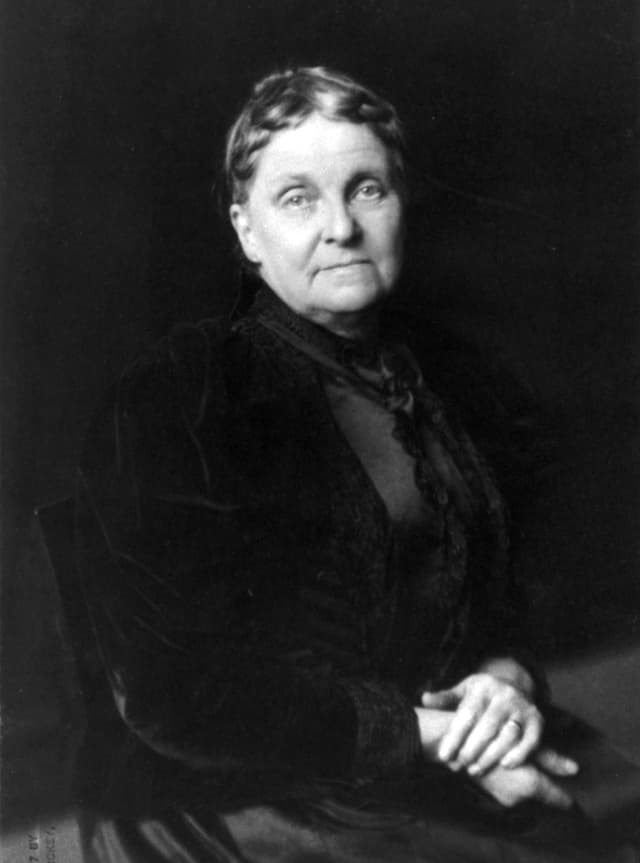
Hetty Green
Various investments and holdings
A formidable figure in the finance and investing industry during the Gilded Age, Hetty Green built a vast fortune estimated at over $100 million, making her one of the wealthiest women of her time. Known for her meticulous approach to investing, she emphasized the importance of thorough due diligence, often gathering information from multiple sources before making decisions. Her extreme frugality was legendary; she famously tracked her expenses down to the smallest penny, embodying the principle that careful management of resources leads to greater financial success. During the Panic of 1907, when many of Wall Street's elite sought her assistance, her steadfastness and strategic acumen positioned her as a key player, allowing her to thrive when others faltered. Green's mantra, "I never set out for anything that I don't conquer," continues to inspire entrepreneurs and business builders today, highlighting the value of discipline and strategic foresight in achieving one's goals.
Core Principles
culture
Teach your children business through ground-up experience, not theoretical instruction. Make them earn their way and prove themselves through actual work.
Hetty sent her son Ned to work as a railroad clerk at $10 per week, patrolling tracks and cutting weeds. When he asked for guidance, she refused to help via telegraph, telling him he must figure it out himself. She tested his reliability by having him transport expired fire insurance policies across the country as if they were valuable securities.
“I sent you to Texas to learn the railway business. I cannot teach you by telegraph from New York. Go back and do the best you can.”
Train the next generation in the belief that they are stewards of family wealth, not owners. Their job is to inherit it, grow it, and prepare the next generation to do the same.
Hetty's family had been wealthy for five generations and taught each heir that making money was not about personal consumption but about fulfilling a duty to increase the family fortune. Hetty told her children they would become the richest people in America and pushed them toward business training from infancy.
education
Acquire business knowledge by being exposed to operations from the ground level. Don't just theorize, but work alongside practitioners and understand the fundamentals.
Hetty ensured her son learned the railroad business by having him work as a section hand, foreman, superintendent, and eventually managing director. She believed true mastery required hands-on understanding from the bottom up.
finance
Seek comprehensive information before investing. Gather details from multiple sources and conduct thorough due diligence to understand what you are buying.
Hetty developed a rigorous research process that included reading newspapers, trade papers, periodicals, and journals daily. She questioned experts and investigated companies thoroughly before committing capital, giving her an informational advantage over casual investors.
“Before deciding on an investment, seek out every kind of information about it.”
Practice extreme frugality and guard every dollar. Watch your pennies obsessively because the dollars will naturally follow.
Hetty was raised in a Quaker family that treated wealth as a trust to increase for future generations, not as something to spend. She modeled this behavior throughout her life, refusing luxury items and ostentation even as she became extraordinarily wealthy.
“Watch your pennies and the dollars will take care of themselves.”
Separate business from pleasure and avoid mixing social relationships with financial transactions. Conduct business first, then socialize once the deal is closed and money has been paid.
Hetty maintained strict boundaries between her business dealings and personal relationships. She refused to let social niceties or personal connections influence financial decisions, which helped her negotiate effectively without emotional entanglement.
“After your business is over, you may take your colleague to dinner and the theater or allow him to take you. But wait until the transaction has been closed and the money paid.”
Never rush financial decisions. Sleep on major deals overnight to gain perspective and avoid emotionally driven choices.
When offered less than her asking price, Hetty would refuse to decide immediately and instead reflect carefully overnight. This cooling-off period allowed her to make rational decisions rather than accept pressure tactics from negotiators.
“In business generally, don't close a bargain until you have reflected on it overnight.”
Buy when everyone is selling and sell when everyone is buying. Develop the courage to act contrary to crowd sentiment.
This was Hetty's core investment thesis. During the Panic of 1857, when others panicked and sold at losses, she accumulated discounted securities. She repeated this pattern through multiple financial crises, always swimming against the tide of human emotion.
“I am always buying when everyone wants to sell and selling when everyone wants to buy.”
focus
Avoid overextension and focus. If you try to do everything, you accomplish nothing. Some things must be neglected to achieve excellence in what matters most.
Late in life, Hetty reflected on the importance of focus and avoiding the temptation to spread herself too thin across too many opportunities. This discipline allowed her to dominate the areas where she chose to concentrate.
“When it comes to spending your life, there have to be some things neglected. If you try to do too much, you can never get anywhere.”
leadership
Make decisions independently without constant guidance from authority figures. Trust those you mentor enough to let them learn from their own mistakes.
When her son telegraphed from Texas asking for advice on railroad decisions, Hetty refused to respond by telegraph. She told him he was on the ground and must make his own decisions. She believed learning from mistakes was essential to developing sound judgment.
“You were on the ground, she answered. Mind your own business.”
Be fair to borrowers in distress. Do not kick a man when he is down. This builds long-term trust and preserves your reputation.
Hetty lent the city of New York a million dollars at 2%, well below the prevailing rate of 3-3.5%. She believed it was bad business to take advantage of desperate borrowers. Her reputation as a fair lender meant that when she needed to call in favors, people would work with her.
“Don't kick a man when he's down.”
Set clear boundaries with people attempting to threaten or harm your interests. Defend yourself and your family with full conviction when necessary.
When railroad magnate Collis Huntington threatened to have Hetty's son Ned thrown in a Texas jail, she narrowed her eyes and told him he was now fighting Hetty the mother, not Hetty the businesswoman. She indicated her revolver on her desk and made clear she would defend her child. This clarity of boundary prevented further threats.
“You have dealt with Hedy Green, the businesswoman. Now you're fighting Hedy Green, the mother. You harm one hair on Ned's head and I'll put a bullet through your heart.”
mindset
View wealth as a multi-generational trust. Each generation must increase the inheritance and pass it forward rather than deplete it through consumption.
Hetty's family treated wealth as a responsibility spanning generations. Her grandfather taught her this lesson by having her read business news aloud. This framing shifted her mindset from personal consumption to stewardship and growth.
“Property was a trust to be taken care of and enlarged for future generations.”
Develop unshakeable self-confidence through preparation and study. Trust your own judgment after doing the work to develop that judgment.
Hetty refused to comply with stereotypes or follow conventional wisdom. She developed extreme confidence in her own analysis, which allowed her to stand firm when others panicked. This confidence came from deep preparation and obsessive study.
“I never set out for anything that I don't conquer.”
Women should master their own financial affairs. Economic independence is not optional but essential for every woman.
Hetty was passionate about financial education for women. She believed women should understand how to manage money, analyze investments, and make independent decisions rather than relying on men to control their finances.
“It is the duty of every woman to learn how to take care of her own business affairs.”
Respect only those who have earned their wealth through authentic achievement, not those who merely inherited it and squandered it through idleness.
Hetty had strong disdain for self-indulgent socialites who inherited fortunes and contributed nothing of value. She respected Commodore Vanderbilt, Russell Sage, and other financiers who built or grew their wealth through competence and effort.
“If it wasn't for his father, the world wouldn't know a thing about him. He has never earned a dollar and doesn't know the value of money.”
When a business relationship becomes compromised by betrayal, end it decisively. Don't tolerate personal indiscretions if they cross into financial dishonesty.
Hetty's husband repeatedly gambled with her money and risked her capital through margin buying. She tolerated his other indiscretions but ended their relationship when he pledged her assets as collateral without permission. This was a bridge too far.
“He had risked her money for his own return. He had squandered some of her wealth, and in doing that, he had cost her some of her worth.”
Frameworks
The Contrary Investing Framework
Buy assets when everyone else is selling and prices are depressed. Hold them until sentiment shifts and everyone wants to buy. This framework exploits the human tendency to panic and become irrationally fearful during crises. Hetty applied this across government bonds, railroad stocks, and real estate. It requires emotional discipline and access to capital when others are desperate.
Use case: Identifying and capitalizing on market panics and sentiment extremes in any asset class.
The Fundamental Analysis Framework
Before investing, conduct exhaustive research on the true underlying value of an asset. Study its history, analyze its assets and liabilities, assess dividend potential, and estimate intrinsic value. Only then compare current price to this intrinsic value. The framework has three stages: information gathering, analysis, and decision-making.
Use case: Making investment decisions in stocks, bonds, real estate, or other assets where intrinsic value can be assessed.
The Circle of Competence Framework
Rather than attempting to understand all investment opportunities, identify a small number of sectors or asset classes you understand deeply. Concentrate your capital within these domains where you have informational and analytical advantages. Hetty focused on railroads, real estate, and government bonds. This framework trades breadth for depth.
Use case: Allocating capital in a way that leverages existing expertise and minimizes costly mistakes from ignorance.
The Financial Discipline Framework
Build a multi-layered approach to preserving capital and resisting temptation: keep expenses minimal, never borrow, maintain large cash reserves, watch every dollar obsessively, and make deliberate decisions only after overnight reflection. This framework creates the margin of safety that allows you to exploit crises.
Use case: Personal finances, business capital allocation, and maintaining the flexibility to act when opportunities arise.
The Historical Pattern Recognition Framework
Study financial panics, booms, and busts across multiple decades and centuries. Recognize that the same cycle repeats despite different surface details. Human greed and fear cause overextension and collapse consistently. By studying historical patterns, you can identify when current conditions echo past warning signs and position yourself accordingly.
Use case: Recognizing market cycles and positioning capital to profit from predictable boom-bust patterns.
The Hands-On Learning Framework
To develop true mastery of a business or industry, work at multiple levels within it starting from the bottom. Don't just read about railroads, work as a section hand, foreman, superintendent, and eventually in management. This framework creates intuitive understanding that theory alone cannot provide.
Use case: Training successors or developing expertise in complex industries where operational understanding is critical.
The Fortress of Cash Strategy
Maintain substantial liquid reserves at all times, avoid all debt, and never buy on margin. During normal times this seems wasteful, but when financial panics occur, those with fortress-like cash positions can buy assets for pennies on the dollar while leveraged investors are forced to liquidate. The framework requires patience, discipline, and faith that opportunities will come.
Use case: Building long-term wealth through multiple market cycles. Essential for founders who want optionality and the ability to capitalize on downturns.
The Contrarian Investment Cycle
Study when others panic and identify what they are selling. Accumulate quietly and secretly. Hold through the period when everyone else doubts your decision. Sell when sentiment shifts and people are crazy to buy. The key is emotional detachment and faith in your research, not following the crowd.
Use case: Investing in stocks, real estate, businesses, and distressed assets. Works best when you have superior information and can maintain conviction against social pressure.
The Ground-Up Learning Method
Rather than teaching theory, put the next generation to work in the actual business at the lowest levels. Make them patrol tracks for $10 a week, handle shipping details, and work with actual craftsmen and operators. Test their reliability and self-reliance through real challenges. Only after proving themselves through experience should they advance.
Use case: Training the next generation of family business leaders. Creates competence grounded in real-world experience rather than abstract knowledge.
The Stewardship Mindset
Teach heirs that they do not own the family fortune but are stewards of it. Their job is to inherit it in good condition, grow it significantly, and pass it to the next generation in even better condition. This reframes wealth not as personal consumption but as intergenerational responsibility and competition.
Use case: Building multi-generational family enterprises. Prevents the common pattern of first generation building, second generation enjoying, third generation losing it all.
Stories
During the Panic of 1907, some of the most prestigious men on Wall Street came to Chemical Bank personally to beg Hetty to buy their assets. She had maintained her position when others were desperate, and she could afford to be selective about what she purchased at what prices.
Lesson: By maintaining discipline during booms and accumulating cash, you eventually find yourself in the position of choosing among opportunities while others are begging for help. This is the opposite of how most people experience markets.
At age eight, Hetty saved coins from her weekly allowance and opened a bank account. She earned compound interest and made her family proud. This early experience taught her that saving and investing was valued and that compound returns were real.
Lesson: Start building wealth and understanding compounding as early as possible. The habit of saving and investing compounds both the money and the discipline.
When her aunt Sylvia warned Hetty away from a dangerous wild horse, Hetty was not discouraged. Instead, she took it upon herself to break the horse and rode it until it settled down. This demonstrated her unbreakable confidence and refusal to accept limitations.
Lesson: Don't accept conventional warnings without testing them yourself. True confidence comes from facing challenges directly and proving yourself capable.
When her banker warned Hetty that carrying $200,000 in bonds on public transportation was dangerous and suggested she take a carriage, she replied with disdain. She said she could not afford a carriage because she was not wasteful with money. Her priorities were clear.
Lesson: Never compromise your financial principles for appearances or social convention. Efficiency and frugality matter more than looking wealthy.
During the Panic of 1857, most investors panicked and sold their holdings at losses. Hetty studied what had happened and what clever men like Russell Sage did: they kept cash on hand and bought stocks at rock bottom prices when others were forced to sell.
Lesson: In crises, those with cash and discipline buy the assets that panic-stricken sellers offload at depressed prices. This pattern repeats across all financial panics.
Hetty bought discounted greenbacks issued by the U.S. government to finance the Civil War. When others viewed them as worthless paper, she accumulated them. Almost ten years later, Congress backed the dollar with gold, and Hetty's greenback positions became extraordinarily valuable.
Lesson: The best investment opportunities appear as risks to those without conviction or historical perspective. Having the courage to buy unpopular assets when others are terrified produces outsized returns.
Hetty's husband repeatedly made money through speculation only to lose it all. She bailed him out multiple times, but eventually he pledged her assets to the bank as collateral without her permission. This betrayal of trust crossed a line she would not tolerate, and she separated from him.
Lesson: No relationship is worth compromising your financial independence. Distinguish between personal failings you can tolerate and financial betrayals you cannot.
When railroad executives offered to buy her Reading Railroad stock at $115 per share (well above the current $100 market price), Hetty refused and demanded $125. When they sweetened the offer by offering to back a collateral agreement, she rejected that too because the security was not in cash. She negotiated until she received cash at $127.50 per share.
Lesson: In negotiation, hold firm on your principles and never accept substitutes for what you actually value. Demand cash, not promises or collateral agreements.
Hetty held $1 million in Reading Railroad stock that needed to be transferred from New York to Pennsylvania. The broker quoted a $100 fee for the transfer. Hetty was outraged and instead paid $4 round trip to travel to Pennsylvania and transfer the stock herself, saving $96 by being willing to take personal action.
Lesson: Never assume intermediaries are necessary. Question every fee and be willing to handle tasks yourself if the economics justify it. Your time may have high value, but not every task justifies that value.
Before the Panic of 1907, Hetty saw the signs of real estate excess. Rather than getting swept up in the boom like most investors, she converted her real estate holdings into cash. When the panic struck and banks failed, she had piles of cash while others were desperate to sell.
Lesson: Learn to recognize the warning signs of excess and unsustainable booms. The time to convert appreciating assets into cash is at the height of enthusiasm, not after the crash begins.
Notable Quotes
“I never set out for anything that I don't conquer.”
Reflects her unshakeable confidence and refusal to accept limitations or defeat.
“I go my own way, take no partners, risk nobody else's fortune.”
Her formula for success emphasizing personal responsibility and independent operation.
“Watch your pennies and the dollars will take care of themselves.”
Core advice she repeated to her children about the importance of meticulous attention to small expenses.
“I am always buying when everyone wants to sell and selling when everyone wants to buy.”
Her core investment philosophy of contrary investing and going against crowd sentiment.
“Before deciding on an investment, seek out every kind of information about it.”
Her principle of exhaustive research before committing capital.
“In business generally, don't close a bargain until you have reflected on it overnight.”
Her advice on avoiding emotionally-driven decisions by imposing a cooling-off period.
“Railroads and real estate are things I like.”
Statement of her investment circle of competence and preferred asset classes.
“Common sense is the most valuable possession anyone can have.”
Her belief that simple fundamental thinking beats complex strategies.
“History doesn't repeat, human nature does.”
Her meta-principle explaining why financial panics recur despite different surface details.
“Most people watch their money wash away in the flood.”
Observation about how panic and lack of discipline cause most investors to lose in crises.
Frequently Asked Questions
What are Hetty Green's key business principles?▼
Hetty Green's core principles include: Teach your children business through ground-up experience, not theoretical instruction. Make them earn their way and prove themselves through actual work.. Train the next generation in the belief that they are stewards of family wealth, not owners. Their job is to inherit it, grow it, and prepare the next generation to do the same.. Acquire business knowledge by being exposed to operations from the ground level. Don't just theorize, but work alongside practitioners and understand the fundamentals.. Founder Almanac has cataloged 30 total principles from Hetty's career.
What can entrepreneurs learn from Hetty Green?▼
Key lessons from Hetty Green include: By maintaining discipline during booms and accumulating cash, you eventually find yourself in the position of choosing among opportunities while others are begging for help. This is the opposite of how most people experience markets.. Explore 10 stories and 10 frameworks from Hetty's experience.
What is Hetty Green known for in business?▼
A formidable figure in the finance and investing industry during the Gilded Age, Hetty Green built a vast fortune estimated at over $100 million, making her one of the wealthiest women of her time. Known for her meticulous approach to investing, she emphasized the importance of thorough due diligence, often gathering information from multiple sources before making decisions. Her extreme frugality was legendary; she famously tracked her expenses down to the smallest penny, embodying the principle that careful management of resources leads to greater financial success. During the Panic of 1907, when many of Wall Street's elite sought her assistance, her steadfastness and strategic acumen positioned her as a key player, allowing her to thrive when others faltered. Green's mantra, "I never set out for anything that I don't conquer," continues to inspire entrepreneurs and business builders today, highlighting the value of discipline and strategic foresight in achieving one's goals.
More Finance & Investing Founders

Want Hetty's advice on your business?
Our AI has studied Hetty Green's biography, principles, and decision-making frameworks. Ask any business question.
Start a conversation