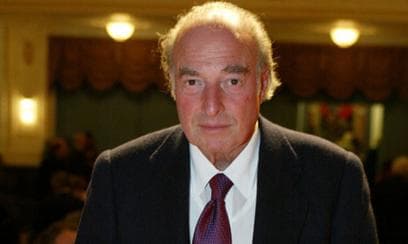
Marc Rich
Marc Rich and Company
A pioneering figure in the finance and investing industry, Marc Rich founded Marc Rich and Company in the 1950s, revolutionizing the commodities market. Driven by his ambition, he identified structural inefficiencies that limited supply, creating direct connections between producers and consumers, which ultimately transformed previously controlled markets. Rich's ability to move swiftly in dynamic environments allowed him to capitalize on emerging trends, establishing his firm as a leader in the sector with revenues exceeding $10 billion at its peak. His journey from fleeing Nazi-occupied Belgium to becoming a billionaire entrepreneur continues to inspire business builders today, showcasing the power of deep industry knowledge and the importance of speed in execution.
Core Principles
competitive advantage
Move faster than competitors when pursuing opportunities. Speed of execution and recognition of trends before others is a sustainable competitive advantage in commodities and dynamic markets.
Rich and his partner Green would fly immediately to countries like Ecuador and Turkey the moment they learned those nations needed oil or materials. By acting within days rather than weeks, they could secure long-term contracts before larger, slower competitors. This speed advantage became a core differentiator of Marc Rich and Company and contributed to their 1974 launch gaining market dominance within five years.
“We were faster than everyone else.”
finance
Choose your location of incorporation strategically. Low taxes, political neutrality, strong banking privacy, and business-friendly regulations create compounding financial advantages that become more powerful as revenues scale.
Rich chose Zug, Switzerland as his headquarters because: Switzerland was politically neutral, had strong banking secrecy laws, offered 10% corporate tax versus 50% in America, had zero bureaucracy, and attracted international traders. Over decades, the 40% tax difference on hundreds of millions in annual profits created billions in additional wealth that competitors paying U.S. taxes could not match.
hiring
Pay your best performers fairly or they will leave to start competitors. Offering below-market compensation to your top revenue generators creates existential business risk.
Rich and his partner Green generated $4-5 million in profit for Philips Brothers in 1973 but earned only $100,000 in salary plus bonus. When Rich demanded $500,000 (reflecting the value he created), founder Jesselsohn refused on principle to pay more than $150,000. Rich left immediately, and within one year of founding his own firm in 1974, he made $28 million in profit, proving his value had been dramatically undercompensated.
“My request was influenced by what I knew the company was making.”
innovation
Identify markets where supply cannot meet demand due to structural inefficiencies, then build systems to connect producers and consumers directly. Creating a transparent, competitive market for previously controlled commodities is the highest form of entrepreneurial value creation.
Rich recognized that 95% of global oil was traded at fixed prices through long-term contracts controlled by the Seven Sisters. He built an independent distribution system and invented the spot market, allowing oil to be traded freely based on supply and demand. This single innovation lowered transaction costs for tankers and refineries, increased efficiency, and shifted power from monopolies to traders who could match supply with demand faster.
“Oil was a product that was moved in huge quantities and had a big value, but it hadn't been traded in a transparent and competitive market. I just thought it should be possible to trade oil despite the seven sisters.”
leadership
Create organizational structures that distribute autonomy and responsibility to talented people. Young people will either learn to swim or sink, but those who can handle freedom will become your best operators.
Rich did not require university education or extensive management oversight. He threw talented young traders into major deals with minimal supervision, allowing them to make decisions using their best judgment. This created a culture of ownership where employees took full responsibility for outcomes and were motivated to develop deep expertise quickly.
“We throw young people into the swimming pool. Either they sink or they learn how to swim.”
mindset
Do not allow obsession with wealth creation to destroy your most important relationships. Time with family during childhood and major life events cannot be recovered.
Rich was so consumed by work that he told his wife he could only give her a half hour on Saturdays and 45 minutes on Sundays. When his daughter was dying of leukemia in a Seattle hospital, he could not travel to be with her in person for fear of arrest. His divorce cost him $365 million and destroyed his marriage of 30 years. Late in life, when his daughters visited, he begged them to stay longer, but the time had already passed.
“I don't have any time for you during the week. I can give you a half hour on Saturdays and 45 minutes on Sundays.”
Ambition is a neutral force. The drive to succeed in business is natural and healthy, but the application of that drive must include ethical boundaries, or it will eventually destroy you.
Rich said he was driven by ambition, the same force that made humans climb higher, run faster, and explore. But his willingness to trade with any regime, hide assets, evade taxes, and prioritize money over family relationships ultimately led to indictment, exile, family destruction, and a legacy defined by legal troubles rather than his actual innovations. His ambition was not bad, but its application lacked moral guardrails.
“I'm driven by what drives most people, ambition. Mankind has developed through ambitions. Some wanted to climb higher. Some wanted to run faster. Some wanted to fly. Others to dive. I wanted to succeed in business.”
Your father's example of resilience and pragmatic opportunism sets the template for your entire life. Study how your parents solved problems and adapted to change, as these patterns will repeat in your business.
Marc's father David bought a car two days before the Nazi invasion, which saved the family from the Holocaust. He rebuilt businesses from zero twice: once in France, once in America selling jute during the Korean War. Marc explicitly credited his father as the person who influenced him most and followed his exact playbook: establish trust, work hard, be reliable, adjust quickly to change, seize opportunities without hesitation.
“My father is definitely the person who influenced me the most. We fled from Belgium and he managed to build up an important business from zero. He actually did that twice.”
Recognize that childhood trauma and outsider status can drive extraordinary ambition, but do not let unresolved personal patterns destroy the relationships and reputation you build.
Rich fled Nazi Germany as a five-year-old, losing his home and security. This created an outsider mentality and an obsession with accumulating wealth and power. He felt at home nowhere, which enabled him to trade with any regime without emotional attachment. But this same detachment from roots and belonging made him prioritize money over family, ultimately costing him the things he could have truly enjoyed.
“Rich would always be an outsider, someone who neither belonged to the establishment nor wanted to.”
operations
Understand the complete value chain and create distribution systems that bypass middlemen. Control over the path from producer to consumer compounds profits.
The Seven Sisters controlled extraction, refining, transport, and retail. Rich created an independent distribution system that broke this vertical integration, allowing producers and consumers to trade directly. This required mastering logistics, finance, contracts, and relationships across geographies, but the ability to move goods nobody else could move became his competitive moat.
resilience
Beware the hidden costs of long-term contracts when market conditions reverse. Leverage and commitment that appears profitable in rising markets becomes catastrophic in falling markets.
Rich's philosophy of long-term contracts and deep market involvement worked brilliantly when oil and commodity prices rose from 1974-1980. But when traders under his management attempted to corner the zinc market in 1992, the artificially inflated position collapsed and cost the company $172 million in a single trade. The same long-term thinking that built his empire helped destroy it.
strategy
Identify and specialize in niche products with limited trading volume that will eventually become essential. Become the expert market-maker before demand explodes.
In his early twenties, Rich saw that mercury would be critical for rearmament as nations prepared for war. He cornered the mercury market by calling every producer and establishing himself as the expert. When the U.S. government launched rearmament and bought huge amounts of mercury, Rich was the only man they could buy from. This gave him both profits and credibility at Philips Brothers.
“To see the opportunity is the most important thing as a trader.”
Study your industry from the ground up before attempting to disrupt it. Deep operational knowledge across all stages of business creation allows you to identify opportunities others miss.
Marc Rich spent 20 years at Philips Brothers learning commodities trading from the mailroom through trading floors. He mastered how materials moved from production to consumption, which enabled him to see how the Seven Sisters' oligopoly could be broken by creating transparent markets. Samuel Zemurray applied this same principle when building his banana empire.
“There's no problem you can't solve if you know your business from A to Z.”
Recognize that wars, revolutions, and crises create massive supply and demand imbalances. Traders and entrepreneurs positioned to move goods during instability can capture outsized profits if they act quickly.
Marc's father profited from the Korean War by importing jute for burlap sandbags when the U.S. Army had urgent demand. Marc himself launched his company during the 1974 oil shock and saw revolutions in Cuba, Iran, and decolonization in Africa as sources of opportunity, not obstacles. The ability to operate where others cannot creates temporary monopolies on distribution.
“Products can be sold for a better price when there is a shortage and crisis and wars can also offer business opportunities.”
In geopolitically unstable markets, position yourself as a neutral service provider. If you solve a fundamental problem (connecting buyers to sellers, managing logistics), governments and regimes will continue doing business with you regardless of political ideology.
Rich traded with Cuba under Castro, Iran under Khomeini, South Africa under apartheid, and communist regimes. He never cared about their politics because he saw himself as providing a service: moving commodities, handling transport, and finding buyers. Regimes needed him to monetize their resources, so they continued contracts even through revolutions.
“We performed a service for them. We bought the oil, we handled the transport, and we sold it. They couldn't do it themselves, so we were able to do it.”
Build long-term client relationships rather than transactional deals. Once a business relationship is established, transaction costs drop dramatically, margins improve, and the customer becomes locked in through trust and dependency.
Rich explicitly sought long-term contracts with all clients, even governments. When the Iranian regime took power, they continued trading with Rich because he had a long-term contract and they needed his distribution networks and buyer relationships. The longer relationships lasted, the lower his marginal costs and the higher his profits.
“The key to success in real wealth is long-term thinking.”
Frameworks
The Spot Market Model
Instead of long-term fixed-price contracts controlled by a cartel, create a transparent marketplace where buyers and sellers trade freely based on real-time supply and demand. The model requires: (1) deep knowledge of producer and consumer networks, (2) logistical capability to move goods, (3) financial capacity to hold inventory, and (4) pricing transparency. The trader becomes the intermediary who matches supply with demand and captures the difference.
Use case: Apply when an entire industry is controlled by a cartel or oligopoly preventing price discovery. Identify the structural inefficiency, build the distribution system to bypass it, and become the market maker.
The Crisis Opportunism Framework
During wars, revolutions, regime changes, and supply shocks, normal supply chains break and traditional suppliers disappear. Traders positioned to move goods when nobody else can create temporary monopolies. The framework: (1) monitor geopolitical instability, (2) identify how it disrupts supply chains, (3) build relationships with new governments or regimes, (4) solve their distribution problem, (5) capture outsized margins until markets normalize.
Use case: When major geopolitical events occur, look for goods that can no longer move through traditional channels and position yourself as the alternative distributor.
The Jurisdiction Arbitrage Model
Choose your company's domicile based on: tax rates, regulatory environment, banking privacy, political neutrality, and business-friendliness. The model is powerful at scale because tax and regulatory savings compound with revenue growth. A 40% tax difference on $100 million in annual profit creates $40 million in additional capital annually that competitors cannot match.
Use case: In early growth stages, incorporate in jurisdictions with favorable tax and regulatory treatment. As revenues scale, the jurisdictional advantage becomes a sustainable competitive moat.
The Long-Term Contract Strategy
After establishing a new business relationship, lock in long-term contracts (years or decades). Once a relationship is created, transaction costs drop, customers become dependent on your service, and margins expand. The strategy works brilliantly in rising markets but creates leverage risk in falling markets.
Use case: Pursue long-term contracts to build durable customer relationships and reduce future customer acquisition costs. But hedge against market reversals to avoid the leverage trap.
The Speed-to-Action Advantage
When markets open (new demand, new government, new opportunity), move faster than competitors to secure contracts and relationships. Speed creates a first-mover advantage that larger, slower organizations cannot match. Implementation: (1) monitor emerging opportunities constantly, (2) maintain ready capital and decision-making authority, (3) be willing to travel and negotiate in person immediately.
Use case: In dynamic, fast-moving markets like commodities or emerging economies, speed of action becomes a sustainable competitive advantage worth investing in.
Stories
Rich's father David bought a used car two days before Nazi Germany's invasion of Belgium in 1940, which allowed him to flee with his family. Eight days later, the Nazis captured Antwerp and killed nine out of ten Jewish residents in the town. This single act of foresight saved Rich's life and shaped his entire worldview about seizing opportunities during crises.
Lesson: Recognize existential threats early and act decisively. The ability to see danger before others and move immediately creates outsized advantage. This lesson defined Rich's entire career as a trader who profited from wars and revolutions.
In the early 1950s, Rich's father shifted his import business to Bengali jute when the Korean War created urgent U.S. military demand for burlap sandbags. Supply was limited, demand exceeded supply, and prices went up. His father made substantial profits by recognizing that crises create scarcity premiums.
Lesson: Wars and crises disrupt normal supply chains and create temporary monopolies for goods that can still move. Young Marc observed this principle firsthand and applied it his entire career with oil, zinc, and other commodities.
At age 24, Rich flew to Havana shortly after Fidel Castro's revolution to recover a $1.2 million loan Philips Brothers had made to the previous regime. Instead of losing the money, Rich analyzed what Castro's government needed most (hard currency, international contacts, continued employment at the mine) and offered to inject fresh capital. Castro accepted because Rich's solution aligned with the regime's priorities, and Rich recovered the full investment while beginning profitable ongoing trades.
Lesson: In political upheaval, position yourself as a service provider solving the new regime's most pressing problem. They don't care about ideology, they care about survival. If you can generate currency, jobs, and international legitimacy, you become essential regardless of political change.
Rich specialized in trading mercury in his early twenties by recognizing that global rearmament would soon create enormous demand. He called every mercury producer, established relationships, and became the expert. When the U.S. Air Force and Army increased mercury stockpiles by 50% during the rearmament program, Rich was the only man they could buy from at scale. This single niche created his reputation and first major profits at Philips Brothers.
Lesson: Become the market expert in a narrow niche before demand explodes. The ability to see coming demand (through geopolitical analysis) and then corner that market before others notice creates both profits and reputation.
Rich generated $4-5 million in profit for Philips Brothers in 1973 through oil and mercury trading but was paid only $100,000 annually plus a $0 bonus. He requested $500,000 for himself and his partner Green, arguing this reflected the value they created. Founder Jesselsohn refused on principle to pay more than $150,000. Rich left immediately and founded Marc Rich and Company with Green. In 1974, his first year, the company made $28 million in profit, proving his value had been massively undercompensated.
Lesson: Compensation misalignment is a founding accelerant. When top performers are dramatically underpaid relative to the value they create, they become entrepreneurs out of necessity. Companies that don't pay talented people fairly create their own competitors.
Traders under Rich's management attempted to corner the global zinc market in 1992 by secretly buying huge quantities to artificially drive up prices. Once market observers noticed the unusual price movements, the jig was up. The price collapsed 25% almost immediately, and Rich's company lost $172 million in a single trade. Rich's credibility was severely damaged, and this loss eventually forced him to sell his company.
Lesson: Long-term thinking and leverage work perfectly in rising markets but become catastrophic in falling markets. The same organizational philosophy that created decades of profits can destroy the company in a single bad bet. Hedge against market reversals or limit leverage.
Rich was so consumed by work and building his empire that he told his wife he could only spare 30 minutes on Saturdays and 45 minutes on Sundays. He was constantly traveling and negotiating. When his daughter was dying of leukemia in a Seattle hospital years later, he could not travel to be with her in person because he would be arrested upon returning to the U.S. He stayed on the phone with her as she died, sobbing, unable to hold her hand.
Lesson: The pursuit of wealth and power has a time cost that is not recoverable. Your children are young for a tiny window of time. Parents influence them most through presence, not money. Build enough wealth to be secure, then protect your relationships with family, because no amount of money at the end of life will buy back the time you didn't spend with them.
Rich's obsession with work and infidelity led to a divorce that cost him $365 million in settlement, $200 million of which was discretionary. His ex-wife, who had raised his children for 30 years and brought capital to his early business, felt she was entitled to more than the initial $3 million offer. The public divorce played out in newspapers and damaged his reputation further while he was already under indictment by the U.S. government.
Lesson: Broken relationships at the top of your organization and in your personal life become public and expensive. The money you save by mistreating people you're close to will eventually cost you far more through legal fees, reputation damage, and loss of partnership support.
Notable Quotes
“I'm driven by what drives most people, ambition. Mankind has developed through ambitions. Some wanted to climb higher. Some wanted to run faster. Some wanted to fly. Others to dive. I wanted to succeed in business.”
Reflecting on his core motivation late in life when he finally agreed to be interviewed by the book's author.
“My father is definitely the person who influenced me the most. We fled from Belgium and he managed to build up an important business from zero. He actually did that twice.”
When asked who influenced him the most in his life.
“We throw young people into the swimming pool. Either they sink or they learn how to swim.”
Describing his management philosophy of giving talented people autonomy and responsibility without bureaucratic oversight.
“Oil was a product that was moved in huge quantities and had a big value, but it hadn't been traded in a transparent and competitive market. I just thought it should be possible to trade oil despite the seven sisters.”
Explaining the insight that led him to invent the spot market and break the Seven Sisters oligopoly.
“I was the right person in the right place at the right time. I was working in a commodity trading house, and the oligopoly of the Seven Sisters was coming to a halt. Suddenly, the world needed a new system of bringing the oil from the producing countries to the consuming countries. So that's exactly what I did.”
Reflecting on how timing and position aligned to create his greatest opportunity.
“The key to success in real wealth is long-term thinking.”
Describing what he believed was his greatest strategic advantage in building lasting business relationships.
“We performed a service for them. We bought the oil, we handled the transport, and we sold it. They couldn't do it themselves, so we were able to do it.”
Explaining why the anti-American, anti-capitalist Iranian regime under Khomeini continued to do business with him despite the revolution.
“My request was influenced by what I knew the company was making.”
When justifying his request for a $500,000 bonus (up from $100,000) after generating $4-5 million in profit for Philips Brothers in 1973.
“I didn't want to leave. I'd been there for 20 years. I liked the company. I always thought that the company would be my career for the rest of my life. But Jesselsohn got stuck on the principle.”
On leaving Philips Brothers after his compensation demand was rejected, which led directly to founding Marc Rich and Company.
“I don't have any time for you during the week. I can give you a half hour on Saturdays and 45 minutes on Sundays.”
What he told his wife about the time he could spend with family while building his empire.
Frequently Asked Questions
What are Marc Rich's key business principles?▼
Marc Rich's core principles include: Move faster than competitors when pursuing opportunities. Speed of execution and recognition of trends before others is a sustainable competitive advantage in commodities and dynamic markets.. Choose your location of incorporation strategically. Low taxes, political neutrality, strong banking privacy, and business-friendly regulations create compounding financial advantages that become more powerful as revenues scale.. Pay your best performers fairly or they will leave to start competitors. Offering below-market compensation to your top revenue generators creates existential business risk.. Founder Almanac has cataloged 16 total principles from Marc's career.
What can entrepreneurs learn from Marc Rich?▼
Key lessons from Marc Rich include: Recognize existential threats early and act decisively. The ability to see danger before others and move immediately creates outsized advantage. This lesson defined Rich's entire career as a trader who profited from wars and revolutions.. Explore 8 stories and 5 frameworks from Marc's experience.
What is Marc Rich known for in business?▼
A pioneering figure in the finance and investing industry, Marc Rich founded Marc Rich and Company in the 1950s, revolutionizing the commodities market. Driven by his ambition, he identified structural inefficiencies that limited supply, creating direct connections between producers and consumers, which ultimately transformed previously controlled markets. Rich's ability to move swiftly in dynamic environments allowed him to capitalize on emerging trends, establishing his firm as a leader in the sector with revenues exceeding $10 billion at its peak. His journey from fleeing Nazi-occupied Belgium to becoming a billionaire entrepreneur continues to inspire business builders today, showcasing the power of deep industry knowledge and the importance of speed in execution.
More Finance & Investing Founders
Want Marc's advice on your business?
Our AI has studied Marc Rich's biography, principles, and decision-making frameworks. Ask any business question.
Start a conversation