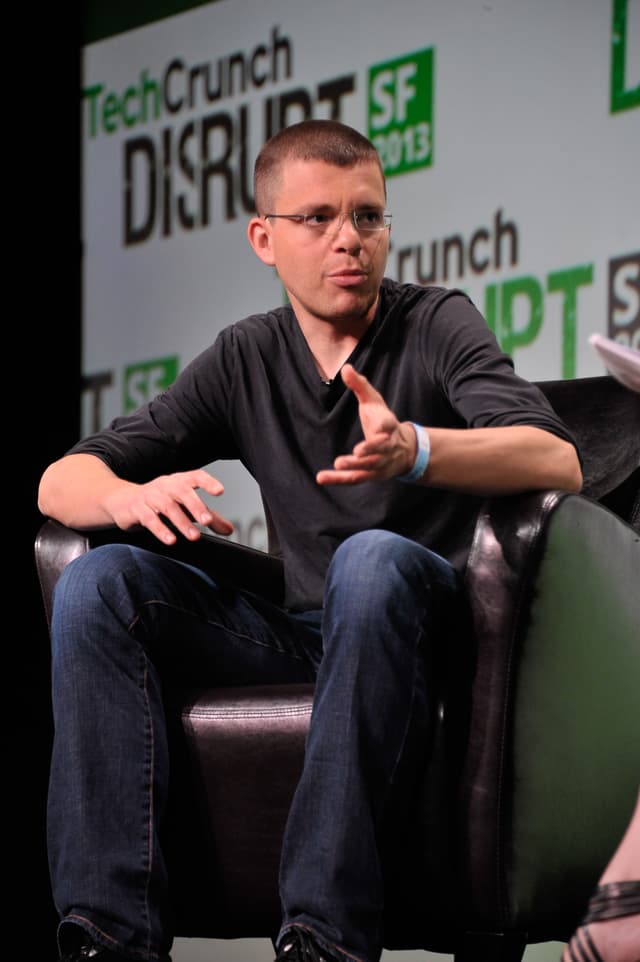
Max Levchin
Confinity / PayPal
Born in Soviet Russia, Max Levchin developed a passion for technology under restrictive conditions, learning to code on paper to maximize his limited computer time. As a co-founder of Confinity and later PayPal, he played a pivotal role in revolutionizing online payments, contributing to the company's valuation of $1.5 billion upon its sale to eBay in 2002. Levchin’s unwavering commitment to maintaining a high hiring standard ensured that only top talent shaped the company's culture and innovation. His belief in focusing on genuine problem-solving continues to resonate with entrepreneurs today, reminding them that a strong mission and a cohesive team are essential for sustainable growth.
Core Principles
culture
When recruiting, emphasize that at your company people are instrumental pieces of a shared creation, not interchangeable parts in a machine. Show them the vision, not just the compensation.
PayPal competed for talent against Google and other well-funded companies. Since they could not win on salary, they focused on making people feel they were essential to building something historically significant. This emotional and intellectual appeal proved more powerful than cash for attracting top talent.
“Meet people's cash flow needs. Pay them so they can cover their rent and go out. It's not about cash. It is about breaking through the wall of cynicism. It is about making 1% of this new thing way more exciting than a couple hundred grand in a cubicle at Google.”
hiring
Maintain an uncompromising hiring bar even if it slows growth. The first B-player hire will drag down the entire company, so it is better to grow slowly with all A-players.
PayPal kept its talent threshold exceedingly high and required all prospects to meet with every team member. This meant hiring took longer, but it ensured cultural fit and quality. The logic was simple: A players hire A players, B players hire C players.
“A players hire A players. B players hire C players. The first B player you hire takes the entire company down.”
Recruit talent by showing them a compelling vision and a team of peers as intense as they are. You cannot compete with larger companies on salary alone, so lead with mission and culture.
PayPal's small team at 10 p.m. interviews and all-night engagement sessions conveyed intensity and seriousness that larger companies could not match. Recruits were drawn not by pay but by the palpable sense of being part of something grand with people they wanted to work with.
“Engineers are very cynical people. They're trained to be. Since engineers think any new idea is dumb, they will tend to think that your new idea is dumb. The way to compete against the giants is not with money. Google will outbid you. To win, you need to tell a story about cogs. At Google, you're a cog. Whereas with me, you're an instrumental piece of this great thing that we'll build together. Articulate the vision. Don't even try to compete on pay.”
mindset
A gift or opportunity given to you by someone who believes in you can change the trajectory of your life. Recognize when you are in a position to be that person for others.
Levchin received access to a computer from a relative when he immigrated to the United States. This single gift enabled him to fall in love with programming and build a world-changing company. Recognizing the power of such gifts, we should seek to give them.
“It was a gift from a relative and it did something his old machines didn't.”
Find living examples of grit and perseverance. Your family members and mentors shape your expectation of what is possible.
Levchin's grandmother was a physicist in a male-dominated field and 'would never surrender under any circumstances.' Having a living example of someone triumphing despite obstacles shaped his belief that giving up is not acceptable. This mentoring through example proved more powerful than explicit instruction.
“She was fortitude personified. A woman who triumphed in a male-dominated field. Her grit seemed to him almost supernatural. I had this living example of someone who would never surrender under any circumstances.”
Treat life as a grand quest or adventure rather than a series of discrete problems to solve. This framing makes the hardships and setbacks feel meaningful.
When Levchin fled the Soviet Union at 16, his family framed it as the beginning of an epic quest rather than a tragedy. This mindset shaped how he approached business challenges: not as obstacles but as chapters in a larger adventure.
“Immigrating to the United States was risky, but for Levchin who had just turned 16, it was the first step on an epic quest.”
product
Focus obsessively on whether you are solving a real problem for real people. If you find yourself using a product you built but ignoring the main product you are committed to, that is a signal.
Max Levchin realized he had become an avid user of the email money feature (an afterthought) while remaining intellectually committed to the original Palm Pilot vision he was not actually using. This discrepancy was the first clue that the product strategy needed to shift toward what people actually wanted.
“I had become an avid user of an afterthought product, but I'm still committed to the vision of the original that I'm not really using.”
resilience
Growing up in scarcity and constraint teaches you to be resourceful and not take the easy way out. Use resource constraints as a forcing function for innovation.
Max Levchin grew up in Soviet Russia with severely limited computer access. He learned to code on paper with a pencil to preserve precious computer time. He says this made him 'very tenacious' because he 'never really had the option to take the easy way out.' Constraints built his work ethic.
“This made me very tenacious. I never really had the option to take the easy way out.”
Frameworks
A Players Hire A Players
A hiring principle that maintains rigorous talent standards even if growth slows. A players naturally attract and hire other A players because they recognize excellence. B players, lacking this standard, hire C players, creating a downward spiral. The first B player hire takes the entire company down.
Use case: Building hiring processes and maintaining culture. Use this to resist the temptation to hire 'good enough' people when growth is accelerating.
Stories
Max Levchin, growing up in Soviet Russia, had only limited access to computers. He learned to write code on paper with a pencil to preserve his precious computer time. This constraint forced him to develop extremely high standards for his code before testing it on a machine. He learned that resourcefulness under constraint teaches discipline.
Lesson: Limitations force innovation and high standards. What seems like a disadvantage can become a competitive advantage if you approach it with intentionality.
Levchin's grandmother was a physicist in a male-dominated field who 'would never surrender under any circumstances.' She modeled grit through her own professional life. When the family faced KGB threats and had to flee the Soviet Union, they framed it as the beginning of an epic quest rather than a tragedy. Levchin carried this frame into business.
Lesson: Your family shapes your expectations about what is possible. A living example of perseverance teaches more than any lesson you could hear.
Max Levchin became obsessed with Seven Samurai and watched it over 100 times. He used the film as a metaphor for startup management: a small band organizing a ragtag group for a fight for its life. Years later, he was giving copies of the film to young CEOs he mentored, explaining it as his primary management education.
Lesson: Study exemplars outside your industry. Great stories, films, and historical narratives teach universal principles about leadership and organization.
Notable Quotes
“A players hire A players. B players hire C players. The first B player you hire takes the entire company down.”
Explaining PayPal's hiring philosophy and why they maintained an uncompromising talent bar even when growth was pressuring them to hire quickly.
“Engineers are very cynical people. They're trained to be. The way to compete against the giants is not with money. Google will outbid you. To win, you need to tell a story about cogs. At Google, you're a cog. Whereas with me, you're an instrumental piece of this great thing that we'll build together.”
Explaining how PayPal recruited talent against well-funded competitors by emphasizing mission and instrumental contribution rather than salary.
“Everybody engaged in complicated work needs colleagues. Just the discipline of having to put your thoughts in order with somebody else is a very useful thing.”
Explaining the value of having a business partner or advisor with whom you can think through difficult problems.
“This made me very tenacious. I never really had the option to take the easy way out.”
Reflecting on learning to code with pen and paper in Soviet Russia due to limited computer access, and how constraint built work ethic.
“A players hire A players, B players hire C players, so the first B player you hire takes the whole company down.”
Explaining why maintaining a high hiring bar is worth sacrificing speed in recruiting
“Levchin kept the bar for talent exceedingly high, even if that came at the expense of speedy staffing. A's hire A's, B's hire C's. The first B you hire takes the whole company down.”
About the cascading effect of hiring standards at PayPal
Frequently Asked Questions
What are Max Levchin's key business principles?▼
Max Levchin's core principles include: When recruiting, emphasize that at your company people are instrumental pieces of a shared creation, not interchangeable parts in a machine. Show them the vision, not just the compensation.. Maintain an uncompromising hiring bar even if it slows growth. The first B-player hire will drag down the entire company, so it is better to grow slowly with all A-players.. Recruit talent by showing them a compelling vision and a team of peers as intense as they are. You cannot compete with larger companies on salary alone, so lead with mission and culture.. Founder Almanac has cataloged 8 total principles from Max's career.
What can entrepreneurs learn from Max Levchin?▼
Key lessons from Max Levchin include: Limitations force innovation and high standards. What seems like a disadvantage can become a competitive advantage if you approach it with intentionality.. Explore 3 stories and 1 frameworks from Max's experience.
What is Max Levchin known for in business?▼
Born in Soviet Russia, Max Levchin developed a passion for technology under restrictive conditions, learning to code on paper to maximize his limited computer time. As a co-founder of Confinity and later PayPal, he played a pivotal role in revolutionizing online payments, contributing to the company's valuation of $1.5 billion upon its sale to eBay in 2002. Levchin’s unwavering commitment to maintaining a high hiring standard ensured that only top talent shaped the company's culture and innovation. His belief in focusing on genuine problem-solving continues to resonate with entrepreneurs today, reminding them that a strong mission and a cohesive team are essential for sustainable growth.
More Finance & Investing Founders
Want Max's advice on your business?
Our AI has studied Max Levchin's biography, principles, and decision-making frameworks. Ask any business question.
Start a conversation