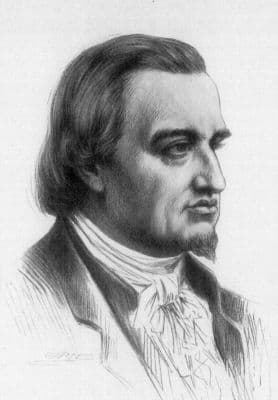
Meyer Rothschild
House of Rothschild
Founding the House of Rothschild in 1744, Meyer Rothschild revolutionized the finance and investing industry through his unwavering commitment to order and discipline in business operations. His meticulous bookkeeping practices safeguarded against theft and loss, reflecting a foundational principle that resonates with entrepreneurs today. By becoming an expert in finance before it gained widespread recognition, Rothschild seized asymmetric opportunities that allowed his firm to thrive and manage substantial wealth. Notably, he established a network of powerful connections, leading to significant financial influence across Europe. With his emphasis on discretion, Rothschild famously stated, "Something three people know about is no more a secret," a principle that continues to guide savvy business builders navigating competitive landscapes.
Core Principles
competitive advantage
Capitalize on structural gaps and inefficiencies in markets. Where others see regulation, see opportunity.
The fragmented German states each had their own currencies, requiring constant exchange. Rothschild built his business around currency arbitrage and bills of exchange, exploiting the constant variations in exchange rates that money changers faced.
“Constant variations in the exchange rates offered knowledgeable money changers ample opportunity to profit.”
culture
Teach your children the family business from an early age. Apprenticeship and hands-on participation build both competence and commitment.
From childhood, all five Rothschild children worked in the family business. Meyer was sent on errands to other money changers as a boy, and his sons worked their way up through every aspect of operations before assuming leadership roles.
“From an early age he was apprenticed in the family business. Everybody in the family, boys and girls, were expected to help.”
customer obsession
Develop deep knowledge of human nature and use it to generate trust. This is a core business asset.
The book notes that Rothschild brought to his work 'a knowledge of human nature and a capacity to generate trust.' This understanding allowed him to build relationships with nobility and establish himself as a reliable intermediary and advisor.
“He brought to work a certain natural flair, a knowledge of human nature and a capacity to generate trust.”
finance
Channel profits back into the business and maintain thrift in personal spending, even when wealthy. This compounds your capital and ensures long-term growth.
Rothschild and his wife Guttle spent only a fraction of their annual income on household expenses, reinvesting the bulk back into the business. They never moved out of the ghetto or displayed wealth, which allowed them to build capital faster than peers.
“Thrifty Guttle Rothschild spent only a fraction of their annual income on the household, and they pumped a large percentage of the money back into the business.”
innovation
Become an expert in a specific domain before it becomes obviously valuable. Accumulate more knowledge than anyone else in your field, which creates asymmetric opportunities.
Rothschild spent years studying rare coins and metals while apprenticing, reading every available book and paper on the subject. By age 18, he was Europe's foremost expert on rare coins, which led to relationships with wealthy nobility including Crown Prince Wilhelm, his most important patron.
“He read every other book or paper he could find on the subject. That is such an important point. And that opportunity still exists to this day.”
leadership
Be proactive and aggressive in pursuing opportunities rather than waiting passively. Default to action and solicitation.
While other bankers waited in their offices for orders, Rothschild went out to solicit business. This proactive approach, combined with his expertise and relationships, gave him first access to the best opportunities.
“Other bankers mostly awaited orders to reach them in their offices, their trading halls. Rothschild went out to solicit them.”
marketing
Use storytelling and context to create value beyond commodity prices. Help customers understand quality, history, and rarity.
Unlike normal coin dealers who traded on metal content, Rothschild carefully described each coin's history, date, and preservation state. He understood that rare coins derive value from beauty and historical significance, not just precious metal weight.
“Each coin was carefully dated, visually described and identified by its number in a recent scientific handbook.”
mindset
Hide your wealth and practice discretion to avoid envy and danger. What three people know about is no longer a secret.
Rothschild learned from Oppenheimer, a court Jew who was tortured and executed after becoming too visible with his wealth and power. Rothschild maintained a modest lifestyle despite accumulating vast riches, channeling profits back into the business rather than displaying them openly.
“Something three people know about is no more a secret. Something three people know about is no more a secret.”
operations
Maintain strict order and discipline in business operations, especially in bookkeeping. Disorganization creates vulnerability to theft and loss.
Rothschild's own bookkeeping was initially sloppy, which led to theft by employees. He learned this lesson painfully and taught his sons the importance of meticulous record-keeping and organizational discipline.
“A lack of order will make a beggar out of a millionaire.”
organizational design
Build family partnerships with clear agreements and distributed responsibilities. Use family members as trusted extensions of your business across multiple locations.
Rothschild formalized a partnership agreement with his sons in 1810, laying the foundation for what would become a multinational banking operation. Each son took responsibility for different geographic markets, coordinating closely under his direction.
resilience
Use secrecy and hidden infrastructure strategically to protect assets and operations. Physical security through concealment creates resilience.
Rothschild built secret cellars and underground passages in his ghetto house with concealed entrances. When police searched, they found nothing. This infrastructure later proved crucial in protecting assets and coordinating operations.
“An underground passage led from the secret cellar to the secret cellar of a neighboring house. It was easy to pass easily and unseen from one house to another without going to the street.”
strategy
Exploit black markets and regulatory restrictions as opportunities for premium pricing. Prohibition creates concentrated profit.
When Napoleon closed continental ports to English goods, Rothschild and his sons built a contraband trade network. The black market prices were far higher than legal competition would allow, creating substantial profits.
“The trade in English and colonial goods never flourished in Frankfurt so much as it did after the imposition of the French blockade.”
Prefer lower prices and higher volume to build long-term relationships and squeeze out competitors. Minimize short-term profits to maximize future business.
Rothschild deliberately underpriced his competitors, sometimes taking small losses, to increase turnover and build loyal customer relationships. Within decades, he eliminated competitors and achieved near monopoly status in his markets.
“As a rule, he preferred to minimize profits in hope of increasing turnover. And consequently, his prices were often lower than those of other dealers.”
Build optionality and security through diversification. Don't rely on a single patron or market.
After Napoleon exiled Wilhelm and seized much of his fortune, Rothschild realized the danger of depending on one wealthy patron. He then deliberately expanded to serve multiple sovereigns and states across Europe.
“Henceforth, the Rothschilds would no longer limit themselves to the service of a single sovereign.”
Take advantage of market dislocations created by war and political upheaval. Supply chains break and create asymmetric profit opportunities.
The Napoleonic Wars and international conflicts created massive demand for supplies, wages distribution, and financial intermediation. Rothschild secured contracts to supply armies and manage soldier wages, which became his first major capital accumulation.
“Rothschild's profit as a pay agent and supplier of fodder to the Austrian military provided his first major capital accumulation.”
Frameworks
The Asymmetric Knowledge Framework
Develop expertise in a specific domain that others ignore or underestimate. Use that knowledge advantage to identify and exploit opportunities invisible to competitors. This creates optionality and compounds over time as that knowledge becomes increasingly valuable.
Use case: When entering a new market or profession where expertise is fragmented. Useful in early-stage businesses competing against larger, less focused players.
The Margin Compression Strategy
Deliberately undercut competitors on price to increase volume and build customer loyalty, squeezing out less efficient competitors. As you scale, eliminate middlemen and consolidate market share. Use reinvested profits to expand distribution.
Use case: Competitive markets where cost structure and logistics can be optimized. Most effective when combined with operational excellence and capital availability.
The Stepping Stone Approach
Don't try to build everything at once. Take whatever opportunity is in front of you, execute well, accumulate capital, and use that position to access the next better opportunity. Each success provides a vantage point to identify the next step.
Use case: Career development and business expansion over long time horizons. Useful for founders without large initial capital who must bootstrap through multiple ventures.
The Structural Inefficiency Exploitation Framework
Identify systemic gaps, regulations, or inefficiencies in how markets operate. Build a business that solves or profits from those inefficiencies. Examples include currency arbitrage, information asymmetries, and regulatory gaps.
Use case: When entering fragmented or poorly organized markets. Useful in identifying competitive advantages that are sustainable because they solve real structural problems.
The Distributed Family Partnership Model
Create formal partnership agreements that distribute family members across key geographic or functional nodes. Maintain centralized coordination and decision-making while giving local operators autonomy. Use family loyalty and aligned incentives as competitive advantages.
Use case: Scaling family businesses across multiple markets or geographies. Works best when family members are competent and the parent founder remains a strong central coordinator.
The Professional Research Discipline
Commit to continuous self-education outside of work hours. Read extensively, study history, learn from other practitioners in your field, and accumulate knowledge across domains. Treat this as a non-negotiable part of your professional development.
Use case: Any knowledge-intensive field where sustained competitive advantage comes from understanding patterns and precedents. Essential for long-term founder success.
Stories
Oppenheimer, a prominent court Jew, accumulated vast wealth and power managing finances for the Duke of Württemberg. After the Duke died, Oppenheimer was tortured and executed publicly in a cage. His execution was meant as a warning about displaying wealth and power too visibly.
Lesson: Visibility of wealth creates envy and danger, especially for minorities or outsiders in any society. The wise accumulate capital in secret and reinvest it rather than display it. This lesson shaped Rothschild's entire approach to wealth and secrecy.
As a young man, Rothschild spent years studying rare coins and historic metals while apprenticing. By age 18, he became Europe's foremost expert. A nobleman named General von Ostroff discovered Rothschild's expertise and commissioned him to locate rare coins. Von Ostroff then introduced Rothschild to Crown Prince Wilhelm, his most important patron.
Lesson: Specialized expertise creates opportunities. Deep knowledge allows you to serve wealthy and powerful people, who reward expertise with access to capital and networks. The path to wealth often begins with becoming genuinely expert in something others ignore.
When Napoleon closed continental ports to English goods, Rothschild's sons positioned in England had access to prohibited textiles at controlled prices. Rothschild coordinated a contraband network distributing these goods across Europe. The black market prices were far higher than legal competition would allow, creating substantial profits while other merchants struggled.
Lesson: Restrictions and prohibitions create market dislocations that sophisticated operators can exploit. The ability to coordinate across borders and manage risk in restricted markets is a sustainable competitive advantage.
Police investigators suspected Rothschild of administering exiled Crown Prince Wilhelm's fortune and financing uprisings against French occupation. They placed him under house arrest and searched his house for evidence. The search found nothing despite his involvement. Rothschild's careful compartmentalization and use of secret hiding places and false walls protected him.
Lesson: Operational security and physical security matter. Hidden infrastructure and the discipline to compartmentalize information provide resilience when authorities become suspicious. Smart people plan for scrutiny before it arrives.
Rothschild was an immigrant orphan from a confined ghetto who became extraordinarily wealthy by age 50. His sons would go on to build an even larger international banking empire. This happened not through single brilliant moves but through decades of disciplined capital accumulation, reinvestment, and stepping into progressively larger opportunities.
Lesson: Generational wealth and lasting dynasties are built through multiple stages of stepping up, not overnight success. Each success funds the next opportunity. Patience, discipline, and continuous compounding over 50+ years produce results invisible in any single year.
Notable Quotes
“Something three people know about is no more a secret.”
Advice to his sons about discretion and secrecy. Teaching them that confidentiality requires extreme discipline and compartmentalization.
“A lack of order will make a beggar out of a millionaire.”
Letter of criticism to his son Nathan about disorganized bookkeeping. Emphasizing the importance of operational discipline even as wealth accumulates.
“Dear son, a father who has to think of the happiness of all his children must be excused if he wants to know the real state of your fortune.”
Letter to Nathan demonstrating Rothschild's parenting style: critical, demanding, and focused on financial discipline.
Frequently Asked Questions
What are Meyer Rothschild's key business principles?▼
Meyer Rothschild's core principles include: Capitalize on structural gaps and inefficiencies in markets. Where others see regulation, see opportunity.. Teach your children the family business from an early age. Apprenticeship and hands-on participation build both competence and commitment.. Develop deep knowledge of human nature and use it to generate trust. This is a core business asset.. Founder Almanac has cataloged 15 total principles from Meyer's career.
What can entrepreneurs learn from Meyer Rothschild?▼
Key lessons from Meyer Rothschild include: Visibility of wealth creates envy and danger, especially for minorities or outsiders in any society. The wise accumulate capital in secret and reinvest it rather than display it. This lesson shaped Rothschild's entire approach to wealth and secrecy.. Explore 5 stories and 6 frameworks from Meyer's experience.
What is Meyer Rothschild known for in business?▼
Founding the House of Rothschild in 1744, Meyer Rothschild revolutionized the finance and investing industry through his unwavering commitment to order and discipline in business operations. His meticulous bookkeeping practices safeguarded against theft and loss, reflecting a foundational principle that resonates with entrepreneurs today. By becoming an expert in finance before it gained widespread recognition, Rothschild seized asymmetric opportunities that allowed his firm to thrive and manage substantial wealth. Notably, he established a network of powerful connections, leading to significant financial influence across Europe. With his emphasis on discretion, Rothschild famously stated, "Something three people know about is no more a secret," a principle that continues to guide savvy business builders navigating competitive landscapes.
More Finance & Investing Founders
Want Meyer's advice on your business?
Our AI has studied Meyer Rothschild's biography, principles, and decision-making frameworks. Ask any business question.
Start a conversation