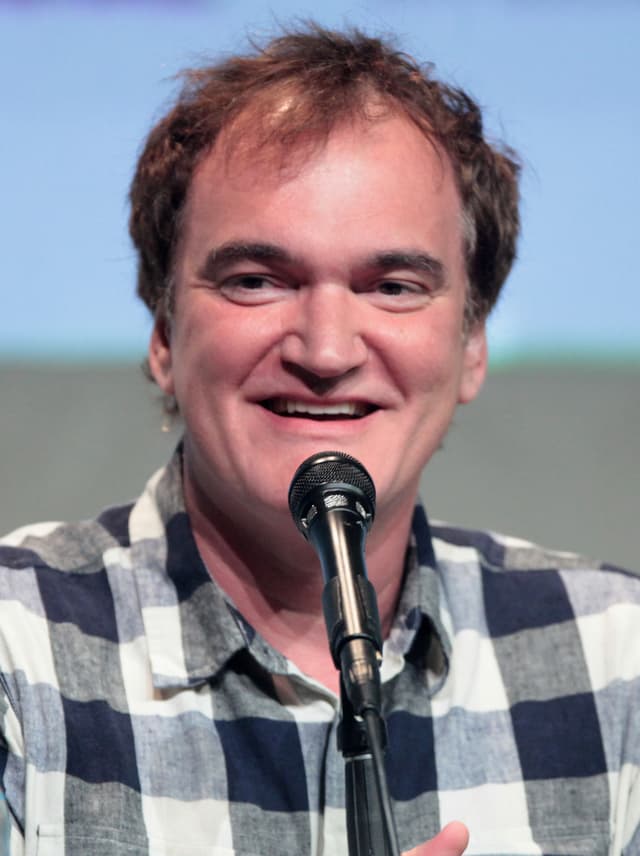
Quentin Tarantino
N/A (Filmmaker)
A visionary filmmaker and screenwriter, Quentin Tarantino has significantly shaped modern cinema since the early 1990s, known for his distinctive narrative style and eclectic dialogue. His debut film, "Reservoir Dogs," released in 1992, garnered critical acclaim and established him as a formidable voice in Hollywood, followed by the iconic "Pulp Fiction," which won the Palme d'Or at the Cannes Film Festival and earned him an Academy Award for Best Original Screenplay. Early experiences, such as the disappointment of waiting for a movie outing that never materialized, helped fuel his passion for storytelling and the cinematic experience. Tarantino's dedication to building a comprehensive understanding of film history has allowed him to create a unique brand that resonates with audiences, making him a relevant figure for entrepreneurs and creatives aiming to cultivate their own distinctive voices in their respective fields.
Core Principles
culture
Passion and enthusiasm are infectious. Your genuine love for your work directly influences others and creates opportunity.
Kevin Thomas, a film critic, wrote with genuine enthusiasm and love for the films he reviewed. Tarantino, who loved movies, admired Thomas's approach even when he disagreed about specific films. This infectious enthusiasm made Thomas's work valuable and inspired Tarantino's own approach.
“I never begrudged Kevin Thomas his enthusiasm. I liked Kevin Thomas so much. I was glad that he at least had a good time.”
focus
Complete obsession with your craft creates perceived sophistication and genuine expertise. Deep focus on one domain positions you as an authority.
Tarantino's singular focus on movies made him appear sophisticated to classmates, and this perception was accurate. While other students pursued diverse interests, his depth made him more knowledgeable than peers and even adults in matters of film.
“Because I was allowed to see things that other kids weren't, I appeared sophisticated to my classmates. And because I was watching the most challenging movies of the greatest movie-making era in the history of Hollywood, they were right. I was.”
innovation
Create the work you want to see in your industry. Do not criticize what exists; instead, build what you envision.
Rather than complaining about the safe, predictable films of the 1980s, Tarantino wrote screenplays and eventually directed films that reflected his artistic values. His refusal to self-censor and his bold narrative choices created the template for his filmmaking legacy.
“The 80s was a horrible decade. The restrictions Hollywood imposed on their product were self-imposed. The harshest form of censorship is self-censorship.”
Think in the medium of your craft at all times. Tarantino thought in films constantly, adapting books and biographies into imagined screenplays while reading.
Tarantino reads books with a notepad beside him, casting roles, adjusting plot points, and envisioning how a novel would work as a film. This constant mental adaptation kept him immersed in his craft and generated endless material for future projects.
“He thinks in movies. He starts writing casting lists.”
inspiration
An unreliable mentor who inspires you creatively can have immense value even without personal reliability. The creative inspiration matters independently of personal trust.
Floyd Ray Wilson was unreliable as a person but gave Tarantino something more valuable: the idea that someone could aspire to be a screenwriter. Seeing Floyd attempt screenwriting at home planted the seed for Tarantino's own career, even though Floyd himself failed.
“Even more influential than any script was having a man trying to be a screenwriter living in my house.”
leadership
Resist self-censorship and playing it safe, even when powerful people pressure you to compromise. Fearlessness about your creative vision is more important than short-term approval.
When Harvey Weinstein demanded Tarantino remove the ear-cutting scene from Reservoir Dogs, he refused. When studio executives told him to cast different actors instead of John Travolta in Pulp Fiction, he refused again. His refusal to compromise directly contributed to these films' cultural significance and commercial success.
“They can go fuck themselves. I wasn't a professional filmmaker back then. I was a brash, know-it-all film geek.”
Protect your creative vision on set with absolute clarity and firmness. Team members respect and perform better when they know the director will not compromise on quality.
Jamie Foxx described Tarantino as a tyrant on set who would not let anyone ruin his film. Yet Foxx was enthusiastic about working with him again, multiple times over. The clarity and firmness served the final product and earned respect from collaborators.
“He won't let you fuck his film up.”
A single supportive mentor who recognizes your gifts can counterbalance institutional resistance. One believer can override the doubts of many.
Mr. Simpson, Tarantino's teacher, recognized his intellectual sophistication despite poor grades. Simpson created a separate curriculum and defended him against bullying. This single advocate made a measurable difference in Tarantino's confidence and path.
“Mr. Simpson saw something in me, thought I was special.”
marketing
Develop a singular, immediately recognizable voice and perspective. This becomes your moat, your brand, and your most valuable asset.
Tarantino's voice is so distinctive that readers hear his words in his accent. Every creative decision, casting choice, and scene construction reflects his specific worldview. This distinctiveness directly contributed to his films' cultural impact and box office success.
“I've always approached my cinema with a fearlessness of the eventual outcome, a fearlessness that comes to me naturally.”
mindset
True interest reveals itself early in life. When you observe a child's natural obsessions and curiosities, you are seeing the seeds of their life's work.
Tarantino became obsessed with movies at age seven and pursued this passion relentlessly throughout his childhood. His mother allowed him to watch R-rated films that other parents prohibited, which gave him a decade of additional study and practice before his peers. This early, deep interest directly shaped his career as a filmmaker.
“I'm sure they could have found someone else to pawn me off on, but instead they allowed me to tag along.”
Belief comes before ability. Build unshakeable confidence in your vision before you have demonstrated success or earned credentials.
Before Tarantino made a single film, he confidently told colleagues at Video Archives that he would make movies his way. He was broke, working minimum wage, with no film school diploma, yet he spoke with absolute certainty about his artistic vision.
“Who the fuck are they and who is going to stop me?”
Know the history of your field so deeply that you can make decisions about when to leave. Understanding what comes before informs when to step back at your peak.
Tarantino studied film history so thoroughly that he learned directors do not improve with age. He decided his next film would be his last, choosing to leave while at the height of his creative powers, referencing Muhammad Ali leaving before fighting Leon Spinks.
“Film directors do not get better as they get older.”
An unusual childhood without traditional male role models can drive obsessive excellence. The absence of father figures may push you to seek them through study and work.
Tarantino never knew his biological father and had unreliable male figures in his life. Rather than wallow in this deficit, he channeled his energy into an obsessive study of films and directors, effectively collecting father figures through cinema. This deficit became fuel for his excellence.
“Like most men who never knew their father, Bill collected father figures.”
resilience
Unreliable mentors and difficult relationships can provide valuable lessons. Learning what not to do from someone is as valuable as learning what to do.
Floyd Ray Wilson was an undependable, self-interested adult who broke promises to young Quentin multiple times. Rather than remaining bitter, Tarantino extracted two pieces of useful information from the relationship: what Floyd was really like, and a cautious realism about human nature that served him later.
“He was an adult I couldn't count on. This is a theme that's going to reappear over and over again.”
When you discover something that excites you, pursue it relentlessly and repeatedly, even if it requires extraordinary effort. Repetition builds mastery and deep understanding.
Tarantino followed Rolling Thunder across Los Angeles for ten years, watching it multiple times. He traveled by bus to distant neighborhoods to catch screenings. He watched his favorite films six, fifteen, twenty times. This extreme repetition generated insights that shaped his later creative work.
“For a period of 10 years, I followed it all over Los Angeles, whenever and wherever it played.”
strategy
Ideas often surface years or decades after you first encountered them. Maintain your historical database knowing that current learning will fuel future work.
Tarantino read Kevin Thomas's 1980 review of Alligator at age 18. Seventeen years later, he cast Robert Forster in Jackie Brown based on that review. The idea had remained dormant in his mind, waiting for the right project to activate it.
“One review Kevin Thomas wrote in 1980 that I read when I was 18 years old was to have a significant impact on my film 17 years later.”
Build a comprehensive historical database in your field before attempting to create at the highest level. This database becomes your competitive advantage and differentiator.
Tarantino watched double and triple features, attended films repeatedly, maintained index cards on movies, created scrapbooks, and kept detailed files. By the time he wrote his first screenplay at 24, he had accumulated years of intensive film study. This encyclopedic knowledge directly informed every creative decision he made.
“I went to films. When I say Universal Pictures or 20th Century Fox, you don't have anything special in your mind.”
Frameworks
The Historical Database Framework
Build a searchable, organized personal repository of knowledge in your field. Use index cards, scrapbooks, note systems, and files to catalog every significant work, idea, and reference you encounter. This database becomes your creative engine, allowing you to connect ideas across years and decades. The framework requires discipline to maintain but compounds in value over time.
Use case: Developing mastery in any creative or knowledge-intensive field. Particularly valuable in film, writing, investing, and strategy.
The Repetition-Based Mastery Framework
Rather than consuming content once, return to significant works multiple times. Watch films six, ten, fifteen times. Read key books repeatedly. With each exposure, you extract deeper understanding and notice new details. This is contrasted with surface-level consumption which yields shallow learning.
Use case: Building deep expertise and creative sophistication in any field. Most effective for studying work you genuinely love.
The Fearless Creativity Framework
Approach your creative work with complete commitment to your vision, regardless of criticism or pressure to compromise. Make decisions about what stays and what goes based on artistic integrity, not audience testing or executive approval. Confidence in your vision attracts collaborators and creates remarkable work.
Use case: Creative industries and situations where compromise dilutes impact. Works best when combined with genuine expertise and deep knowledge.
The Extended Incubation Framework
Ideas do not always activate immediately upon discovery. Collect ideas, store them in your historical database, and allow them to remain dormant until the right project or moment activates them. Years or decades may pass between discovery and application.
Use case: Long-term creative work, strategic planning, and positions requiring synthesis of diverse inputs.
Stories
Floyd Ray Wilson, an unreliable adult, promised 10-year-old Tarantino they would go to the movies on Saturday. When Saturday came, Floyd never showed up with no call or apology. Tarantino waited all afternoon, heartbroken. Floyd made the same promise months later and broke it again.
Lesson: Unreliable mentors teach you early that you cannot depend on others for validation or follow-through. This independence becomes valuable. Tarantino learned to trust his own judgment and vision rather than seeking approval.
At age 19, Tarantino became so obsessed with Rolling Thunder that he wanted to interview director John Flynn. He looked up every John Flynn in the phone book one by one until he found the right person. Flynn agreed to an interview. Tarantino brought only one cassette tape for the recorder and was too embarrassed to ask for another, so he recorded over his early questions, losing the best material.
Lesson: Extreme dedication and creative persistence open doors that normal effort cannot. However, when opportunity arrives, you must be fully prepared. Tarantino's enthusiasm was rewarded with the interview, but his lack of preparation cost him valuable content.
Tarantino's mother allowed him to watch R-rated films including violent adult movies when he was seven and eight years old. Other parents would not let their children play with Tarantino because of what he was watching. His mother defended this by saying she worried more about him watching the news.
Lesson: An unconventional parenting decision that most would judge as irresponsible directly enabled Tarantino's genius. By age 15, he had a decade of additional film study compared to peers. The permission to engage with challenging material created his competitive advantage.
Tarantino read film critic Kevin Thomas's review of the film Alligator when he was 18 years old. Seventeen years later, when writing the adaptation that became Jackie Brown, Tarantino cast Robert Forster in the lead role based solely on Thomas's positive highlighting of Forster in that review.
Lesson: Ideas remain dormant in your mind for years, waiting for the right project to activate them. This is why building a historical database matters. The time gap between input and output can be a decade or more.
Harvey Weinstein pressured Tarantino to remove the ear-cutting scene from Reservoir Dogs, arguing that audiences would walk out. Tarantino refused. Later, executives told him to remove John Travolta from the Pulp Fiction cast. Tarantino refused again. Both films became massive successes.
Lesson: Fearlessness in protecting your creative vision, especially when you have deep knowledge to back it up, generates better outcomes than compromise. The pressure to change reflects insecurity, not insight.
Notable Quotes
“I'm sure they could have found someone else to pawn me off on, but instead they allowed me to tag along.”
Describing how his mother included him in adult activities and movie-going, giving him early exposure to sophisticated content.
“Quentin, they won't let you do that. To which I replied back, who the fuck are they and who is going to stop me? They can go fuck themselves.”
Tarantino's response when colleagues at Video Archives told him his filmmaking ideas would not be permitted by studios.
“I've always approached my cinema with a fearlessness of the eventual outcome, a fearlessness that comes to me naturally.”
Explaining his approach to making films regardless of whether audiences or critics would accept them.
“Film directors do not get better as they get older.”
His reasoning for planning his next film to be his last, wanting to leave at the peak of his powers.
“For a period of 10 years, I followed it all over Los Angeles, whenever and wherever it played.”
Describing his obsessive tracking down and rewatching of Rolling Thunder before he owned a car or could legally drive.
“They loved movies. They dreamed of movies. They even received degrees in movies back when that was a dubious major.”
Discussing the movie brats generation, including Steven Spielberg and Francis Ford Coppola, who were film nerds like himself.
“When Jaws came out in 1975, it was easily the best movie ever made. Because for the first time, the man at the helm wasn't executing a studio assignment, but a natural-born filmmaker genius who grooved on exactly this kind of movie.”
Analyzing Steven Spielberg's directorial vision and how genuine passion for the material creates greatness.
“In his own way, he looked out for me. The difference between Floyd and them was while they loved me, Floyd didn't give a shit about me.”
Contrasting Floyd Ray Wilson with his mother's circle of friends, describing how Floyd's indifference provided brutal honesty.
“Even more influential than any script was having a man trying to be a screenwriter living in my house.”
Explaining how seeing Floyd attempt screenwriting inspired his own decision to become a screenwriter.
“I never begrudged Kevin Thomas his enthusiasm. I liked Kevin Thomas so much. I was glad that he at least had a good time.”
Describing his admiration for film critic Kevin Thomas, even when he disagreed with Thomas's reviews of specific films.
Frequently Asked Questions
What are Quentin Tarantino's key business principles?▼
Quentin Tarantino's core principles include: Passion and enthusiasm are infectious. Your genuine love for your work directly influences others and creates opportunity.. Complete obsession with your craft creates perceived sophistication and genuine expertise. Deep focus on one domain positions you as an authority.. Create the work you want to see in your industry. Do not criticize what exists; instead, build what you envision.. Founder Almanac has cataloged 17 total principles from Quentin's career.
What can entrepreneurs learn from Quentin Tarantino?▼
Key lessons from Quentin Tarantino include: Unreliable mentors teach you early that you cannot depend on others for validation or follow-through. This independence becomes valuable. Tarantino learned to trust his own judgment and vision rather than seeking approval.. Explore 5 stories and 4 frameworks from Quentin's experience.
What is Quentin Tarantino known for in business?▼
A visionary filmmaker and screenwriter, Quentin Tarantino has significantly shaped modern cinema since the early 1990s, known for his distinctive narrative style and eclectic dialogue. His debut film, "Reservoir Dogs," released in 1992, garnered critical acclaim and established him as a formidable voice in Hollywood, followed by the iconic "Pulp Fiction," which won the Palme d'Or at the Cannes Film Festival and earned him an Academy Award for Best Original Screenplay. Early experiences, such as the disappointment of waiting for a movie outing that never materialized, helped fuel his passion for storytelling and the cinematic experience. Tarantino's dedication to building a comprehensive understanding of film history has allowed him to create a unique brand that resonates with audiences, making him a relevant figure for entrepreneurs and creatives aiming to cultivate their own distinctive voices in their respective fields.
More Media & Entertainment Founders



Want Quentin's advice on your business?
Our AI has studied Quentin Tarantino's biography, principles, and decision-making frameworks. Ask any business question.
Start a conversation