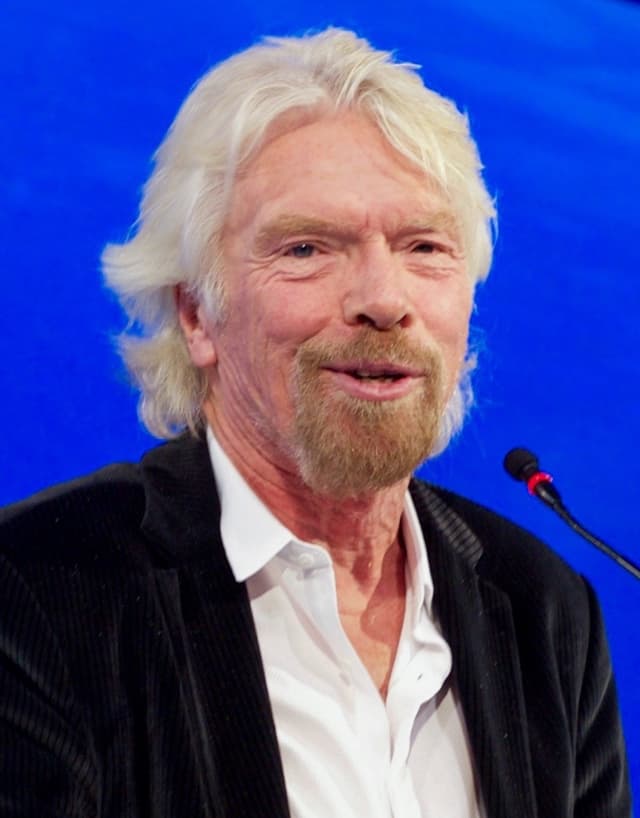
Richard Branson
Virgin Group
A pioneer in the Media and Entertainment industry, Richard Branson founded the Virgin Group in the 1960s, transforming it into a global conglomerate with over 40 subsidiaries by the 1990s. His entrepreneurial journey began at the age of 15 with the launch of Student magazine, where he boldly approached major corporations like Coca-Cola to sell advertising space for a publication that had yet to exist. Emphasizing the importance of a rebellious spirit and the willingness to break conventional rules, Branson believed that naivety and youthful confidence can serve as significant advantages in business. His philosophy, encapsulated in his quote, "You cannot clearly define our business success and then bottle it as you would a perfume," resonates with today's entrepreneurs seeking innovative paths to success.
Core Principles
culture
Parental support and open communication during childhood creates the foundation for entrepreneurial risk-taking. Parents who encourage exploration and maintain open dialogue enable their children to become founders.
Branson credits his parents for never expressing less than sympathy and support for his projects, even when they didn't praise them. He stayed confiding in them rather than becoming embarrassed or rebellious, which many of his peers experienced with their own parents.
“They always encouraged me to go ahead and do whatever I wanted to do, and if they did not always praise my projects, they never expressed less than sympathy and support.”
Teach independence and self-reliance early. Let children solve problems, face challenges, and experience the real world of commerce and effort from a young age.
Branson's mother challenged him constantly: leaving him to find his way home at age 4, sending him on 50-mile bike rides alone at dawn, and involving him and his sisters in family business projects. These experiences taught him that idleness was unacceptable and that real work builds capability.
“If you want milk, don't sit on a stool in the middle of a field in the hope that the cow will back up to you. Go on, Ricky, don't just sit around, catch the cow.”
Empower your employees and value their ideas regardless of where they come from. Create a culture where people can experiment and execute without permission.
Branson tells his staff: 'If you want to do it, just do it. That way we all benefit. The staff's work and ideas are valued and Virgin gains from their input and drive.' This egalitarian approach, different from the benevolent dictator model, allowed Virgin to innovate across multiple industries.
“I tell my staff, if you want to do it, just do it. That way we all benefit. The staff's work and ideas are valued and Virgin gains from their input and drive.”
Build business awareness in your family and team. Discuss real financial challenges, explain how money works, and involve people in solving problems.
At Branson's dinner table, the family discussed business challenges, money, and projects. His mother involved him in painting wooden tissue boxes and negotiating with Harrods. This transparency prevented him from being shocked by the real world later.
“At home, we talked business at dinner. I believe their children never really learn the value of money. Sometimes when they get into the real world, they can't cope.”
Parental support and open communication during childhood creates the foundation for entrepreneurial risk-taking. Parents who encourage exploration and maintain open dialogue enable their children to become founders.
Branson credits his parents for never expressing less than sympathy and support for his projects, even when they didn't praise them. He stayed confiding in them rather than becoming embarrassed or rebellious, which many of his peers experienced with their own parents.
“They always encouraged me to go ahead and do whatever I wanted to do, and if they did not always praise my projects, they never expressed less than sympathy and support.”
customer obsession
Listen carefully to your customers and observe their behavior patterns. Anomalies in how they spend money reveal unmet opportunities that can spawn entirely new business lines.
While running Student magazine, Branson noticed that subscribers were unwilling to spend 40 shillings on a meal but would immediately buy the latest Bob Dylan album. This observation led directly to the idea for a mail order record business, which became Virgin Records.
“People who would never dream of spending as much as 40 shillings on a meal wouldn't hesitate to spend 40 shillings buying the latest bob dylan album.”
Listen carefully to your customers and observe their behavior patterns. Anomalies in how they spend money reveal unmet opportunities that can spawn entirely new business lines.
While running Student magazine, Branson noticed that subscribers were unwilling to spend 40 shillings on a meal but would immediately buy the latest Bob Dylan album. This observation led directly to the idea for a mail order record business, which became Virgin Records.
“People who would never dream of spending as much as 40 shillings on a meal wouldn't hesitate to spend 40 shillings buying the latest bob dylan album.”
finance
When negotiating, push for non-monetary terms that provide leverage and optionality. A rent-free period or lease flexibility can be as valuable as a lower price and directly impacts cash flow.
When expanding Virgin Records stores, Branson negotiated for rent-free periods during the first three months. This crucial element allowed record sales from the first shop to cover rent on previously opened locations, ensuring cash flow stability during expansion.
“After negotiating the lease until we were sure that the landlords would go no lower, we would push for a rent-free period for the first three months. This was the single most crucial element.”
Protect your downside risk by negotiating deal structures that cap losses while leaving upside unlimited. This is the art of being a risk taker: structure deals to minimize what you can lose.
When launching Virgin Records, Branson rejected a standard licensing deal that would cap profits at $171,000-$285,000 on 600,000 copies sold. Instead, he negotiated a pressing and distribution deal where Virgin handled promotion, capturing nearly $920,000 on the same sales volume. Tubular Bells went on to sell millions of copies.
“If you are a risk taker, then the art is to protect the downside.”
Build your business by reinvesting profits rather than taking them out. Reinvestment compounds growth and expands optionality far more than distributing cash to shareholders.
For 25 years, Branson constantly expanded Virgin by reinvesting profits back into the business rather than taking significant personal wealth out. This allowed him to start new ventures like airlines without outside capital, only gaining personal wealth when he eventually sold Virgin Music.
Structure ventures to cap downside while maintaining unlimited upside. Use 50/50 partnerships and keep individual companies small so losses are contained.
Branson created what he calls branded venture capital, dividing Virgin Group into hundreds of small, loosely affiliated companies. When one company fails, downside is limited. When one succeeds and grows large, it is split into smaller units to maintain this structure. This approach resembles an out-of-the-money option financially.
“His downside's capped, his upside's potentially unlimited.”
Protect your downside risk by negotiating deal structures that cap losses while leaving upside unlimited. This is the art of being a risk taker: structure deals to minimize what you can lose.
When launching Virgin Records, Branson rejected a standard licensing deal that would cap profits at $171,000-$285,000 on 600,000 copies sold. Instead, he negotiated a pressing and distribution deal where Virgin handled promotion, capturing nearly $920,000 on the same sales volume. Tubular Bells went on to sell millions of copies.
“If you are a risk taker, then the art is to protect the downside.”
innovation
Question conventional wisdom and established norms when they may be outdated. Use first-principles thinking by asking who decided things had to work a certain way.
Branson repeatedly demonstrates this approach by asking 'whoever said that' about established business practices. This applies to restaurant pricing models, business structures, and industry standards that he challenges throughout his career.
Question conventional wisdom and established norms when they may be outdated. Use first-principles thinking by asking who decided things had to work a certain way.
Branson repeatedly demonstrates this approach by asking 'whoever said that' about established business practices. This applies to restaurant pricing models, business structures, and industry standards that he challenges throughout his career.
leadership
Control over decision-making is more valuable than ownership percentage. Even 50% of a public company means loss of control through mandatory non-executive directors and shareholder obligations.
Branson realized that while 50% of a public company theoretically controls it, appointing non-executive directors and satisfying the city actually caused him to lose faith in his own decision-making. He then took Virgin private to restore autonomy.
“Most people think that 50% of a public company is the key to controlling it while this is true in theory to a large extent you lose control just by having to appoint non-executive directors.”
Structure partnerships as 50-50 splits with entrepreneurial operators. Give the operator majority control and profit incentives, which creates aligned motivation and higher probability of success.
Branson's branded venture capital model relies on finding entrepreneurial partners and offering them 50% ownership with significant autonomy. This structure mirrors how Ken Langone succeeded by giving the truck company operator majority control, creating greater incentive for success.
After winning a major dispute, prioritize rebuilding the relationship with your opponent if they show genuine contrition. Pragmatism preserves future opportunities.
After T-Mobile's crushing legal defeat, the head of their parent company called to apologize, fired the executive who initiated the illegal action, and proposed a new commercial deal. Branson accepted and later partnered with them on Virgin Mobile expansion, converting potential long-term conflict into cooperation.
Delegation is a strength, not a weakness. Asking for support is essential to success. Trying to do everything yourself leads to failure and misery.
Branson describes delegation as a secret of his success for five decades. Rather than attempting all tasks personally, he identifies areas where others excel and delegates, freeing himself to focus on strategy, contacts, and marketing. He works with a content team to produce around 600 blogs per year, calling the team several times daily.
“Asking for support is a strength, not a weakness. If you try to do everything yourself, you won't succeed, and you'll make yourself miserable along the way.”
Do not pressure young people to choose careers prematurely. Take a gap year or exploratory period to understand yourself before committing to long-term paths.
When Branson's son Sam expressed uncertainty about his direction after school, Branson reassured him that this was natural and fine. Rather than pushing immediate career decisions, he encouraged Sam to take a gap year to learn who he was first. This approach recognizes that 16 to 18-year-olds cannot reasonably commit to 40-year career paths without life experience.
“You're 19. Only happens once. So enjoy it. I was very keen not to put any pressure on him or his sister and let them stand on their own two feet.”
Frameworks
Branded Venture Capital Model
A structure where the parent company (Virgin) enters 50-50 partnerships with entrepreneurial operators in new business ventures. Virgin provides branding, some capital, and strategic guidance while the operator owns half and runs the company autonomously. Individual companies remain small (under 60 employees) with clear profit-sharing agreements. This approach creates a diversified portfolio of options with capped downside and unlimited upside across 400+ businesses.
Use case: Expanding into new industries and markets while maintaining operational agility and entrepreneurial incentives. Suitable for conglomerates wanting to scale across diverse verticals without creating bloated corporate structures.
Downside Protection Negotiation
A deal structure approach where the founder identifies the maximum acceptable loss and negotiates deal terms to cap that loss while preserving unlimited upside. For Virgin Records, this meant rejecting a 16-18% royalty licensing deal for a pressing and distribution arrangement. For Virgin Atlantic, it meant leasing planes for one-year terms with return options. The framework requires creative deal structure innovation rather than just price negotiation.
Use case: Entering capital-intensive industries, launching unproven business models, or entering partnerships. Works best when the founder can identify alternative deal structures that shift risk allocation to the counterparty.
Rapid Decision-Making from Intuition
A framework for making fast business decisions based on gut instinct rather than extensive analysis. Branson makes judgments about people and business proposals within 30 seconds. This approach is enabled by accepting that most business decisions are reversible and that you can course-correct quickly. It requires confidence in your pattern recognition and a willingness to move fast and adjust.
Use case: Early-stage business development, partnership evaluation, and strategic decisions when speed of execution matters more than perfect information. Less suitable for irreversible decisions requiring deep analysis.
Creative Sales Tactics for Constrained Resources
A method for generating sales and traction for products that don't yet exist or for which you lack credentials. Richard created false scarcity (mentioning Pepsi's ad to Coca-Cola), used competitive framing (asking newspapers whether they preferred to advertise before or after competitors), and established credibility through third-party validation. The key is reframing the conversation to make targets afraid of missing out rather than afraid of the risk.
Use case: Selling to established companies as an unknown startup, generating advertising revenue for new publications, and creating urgency without having an existing customer base.
Observation-Driven Business Pivots
A process of continuously observing customer behavior for anomalies, then pursuing the opportunity revealed by those anomalies. Branson observed that Student magazine readers spent disproportionately on music relative to dining, leading to the Virgin Records business. This requires maintaining close customer contact and being ready to shift focus when patterns emerge.
Use case: Identifying adjacent business opportunities when a primary business has limited growth. Works best in businesses where you interact directly with customers or can observe their behavior patterns.
Vertical Integration Through Compatible Businesses
A strategy where the founder connects multiple businesses that feed into and support each other, creating compound value. Virgin combined record stores (retail), a record label (production), a recording studio (supply chain), and publishing (distribution). Each business's margin improves through the others, and customer reach expands across the chain. This requires identifying natural connections before building.
Use case: Expanding within an industry ecosystem where businesses have natural customer or supply chain overlaps. Particularly effective for margin expansion and customer lock-in across multiple touchpoints.
Branded Venture Capital
Organize a corporation as a loosely affiliated collection of many small, independent companies held in 50/50 partnerships with strong operators. Cap the downside on each unit while maintaining unlimited upside. As companies grow, split them into smaller units to preserve the structure. This approach combines entrepreneurial culture with portfolio risk management.
Use case: Used by Virgin Group to manage hundreds of companies across airlines, records, mobile, fitness, and other industries while limiting catastrophic loss exposure and maintaining flexibility to pivot or exit.
Second-Order Effects Through Portfolio Diversification
By running multiple unrelated businesses, capture unexpected insights and opportunities that emerge from cross-pollination between industries. Ideas successful in one business often apply to another. This requires portfolio diversity and the flexibility to borrow solutions across silos.
Use case: Virgin's experience in records provided insights that improved Virgin Atlantic's customer experience and branding. Experience in airlines informed Virgin America's service model. Conversely, failures in one business prevent repeating the same mistakes in another.
Pragmatic Conflict Resolution
After winning a dispute, prioritize relationship restoration if the opponent demonstrates genuine contrition and corrects the problematic behavior. Transform potential long-term enemies into partners by accepting sincere apologies and committing to new collaborative structures.
Use case: Applied after T-Mobile's crushing legal defeat in the Virgin Mobile UK case. T-Mobile's parent company fired the executive responsible, apologized, and proposed new deals, allowing Branson to shift from adversary to partner.
Daily Writing Practice
Commit to writing every day as a non-negotiable routine, similar to eating, drinking, or brushing teeth. Jot down ideas, thoughts, requests, reminders, and doodles. Edit and follow up with tasks in order of importance. This habit prevents idea loss, sharpens thinking, and enables long-term projects like autobiographies.
Use case: Enables production of 600 blogs per year, two autobiographies, numerous letters and op-eds, and consistent communication of company values. Note-taking in meetings maintains focus and ensures actionable follow-up.
Stories
At 15 years old, Branson started Student magazine and immediately began calling major corporations like Coca-Cola and the Daily Telegraph to sell advertising space for a publication that didn't yet exist. He used psychological tactics, mentioning competitors' ads to create perceived scarcity. Most people rejected him, but his youth and naivete prevented him from understanding why this should be impossible, allowing him to persist.
Lesson: Youth and inexperience are advantages in entrepreneurship because they prevent you from contemplating failure. The same task would be impossible if approached with adult understanding of reality. Confidence and persistence can open doors that logic would keep closed.
While trying to save on taxes through an illegal import-export scheme, Branson was arrested and spent a night in jail. In his cell, he felt complete claustrophobia and realized he never wanted to be dependent on someone else for his freedom. That night transformed him, causing him to vow never again to do anything embarrassing or illegal, a vow he kept throughout his career regardless of personal temptation.
Lesson: Sometimes failure or punishment creates clarity about your core values. Branson's imprisonment revealed his fundamental need for autonomy and showed him the value of his reputation, shaping every business decision thereafter. Loss of freedom is a more powerful lesson than theoretical ethics.
Virgin Records needed to expand its store chain but lacked capital. Rather than securing expensive loans, Branson negotiated for rent-free periods in the first three months of each lease. This meant sales from the first shop covered rent for the second, and so on. By opening a shop every month in 1971-1972, they built 14 profitable locations by Christmas without massive upfront capital investment.
Lesson: Creative deal structures can be as valuable as capital. Instead of negotiating price, negotiate terms that align risk. A landlord's willingness to take a short-term revenue sacrifice is often better than having more cash today, because it forces business viability before expansion.
Island Records offered Virgin Music an 18% royalty deal on Tubular Bells that would generate $171,000-$285,000 profit on 600,000 copies sold. Instead, Branson negotiated a pressing and distribution deal where Virgin would promote the album themselves. On 600,000 copies, Virgin would make $920,000. The album eventually sold millions, making Virgin 'rich beyond our dreams' and validating his refusal of the safer deal.
Lesson: The willingness to cap downside while pursuing unlimited upside is the entrepreneur's key advantage. The standard deal was 'safe' but capped potential. By taking on marketing risk, Branson created 5-6x more value. This requires confidence in your specific advantage (Virgin's 14 record stores and promotional ability).
While staying on Beef Island with his girlfriend Joan, Branson's flight to Puerto Rico was canceled. Stranded with other passengers and no service, he chartered a plane, divided the cost by number of seats, wrote 'Virgin Airways' on a blackboard, and filled every seat. A passenger commented that with better service, it could actually be a business. This casual moment of problem-solving planted the seed for an airline that launched five years later.
Lesson: Great business ideas often come from directly solving immediate problems you observe. Branson didn't spend months researching airline markets; he solved a real customer problem with available resources. The seed idea often precedes the formal business by years.
Branson saw Necker Island listed for $3 million but had no capital. He offered $150,000, and the estate agent stopped showing interest. Three months later, after learning the owner wanted to build something in Scotland costing $200,000, Branson offered $180,000 and successfully purchased the island for 6% of the asking price. The key was understanding the seller's underlying motivation and timeline, not competing on the standard offer.
Lesson: The best deals come from understanding what the other side actually wants, not from negotiating against their stated position. By waiting and learning the seller's pressure point, Branson turned an unattainable asset into an affordable one. This applies to acquisitions, partnerships, and real estate.
After the stock market crash of 1987, Virgin's share price dropped 20% and Branson personally lost $41 million in wealth. Rather than seeing this as disaster, he recognized it as a golden opportunity to take the company private at a fraction of what the city had valued it. He then showed the stock market had undervalued Virgin by selling 25% of Virgin Music for $100 million, proving Virgin was worth at least $400 million.
Lesson: Market downturns create the best buying opportunities for those with capital. Branson's willingness to be contrarian when everyone else is pessimistic allowed him to acquire control of Virgin at depressed prices, then prove the skeptics wrong. This requires having capital reserves and conviction.
As a public company, Virgin required formal board meetings, mandatory non-executive directors, dividend payments, and constant communication with fund managers and analysts. In 1987, Virgin's single year as public, it was the least creative year in company history. Branson spent 50% of his time explaining decisions to the city rather than executing. This experience drove him to immediately take the company private.
Lesson: Governance structures directly impact decision-making speed and creativity. For founders who value autonomy and rapid iteration, public company requirements are paralyzing. The control loss isn't worth the access to capital if the business generates enough cash flow to remain private.
After major accomplishments including signing Janet Jackson and gaining access to Heathrow airport, Branson felt his world was falling apart at age 40. He experienced depression, questioned his life direction, and faced rumors of bankruptcy despite these wins. The airlines were stretched to breaking, Virgin Music faced difficulties from a major deal, and journalists constantly called asking about bouncing checks. He felt engulfed in a bushfire.
Lesson: Success and stress are not inversely correlated. The highest-stress, most chaotic periods often coincide with the biggest wins. Entrepreneurs must expect this pattern and normalize the emotional turbulence. Having celebrated major wins and major crises simultaneously is common, not pathological.
Simon, Branson's co-founder of Virgin Records, opposed the airline venture as too risky and outside the music industry's scope. Simon's interests lay in the arts, music, and beautiful things. Branson's interests lay in setting huge, seemingly unachievable challenges and trying to rise above them. This fundamental difference in motivation created lasting tension in their relationship, though they remained partners in the record business.
Lesson: Co-founders with different visions and motivations create tension. Branson was motivated by challenge and autonomy, Simon by creative beauty and established success. You cannot compromise on core motivation; you can only accept different people have different drivers and either align or separate.
Notable Quotes
“You cannot clearly define our business success and then bottle it as you would a perfume. It's not that simple.”
Prologue reflection on why business philosophy cannot be reduced to a recipe or formula that can be taught and replicated by others.
“I just pick up the phone and get on with it.”
Describing his approach to business rather than overthinking or analyzing whether others say his vision breaks rules or is too kaleidoscopic.
“I think my parents must have instilled a rebellious streak in me. I have always thought rules were there to be broken.”
Reflecting on his early inclination toward non-conformity and rule-breaking that became fundamental to his entrepreneurial approach.
“Had I been five or six years older the sheer absurdity of trying to sell advertising to major companies in a magazine that did not yet exist would have prevented me from picking up the phone at all. But I was too young to contemplate failure.”
Explaining why his youth was an advantage when starting Student magazine, allowing him to attempt impossible things before understanding the odds.
“They always encouraged me to go ahead and do whatever I wanted to do, and if they did not always praise my projects, they never expressed less than sympathy and support.”
Describing his parents' support and open communication, which he credits as foundational to his willingness to take entrepreneurial risks.
“I can honestly say that I have never gone into any business purely to make money. If that is the sole motive, then I believe you are better off not doing it.”
Core business philosophy that money cannot be the primary motivator if you want sustained success and happiness.
“A business has to be involving. It has to be fun. And it has to exercise your creative instincts.”
Summary of his criteria for any venture worth pursuing, emphasizing engagement and creativity over pure profit.
“People who would never dream of spending as much as 40 shillings on a meal wouldn't hesitate to spend 40 shillings buying the latest bob dylan album.”
Observation about Student magazine subscribers that revealed the anomaly in their spending habits, leading to the idea for Virgin Records.
“It was a timely reminder to always examine every aspect of a deal and go with your instinct if it doesn't feel right.”
Reflecting on his decision to reject Goldman Sachs' subprime mortgage investment offer despite expert pressure
“I tend to make up my mind about people within 30 seconds of meeting them, I also make up my mind about whether a business proposal excites me within about 30 seconds of looking at it. I rely far more on gut instinct than researching huge amounts of statistics.”
Explaining his rapid decision-making approach based on intuition rather than deep analysis, a pattern throughout his career.
Frequently Asked Questions
What are Richard Branson's key business principles?▼
Richard Branson's core principles include: Parental support and open communication during childhood creates the foundation for entrepreneurial risk-taking. Parents who encourage exploration and maintain open dialogue enable their children to become founders.. Teach independence and self-reliance early. Let children solve problems, face challenges, and experience the real world of commerce and effort from a young age.. Empower your employees and value their ideas regardless of where they come from. Create a culture where people can experiment and execute without permission.. Founder Almanac has cataloged 30 total principles from Richard's career.
What can entrepreneurs learn from Richard Branson?▼
Key lessons from Richard Branson include: Youth and inexperience are advantages in entrepreneurship because they prevent you from contemplating failure. The same task would be impossible if approached with adult understanding of reality. Confidence and persistence can open doors that logic would keep closed.. Explore 10 stories and 10 frameworks from Richard's experience.
What is Richard Branson known for in business?▼
A pioneer in the Media and Entertainment industry, Richard Branson founded the Virgin Group in the 1960s, transforming it into a global conglomerate with over 40 subsidiaries by the 1990s. His entrepreneurial journey began at the age of 15 with the launch of Student magazine, where he boldly approached major corporations like Coca-Cola to sell advertising space for a publication that had yet to exist. Emphasizing the importance of a rebellious spirit and the willingness to break conventional rules, Branson believed that naivety and youthful confidence can serve as significant advantages in business. His philosophy, encapsulated in his quote, "You cannot clearly define our business success and then bottle it as you would a perfume," resonates with today's entrepreneurs seeking innovative paths to success.
More Media & Entertainment Founders

Want Richard's advice on your business?
Our AI has studied Richard Branson's biography, principles, and decision-making frameworks. Ask any business question.
Start a conversation