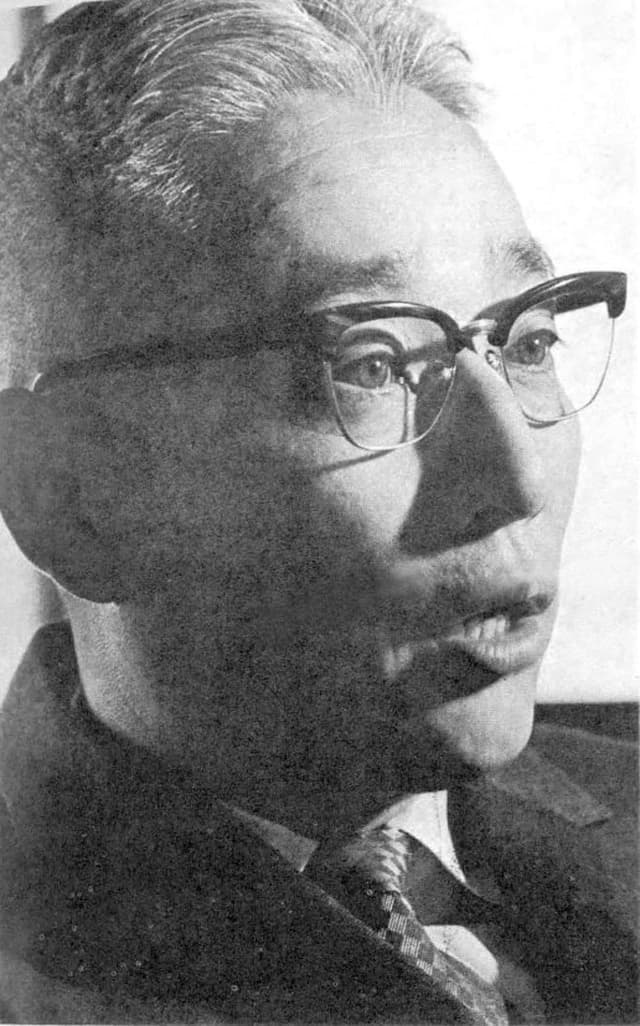
Akio Morita
Sony
A visionary in the technology industry, Akio Morita co-founded Sony in 1946, transforming it from a small electronics company into a global powerhouse known for innovation. Under his leadership, Sony introduced groundbreaking products like the first portable transistor radio in 1955, which sold over 100,000 units in its first year, revolutionizing personal music consumption. Morita believed in the importance of maintaining confidence during uncertain times and emphasized the necessity of challenging young talent to drive growth. His approach to leadership reinforced the idea that personal involvement in business operations is crucial for long-term success, warning against the pitfalls of complete delegation. Through his journey, he exemplified how resilience and a focus on innovation could foster remarkable achievements in the face of adversity.
Core Principles
culture
Don't work in a job you hate. Your career is the brightest period of your life. If you spend 30 years in misery, that's a tragedy you alone are responsible for preventing.
A young Sony employee complained that he works for his section chief, not for Sony, and everything must go through a difficult manager. Akio realized this revealed a major management problem. He started a company newspaper with confidential job listings so employees could transfer. This taught him that employee dissatisfaction reveals bad management.
“The most important thing in the next few months is for you to decide whether you will be happy or unhappy here. I do not want you to regret that you spent all those years here. That would be a tragedy.”
Preserve individuality rather than forcing consensus. The elimination of individuality in the name of cooperation is a mistake. Managers should attract willing followers, not suppress differences.
Many Japanese companies use the word cooperation to mean the elimination of individuality. Akio believed the opposite: Sony's success came from managers who preserved individuality while still achieving harmony. He told managers their job is to attract large numbers of people to willingly follow them with enthusiasm.
“Don't think that because you are at the top you can boss others around. Show them how you are attempting to attract a large number of people to follow you willingly and with the enthusiasm to contribute to the success of the company.”
Ensure employees love their work and believe in the mission. A job you hate will poison the best years of your life.
Akio spoke directly to young employees about the importance of being happy at Sony. He noted that if you work eight hours a day and sleep eight hours, you have 16 hours awake, and eight of those are at work. If you hate those eight hours, you cannot have a great life. He made it their responsibility to decide if they would be happy or unhappy at Sony.
“The most important thing in the next few months is for you to decide whether you will be happy or unhappy here. When you leave the company 30 years from now and when your life is finished, I do not want you to regret that you spent all those years here.”
Build physical and mental discipline through stress and high standards. This creates confidence and prevents lazy thinking.
Akio credits his military training and strict schooling with building confidence in himself. Running before breakfast, cold classrooms without heaters, and intense Naval boot camp taught him he was stronger than he believed. He applied this philosophy to Sony by maintaining high standards and refusing to allow complacency. Discipline builds capability.
“Unless you are forced to use your mind, you become mentally lazy and you will never fulfill your potential.”
Know your ancestors and the decisions they made. Understand that you are steward of something bigger than yourself.
Akio's parents taught him from childhood about his ancestors and the decisions they made over 300 years of running the family sake business. This created a sense of responsibility and stewardship that transcended personal ambition. When family business leaders diversified into art collecting, the business suffered. Akio knew his name and family were on the line.
“I was taught about my ancestors from early childhood. Tenacity, perseverance, and optimism are traits that have been handed down to me through my family genes.”
finance
Cost control is the only permanent competitive advantage. Prices and markets are cyclical, but controlled costs provide lasting advantage.
Akio was taught from childhood that wasting resources was a sin. Starting Sony in a burned-out department store with minimal funding forced extreme cost discipline. He repeatedly emphasized that even brilliant operations can fail if expenses aren't controlled, while mediocre operations can survive with disciplined spending.
“Profits and prices are cyclical, subject to any number of transient forces of the marketplace. Costs, however, could be strictly controlled, and any savings achieved in costs were permanent.”
hiring
Immerse young people in challenging work slightly beyond their current capability. Discomfort drives growth more than structured instruction. This builds confidence and adaptability.
Akio's father brought him to business meetings from age 10 onwards, sitting him in on complex discussions he didn't yet understand. After meetings, Akio had to think deeply to interpret what the adults discussed. This forced learning became his model for developing people and his belief in total immersion theory.
Hire a paid critic to push your company toward higher standards. Just as dancers use mirrors and singers use aural feedback, companies need external voices to identify shortcomings.
Akio noticed a vocal arts student named Norio Oga who gave harsh criticism of Sony's first tape recorders, saying they had too much wow and flutter. Rather than dismissing him, Akio invited him to be Sony's paid critic while still in school. Oga's challenging ideas eventually made him Sony's president.
“A ballet dancer needs a mirror to perfect her style, her technique. A singer needs the same, an aural mirror. Oga is now the president of Sony.”
Find and work with the absolute best people. One genius engineer is worth fifty average engineers.
Akio identified Masuro Ibuka as the most brilliant engineer he knew. Rather than build Sony alone, he immediately sought him out and made him co-founder. Ibuka's creative thinking on product design and engineering was foundational to Sony's success. Akio refused to compromise on talent.
“I mentioned this story as an example of the freshness and inventiveness of his mind, which so impressed me and made me want to work with this man.”
Hire a paid critic to provide honest feedback on your work. Criticism from someone with real skin in the game is invaluable.
Akio hired Norio Oga as a paid critic while Oga was still a student. Oga was an early Sony fan but was harsh on their products because he believed they could be better. Akio valued this brutal honesty. Oga eventually became President of Sony. A paid critic acts like a mirror for a dancer, helping perfect technique.
“A ballet dancer needs a mirror to perfect her style, her technique. A singer needs the same. His criticism and taste was so valuable.”
leadership
Family businesses fail when owners lose focus on operations and delegate completely to hired managers who lack personal skin in the game. Misaligned incentives prevent long-term thinking.
Akio's family had run a profitable sake business for 300 years, but three generations before him spent their time collecting art and ceramics instead of managing the business. Hired managers treated it as mere livelihood, not as a legacy. When his father took over, he had to execute a turnaround because he had generational responsibility.
“They relied on hired managers to run the Morita company, but to these managers, the business was no more than a livelihood. In the end, all the managers stood to lose was a job. They did not carry the responsibility of the generations of maintaining the continuity and the prosperity of the enterprise.”
Don't boss people around based on rank. Be explicit about decisions, take full responsibility for them, and avoid blaming subordinates. This accountability mindset prevents poor culture.
Akio's father taught him that holding rank doesn't entitle you to boss others. He was cautioned repeatedly that scolding subordinates and seeking scapegoats is useless. These lessons shaped Akio's management philosophy throughout his career.
“Don't think that because you are at the top you can boss others around. Be very clear on what you have decided to do and when you ask others to do it, take full responsibility for it.”
Bet your career on products you believe in. Taking personal responsibility increases your conviction and forces you to do whatever it takes to succeed.
When Akio pushed for the Sony Walkman against internal opposition from engineering, marketing, and accounting teams, he made an implicit bet that he would resign if it failed. This stake in the outcome gave him the leverage to overcome organizational resistance and the determination to make it succeed. The Walkman became a runaway success.
“I was so confident that the product was viable that I said it would take personal responsibility for the project. I never had reason to regret it.”
Spend time with young, enthusiastic people. They provide fresh perspectives, challenge your assumptions, and improve your mental state.
Akio regularly played tennis, skied, and spent time with young people at Sony. He noticed his reflexes improved through sports and vigorous exercise. More importantly, young people gave him fresh perspectives on almost everything and their enthusiasm was good for his spirit.
“I like to play sports with young people because I get ideas from them and they give me a fresh slant on almost everything.”
Discover weak managers by tracking transfer requests. If many employees ask to leave a department, the manager is inadequate. Wisdom is not exclusive to management.
After hearing an employee complain about working for a poor section chief rather than for Sony, Akio created an internal job posting system. He discovered that tracking transfer requests out of departments revealed which managers were creating poor environments. This gave him visibility into problems that top-down feedback never would have surfaced.
“We started a weekly company newspaper where we could advertise job openings. We have had cases where we discovered a manager was inadequate because so many people working under him asked to be transferred.”
marketing
You must identify and educate your target customer, not just build a great product. Markets don't exist in the void. You must create demand by showing customers the value they didn't know they needed.
Sony's first tape recorder had no market initially. Akio realized that merely making a good product guarantees nothing. He saw a customer pay more for a vase with perceived value than for Sony's technically superior tape recorder. This insight led him to target the Japanese courts, where stenographers faced a genuine shortage, and the product sold 20 units immediately.
“I realized that to sell a recorder we would have to identify the people that would be likely to recognize the value in our product.”
Marketing is communication, not manipulation. Traditional distribution channels create distance between you and customers. You must educate customers directly about new products they've never encountered.
Sony couldn't use traditional Japanese distribution because it kept manufacturers at arm's length from consumers. For unprecedented products like tape recorders, manufacturers had to communicate the value proposition themselves. This is why Sony established its own outlets and direct customer education channels.
“Marketing is really a form of communication. In the traditional Japanese system for distributing consumer products, the manufacturers are kept at an arm's length from the consumer. Communication is all but impossible.”
Marketing is communication, not manipulation. Control distribution so you can educate customers directly.
Early Sony products flopped until Akio realized he needed to identify customers with specific problems. He discovered courts needed stenographers and sold tape recorders as tools, not toys. He later established direct-to-consumer showrooms to eliminate intermediaries who had no enthusiasm for the products. This direct contact allowed him to educate customers on value.
“I knew that to sell our recorder, we'd have to identify the people and institutions that would be likely to recognize the value in our product. It wouldn't be a toy for them. It'd be a tool.”
mindset
Maintain unshakeable confidence in yourself, especially during uncertain times. Self-doubt paralyzes action, while confidence drives you to persist through obstacles others use as reasons to quit.
At age 24, immediately after Japan's atomic bombing and surrender, Akio possessed absolute confidence in his future despite Japan having just lost its first war and facing devastation. This mindset allowed him to later bet his career on the Sony Walkman when everyone internally opposed the idea.
“The future had never been more uncertain. Japan had never lost a war, and only a young man could be optimistic. Yet I had confidence in myself and in my future even then. I was 24.”
Follow your passions early. Your passions find you through natural curiosity and obsessive interest, not through rational career planning. Build your life around what you can't stop doing.
As a young boy, Akio became obsessed with electronics, buying books and subscribing to magazines about sound and radio. He spent all afterschool hours on this hobby and nearly flunked out of school. This early obsession directly led to the industries Sony would pioneer.
“I began to buy books about electronics and I subscribed to magazines that contain all the latest information about sound reproduction and radio. Soon I was spending so much time on electronics that it was hurting my school work.”
Avoid intense ideology and psychological groupthink. Think independently and reach your own conclusions rather than being swept up in mass psychological currents that grip societies.
Akio and his brothers avoided the fanaticism that gripped much of Japan's youth during wartime, including worship of the emperor and glorification of death. He recognized how psychological atmospheres can sweep people into like-minded activity and consciously rejected this pattern.
“We had managed to do our duty and had come home without physical scars. We had also avoided the fanaticism that seemed to grip so much of Japan's youth in those days.”
Maintain both physical and mental discipline. Physical training builds confidence in your capabilities. Mental discipline prevents laziness and allows you to fulfill your potential.
Akio insisted on strict physical training in school and the Navy, noticing that under harsh conditions he discovered he wasn't as weak as he believed. He applied the same principle to mental discipline, arguing that unless forced to use your mind through study and learning, you become mentally lazy and never fulfill your potential.
“Unless you are forced to use your mind, you become mentally lazy and you will never fulfill your potential.”
Embrace the concept of Montanai: everything is a gift from the creator that we're stewards of, never to be wasted. This drives efficiency that compounds over decades.
Montanai is a Japanese cultural value suggesting all things are provided as sacred trust and wasting them is shameful. During resource scarcity, Japan developed exceptional conservation practices. When oil became abundant again post-1973, Japanese companies maintained these efficiency habits while competitors reverted to waste, giving Japan lasting competitive advantage.
“It is an expression that suggests that everything in the world is a gift from the creator and that we should be grateful for it and never waste anything. To waste something is considered a kind of sin.”
operations
Do exceptional work even in terrible conditions. Quality demonstrates capability and builds trust for future larger opportunities. Small jobs executed flawlessly compound into bigger chances.
When an American general visited Sony's bombed-out factory to discuss a mixing equipment bid, he was so concerned about the primitive conditions that he recommended keeping buckets of sand for fire prevention. Despite this, Sony produced high-quality equipment that impressed the skeptical officer. This single job's quality led to further contracts and eventually enabled Sony's growth.
“When the equipment was delivered, everyone marveled at its quality. Because the quality was so high, we were able to attain further jobs.”
Frameworks
Namawashi Product Launch
Prepare customers for new products through patient, gradual groundwork before launch, similar to the Japanese gardening technique of preparing a tree for transplanting by slowly binding its roots over time. Advertising and promotion must happen before the product arrives so customers are ready to receive it. This takes time and patience but results in successful market adoption.
Use case: Launching unprecedented products that require customer education and behavior change
Target Customer Identification Framework
When you can't sell a product to the general market, identify specific customer segments with acute problems your product solves. Use this to create initial traction and generate revenue to fund broader market expansion. As Akio did with the tape recorder and Japanese courts facing stenographer shortages, find customers who immediately recognize and will pay for the value.
Use case: Breaking into markets for high-priced or unconventional products with no existing demand
Total Immersion Learning
Teach people by exposing them to challenges slightly beyond their current capability, forcing them to think deeply and develop solutions. This builds confidence and adaptability more effectively than structured instruction. The discomfort is the pedagogy.
Use case: Developing young talent in organizations, especially for future leaders who need to handle complex problems
Direct-to-Consumer Showroom Strategy
Open company-controlled showrooms in high-traffic areas where affluent customers can experience products without salespeople. This eliminates intermediaries, communicates directly with customers about product value, and builds brand prestige. Akio applied this in the Ginza district in Tokyo and later on Fifth Avenue in New York.
Use case: When selling premium products to sophisticated customers who need education about new technology or when intermediary distribution channels lack enthusiasm for your products
Problem-First Selling
Identify specific groups of people or institutions facing acute problems, then demonstrate how your product solves that problem as a tool, not a toy. This creates immediate value recognition and early sales momentum. Akio sold tape recorders to courts facing stenographer shortages rather than trying to sell to the general public.
Use case: When launching new products with no existing market, use early adopter groups with pressing needs to validate the product and build momentum
Paid Critic System
Hire someone whose judgment and taste you respect to provide ongoing brutal honesty about your products and company. Structure this as a formal role with compensation. The critic should be genuinely knowledgeable and care about quality, creating accountability similar to a dancer using a mirror.
Use case: In organizations where insiders may be reluctant to provide honest feedback, especially as companies scale and founder-level visibility decreases
Confidential Job Transfer System
Publish open job positions internally and allow employees to apply confidentially for transfers. Use transfer request patterns to identify managers with low morale under them. A spike in transfer requests from under a particular manager signals a problem.
Use case: Scaling companies where management quality varies significantly and feedback mechanisms are informal
Multi-Generational Brand Stewardship
Educate children and successors about ancestors' decisions, the history of the business, and their responsibility as stewards of something larger than themselves. This creates intrinsic motivation to maintain quality and long-term thinking because the family name is at stake.
Use case: Family businesses and founder-led companies where culture and values need to survive leadership transitions
Total Immersion Market Understanding
When entering a critical new market, fully immerse yourself and your family in that market rather than delegating. Learn the language, customs, and customer preferences by living as a local. This depth of understanding shapes better product and strategy decisions than research alone.
Use case: When expanding into new geographic or demographic markets where customer preferences are significantly different from your home market
Feature Subtraction for Miniaturization
When designing products for smaller form factors or lower cost, systematically remove features until only essential functionality remains. This often creates better products than feature-adding approaches because it forces clarity about true customer needs.
Use case: Hardware design and consumer electronics, where form factor constraints exist
Stories
After World War II devastated Japan, Sony's founders began in a bombed-out department store building in downtown Tokyo with almost no resources. An American general visiting to discuss a manufacturing contract was so concerned about the primitive conditions that he recommended they keep buckets of sand for fire prevention. Despite this, Sony produced exceptional quality equipment that impressed the skeptical officer, leading to more contracts.
Lesson: Extraordinary work emerges from terrible conditions when people care deeply about quality. Small jobs executed flawlessly create the foundation for larger opportunities. Constraints breed resourcefulness.
Akio saw a customer pay more for an old vase in an antique shop than Sony was asking for a tape recorder. This surprised him because the tape recorder was vastly more practical and valuable. He realized the vase had perceived value to the collector. This insight led him to stop trying to sell tape recorders to the general public and instead target the Japanese courts facing stenographer shortages, resulting in 20 immediate sales.
Lesson: You must identify customers who perceive value in your product rather than trying to convince skeptics. Find the market that's ready, not the one you wish existed.
When Akio decided to create the Sony Walkman, he faced opposition from engineering, marketing, and accounting teams who said it would never sell because it lacked recording capability. Everyone told him no repeatedly. Akio responded that millions had bought car stereos without recording capability, so millions would buy this machine. He told them he would take personal responsibility and even implied he would resign if it failed. The Walkman sold over 400 million units.
Lesson: Self-confidence and willingness to bet your career on your judgment overcomes organizational resistance. When you believe deeply in something, you must persist past the easy objections.
A major buyer offered to purchase 100,000 radios from Sony, worth several times the company's total capital. The condition was that the buyer's name go on the products, not Sony's. Akio refused the deal despite the financial pressure. He told the buyer that their brand took 50 years to build and he was taking the first step for Sony's next 50 years. Decades later, Sony became one of the world's most valuable brands.
Lesson: Short-term financial gains should not override long-term brand identity and independence. Your company's name is worth more than any single deal.
Akio's family had owned a sake business for 300 years and was once extremely wealthy. Multiple generations abandoned active management to pursue art collecting and hobbies. They delegated to hired managers who treated the business as employment, not legacy. By the time Akio's father inherited the business, it was nearly bankrupt. He had to execute a full turnaround because he had personal responsibility for generational wealth.
Lesson: Delegation without accountability destroys even long-standing businesses. Hired managers optimize for their own survival, not the company's future. Founders with personal stakes think differently.
During WWII, Akio was ordered by his Navy commanding officer to prepare for mass suicide if invasion occurred. Rather than obey, he told his superior he would not follow that order. When threatened with court martial, Akio logically responded: if everyone commits suicide, who will be alive to punish him?
Lesson: Clear thinking and refusal to adopt intense ideology allows you to see obvious truths others miss. The ability to question prevailing wisdom, even at personal risk, is foundational to entrepreneurship.
Akio's family had run a 300-year-old sake business. Two generations of family leaders became so absorbed in collecting art and antiques that the business nearly went bankrupt. The hired managers had no personal stake in success. Akio's father had to save the company. Akio never forgot this lesson.
Lesson: Family businesses thrive when the heir carries the weight of generations and family reputation. Outsourcing management without ownership creates misalignment. The stewardship model drives accountability that employment cannot.
When Belova offered to buy 100,000 units of Sony radios (worth several times Sony's total capital) on the condition that Belova's name appear on the products, Akio refused the order. He told Belova their brand was unknown 50 years ago, just as Sony's was now, and his company would match their reputation in time.
Lesson: Protecting long-term brand positioning is worth sacrificing short-term revenue. Decisions about branding compound over decades. Knowing your why makes the hard choice obvious, even when capital is scarce.
When Sony's first tape recorder flopped despite superior technology, Akio realized customers did not see value in a device with no obvious use case. He then found the Japanese courts faced a severe shortage of stenographers. Sony demonstrated the recorder to the Supreme Court and sold 20 units instantly, because those customers understood immediate practical value.
Lesson: Finding early adopters with acute problems validates your product and creates momentum. A tool solving a real problem sells itself. The market research was finding people with problems, not asking the general public.
Akio's co-founder Ibuka arrived at the office carrying a heavy portable tape recorder and headphones because he wanted to listen to music without disturbing others or staying by the stereo. Akio saw this and immediately realized the need: portable music. He ordered engineers to remove recording capability and the speaker, replace them with lightweight headphones, and miniaturize the device. Everyone in the company opposed it.
Lesson: Unmet customer needs are visible in how customers hack solutions. Akio's breakthrough came from observing Ibuka's workaround, not from market research. Extreme self-confidence was required to override internal consensus and launch the Walkman.
Notable Quotes
“The future had never been more uncertain. Japan had never lost a war, and only a young man could be optimistic. Yet I had confidence in myself and in my future even then. I was 24.”
Reflecting on his mindset immediately after Japan's atomic bombing and surrender in World War II
“I had vowed that we would not be an original equipment maker for other companies. We wanted to make a name for our company on the strength of our own products.”
Explaining why he refused a massive 100,000-unit order from a major buyer that would have required Sony's name to be omitted from the products
“Millions of people have bought car stereos without recording capability, and I think millions will buy this machine.”
Defending his decision to create the Sony Walkman when internal teams opposed it because the product lacked recording capability
“I do not believe that any amount of market research could have told us that the Sony Walkman would be successful.”
Reflecting on how he developed the Walkman based on his own judgment rather than surveying customers
“I was so confident that the product was viable that I said it would take personal responsibility for the project. I never had reason to regret it.”
Describing how he staked his career on the Walkman to overcome internal resistance
“Unless you are forced to use your mind, you become mentally lazy and you will never fulfill your potential.”
Explaining why mental discipline is as important as physical training for personal development
“Marketing is really a form of communication. In the traditional Japanese system for distributing consumer products, the manufacturers are kept at an arm's length from the consumer. Communication is all but impossible.”
Explaining why Sony had to establish its own sales and distribution channels rather than using traditional intermediaries
“You must also consider the return that comes in five or ten years, not just the immediate return.”
Calling his Sony America president in the middle of the night to force him to spend millions on a product launch campaign despite short-term profit concerns
“In Japan, we used our top talent and our best brains and spent years seeking ways to increase the efficiency and the productivity of even such a simple thing as a screwdriver.”
Criticizing Soviet manufacturing for lacking attention to detail and process improvement
“It is an expression that suggests that everything in the world is a gift from the creator and that we should be grateful for it and never waste anything. To waste something is considered a kind of sin.”
Explaining the Japanese cultural concept of Montanai, which values conservation and resource efficiency
Frequently Asked Questions
What are Akio Morita's key business principles?▼
Akio Morita's core principles include: Don't work in a job you hate. Your career is the brightest period of your life. If you spend 30 years in misery, that's a tragedy you alone are responsible for preventing.. Preserve individuality rather than forcing consensus. The elimination of individuality in the name of cooperation is a mistake. Managers should attract willing followers, not suppress differences.. Ensure employees love their work and believe in the mission. A job you hate will poison the best years of your life.. Founder Almanac has cataloged 30 total principles from Akio's career.
What can entrepreneurs learn from Akio Morita?▼
Key lessons from Akio Morita include: Extraordinary work emerges from terrible conditions when people care deeply about quality. Small jobs executed flawlessly create the foundation for larger opportunities. Constraints breed resourcefulness.. Explore 10 stories and 10 frameworks from Akio's experience.
What is Akio Morita known for in business?▼
A visionary in the technology industry, Akio Morita co-founded Sony in 1946, transforming it from a small electronics company into a global powerhouse known for innovation. Under his leadership, Sony introduced groundbreaking products like the first portable transistor radio in 1955, which sold over 100,000 units in its first year, revolutionizing personal music consumption. Morita believed in the importance of maintaining confidence during uncertain times and emphasized the necessity of challenging young talent to drive growth. His approach to leadership reinforced the idea that personal involvement in business operations is crucial for long-term success, warning against the pitfalls of complete delegation. Through his journey, he exemplified how resilience and a focus on innovation could foster remarkable achievements in the face of adversity.
More Technology Founders


Want Akio's advice on your business?
Our AI has studied Akio Morita's biography, principles, and decision-making frameworks. Ask any business question.
Start a conversation