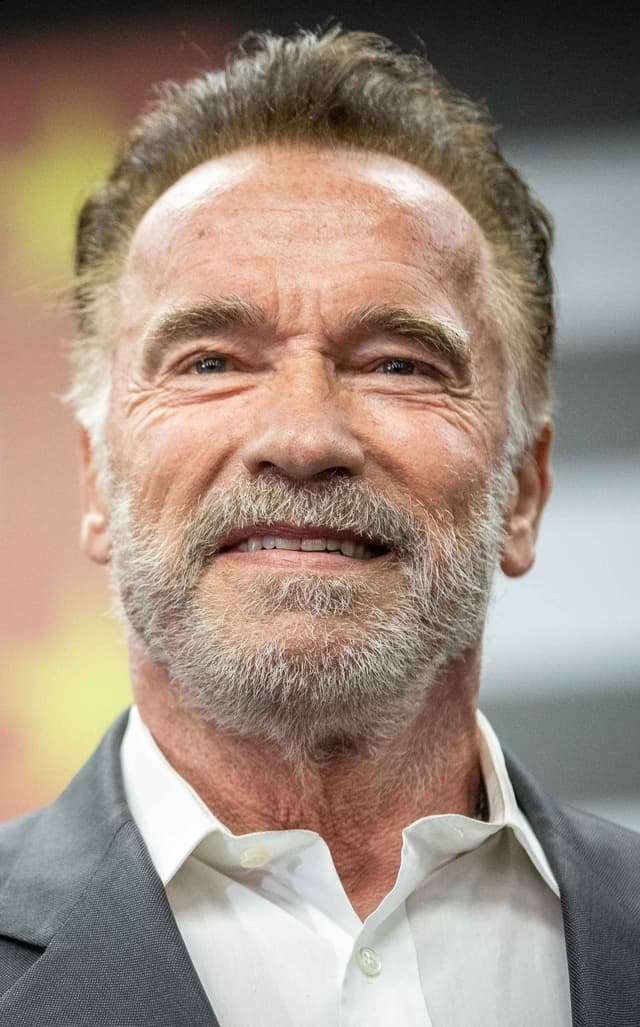
Arnold Schwarzenegger
Multiple ventures (mail order, construction, real estate, entertainment)
A titan in the sports and athletics industry, Arnold Schwarzenegger transformed his humble beginnings into a multifaceted career as an entrepreneur and entertainer. Driven by an unwavering ambition, he rejected a lucrative offer of $200,000 per year in the 1970s to manage a leading gym chain, choosing instead to pursue his goal of becoming Mr. Universe and establishing his legacy in bodybuilding. His ventures spanned mail order, construction, real estate, and entertainment, culminating in his role as a global icon and Governor of California. Emphasizing the importance of competition and resilience, Schwarzenegger embodies the idea that every challenge is an opportunity for growth, motivating countless entrepreneurs to embrace their struggles as they strive for success.
Core Principles
competitive advantage
Recognize that most people self-select out of excellence by limiting their effort. Your competitive advantage comes from being willing to do what others will not.
While other bodybuilders trained three times a week, Arnold escalated to six. While others resisted weak-point training, Arnold embraced it. His advantage was not genetic but rooted in willingness to sacrifice and work harder than his peers.
“I was hungrier than anybody. I wanted it so badly it hurt. I knew there could be no one else in the world who wanted this title as much as I did.”
Expand your competitive advantage by entering adjacent fields where no one else is thinking about excellence. Look for underserved aspects of your industry.
While other bodybuilders focused only on muscle development, Arnold noticed that posing was a separate skill. He hired a ballet dancer and took lessons to make his posing graceful and fluid. This gave him an aesthetic edge that judges and audiences preferred.
“I went to hire a dancer at UCLA and started taking ballet lessons to further improve my posing.”
culture
Surround yourself with people who have similar hunger and commitment. This creates mutual accountability and pushes everyone to higher performance.
Arnold realized that training partners were essential. When his motivation dipped, someone saying 'let's do one more rep' made the difference. He also made sure to be that person for others, creating a reciprocal environment of pushing and being pushed.
“It became extremely important to have somebody standing behind me saying let's do one more arnold come on another set one more rep and it was just as important for me to help somebody else.”
finance
Never allow yourself to be in a financially vulnerable position. Build multiple income streams early so you can make decisions based on vision, not desperation.
Before pursuing movies seriously, Arnold built wealth through mail order fitness products and a construction business with Franco. When offered $200,000 per year to manage a gym chain, he declined because it wouldn't serve his stated goals. His pre-existing income from business allowed him to turn down acting roles that didn't align with his vision and negotiate from strength rather than need.
“I was very glad I could afford to say no with the income from my businesses. I didn't need money from acting. I never wanted to be in a financially vulnerable position.”
Build financial independence through unglamorous means (real estate) so you can be selective about higher-profile opportunities. Money earned in boring businesses buys freedom to pursue interesting ones.
While training and competing, Arnold invested his earnings in multifamily apartment buildings with a savvy realtor. By owning income-bearing property, he generated passive cash flow. This allowed him to reject bad film roles and only pursue opportunities that aligned with his vision of stardom, not just acting work.
“We lived in the manager's front quarters while he rented out the rest of the units. At 26 years old, he now owned income-bearing real estate.”
focus
Be deliberate about which opportunities to pursue and which to decline. Not all opportunities move you toward your vision. Declining them is wisdom, not loss.
Arnold was offered multiple lucrative opportunities: managing a gym chain for $200,000 annually, various acting roles as bouncers or secondary characters, and other ventures. He declined all of them because they did not serve his written goal of becoming Mr. Universe and a leading man in movies. Financial offers were tempting but insufficient justification.
“But that was not my goal. The same with the offer I received in the early 70s to manage a leading gym chain for $200,000 a year. Nothing was going to distract me from my goal. No offer, no relationship, nothing.”
Eliminate all distractions that don't serve your primary goal. Complete mental dedication requires removing anything that might fragment your focus.
Arnold refused to allow himself relationships, friendships, or social activities that would distract from his goal of becoming Mr. Universe. He eliminated his parents from his inner circle temporarily and focused all energy on his craft for years.
“I couldn't be bothered with girls as companions my mind was totally locked into working out and I was annoyed if anything took me away from it. Whatever I thought might hold me back, I avoided.”
Use intense concentration and mental focus to unlock hidden capacities. Most people fail because they allow distractions and competing thoughts to dilute their effort.
Arnold discovered that when he went to the gym with a clear mind, free of worries about bills or relationships, his results multiplied. He would eliminate every distracting thought before a workout, knowing that partial focus yields only marginal progress.
“When I went to the gym, I got rid of every alien thought in my mind. I knew that if I went in there with concern about bills or girls and let myself think about those things, I'd only make marginal progress.”
Commit completely to a single mission and eliminate plan B entirely. Pick one goal, burn the boats, and never doubt yourself. Do everything necessary to achieve that singular objective.
Arnold identified bodybuilding as his path out of Austria at age 15 and committed with absolute clarity. He trained 2-4 times daily when competitors trained once, took ballet classes to perfect posing, studied psychology to develop mental advantages, and aligned only with people who shared his passion. He rejected suggestions to pursue anything else.
“It became clear to me that bodybuilding was the thing for me. This is what I was meant for at that time. And I then saw very clearly what I could achieve, and that gave me a tremendous amount of motivation.”
innovation
Shock your system periodically by doing something completely different. Routine creates adaptation and plateaus, while novel challenges create rapid growth.
Arnold began taking weekly outdoor training sessions where he would perform 55 sets of squats in the forest. These extreme sessions shocked his muscles and produced remarkable growth. He combined the hard work with celebration and pleasure, making the challenge sustainable.
“We did torturous workouts in the fresh air. We challenged each other. We experienced a lot of pain. That was the first time I knew pain could become pleasure.”
Believe you can learn anything if you invest time and attention. Seek out experts in new domains and absorb everything they teach. Recognize your ability to master new content is a superpower.
When Arnold decided to become an actor, he took accent removal classes, acting classes, and even violin lessons for a specific role. He craved interaction with new experts and remembered every tip. He applied the same learning methodology that made him a champion bodybuilder to acting, business, and politics.
“Arnold already recognized that he had the ability to learn any content he chose. Now he was eager to take that same drive and learn everything he could about the movie-making world.”
leadership
Be ruthlessly clear about your priorities with those in your life. Ambiguity creates resentment. Transparency, even when uncomfortable, allows others to make informed decisions about their participation.
Arnold explicitly told Barbara his plan: dominate bodybuilding, then leverage that platform for movies, then build a business empire. He made no promises of marriage or family during these building phases. Though she struggled with this clarity, it was honest communication rather than deception.
Associate only with those who share your passion and vision. Eliminate time-wasters and naysayers without guilt. Your network determines your trajectory.
Arnold aligned exclusively with people who understood and supported bodybuilding. He walked away from his tiny Austrian town forever. He rejected social suggestions that didn't advance his goals. He built relationships with gym enthusiasts, trainers, and later entrepreneurs who shared his ambition.
“He had no time to waste on naysayers. He aligned only with those who shared his passion.”
Do not attempt to change formidable individuals. Do not suggest they compromise their mission for your comfort. Either accept them as they are or exit the relationship.
Barbara's repeated attempts to change Arnold (requesting marriage, asking him to slow down, suggesting normal life) were futile because they were fundamentally at odds with who he was. He made this clear from the beginning. Her continued hope for change created her suffering.
“You're asking him not to be Arnold.”
Charisma can be developed and weaponized. Use humor, boisterousness, and personality to create allies and memorable impressions. The more genuinely you poke fun at someone, the more you're signaling you like them.
Arnold had exceptional charisma beyond what his appearance alone would suggest. He would make outlandish jokes at dinner tables (farting accusations), create memorable moments, and attract people through personality. Even decades after breaking up with Barbara, her mother still invited him to family events because his personality created genuine connection.
Be selective about relationships with people pursuing different life visions. If someone wants you to slow down, settle down, or abandon your mission, they are incompatible with your trajectory regardless of emotional connection.
Barbara repeatedly asked Arnold to marry her, have children, and slow down. Arnold was explicit that this was impossible given his goals. For six years, she hoped he would change. He never did. This mismatch was inevitable, not fixable. Attempting to change him was futile.
learning
Learn from successful operators in your field by observing how they conduct business. Selective imitation of proven business practices accelerates your own success.
Arnold studied Joe Weider's media empire and business practices. Rather than seeing him as competition, he viewed Weider as a teacher. He learned specific business techniques and later applied them to his own ventures.
“Business fascinates me. Joe Weider is a wizard at it. And I like being able to watch him operate.”
marketing
Work like hell and then advertise relentlessly. Assume that no matter how good your product is, most people don't know about it, so telling them is your responsibility, not beneath you.
Arnold observed that most actors, artists, and writers treated marketing as beneath them once their work was complete. He rejected this mentality entirely. After finishing a movie, he considered his job only half done. He actively promoted films, appeared on shows, did interviews, and invested in making people aware of his work. He learned this from Ted Turner's advice and applied it across bodybuilding, movies, books, and real estate.
“No matter what I did in life, I was aware that you had to sell it. You can have the greatest movie in the world but if you don't get it out there if people don't know about it, you have nothing. It's the same with poetry, with painting, with writing, with inventions.”
Leverage cultural differences and perceived outsider status as competitive advantages. Use what makes you different as marketing material.
Arnold noticed that Americans valued foreign names and expertise, Swedish massage, Italian design, German ingenuity. When starting his construction business with Franco, they advertised as 'European bricklayers, experts in marble and stone.' They capitalized on being foreign, and it became a selling point rather than a liability. His Austrian accent eventually became iconic rather than a limitation.
“We decided that we should highlight being European. I also noticed that Americans like to bargain a little bit and feel like they're getting a deal. Americans love foreign names, Swedish massage, Italian design, Chinese herbs, German ingenuity.”
Make yourself synonymous with your category. The ultimate business goal is to become the default association when people think of your entire industry.
Arnold didn't just want to be a great bodybuilder, he wanted to become the face of bodybuilding itself. He worked to ensure that whenever anyone touched a barbell, they thought of Arnold. He became an ambassador and evangelist for the entire sport.
“I wanted every single person who touched a weight to equate the feeling of the barbell with my name. The moment he got hold of it, I wanted him to think Arnold.”
Understand that media and self-promotion are non-negotiable. You must promote, promote, promote constantly or your work dies. Early visibility in media compounds over time.
Arnold understood this principle from age 15 when he found Reg Park on a magazine cover. He leveraged magazines, documentaries, interviews, and personal appearances constantly. In the early 70s as new media emerged, he navigated every channel with dexterity. This wasn't vanity; it was a core business practice.
“Stay public. You gotta promote, promote, promote, or it all dies. You just gotta be out there all the time.”
mindset
Transform harsh circumstances into fuel for ambition rather than excuses for failure. Channel difficult upbringings into vision, goal-setting, and hunger for success.
Arnold's father was brutally demanding, which would have crippled many sons. Instead, Arnold recognized that his father's harshness, combined with Austria's post-war poverty, created the hunger and drive that propelled him to America and success. He explicitly states that without these harsh conditions, he likely would have stayed in Austria and lived a normal life.
“I became Arnold because of what he did to me. I recognized that I could channel my upbringing in a positive way rather than complain.”
Every difficult rep, every painful set, every challenging task is a step closer to your goal. Flip your mindset to find joy in struggle rather than suffering in it.
While other bodybuilders grimaced and suffered through training, Arnold smiled throughout his workouts. He deliberately reframed pain as progress. Later, when learning sword combat for Conan or practicing sword transitions for bodybuilding competitions, he found joy in the difficulty because he understood each effort moved him closer to his vision of being Mr. Universe and a movie star.
“Every painful set, every extra rep was a step closer toward my goal of winning Mr. Austria. And I think that's that's a fantastic way to flip the mindset. So, yes, it's really difficult struggling, but I should be happy about that because I'm getting closer to where I want to go.”
Maintain unwavering belief in yourself even when every external voice tells you it's impossible. Use rejection as proof of concept, not defeat.
Hollywood agents told Arnold his accent was too thick, his body too large, his name wouldn't fit on a poster. He was offered roles as bouncers, Nazi officers, wrestlers, and prisoners, but rejected all of them. He held the conviction that he was born to be a leading man and would only accept roles that reinforced that identity. This self-belief, combined with financial independence from his businesses, allowed him to say no until Conan offered the right opportunity.
“I felt that I was born to be a leading man. I had to be on the posters. I had to be the one carrying the movie. I realized that this sounded crazy to everybody but me. But I believed that the only way you become a leading man is by treating yourself like a leading man and working your ass off.”
Develop competence through repetition, not talent or shortcuts. Thousands of reps build the conviction that there are no shortcuts to excellence.
Whether learning English pronunciation by saying the same sentence 10,000 times, practicing sword combat two hours daily, learning tango for True Lies, or training in bodybuilding, Arnold believed all excellence requires mileage. He explicitly states there are no shortcuts: it is always reps, reps, reps. This conviction freed him from seeking magic formulas and allowed him to commit to the grinding work required.
“There are no shortcuts. Everything is reps, reps, reps. No matter what you do in life, it's either reps or mileage. If you want to get good at skiing, you have to get on the slopes all the time. If you want to play chess, you have to play tens of thousands of games.”
Do not overthink before taking action. The more information you gather about potential problems, the more likely you will be paralyzed. Enter with optimism and solve problems as they emerge.
When considering buying his first apartment building for $215,000, Arnold's friend Artie warned him about all the potential disasters: lawsuits, drunk tenants, noise complaints. Arnold deliberately stopped listening and told himself he would walk into problems like a puppy and figure out what was really needed. His belief was that overthinking prevents action, while optimistic action creates solutions.
“Don't tell me any more of this information. I like to always wander in like a puppy. I want to walk into a problem and then figure out what the problem really is. Don't tell me ahead of time. Often, it's easier to make a decision when you don't know as much because then you can't overthink.”
Frameworks
The Dual-Lifecycle Strategy
In a single domain, master one phase (e.g., competitor), then deliberately transition to the next phase (e.g., entertainer) rather than stretching one success across multiple decades. Arnold mastered bodybuilding, then retired while at peak to pursue acting, then real estate and politics. The framework involves knowing when to close one chapter and open another.
Use case: When you reach the peak of one domain, consider whether your next growth comes from mastering a new domain rather than defending your current position.
The Blueprint Method
Identify successful people in your field, study not just their achievements but their entire routines and decision-making processes, and then adapt their blueprint to your own context. Arnold applied this with Reg Park (bodybuilding to movies to wealth), Charles Atlas (mail order fitness), and Joe Weider (business operations). The framework involves finding someone five to ten years ahead of you and reverse-engineering their path.
Use case: When entering a new domain or trying to accelerate progress, find someone who has succeeded in that domain and study their complete journey, not just their end result.
The 24-Hour Audit
When claiming insufficient time for a goal, conduct a rigorous audit of how all 24 hours are actually spent. Allocate 6-8 hours for sleep, account for mandatory activities, then identify the remaining discretionary hours. This framework assumes no time scarcity, only allocation inefficiency. It forces accountability by making invisible time visible.
Use case: When you or someone else claims they don't have time to pursue a goal, break down the actual hourly allocation to identify where time is being misallocated or wasted.
The Reframing Reality Framework
When facing setbacks or difficult circumstances, deliberately reframe them as advantages or fuel rather than obstacles. Arnold transformed his harsh upbringing into hunger, his thick accent into a memorable brand, his outsider status into a competitive advantage, and difficult training into joyful progress. The framework involves asking: 'How can I flip the interpretation of this situation to my advantage?'
Use case: When facing adversity, circumstances beyond your control, or feedback that seems limiting, reframe it as fuel or advantage rather than accepting it as a constraint.
The Aligned Interest Deal Structure
When entering a partnership or negotiation, structure the deal so that all parties share risk and reward proportionally based on their contributions. This creates mutual motivation for success and replaces zero-sum negotiation with collaborative optimization. Arnold applied this with Twins, where all three parties received 37.5% of income based on their relative market value.
Use case: When negotiating high-risk or long-term deals, consider structuring compensation to align interests rather than taking guaranteed payments that may undervalue future upside.
The Empire Expansion Sequence
Begin by developing mastery in your core domain. Once proficient, identify adjacent revenue streams that leverage your expertise and reputation. Systematically expand into mail-order products, seminars, appearances, endorsements, and media. Each expansion reinforces your brand while diversifying income.
Use case: When moving from individual contributor excellence to building a sustainable business empire
The Visualization Protocol
Create a clear mental image of your desired outcome and reinforce it constantly through multiple sensory channels. Write affirmations, paste pictures, create vision boards, and repeat your desired state dozens of times daily. The mind works to manifest what it consistently visualizes.
Use case: When you need to build conviction about a goal before the external world confirms it, or when motivation fluctuates
The Weak Point Matrix
Systematically identify the specific areas where you are weakest compared to champions in your field. Record these weaknesses visibly, adjust your efforts to focus disproportionately on these gaps, and measure the specific improvements over time. This inverts the natural human tendency to work on strengths.
Use case: When seeking competitive advantage by addressing what everyone else ignores, or when progress has plateaued
The Distraction Elimination Method
Identify everything that might fragment your focus from your primary goal, then systematically remove or minimize it. This includes relationships, activities, social obligations, and even family relationships if necessary. The goal is creating a moat around your mental energy.
Use case: During the critical early phase of pursuing an ambitious goal when focus determines viability
The Blueprint Replication Process
Find someone further along your intended path and become obsessed with understanding every detail of how they think, train, live, and work. Study their decisions, recreate their processes, and use their success as a template. This accelerates learning by providing a proven pathway.
Use case: When entering a new field or pursuing an ambitious goal where someone else has already mapped the terrain
Stories
Arnold was offered $200,000 per year to manage a leading gym chain, a massive sum in the 1970s. He turned it down immediately because it didn't serve his written goal of becoming Mr. Universe and a leading man in Hollywood. No amount of money would distract him from his vision.
Lesson: Clarity on your primary goal allows you to say no to lucrative distractions. Money is not the primary goal; the vision is. Protecting your vision from distraction is more valuable than incremental cash.
When negotiations for Conan broke down and producer Dino De Laurentiis retracted the promised 5% of profits after a personal conflict, Arnold's lawyer expected a fight. Instead, Arnold immediately told them to take back all the points. He reasoned that getting the role of Conan was worth far more than 5% of profits because it would establish him as a movie star, leading to future roles and earnings.
Lesson: In lopsided negotiations, sometimes the real value is elsewhere. Preserve access to rare opportunities even if it means conceding on points, because the downstream value often exceeds what you're fighting over.
When a college student complained about lacking time to study while working part-time due to tuition costs, Arnold broke down his actual schedule: two to three hours of classes, three hours of studying, leaving 16 hours for other pursuits. Arnold then shared his own schedule: five hours of training, four hours of acting class, several hours of construction work, college, homework, and more. The student had 18 hours of discretionary time; the issue was not scarcity but allocation.
Lesson: Everyone has the same 24 hours. Claims of insufficient time are claims of poor organization. The solution is not more time but better allocation.
After losing his first Mr. Olympia competition in Miami despite winning Mr. Universe, Arnold spiraled into despair for hours. By morning, he arrived at a harsh conclusion: he had relied on momentum instead of preparation. He hadn't dieted properly, hadn't trained as hard as he could have. He declared that from that moment forward, he would never be an amateur about preparation again.
Lesson: When you fail, own it as a failure of your effort and preparation, not external circumstances. This transforms failure from shame into information that changes your behavior.
Arnold and Franco started a construction business highlighting their European identity, advertising as 'European bricklayers, experts in marble and stone.' When a big earthquake hit the San Fernando Valley in 1971, they immediately ran advertisements in the Los Angeles Times and became swamped with work. At one point they had 15 bodybuilders mixing cement and carrying bricks.
Lesson: Being in the right place at the right time matters, but you must be ready and visible when opportunity arrives. Capitalize on external events by having infrastructure to respond immediately.
While most bodybuilders in his gym at 15 only trained their bodies, Arnold studied the entire routine of his friend Kurt's father: his day job, his work schedule, his training discipline, his philosophical beliefs about balancing body and mind. Arnold absorbed not just the training but the complete lifestyle and philosophy that produced results.
Lesson: Don't just copy someone's achievement, copy their entire system and philosophy. Study how they spend their time, what they value, and how they make decisions, then adapt that system to your context.
Arnold discovered a magazine with Reg Park's full life story: growing up poor in England, becoming Mr. Universe, being invited to America as a champion bodybuilder, starring in Hercules in Rome, and marrying a beautiful woman from South Africa. Arnold says the story crystallized a new vision for him instantly. He decided he would become another Reg Park, and the vision became so clear and specific that he felt it had to happen.
Lesson: A vivid vision of a complete life path, not just a single achievement, can crystallize your entire strategy. Finding someone five to ten years ahead of you and modeling their trajectory makes your own path seem inevitable rather than impossible.
After achieving significant fame and success in his 40s, The Last Action Hero underperformed at the box office, released unfortunately after Jurassic Park dominated. People called expressing sympathy and concern. Arnold realized that most people hadn't read Variety, hadn't seen the reviews, and had no idea the movie underperformed. They were simply saying something nice based on their own worldview, not judging him.
Lesson: Your failures are far less visible to the world than they feel to you. Most people are too focused on themselves to notice or care about your temporary setbacks.
After his first intense weight training session at age 15, Arnold rode his bike 8 miles home but was so weak he fell off twice, with numb legs and no feeling. The next morning he could not lift his arm to comb his hair or hold a coffee cup. Rather than being discouraged, he interpreted the extreme soreness as proof that his muscles were growing and became even more obsessed with training.
Lesson: Pain and exhaustion are not signals to quit but evidence that you are pushing past previous limitations. The discomfort means growth is happening. Reframe suffering as confirmation that your system is working.
When Arnold's friend Carl noticed Arnold's inconsistent workout performance on different days, he explained that it was not the body changing but the mind. On good days, Arnold's goals were clearer. On bad days, he needed someone to push him. Arnold realized he needed both partners and had to be a partner to others, creating mutual accountability.
Lesson: Consistency comes from understanding that motivation and mental state fluctuate. Build systems and surround yourself with people who push you when your own internal drive weakens. Be that person for others.
Notable Quotes
“I always wanted to be an inspiration for people, but I never set out to be a role model in everything. How could I be when I have so many contradictions in my life?”
Introduction to his philosophy on authenticity. Arnold rejects the idea that successful people must be consistent in all domains.
“Have a vision. Trust yourself. Break some rules. Ignore the naysayers. Don't be afraid to fail.”
His core principles shared with graduating classes, woven throughout his memoir as foundational lessons.
“I was too impatient for that. I wanted the toughest competition I could get. And this was the most aggressive career move I could make.”
Explaining why he skipped intermediate competitions and went directly to Mr. Universe in London instead of following the conventional ladder of Mr. Austria, then Mr. Europe.
“Instead of existing, I started to live. I was catapulted out of the dull routine. Now all of a sudden there was joy. There was struggle. There was pain. There was happiness. There were pleasures. There were women. There was drama. Everything made it feel like now we were really living.”
Describing the transformative effect that discovering bodybuilding had on him as a teenager, moving from existence to genuine living.
“I became absolutely convinced that I was special and meant for bigger things. I knew I would be the best at something, although I didn't know what, and that it would make me famous.”
Reflecting on his grade school certainty about his destiny, before he knew the specific path.
“The story crystallized a new vision for me. I could become another Reg Park. All my dreams suddenly came together and made sense.”
The moment he discovered Reg Park's magazine biography and understood a complete template for his life from poverty to fame to Hollywood to wealth.
“I never felt that I was good enough, strong enough, smart enough. He let me know that there was always room for improvement. A lot of sons would have been crippled by his demands, but instead the discipline rubbed off on me. It turned into drive.”
Describing how his father's relentless criticism transformed from emotional damage into competitive drive and excellence.
“When it was time to train, I never missed a session.”
Describing his compartmentalization of wild, fun-loving behavior and absolute discipline where it mattered most.
“You have to build the ultimate physical machine, but also the ultimate mind. Read Plato. The Greeks started the Olympics, but they also gave us the great philosophers. And you've got to take care of both.”
The philosophy that shaped Arnold's approach to balancing physical and intellectual development.
“Every painful set, every extra rep was a step closer toward my goal of winning Mr. Austria.”
His method of reframing pain and difficulty as progress rather than suffering.
Frequently Asked Questions
What are Arnold Schwarzenegger's key business principles?▼
Arnold Schwarzenegger's core principles include: Recognize that most people self-select out of excellence by limiting their effort. Your competitive advantage comes from being willing to do what others will not.. Expand your competitive advantage by entering adjacent fields where no one else is thinking about excellence. Look for underserved aspects of your industry.. Surround yourself with people who have similar hunger and commitment. This creates mutual accountability and pushes everyone to higher performance.. Founder Almanac has cataloged 30 total principles from Arnold's career.
What can entrepreneurs learn from Arnold Schwarzenegger?▼
Key lessons from Arnold Schwarzenegger include: Clarity on your primary goal allows you to say no to lucrative distractions. Money is not the primary goal; the vision is. Protecting your vision from distraction is more valuable than incremental cash.. Explore 10 stories and 10 frameworks from Arnold's experience.
What is Arnold Schwarzenegger known for in business?▼
A titan in the sports and athletics industry, Arnold Schwarzenegger transformed his humble beginnings into a multifaceted career as an entrepreneur and entertainer. Driven by an unwavering ambition, he rejected a lucrative offer of $200,000 per year in the 1970s to manage a leading gym chain, choosing instead to pursue his goal of becoming Mr. Universe and establishing his legacy in bodybuilding. His ventures spanned mail order, construction, real estate, and entertainment, culminating in his role as a global icon and Governor of California. Emphasizing the importance of competition and resilience, Schwarzenegger embodies the idea that every challenge is an opportunity for growth, motivating countless entrepreneurs to embrace their struggles as they strive for success.
More Sports & Athletics Founders

Want Arnold's advice on your business?
Our AI has studied Arnold Schwarzenegger's biography, principles, and decision-making frameworks. Ask any business question.
Start a conversation