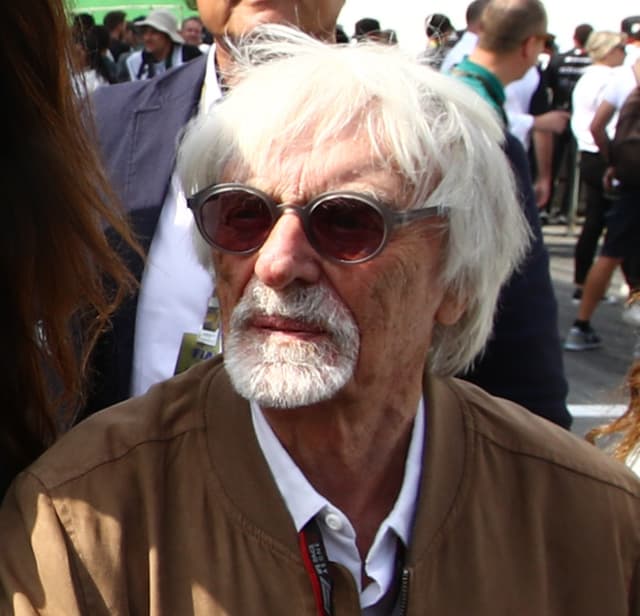
Bernie Ecclestone
Formula One (FOCA)
A transformative figure in the world of motorsport, Bernie Ecclestone revolutionized Formula One during his tenure from the 1960s to the 2000s, turning it into a global commercial powerhouse. Growing up in postwar London without indoor plumbing, he developed a keen business acumen early on, selling baked goods on his newspaper route. Under his leadership, Formula One Management secured lucrative television deals, generating revenue streams that increased the sport's value exponentially; by the 1990s, F1's annual income surpassed $1 billion. Ecclestone's principles emphasized collaboration among competing teams, recognizing that shared interests could elevate the entire industry, while his caution against relinquishing future rights underscored his strategic foresight. His notable remark, "The sport is on the table, and the business is underneath it," encapsulates his belief in the intricate balance between competition and collaboration, a lesson that resonates with entrepreneurs today.
Core Principles
finance
Build your business to compound over decades, not quarters. Don't interrupt the compounding by exiting too early or stopping your investment.
Ecclestone entered Formula One around 1960 and didn't exit for decades. He continuously reinvested in building the business, compounding small percentage cuts from growing revenues. By staying in place for forty years, he captured the upside of television, sponsorship, and global expansion that outsiders couldn't predict.
“This guy did not interrupt the compounding. He built his career for nearly 45 years, starting in the early 1960s and not stopping until his mid-80s.”
Money management matters more than technical mastery. The person who can manage money manages all others, even those with superior technical skills.
Ecclestone was never the fastest driver, the best engineer, or the most prestigious team owner. But he understood that controlling television rights, sponsorship revenue, and circuit fees meant controlling the entire sport. His ability to manage F1's money for four decades made him more powerful than any engineer or driver.
“The sport is on the table, and the business is underneath it.”
operations
Add order to chaos. Standardize processes and create predictability where none existed to unlock hidden value for all participants.
Ecclestone took Formula One from a chaotic collection of races with uncertain attendance and inconsistent prize money and standardized the calendar, guarantees, and TV broadcast times. By moving all races to 2 p.m. Europe time, he made the sport findable and watchable. This order transformation enabled sponsors and broadcasters to plan around the sport.
“How the hell are you going to grow your sport? How are you going to reach your customers and your fans if they don't know when it's on?”
product
Identify underutilized assets and monetize them by thinking differently. The paddock, the broadcast window, and sponsor visibility were hiding in plain sight.
Ecclestone recognized that television was turning the NFL into a profit machine in America. He then took that insight and applied it to European Formula One, building broadcast deals that made the sport globally visible. He also monetized the paddock through sponsorship access and created exclusive experiences that sponsors would pay premium prices to offer their clients.
“Look what the NFL is doing with TV in America. Why can't we just take that idea and apply it to our sport in Europe?”
strategy
Never surrender future rights, especially when you don't yet understand their value. The most expensive mistake is trading away something priceless for something cheap today.
In 1981, the FIA traded away their 30 percent stake in Formula One television rights for nine million dollars. Decades later, Liberty Media reportedly turned down a twenty billion dollar offer for those same rights. Ecclestone, by contrast, locked in control of TV rights early and compounded those rights into billions in value.
“Don't give up future rights. You have no idea how valuable these rights are going to be in the years to come.”
Recognize that competing teams are often business partners disguised as rivals. Collaborate on industry structure while competing on performance to create a rising tide.
Bernie Ecclestone saw that F1 teams spent most of their time losing money through fragmented negotiations with individual circuits. He proposed forming a unified front (FOCA) to negotiate as a cartel, keeping appearance fees, scheduling, and television revenues under collective control while teams still competed intensely on track.
“The teams were only really rivals for a couple of hours a dozen times a year on the track. They needed to understand that the rest of the time they were business partners.”
Control information asymmetry and ambiguity to maintain advantage. The appearance of chaos is a powerful negotiating weapon when the other side doesn't know where they stand.
Ecclestone famously kept the only accurate accounting of F1 operations inside his own head. He disliked written contracts, preferred handshake deals, and scheduled meetings so tightly that he could leave whenever negotiations became unfavorable. No competitor could predict his next move or see the full picture of what was happening.
“Your problem is you always want things absolutely clear. And sometimes it's better if things are not clear.”
Be early to recognize where value is migrating. Control that channel before others understand it exists. Television was the future of sports; Ecclestone recognized it when others dismissed it.
In the 1970s and 1980s, most F1 teams and circuits were skeptical about the value of television. Ecclestone bet heavily on broadcast rights when they seemed worthless. He secured those rights for low sums, then spent decades capturing the upside as television became the engine of sports economics globally.
“I don't care about the cash right now. What I care about is the visibility, because the real cash is from the sponsors.”
Frameworks
The Cartel Framework
Unite fragmented competitors around a shared interest (industry structure, pricing, standards) while preserving competition within that structure. Ecclestone convinced individual F1 teams to act as one entity (FOCA) when negotiating with circuits and television networks, then secured guaranteed appearance fees for all. This created stability that enabled sponsors and broadcasters to plan long-term investments.
Use case: Building industry standards, negotiating power, or value chains when participants are losing money individually but could win collectively
The Order from Chaos Framework
Document the inefficiencies and randomness plaguing an industry, then systematically introduce standardization and predictability. Make calendars consistent, pricing transparent, payment reliable, and timing certain. This transforms scattered participants into an organized system that attracts investment and builds brand loyalty.
Use case: Scaling fragmented markets or industries by introducing operational discipline and removing uncertainty
The Asymmetric Information Framework
In negotiations, maintain information advantage by keeping your thinking opaque while learning everything about the other side. Don't use written contracts if verbal agreements create uncertainty. Schedule meetings too tightly to allow for deep negotiation. Control what information flows and when, making the other side feel off-balance.
Use case: Negotiating from a position of structural weakness against larger, better-resourced opponents
The Future Rights Framework
Never trade away rights to future revenue streams, especially when you cannot calculate their value. If you don't understand how valuable something will become, assume it's more valuable than the immediate cash offer. Television rights, data, IP, and audience relationships compound in value faster than most other assets.
Use case: Making long-term business decisions about what to keep and what to license or sell
Stories
Bernie Ecclestone grew up as the son of a fisherman in postwar London, in a house without indoor plumbing. He began his business career selling cookies and buns at markup on his newspaper route. He later became a used car dealer in rough neighborhoods dominated by gangsters and thugs. By learning to navigate that world of sharks, he developed the negotiating skills and instinct for deal-making that would eventually make him a billionaire.
Lesson: Difficult childhoods and rough environments can forge powerful business instincts. Scarcity teaches hustling. Dealing with sharks teaches negotiation. The skills forged in hardship transfer to high-stakes business.
In 1981, after a decade of chaos and conflict between FOCA (Bernie Ecclestone's organization of teams) and FISA (the sport's governing body), they negotiated a compromise called the Concord Agreement. FISA kept control of technical and sporting matters. FOCA kept control of promotion and commercial rights. In that deal, Ecclestone secured the television rights for Formula One. Years later, the FIA traded away their 30 percent stake in those same rights for nine million dollars. Decades later, Liberty Media reportedly turned down a twenty billion dollar offer for those same television rights.
Lesson: Future rights compound in value far faster than most entrepreneurs anticipate. What seems worthless today becomes invaluable later. Never surrender control of distribution channels, audience relationships, or media rights, even when you cannot calculate their future value.
Bernie Ecclestone entered Formula One around 1960 as a used car dealer and driver agent. He saw fragmented teams negotiating separately with circuits, losing money, and having no business model. He proposed to create FOCA, an organization where he would take responsibility for all negotiations and guarantee appearance fees, in exchange for 8 percent of revenues. Other teams shouted him down at first, but he persisted. Then he spent the next four decades steadily increasing his percentage cut and consolidating power until he controlled television rights, sponsorship, circuit fees, and the entire commercial apparatus of the sport. By the 1990s, he was the highest-paid executive in Britain and a billionaire.
Lesson: Long-term wealth comes from controlling the cash flow architecture of an industry, not from winning a single race or deal. By solving a problem that everyone else sees as unsolvable (fragmented money flows), you position yourself to capture the upside of the entire system as it grows.
Notable Quotes
“The sport is on the table, and the business is underneath it.”
Ferrari's advice to Ecclestone about the true nature of Formula One, suggesting that spectacle and competition are the visible layer while profit and control are what really matter
“You should never let people know you're running a brothel. You have to pretend it's a hotel and keep the brothel in the basement.”
Ferrari's cynical advice to Ecclestone about the importance of maintaining appearances and keeping true operations hidden from public view
“The teams were only really rivals for a couple of hours a dozen times a year on the track. They needed to understand that the rest of the time they were business partners.”
Ecclestone's insight that allowed him to unite fragmented F1 teams into FOCA, reframing their relationship and creating a cartel for negotiating power
“Your problem is you always want things absolutely clear. And sometimes it's better if things are not clear.”
Ecclestone's principle for maintaining negotiating advantage through strategic ambiguity and information asymmetry
“I was the used car dealer. He was the barrister.”
Ecclestone's description of his partnership with Max Mosley, highlighting how their different backgrounds and styles complemented each other in negotiations
“I carry out my business in a very unusual way. I don't like contracts. I like to be able to look someone in the eye and then shake them by the hand rather than do it the American way with 92 page contracts that no one reads or understands.”
Ecclestone explaining his preference for verbal agreements and handshake deals, which allowed him to maintain flexibility and information advantage
“If I say I'll do something, then I'll do it. If I say I won't, then I won't.”
Ecclestone's statement about his reliability as a deal-maker, suggesting that his word and personal honor were more important to him than written legal frameworks
“Nobody was there trying to stop me from doing something that I thought was good.”
Ecclestone's observation that in the absence of clear rules or enforcement, he was able to gradually consolidate power and reshape Formula One
Frequently Asked Questions
What are Bernie Ecclestone's key business principles?▼
Bernie Ecclestone's core principles include: Build your business to compound over decades, not quarters. Don't interrupt the compounding by exiting too early or stopping your investment.. Money management matters more than technical mastery. The person who can manage money manages all others, even those with superior technical skills.. Add order to chaos. Standardize processes and create predictability where none existed to unlock hidden value for all participants.. Founder Almanac has cataloged 8 total principles from Bernie's career.
What can entrepreneurs learn from Bernie Ecclestone?▼
Key lessons from Bernie Ecclestone include: Difficult childhoods and rough environments can forge powerful business instincts. Scarcity teaches hustling. Dealing with sharks teaches negotiation. The skills forged in hardship transfer to high-stakes business.. Explore 3 stories and 4 frameworks from Bernie's experience.
What is Bernie Ecclestone known for in business?▼
A transformative figure in the world of motorsport, Bernie Ecclestone revolutionized Formula One during his tenure from the 1960s to the 2000s, turning it into a global commercial powerhouse. Growing up in postwar London without indoor plumbing, he developed a keen business acumen early on, selling baked goods on his newspaper route. Under his leadership, Formula One Management secured lucrative television deals, generating revenue streams that increased the sport's value exponentially; by the 1990s, F1's annual income surpassed $1 billion. Ecclestone's principles emphasized collaboration among competing teams, recognizing that shared interests could elevate the entire industry, while his caution against relinquishing future rights underscored his strategic foresight. His notable remark, "The sport is on the table, and the business is underneath it," encapsulates his belief in the intricate balance between competition and collaboration, a lesson that resonates with entrepreneurs today.
More Sports & Athletics Founders
Want Bernie's advice on your business?
Our AI has studied Bernie Ecclestone's biography, principles, and decision-making frameworks. Ask any business question.
Start a conversation