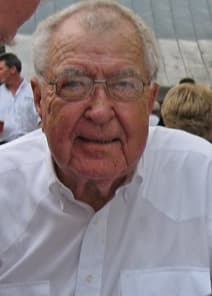
Carroll Shelby
Shelby American
A pioneer in the automotive industry, Carroll Shelby founded Shelby American and became synonymous with high-performance sports cars, most notably the Shelby Cobra, which achieved legendary status with over 1,000 units sold. His journey to success was marked by persistence and resilience, as he faced numerous setbacks before finding his true calling as a race car driver and entrepreneur at nearly 30 years old. Shelby's philosophy emphasized that money should serve as a means to fulfill one's passions rather than an end goal, a principle that resonates with today's entrepreneurs who seek meaningful ventures. Known for his hands-on approach, he famously stated that they could adapt designs on the fly, showcasing his belief in immediate action and innovation. Through his life, Shelby exemplified the importance of self-awareness and understanding one's passions as foundational to achieving lasting success.
Core Principles
culture
Growth and scale inevitably change company culture and dynamics. Rapid scaling through outside funding brings political and bureaucratic pressures incompatible with entrepreneurial autonomy.
As Ford poured more money into Shelby American, the company grew from a small band of misfits to hundreds of employees. This brought corporate politics, bean counters, and committees that Shelby despised, ultimately making him want to escape the very success he had created.
“Their bean counters seemed to be everywhere.”
Early-stage teams of passionate misfits often outperform larger, more professionally structured teams. Morale, autonomy, and shared purpose trump bureaucratic efficiency in innovative work.
Shelby's early team consisted of hot rodders and enthusiasts from around the world who worked 14-16 hour days and came back the next morning. This intensity and morale was impossible to maintain as Ford expanded the company with corporate processes and Detroit transfers.
“We had hot rodders from England, Switzerland, France, Japan, Australia, New Zealand. People from all over the world wanted to work for this little company. I've never seen a company that had as high of a morale as we had.”
The best team members are often those who cannot work in large organizations. When your company scales, you may lose your best people even if they still love the mission.
As Shelby American grew and incorporated more Ford employees and processes, the original hot rodders and misfits who formed the core team began leaving. They were entrepreneurial spirits incompatible with growing bureaucracy, not disloyal to Shelby personally.
leadership
Charisma and the ability to attract people to your vision is a learnable and invaluable asset. It matters as much as technical skill in building ventures.
Shelby's natural ability to connect with people and get them to believe in his vision was identified by those close to him as his biggest single asset. He used this to convince Ford to back his car company with minimal initial investment and to recruit world-class talent.
“One of Carroll Shelby's natural abilities is to get on with people, or perhaps I should say get in with people. He doesn't even have to make a noticeable effort. They're just attracted to him as though by an invisible magnet.”
Company politics and bureaucracy become problematic in small manufacturing and innovation teams. What is necessary in large organizations undermines decision speed in entrepreneurial ventures.
Shelby observed that Ford's internal politics and approval processes, while necessary for managing mass production, became destructive to Shelby American's ability to innovate quickly and maintain team cohesion.
“Politics, while being necessary within a huge organization that dealt with mass markets, were problematic for a small-scale manufacturer and close to unworkable within a racing team.”
learning
Learning from observing others is invaluable but often overlooked. Spend time around successful people and companies in your field to understand how they operate.
Before building the Cobra, Shelby spent time in Italian racing factories watching how Dino Ferrari and Enzo's team designed and built cars. He hung around factories, observed their processes, and learned from direct observation rather than just racing against them.
“I spent one whole summer with Dino Ferrari. I used to hang around the factory where they were building the cars, hanging around the factory, seeing how everything was put together and how little companies operated. That was the thing that gave me insights on how to put the Cobra together.”
marketing
Differentiation through authenticity is more powerful than trying to blend in. Finding what makes you uniquely you and leaning into it creates memorable branding.
Shelby wore farm overalls while racing because they kept him cooler than traditional racing suits. Rather than changing to fit in, he made this his signature look. The press and public noticed, and it became his brand rather than a liability.
“From that day, the press honed in on Carroll and his farm overalls. The relaxed and casual looking farm boy, half asleep as he sauntered towards his race car. He didn't care what they said. It was all publicity and free at that.”
mindset
Enthusiasm and passion are universal attractive forces that transcend language and culture. They are among the few things that cannot be taught in school but can dramatically accelerate your influence.
Shelby's passion for cars and racing was visible to everyone around him, from Italian factory workers to Ford executives. This authentic enthusiasm attracted world-class talent and investors who wanted to be part of something he believed in.
Self-awareness about what drives you is foundational. You cannot pursue your natural drift unless you first understand who you are naturally and what you're naturally drawn to.
Shelby's breakthrough came after exposure to different experiences in oil fields, trucking, and other businesses. Through these exposures, he realized he could not work for others and needed autonomy. This self-knowledge shaped every subsequent decision.
Money is a means to an end, not the end itself. Pursuing wealth alone leads to dissatisfaction and poor decisions. Financial sufficiency enables pursuing what you actually care about.
Shelby explicitly rejected a path that would have made him a millionaire before 30 by running a concrete business for a wealthy man. He prioritized autonomy and pursuing his passions over maximum wealth accumulation.
“If I was more money-oriented, I'd have stayed with him and become a millionaire before I was 30. Anyway, I'm still here and he's gone.”
Focus is a superpower in the information age. The ability to shut out noise and concentrate on solving the problem at hand separates exceptional performers from the rest.
Shelby had a reputation for extreme focus when engaged in a task, whether racing or building cars. He would eliminate distractions and devote complete attention to the work. This enabled him to see solutions others missed.
Know when to exit a bad situation rather than persisting out of obligation. Recognizing misalignment early saves years of wasted effort.
When Shelby realized he could not work for his father-in-law in the oil business, he left after six months despite the expectation that he would work there for 15 years. He chose autonomy over financial security.
“I went in as a roughneck to learn the oil business. After six months, I said, stick it and left. I tried and I didn't and it didn't work.”
operations
Resourcefulness in the absence of capital is essential for founders. Constraints force creative solutions that larger, better-funded competitors cannot match.
Shelby's early companies were capitalized by loans from the Small Business Administration, credit from feed companies, and borrowed resources. This forced him to be extremely efficient and creative, which became a competitive advantage.
“The small business administration loaned me some money. I built some chicken houses on land that I leased from Karuth... The feed companies and others were happy to provide their products on credit. So off I went.”
resilience
Personal tragedies and setbacks are part of every life. Your response to adversity, not the adversity itself, determines your trajectory.
Shelby lost his father at 18, survived a plane crash during wartime, lost his mother before age 50, endured multiple business failures, and battled heart disease. Rather than surrender, he used each setback as motivation to pursue his passions more urgently.
Early failures teach you what you are not suited for. Rather than viewing failures as permanent setbacks, view them as data points that guide you toward your actual strengths.
Shelby's failed ventures in trucking, oil, and chicken farming were not wastes. Each taught him something about himself, business, and what he did not want to do. This process of elimination eventually clarified what he should do.
Persistence and resilience matter more than natural talent or starting position. Shelby kept trying different ventures and failed multiple times before finding his true calling at nearly 30 years old, which is unusually late for a race car driver.
After failing in trucking, oil fields, chicken farming, and other businesses, Shelby remained determined to pursue what interested him rather than chasing money or security. His willingness to try and fail repeatedly positioned him to eventually succeed when the right opportunity emerged in racing.
“I can't work for anybody.”
Depression and despair can strike even the successful. The path out is reconnecting with your core purpose and taking concrete action toward it.
After retiring from racing with acclaim but unable to fund his car company, Shelby fell into alcoholism and depression. He recovered by refocusing on his core goal of building a sports car and taking steps (starting a driving school, making connections) that moved him toward it.
“He picked himself up, dusted himself off and got back on track to where he wanted to go.”
Understand that human nature includes dishonesty and corruption. Naive trust in others, especially in high-stakes business, can destroy you.
When feed suppliers knowingly supplied defective vaccines to Shelby's chicken operation, he lost his entire flock and business. This taught him that even apparently trustworthy suppliers will cut corners for profit.
“There are a lot of crooks in the feed business. I found that he didn't put the right chemicals in. I was vaccinating chickens for Newcastle disease and it was absolutely worthless.”
sales
Use leverage and positioning strategically. When you lack resources, frame yourself as connected to larger players to build credibility.
When approaching AC Cars, Shelby presented himself as having Ford backing before he officially had it. This gave AC confidence he could deliver, making them willing to supply chassis. The framing created confidence that led to the actual partnership.
strategy
Geographic location matters when building a company. Establish your base where the talent and infrastructure for your industry already exists rather than trying to build everything from scratch.
Shelby deliberately chose to base Shelby American in California because it was the epicenter of sports racing and performance car culture. The region had dozens of shops, manufacturers, and skilled hot rodders already operating.
Create preliminary steps toward your main goal when direct progress is blocked. A stepping stone business can generate income while you prepare for your real ambition.
Unable to secure funding for car manufacturing, Shelby started the Carroll Shelby School of Race Car Driving. This generated revenue through his fame, built relationships, and bought time while he developed the relationships and resources needed to build the Cobra.
Master the alignment of incentives. Structure deals so all parties benefit and reduce risk for potential partners or funders, not just yourself.
When pitching to Ford and AC Cars, Shelby structured arrangements where AC invoiced Ford Motor Credit directly, reducing AC's payment risk. For Ford, the Cobra provided performance brand association and brought customers to dealerships. Each party's incentives aligned with the others.
Build on existing foundations rather than starting from scratch. Find a working chassis or platform and improve it rather than designing everything from zero.
Shelby did not attempt to design a car from the ground up. Instead, he identified the AC Ace chassis from a small English company, then partnered with Ford to provide the engine. This approach was faster, cheaper, and lower risk than developing a complete car independently.
“Much better to find someone who was already building a good, but maybe underpowered chassis and drop a V8 in it.”
Racing (or any high-stakes competitive goal) should be a means to an end, not the end itself. Calculate your personal survival and long-term objectives before betting your life on short-term victories.
Unlike many drivers who took fatal risks to win individual races, Shelby approached racing with the understanding that his real goal was building his own car company. He managed risk carefully, refused to push equipment beyond safe limits, and prioritized survival.
“I had a strong survival instinct. I knew I was never going to... racing wasn't going to be my whole career.”
Frameworks
Three Ways to Break Into a Competitive Field
When entering a competitive industry where you lack obvious advantages, you have three options: be wealthy enough to buy your way in, come up through years of lower-level competition starting young, or know the right people who can accelerate your entry. Shelby chose option three when the first two were unavailable to him, recognizing that relationship and network cultivation could overcome age and financial disadvantages.
Use case: When entering a new industry or field where you lack capital, experience, or pedigree
The Stepping Stone Business Model
When your ultimate goal is blocked by lack of resources or timing, create an interim business that serves three purposes simultaneously: generates income to sustain yourself, develops skills relevant to your real goal, and builds relationships with the people and networks you will need. The interim business is not a pivot or distraction, but a strategic stepping stone.
Use case: When pursuing an ambitious long-term goal but lacking immediate capital or market conditions to pursue it directly
The Incentive Alignment Matrix
Before approaching potential partners or funders, map out what each party needs and structure the deal so their incentives align with yours and with each other. Reduce risk for partners by having them invoice larger, creditworthy firms rather than you personally. Provide them visibility, exposure, or network benefits that justify their participation. This transforms a favor into a mutual benefit.
Use case: When seeking partnerships, funding, or cooperation from larger or more established players while you are a startup
Learning Through Immersion Observation
Before attempting to replicate or improve upon something others have built, spend time immersed in their environment observing how they actually work. Rather than just competing against others or studying them from a distance, integrate yourself into their operations when possible. The insights gained from direct observation of processes, culture, and problem-solving approaches are invaluable.
Use case: When you want to understand how to build or compete in a new market or industry
Stories
As a teenager, Shelby was a small kid constantly getting into fights with a much larger opponent. A friend repeatedly told him to stop fighting someone he could not beat. Shelby kept trying anyway, taking beatings from the same opponent three times in one lunch period. This persistence and refusal to accept limits defined his personality throughout life.
Lesson: Determination and willingness to keep trying despite repeated failure is a core part of the entrepreneurial personality. The obstacles you face early in life foreshadow what you will do in business.
At age 14, Shelby talked his father into letting him borrow the family car to drive to work. Within days, he was caught speeding at 80 mph. As punishment, he lost his driving privileges for six months. This incident revealed that Shelby was willing to bend rules and take risks to do what he wanted, and that consequences would not deter him.
Lesson: Early personality traits persist. Those willing to break rules and take risks as teenagers often become entrepreneurs as adults. The question is whether they channel that energy constructively.
Shelby entered the trucking business with a partner, thinking they were successful after buying multiple trucks and hauling concrete. The partner realized they were actually losing money because they did not track expenses carefully. The partner secretly kept a separate bank account and hid profits to accumulate capital. When they exited the business, they split about $400 and each took their equipment.
Lesson: Revenue is vanity, profit is sanity. Early entrepreneurs often confuse activity and cash flow with actual profitability. Financial discipline and accurate tracking are non-negotiable.
Shelby was offered a job working in the oil fields for his wealthy father-in-law, who had built a successful oil empire. The father-in-law made it clear Shelby would have to work his way up from the bottom, doing the dirtiest work, for potentially 15 years before being trusted with real responsibility. After six months as a roughneck, Shelby quit, realizing he could not work for anyone.
Lesson: Self-awareness about your core values comes through exposure and trial. Some people cannot work for others no matter the compensation. Recognizing this early saves years of frustration and poor decisions.
Shelby's chicken-farming business failed when suppliers intentionally provided defective vaccines. Thousands of birds died from Newcastle disease. Though bankrupt, Shelby paid off every debt to every supplier in full, including those who had defrauded him. This established his reputation for integrity.
Lesson: Your reputation is your most valuable asset, especially in cycles of failure. Those who honor their commitments even in defeat build trust that enables future opportunities.
After becoming famous as a race car driver and retiring from racing with accomplishments, Shelby struggled to find financial backing for his dream car company. For months, he fell into depression and alcoholism, spending more time in bars than anywhere else. His wife left him. Then he forced himself to refocus on his goal, started a driving school to generate income, and began making strategic connections. Within 12 months, everything changed.
Lesson: Depression and despair are temporary states, not permanent conditions. The antidote is reconnecting with your purpose and taking concrete action toward it. Even small steps compound.
During a military training flight, a fire broke out beneath the cockpit. Shelby ordered the crew to bail out while he remained to keep the plane stable. As they jumped, he realized the plane was carrying live bombs. Rather than abandon ship, he flew the plane to an unpopulated area over Kansas and released the bombs, then bailed out himself.
Lesson: Courage is not the absence of fear but acting in spite of it. Leaders think about consequences for others, not just themselves.
When a friend and fellow driver named Peter began winning races, he became overconfident and let success go to his head. He married a famous actress, bought a yacht, lived a playboy lifestyle in Monte Carlo, and stopped focusing on racing. About a year later, he died in a racing accident at age 26. Shelby observed this and understood that maintaining focus and discipline was the real difference between living and dying in racing.
Lesson: Success can seduce you away from the discipline that created it. Staying focused on fundamentals and priorities is what keeps you safe and successful long-term.
In the early days of Shelby American, a small team of hot rodders from around the world would work until 2 or 3 AM, then return at 7:30 AM the next morning. Everyone was hyper-focused on beating Ferrari. The morale was higher than Shelby ever witnessed before or after. However, once they achieved that goal and Ford invested heavily in the company, bringing in corporate processes and Detroit staff, this magic disappeared. The original team scattered.
Lesson: Small teams united around a clear enemy or goal operate with intensity that large organizations cannot replicate. Growth and success often destroy the very culture that created them.
Notable Quotes
“We can react to a suggestion. We can do something right now. We don't have to go through elaborate procedures of putting through formal design changes. If we decide we don't like something, we can take a hacksaw and cut it off practically everything we do is a panic operation but if anyone can do it we can.”
Explaining the advantages of a small founder-led team over Ford's bureaucratic structure
“I can't work for anybody.”
After quitting the oil business after six months. This statement is central to understanding Shelby's entire approach to life and business.
“If I was more money-oriented, I'd have stayed with him and become a millionaire before I was 30. Anyway, I'm still here and he's gone.”
Reflecting on his decision not to continue in the concrete business despite its profitability. The person who offered him the job later shot himself.
“I had the ambition to build my own car. What I did was spend a lot of time around the factories that I drove for.”
Describing his strategy of immersing himself in Italian and English racing factories to learn how to build cars before actually attempting it.
“I'm really tired of living out of a suitcase. I could quit all this nonsense very easily right now. My luck is running so bad that it's really comical. But it always changes. And all I can do is the best I can.”
Reflecting on his racing career as he considered transitioning to manufacturing. Shows his mindset during the transition period.
“I had a strong survival instinct. I knew I was never going to... racing wasn't going to be my whole career.”
Explaining his conservative approach to racing despite its dangers. Racing was a means to an end, not an end itself.
“Much better to find someone who was already building a good, but maybe underpowered chassis and drop a V8 in it.”
Describing his product strategy for the Cobra. Rather than designing from scratch, he found existing quality and improved it.
“Everything had to be done tomorrow and by the cheapest method possible.”
Describing the operational constraints of early Shelby American. Captures the urgency and resourcefulness of the startup phase.
“We had hot rodders from England, Switzerland, France, Japan, Australia, New Zealand. People from all over the world wanted to work for this little company. I've never seen a company that had as high of a morale as we had.”
Reflecting on the early days of Shelby American before corporate structure and processes degraded the culture.
“Their bean counters seemed to be everywhere.”
Describing his frustration with Ford's increasing involvement in Shelby American as they invested more capital.
Frequently Asked Questions
What are Carroll Shelby's key business principles?▼
Carroll Shelby's core principles include: Growth and scale inevitably change company culture and dynamics. Rapid scaling through outside funding brings political and bureaucratic pressures incompatible with entrepreneurial autonomy.. Early-stage teams of passionate misfits often outperform larger, more professionally structured teams. Morale, autonomy, and shared purpose trump bureaucratic efficiency in innovative work.. The best team members are often those who cannot work in large organizations. When your company scales, you may lose your best people even if they still love the mission.. Founder Almanac has cataloged 26 total principles from Carroll's career.
What can entrepreneurs learn from Carroll Shelby?▼
Key lessons from Carroll Shelby include: Determination and willingness to keep trying despite repeated failure is a core part of the entrepreneurial personality. The obstacles you face early in life foreshadow what you will do in business.. Explore 9 stories and 4 frameworks from Carroll's experience.
What is Carroll Shelby known for in business?▼
A pioneer in the automotive industry, Carroll Shelby founded Shelby American and became synonymous with high-performance sports cars, most notably the Shelby Cobra, which achieved legendary status with over 1,000 units sold. His journey to success was marked by persistence and resilience, as he faced numerous setbacks before finding his true calling as a race car driver and entrepreneur at nearly 30 years old. Shelby's philosophy emphasized that money should serve as a means to fulfill one's passions rather than an end goal, a principle that resonates with today's entrepreneurs who seek meaningful ventures. Known for his hands-on approach, he famously stated that they could adapt designs on the fly, showcasing his belief in immediate action and innovation. Through his life, Shelby exemplified the importance of self-awareness and understanding one's passions as foundational to achieving lasting success.
More Automotive Founders
Want Carroll's advice on your business?
Our AI has studied Carroll Shelby's biography, principles, and decision-making frameworks. Ask any business question.
Start a conversation