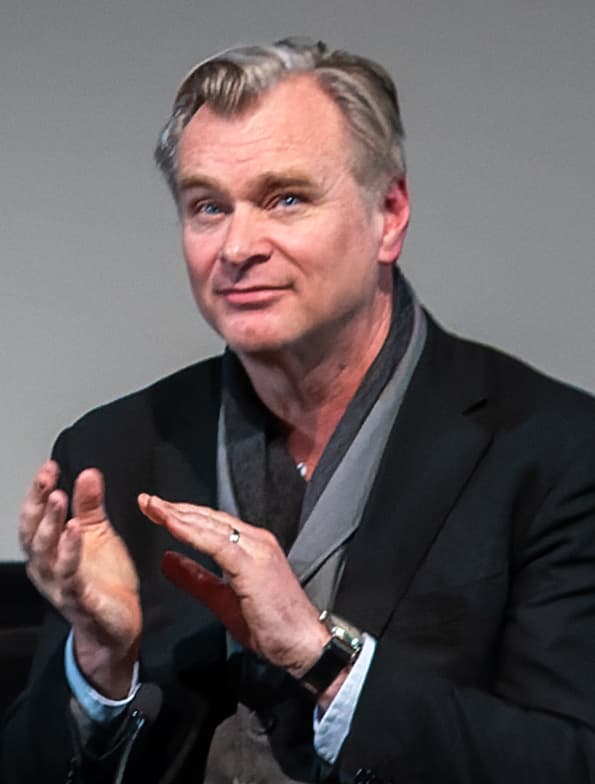
Christopher Nolan
Film Director
Renowned for his innovative storytelling techniques and meticulous craftsmanship, Christopher Nolan has significantly shaped the film industry since the 1990s. His obsession with filmmaking has inspired countless creators, emphasizing that genuine passion can ignite a similar fervor in audiences. Nolan's approach to constraints, viewing them as tools for creativity rather than limitations, has led to successful projects like "Inception," which grossed over $800 million worldwide. He advocates for simplicity in screenwriting, believing that the essence of a story should be distilled to its core, a principle that resonates with entrepreneurs who seek clarity in their vision. With a commitment to excellence, Nolan famously stated, "Every film I do, I have to believe that I'm making the best film that's ever been made," underscoring the dedication required to produce impactful work.
Core Principles
culture
Keep work as a family business to balance professional obsession with personal relationships. When your work is consuming and requires total commitment, involving family members aligns professional and personal life.
Nolan's wife Emma is his creative partner on all films. His children are brought on set. He explicitly states he keeps it a family business because it's more fun and allows him to do the thing together with those he loves most, creating alignment between his intense professional and personal worlds.
“I know it's more fun when we're all together and we can do the thing together. That's why we keep it as a family business.”
focus
Document the heart of your project before starting. Write a one-page summary of your vision and purpose, then revisit it regularly to stay anchored when daily decisions pull you off course.
Nolan types out a one-page vision statement for each film on a typewriter, identifying the heart of what the project needs to be. He returns to it periodically because the constant decisions about budget, location, and logistics can make it easy to forget the original purpose.
“I'll bang out a page or a paragraph of what I think the film needs, like the bigger picture, what it is the thing that I'm trying to do. And then I put that away and I come back to it every now and again, just to remind myself, because you get lost in movies as these things start.”
innovation
Study past masters in your field systematically. Identify filmmakers whose work resonates with you, watch their films repeatedly, then study the decisions they made. This builds your creative vocabulary.
As a child, Nolan discovered that Ridley Scott directed both Blade Runner and Alien. He realized the director was the connective thread between different stories. This insight at 13 crystallized his career path, and he systematically studied past filmmakers throughout his life.
Let influences permeate your work subconsciously rather than directly. Stories and past works add to your thinking only if you already have a foundation that connects with them. You need to be predisposed to what you're consuming.
Nolan frequently references influences like Jorge Luis Borges' short stories, noting that while they influence his work like Inception, the influence only works because he already had relevant ideas gestating. Without existing foundation, influences are just entertainment.
Flip ideas backwards before executing. Your first instinct with a new idea should be to reverse it or examine it from the opposite direction. Then translate that reversed idea into something tangible you can hold and examine.
Nolan's first approach to a new idea is to flip it backwards. He then writes it out or draws it, turning the two-dimensional concept into a three-dimensional object he can manipulate, similar to how Henry Royce of Rolls-Royce would create wooden models of parts.
leadership
The director is the guardian of the creative soul. As a leader, you are responsible for protecting and guiding the core vision. Every decision should feed or protect the heart of what you're building.
David Senra notes that the best description of a founder is that they are the guardian of the company's soul. Directors have the same responsibility for their films. Nolan embodies this through his obsessive attention to core vision and willingness to fight for it.
Lead through quiet confidence and discipline rather than visibility. The best leaders on set are calm and composed, not theatrical. Let the work speak for itself and earn respect through results.
Collaborators note that on a Nolan set, you wouldn't know he's the director. He's very quiet, very confident, and very calm. His sets are known for discipline and focus because his demeanor sets the tone, not through shouuting or ego.
Keep going no matter what conditions you face. Communicate to your team through your own example that you will proceed despite weather, fatigue, or challenges. This sets the tone for perseverance.
Nolan is known for shooting in any weather condition. He doesn't look at the window to decide whether to shoot; he just keeps going. By demonstrating this relentless approach, he signals to the crew that conditions don't dictate progress.
“I'm known in the film business for having good luck with the weather. That's inaccurate. I often have terrible luck with the weather, but my philosophy is to just shoot no matter what the weather is. I'm always shooting no matter what the weather is. Just keep going, just keep going.”
learning
Create your own curriculum if the standard path doesn't serve you. Don't wait for institutions to teach you what you need. Build your own focused learning program around what you actually need to master.
When Nolan attended university, he became president of the Film and TV Society and largely ignored regular curriculum in favor of teaching himself camera operation, editing, hand film cutting, and sound syncing. He created exactly the education he needed.
mindset
Obsession with your craft is contagious. When you are genuinely obsessed with what you're making, you make others obsessed with it too. People will feel the intensity and passion you've poured into your work.
Nolan notes that fans express obsession with his films like Inception and Memento, which doesn't surprise him because he was obsessed with them for years during their creation. He believes this transfer of obsession from creator to audience is natural and expected.
“People will say to me that there are people online who are obsessed with Inception or obsessed with Memento. They're asking me to comment on that as if I thought it was weird or something. And I'm like, well, I was obsessed with it for years, genuinely obsessed with it.”
Live through your children's eyes to improve your decisions. Once children are born, you can never see yourself only through your own perspective again. Use their viewpoint to guide your choices.
Hans Zimmer told Nolan that once children are born, you always see yourself through their eyes. This perspective drives Nolan to work harder and try to improve, wanting to create something his children can be proud of. It shapes his decision-making process.
“Once your children are born, you can never look at yourself through your own eyes anymore. You always look at yourself through their eyes.”
You must believe you are making the best work ever made, even if it won't be. Approach every project with the conviction that it could be the greatest achievement in your field. This mindset is what drives excellence.
Nolan approaches each film with the belief that he is making the best film ever made. He finds it incomprehensible that any creator would approach their work otherwise, given the consuming nature of the work.
“Every film I do, I have to believe that I'm making the best film that's ever been made. Films are really hard to make. They are all consuming. So it had never occurred to me that there were people making films who weren't trying to make the best film that ever was. Why would you otherwise?”
Maintain an analog mindset in a digital world. Resist over-reliance on technology that creates dependency. Preserve space for imagination and independent thought by limiting digital stimulation.
Nolan deliberately avoids email, cell phones, and digital workflows where possible. He believes younger generations are overstimulated by technology, preventing their imagination from working. He listens to film scores in the dark to create space for ideas to develop.
Your output quality reflects where your instincts come from. After a decade or two of focused practice, much of your work comes from unconscious instinct. Trust this instinct as it represents accumulated wisdom.
Through years of directing films with obsessive focus, Nolan has developed instincts that guide his decisions. Many of his creative choices now come from this unconscious competence, which is why trusting instinct becomes reliable.
operations
Implement disciplined scheduling to maximize output and focus. Set firm hours (like 7 am to 7 pm with one lunch break) and maintain discipline. The structure enables both pace and mental clarity.
Nolan's sets are known for running from 7 am to 7 pm with a single lunch break. This consistent schedule is both respectful of crew time and creates a container for focused, intensive work without indulgence or waste.
Screen out spectators who might dilute focus. Limit who has access to your work in progress. Control information flow carefully to maintain concentration on the vision.
For Dunkirk, only 20 of 600 people working on the film were allowed to read the script. Scripts were watermarked with actors' names. Nolan famously would visit actors at home with script in hand, refusing to leave until they finished reading, then taking it with him.
product
Use real-world solutions instead of digital shortcuts when possible. Go to extraordinary lengths to avoid relying on CGI or digital workarounds. The effort to achieve something tangentially has creative and operational value.
For Interstellar's cornfield scene, rather than using CGI, Nolan planted 500 acres of corn. The commitment to physical reality forced practical solutions that ultimately created the shot he envisioned and the corn was sold for profit.
Define a genre or product by what it lacks, not what it contains. Identify the typical elements of a category and deliberately exclude them to create something fresh and compelling.
For Dunkirk, Nolan approached it as a war film that excluded typical war movie elements: no quick cuts, chaos, smoke, fire, or bombs. By stripping away backstory and generals, he created pure present tense survival tension that felt completely original.
quality
Do every frame yourself if possible. Refuse to delegate key creative work to second units. The extra effort ensures consistency of vision and quality control.
Nolan refuses to use second units, preferring to shoot every frame himself. This level of directorial involvement ensures his vision permeates every shot and maintains the quality standard he demands.
resilience
Nothing in execution matches the plan exactly. Plans have only a loose association with final products. Embrace this reality and adapt while maintaining core vision, just as you would navigate a new city without GPS.
Nolan notes that the best screenplay still has only a loose association with the finished film, much like a business plan has loose association with actual business performance. He teaches his kids to navigate new cities without phones or maps to embrace this principle of finding your way despite imperfect planning.
“You can have the best screenplay in the world and it's still gonna have a loose association with the finished product. Just like if you make a business plan before you do anything, it's gonna have a loose association with the product you build or the performance of the business.”
simplicity
Strip screenplays down to their essence. The best screenplays are completely stripped down, very simple documents. The more you can reduce them, the better they communicate the core vision.
Nolan insists on writing all or part of every screenplay he directs because he loves screenplays and believes in their power when minimized. This parallels historical leaders who communicated through short, focused memos with no wasted words.
strategy
Maintain your personal workflow standards even when the industry moves otherwise. Refuse to abandon proven methods just because others adopt new technologies. Prove the old way still works.
When Disney expected Nolan to digitize and edit electronically for The Prestige, he argued and continued shooting on film, editing electronically, then cutting film by hand. From that point forward, he stayed committed to this workflow despite industry standards changing, proving it could still achieve massive commercial success.
“The Prestige was the first film where we were expected by the studio to digitize the negative and edit electronically. We had a lot of arguments with the post-production team at Disney, but we carried on. From the Prestige on to this day, we have never converted to the other workflow used by most of the industry.”
Always have your next project ready before the current one succeeds. Prepare a compelling follow-up so that when your work gains traction, you're positioned immediately for the next opportunity.
At 27, Nolan completed Following and simultaneously had a finished script for Memento ready. When Following was well-received and distributors asked what was next, he could immediately present the completed Memento screenplay, demonstrating foresight and keeping momentum.
Spend less and move faster to gain creative power. By underspending and outpacing expectations, you avoid giving stakeholders reasons to interfere. This was a deliberate strategy formed early in your career.
Nolan made the strategic decision early on that creative power comes from working faster and cheaper than people expect. This approach prevents studio executives and others from visiting set or complaining, allowing him to maintain his vision.
“I get my power from spending less and moving faster, not giving anybody a reason to come visit me or to interfere or to complain. I made that decision very early in my career. If I can work a little bit faster than people expect, if I can work a little bit cheaper than people expect, then they'll have other problems to deal with and they'll let me do my thing.”
Financial success buys you the final word. Use profits from successful projects to fund exactly what you want to do next without compromise. This is the ultimate goal of business discipline.
When The Dark Knight grossed $1 billion, it transformed Nolan's position from solid to unassailable at Warner Brothers. This suddenly allowed him to do whatever he wanted next, including finally making Inception, which he had conceived at 16 and wanted to make for decades.
“It changed a lot of things, but the immediate thing that it did that was extraordinary was it allowed me to do whatever I wanted as the next film. Everything up till that moment had been a fight or a struggle one way or another. And suddenly I'm realizing, oh, I'm going to get the last word.”
Build credibility by completing work independently before involving larger organizations. Do the work first, then present finished results to maintain creative control rather than seeking permission upfront.
Before starting Batman Begins, Nolan worked on scripts and set designs without telling Warner Brothers, building everything in his home studio. He then invited studio executives to view the completed work, using what he calls the 'ask forgiveness not permission' approach to maintain creative control.
Frameworks
Definition by Absence
Instead of defining a product or work by what it includes, define it by what it deliberately excludes. Identify typical elements in the category and deliberately remove them. This creates novelty and forces you to solve problems in unexpected ways.
Use case: Product development and creative work in established categories where differentiation is needed
The One-Page Vision Document
Before starting a major project, write a one-page summary of the heart of what you're trying to create. Use a typewriter or handwrite it. Revisit this document periodically when daily decisions threaten to pull you off course. This anchors your team and protects the core vision from incremental drift.
Use case: Starting any major creative or business project that requires sustained focus over months or years
The Flipped Idea Framework
When you have an idea, flip it backwards first. Reverse the concept or approach. Then translate the flipped idea into something tangible you can hold, manipulate, and examine from multiple angles. This three-dimensional externalization deepens understanding and reveals non-obvious implications.
Use case: Early stage conceptual work on products, stories, or strategies
The Constraint as Tool Framework
View constraints of time and budget not as restrictions but as creative accelerants. Use them to force resourcefulness and prevent interference. Commit to working within limits and communicating those limits clearly so your team adapts.
Use case: Resource-limited projects and situations where control is being threatened by stakeholder interference
The Prep-Before-Permission Strategy
Complete significant work before seeking approval from those with authority. Prepare, build, and execute so thoroughly that you present finished or near-finished results to stakeholders. This shifts the conversation from theoretical approval to practical judgment about completed work.
Use case: Situations where approval committees or executives might delay or water down creative vision
Stories
Steven Soderbergh, a fan of Following, learned that Warner Brothers wouldn't even take a meeting with Nolan. Soderbergh marched to the head of production and said they were insane not to meet with Nolan, then offered to executive produce Insomnia himself to guarantee the 31-year-old director's involvement.
Lesson: Advocates with credibility can open doors you cannot open yourself. Being good at your craft attracts these advocates.
Following received strong critical reviews in major publications. With this credibility established and a completed Memento script ready, Nolan was positioned to pitch his second film with proof of concept and track record, rather than just an idea.
Lesson: Build credibility through small wins before attempting bigger asks. Completed work is more persuasive than promises.
At 27, Nolan finished his first feature film Following on a shoestring budget shot on weekends while working full-time. Simultaneously, he had already completed the script for Memento. When Following was well-received, distributors asked what he'd do next, and he handed them a finished Memento screenplay, ensuring he could immediately transition to the next project.
Lesson: Always prepare your next move before current success arrives. Readiness accelerates momentum and demonstrates seriousness to stakeholders.
As a child passionate about films, Nolan saw Star Wars at 6 or 7 and became obsessed with how the special effects were made. He found trade magazines detailing Industrial Light and Magic's techniques. When his father noticed this obsession, he took young Christopher to see 2001: A Space Odyssey, a re-release. That film crystallized Nolan's realization that movies could be anything and that he could make them.
Lesson: True interest reveals itself early through obsessive behavior. Great mentors recognize and feed that obsession rather than diminishing it.
At boarding school with strict schedules, Nolan couldn't pursue his film interests openly. Instead, after lights out, he would lie in bed with his eyes closed, listening to film scores on his Walkman in the dark. This act forced his imagination to fill in visual blanks and generated ideas that would later become part of his films, including Inception.
Lesson: Constraints on access can paradoxically deepen imagination when you lean into limitation. Making your mind work harder produces original ideas.
For Interstellar, Nolan realized his daughter was the same age as a character in the script who was originally written as a son. He changed the character's gender because the personal connection to his own experience of leaving his children for work deepened the emotional authenticity. His guilt about missing family time became the emotional core of the film.
Lesson: Your personal struggles and constraints become your greatest creative assets when authentically integrated into your work.
For the cornfield scene in Interstellar, instead of using CGI, Nolan planted 500 acres of corn rather than relying on digital effects. The crops grew so well they were sold for profit, turning the constraint into an asset.
Lesson: Going to extraordinary lengths to solve problems with physical reality often produces better results and unexpected benefits.
Notable Quotes
“Every film I do, I have to believe that I'm making the best film that's ever been made. Films are really hard to make. They are all consuming.”
Explaining his mindset when approaching each new project, and why he finds it incomprehensible that filmmakers wouldn't approach their work with this level of conviction
“What happens when you make a film is you burrow into it, you dig in so you kind of can't see it anymore. You're immersed in it. The only thing you can do is trust your initial instincts.”
Describing the creative immersion required in filmmaking and why trusting first instincts becomes necessary once fully committed
“The efficiency of filmmaking is, for me, a way of keeping control. The pressure of time, the pressure of money, even though they feel like restrictions at the time and you chafe against them, they're helping you.”
Explaining how he learned constraints actually enabled his creative vision during his work on studio films
“I get my power from spending less and moving faster, not giving anybody a reason to come visit me or to interfere or to complain.”
Articulating the strategic decision he made early in his career to maintain creative control through operational excellence
“It changed a lot of things, but the immediate thing that it did that was extraordinary was it allowed me to do whatever I wanted as the next film. Everything up till that moment had been a fight or a struggle one way or another.”
Reflecting on how The Dark Knight's billion-dollar success transformed his position at Warner Brothers, finally allowing him creative freedom
“The Prestige was the first film where we were expected by the studio to digitize the negative and edit electronically. From the Prestige on to this day, we have never converted to the other workflow used by most of the industry.”
Explaining his decision to maintain his analog editing workflow despite industry pressure and expectations
“I'll bang out a page or a paragraph of what I think the film needs, like the bigger picture, what it is the thing that I'm trying to do. And then I put that away and I come back to it every now and again, just to remind myself.”
Describing his method of documenting the core vision of a film before diving into production details
“I'm known in the film business for having good luck with the weather. That's inaccurate. I often have terrible luck with the weather, but my philosophy is to just shoot no matter what the weather is.”
Correcting a misconception and explaining his philosophy of relentless forward progress regardless of external conditions
“I think that's what films do for us. They're very dreamlike experiences.”
Describing the unique power of cinema as a medium that operates like our dreams, reconciling the subjective and the shared
“I was obsessed with it for years, genuinely obsessed with it. So it doesn't strike me as weird. We put a lot into these films.”
Responding to the observation that audiences are obsessed with his films, explaining this is natural when the creator has been equally obsessed
Frequently Asked Questions
What are Christopher Nolan's key business principles?▼
Christopher Nolan's core principles include: Keep work as a family business to balance professional obsession with personal relationships. When your work is consuming and requires total commitment, involving family members aligns professional and personal life.. Document the heart of your project before starting. Write a one-page summary of your vision and purpose, then revisit it regularly to stay anchored when daily decisions pull you off course.. Study past masters in your field systematically. Identify filmmakers whose work resonates with you, watch their films repeatedly, then study the decisions they made. This builds your creative vocabulary.. Founder Almanac has cataloged 30 total principles from Christopher's career.
What can entrepreneurs learn from Christopher Nolan?▼
Key lessons from Christopher Nolan include: Advocates with credibility can open doors you cannot open yourself. Being good at your craft attracts these advocates.. Explore 7 stories and 5 frameworks from Christopher's experience.
What is Christopher Nolan known for in business?▼
Renowned for his innovative storytelling techniques and meticulous craftsmanship, Christopher Nolan has significantly shaped the film industry since the 1990s. His obsession with filmmaking has inspired countless creators, emphasizing that genuine passion can ignite a similar fervor in audiences. Nolan's approach to constraints, viewing them as tools for creativity rather than limitations, has led to successful projects like "Inception," which grossed over $800 million worldwide. He advocates for simplicity in screenwriting, believing that the essence of a story should be distilled to its core, a principle that resonates with entrepreneurs who seek clarity in their vision. With a commitment to excellence, Nolan famously stated, "Every film I do, I have to believe that I'm making the best film that's ever been made," underscoring the dedication required to produce impactful work.
More Media & Entertainment Founders
Want Christopher's advice on your business?
Our AI has studied Christopher Nolan's biography, principles, and decision-making frameworks. Ask any business question.
Start a conversation