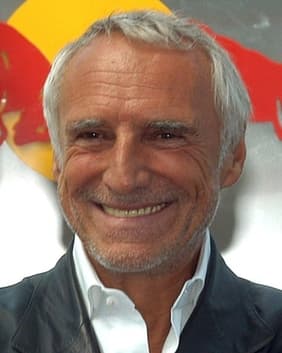
Dietrich Mateschitz
Red Bull
A visionary in the sports and athletics industry, Dietrich Mateschitz transformed the beverage landscape by co-founding Red Bull in 1984, spearheading the energy drink category that generated over $7 billion in global sales by 2020. His approach focused on creating a lifestyle brand rather than merely a product, emphasizing grassroots marketing strategies that resonated deeply with consumers. Mateschitz's dedication to innovation and loyalty within his team was encapsulated in his quote, "We are hopelessly loyal to each other," reflecting a unique corporate culture that empowered employees and fostered creativity. Through his leadership, Red Bull not only dominated the energy drink market but also became synonymous with extreme sports and adventurous living, serving as a case study for modern entrepreneurs seeking to disrupt traditional industries.
Core Principles
culture
Create a company culture where the brand becomes part of people's identity and life purpose. Culture should reflect the founder's authentic personality and values, not be fabricated.
Red Bull created a cult-like following by making the company's culture an extension of Mateschitz's personality. Employees adopted specific codes of conduct: holding doors open, not getting drunk in public, valuing sophisticated conversation. They even drank proprietary mineral water. The culture worked because it was authentic to Mateschitz's actual values.
“Red Bull is Mateschitz and Mateschitz is Red Bull.”
Create a differentiated physical place to work that reflects your brand values and creates insulation from the outside world. The physical environment shapes culture and limits distractions.
Mateschitz moved Red Bull headquarters from the larger city of Salzburg to a tiny village of 1,500 people on a picturesque lake. The remote location forced focus, prevented typical corporate politics, and created a contained world where Red Bull values dominated. The village became nearly entirely dependent on Red Bull, further embedding the company into place.
“The aim was to create a more pleasant working atmosphere.”
Pay above-market salaries and provide non-financial benefits like company cars to all employees across all levels. Employee satisfaction and loyalty create stability that enables bold vision.
Every Red Bull employee from secretary to board member received a company car and above-market salary. Former employees unanimously reported high loyalty and positive experience despite intense performance expectations. This investment in employee welfare created a team willing to execute difficult strategy.
Challenge every unwritten rule and standard way of operating. The best innovations often come from asking why something must be done a certain way.
Red Bull burst into Formula One and immediately questioned norms. They opened their team motorhome to all paddock staff instead of keeping it private. They built a floating nightclub for Monaco. They asked themselves: if every other team does something one way, why should we do it that way? This posture of principled rule-breaking became their competitive identity.
“We always thought that if the old teams did something one way, is that necessarily the way Red Bull would do it? And if it's not the way we would do it, then why don't we change it?”
finance
Never take debt and maintain financial discipline even during explosive growth. Only spend money you have already earned, not money you might earn. This ensures survival is never compromised.
Red Bull accepted minor bank financing only in year two and never carried significant debt for 40 years. The company paid zero dividends for 15 years, reinvesting all profits into expansion. Mateschitz paid only his salary as managing director during this period. This conservative approach ensured the company could never be forced to compromise its strategy or vision.
“I have been raised on the motto that one does not incur debt. We at Red Bull spend the money that we've earned, not that we might earn someday. We never want to endanger the existence of the company, not even for a second.”
focus
Identify and protect the one thing that drives all company value. Use ruthless focus to ensure all resources flow to that single lever, not scattered across many initiatives.
Red Bull identified the energy drink itself as the single value driver. Everything else, all marketing, events, sports investments, and media production exist solely to drive sales of the core product. Rejected every brand extension because they diluted focus from this single lever.
Focus all energy on a single core product. Reject all brand extension opportunities. Any new product dilutes focus and compounds mistakes across a wider surface area.
Red Bull launched secondary products like the Red Rooster lemonade drink early on. These products flopped. Mateschitz recognized this mistake and never launched another product outside the core energy drink business. Despite hundreds of licensing offers for Red Bull gummy bears, underwear, and perfume, he said no to every one.
“Everything is marketing.”
hiring
Hire an advertising partner who shares your perfectionism and vision from the very beginning. The creative partner who understands your standards will develop solutions you cannot generate alone.
Mateschitz hired his college friend Kastner, founder of an advertising agency, to develop Red Bull's creative positioning. Kastner understood Mateschitz's perfectionist standards and rejected 50+ iterations of campaign concepts before arriving at 'Red Bull gives you wings.' The partnership worked because both parties shared extreme standards.
“He wants the absolute best. He believed in his product to the end of his days.”
Always bet on talent. A small team of A-players will outperform a massive team of B and C players in virtually every competitive domain.
Dietrich Mateschitz built Red Bull Racing by recruiting Adrian Newey, the world's foremost aerodynamics expert, despite his high cost. Steve Jobs and Jeff Bezos operated by the same principle throughout their careers, understanding that hiring excellence compounds over time.
“Setting the bar high in our hiring has been and will continue to be the single most important element of Amazon's success.”
Pay premium salaries for rare talent because it is nearly impossible to overpay for talent that creates disproportionate value. One Adrian Newey is worth millions in ordinary engineering.
Mateschitz initially questioned whether Adrian Newey was worth his asking price. Gerhard Berger told him: 'It depends on what value you put on a second a lap. If you want to win, pay the man.' Newey's designs won four consecutive championships and transformed Red Bull into the dominant force in motorsports.
“It depends on what value you put on a second a lap. If you want to win, pay the man.”
innovation
Brand as Media Company
Red Bull Media House (founded 2007) produces documentaries, music, and sports content. Controlling narrative and content is more valuable than controlling production. Own the story.
leadership
Develop and maintain intimate relationships with key people in your business, but do not confuse quantity of relationships with quality. A few deep relationships compound far more than many shallow ones.
Mateschitz explicitly stated he does not believe in collecting 50 friends or attending society events, which he called the most useless use of time. He cultivates deep loyalty with his core team and partners, people who share his perfectionism and vision. He described himself as closed socially but intensely connected to a small number.
“I don't believe in 50 friends. I believe in a smaller number, nor do I care about society events. It is the most useless use of time.”
Hire a visionary and get out of the way. Trust talented people to execute without micromanagement, and create conditions where they can take intelligent risks.
Mateschitz hired 31-year-old Christian Horner with no prior Formula One experience and told him to build the team 'the Red Bull way.' He then recruited Adrian Newey and paid him premium salaries without demanding short-term results. This hands-off approach to talented leadership enabled rapid innovation and four consecutive world championships.
“I've got big ambitions with this team. I want it to be different. I want it to have different energy. We are not going to be corporate.”
marketing
Brand as Lifestyle Not Product
Red Bull never marketed itself as a beverage with certain ingredients. It marketed a lifestyle: extreme achievement, pushing limits, adventure. The drink became secondary to the identity.
Grassroots Over Traditional Advertising
Mateschitz eschewed traditional TV and print ads. Red Bull created experiences: Flugtag, extreme sports sponsorships, festival presence. Consumers discovered the brand through participation.
Authenticity Through Genuine Risk
Felix Baumgartner space jump was not a stunt, it was a genuine risk. Red Bull funded real research and engineering. Authentic extremity builds trust no paid ad can match.
Create your own market rather than compete in existing ones. If no market exists for your product, invest heavily in educating customers and building demand from scratch.
Mateschitz discovered the Thai energy drink and recognized opportunity, but the energy drink category didn't exist in Europe. He spent over 30 percent of gross revenue on advertising in early years to establish Red Bull as a new category entirely, avoiding direct competition with soft drinks or sports drinks.
“There is no market for Red Bull. We will create one.”
Foster rumors and public interest in your product rather than fighting them. The most dangerous threat to a brand is indifference, not negative talk.
Red Bull circulated as a banned product in several European countries with rumors that taurine came from bull testicles or bull semen. Instead of issuing denials, Mateschitz intentionally let rumors spread and even created a website page about them. This created desire and intrigue that drove early sales, particularly in nightclubs.
“The most dangerous thing for a branded product is low interest. Yes, we expected it. It was part of the strategy from the beginning. We would make the brand interesting enough that people wanted to get their hands on it.”
mindset
Maintain extreme physical fitness as a founder. Physical health enables the mental toughness, endurance, and vitality required for decades of high-performance work.
Mateschitz was nearly 70 years old and still riding motorcycles, competing in off-road races, piloting planes, and maintaining rigorous fitness. He connected physical fitness directly to his ability to enjoy extreme sports and maintain the energy required to run Red Bull. He viewed fitness as selfish necessity, not luxury.
“Everything that gives me pleasure in life is connected with a certain physical fitness and a physical wellbeing.”
Never retire if you love the work. Money ceases to be motivation once independence and control are achieved. The climb is the reward, not the summit.
Mateschitz continued leading Red Bull for 40 years, working until his death despite having $20-30 billion net worth and earning $500-800 million annually in dividends. He repeatedly said he had no plans to sell or go public because he was having fun. His motivation was independence, control, and joy in the work itself, not additional wealth.
“Our motto is the journey is the destination. I don't want to go to the summit to stand at the top, but to do the climb up.”
Define success not by profit maximization but by freedom, independence, and joy. Money should enable these things, not become the primary goal. This mindset changes how you make decisions.
Mateschitz stated repeatedly that profit maximization was not Red Bull's primary goal. Rather, his driving forces were longing for freedom, independence, and joy in work. This philosophy meant he refused to sell, refused to go public, refused to license the brand, and refused to retire. Every decision was filtered through whether it protected his freedom and joy.
“I just don't believe everything I learned at business school. Money was never my main motivation for starting my own company. Rather, the driving forces were longing for freedom and independence as well as finding joy in the work.”
Outsiders who enter an established domain often outperform insiders because they are unencumbered by 'how we've always done it' thinking. Bring fresh perspective and don't assume tradition is wisdom.
Chapman, Ecclestone, and Mateschitz all entered Formula One as outsiders. Chapman came from aircraft design, Ecclestone from used cars and casinos, Mateschitz from consumer marketing. Each looked at F1 and saw a broken system they could fix. Insiders couldn't see these opportunities because they were too close to the status quo.
“Those on the margin often come to control the center.”
Frameworks
Red Bull Model: Marketing as Core Competency
Structure the company so that marketing and brand experience are the core competency, while all other functions (production, distribution, logistics) are outsourced to trusted partners. This asset-light approach frees capital and mental energy for brand building. Mateschitz viewed Red Bull as a marketing conglomerate that happened to sell a beverage product, not a beverage company that also marketed.
Use case: Consumer brands competing on brand perception and experience rather than production efficiency. B2C companies where marketing ROI and brand identity drive pricing power and customer loyalty more than product cost advantages.
Category Creation Through Premium Positioning
When entering a market with no existing category, price so aggressively and position so distinctly that customers perceive an entirely new category, not a premium variant of existing products. Invest heavily in educating customers about why they need this new category. Use premium pricing to signal quality and justify investment in brand building.
Use case: Launching completely new product categories or disrupting established categories. Situations where competitors are entrenched in existing category definitions and price points. Requires capital to fund awareness and education before sales volume justifies investment.
Rumor and Controversy as Free Marketing
Rather than fighting rumors or controversy around your product, strategically allow them to spread and even amplify them. Rumors and scandal generate free media coverage and word-of-mouth that paid advertising cannot buy. The only dangerous state is indifference, not negative attention. Manage the conversation by controlling what you acknowledge and when.
Use case: Launching products into resistant or skeptical markets. Building intrigue and cult-like following around products. Situations where direct advertising faces regulatory barriers or skepticism. Requires strong founder confidence that product quality will win trials despite negative perception.
Founder-Brand Separation
Build a company structure where all marketing energy flows to the brand and product, never to the founder's personality. Establish a press prevention office, limit founder visibility, refuse interviews, and buy publications to prevent coverage. Let the brand become more famous than the founder. This separates the founder's personal preferences from the brand's perception and creates a durable asset independent of founder mortality.
Use case: Building durable brand assets that can outlive the founder. Protecting founder privacy while building a public-facing brand. Creating mystique and control over brand narrative. Suits founders who prefer privacy or are uncomfortable with public attention.
Experience Ownership vs. Sponsorship
Rather than buying advertising space within other people's events or media, acquire ownership stake in sports teams, racing series, or events. Rename the property with your brand and place your logo directly on assets like jerseys. This creates seamless integration, eliminates advertising cost per unit of exposure, and gives brand responsibility for success of the venture.
Use case: Mature brands with capital to acquire sports properties. Situations where traditional sponsorship has become commoditized and less effective. Building long-term brand integration rather than temporary advertising placements. Requires patient capital that accepts multi-year returns.
Single Market Deep Dive Before Expansion
Launch in a single small market and run 4-5+ years of experiments before expanding to new geographies. Use this period to refine product, develop messaging, test marketing approaches, build brand momentum, and prove the business model. Only once success is established in one market should rapid expansion begin. This reduces risk and prevents spreading limited resources across too many simultaneous launches.
Use case: Capital-constrained startups entering new product categories. Companies launching into skeptical or regulated markets that require education. Situations where founder wants to validate the model before aggressive scaling. Suits patient founders who are willing to delay growth for security.
Outrageous Events as Free Media Generation
Invest in creating outrageous, unique events that generate media coverage through sheer uniqueness and spectacle. A cliff dive, space jump, or extreme sports event attracts no paying spectators but generates enormous free media coverage because the event itself is newsworthy. Give the media freely produced content of the event and they distribute it for free, giving you reach worth millions in traditional advertising.
Use case: Brands seeking to generate earned media coverage and word-of-mouth. Situations where traditional advertising is ineffective or expensive. Building brand association with extreme, aspirational activities. Requires significant capital to fund events and in-house content production.
No Debt, Discipline, and Survival First
Establish a company rule of never carrying significant debt and only spending money already earned. This discipline ensures the company survives any market downturn, maintains strategic independence, and prevents creditors from forcing compromises. In growth phase, reinvest all profits rather than taking dividends. This approach sacrifices near-term founder wealth for long-term company durability and independence.
Use case: Any company where strategic independence and long-term survival are more valuable than short-term founder wealth extraction. Industries or geographies with uncertain regulatory or competitive environments. Suits founders who prioritize control and freedom over immediate compensation.
Media Content Ownership and Distribution
Produce all content related to your brand in-house or via owned production companies. Retain all media rights. Give this content freely to major media outlets, networks, and publications to distribute. By being the content supplier rather than the advertising buyer, you leverage media outlets' distribution while maintaining brand control and avoiding per-impression costs.
Use case: Brands with capital to fund content production. Situations where media has high distribution reach but advertising is expensive or commoditized. Building owned media assets and distribution relationships. Requires in-house production capability or strategic partnerships with production companies.
Perfectionism and Long Creative Iteration
Establish the expectation that marketing, product, and positioning iterations may take months or years before arriving at the perfect expression. Reject 50+ creative concepts if necessary before finding the one that matches your standard. This requires trusting partners who share your perfectionism. The payoff is a positioning or campaign so clear and powerful that it becomes iconic.
Use case: Category-creating brands where positioning must be unprecedented and perfect. Consumer brands competing on brand perception where a weak positioning will fail. Situations where founder has capital and time to iterate on positioning. Suits founders with high standards and low tolerance for mediocrity.
Stories
Dietrich Mateschitz was a bored marketing executive trapped in corporate life, flying the same routes and seeing the same gray faces. On a business trip to Thailand in 1982, he discovered a local energy drink favored by truck drivers. Within months, he quit his job, redesigned the recipe and can, priced it as a premium product, and built Red Bull into a global phenomenon. By 1998, Red Bull had single-handedly created the energy drink category and made Mateschitz a billionaire.
Lesson: Boredom with the existing path can be a signal to seek new territory. Outsider perspective allows you to see products and categories that industry insiders have missed. A small insight from a different geography can become the foundation of a global category.
Adrian Newey was the world's preeminent aerodynamics expert, working for another prestigious F1 team when Christian Horner decided he needed him at Red Bull. Horner stalked Newey for months, 'accidentally' bumping into him at paddock events and building a relationship. Eventually they flew Newey to Salzburg, took him up in an alpha jet fighter that went inverted over a mountain at 500 feet, and had lunch with Dietrich Mateschitz. When Newey quoted his salary expectation, Mateschitz hesitated. Gerhard Berger told him: 'It depends on what value you put on a second a lap. If you want to win, pay the man.' Mateschitz paid, and Newey designed four consecutive championship-winning cars.
Lesson: Recruiting exceptional talent requires patience, relationship-building, and willingness to pay premium salaries. The cost of rare talent that moves the needle is always less than the value it creates. Talent that shaves one second per lap is worth millions.
Mateschitz quit his marketing director role at Unilever after 15 years of constant travel, seeing gray planes, gray suits, and gray faces. He was 38 and suddenly realized he didn't want to spend the next decade in the same position. This realization, combined with discovering the Thai energy drink and reading about its manufacturer's tax contributions, crystallized his conviction to start his own company.
Lesson: Sometimes the decision to start a company comes from negative motivation (escape) combining with positive opportunity. The collision of desperation and possibility creates founders bold enough to bet everything.
In Red Bull's early years with minimal capital, Mateschitz would deliver pallets of free Red Bull to bars and nightclubs by hand, letting customers try it rather than buying traditional advertising. He prioritized product trial and word-of-mouth over paid media. When sales didn't immediately spike, he doubled down on this strategy instead of panicking.
Lesson: In capital-constrained situations, product quality and trial often convert better than advertising claims. Giving away product to build word-of-mouth is not a failure of marketing; it's a sophisticated understanding of how new categories are adopted.
Mateschitz's advertising partner Kastner spent a year and a half trying 50+ different taglines and campaign concepts. Mateschitz rejected every single one. Finally, in the middle of the night, Kastner called him with 'Red Bull gives you wings.' Mateschitz heard it and immediately said yes. The two men's perfectionism aligned so completely that the right answer was obvious the instant it was spoken.
Lesson: Perfectionism requires trusted partners who share your standards. When both parties truly understand the goal, the right answer becomes obvious in an instant, even after months of failed attempts.
Red Bull was banned in several European countries for regulatory and safety reasons. Rather than fighting the bans or trying to win approval quickly, Mateschitz let the controversy spread. Black market sales emerged, creating even more desire. Rumors circulated that taurine was bull testicles or bull semen. The company neither confirmed nor denied the rumors, even creating a website page about them.
Lesson: Controversy and restriction create desire more powerful than any advertising. The founder who understands indifference is the true enemy will leverage restriction as a marketing tool rather than fight it.
Mateschitz threatened to break the kneecaps of a Russian biographer who was attempting to write an unauthorized biography and was visiting his elderly mother in his hometown. The threat revealed his extreme commitment to controlling his own narrative and image. He later authorized a German language biography only because the book would be limited in reach.
Lesson: Extreme control over narrative can cross ethical lines. The founder's need for privacy and message control, if unchecked, can become paranoia and aggression. There is a point where privacy becomes defensiveness.
Mateschitz met windsurfer Robbie Nash to discuss a sponsorship deal. Within minutes, they discovered a shared passion for cars. Mateschitz abandoned the business conversation, showed Nash his Ferrari GTO, then asked Nash to drive it back from the mountains alone. Nash was terrified but complied. The sponsorship deal was sealed through this shared passion, not financial negotiation.
Lesson: The best business relationships are built on shared personal interests and experiences, not contract terms. Mateschitz's approach reversed the typical business process: connection first, terms second.
For 15 years, Red Bull paid no dividends. Mateschitz took only his salary as managing director while all profits flowed back into expansion. By the time dividends began in 1999, the company was so valuable that he could then extract $500-800 million annually in dividends. His patience and reinvestment created exponential compound returns.
Lesson: Founders willing to defer personal wealth extraction in early years compound returns exponentially over decades. Discipline in growth phase creates prosperity in maturity.
Mateschitz moved Red Bull's headquarters from Salzburg to a tiny village of 1,500 people on a picturesque lake in Austria. Rumors circulated that he was building underground tunnels to avoid being seen. By relocating the company to a remote location, he created a controlled environment where Red Bull culture dominated and external distractions were eliminated.
Lesson: The physical environment in which a company operates shapes culture and focus more than policy documents. Building in isolation requires intentionality but creates unique culture impossible to replicate in urban centers.
Notable Quotes
“We are hopelessly loyal to each other.”
Describing his relationship with his main bottling partner of 40 years, sealed with only a handshake in 1987.
“There is no market for Red Bull. We will create one.”
Mateschitz believed so strongly in the energy drink concept that he made this statement despite having no evidence of market demand. This conviction drove his willingness to invest heavily in creating category awareness.
“If we only had a 15% price premium, we'd merely be a premium brand among soft drinks and not a different category altogether.”
Explaining the decision to price Red Bull at $2 per can, far above competitors. He understood that aggressive premium pricing was necessary to position Red Bull as a fundamentally different category.
“The most dangerous thing for a branded product is low interest.”
Justifying his decision to allow rumors and controversy to spread rather than fight them. Indifference, not negative attention, was the threat.
“Yes, we expected it. It was part of the strategy from the beginning. We would make the brand interesting enough that people wanted to get their hands on it.”
Responding to question of whether Red Bull intentionally fostered rumors and prohibition as marketing strategy. He confirmed this was deliberate from the beginning.
“This fun stuff and it's a lot more interesting than writing a check to buy 30 seconds during the Super Bowl.”
Comparing Red Bull's approach of creating owned events and experiences versus traditional paid advertising. He clearly preferred the control and creativity of event ownership.
“Everything is marketing.”
Explaining why even the can holders in Red Bull's private aircraft are designed to only fit Red Bull cans. Every detail serves the marketing mission.
“I don't believe in 50 friends. I believe in a smaller number, nor do I care about society events. It is the most useless use of time.”
Revealing his preference for quality relationships over quantity and his disdain for meaningless social obligations.
“The aim was to create a more pleasant working atmosphere.”
Explaining why he relocated Red Bull headquarters from Salzburg to a tiny village on a picturesque lake.
“All I could see were the same gray planes, the same gray suits and the same gray faces. I wondered if I wanted to spend the next decade like this.”
Reflecting on his years at Unilever, the moment he realized he needed to create his own company to achieve independence.
Frequently Asked Questions
What are Dietrich Mateschitz's key business principles?▼
Dietrich Mateschitz's core principles include: Create a company culture where the brand becomes part of people's identity and life purpose. Culture should reflect the founder's authentic personality and values, not be fabricated.. Create a differentiated physical place to work that reflects your brand values and creates insulation from the outside world. The physical environment shapes culture and limits distractions.. Pay above-market salaries and provide non-financial benefits like company cars to all employees across all levels. Employee satisfaction and loyalty create stability that enables bold vision.. Founder Almanac has cataloged 30 total principles from Dietrich's career.
What can entrepreneurs learn from Dietrich Mateschitz?▼
Key lessons from Dietrich Mateschitz include: Boredom with the existing path can be a signal to seek new territory. Outsider perspective allows you to see products and categories that industry insiders have missed. A small insight from a different geography can become the foundation of a global category.. Explore 10 stories and 10 frameworks from Dietrich's experience.
What is Dietrich Mateschitz known for in business?▼
A visionary in the sports and athletics industry, Dietrich Mateschitz transformed the beverage landscape by co-founding Red Bull in 1984, spearheading the energy drink category that generated over $7 billion in global sales by 2020. His approach focused on creating a lifestyle brand rather than merely a product, emphasizing grassroots marketing strategies that resonated deeply with consumers. Mateschitz's dedication to innovation and loyalty within his team was encapsulated in his quote, "We are hopelessly loyal to each other," reflecting a unique corporate culture that empowered employees and fostered creativity. Through his leadership, Red Bull not only dominated the energy drink market but also became synonymous with extreme sports and adventurous living, serving as a case study for modern entrepreneurs seeking to disrupt traditional industries.
More Sports & Athletics Founders


Want Dietrich's advice on your business?
Our AI has studied Dietrich Mateschitz's biography, principles, and decision-making frameworks. Ask any business question.
Start a conversation