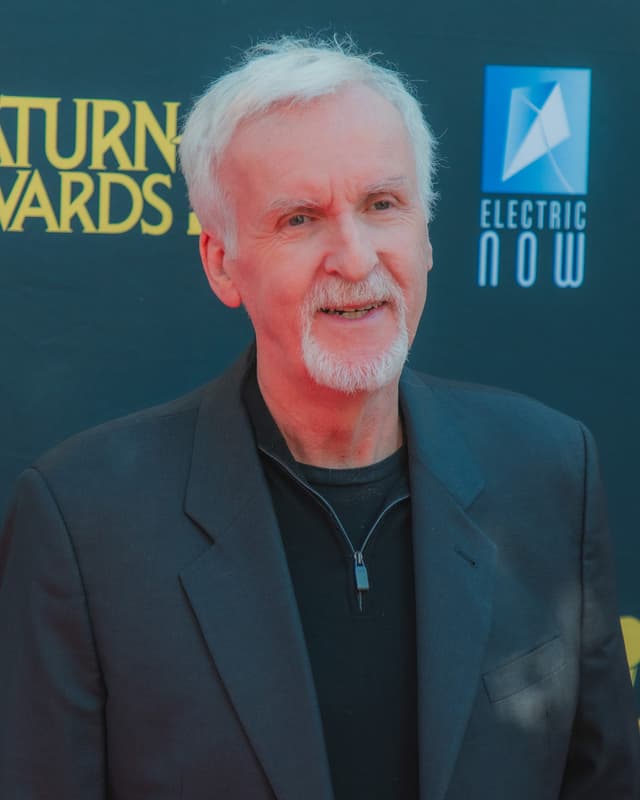
James Cameron
Digital Domain
A visionary in the Media & Entertainment industry, James Cameron founded and led Digital Domain, revolutionizing visual effects and digital media since its inception in 1993. Known for his relentless pursuit of excellence and meticulous attention to detail, he has directed blockbuster films like "Titanic," which became the first movie to gross over $2 billion. Cameron's early career setbacks, including being fired after just five days on his first directing opportunity, propelled him to embrace challenges, leading him to state, "I like difficult. I'm attracted by difficult." His unwavering belief that artistic vision should not be compromised has inspired countless entrepreneurs to prioritize innovation over financial gain, proving that greatness often emerges from adversity.
Core Principles
competitive advantage
Embrace difficulty as a competitive advantage. The harder something is, the less competition you will face and the greater your tactical edge.
Cameron explicitly states that he is attracted to difficult problems because most talented people avoid them. He seeks out water-shooting, underwater filming, and technically impossible tasks that others won't attempt. This gives him monopolistic advantages on outcomes that competitors cannot replicate.
“I like difficult. I'm attracted by difficult. Difficult is a fucking magnet for me. I go straight to difficult. And I think it probably goes back to this idea that there are lots of smart, really gifted, really talented filmmakers out there that just can't do the difficult stuff. So that gives me a tactical edge to do something nobody else has ever seen.”
focus
Focus intensely on your work and mute external noise. Ignore industry gossip and competitive positioning.
Cameron does not follow Hollywood gossip, read industry news, or monitor what other directors make. He applies his laser-focused attention solely to his work. This allows him to make decisions based on internal standards rather than external comparisons.
“Mute the world. Build your own world.”
hiring
Build a small team of people as ambitious and skilled as you are. Excellence attracts excellence.
Cameron sought out Stan Winston, a fellow perfectionist and high-quality individual. Their partnership produced three Academy Awards and led to co-founding Digital Domain. Cameron surrounds himself with people who share his intensity and refuse to compromise.
“When you have a small team of people as crazy as you are that are good at it, there is deep satisfaction in both the process of doing it and the resulting footage.”
innovation
Solve your own technical problems rather than waiting for vendors. Create new tools and technology when needed.
When existing technology could not deliver what Cameron needed, he did not accept limitations. He worked with tech companies to develop new cameras, motion capture systems, and algorithms for Avatar and Avatar 2. This forced innovation created permanent advantages.
“Nothing would work the first time Cameron and the production tried it, or the second, or usually the third.”
Let ideas marinate and develop over decades. Great concepts do not require immediate execution.
Cameron conceived The Abyss as a short story at age 16 after watching Jacques Cousteau documentaries. He did not make the film for 19 years. Avatar came to him in a dream and he worked on it for years before production. Avatar 2 took over a decade in development.
“Every idea is a work in progress.”
leadership
View temperament and high standards as inseparable. A demanding approach is justified when it produces excellence.
Cameron earned a reputation for having a temper and crew members wore shirts saying they were not afraid because they worked for him. Yet this demanding approach never prevented people from wanting to work with him again, because the results were undeniable.
“On more than one Cameron set, crew members have taken to wearing shirts that read, you can't scare me, I work for Jim Cameron.”
mindset
Your mediocrity is an opportunity for someone willing to raise the bar. When you see poor execution in your field, view it as a chance to do better.
On his first film production, Cameron observed the director failing to get good shots or performances. Rather than accept this as normal, he recognized it as an opening. He approached Corman and volunteered to be second unit director, eventually becoming the main director.
“Your mediocrity is my opportunity.”
Maintain a physical discipline that supports mental resilience. Physical training builds the capacity to endure extreme demands.
At 68, Cameron wakes at 4:45 AM and kickboxes regularly. He was trained by a championship firearms instructor. His physical discipline supports his ability to work 18-hour days decompressing underwater and sustaining extreme production schedules.
“At 68 years old, Cameron wakes up at 4.45 a.m. and often kick boxes in the morning.”
Find meaning through exploration and discovery, not just through commerce. The work itself is the primary reward.
Cameron took an 8-year break from filmmaking after Titanic to explore the deep ocean, diving to the Mariana Trench and conducting underwater expeditions. He was not motivated by profit during this period, but by the pursuit of discovery itself.
“I am an explorer at heart and a filmmaker by trade.”
Question accepted wisdom and believe in the power of the individual to change outcomes. Reject group think.
Cameron refused to recite the national anthem in high school while others complied. He disregarded industry norms about how films should be made, what was technically possible, and how much control a director should have. His career is built on rejecting conventional wisdom.
“Cameron's career has been built on questioning accepted wisdom and believing in the power of the individual. His outlook is that we can take fate in our own hands.”
Be willing to walk away from compromises, even from powerful people. Your vision is not negotiable.
When a Fox executive asked Cameron to shorten Titanic, Cameron declined and made clear he would not accept compliments from someone who did not believe in the project. When Bill Mechanic suggested Cameron give back his profits, Cameron told him to get out of his house.
“Get the fuck out of my house.”
operations
Be hands-on across all aspects of your work. Understand every technical and creative dimension yourself.
Cameron holds the camera, edits footage, mixes sound, and performs nearly every technical task on his films. He does not simply direct from a distance. This hands-on approach gives him complete control and understanding of every element.
“Cameron can do almost anything there is to do on a movie set as well as any specialist, and he knows it.”
product
Obsess over small details. The accumulation of attention to details creates excellence.
Cameron obsessed over historical accuracy on Titanic, from stationery to small businesses depicted in the ship. This focus on minute details, applied across an entire project, distinguishes excellent work from average work.
“There was a degree of obsession in Cameron's dedication to the little details.”
Excellence must come before financial considerations. Build something great with the conviction that money will follow.
Cameron prioritizes quality and technical achievement above profit. Every film of his has made its money back, many spectacularly. His obsession is with solving impossible technical problems and telling compelling stories, not with calculating returns.
“Quality will always make you more money.”
resilience
Maintain confidence in your vision even when ridiculed. Critics and doubters often precede vindication.
Before Titanic's release, Hollywood ridiculed the project daily. A Fox president claimed it would never make profit. The media mocked it as a disaster. Cameron maintained absolute confidence. The film became the highest-grossing of its time, proving the doubters wrong.
“I said, I think this movie is going to make all the fucking money.”
Do painful work that you avoid, especially writing. The discomfort is often a sign of importance.
Cameron finds writing to be torture and describes it as lonely and unforgiving. He intentionally makes himself uncomfortable while writing, even choosing the most uncomfortable chair so he will finish faster. Yet he forces himself to write repeatedly throughout his career because he recognizes its necessity.
“Cameron finds writing torture. He does it anyway.”
strategy
Take ownership and control of your work. Ownership allows you to determine your own future.
Cameron negotiated deals that gave him ownership of his films, not just directing fees. This ownership position allowed him to capture upside from Avatar and its sequels, generating billions in personal wealth.
“I admired how they rolled, being their own bosses, mavericks and entrepreneurs.”
Go all-in on where you believe the future is heading, regardless of current market conditions. Position yourself ahead of the wave.
When founding Digital Domain, Cameron decided to skip optical effects entirely and go directly to digital compositing, which was still emerging. Most Hollywood studios still relied on opticals. This bet on the future gave Digital Domain an immediate advantage.
“I wanted to make sure that as a filmmaker, I was always ahead of the wave and not behind it.”
Build your own world rather than work within existing systems. Create the structure that allows you complete control.
After success with Terminator 2, Cameron negotiated a deal giving him complete creative and financial control. He then founded Digital Domain to control the future of visual effects technology. He refused to go to space unless he could do it on his own terms.
“I'd been fed up with the studio system. So I figured I could set up a structure which would allow me to call the shots myself.”
Compound your advantages by staying in your domain for decades. Long tenure creates cumulative benefits.
Cameron entered filmmaking in the late 1970s and remained focused on film and technology. By 2000, his team could create 2,000 visual effects shots in the time it took Industrial Light and Magic to do 20 in 1988. This compounding benefited all his later projects.
“There is a massive benefit in getting to find your life's work as fast as possible. And then once you're there, just stay in it.”
Be willing to pass on opportunities that do not align with your standards. Say no to maintain control.
NASA offered Cameron a space shuttle flight without a trip to the ISS. Despite the opportunity and prestige, he declined because it did not meet his terms. He later reflected that this decision may have saved his life, as that shuttle was Columbia.
“I want to stick to my plan, even if it can't happen.”
Frameworks
The High Agency Model
Assume you can learn any job if asked. Rather than waiting until you are qualified, accept challenges and figure out competence afterward. This requires blissful ignorance about obstacles and a willingness to work intensely to close knowledge gaps. Cameron jumped from model builder to art director to director using this approach.
Use case: Early-stage founders and ambitious individuals entering new domains or roles they lack traditional qualification for
The Difficulty Advantage
Identify problems others avoid because they are hard. Excel at difficult problems that competitors reject. The harder the problem, the less competition you will face. This creates a monopoly on outcomes because capable people refuse the challenge.
Use case: Creating competitive advantage when you lack brand, capital, or resources. Choose difficult terrain where few will follow.
The Ownership Accumulation Strategy
Negotiate ownership of your work rather than collecting fees alone. Build your career toward ownership positions that allow you to capture value created. Use early financial success to gain leverage for ownership deals in subsequent projects.
Use case: Founders and executives building long-term wealth. Trade short-term income for long-term ownership position.
The Self-Education Method
Use available free or cheap resources to build elite knowledge without credentials. Photocopying technical papers, reading scripts, studying existing work, and applying yourself intensely to learning can produce graduate-level expertise for minimal cost.
Use case: Ambitious individuals who cannot afford formal education but have access to information and time
The Idea Maturation Process
Allow ideas to develop over years or decades before executing them. Do not force execution timelines on your best ideas. Revisit ideas periodically and execute when conditions and technology align, even if that takes 20+ years.
Use case: Innovation-driven founders who encounter ideas they cannot yet execute. Keep lists of future projects and revisit them when circumstances change.
Stories
On his first directing opportunity, Cameron was fired after five days. This early failure depressed him and left him broke at age 27. Rather than quit, this dark moment forced him into deeper reflection and dream life, where he conceived The Terminator, which became a massive hit.
Lesson: Failure can redirect you to better ideas. The lowest moments often precede the most important work. Pain can be the catalyst for your best creative output.
At age 10, Cameron noticed neighborhood children streaming into his yard with scrap materials. He organized them to build an airplane from junk and positioned himself in it to be pulled around. His mother observed that he was very good at telling people what to do and naturally assembled groups in service of his goals.
Lesson: Natural leaders demonstrate the ability to organize and direct others toward shared goals from an early age. High-agency individuals naturally become leaders in unstructured environments.
Cameron was skipped ahead twice in elementary school due to his intelligence. Despite this academic advantage, he remained unimpressed by conformity. In high school, when classmates recited the national anthem, he felt defiance and opened his book to read instead. He never worried what others thought of his choices.
Lesson: Intelligence without independent thinking does not guarantee success. The ability to resist group think and follow your own path is often more valuable than raw intelligence.
Cameron was hired as a model builder at Roger Corman's studio. Within days, he was already taking charge of the model shop. When the art director was fired at 3 AM, Corman woke Cameron and asked if he wanted the job. Cameron had never been an art director and had no idea what the job involved. He said yes and jumped from model builder to art director in weeks.
Lesson: Do not let lack of experience prevent you from accepting opportunities. Ignorance of what you do not know is an advantage that allows you to attempt things qualified people would refuse.
While writing three scripts in three months for Terminator, Avatar 2, and Rambo, Cameron calculated the exact number of pages he needed to write per hour. He then wrote that many pages per hour, treating the challenge like a Terminator would: with relentless, mechanical productivity.
Lesson: Break overwhelming projects into measurable daily outputs. Mechanical discipline and clear targets enable completion of seemingly impossible workloads.
Cameron noticed mediocre directing on a Corman production. He observed the director failing to get good shots or performances. Rather than accept this as normal, he approached Corman and volunteered to be second unit director, eventually becoming main director.
Lesson: When you observe poor execution in your field, view it not as a standard but as an opportunity. Someone willing to raise the bar can build advantage over accepting peers.
While decompressing underwater during The Abyss, Cameron had monitors installed so he could watch dailies through acrylic windows while hanging under water. When his neck was sore from his helmet, he hung upside down and asked the crew to invert the monitor. He continued working even while physically suspended.
Lesson: Never waste time, even during decompression or recovery. Find ways to advance your work during every moment. This relentless focus is what separates great from average.
A Fox executive told Cameron that Titanic would never make a dime of profit and suggested Cameron surrender all his points and give back half his points on the next film. Cameron told him to get out of his house. The film went on to make nearly $2 billion.
Lesson: Confidence in your vision must be more absolute than others' doubts. Be willing to lose access to power people if they try to undermine your belief.
During production of The Abyss, Cameron scoured a location and discovered an abandoned concrete bowl with 80-foot walls. He climbed a 110-foot crane in rain and wind to see inside, then decided this was the location. He then engineered one of the largest underwater sets ever built, including 7.5 million gallons of water heated by 20,000 heaters.
Lesson: Recognize opportunity in difficult locations others avoid. The harder the logistical challenge, the more uniqueness you can create and the less competition you will face.
After Titanic made nearly $2 billion, Cameron took an 8-year break from filmmaking to explore the deep ocean, eventually diving solo to the Mariana Trench. He was pursuing discovery and exploration, not profit. This break from filmmaking was about personal fulfillment.
Lesson: Money and success are tools that should enable what you actually want to do. Once you have enough, use that freedom to pursue genuine interests rather than continuing the cycle of chasing success.
Notable Quotes
“I like difficult. I'm attracted by difficult. Difficult is a fucking magnet for me. I go straight to difficult.”
Explaining his attraction to technically impossible filmmaking challenges that others avoid
“I basically gave myself a college education in visual effects and cinematography while I was driving a truck.”
Describing how he self-educated by photocopying graduate theses from USC library while working blue collar jobs
“Your mediocrity is my opportunity.”
His philosophy when observing poor directing on a film production, which led him to volunteer for larger roles
“Every idea is a work in progress.”
Explaining his willingness to let ideas develop over decades before executing them
“I like doing things I know others can't.”
Explaining his attraction to shooting in water and performing underwater filmmaking that no one else likes
“I had just made T2 for Carolco and I admired how they rolled, being their own bosses, mavericks, entrepreneurs. I'd been fed up with the studio system. So I figured I could set up a structure which would allow me to call the shots myself.”
Explaining why he negotiated ownership deals and eventually founded Digital Domain
“There wasn't time for any doubt. We didn't know the 27 reasons why we shouldn't be able to do exactly what we were in the process of doing.”
Describing the blissful ignorance that allowed his early productions to accomplish things experienced people would consider impossible
“Get the fuck out of my house.”
His response to a Fox executive who suggested he surrender his profits on Titanic
“I think this movie is going to make all the fucking money.”
His confidence to a skeptical Fox executive before Titanic's release, despite the film being ridiculed and over budget
“Mute the world. Build your own world.”
His philosophy on ignoring industry gossip and focusing intensely on his own work
Frequently Asked Questions
What are James Cameron's key business principles?▼
James Cameron's core principles include: Embrace difficulty as a competitive advantage. The harder something is, the less competition you will face and the greater your tactical edge.. Focus intensely on your work and mute external noise. Ignore industry gossip and competitive positioning.. Build a small team of people as ambitious and skilled as you are. Excellence attracts excellence.. Founder Almanac has cataloged 24 total principles from James's career.
What can entrepreneurs learn from James Cameron?▼
Key lessons from James Cameron include: Failure can redirect you to better ideas. The lowest moments often precede the most important work. Pain can be the catalyst for your best creative output.. Explore 10 stories and 5 frameworks from James's experience.
What is James Cameron known for in business?▼
A visionary in the Media & Entertainment industry, James Cameron founded and led Digital Domain, revolutionizing visual effects and digital media since its inception in 1993. Known for his relentless pursuit of excellence and meticulous attention to detail, he has directed blockbuster films like "Titanic," which became the first movie to gross over $2 billion. Cameron's early career setbacks, including being fired after just five days on his first directing opportunity, propelled him to embrace challenges, leading him to state, "I like difficult. I'm attracted by difficult." His unwavering belief that artistic vision should not be compromised has inspired countless entrepreneurs to prioritize innovation over financial gain, proving that greatness often emerges from adversity.
More Media & Entertainment Founders





Want James's advice on your business?
Our AI has studied James Cameron's biography, principles, and decision-making frameworks. Ask any business question.
Start a conversation