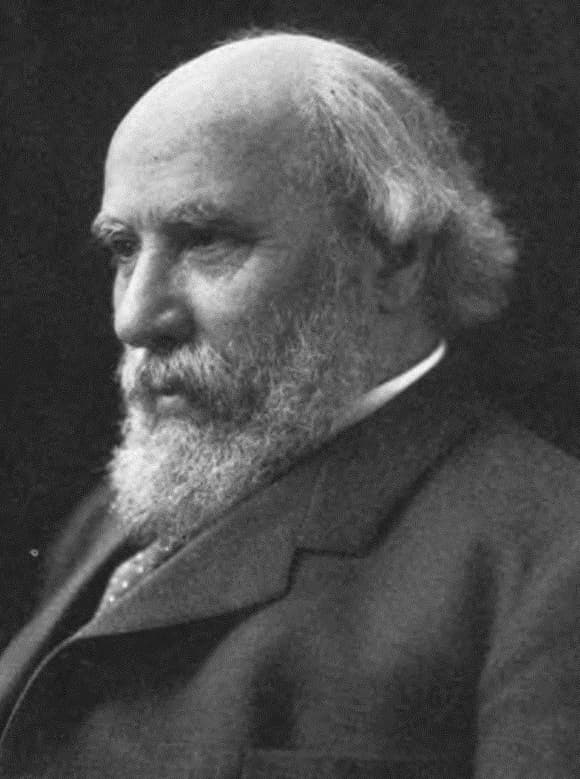
James J. Hill
Great Northern Railway
A visionary in the shipping and logistics sector, James J. Hill transformed the Great Northern Railway into one of the most successful railroads in the United States by emphasizing capital discipline and operational efficiency. Known for his belief that a business should adapt and improve continuously, Hill guided the railway to profitability before expanding into new territories, ultimately connecting the Midwest with the Pacific Northwest. Under his leadership, the Great Northern Railway became a vital artery for trade, generating over $22 million in annual revenue by the time of his death in 1916. His philosophy that success stems from careful financial management and strategic growth remains relevant for entrepreneurs today, illustrating the importance of building a solid foundation before pursuing broader ambitions.
Core Principles
competitive advantage
Develop a thorough understanding of your business from A to Z. Know every detail, every process, every cost structure. This knowledge becomes your competitive edge.
Hill arose from the inside world of freighting and transportation, not from finance like his competitors. He knew the complexity of the industry intimately, allowing him to spot inefficiencies others missed, such as $200,000 in misallocated construction costs at the SP&P.
“He possessed a priceless advantage compared with most other 19th century rail titans. Rather than coming from the outside world of finance, as most of them did, he arose from the inside world of freighting and transportation, and he knew this world in all its complexity.”
The best defense against competition is a well-built system that can operate at lower costs and lower rates than competitors. Obsess over operational efficiency.
Hill understood that other railroads would invade his territory. Rather than engage in financial speculation, he invested profits into improving infrastructure: straightening curves, lowering grades, reducing curvature and grades to minimize energy consumption and enable lower rates.
“Knowing that the best defense against invading railroads was a better built system that could operate at lower rates.”
Beware of erratically behaving competitors. Poorly run, desperate competitors may be more dangerous than well-managed ones because they act unpredictably and destructively.
Hill faced a choice to either build around or acquire a rival railroad with shaky finances that behaved erratically by cutting rates unsustainably. The unpredictable, irrational competitor posed greater risk than a well-managed one would have.
“Your most dangerous competition is not your smart, well run competition. It's the crazy unsuccessful ones because they behave in ways that are completely unpredictable.”
culture
Create a clear, simple organizing principle that aligns every decision and communicates your core values. Make it memorable and difficult to deviate from.
Hill established a credo for the Great Northern that became the company's organizing principle: seek the best possible line, shortest distance, lowest grades, and least curvature. Every major decision about construction, materials, and engineering was filtered through this single principle. This clarity made it easier to maintain standards even as the organization grew.
“What we want is the best possible line, the shortest distance, the lowest grades, and the least curvature that we can build.”
customer obsession
Align your interests with your customers' long-term prosperity. Build mutual interdependence so that customer success drives your success.
Hill targeted European farmers and entire church congregations to settle in territories served by his railroad. He believed the railroad and the regions must be rich or poor together. He positioned his monopoly not as a way to gouge customers with excessive rates, but to push prices down through efficiency, benefiting everyone. This alignment meant farmers would develop the land, creating more freight traffic.
“We consider ourselves and the people along our line as partners in the prosperity of the country we both occupy. If the farmer is not prosperous, we are poor.”
finance
Success requires the ability to save money and deploy capital efficiently. Those who cannot save money will fail, because the seed of success requires capital discipline.
Hill believed that financial discipline was the ultimate test of whether someone was destined to succeed or fail in life. He practiced this throughout his career, plowing large percentages of profits back into infrastructure rather than extracting wealth.
“If you want to know whether you're destined to be a success or failure in life, you can easily find out. The test is simple and it is infallible. Are you able to save money? If not, drop out. You will lose.”
Get rich slowly, not quickly. Real wealth comes from compounding returns, reinvestment in business, and long-term value creation, not from quick financial schemes.
Hill took 11 years to accumulate $150,000 in assets before entering railroading. He didn't pursue quick profits but methodically built capital through transportation, fuel, and forwarding businesses. Charlie Munger notes that most people don't emulate Hill's strategy because they don't want to get rich slowly.
“11 years later, at the time he entered the world of railroading, he would count assets of $150,000.”
Practice conservative financial management, not speculation. Reinvest profits into infrastructure and operations rather than extracting wealth or engaging in financial manipulation.
Hill and his associates managed railroad finances conservatively, unlike speculators like Jay Gould and Henry Villard who milked railroads of resources and oversold stocks. Hill's approach meant the Great Northern was the only transcontinental railroad that survived the 1893 Panic without bankruptcy.
“He advocated and practiced a policy of plowing large percentages of profits directly back into the property.”
Control your expenses better than your competition to find sustainable competitive advantage. Cost awareness must be treated as an obsession across all levels of the organization.
Hill was obsessed with controlling costs and this became the cornerstone of his competitive advantage. While competitors like Henry Villard built railroads in ignorance of their costs and went bankrupt, Hill's meticulous cost management allowed him to operate at lower rates that competitors could not match, making it nearly impossible for them to compete.
“The best defense against invading railroads was a better built system that could operate at lower rates.”
If you cannot save money, the seeds of success are not in you. Personal financial discipline is the foundation for business success.
Hill lived this principle throughout his life, starting as a young man by saving all his earnings. He left his first job with $600 in cash, his entire life savings. This discipline of saving and financial conservation carried through his entire career, allowing him to capitalize on opportunities when they appeared.
“Are you able to save money? If not, drop out, you will lose. You may think not, but you will lose as sure as you live. The seed of success is not in you.”
focus
Obsession is an edge in business. When you understand an opportunity better than anyone else and cannot stop thinking about it, that focus becomes a competitive advantage.
Hill was obsessed with the St. Paul and Pacific Railroad during the 1870s. He studied every legal document, mortgage, and court record related to it. A friend recalled that Jim had spoken about the opportunity probably several hundred times during the mid-1870s. This obsessive study gave him insights others lacked.
“Here stood the kind of opportunity that came only with the opening of a new frontier, once in a lifetime, once in many lifetimes.”
Maintain focus on your core mission. Many side ventures will dilute energy and resources from your primary objective, where your real advantage lies.
Hill invested in the Canadian Pacific Railway with partners Stephen and Smith but realized this diverted attention from his true mission: the St. Paul, Minneapolis, and Manitoba Railway (Great Northern). He withdrew from secondary projects to focus exclusively on his transcontinental vision.
“The Manitoba would always remain the focus of his career and his investments.”
Stay within your circle of competence. Invest and build in your main area of focus; side forays into unrelated projects will often fail.
Like John D. Rockefeller, Hill succeeded primarily in railroads and related infrastructure. His investments outside transportation generally underperformed. His genius lay in mastering detail while fashioning broad vision within railroads specifically.
“Hill resembled his contemporary John D. Rockefeller in that he usually did well only by investing in his main area of focus. His many side forays into other projects quite often failed.”
When you find your core competency and life's work, focus on it exclusively and intensely for decades. Reject distractions and pound away at the same thing forever.
Hill found his life's work in railroading at age 40 and devoted 37 years to the Great Northern Railway until his death. As his fellow associates' attention wandered, Hill's focus became ever more absolute. He reinvested profits back into the railroad, continuously improved it, and never stopped working on improvements. This long-term, undistracted focus created sustainable competitive advantage.
“This railroad is my monument.”
hiring
Hire and retain only those who meet uncompromising standards. Fire consistently and quickly when people do not perform, regardless of relationship or position.
Hill would routinely fire shift bosses, engineers, and even entire work crews if they failed to meet his standards. He fired an engineer for exceeding the speed limit despite not recognizing his boss. This uncompromising approach extended to partners as well, such as when he forced out his partner Griggs from their coal business. He accepted that this made him difficult to work for but refused to compromise on quality.
“Hill fired employees at an alarming rate for his entire life. He refused to bend his standards to other people.”
innovation
Identify inefficiency in existing processes and found a business to eliminate that step. This creates immediate value and builds operational expertise.
Hill's first business (James J. Hill Company) identified that freight was being unloaded from steamboats, then reloaded onto horse carts, then reloaded again onto trains. He built a two-story warehouse with the first floor level with the dock and second floor level with the railroad, eliminating two reloads. This single innovation drastically reduced transfer costs and taught him about logistics.
leadership
Build relationships with older, more successful people. These mentorships often evolve into valuable partnerships and accelerate your learning.
Hill deliberately cultivated relationships with established businessmen like Norman Kitson, a leading St. Paul businessman and former Hudson Bay Company agent. Kitson became his close friend, mentor, and longtime business associate, eventually passing business interests to Hill as a partner.
“Kitson became his close friend, mentor, and longtime business associate. Jim would name his firstborn son James Norman in the old man's honor.”
Know the names and stories of your workers. Personal connection, recognition, and occasional participation in their work builds loyalty and commitment that survives hardship.
When managing railroad construction crews in brutal conditions, Hill would walk the lines calling workers by name, remembering details about them. Occasionally, he would pick up their tools and work alongside them during breaks, demonstrating shared sacrifice.
“He learned many of the men's names and would walk around along the lines calling out to them familiarly, even working for them when they retired for a cup of hot coffee.”
Set extremely high standards and enforce them ruthlessly. Fire those who fail to meet your exacting demands, but do so fairly and consistently.
Hill was known to fire shift bosses and even entire crews when they failed to perform to his satisfaction. Yet he also rewarded loyalty and effort. This combination of high standards and occasional mercy created a culture where performance mattered.
“He routinely fired shift bosses when they failed to perform to his satisfaction. When one whole crew rebelled, he fired the entire entourage.”
Respect and reward genuine talent and excellence, even when it requires you to admit you were wrong. Superior talent deserves higher compensation.
John F. Stevens defied Hill's direct order to stop construction and kept building a 13-degree curve that he believed was necessary. When Hill arrived and saw Stevens' rationale, he realized Stevens was right. Instead of punishing the insubordination, Hill immediately raised Stevens' salary by 50 percent. Hill recognized that Stevens' excellence was worth more than his ego.
Develop an exceptional personality that attracts and holds people's attention. Use charisma and animated communication to sell your vision and motivate others.
Hill was described as extremely charismatic with high energy, engaging people in rapid-fire, animated conversation with expansive gestures. As a young man, this natural charisma served him well when he worked in shipping and logistics. This personality trait was essential for his success as a railroad entrepreneur, where the role was called a promoter.
“He held people's attention as he engaged them in characteristic rapid fire, highly animated conversation, gesturing expansively and driving home his point with jabbing motions of his hands.”
mindset
Work ethic combined with intelligent work produces results. Ordinary hard work without strategy is insufficient; you must apply analytical thinking to your labor.
When asked what accounted for his success, Hill emphasized not just hard work but intelligent work directed with purpose and strategy. He studied every detail of his business systematically.
“Work, hard work, intelligent work, and then more work.”
Dual personality traits can coexist productively: be both realistic and pragmatic in execution while maintaining romantic vision and ambition about your mission.
Hill embodied both cold analytical practicality in how he built the railroad and romantic idealism about the adventure of building it. He studied costs minutely yet described the enterprise as his great adventure, combining engineering rigor with visionary thinking.
“Think about how he described the building of a railroad. He was very realistic and pragmatic how he goes about doing that. But he described it as a great adventure.”
Be high agency. Do not wait for perfect circumstances to act. Take difficult, unusual steps to solve problems and create opportunities.
When Hill was concerned about a potential conflict in Canada interfering with his trade business, he traveled seven weeks in winter through dangerous terrain to meet with Canadian officials and help resolve the dispute. When competitors used foreign ships in American waters, he researched maritime law, discovered a neglected regulation, and persuaded the Treasury Department to enforce it. He created solutions rather than accepting constraints.
Read voraciously and study history and biography to understand how dynamic individuals create change. Use reading as your primary tool for learning from others.
Hill was obsessed with reading from childhood despite having only one eye. He read history and biography extensively, studying Napoleon and other conquering figures. He would bore people with endless discussion of what he read. Later in life, his rail car was sparse except for one thing: it was loaded with books. This reading habit fed his constant search for improvements and new ideas.
Think of your business as a living, vital organism that requires constant nourishment and improvement. Design systems for continuous iteration and refinement.
Hill described his railroad as a living organism that constantly needed to be replenished. He never stopped straightening curves, lowering grades, and improving the physical plant. He treated it like a craftsman treats a work of art, always looking for the next improvement. This frame allowed him to stay engaged and innovative for 37 years.
“The railroad trunk lines and their spreading branches formed a living, vital organism, which constantly needed to be replenished.”
operations
Be where the money is being spent. Your physical presence in operations, not reports and correspondence, reveals truth and enables real-time decision-making.
Hill refused to manage from an office distant from construction. He spent enormous time in the field, driving back and forth along the line, observing every detail. His competitors managed from offices in New York or Europe, unable to see critical problems.
“He found it imperative, he said, to be where the money was being spent.”
Be physically present where money is being spent. Proximity to execution allows for real-time observation, course correction, and maintaining uncompromising standards.
Hill was famous for constantly riding his railroad lines and being present during construction. He would notice minute details like bad housekeeping at station stops or defects in tracks. His competitors, particularly Eastern financiers, managed from distant offices and were unaware of operational realities. This bias to be present gave Hill profound knowledge advantages.
“It pays to be where the money is spent.”
Frameworks
Vertical Integration and Rational Organization
Systematically integrate all steps of a business process under unified control and optimize each step for efficiency and cost reduction. Consolidate industry players to eliminate wasteful competition while serving customers better. This can mean controlling supply chains, transportation, and distribution rather than depending on outside providers.
Use case: Apply when an industry is fragmented, wasteful, or subject to rate volatility. Use to build defensible competitive advantage through operational control and efficiency.
Living Organism Model of Business
View your company not as a static asset but as a dynamic living system that must constantly evolve, adapt, and improve. Regularly upgrade infrastructure, processes, and products. Identify weak points and weak points, similar to how a body maintains health through continuous repair and renewal.
Use case: Use this mindset to maintain focus on continuous improvement rather than one-time optimization. Apply to mature businesses facing complacency or stagnation.
Build Slowly, Then Expand
Create a highly profitable, well-optimized operation in your core market before expanding into adjacent territories. Prove your model works at scale in one region before stretching resources thin across many regions. This builds capital, tests processes, and creates a fortress base.
Use case: Use as a growth strategy when entering capital-intensive industries or entering undeveloped markets. Prevents overextension and creates defensibility.
Deep Knowledge as Competitive Edge
Develop intimate knowledge of your industry and business across all dimensions: history, costs, operations, customer needs, competitive dynamics, and technical details. This knowledge allows you to spot inefficiencies, make better decisions, and predict future trends faster than competitors.
Use case: Apply in competitive industries where small advantages in cost or efficiency compound into market dominance. Invest time in research, direct observation, and relationship-building across all levels of your organization.
The Obsession Strategy
When you have identified a genuine opportunity aligned with your skills and market knowledge, allow yourself to become obsessed with it. Study it exhaustively, think about it constantly, and speak about it repeatedly to others. This obsessive focus becomes an information advantage that others cannot replicate.
Use case: Apply when you have identified a true edge based on unique knowledge or insight. Useful for long-term opportunity development when others are distracted by competing priorities.
Physical Presence as Intelligence Gathering
Be physically present where your business operations happen, not just reading reports from afar. Direct observation reveals problems, opportunities, and nuances that communication cannot convey. Your presence also signals priority and builds relationships with workers and managers.
Use case: Apply in operations-heavy, capital-intensive, or complex businesses. Particularly valuable in manufacturing, construction, logistics, and other businesses where field conditions change rapidly.
Rate-Based Competitive Moat
Build a business model where you can profitably operate at lower prices than competitors can sustain. This creates a self-reinforcing advantage: you gain volume, your efficiency improves further, and competitors cannot match your rates without losing money. Eventually, they exit the market.
Use case: Apply in commoditized industries where price competition is intense. Build operational excellence that compounds over time through scale and reinvestment.
Pragmatic Competitor Negotiation
When direct competition becomes economically wasteful for all parties, shift from competition to negotiation. Form agreements with competitors to establish market-sharing arrangements, pricing discipline, and orderly markets. This serves customers better and protects all participants from mutually destructive price wars.
Use case: Apply when competition has become irrational and all players are losing money or suffering. Particularly useful in oligopoly situations or when consolidation is possible.
The Credo Operating Principle
Create a single, memorable, multi-part principle that guides all major decisions and serves as a quality filter. Hill's credo was to build the best possible line, shortest distance, lowest grades, and least curvature. Every decision about materials, engineering, construction routes, and investment was filtered through this statement, making it easy to maintain standards and communicate priorities without constant negotiation.
Use case: Establishing organizational culture and decision-making criteria in scaling organizations where you cannot personally make every decision
Rational Integration
Strategically acquire or build businesses that are vertically integrated into your core value chain, giving you control over costs, quality, and rates. Hill moved upstream and downstream from his railroad business, controlling forwarding, warehousing, fuel supply, coal mining, and land development. Each business gave him competitive advantages his competitors couldn't match.
Use case: Scaling companies where controlling suppliers or distribution channels creates significant cost or quality advantages
Stories
A trader from St. Paul randomly handed young Jim Hill a tattered newspaper from New York with the headline, 'Splendid chances for young men in the West.' Hill carried the paper around, reading and rereading it until it fell apart. This small gesture redirected his life toward America and opportunity.
Lesson: Serendipity plays a role in success, but only for people positioned to recognize and act on opportunity. Hill's receptiveness to the message, combined with his ambition, allowed him to transform a random encounter into a life-changing decision.
Hill spotted an engine numbered 94 on a Dakota rail siding and, without hesitation, walked up to the engineer Roberts by name and noted the engine had been in for repairs recently. His knowledge of such minute details across the entire railroad became legendary.
Lesson: Mastery of small details compounds into comprehensive knowledge that gives you an intuitive understanding of your entire operation. This allows faster decision-making and problem-solving than competitors relying on secondhand reports.
When Hill's former partner Griggs refused to work hard enough to meet Hill's standards, Hill forced him out. Hill then ruthlessly leveraged his railroad relationships to deny Griggs preferred rates. But when they finally became direct competitors, Hill pragmatically approached Griggs and negotiated a market-sharing consortium instead of destroying each other.
Lesson: High standards and ruthlessness are necessary, but flexibility and pragmatism matter too. When competition becomes wasteful, shift from war to negotiation. This requires both willingness to crush competitors and wisdom to recognize when mutual benefit exceeds mutual destruction.
While competitors like Henry Villard built rapidly and poorly, requiring extensive rebuilding later, Hill built slowly and meticulously, straightening curves, lowering grades, and using high-quality materials. When the 1893 Panic devastated the railroad industry, Hill's Great Northern was the only transcontinental railroad that did not fail.
Lesson: Slow, careful building creates resilience that fast building cannot match. The time and care you invest during good times determines whether you survive hard times. Competitors who rush to capture market share often lack the foundation to survive downturns.
Hill discovered that the bankrupt St. Paul and Pacific Railroad had misallocated nearly $200,000 in construction costs to operations, understating its true profit capacity. By studying the road constantly, reading every scrap of information, and analyzing court records about the Dutch bondholders, he perceived an opportunity others completely missed.
Lesson: Most people make quick surface judgments. Deep research into financial records, legal documents, and industry history often reveals hidden opportunities that look like disasters to casual observers. This research edge compounds into massive returns.
Hill worked on St. Paul riverboat levees as a young man, learning to extract favorable rates, beat artificially inflated pricing, purchase cheaply, and cultivate customer loyalty by anticipating their needs. These skills, developed while coordinating steamboat and railroad freight transfers, became the foundation of his later railroad empire.
Lesson: Skills learned in humble early positions become your competitive advantage later. Do not dismiss entry-level work as beneath you; instead, master it completely. The operational knowledge gained from bottom-up work cannot be replicated by people who start at the top.
Hill faced the choice of either building his railroad around a failing competitor or acquiring it to prevent erratic behavior from harming his business. He recognized that a desperate, poorly-managed competitor behaves unpredictably in ways a rational competitor would not, sometimes making decisions that hurt everyone.
Lesson: Your most dangerous competitor is not always the strongest or most intelligent. Erratic, desperate competitors may be more dangerous because they act irrationally. Sometimes you must choose to neutralize such competitors rather than compete with them directly.
Hill originally planned to retire with $100,000 and devote himself to study, philanthropy, and fatherhood. As he accumulated success, he abandoned this plan and instead drove forward to build the transcontinental railroad. His ambition, once awakened, compounded with his success.
Lesson: Early goals become obsolete as you achieve them and gain clarity on what is possible. Ambitious people often reset their targets upward when they prove capable of achieving initial goals. Stay flexible about the scale of your ambition as evidence accumulates.
In winter 1870, Hill was refused shelter at an inn in Caledonia, Dakota Territory, but a widow gave him refuge for the night. Ten years later, when Hill built his railroad, he intentionally routed it away from Caledonia and through the widow's town instead. Caledonia disappeared from the map while the widow's town became the county capital and was renamed Hillsboro in Hill's honor.
Lesson: Personal loyalty and gratitude matter. Hill never forgot kindness and cruelty, and he used his power and resources to reward and punish accordingly. This demonstrates the long-term consequences of how you treat people and the importance of remembering your roots.
Hill discovered that maritime law prohibited foreign ships from operating in American waters. When a Canadian competitor entered his steamboat market and triggered a rate war that was hurting his profits, Hill researched maritime law, found this neglected regulation, and persuaded the U.S. Treasury Department to enforce it against his competitor. He then merged with the competitor and formed a monopoly.
Lesson: Study the rules and regulations of your industry deeply. Competitors ignore them, but understanding them can give you a powerful legal advantage. Hill's high agency and reading habit allowed him to find and leverage a rule that others didn't know existed.
Notable Quotes
“Give me snuff, whiskey, and Swedes, and I will build a railroad to hell.”
A colorful quote reflecting Hill's confidence in his ability to accomplish the seemingly impossible with the right resources and determination.
“Work, hard work, intelligent work, and then more work.”
Hill's answer when asked later in life what was responsible for his success. Emphasizes that success requires both effort and thoughtful strategy.
“Most men who have really lived have had, in some share, their great adventure. This railway is mine.”
Reflects Hill's view of business and life intertwined. He saw the railroad not just as profit but as his life's grand adventure, combining realism with romanticism.
“If you want to know whether you're destined to be a success or failure in life, you can easily find out. The test is simple and it is infallible. Are you able to save money? If not, drop out. You will lose.”
Hill's philosophy on financial discipline as the fundamental test of success. He believed the ability to save and deploy capital wisely determined ultimate outcomes.
“I commenced to get all the information that I could find, copies of the mortgages, of the complaints, paper books published in connection with the lawsuits, records in the courts.”
Describing his obsessive research into the St. Paul and Pacific Railroad's documents, lawsuits, and records before acquiring it. Shows his commitment to deep knowledge before major decisions.
“He found it imperative, he said, to be where the money was being spent.”
Hill's philosophy on management presence. Rather than managing from an office, he spent time directly observing operations to understand what was really happening.
“Knowing that the best defense against invading railroads was a better built system that could operate at lower rates.”
Hill's core competitive strategy. He understood that building a superior, low-cost operation was better than trying to crush competitors through rate wars or financial manipulation.
“To Hill, the railroad trunk lines and their spreading branches formed a living vital organism, which constantly needed to be replenished.”
Describing Hill's view of his railroad as a living system requiring constant improvement and adaptation, not a static asset to be exploited.
“When competition became wasteful to him, he did not hesitate to end it, even if it meant joining with old enemies and creating an unblushing situation of monopoly.”
Illustrates Hill's pragmatism. When competition harmed all parties, he negotiated peace and market-sharing agreements rather than fight to the death.
“The days of prosperous independent regional railroads must soon end, and the future lay in integrated continental systems that could move heavy tonnages rapidly and without interruption, at uniform and falling rates.”
Shows Hill's long-term thinking about industry consolidation, which drove his decision to build transcontinental rather than remain regional.
Frequently Asked Questions
What are James J. Hill's key business principles?▼
James J. Hill's core principles include: Develop a thorough understanding of your business from A to Z. Know every detail, every process, every cost structure. This knowledge becomes your competitive edge.. The best defense against competition is a well-built system that can operate at lower costs and lower rates than competitors. Obsess over operational efficiency.. Beware of erratically behaving competitors. Poorly run, desperate competitors may be more dangerous than well-managed ones because they act unpredictably and destructively.. Founder Almanac has cataloged 30 total principles from James's career.
What can entrepreneurs learn from James J. Hill?▼
Key lessons from James J. Hill include: Serendipity plays a role in success, but only for people positioned to recognize and act on opportunity. Hill's receptiveness to the message, combined with his ambition, allowed him to transform a random encounter into a life-changing decision.. Explore 10 stories and 10 frameworks from James's experience.
What is James J. Hill known for in business?▼
A visionary in the shipping and logistics sector, James J. Hill transformed the Great Northern Railway into one of the most successful railroads in the United States by emphasizing capital discipline and operational efficiency. Known for his belief that a business should adapt and improve continuously, Hill guided the railway to profitability before expanding into new territories, ultimately connecting the Midwest with the Pacific Northwest. Under his leadership, the Great Northern Railway became a vital artery for trade, generating over $22 million in annual revenue by the time of his death in 1916. His philosophy that success stems from careful financial management and strategic growth remains relevant for entrepreneurs today, illustrating the importance of building a solid foundation before pursuing broader ambitions.
More Shipping & Logistics Founders
Want James's advice on your business?
Our AI has studied James J. Hill's biography, principles, and decision-making frameworks. Ask any business question.
Start a conversation