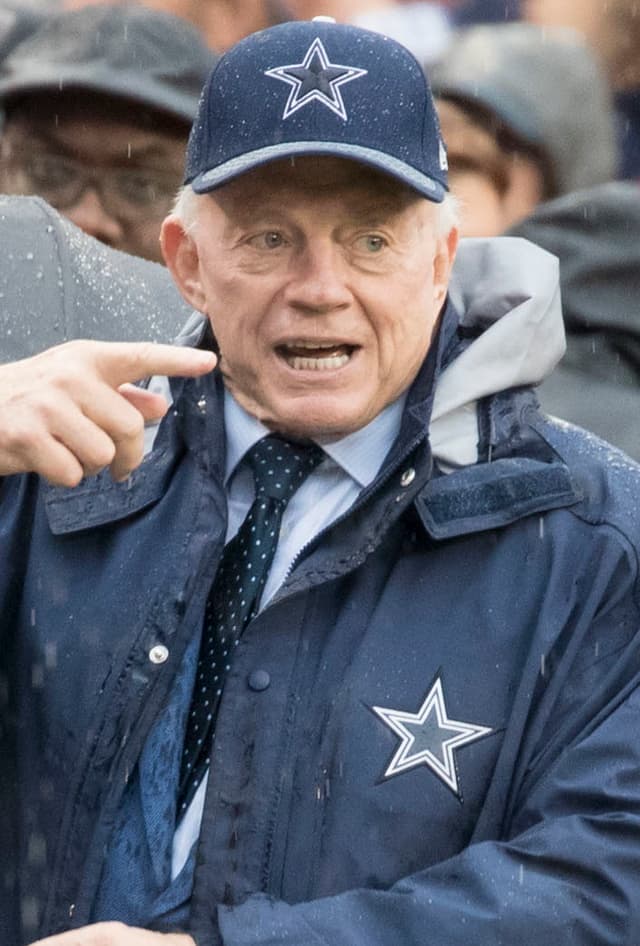
Jerry Jones
Dallas Cowboys
A prominent figure in the sports industry, Jerry Jones transformed the Dallas Cowboys into one of the most valuable franchises in the world, worth over $6 billion as of 2021. His leadership style emphasized relentless cost awareness and risk-taking, as he famously stated, "By instinct, we Joneses were risk takers. To win big, you have to play the big hand." Jones's refusal to sell a struggling land investment, despite being deeply in debt, demonstrated his commitment to long-term vision over short-term gains. His belief in the potential of overconfidence led to unconventional successes that have inspired entrepreneurs to embrace calculated risks in pursuit of their goals.
Core Principles
finance
Preserve and reinvest cash from successful ventures rather than blowing it on lifestyle. This allows you to capitalize on the next big opportunity.
After making $50 million from his first oil deal and $80 million from his gas wells, Jerry had accumulated $90 million in cash by age 47. This war chest allowed him to buy the Cowboys when the opportunity arose, which he wouldn't have been able to do if he'd spent the money.
Cost awareness must be an obsession at all levels of the organization. Every dollar wasted comes directly from customer value and competitive advantage.
Both Ingvar Kamprad at IKEA and Sam Walton at Walmart built their empires on ruthless cost control. Jerry Jones applied this same principle when he took over the Cowboys, cutting non-revenue producing positions and eliminating waste throughout the organization.
“Control your expenses better than your competition. This is where you can always find a competitive advantage.”
leadership
Build long-term partnerships with people who are comfortable being number two. If someone needs to be number one, the partnership will eventually break.
Jerry fired his college roommate and friend Jimmy Johnson after winning a second Super Bowl because Johnson struggled with Jerry always being the decision-maker. He later hired Barry Switzer, who was comfortable in a supporting role, and the partnership lasted longer.
mindset
Seek out and learn from people more successful than you. Spend time around intense, driven entrepreneurs and absorb their habits and mindsets.
Jerry built relationships with Don Tyson, his father Pat Jones, and other successful entrepreneurs. He would observe their work ethic, their risk appetite, and their approach to business. These relationships shaped his worldview about what was possible.
Never underestimate the person who overestimates themselves. Excess self-regard, while often counterproductive, can cause weird successes from overconfidence that actually work out.
Jerry refused to sell a $500,000 piece of land when banks pressured him to do so. Thirty years later, it was worth $20 million with a Walmart built on it and an interstate highway nearby. His stubborn self-belief in deals that others rejected repeatedly paid off.
“Never underestimate the man who overestimates himself.”
Control your sleep and physical energy ruthlessly. The ability to survive and thrive on very limited sleep is a competitive advantage in high-stakes situations.
Tales abound of 4 a.m. phone calls from Jones with people unsure if he was just waking up or hadn't slept yet. His restless energy and single-minded drive defined him for decades and allowed him to outwork competitors.
Be obsessed with your work and willing to empty your bank account to pursue what you truly believe in. Financial advisors will call it suicide, but obsession creates an advantage.
Jerry had $90 million in cash from oil and gas. He emptied his entire bank account to buy the Cowboys for $140 million, then borrowed the rest at steep interest rates. Financial advisors called it 'ridiculously overpriced and financial suicide,' but his obsession with football allowed him to see value others missed.
When taking a big risk, pair it with something you're genuinely obsessed with. The obsession will drive the work ethic needed to make it succeed.
Jerry bought the Cowboys when skeptics called it financial suicide. But unlike the previous owner who saw it as a tax write-off, Jerry was genuinely obsessed with football since childhood. This obsession drove him to work harder than any owner had before.
operations
When taking over a struggling business, ask yourself what the previous owner did wrong, then fix the obvious problems. This creates immediate value.
The Cowboys lost $9 million the year before Jones took over. Rather than overhaul everything, he identified three simple fixes: sell unsold luxury suites, monetize the press box, and add in-stadium advertising. These three items generated millions.
Use your time on the highest leverage activities. Spend your energy where it will unlock the most value, not on routine tasks.
When Jerry bought the Cowboys, he focused his personal attention on selling luxury suites and convincing city council to allow alcohol sales, knowing these two initiatives would generate millions. He didn't waste time on lower-impact activities.
Be willing to make decisions and act on them with extraordinary speed. Obsession with speed of execution is a competitive advantage.
Jerry was famous for making deals by the first hole of golf then leaving, and for 4 a.m. phone calls. He moved with such speed and intensity that he didn't waste time on anything that wasn't immediately productive.
“Jerry Jones doesn't like to waste time. On the rare occasion he hits the golf course, he's been known to close a business deal by the first hole, shake hands, and then walk off saying, why would I play another four hours when the deal was done?”
resilience
When you fail at one venture, immediately move with enthusiasm to the next decision. Dwelling on losses is a death sentence.
In his 20s and 30s, Jerry failed at pizzerias, struggled with real estate, and faced bank calls demanding payment. Rather than give up, he said: 'You just have to buck up and go on to the next decision. If you don't move with enthusiasm to the next deal, you lose.'
“The hardest things I would learn would be keeping my head together during those tough times. You just have to buck up and go on to the next decision. If you don't move with enthusiasm to the next deal, you lose.”
revenue
Identify obvious revenue opportunities that previous management overlooked or left untapped. Most businesses are poorly run with money sitting on the table.
When Jones bought the Cowboys, 182 of 188 luxury suites were unsold, the press box was given away free to reporters, and there were no in-stadium advertisements. By fixing these three issues, he generated millions in new revenue annually.
strategy
Sell what others don't think is sellable. If 75 people say no to a deal, the one person who says yes might have an advantage because they see something others missed.
The previous Cowboys owner shopped the team to 75 people before Jerry said yes. Jerry also said yes to Bill Sparks' oil deal that everyone else rejected as crazy. In both cases, Jerry saw opportunity where others saw risk.
To break out and achieve extraordinary results, you must be willing to gamble. Avoid doing what traditionalists would do and instead chart your own path.
Jerry's entire career was built on bets that others rejected. He bought oil deals everyone else said no to, invested in a team most called overpriced and financial suicide, and made deals at terms others wouldn't accept.
“The only way to break out is to gamble.”
Take risks in bunches rather than individually. The more risks you take, the better the chance that one of them will hit big.
In the Oklahoma oil fields, Jerry learned to bundle multiple risky ventures. When drilling for natural gas near San Francisco and Oklahoma simultaneously, one well failed catastrophically but the other produced $40 million, netting $80 million total on two wells.
“Some of your risks are bound to be bust. The more risks you take, the better the chance of one of them hitting.”
Frameworks
The Wildcatter Mentality
Roll the dice until your knuckles bleed. Never do what traditionalists would do. Take multiple risks simultaneously because some will fail and some will hit big. This mentality comes from oil patch culture where a single well can make or break you, so you drill many at once to improve odds.
Use case: When you're in a high-risk, high-reward industry and need to accelerate learning and capital accumulation. Particularly useful in early-stage ventures where a few big wins can generate the capital needed for subsequent opportunities.
The Cash Flow Machine Design
Design your business to have no fat. Keep only positions and resources that directly generate revenue. Every employee should be able to explain what revenue they produce. This creates a lean organization that can survive downturns and maximize returns during good times.
Use case: When taking over a struggling business or restructuring during a downturn. Applicable to any organization that has become bloated or lost focus on revenue generation.
The Hidden Opportunity Audit
After acquiring or entering a business, systematically audit for obvious value creation opportunities. Ask: What's unsold? What's given away for free that should be monetized? What untapped resources exist? What was the previous owner doing wrong? Start with these low-hanging fruit before making major changes.
Use case: When buying a business, taking over a division, or entering a new market. Particularly useful in turnaround situations where previous management has left obvious revenue opportunities on the table.
The Risk Bunching Strategy
Rather than take one big risk, take several calculated risks simultaneously. This increases the probability that at least one will succeed massively while limiting downside. The offsetting risks provide psychological comfort for decision-making.
Use case: In oil and gas, venture capital, real estate, or any business where you can initiate multiple independent projects. Helps manage both financial risk and psychological burden of uncertainty.
Stories
As a banker pressured Jerry to sell his $500,000 land investment, Jerry stubbornly refused despite being deeply in debt. He visited an elderly tenant who was three months behind on rent and waived the payment out of compassion. A different banker heard of his generosity and convinced his bank to extend Jerry's loan. Thirty years later, the land was worth $20 million with a Walmart built on it and an interstate highway nearby.
Lesson: Stubbornness combined with occasional kindness can pay off enormously. Never underestimate the person who overestimates themselves. What looks insane to others might be patience and conviction in your own judgment. Compassion doesn't mean weakness in business.
Jerry's first oil deal with Bill Sparks was rejected by every bank and investor because Sparks believed in an underground 'river of oil' called the red fork sand that everyone thought was insane. The company that employed Sparks fired him for this crazy idea. Jerry was the only person who said yes. The first 15 wells they drilled all came in successful, generating tens of millions in profit.
Lesson: Being willing to say yes to deals everyone else rejects can be a massive competitive advantage. The person smart enough to see what others miss can make extraordinary returns. Desperation combined with clarity of vision makes you more likely to see opportunities.
Jerry and his partners hit a catastrophic disaster when an employee mistakenly poured cement into a natural gas well instead of into the casing, completely ruining it. Jones took the news in stride, immediately invested another $500,000, moved the drill 100 feet over, and the next day found a well worth $40 million. At the same time, their California well came in for another $40 million, netting $80 million total.
Lesson: Failure is part of the process in high-risk businesses. The speed at which you move to the next decision after failure determines your ultimate success. One catastrophic mistake doesn't define an entire venture if you keep drilling.
Jerry bought a Dallas Cowboys team that had lost $9 million the previous year for $140 million, using his entire $90 million cash position and taking on $60 million in high-interest debt. Financial advisors called it 'ridiculously overpriced and financial suicide.' He then identified that 182 of 188 luxury suites were unsold, the best press box seats were given away free, and there were no in-stadium advertisements. By fixing these three issues, he generated over $50 million in luxury suite revenue alone within a few years.
Lesson: What looks like financial suicide to cautious advisors can be brilliant if you see inefficiencies others missed. Previous management leaving obvious money on the table is a sign of opportunity, not a sign of doom. Obsession with your industry allows you to see what others can't.
Jerry went to Stanford to visit his daughter and eventually rented an office in Palo Alto thinking he'd do some business development. Instead, he bought 25 land lots planning to build 25 houses. He then drilled four gas wells on the property, and within 18 months, those four gas wells had generated enough money for him to buy the Dallas Cowboys.
Lesson: Opportunities often come from trying to solve personal problems (staying close to family). When you follow your instincts and stay active, you stumble into lucrative deals. Side projects can sometimes become bigger than the main business.
Notable Quotes
“By instinct we Joneses were risk takers. To win big, you have to play the big hand.”
Describing his family's inherited approach to business and the mentality required to achieve extraordinary results.
“The only way to break out is to gamble.”
Expressing his philosophy about achieving breakthroughs in business and avoiding conventional paths.
“The hardest things I would learn would be keeping my head together during those tough times. You just have to buck up and go on to the next decision. If you don't move with enthusiasm to the next deal, you lose.”
Reflecting on his 20s and 30s when he was overextended in debt and facing bank calls, explaining what he learned about resilience.
“First of all, you must have a desire to succeed and you must also have a willingness not to be number one.”
Describing the key trait required to have a long-term relationship with Jerry Jones.
Frequently Asked Questions
What are Jerry Jones's key business principles?▼
Jerry Jones's core principles include: Preserve and reinvest cash from successful ventures rather than blowing it on lifestyle. This allows you to capitalize on the next big opportunity.. Cost awareness must be an obsession at all levels of the organization. Every dollar wasted comes directly from customer value and competitive advantage.. Build long-term partnerships with people who are comfortable being number two. If someone needs to be number one, the partnership will eventually break.. Founder Almanac has cataloged 17 total principles from Jerry's career.
What can entrepreneurs learn from Jerry Jones?▼
Key lessons from Jerry Jones include: Stubbornness combined with occasional kindness can pay off enormously. Never underestimate the person who overestimates themselves. What looks insane to others might be patience and conviction in your own judgment. Compassion doesn't mean weakness in business.. Explore 5 stories and 4 frameworks from Jerry's experience.
What is Jerry Jones known for in business?▼
A prominent figure in the sports industry, Jerry Jones transformed the Dallas Cowboys into one of the most valuable franchises in the world, worth over $6 billion as of 2021. His leadership style emphasized relentless cost awareness and risk-taking, as he famously stated, "By instinct, we Joneses were risk takers. To win big, you have to play the big hand." Jones's refusal to sell a struggling land investment, despite being deeply in debt, demonstrated his commitment to long-term vision over short-term gains. His belief in the potential of overconfidence led to unconventional successes that have inspired entrepreneurs to embrace calculated risks in pursuit of their goals.
More Sports & Athletics Founders


Want Jerry's advice on your business?
Our AI has studied Jerry Jones's biography, principles, and decision-making frameworks. Ask any business question.
Start a conversation