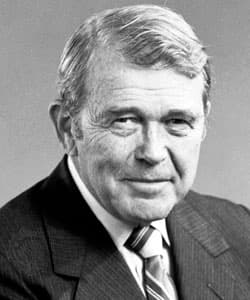
Jim Clark
Silicon Graphics
A visionary leader in the technology industry, Jim Clark founded Silicon Graphics in the mid-1980s, driving innovations in computer graphics and visualization that transformed industries from film to scientific research. Under his leadership, the company pioneered the development of high-performance workstations, contributing to the creation of groundbreaking visual effects in major films like "Jurassic Park." Embracing the principle of creative destruction, Clark understood the importance of self-disruption, ensuring that Silicon Graphics remained at the forefront of technological advancement. His willingness to pivot based on emerging trends exemplifies the entrepreneurial spirit that continues to inspire business builders today. Clark's journey from a rebellious high school student, expelled for his defiant behavior, to a key player in the tech revolution underscores the power of imagination and innovation in wealth creation.
Core Principles
culture
A company culture reflects the founder's personality. If you permit an extraordinary willful founder to build a large organization, it will behave like that founder, not like conventional business practice.
Silicon Graphics under Jim Clark's direct leadership was a loose collection of argumentative, brilliant, bullheaded engineers who might not make money but almost certainly built something wonderful. Once professional managers took over, the culture shifted to selling present machines rather than building future ones.
“It would be a loose collection of argumentative, brilliant, bullheaded engineers who might or might not make money, but almost certainly would build something wonderful.”
finance
Engineers who create wealth should be the primary beneficiaries of that wealth. Design equity structures and power distribution to reward technical contributors over managers and financiers.
Clark was deeply frustrated that at Silicon Graphics, despite inventing the geometry engine and attracting the smartest engineers, the financiers and professional managers captured most of the equity. He saw this as a fundamental injustice. This drove his design of Netscape, where he ensured engineers became wealthy. Mark Andreessen became worth $80 million at age 24.
“The lion's share of the equity and the power had been taken by others, financiers and managers who owned huge chunks of Silicon Graphics. It did not take long for Clark to become deeply irritated by the rules of American capitalism.”
Never ask permission or validation from authorities who have incentive to maintain the status quo. Proceed with conviction on bets where you have edge, even if it seems insane to conventional wisdom.
Clark's personal investment choices defied every conventional financial principle. Swiss bankers presented him with standard risk profiles: conservative, moderate growth, high growth. Clark couldn't fit into any category because his risk profile—putting billions on single companies in volatile sectors—existed outside normal frameworks. He didn't seek to optimize for their approval. He recognized they were optimizing for mediocrity and proceeded with his own strategy instead.
“I think this is for a different person.”
Concentrate capital rather than diversify it. If you genuinely understand an emerging market, deploying all chips on that single bet creates more wealth than spreading capital across many mediocre opportunities. This requires high conviction and high risk tolerance.
While venture capitalists sprinkled capital across dozens of companies to rely on law of averages, Clark concentrated his wealth entirely within Silicon Valley's internet sector. He sank all resources into his newest company, holding massive stakes in Netscape and Healthion rather than buying Treasury bonds or diversified portfolios. This unconventional concentration approach—all chips on double zero—generated his extraordinary returns compared to more diversified portfolios.
“I know how to make a lot of money in the future. And since I know how to make a lot of money in the future, I'm going to put all my money on it.”
Call bluffs in capital markets by demonstrating personal conviction. If others have signaled zero confidence in your company but you believe in it, prove your conviction by putting your own capital at risk. This forces rational investors to reconsider their assumptions.
When venture capitalists valued Healthion at zero and refused to invest further, Clark called their bluff. He announced he would personally fund the company fully, meaning he'd acquire even larger ownership. The VCs were torn between their valuation (zero) and their fear that Clark knew something they didn't. Their anxiety about missing the new new thing overcame their rational valuation, and they threw $8 million at a company they'd just valued at nothing. Clark's personal capital commitment made his conviction credible.
“He would personally provide Long with as much money as he needed. If Long needed $20 million, Clark would cut him a check for $20 million that day.”
hiring
Founders must ensure early team members capture significant equity upside. Failing to do so creates resentment and misalignment. Ensure your best people don't suffer from the same venture capital dynamics that may have disadvantaged you.
Clark had been diluted heavily by venture capitalists when building Silicon Graphics, retaining only a tiny stake of his own creation. At Netscape, he ensured Marc Andreessen received nearly $80 million at IPO (at age 24) and took a personal stake of nearly 25 percent of the company. This alignment prevented the resentment that might otherwise have driven key team members away.
“Clark made certain that Marc Andreessen, the young inventor, did not suffer the same fate at the hands of the venture capitalists as he himself had 12 years before.”
Hire people who are pigs, not chickens. Pigs are committed; they have skin in the game and will do what it takes. Chickens are merely interested and will abandon ship when conditions get difficult.
Clark explicitly distinguished between two types of risk-takers using the ham and eggs breakfast metaphor: the chicken is interested in the outcome, the pig is committed to it because it goes into the dish. When building Netscape and other ventures, Clark prioritized finding people who had made a personal commitment rather than those seeking a paycheck or resume line.
“The difference between a pig and a chicken in the ham and eggs breakfast is the chicken is interested. The pig is committed. If you're going to do anything worth doing, you need a lot of pigs.”
Recruit A-plus players at all costs. The performance differential between great and average engineers is 50 to 100 times. Small teams of A-plus players outperform large teams of B and C players.
Clark was fanatical about hiring the best engineers. Mark Andreessen was the only person Clark successfully recruited out of a dozen candidates when founding Netscape. Clark understood that in software especially, the difference between a great engineer and an okay one is enormous. This was critical to all his company launches.
“The difference between a great software guy and an okay software guy is huge. A great software guy is worth 10 times an okay software guy.”
Avoid hiring people who are merely changing jobs. When recruiting, clearly distinguish between those seeking the next rung on a ladder versus those burning to build something significant. Screen for commitment to the mission, not resume optimization.
Clark developed a deliberate recruitment strategy. When uninterested candidates came by, he'd tell them the company was confused and didn't know what it would do. When he found genuinely interested candidates, he'd describe the exact vision and the wealth they could create. This sorting mechanism ensured he built teams of people intrinsically motivated by the mission rather than extrinsically motivated by job titles.
“Those are exactly the people you don't want. I have a strategy for dealing with these people. When they come by to apply for the job, I tell them, we're all confused here. We don't know what we're going to do yet. But when you find someone I want, I tell them, here's exactly what we are going to do. And it's going to be huge. And you are going to get very, very rich.”
innovation
Wealth creation comes from imagination and the ability to combine existing ingredients in novel ways. Economic growth is the discovery of new recipes, not the accumulation of more of the same resources.
Paul Romer's New Growth Theory, which Clark understood intuitively, states that wealth comes from human imagination creating entirely new combinations. Clark embodied this by seeing that the internet—an existing but underdeveloped technology—combined with browser software could create a new category of value. This wasn't inventing the wheel; it was seeing a new way to use wheels.
“Growth is just another word for change.”
Impatience is a commercial virtue, not a social vice. The constant push for change and disruption is what creates new companies and opportunities.
Clark's restlessness and inability to be satisfied drove him to continuously seek new challenges. He understood that patience preserves the status quo, while impatience forces innovation. This quality made him perpetually dissatisfied with success, pushing him to found multiple companies.
“If everyone was patient, there'd be no new companies.”
leadership
Distinguish between being interested and being committed. Only work with people who are pigs, not chickens. Commitment means putting your life on the line, not just laying eggs.
When Healthion needed $40 million and no one would invest, Clark personally funded $20 million of it. This signaled his total commitment (pig status) to others, which transformed the narrative from failure to opportunity. His willingness to risk everything gave his story credibility.
“The chicken is interested. The pig is committed. The pig gave his life. Chicken just laid an egg. If you're going to do anything worth doing, you need a lot of pigs.”
Recognize when you no longer fit the organization you created. Rather than fight, leave and create something new. Design future companies to exclude yourself from day-to-day operations.
When professional managers took over Silicon Graphics and Clark's influence was marginalised, rather than fight, he left. At Netscape, he learned the lesson: he designed his role to include only chairmanship and board attendance, keeping the shares and influence but avoiding the operational constraints.
“He had finished with Netscape, having learned from Silicon Graphics that he did not really belong inside a large organization. He designed all future large organizations without a place for himself inside of it.”
Become the author of the story others are willing to play roles in. The founder's narrative power determines the capital they can access and the people they can recruit.
When Netscape's IPO was delayed and the company needed $40 million, Clark's reputation and his willingness to fund it himself suddenly changed the narrative. Venture capitalists who were hesitant suddenly wanted in. His storytelling power as the founder of Silicon Graphics gave him the credibility to move markets.
“His role in the valley was suddenly clear. He was the author of the story. He was the man with the nerve to invent the tale in which all the characters agreed to play the role assigned to them.”
mindset
There is no distinction between work and play for the truly committed entrepreneur. Design your life so your work pursuits are indistinguishable from your leisure pursuits.
Clark was unable to rest. His leisure time (flying toy helicopters, sailing expensive yachts) and his work time (building companies, writing code) were seamlessly integrated. His obsessions were always technological. This lack of separation meant he could sustain intense effort indefinitely.
“To Clark's way of thinking, the big distinction wasn't between work and play, but between creating new technology for money and creating new technology for pleasure. In part, it was because there was no distinction at all.”
Perpetual dissatisfaction is the fuel for continuous creation. Move the goalpost deliberately to maintain motivation rather than becoming complacent after achieving objectives.
Clark told himself he wanted $10 million, then $100 million, then $1 billion, then to exceed Larry Ellison, then to surpass Bill Gates. Each achieved milestone was immediately replaced with a new, larger target. This psychological trick kept him running at maximum speed throughout his life. He understood that satisfaction was the enemy of achievement.
“Clark played these little tricks on himself so that he would have an excuse to keep running as fast as he could.”
Maintain perpetual dissatisfaction by constantly raising the goal post. Use self-imposed psychological tricks to create conditions for continued effort. Once you achieve a target, immediately set a higher one so you never reach a resting point.
Clark told himself he'd retire after making $10 million, then $100 million, then $1 billion, then $1 billion after taxes, then he wanted more money than Larry Ellison, then just for one moment he wanted the most money of anyone. Michael Lewis recognizes this as an intentional trick Clark played on himself to maintain motivation and prevent complacency. The goalpost always receded, ensuring he'd never reach the promised rest.
“I just want to make more money than Larry Ellison. Then I'll stop. [Later] You know, just for one moment, I would kind of like to have the most. Just for one tiny moment.”
Use past humiliations and rejections as fuel for future achievement. Successful founders often convert childhood poverty, academic failure, or social rejection into an engine for proving doubters wrong. Resentment, properly channeled, becomes a powerful motivator.
Clark grew up in poverty in rural Texas, was expelled from high school for telling a teacher to go to hell, entered Navy boot camp, and was initially put on the juvenile delinquent track after circling multiple answers on a test he didn't understand. He said the Navy taught him that desire for revenge could lead to success—he was propelled by anger about his sea humiliation. This resentment and desire to prove Plainview wrong fueled decades of relentless ambition.
“In the Navy, Clark said, he learned that his desire for revenge could lead to success. He was propelled in the classroom by his anger about the humiliation he'd suffered at sea. Thus, success for him became a form of revenge.”
True reinvention requires severing the past entirely. When you need to fundamentally change yourself and your circumstances, you may need to abandon relationships, friendships, and even family ties. The old connections anchor you to your old identity.
When Clark was 38, he was fired and his wife left him. He spent 18 months in dark depression, then one day consciously decided to change everything. In the following decade, no one from his previous life remained. His wife, friends, colleagues, and casual acquaintances were all replaced with new people. This wasn't callousness but a recognition that maintaining old relationships would keep him tethered to his previous failed identity.
“No one who had been in his life to that point would be in it 10 years later. His wife, his friends, his colleagues, even his casual acquaintances, they'd all be new.”
philosophy
Engineers are the true engines of capitalism and should be positioned accordingly. The future belongs to those who create new recipes, not those who distribute existing ones.
Clark's philosophy aligned with Veblen's 'Engineers and the Price System' and New Growth Theory. He believed wealth came from engineers solving problems with new combinations of technology, not from managers selling existing products. This conviction drove his equity design at Netscape.
“Engineers are the ones that created the wealth. The power is shifting to the engineers who create the companies. Clark thought that was as it should be.”
resilience
Progress in capitalism is driven by people who cannot be satisfied by comfort. Economic advancement depends on perpetual discomfort with the status quo. The happiest people rarely change the world.
Clark's defining characteristic was his inability to rest. The moment he achieved one goal, he manufactured a new one. This wasn't greed in the conventional sense—it was a fundamental psychological inability to be satisfied. Most people, once they achieve wealth, slow down. Clark accelerated. This trait—being the least happy optimist—meant he continued disrupting industries decades after reaching billionaire status.
“He was the least happy optimist there ever was. No matter how well Jim Clark did for himself, it was always two in the morning in his heart, and he was lying awake.”
strategy
Refuse to repeat past mistakes. When you identify what went wrong, restructure completely rather than making incremental improvements.
Clark lost control at Silicon Graphics by giving up 40% to Glenn Mueller for $800k, which turned into $400 million. He never forgave Mueller and never repeated this pattern. At Netscape, he negotiated completely different terms, ensuring he maintained majority control and kept the shares.
“He would never do that again with venture capitalists.”
Timing matters more than prediction. Rather than trying to see the future with perfect clarity, successful innovators grope for it by staying sensitive to signals and being ready to pivot when the new new thing becomes visible.
Clark didn't claim to have visionary foresight. When he realized the internet represented the same inflection point that personal computers had in 1985, he abandoned his telecomputer project immediately and pivoted to what would become Netscape. His competitive advantage wasn't perfect prediction but the willingness to discard failing bets quickly and move toward emerging trends.
“All of a sudden, it was clear to me when I looked at the internet that I was looking at the personal computer in 1985. It was slow and clunky, but people were using it, and it would get faster. I realized that this was the thing I'd been groping for.”
Be prepared for timing luck to overwhelm execution. The person who sees the new new thing and acts on it can accidentally destroy billions in competitor capital. Speed and decisiveness matter more than perfection.
Clark's move to Netscape happened because Marc Andreessen casually mentioned that 25 million people were using the internet and those numbers were doubling yearly. This sparked Clark to recognize the internet as the personal computer equivalent of 1985. Microsoft redirected 1,000 employees from the telecomputer to compete. Oracle, Sun, Time Warner, and others made similar massive capital commitments—all following a lead Clark had set with the telecomputer idea and then abandoned. Within six months, he made them all look foolish. The companies that followed his initial ideas then had to follow his new direction.
“It was one of the great unintentional head fakes in the history of technology.”
Avoid the innovator's dilemma by being willing to cannibalize your own successful product. Technology companies must constantly destroy their own business or others will do it for them.
Clark recognized that Silicon Graphics' expensive workstations would eventually be disrupted by cheaper personal computers. He advocated for the company to develop low-cost alternatives that would undercut its own profitable products. The board and management refused. He was proven right when the company eventually declined.
“A technology company to succeed, he argued it needed always to be looking to destroy itself. If it didn't somebody else would. It is the hardest thing to do in business.”
Control and independence are worth more than money to founders. Design your role to maximize creative freedom rather than surrender control for capital gains.
Clark learned from Silicon Graphics that surrendering 40% of the company to venture capitalists meant surrendering control. At Netscape, he structured the deal to keep control and most of the shares. Later, he designed his role to avoid being trapped in large organizations, keeping only the title of chairman and a board seat.
“He had trusted him, meaning Mueller. He would never do that again with venture capitalists and he never forgave Mueller for exploiting his ignorance.”
Frameworks
Pig vs Chicken Risk Framework
Two types of risk-takers exist. The chicken is interested in outcomes but not committed—it appears at breakfast but isn't part of the dish. The pig is fully committed—it becomes the ham. Meaningful achievements require pigs, not chickens. Pigs have integrated their personal identity and fortune with the outcome; chickens are playing a role.
Use case: When hiring or evaluating whether to partner with someone. Determine whether they're in it because they genuinely believe in the mission and have stake-of-the-game commitment (pig) or whether they're optimizing for status, resume lines, or a paycheck (chicken). Build with pigs only.
The Goalpost Recession Strategy
Perpetually raise your targets such that achievement feels impossible. Once you hit $10 million, shift to $100 million. At $100 million, shift to $1 billion. At $1 billion, shift to $1 billion after taxes. After that, shift to having more than a specific competitor. The goalpost always recedes. This is an intentional psychological trick to prevent complacency and maintain intrinsic motivation even after external validation has been achieved multiple times over.
Use case: When you recognize that you're at risk of becoming complacent after achieving a major goal. Use this to reset your internal motivation calibration. Don't eliminate targets; make them impossible to reach so the journey itself—not the destination—becomes the motivator.
The Bluff-Calling Strategy (Capital Markets)
When other investors have clearly signaled zero confidence (zero valuation, refusal to invest), demonstrate your own conviction by deploying personal capital. Put enough money at stake that your conviction becomes credible. Rational investors will reassess their valuation when they see you betting your own billions. This forces them to choose between their stated valuation and their fear of missing out on the new new thing.
Use case: When raising capital and investors are genuinely uncertain about your vision. Rather than trying to convince them with words, show conviction through personal capital deployment. Their fear of missing out will often override their rational skepticism.
The Concentration vs Diversification Spectrum
Two capital deployment strategies exist. Diversification is for people who don't have edge or conviction—it relies on law of averages across many mediocre bets. Concentration is for people who have deep understanding of an emerging market and can identify where the new new thing is happening. If you truly understand the trend, deploying all capital in it outperforms diversified portfolios. This requires high conviction and high risk tolerance, but generates outsized returns.
Use case: When deciding how to allocate capital after your first success. If you genuinely understand where the next wave is coming (as Clark did with the internet), concentrate capital rather than diversify. Diversification is for idiots—specifically, for people without edge. Those with edge should bet accordingly.
Pigs vs. Chickens Commitment Framework
A distinction between two types of risk-takers. A chicken is interested but can walk away (like an egg layer). A pig is committed and has everything at stake (gives its life). Clark used this metaphor to assess whether people were truly committed to his ventures. High-stakes commitments require pigs, not chickens. This framework helped him evaluate which partners and investors to trust with major capital.
Use case: Evaluating commitment levels of team members, investors, and partners before major capital allocation or strategic decisions
Groping Strategy for Opportunity Discovery
Rather than attempting to predict the future, grope toward opportunities by following intense enthusiasm. When seized by overwhelming excitement, follow it into unexplored territory. Avoid grand declarations of vision. Instead, let physical enthusiasm guide exploration and discovery. This method requires openness, willingness to pivot, and comfort with uncertainty.
Use case: Early stage strategy development, startup ideation, navigating uncertain markets, technology decisions
Success as Revenge Motivation
Deliberately use past humiliation, setbacks, and resentments as fuel for achievement. Rather than resolving these feelings, weaponize them as motivation. Keep a mental list of doubters and use their skepticism as psychological leverage to sustain effort. This framework helps channel negative emotions into productive drive.
Use case: Personal motivation during difficult startup phases, maintaining intensity through setbacks, pushing through self-doubt
The Perpetual Goalpost Shift
Set ambitious goals, then deliberately move the target after achievement. When you reach $10 million, suddenly $100 million becomes the goal. Then $1 billion. Then exceeding Larry Ellison. This prevents the psychological trap of satisfaction and complacency. It sustains motivation by making the target always feel just out of reach.
Use case: Maintaining personal motivation over decades, sustaining entrepreneurial drive, avoiding post-success letdown
Equity Design for Creator Alignment
Structure equity distribution to ensure the engineers and creators who built the company become the primary beneficiaries. This involves equity packages that reward technical contributors above managers and financiers. At Netscape, ensure Mark Andreessen owned significant shares from the start. Avoid the Silicon Graphics pattern where financiers captured most gains.
Use case: Company formation, early equity distribution, hiring key technical talent, ensuring founder control
Self-Cannibalization for Disruption Avoidance
Continuously work to destroy your own most profitable product before competitors do. Develop cheaper alternatives that will cannibalise your margins. This is counterintuitive because every stakeholder with equity in current products resists. Requires founder with absolute control and long-term perspective. The cost of implementation appears irrational in the short term.
Use case: Scaling strategy, avoiding innovator's dilemma, mature company strategy, competitive positioning
Stories
Clark was expelled from high school for telling a teacher to go to hell. He'd previously detonated bombs, smuggled skunks, and set off firecrackers in lockers. When he left for Navy boot camp at 17.5 years old, everyone assumed he was a lost cause. He scored poorly on his initial aptitude test because he didn't understand multiple choice and circled all reasonable answers. The Navy put him on the juvenile delinquent track. Within nine months at sea doing the worst jobs on the ship, exposed to officers calling him stupid, he took a math test and scored the highest in his class. Within eight years, he had a college degree, a master's degree in physics, and a PhD in computer science.
Lesson: Institutional labels and early failures tell you nothing about ultimate potential. The qualities that make you a misfit in one system (rule-breaking, non-conformism, impatience) often become the very qualities that make you exceptional in another. Don't accept society's early judgments about your trajectory.
At 38 years old, Clark had been fired from his professor role and his second wife had left him. He spent 18 months in dark depression, telling himself 'I'm going to spend the rest of my life in this fucking hole.' One day, he had a conscious realization: he could dig that hole as deep as he wanted. He consciously decided to change everything about his life. He cut ties with everyone from his past, developed an obsession with achievement, and began plotting wealth creation. In less than a year, he started Silicon Graphics. Within a decade, everyone from his previous life was gone and replaced with new people aligned to his new identity.
Lesson: Radical reinvention is possible at any age, but it requires severing the past entirely. Don't try to improve your old life; build a new one. Old relationships, old identities, and old environments will anchor you to your previous trajectory.
During Navy training, Clark was accused of cheating on an aptitude test. The Navy made him the scapegoat and put him on a brutal punishment track doing the filthiest jobs on a ship. Officers explicitly told him he was stupid. He endured nine months of humiliation. When he returned to the classroom, he discovered he had natural genius in mathematics. Clark later said the Navy taught him that 'desire for revenge could lead to success' and that he was 'propelled in the classroom by his anger about the humiliation he'd suffered at sea.'
Lesson: Childhood and early adult humiliation can be converted into fuel for achievement if you make a deliberate choice to do so. The people who doubted you and the places that rejected you can become powerful motivators. What society labels as disadvantage can become competitive advantage.
When Clark was 54 years old and already a billionaire who had founded three major companies, Michael Lewis asked him when he'd retire—Clark had previously said he'd stop once he became an after-tax billionaire. Clark said he'd retire once he had more money than Larry Ellison. Lewis asked what would come after that. Clark waved the question away, saying that would never happen. A few minutes later, Clark admitted: 'You know, just for one moment, I would kind of like to have the most. Just for one tiny moment.' A few months earlier, when worth $600 million, he'd said he just wanted $1 billion after taxes then he'd be satisfied. Years earlier, he'd told someone he just wanted $100 million. Even earlier, he wanted $10 million.
Lesson: The goalposts recede perpetually for founders built to create rather than rest. Don't believe anyone who says they'll stop at a certain wealth level—the thrill is the chase, not the destination. True entrepreneurs use manufactured dissatisfaction to maintain perpetual motion.
Clark was in a Swiss bank opening an account and was presented with a standard investment questionnaire with risk profiles: conservative, moderate growth, or high growth. The form included advice about minimizing volatility and preserving capital. Clark stared at it in confusion, unable to fit himself into any category. He'd just lost $600 million in the past 10 months by holding concentrated Netscape shares. His portfolio was $9.5 million in Healthion shares (valued at zero) and $15.5 million in Netscape shares (valued at $550 million). He had no interest in Treasury bonds, diversification, or 'preserving' anything. Finally, he looked up and said: 'I think this is for a different person.'
Lesson: Conventional financial advice is designed for people without edge or conviction. If you genuinely understand where the next wave of creation is happening, conventional wisdom about diversification will feel not just wrong but incomprehensible. Trust your edge; don't force yourself into frameworks designed for mediocre returns.
When venture capitalists valued Healthion at zero and refused to invest more capital, Clark announced he would personally fund the company fully, offering to cut a $20 million check on the spot. This would massively increase his ownership stake. The VCs were immediately torn—their stated valuation (zero) contradicted their terror of missing out on the new new thing. They realized how terrible it would look if Healthion became enormous and Clark owned it all while they'd missed it. Almost before they could think clearly, they threw $8 million at a company they'd just valued at worthless.
Lesson: Personal capital deployment is a credible signal that words can never be. When you demonstrate you're willing to bet billions of your own money on conviction, it forces rational people to reconsider their assumptions. Fear of missing out becomes more powerful than numerical valuations.
At age 16, Jim Clark confronted his abusive, alcoholic father after the man sabotaged his mother's car twice, risking the life of Clark's baby sister. Clark left the house to find his father. When he returned, he was crying and his sister never saw the father bother their mother again. The exact confrontation was never fully revealed.
Lesson: Extreme circumstances can catalyze action in young people. Clark's early confrontation with injustice and his willingness to protect his family foreshadowed his later pattern of fighting against systems he viewed as unfair. This incident likely contributed to his lifelong drive to prove himself and fight for those mistreated by systems.
Clark was expelled from high school for telling an English teacher to go to hell. He had previously exploded a bomb on a school bus, smuggled a skunk in a horn case into a school dance, and set off firecrackers in another student's locker. Despite being deemed unfit to graduate from high school, within eight years he had earned a PhD in computer science.
Lesson: Unconventional paths can lead to extraordinary outcomes. Clark's early rebelliousness and rule-breaking were indicators of his willingness to challenge authority and conventions, not signs of lack of ability. His ultimate success shows that traditional credentials are less predictive than natural aptitude combined with drive.
Clark had never seen a computer or multiple-choice test before joining the Navy. He accidentally circled all partially correct answers on the grading machine test, fooling it. The Navy later discovered his mathematical genius when he scored the highest grade on a math test. An instructor suggested he enroll in night classes at Tulane. Within eight years: college degree, master's in physics, and PhD in computer science.
Lesson: A single person's recognition of your potential can change everything. The Navy instructor's identification of Clark's mathematical gift redirected his entire life. Sometimes what matters most is not your past or circumstances, but having someone believe in your capability and guide you toward it.
Clark grew up with his mother supporting a family of four on $225/month. After bills, only $5/month remained for groceries. His father, a drunk, sabotaged her car twice, costing her two months of pay to repair. Yet his mother never took welfare despite her circumstances. Clark was painfully aware of this poverty and chose to play the tuba because it was the only instrument the school provided for free.
Lesson: Early scarcity creates lasting hunger and drive. Clark's poverty shaped his relentless ambition to succeed and his later obsession with ensuring engineers (not financiers) captured the wealth they created. The lesson isn't romantic, but practical: difficult early circumstances can calibrate your expectations and fuel sustained effort.
Notable Quotes
“I grew up in black and white. I thought the whole world was shit and I was sitting in the middle of it.”
Clark describing his childhood in poverty in Plainview, Texas
“In the Navy, Clark said, he learned that his desire for revenge could lead to success. He was propelled in the classroom by his anger about the humiliation he'd suffered at sea. Thus, success for him became a form of revenge.”
Lewis explaining Clark's transformation from scapegoat to mathematical genius, driven by humiliation and resentment
“I was so worried about the PC. I was adamant that we had to build a low-end product and that it had to be something that sold for under five grand.”
Clark at Silicon Graphics pushing the company to cannibalize its own high-end workstation business by building cheaper computers
“I thought, Jesus, those are big numbers. I've never been in a business with those kind of big numbers. Eventually, you were talking about all the people on earth.”
Clark's realization when Marc Andreessen mentioned 25 million people using the internet and numbers doubling annually
“All of a sudden, it was clear to me when I looked at the internet that I was looking at the personal computer in 1985. It was slow and clunky, but people were using it, and it would get faster. I realized that this was the thing I'd been groping for.”
Clark explaining his pivot to the internet and what would become Netscape
“The difference between a pig and a chicken in the ham and eggs breakfast is the chicken is interested. The pig is committed. If you're going to do anything worth doing, you need a lot of pigs.”
Clark explaining his hiring philosophy and the distinction between those merely interested vs genuinely committed to a mission
“Those are exactly the people you don't want. I have a strategy for dealing with these people. When they come by to apply for the job, I tell them, we're all confused here. We don't know what we're going to do yet. But when you find someone I want, I tell them, here's exactly what we are going to do. And it's going to be huge. And you are going to get very, very rich.”
Clark describing his recruitment process to distinguish between those seeking jobs vs those seeking to build something meaningful
“There is nothing more satisfying to me than to create a complete self-contained world when a computer is controlling it.”
Clark revealing his deep satisfaction with technology and world-building
“I know how to make a lot of money in the future. And since I know how to make a lot of money in the future, I'm going to put all my money on it.”
Clark explaining his concentration strategy vs the venture capitalists' diversification approach
“I think this is for a different person.”
Clark's response to the Swiss banker's standard investment questionnaire with conventional risk profiles
Frequently Asked Questions
What are Jim Clark's key business principles?▼
Jim Clark's core principles include: A company culture reflects the founder's personality. If you permit an extraordinary willful founder to build a large organization, it will behave like that founder, not like conventional business practice.. Engineers who create wealth should be the primary beneficiaries of that wealth. Design equity structures and power distribution to reward technical contributors over managers and financiers.. Never ask permission or validation from authorities who have incentive to maintain the status quo. Proceed with conviction on bets where you have edge, even if it seems insane to conventional wisdom.. Founder Almanac has cataloged 30 total principles from Jim's career.
What can entrepreneurs learn from Jim Clark?▼
Key lessons from Jim Clark include: Institutional labels and early failures tell you nothing about ultimate potential. The qualities that make you a misfit in one system (rule-breaking, non-conformism, impatience) often become the very qualities that make you exceptional in another. Don't accept society's early judgments about your trajectory.. Explore 10 stories and 10 frameworks from Jim's experience.
What is Jim Clark known for in business?▼
A visionary leader in the technology industry, Jim Clark founded Silicon Graphics in the mid-1980s, driving innovations in computer graphics and visualization that transformed industries from film to scientific research. Under his leadership, the company pioneered the development of high-performance workstations, contributing to the creation of groundbreaking visual effects in major films like "Jurassic Park." Embracing the principle of creative destruction, Clark understood the importance of self-disruption, ensuring that Silicon Graphics remained at the forefront of technological advancement. His willingness to pivot based on emerging trends exemplifies the entrepreneurial spirit that continues to inspire business builders today. Clark's journey from a rebellious high school student, expelled for his defiant behavior, to a key player in the tech revolution underscores the power of imagination and innovation in wealth creation.
More Technology Founders


Want Jim's advice on your business?
Our AI has studied Jim Clark's biography, principles, and decision-making frameworks. Ask any business question.
Start a conversation