Jonathan Ive
Apple
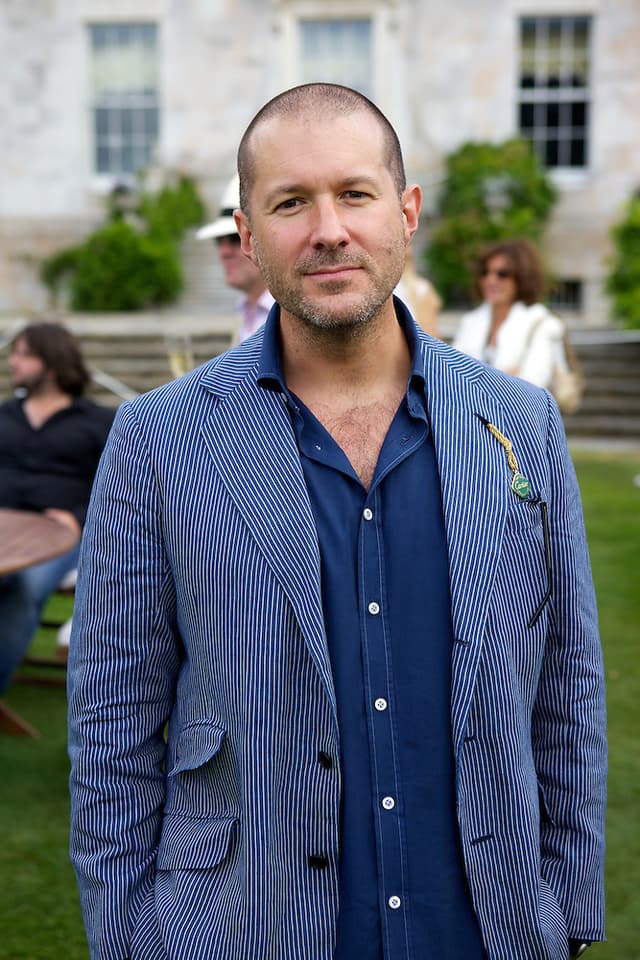
Renowned for his transformative impact on technology design, Jonathan Ive co-founded and led Apple's design team from 1992 until 2019, shaping iconic products such as the iPhone, which sold over 2.2 billion units globally. Guided by principles of relentless simplification and care in craftsmanship, he emphasized the importance of removing unnecessary elements to enhance user experience. Ive's design philosophy aimed to humanize technology, incorporating friendly features like rounded corners and vibrant colors. His childhood discussions with his father about design choices instilled a lifelong passion for understanding the essence of objects, making him a pivotal figure for entrepreneurs seeking to create meaningful and approachable products. As he famously stated, "We wanted to get rid of anything other than what was absolutely essential."
Core Principles
culture
Surround yourself with people who care more about doing great work than making money. Purpose attracts excellence.
Ive was initially drawn to Apple because he sensed that the company stood for something beyond profit. When Jobs returned, he made it explicit: our goal is not just to make money, but to make great products. Ive and Jobs bonded immediately because they shared the belief that the decisions you make based on caring about products are fundamentally different from those made purely for profit.
“Apple stood for something and had a reason for being that wasn't just about making money.”
customer obsession
Start with the user's everyday life, not technical specifications. Products should relate to how people actually use them, not just measure well on a spreadsheet.
When designing the Newton MessagePad, Ive began by asking what the design story should be rather than focusing on processor speed or memory. He recognized that the computer industry had become obsessed with measurable attributes while ignoring the human, emotional aspects of products. This human-centered approach separated Apple from competitors.
“The computer industry has an obsession about product attributes that you can measure empirically. But that's inhuman and very cold.”
Observe people's actual behavior, not what they say they do. Details that seem insignificant reveal how products are truly used.
As a child, Ive's father would point out different street lamps and ask why they were designed differently, teaching him to observe made objects critically. This observation extended to how people interact with products. Ive noticed people fidget with pens, so his TX2 design invited that behavior. He understood that computers scared people, so handles and friendly forms made them approachable.
focus
Design only what you love, and don't dilute your focus with administrative work. Separate people's responsibilities so A players concentrate on what they do best.
Ive discovered at Tangerine that he hated the business and sales aspects of running a design firm. He realized he was spending 90 percent of his time selling services and only 10 percent designing. This misalignment drove him to Apple, where he could focus exclusively on design while others handled business operations. Jobs later applied this principle company-wide by building a company of A players each focused on their strength.
“I worked out what I was good at and what I was bad at. I was really only interested in design. I was neither interested nor good at building a business.”
hiring
Compensation must reflect talent level. Underpaying exceptional talent relative to their contribution is a critical mistake that leads to losing your best people.
Early in his career at RWG, Ive asked for a substantial raise after just a few weeks. His manager explained that they had to balance compensation across the team, but this decision to underpay exceptional talent led Ive to leave for Tangerine. The long-term cost of losing a world-class designer far exceeded what better compensation would have cost.
innovation
Take big chances instead of incremental improvements. If you design by focus group logic, your bold ideas won't survive.
As a design student, Ive took risks that would have failed any focus group test. His designs were surprising but made complete sense once seen. Later, the iMac broke every rule consumers thought they wanted: no floppy drive, unusual shape, higher price. Yet it became the fastest-selling computer in history. True innovation requires betting on what customers don't know they want.
Recognize that being different is easy, being better is difficult. Most companies add features to seem innovative, but true innovation requires disciplined focus on what actually matters.
Ive understood that the computer industry had become conservative in design, competing on measurable attributes rather than human experience. Creating differentiation is straightforward, but creating genuinely superior products demands intense scrutiny of every detail and unwillingness to compromise.
“It's very easy to be different, but very difficult to be better.”
Learn from inspiring examples in other industries. Take ideas from aerospace, automotive, and animation to solve design problems in technology.
Ive studied designers like Dieter Rams from Braun and Eline Gray. Jobs brought in 3D design software from aerospace and automotive industries to accelerate Apple's design process. They used techniques from Pixar's animation workflow to develop computer hardware designs faster. Cross-industry learning prevents narrow, conventional thinking.
leadership
Guard your design vision fiercely but communicate reasons clearly. Protect the team from constant interference while explaining the philosophy behind decisions.
Ive was protective of his design team, shielding them from external noise and dilution of vision. Jobs gave him autonomy while maintaining tight alignment on values. Together they created an environment where the design group could remain small and focused, constantly collaborating, rather than being pulled in multiple directions by competing agendas.
mindset
Nurture curiosity and questioning from a young age. Teach children to observe how things work and to ask why they're designed the way they are.
Ive's father encouraged his curiosity by discussing design constantly, asking why street lamps were different, and engaging in conversations about made objects. This wasn't forced learning but natural dialogue about the world. This early training in observing and questioning became the foundation of Ive's design approach and ability to see what others missed.
product
Product design is a love affair that requires living and breathing the work. Superficial involvement produces mediocre results.
Ive approached each product with intense passion and immersion. The process was described as exhilarating and exhausting because he couldn't separate himself from the work. This deep commitment produced designs that had personality and meaning, not just functional objects. You cannot achieve excellence through detached professionalism.
“To do the best design you have to live and breathe the product. It becomes like a love affair.”
Care and craftsmanship are visible to users. When someone senses carelessness in a product, it undermines everything else about it.
Ive learned from his father about the importance of handmade quality and the care that goes into making objects. He despised products that showed evidence of careless work, believing that customers could sense the effort and attention behind a well-made product. This respect for craft influenced every detail of Apple's designs.
“What I really despise is when I sense some carelessness in a product.”
Humanize technology by inviting physical interaction. Make products approachable and friendly through design choices like handles, rounded corners, and bright colors.
Ive observed that people were scared of computers in the early 1990s. He designed machines with handles and welcoming forms to make technology feel less industrial and more like something you would put in your home. His TX2 pen encouraged fidgeting and play, recognizing that humans interact with objects in multiple ways beyond their primary function.
“If you make it in bright colors and rounded corners, it becomes much more friendly. People are more receptive to it.”
Design is something you do, not something you talk about. Build hundreds of physical prototypes and models to understand a product before manufacturing.
Ive's design process relied heavily on creating physical mockups and models. While a typical design student might build six models, Ive built over a hundred for a single project. This hands-on approach of making and testing was learned from his father and became his trademark at Apple. He consolidated the model shop into the design studio so designers and makers worked side by side.
“The sheer focus to get it perfect. Building scores of models and prototypes became another trademark in his career at Apple.”
Don't use focus groups to design products. The role of the designer is to understand what the customer doesn't yet know they need.
Ive rejected focus groups, explaining that it's unfair to ask people without knowledge of future opportunities to design tomorrow's products. Apple's design process relied on the taste and vision of a small collaborative team constantly making demos and communicating, not on testing with consumers who think in terms of today's context.
“It's unfair to ask people who don't have a sense of the opportunity of tomorrow from the context of today to design.”
resilience
Risk comes from not innovating, not from innovating boldly. The real danger is playing it safe when your market is changing.
While critics attacked the iMac as too radical, no floppy drive, too expensive, and incompatible with Windows, consumers bought 300,000 units in six weeks and 800,000 by year-end. Ive understood that in an industry born to innovate, the true risk is thinking it's safe to play it safe. Stagnation is riskier than bold design.
“In a company that was born to innovate, the risk is not in innovating. The real risk is to think it's safe to play it safe.”
simplicity
Reduce and simplify relentlessly. Design by asking what is absolutely essential and removing everything else, making products easier to build and use.
Ive's foundational design philosophy was to keep going back to the beginning, repeatedly asking if each part was truly necessary. He would exercise reduction over and over until reaching the essence of a product. This approach was radical in an industry that typically added features rather than removing them.
“We wanted to get rid of anything other than what was absolutely essential.”
Frameworks
Design Story First Method
Before specifying technical requirements or gathering data, ask what story the product should tell and how it relates to people's everyday lives. Start with the human experience and work backward to the technology, not the reverse. This keeps design human-centered rather than driven by technical specifications.
Use case: When designing a new product, especially in technology, begin by understanding the narrative and human experience rather than jumping to feature lists and technical attributes.
Integrated Design Process
Consolidate design and manufacturing functions into one space so designers and model makers work side by side in real time. This eliminates communication delays and feedback loops that can take days or weeks. Decisions happen in minutes rather than through formal review processes.
Use case: When product development is slow due to handoffs between departments, physically integrate the teams and eliminate intermediary approval steps.
Design by Making, Not Talking
Create hundreds of physical prototypes and models before manufacturing. Use sketching, discussion, and making as the primary design language. Build one-off models to understand form and function before committing to production tooling.
Use case: When you need to understand a product at a visceral level before manufacturing or when design teams are stuck in abstraction, shift to building physical mockups and models.
Stories
As a child, Ive's father would take him on walks and point out different street lamps, asking why he thought they were designed differently. They would engage in constant conversations about made objects and how they could be improved. This regular dialogue about design observation became the foundation for Ive's career-long ability to see what others missed in products.
Lesson: Nurture curiosity through conversation and observation, not lectures. Teach children to question how things are made and why, and they will develop the design thinking skills that separate exceptional creators from mediocre ones.
While still a design student, Ive's apartment was filled with over 100 foam model prototypes of a single project. A friend who visited was amazed because most students built maybe six models. This physical prototyping discipline revealed Ive's obsessive commitment to understanding form and function through making.
Lesson: Excellence requires going far beyond what reasonable people would consider sufficient effort. The willingness to build 100 models when six would seem enough separates great designers from good ones. This intensity compounds over a lifetime.
Ive interned at RWG Design and his work was so good that one of his pen designs, the TX2, went into production. This was nearly unheard of for an intern. When he asked for a substantial raise after a few weeks, his boss declined, citing the need to balance compensation across the team. Ive eventually left for Tangerine.
Lesson: Underpaying exceptional talent relative to their contribution is a critical hiring mistake. The long-term cost of losing someone who later becomes the world's greatest industrial designer far exceeds what better early compensation would have cost. Pay for actual value created, not tenure or position.
At Tangerine, Ive and his partners would make their small design studio look busier than it was by putting client projects and prototypes on display when executives visited. They learned this trick from their previous employer RWG. It helped them win clients and build reputation despite being a struggling young firm.
Lesson: Early stage companies must demonstrate their capabilities and energy to compensate for lack of track record or size. Showing your work, your passion, and your professionalism can win over skeptical potential clients and investors.
While at Tangerine, Ive was working on a product for a client who only cared about speed and cost, not quality. He poured himself into the work only to see the client strip out the soul of his design during productionalization to cut costs. Driving back to London, Ive was depressed. This experience made him realize he wasn't cut out for running a business that required making those kinds of compromises.
Lesson: Work with clients and partners who share your values about quality. If you have to constantly choose between your standards and their financial priorities, you'll be miserable and your work will suffer. Seek organizations where excellence is a shared goal.
Ive agonized over whether to move to California to work for Apple. He had doubts about leaving England, his work at Tangerine, and his family's willingness to move. But he was drawn to the challenge and the opportunity. After much deliberation, he made the decision through what he called a reckless sense of faith.
Lesson: Major career decisions rarely have perfect information. At some point you have to trust your gut and take a leap. The alternate history where Ive says no to Apple and never moves is a cautionary tale about how a single decision point can determine your entire life trajectory.
After four years of effort building the Newton MessagePad under the old committee-driven process, the design team hated the product. It had flawed compromises from too many cooks. When Ive took over, he asked what the design story should be and reimagined the entire approach. He won multiple design awards and created a product he was proud of.
Lesson: Bad processes produce bad products. When you inherit a project damaged by committee design, sometimes you have to go back to first principles and reimagine it entirely rather than iterating on the flawed foundation.
Critics said the iMac was too radical, lacked a floppy drive, cost too much, and wasn't compatible with Windows. None of the criticism mattered because consumers saw something magical in the design. They wanted it regardless of what experts said. The product's reception proved that critics were disconnected from what customers actually valued.
Lesson: Critics protect the status quo. If your innovation is sound and addresses real customer needs, customer behavior will eventually vindicate you regardless of expert criticism. Don't let critics convince you to play it safe.
Notable Quotes
“We wanted to get rid of anything other than what was absolutely essential.”
On his core design philosophy of simplification and reduction
“What I really despise is when I sense some carelessness in a product.”
Explaining why craftsmanship and attention to detail matter, learned from his father
“It's very easy to be different, but very difficult to be better.”
On the difference between innovation and actual improvement
“I worked out what I was good at and what I was bad at. I really only interested in design. I was neither interested nor good at building a business.”
Explaining why he left Tangerine to join Apple and focus exclusively on design
“There was a real sense of the people who made it.”
On what drew him to Apple when he first used a Macintosh, the sense that actual humans had designed it with care
“Apple stood for something and had a reason for being that wasn't just about making money.”
Why Apple appealed to him as an alternative to a creatively bankrupt industry
“I remember very clearly Steve announcing that our goal is not just to make money, but to make great products.”
The turning point when Jobs returned and aligned everyone on the true priority
“In a company that was born to innovate, the risk is not in innovating. The real risk is to think it's safe to play it safe.”
On why bold design decisions are less risky than incremental ones
“The decisive factor is fanatical care beyond the obvious stuff. The obsessive attention to details that are often overlooked.”
On what separates great design from good design
“It's the first thing you see and the first thing you interact with. I wanted that moment to be special.”
On why he spent so much time perfecting how the Newton's lid opened
Frequently Asked Questions
What are Jonathan Ive's key business principles?▼
Jonathan Ive's core principles include: Surround yourself with people who care more about doing great work than making money. Purpose attracts excellence.. Start with the user's everyday life, not technical specifications. Products should relate to how people actually use them, not just measure well on a spreadsheet.. Observe people's actual behavior, not what they say they do. Details that seem insignificant reveal how products are truly used.. Founder Almanac has cataloged 21 total principles from Jonathan's career.
What can entrepreneurs learn from Jonathan Ive?▼
Key lessons from Jonathan Ive include: Nurture curiosity through conversation and observation, not lectures. Teach children to question how things are made and why, and they will develop the design thinking skills that separate exceptional creators from mediocre ones.. Explore 8 stories and 3 frameworks from Jonathan's experience.
What is Jonathan Ive known for in business?▼
Renowned for his transformative impact on technology design, Jonathan Ive co-founded and led Apple's design team from 1992 until 2019, shaping iconic products such as the iPhone, which sold over 2.2 billion units globally. Guided by principles of relentless simplification and care in craftsmanship, he emphasized the importance of removing unnecessary elements to enhance user experience. Ive's design philosophy aimed to humanize technology, incorporating friendly features like rounded corners and vibrant colors. His childhood discussions with his father about design choices instilled a lifelong passion for understanding the essence of objects, making him a pivotal figure for entrepreneurs seeking to create meaningful and approachable products. As he famously stated, "We wanted to get rid of anything other than what was absolutely essential."
More Technology Founders
Want Jonathan's advice on your business?
Our AI has studied Jonathan Ive's biography, principles, and decision-making frameworks. Ask any business question.
Start a conversation