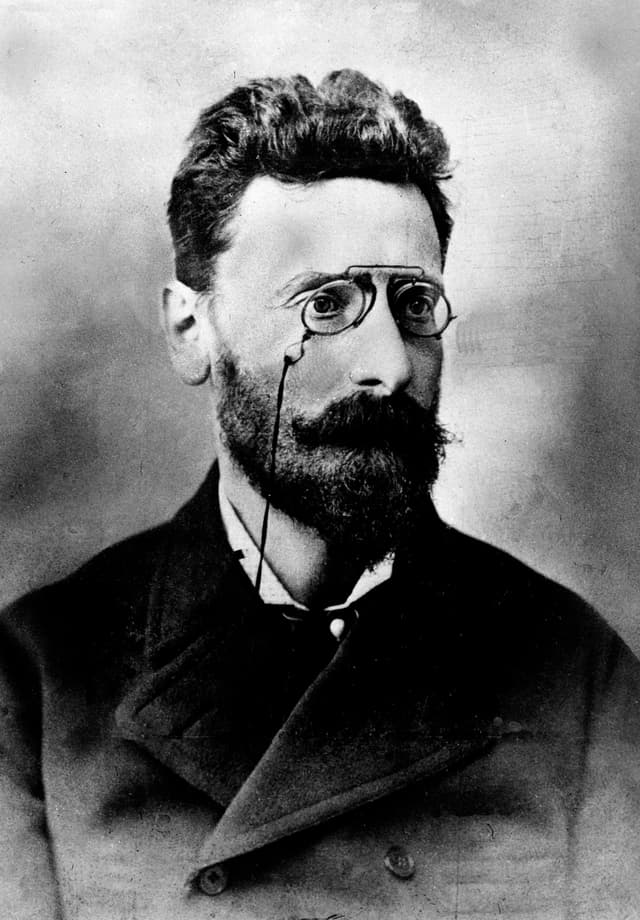
Joseph Pulitzer
New York World
A transformative figure in American journalism, Joseph Pulitzer founded the New York World and revolutionized the media landscape in the late 19th century. Arriving in the United States as a penniless immigrant at 17, he embodied the principles of relentless self-education and opportunity recognition, often acquiring failing newspapers and turning them into profitable ventures. Pulitzer's innovative approach included creating urgency in his operations, as he frequently left himself with minimal capital to force success. His strategies not only made the New York World a leading publication, boasting a circulation of over 1 million by the early 1900s, but also laid the groundwork for modern journalism, emphasizing the importance of accessibility and engagement in news coverage.
Core Principles
competitive advantage
Study and learn from competitors, then execute their model better. Pulitzer's playbook became the template every ambitious publisher copied.
William Randolph Hearst studied the New York World for years, cutting out articles and learning Pulitzer's formula. Hearst then copied the model, merged papers strategically like Pulitzer did in St. Louis, and eventually exceeded Pulitzer's success. The formula was replicable.
Use secrecy and misdirection to gain competitive advantage. Reveal your strategy only after you have executed it, not before.
When Pulitzer wanted to acquire the St. Louis Dispatch at auction, he sent a third party to bid on his behalf rather than bidding openly himself. Had competitors known of his interest, they would have driven up the price. His secrecy was a defining trait throughout his life.
leadership
Never settle for equal partnerships. If you are substantially more talented than your partner, the partnership will dissolve. Design your organization to have one clear leader.
Pulitzer's partnership with Dillon failed because Pulitzer was more talented and driven. Dillon's mentor predicted this, noting that the partnership suffered from 'incompatibility of temper, super-induced perhaps by an excess of talent.' Pulitzer could only work for himself.
“The truth of the matter was that one did not work with Pulitzer for him, surely against him often, but not with him.”
Control cannot be delegated. A founder must establish operational discipline early and maintain it relentlessly, even at great personal cost.
Pulitzer's business partner Dillon eventually discovered that partnership with Pulitzer was impossible. Pulitzer could not work with equals, only direct subordinates. Even blind and in exile, he sent coded telegrams controlling details like typeface choices and vacation schedules.
“One did not work with Pulitzer for him, surely against him often, but not with him.”
marketing
Crusade against a clear villain to attract readers and build circulation. Transform editorial conviction into business growth by picking fights that resonate with your audience.
Pulitzer built the St. Louis Post-Dispatch by exposing corruption in city government and attacking monopolistic businesses. He understood that many merchants and professionals chafed under crony capitalism. His crusading attracted readers with grievances and built circulation from 15,000 to 250,000.
Leverage public service campaigns as customer acquisition and circulation growth engines. Align your product with civic causes your audience cares about.
Pulitzer raised funds for the Statue of Liberty through the World, promising to publish every donor's name. Poor New Yorkers could donate a penny and see their name alongside the Vanderbilts and Roosevelts. This campaign transformed the World's circulation and made it indispensable to New York.
“For as little as a penny, the poorest New Yorker could have his name in print in the same newspaper whose columns were populated with the names of the Vanderbilts, the Whitneys, the Roosevelts, and the Astors.”
mindset
Obsess over learning and self-education as a path to opportunity. Pulitzer spent every free moment reading and improving his mind, which elevated his conversation and revealed opportunities others missed.
As a penniless immigrant in St. Louis, Pulitzer paid for membership to the Mercantile Library and brought apples to avoid wasting time on meals. He read voraciously from their 27,000-book collection, particularly history and biography. This constant learning made him intellectually interesting to influential people, who then offered him jobs and business opportunities.
“If anything's worth doing, it's worth doing to excess.”
Building wealth and influence means nothing if it comes at the cost of your health, relationships, and happiness. Success pursued to the exclusion of all else becomes a form of failure.
Pulitzer worked obsessively, driven by ambition rather than purpose. He destroyed his health through overwork, became estranged from his wife and children, and when blindness struck at 41, he spent 20 years increasingly reclusive. His wife Kate wrote: 'What does it all amount to? To a puff of smoke which makes a few rings and then disappears into nothingness.'
“A giant intelligence internally condemned to the darkest of dungeons. A caged eagle furiously belaboring the bars.”
Self-made people emerge from adversity, not comfort. Children raised in privilege without struggle often lack the drive and resilience of their ambitious parents.
A self-made friend told Pulitzer: 'Self-made men like you and myself only come to maturity in the battle for existence. Your children do not form any exception from those children who have grown up in similarly favorable conditions.' Pulitzer's children disappointed him because he removed all adversity from their lives.
“Self-made men like you and myself only come to maturity in the battle for existence.”
operations
Demand daily metrics and operational transparency from the moment you take control. Create a dashboard of vital signs that reveals where your business stands at a glance.
Pulitzer required detailed daily reports: exact copies printed, sold, returned, street sales, advertising lines. He never relaxed this habit, even from his yacht or blind, encoded in telegrams. This gave him a statistical portrait that revealed the paper's health instantly.
“Everything in a nutshell, everything in a nutshell.”
product
Prioritize quality and best-in-class execution over scale and size. The goal is to be the best paper, not the biggest.
Even as Hearst competed directly with him, Pulitzer refused to race to size. Instead, he instructed his staff to write shorter paragraphs, shorter sentences, shorter stories. He understood that more readers would consume a three-paragraph story than a three-page one. Quality beat quantity.
“I regard it as more important to have the best paper than the biggest in size.”
Differentiate through format and design, not just content. Make your product visually unmistakable on the newsstand before readers read a single word.
Pulitzer wanted the World to stand out from the gray, identical front pages of competitor newspapers. He added illustrations and visual design elements so readers would recognize the World instantly. This visual differentiation attracted readers and drove circulation.
“On newsstands in the arms of newsboys, the gray unbroken front pages of the city newspapers were indistinguishable from each other.”
Build products for accessibility, not just the elite. Design for the consumer who struggles with language or literacy by using visual communication.
Pulitzer understood that New York was filled with immigrants who didn't speak English. He added illustrations and made the World visually distinctive so non-English speakers could recognize and engage with the paper. As he said, many people 'require to be educated through their eyes as it were.'
“A great many people in the world require to be educated through their eyes as it were.”
strategy
Newspapers are not objective; they are political and opinionated by design. A publisher must choose a point of view and defend it clearly.
Pulitzer saw no conflict between running a newspaper and holding political office. To him, media and politics were the same thing. A paper was either Democratic, Republican, Socialist, or reflected the owner's beliefs. Objectivity was never the goal.
Create urgency and scarcity to force innovation. When Pulitzer bought failing papers, he often left himself with only weeks of operating capital, forcing him to succeed or go bankrupt.
With the St. Louis Dispatch, Pulitzer had only 17 weeks of runway before his cash ran out. This forced him to immediately merge with another paper to gain subscribers and buy time. He repeated this strategy in New York, betting nearly $500,000 on the World when he couldn't afford to fail.
Recognize value where others see only failure or burden. Pulitzer's greatest business wins came from acquiring bankrupt or unwanted assets that contained hidden strategic value.
Pulitzer bought a bankrupt German-language newspaper solely to gain membership in the Associated Press, which he then sold to a competitor. Later, he purchased Jay Gould's money-losing New York World for $500,000, a paper Gould called a burden. He transformed both into gold mines by seeing what others dismissed.
“Pulitzer saw value where others didn't see it.”
Frameworks
The Bankrupt Asset Arbitrage
Identify failing or bankrupt assets that contain hidden strategic value (a membership, a license, an audience). Acquire them cheaply. Extract or resell the valuable component. This works when others can only see the surface failure and not the embedded value.
Use case: Acquiring struggling businesses or assets in competitive markets where strategic components are undervalued by the current owner.
The Merger as Runway Extension
When you lack time or cash to build momentum alone, merge with a struggling competitor that has complementary strengths (audience, subscribers, distribution). This buys you time and combines resources without requiring as much capital. Both parties benefit from avoiding a destructive price war.
Use case: Early-stage or turnaround situations where you need immediate scale and cash flow but lack sufficient runway or capital to build independently.
The Daily Vital Signs Dashboard
Create a single report that shows at a glance the health of your business: exact metrics for production, sales, returns, revenue, and efficiency. Review it every day without fail. This allows you to spot problems immediately and make quick corrections. Never delegate this habit.
Use case: Any business stage, but especially critical in growth and scaling phases where losing visibility leads to problems compounding silently.
The Crusade to Circulation
Pick a clear villain (corruption, monopoly, injustice) that resonates with your target audience's grievances. Crusade against it editorially. This transforms readers into subscribers because they feel your product is fighting on their behalf. Editorial conviction becomes a customer acquisition engine.
Use case: Building initial circulation or audience in a crowded media market where many competitors exist but few stand for anything.
The Visual Distinctiveness Strategy
Make your product unmistakable on sight, before the consumer reads, listens, or experiences the content. Use design, format, illustrations, or color to ensure your product stands out from identical-looking competitors. This is especially powerful when your audience includes non-native language speakers or low-literacy consumers.
Use case: Markets with many similar competitors, immigrant populations, or consumers with low language proficiency.
The Public Service Campaign Flywheel
Align your product with a civic cause your audience cares about (fundraising, reform, community benefit). Make your product the central hub through which people participate and see their names in print. This creates massive earned media, goodwill, and circulation growth while serving a genuine public purpose.
Use case: Consumer or media businesses seeking rapid circulation or audience growth with positive brand association.
The Competitive Misdirection
When you intend to acquire or invest in an asset, use proxies or third parties to hide your interest from competitors. Reveal your strategy only after you have executed it. This prevents competitors from bidding against you or raising prices based on your demonstrated demand.
Use case: Acquiring assets, businesses, or market positions where open interest would trigger competitive bidding or price inflation.
The Urgency-Driven Innovation Constraint
Put yourself in a position of extreme scarcity (limited cash, tight deadline, high stakes). This removes the option to do anything except succeed, which forces rapid innovation and ruthless prioritization. Pulitzer became his most creative when his back was against the wall.
Use case: Startup and turnaround situations where you need to force rapid improvement and cannot afford mediocrity or slow iteration.
Stories
At 17, penniless and speaking no English, Pulitzer volunteered for the Union Army during the Civil War to get passage to America. He received $135 as payment for his service. Upon arrival, homeless and jobless, he wandered New York streets sleeping in doorways until he escaped to St. Louis, where he began working as a mule tender, deckhand, and day laborer.
Lesson: Desperation is a powerful catalyst for action. When there is nowhere lower to go and no safety net, you find resources within yourself. Pulitzer's complete lack of advantages forced him to be resourceful and self-directed.
After gaining a modest clerk position, Pulitzer paid for membership to the Mercantile Library out of his meager wages, bringing apples for sustenance so he would never waste a moment leaving to eat. He spent every free hour reading from their 27,000-book collection, particularly history and biography. This voracious learning made him intellectually interesting to influential people who then offered him opportunities.
Lesson: Self-education accessed through your own resourcefulness is more valuable than formal credentials. The compound returns from reading and learning are visible to others, who then invest in you. Learning is the ultimate acquisition channel.
When Pulitzer needed AP (Associated Press) membership to compete in St. Louis but had minimal capital, he bought a bankrupt German-language newspaper solely for its AP membership. He never intended to run the paper. Within 48 hours, he sold the AP membership to a competitor newspaper owner, then sold back the presses and equipment to investors. He netted $11,000-20,000 on a transaction that took less than two days.
Lesson: See beyond the surface asset to the strategic component embedded within it. Sometimes the real value is not what the asset looks like, but what it owns or enables. This kind of financial judo is how undercapitalized founders can move quickly.
Pulitzer's political partner Dillon proposed merging their two competing evening papers to avoid a destructive circulation war. Pulitzer agreed, understanding that the merger bought him time to build circulation while avoiding a price war that would have destroyed both. The merger worked, but Dillon eventually realized he could never be Pulitzer's equal. Pulitzer bought him out and became sole owner.
Lesson: Partnerships with unequal talent rarely survive. Know when you need a partner for runway or resources, but be clear on the endgame. Pulitzer could not work with anyone, only command them.
While building the St. Louis Post-Dispatch as a crusader against corruption and monopoly, Pulitzer was nominated for office by others. Two years later, when a political governor offered him a lucrative $1,000-per-year job on the Police Commission (when skilled workers earned $600 annually), Pulitzer accepted despite his written crusades against corruption. He took the high-paying sinecure from a political ally in return for favorable newspaper coverage.
Lesson: It is far easier to see hypocrisy and corruption in others than in yourself. Idealism is fragile when money arrives. Even the most principled founders will rationalize compromise when incentives align against their stated values.
Pulitzer purchased the New York World from Jay Gould for $500,000, betting nearly every dollar he had despite the paper losing money weekly and having only 15,000 circulation. He was essentially bankrupt and had to borrow to close the deal. He then spent years slowly building the paper before introducing dramatic innovations, understanding that he had to condition his staff to his principles before attempting massive transformation.
Lesson: All-in bets on undercapitalized growth can work if you have an unflinching willingness to execute and no backup plan. The constraint forces excellence. Patience in the early phase, before going public with your vision, allows you to control narrative and manage risk.
When Pulitzer wanted to acquire the St. Louis Dispatch at bankruptcy auction, he sent a third party to bid on his behalf rather than bidding openly. Had the market known Pulitzer wanted the paper, competitors would have driven up the price. He kept his interest secret until after acquisition, then revealed his ownership.
Lesson: Information asymmetry is a form of competitive advantage. Reveal strategy after execution, not before. What others don't know can't be used against you in competitive situations.
Pulitzer raised funds for the Statue of Liberty by accepting donations through the World and publishing every donor's name. This allowed poor immigrants to donate a penny and see their name in the same newspaper as the Vanderbilts and Roosevelts. The campaign drove massive circulation growth and made the World indispensable to New York's working poor.
Lesson: Align your product with civic causes your audience cares about. This transforms your product from a commodity into a cause. The byproduct is explosive growth, but the primary benefit is meaningful connection to your audience.
At age 41, at the height of his power with an empire of newspapers and enormous wealth, Pulitzer's retina detached, leading to total blindness. He had worked obsessively, ignoring doctors' warnings and his wife's pleas to slow down. For the next 20 years, he became increasingly reclusive, managing his empire through coded telegrams while estranging himself from family, friends, and any life outside work.
Lesson: Building an empire at the cost of your health, relationships, and happiness is a Pyrrhic victory. Success that destroys the life you live is not success. The second half of Pulitzer's life is an inversion of its aspirational first half, serving as a stark warning about the cost of ambition without balance.
Notable Quotes
“I think God Almighty made it for the benefit of the world when he made me blind. Because I don't meet anybody, I am a recluse. Like a blind goddess of justice, I sit aloof and uninfluenced. I have no friends. The world is therefore absolutely free.”
Pulitzer justifying his blindness and reclusion to an editorial writer a few months before his complete withdrawal from public life. This quote reveals his rationalization of isolation as noble detachment, though it masks profound depression and disconnection.
“I must go because my mother cannot support us. And here there is no work.”
Pulitzer explaining to friends at age 17 why he was emigrating to America from Hungary. This simple statement captures the desperation that drove him to volunteer for the Civil War as a way to finance passage.
“Never in my life did I have a more trying task. The man who has not cared for 16 mules does not know what work and trouble are.”
Pulitzer describing one of his early odd jobs in St. Louis after arriving in America. The quote reflects his tendency to find meaning and learning in even the most menial labor.
“I, the unknown, the luckless, almost a boy of the streets, selected for such a responsibility. It all seemed like a dream.”
Pulitzer reflecting on being hired as a reporter at the St. Louis Post at age 20, after years of homelessness and odd jobs. The quote shows his astonishment at gaining opportunity despite his circumstances.
“Everything in a nutshell, everything in a nutshell.”
Pulitzer's constant refrain when demanding daily reports on his newspaper's vital signs. He wanted all essential metrics condensed into a single dashboard he could absorb at a glance, regardless of his blindness.
“They probably would have done the same thing to any other man who works 16 hours a day as I did through that campaign.”
Pulitzer reflecting on why his employers offered to sell him ownership of the paper. He attributes his opportunity to relentless work, not to being special or unique.
“If anything's worth doing, it's worth doing to excess.”
Pulitzer's philosophy on work and learning, similar to Edwin Land's quote. This encapsulates his approach to building his empire and also, arguably, his inability to modulate or balance his life.
“A great many people in the world require to be educated through their eyes as it were.”
Pulitzer explaining why he added illustrations to the New York World. He understood that immigrants and non-English speakers could engage with visual media where text might exclude them.
“On newsstands in the arms of newsboys, the gray unbroken front pages of the city newspapers were indistinguishable from each other.”
Pulitzer's observation that led him to redesign the World's front page with illustrations and visual distinction. He wanted the paper to be unmistakable at a glance.
“I regard it as more important to have the best paper than the biggest in size.”
Pulitzer's response to William Randolph Hearst's competitive challenge. Rather than race to scale, Pulitzer focused on quality, shorter sentences, shorter paragraphs, and tighter writing.
Frequently Asked Questions
What are Joseph Pulitzer's key business principles?▼
Joseph Pulitzer's core principles include: Study and learn from competitors, then execute their model better. Pulitzer's playbook became the template every ambitious publisher copied.. Use secrecy and misdirection to gain competitive advantage. Reveal your strategy only after you have executed it, not before.. Never settle for equal partnerships. If you are substantially more talented than your partner, the partnership will dissolve. Design your organization to have one clear leader.. Founder Almanac has cataloged 16 total principles from Joseph's career.
What can entrepreneurs learn from Joseph Pulitzer?▼
Key lessons from Joseph Pulitzer include: Desperation is a powerful catalyst for action. When there is nowhere lower to go and no safety net, you find resources within yourself. Pulitzer's complete lack of advantages forced him to be resourceful and self-directed.. Explore 9 stories and 8 frameworks from Joseph's experience.
What is Joseph Pulitzer known for in business?▼
A transformative figure in American journalism, Joseph Pulitzer founded the New York World and revolutionized the media landscape in the late 19th century. Arriving in the United States as a penniless immigrant at 17, he embodied the principles of relentless self-education and opportunity recognition, often acquiring failing newspapers and turning them into profitable ventures. Pulitzer's innovative approach included creating urgency in his operations, as he frequently left himself with minimal capital to force success. His strategies not only made the New York World a leading publication, boasting a circulation of over 1 million by the early 1900s, but also laid the groundwork for modern journalism, emphasizing the importance of accessibility and engagement in news coverage.
More Media & Entertainment Founders




Want Joseph's advice on your business?
Our AI has studied Joseph Pulitzer's biography, principles, and decision-making frameworks. Ask any business question.
Start a conversation