Larry Gagosian
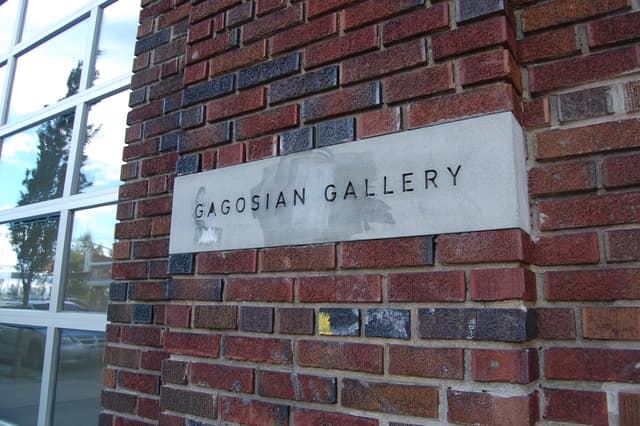
Gagosian Gallery
A pivotal force in the contemporary art world, Larry Gagosian founded Gagosian Gallery in 1972, transforming it into a global powerhouse with 17 locations worldwide. Emphasizing the commercial reality of art, he openly identifies as a dealer, challenging the pretensions often associated with the art industry. His keen business acumen is exemplified by his early venture into the art market, where he capitalized on a simple observation of a street vendor selling cat posters, ultimately securing a direct supply chain that enhanced profitability. Gagosian's mastery of simplicity and execution has made him a model for entrepreneurs, demonstrating that clear intent and straightforward strategies can lead to monumental success.
Core Principles
competitive advantage
Identify opportunities in businesses that established players have rejected as low-status or beneath them. These are often where the most profit lies.
The secondary art market was perceived as distasteful and low-status by primary market dealers like Castelli. Gagosian saw enormous untapped profit. By entering an industry segment competitors disdained, he avoided direct competition while accessing massive inventory and profit potential.
Use your size and resources as an unfair advantage. Once you achieve dominance, leverage it to poach talent and inventory from smaller competitors.
Gagosian used his gallery network, capital, and reputation to attract artists away from smaller dealers. He offered shows in other cities, larger commissions, and better sales support. His competitors called this unfair, but Gagosian unapologetically used his advantages.
“Gagosian scorns any suggestion that luring artists away from other dealers is unsportsmanlike”
customer obsession
Understand human nature repeats across centuries. Status anxiety, competitive drive, and desire for exclusivity are constants that powered business 500 years ago and today.
Vasari wrote about lavish Renaissance prices and artists competing for wealthy sponsors nearly 500 years ago. Gagosian noted that competition for art among billionaires follows the same patterns. Understanding timeless human motivations reveals opportunities others miss.
Build your business around exploiting status anxiety, especially among those who already have everything. Wealth does not eliminate insecurity.
Even billionaires experience status anxiety. Gagosian built his empire by making clients feel that despite their wealth, they lacked the connections he possessed. A tech founder with more money than Gagosian felt insecure realizing he was not as connected. This leveraged emotional need became the foundation of his business.
“People in the art world are incredibly insecure. The richest guy walks into the room. He wants a certain painting, but he cannot get it. Immediately, he becomes insecure”
execution
Don't overthink market entry. If you can identify a product selling, figure out who supplies it and buy direct. Execute rather than deliberate.
Gagosian noticed a street vendor selling cat posters and immediately bought directly from the supplier rather than continuing to resell through the vendor. Art was an arbitrary choice, he said. He just wanted a product already proven to sell and would improve distribution and margins.
“Art was an arbitrary choice. If the guy had been selling belt buckles, I might have tried to sell belt buckles”
finance
Monetize on both sides of every transaction. Make commissions as a seller and again as a buyer. Repeat transactions maximize lifetime value.
Gagosian would buy a painting from one collector for 7.25 million, sell it to another for 11.5 million, and take commissions on both sides. David Geffen credited him with helping him sell paintings that financed over a billion dollars in charitable giving, creating repeat commissions over decades.
hiring
Hire people with simple jobs and monitor them relentlessly. Directors get a phone, computer, and instructions to sell. That is it.
Gagosian's management structure was simple: hire directors, give them tools, and demand they make phone calls. No mentoring, no hierarchy beyond Larry and everyone else. High-performers earned 10% of gallery profits, creating strong incentive alignment. He would call directors 10 times if necessary.
Hire unconventional talent when it gives you advantage. Hiring a Picasso biographer as a consultant was unusual but positioned you with family heirs and created exhibitions that drew huge crowds.
Gagosian hired John Richardson, the famous Picasso biographer, as a consultant. This created landmark exhibitions drawing 100,000 visitors and affiliated Gagosian with greatness. More importantly, it built relationships with Picasso heirs, creating access to the highest-value inventory.
marketing
Your brand becomes the product. Once you achieve brand dominance, you can charge premiums for the exact same item because your endorsement enhances value.
A competing dealer tried to sell the same painting to the same collector and failed. The collector then bought it from Gagosian at a significant premium. The Gagosian name itself became worth millions on deals, justifying higher commissions than competitors could charge.
“Collectors know that they're paying more when they deal with Larry and they're still happy to do it”
mindset
Avoid self-reflection to maintain your edge. Constant introspection can dilute focus and execution speed.
Gagosian explicitly stated he avoids self-reflection because it causes you to lose your edge. Art critics noted that geniuses have the fewest moving parts, operating with shark-like simplicity rather than complex inner analysis.
“Gagosian avoids self-reflection because that is how you lose your edge”
Be willing to break social conventions if they serve your business model. Disinhibition is a weapon when paired with execution.
Gagosian would cold call artists repeatedly, show up to parties uninvited, take secret Polaroids of artwork in people's homes, and make unsolicited offers. His disinhibition allowed him to do things competitors considered inappropriate but effective. This willingness to violate unwritten rules became a competitive advantage.
“If Gagosian possesses one secret weapon that has equipped him for success, it might be his disinhibition”
Study biographies obsessively. Keep art history books stacked next to your bed. Self-education through reading is how you master an industry.
Gagosian had no formal art training but stacked art books beside his bed and read trade magazines obsessively. A girlfriend noted his commitment to studying the industry. This self-directed education allowed him to speak confidently with collectors and artists despite starting outside the world.
Be amoral about business when it is legal. If something is illegal, don't do it. Otherwise, don't parse the moral credentials of opportunities.
Gagosian was described as unburdened by ethical conundrums. He would work with Russian oligarchs, poach artists aggressively, and use information asymmetries without apology. His rule was simple: if it is legal, pursue it. If illegal, don't.
“If it is illegal for him to do business with someone, he will not. Otherwise, it's not for him to parse the moral credentials of potential buyers”
Work relentlessly. The lavish lifestyle is secondary to the business. Everything serves the primary purpose of selling more.
Friends cautioned not to mistake Gagosian's parties and galas for leisure. The parties were marketing showcases in disguise. Mansion dinners were sales events where walls covered with art invited offers. Everything was work.
pricing
Constantly raise prices. Tell artists their work is undervalued and clients can afford more. Pricing power increases with brand strength.
Gagosian told artist Cecilia Brown that her paintings were too cheap for his customers and she needed to raise prices. His entire career involved pushing prices upward as his brand strengthened and his clients competed for limited inventory.
product
Add value through simple improvements. Gagosian added cheap frames to two-dollar posters and sold them for fifteen dollars. Incremental improvement creates profit leverage.
Early in his career, Gagosian discovered that framing a cheap poster increased its perceived value and allowed him to charge a massive markup. Later, his own brand name became the frame that justified premium pricing. Start with simple value-adds and build from there.
sales
Make 100 cold calls a day. High volume prospecting creates the information asymmetry that becomes your competitive edge.
Gagosian was known for making 100 cold calls daily, sniffing out artwork locations, lining up buyers, and haggling with owners. No competitors matched his telephone discipline. This relentless prospecting built his internal map of where valuable art was located and who owned it.
“The telephone was his instrument of choice, and he made 100 cold calls a day, sniffing out the location of artwork, lining up buyers”
Everything in your business environment can be an asset for sale. Create the mindset that all inventory is liquid and convertible to profit.
Gagosian would tell visitors that everything in his homes and galleries was for sale. Bernard Arnault would visit his townhouse and be told he could buy any chair or painting. This extended to his business model where he constantly turned over inventory and rarely refused to sell.
“Everything here is for sale. You want to buy this chair? You can buy this chair. You want to buy the painting? Just ask”
A true dealer knows that everything has a price, and the best way to raise the price of something is to say you would never sell it.
Gagosian created artificial scarcity and exclusivity, modeled after Enzo Ferrari's strategy. By claiming paintings were not for sale or were available only until Tuesday, he created urgency and increased perceived value. This psychological tactic drove buyers to move faster and pay premiums.
“A true dealer knows that everything has a price and the best way to raise the price of something is to say that you would never sell it”
Get on the plane. Make the relationship in person. Cold calls are more effective when followed by face-to-face engagement.
Gagosian cold-called photographer Ralph Gibson from Los Angeles and immediately flew to New York with a check to meet him in person. This in-person commitment built the relationship with Gibson's mentor Leo Castelli, one of the most significant relationships of his career. Physical presence matters.
simplicity
Master simplicity: a true master uses the fewest motions required to fulfill their intention. Don't overcomplicate execution.
Gagosian was described as simple, basically a shark or feeding machine. He avoided unnecessary complexity in operations, hiring directors with just a phone and computer with instructions to sell. This contrasted with his competitors who maintained elaborate protocols and hierarchies.
“We think of genius as being complicated, but geniuses have the fewest moving parts. Gagosian is simple. He's basically a shark, a feeding machine”
strategy
Study blueprints from history. Find predecessors in your industry who achieved similar success and learn their methods directly.
Gagosian read all available biographies of Joseph Duveen, the legendary art dealer who served robber barons. He replicated Duveen's strategy of showing clients he lived better than they did, demonstrating status superiority. This direct historical study informed his core business model.
“Gagosian is a big reader and one of his favorite subjects is the life of Joseph Duveen”
Convert apparent liabilities into assets. What competitors see as disadvantages or excessive overhead can become competitive advantages when leveraged correctly.
Gagosian's high overhead with lavish estates, parties, and private jet were confusing to competitors who saw them as wasteful. But these were actually sales venues disguised as social events. Similar to how shipping magnates used luxury yachts to close deals worth billions more than the vessel's cost.
Play the long game and invest in relationships that pay off decades later. Patience compounds returns in high-value businesses.
Gagosian hired Richardson decades before the payoff. He cultivated relationships with collectors and artists for years with no immediate profit. These long-term relationship investments became the foundation of a billion-dollar business.
Be blunt about the commercial nature of your business rather than hiding behind euphemisms. Call yourself a dealer, not a gallerist; acknowledge you sell.
Gagosian rejected the term gallerist, calling it a pretentious euphemism that obscures the mercantile essence of the occupation. He paralleled David Ogilvy's advertising principle: we sell or else. By being explicit about profit motive, he differentiated himself from competitors who tried to maintain artistic pretense.
“I'm an art dealer. He regards gallerist as a pretentious euphemism that obscures the mercantile essence of the occupation”
Create a market as a middleman by controlling information. You don't need to own inventory, just understand where it is and who wants it.
Gagosian's core business was matching sellers with buyers while taking commissions on both sides. He would call collectors to find who owned specific pieces, then call the owner to offer them premium prices. His profit came from information and relationship control, not inventory ownership.
Frameworks
The Treasure Map Framework
Build relationships with gatekeepers who control access to your market's inventory. Extract information about what exists, who owns it, where it is, and what they paid. Use this information asymmetry to match buyers with sellers while taking commissions on both sides. This transforms you from a competitor to an essential middleman.
Use case: Secondary markets where inventory already exists but lacks transparent pricing or centralized distribution. Any business where value flows through information control and relationship networks.
The Status Anxiety Monetization Framework
Identify that ultra-wealthy customers experience status anxiety despite having money. Design your business to create artificial scarcity and exclusivity that makes them feel excluded, then position yourself as the only person who can access desired items. Make them compete for access. Use psychological scarcity and the fear of missing out to drive premium pricing.
Use case: Luxury goods and services targeting ultra-high-net-worth individuals who are status-conscious. Any premium market where exclusivity and belonging matter more than functional utility.
The Liability Inversion Framework
Identify what competitors perceive as liabilities or unfair advantages and convert them into assets. High overhead, luxurious estates, and expensive entertainment are costs competitors resent. Use these to create environments where deals happen, relationships deepen, and sales accelerate. Make your liabilities visible and expensive as proof of your success.
Use case: Competitive industries where clients judge supplier quality by visible signals. When selling to the ultra-wealthy or status-conscious buyers who equate vendor success with vendor trustworthiness.
The Cold Call Treasure Hunt Framework
Execute high-volume prospecting at scale, making 100 calls daily to map your market. Each call qualifies a prospect, gathers information about inventory ownership, and plants seeds for future transactions. Combined with a CRM or internal database, this builds the knowledge asymmetry that becomes your competitive edge. Speed and consistency matter more than conversion on individual calls.
Use case: Sales-driven businesses with many potential customers and inventory to match. Particularly effective in markets where relationships and trust are not yet established but inventory location is valuable information.
The Double-Sided Commission Framework
Structure deals where you take commissions from both buyer and seller, or create intermediary steps where you profit on each transaction layer. A seller gets X for an item, you sell it for more to a buyer, and take percentages from both. Design repeat transactions where the same asset moves multiple times, generating commissions at each step.
Use case: Marketplace and brokerage models where you control inventory flow. Any secondary or tertiary market where assets change hands multiple times and each transition offers monetization.
The Brand Premium Framework
Once you achieve market dominance and establish a recognized brand, your endorsement becomes worth more than the item itself. Buyers will pay premiums for the exact same product if it carries your brand or your approval. Use this to justify higher margins and maintain competitive moats that grow stronger with time.
Use case: Mature scaling stages where you have established reputation and market position. Luxury and premium markets where the dealer or curator is as important as the product.
The Niche Inversion Framework
Identify a business segment that established competitors reject as low-status, distasteful, or insufficiently prestigious. Enter that segment with full commitment while your competitors maintain their disdain. Build the neglected segment into enormous profitability while competitors remain focused on prestige markets.
Use case: Competitive industries with status hierarchies and perceived prestige differences. When established players have made principled stands against certain business types, those types become opportunities.
Stories
Gagosian noticed a street vendor selling cat posters at the edge of a parking lot where he worked. Rather than compete as a vendor, he found the supplier and bought directly, then added cheap frames to increase perceived value, selling posters for seven times the cost. This bootstrap lesson taught him that improvements compound and that you should focus on what already sells.
Lesson: Don't overthink market entry. If a product already sells, figure out who supplies it and improve the distribution or packaging. Small value-adds can create massive margin improvements.
Gagosian cold-called photographer Ralph Gibson after seeing his work in a magazine. Gibson's mentor was legendary dealer Leo Castelli. Gagosian got on a plane with a check and met Gibson in person, building a relationship that led to Castelli's mentorship. This single disinhibited action changed the trajectory of his career.
Lesson: Get on the plane. Make relationships in person. Cold calls are starting points, not endings. Physical presence and commitment matter.
Gagosian showed up to parties he wasn't invited to, secretly took Polaroids of artwork on walls, and then called collectors offering to find them those same paintings. When confronted, he admitted he did exactly what he claimed he didn't do. His shamelessness and disinhibition became his competitive weapon.
Lesson: Be willing to violate social conventions that don't serve your business model. Competitors constrained by politeness create opportunities for those unburdened by the same rules.
When billionaire Ronald Perlman negotiated a painting price from 8 million to 6 million, Gagosian refused. When Perlman returned a week later willing to pay 8 million, Gagosian said he had already sold it to someone else for 7.25 million. He then called the new buyer to resell it to Perlman for 10.5 million, netting him a million-dollar commission on an item he never owned.
Lesson: Create artificial scarcity and train customers that rejection increases price. Information opacity allows you to capture more value by preventing price standardization.
A sheet metal company family was cold-called by Gagosian, who offered to buy a specific painting they owned for 11 million. He immediately called Cy Newhouse and sold the same painting for exactly 11 million. The family got their asking price, Newhouse got what he wanted, and Gagosian made a seven-figure commission with two phone calls.
Lesson: Master the middleman role. You don't need to own inventory or have unique products. Control information about who owns what and who wants it.
When asked by artist Christina Wood what would happen when he died, Gagosian exploded, saying don't talk about my death in a meeting. He immediately sent her three texts saying competing galleries would go out of business before his demise. Wood left to be with a different dealer. His domineering nature and inability to imagine a world without him cost him the relationship.
Lesson: Extreme confidence in your indispensability can become a liability. There is a limit to how much aggression and control a relationship can tolerate.
Sam Zell and Rick Gerson had a failed pitch meeting where the potential client declined their opportunity. Hours later on a plane, when Rick brought up the disappointing meeting, Sam asked huh? He had already forgotten about it completely and moved on to the next opportunity. This extreme bias for action and forward momentum is characteristic of top performers.
Lesson: Ignore the unimportant. Dwelling on failures or setbacks dilutes energy for future opportunities. Move forward always.
Gagosian's father was a gambler and drunk who tried to push securities on relatives as a stockbroker. He died of lung cancer at 59 when Larry was 24. Growing up in a middle-class Armenian family without discipline taught Gagosian that he needed to build his own path through relentless work.
Lesson: Disadvantaged backgrounds can fuel extreme ambition. Those who start on the margins often develop the hunger and speed to control the center.
Notable Quotes
“I'm an art dealer. Other people refer to themselves as gallerists which he regards as a pretentious euphemism that obscures the mercantile essence of the occupation.”
Explaining his refusal to adopt the more prestigious term gallerist, insisting on being direct about the commercial nature of his work
“Gagosian avoids self-reflection because that is how you lose your edge.”
Explaining why he does not engage in introspection or analysis of his motivations
“Art is just money on the walls.”
Explaining his purely commercial view of the art world, refusing to pretend it is about aesthetics rather than profit
“A true dealer knows that everything has a price and the best way to raise the price of something is to say that you would never sell it.”
Describing his pricing and exclusivity strategy for managing demand
“The other galleries that you are considering will most likely go out of business before my demise.”
Text message to artist Christina Wood explaining his belief in his indispensability
“Everything here is for sale. You want to buy this chair? You can buy this chair. You want to buy the painting? Just ask.”
Telling Bernard Arnault at his townhouse that anything in his home could be purchased
“I enjoy what I do. I don't know what else to do.”
At age 78 explaining his intention to never retire from the art business
Frequently Asked Questions
What are Larry Gagosian's key business principles?▼
Larry Gagosian's core principles include: Identify opportunities in businesses that established players have rejected as low-status or beneath them. These are often where the most profit lies.. Use your size and resources as an unfair advantage. Once you achieve dominance, leverage it to poach talent and inventory from smaller competitors.. Understand human nature repeats across centuries. Status anxiety, competitive drive, and desire for exclusivity are constants that powered business 500 years ago and today.. Founder Almanac has cataloged 30 total principles from Larry's career.
What can entrepreneurs learn from Larry Gagosian?▼
Key lessons from Larry Gagosian include: Don't overthink market entry. If a product already sells, figure out who supplies it and improve the distribution or packaging. Small value-adds can create massive margin improvements.. Explore 8 stories and 7 frameworks from Larry's experience.
What is Larry Gagosian known for in business?▼
A pivotal force in the contemporary art world, Larry Gagosian founded Gagosian Gallery in 1972, transforming it into a global powerhouse with 17 locations worldwide. Emphasizing the commercial reality of art, he openly identifies as a dealer, challenging the pretensions often associated with the art industry. His keen business acumen is exemplified by his early venture into the art market, where he capitalized on a simple observation of a street vendor selling cat posters, ultimately securing a direct supply chain that enhanced profitability. Gagosian's mastery of simplicity and execution has made him a model for entrepreneurs, demonstrating that clear intent and straightforward strategies can lead to monumental success.
More Art Founders
Want Larry's advice on your business?
Our AI has studied Larry Gagosian's biography, principles, and decision-making frameworks. Ask any business question.
Start a conversation