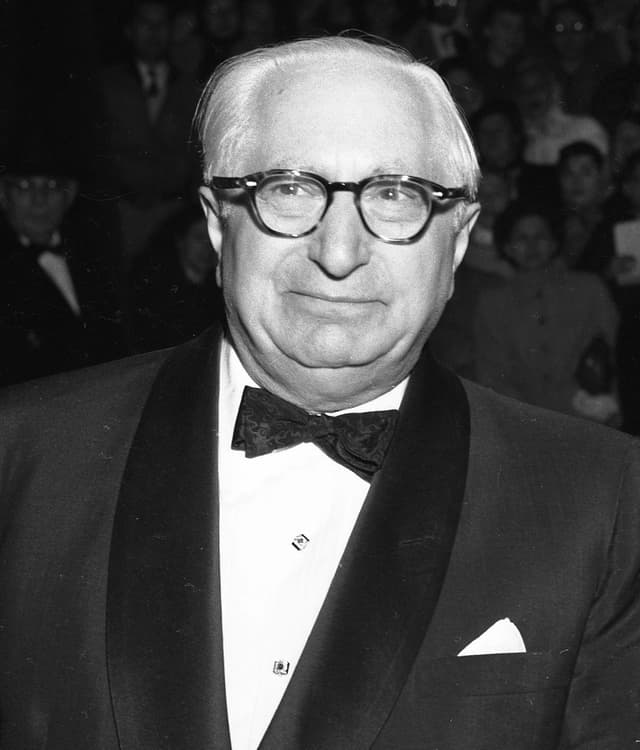
Louis B. Mayer
MGM Studios
A pioneering force in the film industry, Louis B. Mayer co-founded MGM Studios, transforming it into one of Hollywood's most iconic studios during the Golden Age of cinema. Rising from humble beginnings as an immigrant child, he channeled early adversity into an unyielding ambition that propelled the studio to produce over 200 films in its first decade alone, including classics like "The Wizard of Oz." Mayer's commitment to optimism and his instinct for emotional storytelling allowed him to bet on consumer behavior rather than industry consensus, leading to unprecedented success. His mantra, which emphasized the importance of great talent and production values, became a guiding principle that resonates with entrepreneurs striving for excellence today.
Core Principles
culture
Do not be careless with loyalty to people who helped you early in your career. Abandoning early supporters for new opportunity erodes your integrity and ultimately your reputation.
After moving to Los Angeles to build a film production company, Mayer left behind friends and business associates from Boston and Massachusetts who had supported him, never properly integrating them into his new ventures or acknowledging their contributions.
“His old friends in Boston were considerably shocked and provoked at the way he apparently dropped them once he was on his new road.”
Recognize that relationships built on your power and position are conditional, not genuine. When power is lost, those people will disappear, revealing that they were never really friends.
Mayer cultivated relationships with stars, executives, and industry figures while he was in a position to grant favors and provide opportunity. Once he lost his position at MGM after 27 years, these relationships evaporated, showing they were transactional rather than authentic.
“Those whom he favored regarded him as a demigod. Those whom he did not thought of him as a monster.”
customer obsession
Bet on consumer behavior and emotion rather than industry consensus. When customers respond with strong emotion to a new product, that is the signal to commit fully, not to dismiss it as a novelty.
While entrenched film producers dismissed sound technology as an expensive gimmick, Warner Brothers observed that audiences cried and cheered when they heard actors speak. This emotional response was the definitive proof that sound was not a temporary fad but a fundamental shift.
“The effect was galvanizing suddenly the character was brought alive and made capable of giving vocal expression to the already tearful sentiments of the plot. The illusion was so effective that the audience cried and cheered.”
innovation
Recognize that industry incumbents will always resist technological change longer than consumers. This resistance creates the wedge for new companies to enter and eventually dominate.
When sound technology emerged, entrenched silent film producers viewed it as an expensive nuisance while consumers embraced it with enthusiasm. Warner Brothers, the smaller player, bet on consumer preference and used this technology gap to build power.
“Why should they endeavor to tamper with their satisfactory medium of silent films? The addition of mechanical audio would only be an expense.”
leadership
Never demand that others choose between you and a person doing the actual work. If forced to choose, organizations will choose the person creating value over the person managing.
When creative partner Thalberg was making excellent films, Mayer initially valued him as a son-like figure. Later, as competition for credit intensified, Mayer demanded the company choose between him and creative director Sherry. The company chose Sherry, and Mayer was forced to resign.
“It's either me or Sherry, he stated. Schenck was ready for that question. He stated, recruited Sherry. On the basis of that analysis, he wrote Mayer a personal letter which advised him, all things considered, that Sherry was his choice.”
Recognize that manipulating people through threats, flattery, and manufactured emotional vulnerability creates temporary compliance but permanent resentment. This strategy eventually fails.
Mayer was famous for manipulating star Joan Crawford through cycles of flattery, complaints, threats, and emotional appeals, controlling her career decisions through manufactured favor and disfavor. She eventually saw through his tactics and left.
“He would solemnly counsel her and cajole her and if need be, he would cry a little bit. Then he'd drop a few hints of his disfavor and what consequences they might be.”
mindset
Do not confuse ownership of a distribution medium with ownership of the creative output. You can own the studio but not the art form itself.
As MGM grew, Mayer began to believe he owned the movie medium itself. This led him to dismiss legitimate creative disagreements, believing he alone understood what made good film. This arrogance blinded him to genuine talent and contributed to the studio's decline.
Operate with default optimism even when circumstances suggest failure is likely. Optimism creates the mental framework to persist when others quit.
When Mayer took over the merged MGM company, competitors and observers gave the venture only a 50-50 chance of survival. Mayer approached it with unwavering confidence that if anyone could make good pictures with the available resources, talent, and facilities, he could.
“For him, the miracle had happened in a head of an extensive studio, a fine production facilities, plenty of talent, experienced artists, and experienced artists were at his command. If he couldn't make them make good pictures, he figured it couldn't be done.”
Establish an inner scorecard based on your own values rather than seeking external validation. An outer scorecard, driven by others' approval, leads to hollow relationships and eventual downfall.
Unlike Walt Disney, who pursued quality because it aligned with his inner standards, Mayer pursued quality to gain adulation and control over others. This fundamental difference in motivation drove all his subsequent relationship failures and contributed to his downfall.
Learn from mentors and remember their wisdom, especially during your darkest moments. A single maxim from a trusted advisor can sustain you through decades of struggle.
As a young boy, a merchant who caught Mayer attempting to take scrap metal took interest in him and taught him valuable lessons about life and resilience. One maxim, 'When you come to the end of your rope, tie a knot in it and hang on,' stayed with Mayer throughout his career.
“When you come to the end of your rope, tie a knot in it and hang on.”
operations
Build organizations around creative talent and quality output, not administrative overhead and executives. Overhead is a cost center, creativity is the profit center.
As Mayer consolidated power, he filled MGM with high-priced executives and administrators who resembled him, but failed to maintain the creative producers who actually made quality films. This top-heavy structure eventually led to decline.
“Its studio was in an obese and inefficient state. The employee list was loaded with high-priced executives, similar to Mayer, but there were few creative producers who could be depended on for quality films.”
product
Insist on quality across all elements of production, not just the star. A great lead actor cannot compensate for poor supporting cast, direction, or story.
While other producers believed a strong star could carry any film and questioned spending money on directors, writers, and supporting cast, Mayer refused this logic. He believed all elements needed to be excellent.
“My unchanging policy will be a great star a great director great play and great cast you are authorized to get these without stint or limits spare nothing neither expense time nor effort.”
resilience
Channel adversity and struggle into fuel for ambition rather than letting it break you. Difficult circumstances can become the foundation for exceptional drive and achievement.
Mayer grew up in extreme poverty as an immigrant, faced physical violence from street gangs, and witnessed his family's desperation. Rather than becoming paralyzed by fear, he channeled the aggression and urgency into relentless pursuit of opportunity and success.
“Fighting provided an easy and convenient release for him. He had a lot of natural aggression that came out in rough and tumble brawls.”
In fragmented early-stage industries, persistence and survival matter more than early dominance. Most competitors will quit at the first sign of difficulty, leaving the remaining few to consolidate power.
During the early film industry, hundreds of entrepreneurs tried to succeed. Many picked up profits on a few films then abandoned the business when it became difficult. Mayer's willingness to persist through struggles and modest returns eventually left him with few meaningful competitors.
“There were many others like him, clawing to get minor stars and unattached directors to make their pictures and help them get ahead. On some films, they picked up profits, and on others, they definitely did not.”
sales
If you make something valuable, learn to sell it yourself rather than relying on intermediaries. You have the deepest understanding of your product and the strongest ability to convince customers of its value.
The filmmaker who created The Birth of a Nation sold distribution rights to Mayer for a fraction of potential profits, assuming the film had already earned most of its money. Mayer's sales efforts generated over a million dollars in additional revenue that should have gone to the creator.
strategy
Study what works in other markets and replicate it in your local market. Information travels slowly, so what succeeds elsewhere may not yet be known locally.
When Mayer's small Nickelodeon theater was struggling, he learned that a play called 'Passion Play' had been massively successful in other cities. He secured the rights for the Christmas season in his market, and it became a massive hit that saved his business and gave him capital to expand.
“No sooner was the contract signed than Mayer started selling furiously. He's trying to expand the market for Birth of a Nation.”
Preserve your name and credit in all business dealings, especially when merging or partnering with larger entities. Others will claim ownership of your work if you allow it.
When Mayer joined the merger that created MGM, he insisted that his name appear prominently on all advertising and paid publicity as the producer. He had learned this lesson by studying how Louis Selznick's name disappeared into the Select company when he partnered with Adolf Zucker.
“In all advertising and paid publicity, the name of Louis B. Mayer shall be prominently mentioned as the producer of the motion pictures.”
Be willing to make critical bets on opportunity even when you have limited resources and high personal stakes. The biggest moves sometimes come when you have the most to lose.
With a wife and two children to support and having failed at multiple businesses, Mayer borrowed money he didn't have to invest $50 in the rights to a small, dilapidated theater. This desperate bet on a rundown venue became the foundation of his entire career.
“Should Mayer risk his $50 on an off chance? He did. This was probably the toughest and most critical decision he ever made.”
Understand that new technologies create opportunities not in spite of economic downturns but because of them. When incumbents contract, disruptors expand into the gap.
As the film industry faced financial contraction in the late 1920s, sound technology emerged. While incumbents cut costs and retreated, Mayer and others who bet on the new technology invested in expensive equipment and new production methods, positioning themselves for dominance.
Frameworks
Vertical Integration Strategy
Combining film production, distribution, and exhibition (theaters) under single company control to capture all profit margins and control the entire customer experience. This strategy eliminates middlemen and allows companies to manage the full value chain.
Use case: When operating in fragmented industries with separate stages (production, distribution, retail), consider consolidating to control pricing, quality, and customer relationships
Technology Adoption Signal Detection
Consumer emotional response is the primary indicator of whether a technological innovation will succeed, not industry expert opinion. When audiences respond with strong emotion (crying, cheering, excitement) to a new product, that is the definitive signal to commit resources fully, even if industry incumbents dismiss it as a novelty.
Use case: Identifying which emerging technologies will disrupt your industry, and deciding whether to embrace or resist them
Stories
As a young immigrant child with no money, Mayer attempted to take scrap metal from a merchant's yard. Rather than pressing charges, the merchant took interest in him and became his mentor, teaching him valuable lessons about life and resilience. Years later, when the merchant died, Mayer returned to his hometown specifically to place flowers on his grave.
Lesson: A single person who believes in you when you have nothing can fundamentally change the trajectory of your life. Gratitude and remembrance of those who helped you matters.
Nearly bankrupt with two young children and a wife, living in his in-laws' home, Mayer heard about a play called 'Passion Play' that had been successful in other cities. He borrowed money to get the rights for Christmas season in his market. It became a massive hit that generated several hundred dollars profit, allowing him to start buying theaters and escape his family situation.
Lesson: In early-stage industries with slow information flow, copying what works elsewhere can be a powerful survival strategy. One big break can change your trajectory when you're at rock bottom.
Mayer worked part-time at his friend's Nickelodeon theater and immediately became fascinated by the business model. When his friend mentioned he wouldn't pursue another location because it was a rundown theater in a small town, Mayer asked if he could try. He risked $50 (borrowed money) on the rights to what people called 'the germ' instead of its name 'the gem,' and turned it into a successful business.
Lesson: Opportunity often lies in locations or situations others have rejected. Being willing to attempt what others view as beneath them or too risky can be the foundation for major success.
Mayer discovered that The Birth of a Nation, a groundbreaking two-hour, $100,000 film, was a massive success but the original creator had sold away future profit rights to Mayer for a down payment, assuming the film had already made most of its money. Mayer then spent years aggressively selling and promoting the film, generating over a million dollars in profit that went almost entirely to him rather than the creator.
Lesson: If you create something valuable, you must learn to sell it yourself. Intermediaries will capture the majority of value if you allow them to. Early sellers who underestimate long-term demand lose exponentially.
When sound technology emerged in the late 1920s, all the major film studios dismissed it as an expensive novelty not worth the investment. Warner Brothers, a smaller competitor, observed that audiences had a galvanizing emotional response to hearing actors speak, crying and cheering at the new experience. While incumbents contracted costs, Warner bet heavily on sound technology and positioned itself to dominate.
Lesson: Consumer emotional response is the signal, not industry expert opinion. Industries will always resist change longer than customers demand it, creating wedge opportunities for smaller competitors willing to invest in the new technology.
After 27 years as head of MGM, Mayer had a dispute with creative director Sherry and demanded that company leadership choose between him or Sherry. Believing he was indispensable and that management depended on him, Mayer was shocked when leadership chose Sherry and asked him to resign. The organization chose the person creating films over the person managing.
Lesson: Never assume you are indispensable. If you demand to be chosen over the person doing the actual work, you will lose. Organizations choose value creators over administrators.
Mayer spent his final days in a hospital, dying from cancer, asking his nurses 'Has my daughter Edith come yet?' He had estranged himself from her over political disagreements and her refusal to control her husband's behavior to match his preferences. He died not having reconciled with her, haunted by the separation.
Lesson: Relationships built on control and power are fragile. Trying to impose your will on family members for political or personal reasons creates permanent damage. At the end of life, you will regret not having genuine relationships.
Notable Quotes
“My unchanging policy will be a great star a great director great play and great cast you are authorized to get these without stint or limits spare nothing neither expense time nor effort.”
Mayer's statement of production philosophy, insisting on quality across all elements rather than relying on star power alone
“Regarding my idea of a leading man, think of a star. It is the same as my ideas of play and cast and meaning, namely the best is how he summarizes that.”
Explaining his philosophy that quality standards apply equally to all elements of production
“In all advertising and paid publicity, the name of Louis B. Mayer shall be prominently mentioned as the producer of the motion pictures.”
Contract requirement Mayer insisted on when joining the merger that created MGM, protecting his name and credit
Frequently Asked Questions
What are Louis B. Mayer's key business principles?▼
Louis B. Mayer's core principles include: Do not be careless with loyalty to people who helped you early in your career. Abandoning early supporters for new opportunity erodes your integrity and ultimately your reputation.. Recognize that relationships built on your power and position are conditional, not genuine. When power is lost, those people will disappear, revealing that they were never really friends.. Bet on consumer behavior and emotion rather than industry consensus. When customers respond with strong emotion to a new product, that is the signal to commit fully, not to dismiss it as a novelty.. Founder Almanac has cataloged 19 total principles from Louis's career.
What can entrepreneurs learn from Louis B. Mayer?▼
Key lessons from Louis B. Mayer include: A single person who believes in you when you have nothing can fundamentally change the trajectory of your life. Gratitude and remembrance of those who helped you matters.. Explore 7 stories and 2 frameworks from Louis's experience.
What is Louis B. Mayer known for in business?▼
A pioneering force in the film industry, Louis B. Mayer co-founded MGM Studios, transforming it into one of Hollywood's most iconic studios during the Golden Age of cinema. Rising from humble beginnings as an immigrant child, he channeled early adversity into an unyielding ambition that propelled the studio to produce over 200 films in its first decade alone, including classics like "The Wizard of Oz." Mayer's commitment to optimism and his instinct for emotional storytelling allowed him to bet on consumer behavior rather than industry consensus, leading to unprecedented success. His mantra, which emphasized the importance of great talent and production values, became a guiding principle that resonates with entrepreneurs striving for excellence today.
More Media & Entertainment Founders





Want Louis's advice on your business?
Our AI has studied Louis B. Mayer's biography, principles, and decision-making frameworks. Ask any business question.
Start a conversation