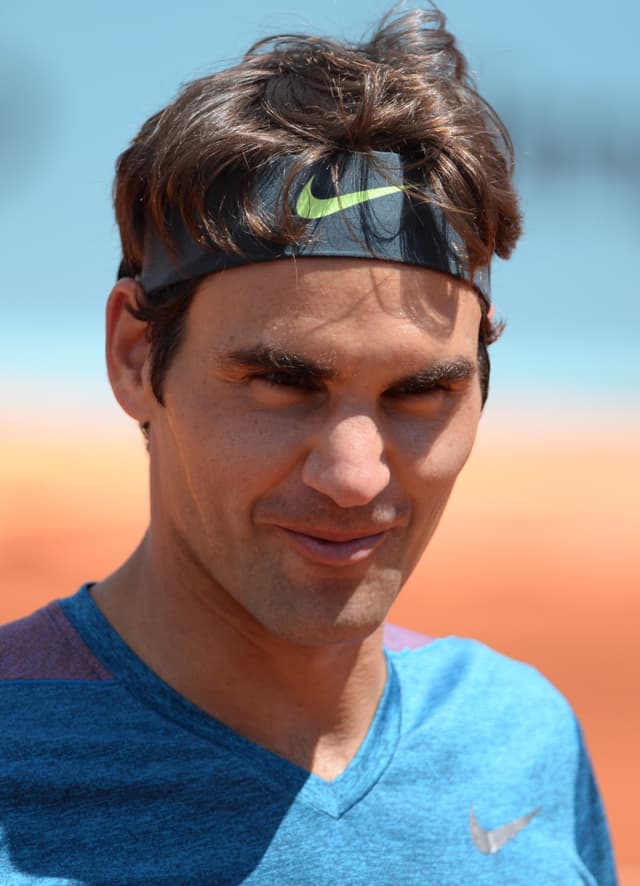
Roger Federer
Federer Inc.
A pioneer in the sports and athletics industry, Roger Federer founded Federer Inc. to embody the principles of excellence, discipline, and continuous improvement. Throughout his illustrious career, he achieved 20 Grand Slam titles, demonstrating that behind every success lies meticulous planning and relentless effort. Federer's philosophy emphasizes that perfection is unattainable, as he noted, winning only 54% of points in his matches while maintaining an almost 80% victory rate. His journey highlights the importance of mental resilience and emotional discipline, lessons he learned from a no-nonsense coach and a mental coach during his formative years. Today, his insights on evolving in competitive fields serve as invaluable guidance for entrepreneurs and business builders striving for success.
Core Principles
culture
Build a team of unconventional, high-integrity people who can hold you to higher standards. Avoid surrounding yourself with people who doubt your vision.
Federer deliberately chose unusual coaches like Pierre Paganini, a fitness trainer who had never played competitive tennis but understood long-term athlete development. He also switched his dentist when the dentist questioned his career choice. He surrounded himself only with believers who could push him forward.
“I never went back because I just felt like he's not really understanding what I'm trying to do here. I'm chasing a dream. I'm trying to aim for the stars. And he's trying to pull me back.”
customer obsession
Deliver personalized service and genuine care to sponsors, partners, and audiences. Make each person feel valued and that you have time for them, regardless of scale.
Federer visited all 21 sponsor suites at Swiss Indoor tournaments personally. In group events, fans felt he had all the time in the world for them. This personalized approach to relationships translated into long-term sponsorship loyalty and premium business partnerships worth hundreds of millions.
“He takes pride in delivering personalized service. He would visit all 21 of the sponsor suites at the Swiss indoor tournament to do meet and greets.”
Seek immediate feedback from live audiences or customers. Real-time feedback loops accelerate learning and let you quickly apply what you discover.
Federer emphasized that playing in front of live audiences provided instant feedback on whether he was performing well or poorly. This immediate loop allowed him to quickly adjust and iterate. He applied coaching advice faster than peers, making rapid improvements based on what he observed.
“Playing in front of a live audience, you get the review right away. You know if you're good or bad. It's like a musician. And I'll tell you it's a good feeling to have.”
focus
Protect your mental energy by limiting unnecessary public exposure and maintaining control over your schedule. Preserve bandwidth for what matters most.
When Federer felt burnout approaching, he reduced press appearances, autographs, and public events, focusing only on practice, matches, and family. He negotiated with the tour for a three-month period to reduce media demands. This active management of his attention preserved energy for peak performance.
“If I do feel burnout coming on, what I've tried to do is break it down to the absolute minimum. I will do less press, less autographs, less public appearances.”
innovation
Study the history and greats of your field. Understanding what masters before you accomplished and learning from them gives you an edge over competition.
Though an indifferent student in school, Federer was drawn to tennis history. He actively studied great players both dead and living, asked older players about their approaches, and learned lessons that gave him competitive advantages. He encouraged young players to develop similar curiosity.
“I asked a lot of questions and I had a great bunch of guys around me when I came up on tour that educated me as well. They were like, look, this is somebody who played at semis in Wimbledon back in 1968.”
leadership
Build a seamless web of deserved trust with your core team. Once people are in your inner circle, commit fully to them rather than constantly second-guessing.
Federer carefully selected his team (coaches, trainers, wife) and took time to build trust. Once trust was established, he relied on them completely without constant questioning. This allowed each team member to do their best work without doubt or micromanagement.
“It takes a while to get that trust, but once you're in, nothing is second guessed.”
mindset
Effortlessness is a myth. Excellence requires meticulous planning, discipline, and relentless work behind the scenes that the world never sees.
Federer appeared to play with natural ease, but this masked years of detailed scheduling, self-discipline, and rigorous training. He worked with unconventional coaches like fitness trainer Pierre Paganini who emphasized structured, long-term planning. The perception of effortlessness was the result of invisible discipline.
“Federer was widely perceived as a natural, and yet he became a meticulous planner who learned to embrace routine and self-discipline, plotting out his schedule well in advance and in considerable detail.”
Emotional control is a learnable skill that separates good performers from great ones. Young talent may be obvious, but the ability to manage emotions under pressure determines long-term dominance.
Federer was emotionally fragile as a junior player, throwing rackets and expressing frustration. At 14, a coach told him his only barrier was his head. He worked with a performance psychologist at age 16-17 to develop mental discipline. This skill became as critical to his success as his physical abilities.
“I was a terrible loser. I really was. I knew what I could do and failure made me mad. I had two voices inside me, the devil and the angel.”
Manage your inner monologue and emotions by converting intense feelings into controlled fuel rather than trying to eliminate them. Channel rage into focused drive.
Rather than extinguishing his competitive fire, Federer learned to control it. The inner rage remained, but he developed the skill to convert it into slow-burning motivation rather than explosive outbursts. This allowed him to maintain intensity without the self-destructive behavior of his youth.
“It was about learning to control the flames instead of extinguishing them, about converting them into slow burning fuel rather than a bonfire of distraction.”
Set ambitious goals early and maintain that belief in yourself even when others doubt you. Excessive self-confidence before demonstrated ability is a trait of high achievers.
At age 8, Federer told friends he would be number one in the world. At 14, while most junior players wrote they hoped to reach the top 100, he was the only one stating he would be number one. He would go to the Olympics at 19, ranked 43rd and with no ATP titles, confidently expecting to win gold.
“At age eight, Roger was going around and telling his friends that he was going to be number one.”
Compete against yourself and an internal scorecard, not primarily against external rivals. This sustains motivation and prevents burnout from obsessing over others.
Federer's primary competition was with himself and his own potential. While his rivalry with Nadal was compelling, his real focus was on winning tournaments and proving to himself he could perform at his best. This inner orientation kept him driven across decades of competition.
“The idea is that you want to prove to yourself, you can do it, and not to other people. It is important you can wake up in the morning and go to bed feeling good about yourself and your effort.”
operations
Optimize for recovery as aggressively as you optimize for work. Rest and recovery are not breaks from training, they are central mechanisms that make training effective.
Federer's fitness coach Paganini taught that stress, recovery, and improvement form a loop. The central message was that tough work was necessary, but so were rest and escape. This philosophy of intelligent restraint in service of long-term consistency enabled Federer's 24-year career without major burnout.
“Paganini had a long-term view of Federer's health and path. The central message was that tough, consistent work was necessary, but so were rest and escape if Federer wanted to last in a sport.”
resilience
Perfect execution is impossible. Learn to move past individual failures quickly so you can commit fully to the next opportunity with clarity and focus.
Even as a top-ranked player, Federer won only 54% of points in matches. Rather than dwell on losses, he developed a mental framework to accept failure, move on, and redirect energy to the next point. This allowed him to maintain intensity across 1,526 matches.
“When you lose every second point on average, you learn not to dwell on every shot. You teach yourself to say, okay, I double faulted. It's only a point.”
strategy
Be willing to take calculated risks on partnerships and investments, especially when they align with your values and long-term vision. One major decision can compound significantly.
When Federer couldn't agree with Nike in 2018, he took a significant risk signing with Uniqlo for a reported $30 million yearly apparel deal. Because the agreement didn't cover footwear, he invested in On, a Swiss running shoe company. When On went public, his stake was worth approximately $300 million.
“When on goes public, Federer's stake in the company was worth about $300 million.”
Trust your own judgment enough to make unconventional decisions. Don't be sentimental about breaking with teams or approaches when your inner voice signals you need change.
Federer repeatedly made contrarian choices: going without an official coach for long stretches, switching coaches when routines set in, parting with winning teams when he felt stagnation. His success came from trusting his instinct about what he needed rather than defaulting to conventional wisdom.
“Federer was not too sentimental to break bonds when his inner voice was shouting that he needed change. Trusting yourself is a talent.”
Design your career and business for the long run, not quick wins. Optimizing for sustainability and endurance pays off exponentially over decades.
Every decision Federer made, from training philosophy to personal life balance to business partnerships, was optimized for longevity. His biggest business win came 23 years after turning pro. He outlasted 127 of the 128 men who played singles at the 1999 French Open, the only one still competing.
“The fact that he optimized for the long game, the long run from day one, not only did he have a remarkable tennis career, but it benefited him in business.”
Stagnation is regression. In competitive fields, maintaining your current level means falling behind. You must constantly push to improve and evolve in every aspect of your work.
Federer rejected complacency throughout his career. Whether it was switching coaches when he felt routines setting in or constantly seeking to improve his game, he believed that standing still was losing ground. This mindset kept him relevant for over two decades.
“He believed that maintaining the same level in pro tennis was actually losing ground.”
Frameworks
The Inner Game Framework
Manage emotions and mental discipline as a distinct trainable skill separate from physical execution. The framework recognizes that the gap between elite and exceptional performers is primarily mental, not physical. It involves controlling your inner monologue, managing self-doubt, and developing emotional regulation strategies.
Use case: Leadership development, high-stakes decision making, and situations where emotional control directly impacts outcomes. Critical for anyone in competitive fields or facing repeated adversity.
The Long-Game Optimization Model
Design decisions and systems assuming a career will span multiple decades rather than single years or tournament seasons. This involves careful scheduling, balanced personal life, recovery protocols, team building, and skill diversification. Every choice is evaluated for its impact on sustainability and cumulative compounding.
Use case: Career planning, business strategy, talent development, and succession planning. Particularly valuable for founders building companies intended to last and leaders managing talent for decades, not quarters.
The Feedback-Application Loop
Seek immediate feedback from real-world performance in front of audiences or customers. Use that feedback to rapidly apply learnings and iterate. The speed of application becomes a competitive advantage. Fast feedback plus fast implementation creates a compounding edge over time.
Use case: Product development, customer obsession, coaching relationships, and any domain where real-time feedback is available. Particularly powerful in startups and competitive markets where speed of adaptation matters.
Stories
At age 14-17, a no-nonsense coach told Federer that the only thing stopping him from becoming the best was his head, not his talent. A mental coach at age 16-17 helped him develop emotional discipline by giving him tools to channel his inner rage into focused fuel rather than explosive outbursts. This mental transformation, more than any technical improvement, enabled his 24-year dominance.
Lesson: Emotional discipline and mental skills are trainable and often more critical than raw talent. The willingness to work on your inner game, even when it feels like a sign of weakness, is what separates great from exceptional.
Federer chose an unusual fitness coach named Pierre Paganini who had never played competitive tennis but understood long-term athlete development and emphasized rest and recovery as equal to work. This counterintuitive choice, made unconditionally, became perhaps the decisive factor in Federer's 24-year career without major burnout. Peers without similar coaches suffered injuries and burnout.
Lesson: The most important hires and partnerships are often unconventional. Don't optimize for obvious credentials. Optimize for people who understand your long-term vision and can hold you to standards you can't hold yourself to.
Federer was asked by a rival early in his career why the rival would be the favorite after two hours. The rival explained that after two hours, Federer's legs would get wobbly, his mind would wander, and his discipline would fade. This public criticism wounded Federer, but instead of dismissing it, he took it as truth and worked exponentially harder on his mental and physical conditioning for decades.
Lesson: Criticism from worthy competitors is a gift. The willingness to accept painful truths about yourself and let them drive improvement, rather than defending your ego, determines long-term trajectory.
When Federer felt routines setting in with his coach Lundgren, despite winning, he ended the partnership because his inner voice told him he needed change. This pattern repeated throughout his career: he would go stretches without an official coach because he trusted his own judgment more than conventional wisdom about what successful people do.
Lesson: Don't be sentimental about relationships or approaches that worked before. Stagnation is regression. The willingness to disrupt working systems when your instinct signals change is necessary is what enables sustained excellence.
Federer's dentist questioned his decision to pursue tennis full-time at age 16, asking what else he would do. Rather than try to convince the dentist, Federer simply found a new dentist. Throughout his career, he actively removed people who didn't believe in his vision and surrounded himself only with believers who held him to high standards.
Lesson: You cannot afford to have doubt in your immediate circle when pursuing ambitious goals. The energy cost of managing skepticism outweighs any benefit of 'staying grounded.' Surround yourself with believers.
At 21, Federer won his first Wimbledon title after years of working on his emotional discipline and mental game. A coach who had been skeptical of him as a 14-year-old, seeing how far he had come, reflected: 'Look how far he has come. Now I'm thinking about how far he went after that.' The 20+ years of championships and dominance that followed proved that the internal transformation was more important than the external success.
Lesson: The invisible work done early in your career, especially on your character and mental discipline, compounds for decades. Breakthroughs aren't single events, they are the result of years of unglamorous internal development.
Notable Quotes
“Perfection is impossible. It is only a point. In the 1,526 single matches I played in my career, I won almost 80% of those matches. What percentage of points do you think I won in those matches? Only 54%.”
From his Dartmouth commencement address, explaining why elite performers don't dwell on individual losses and how learning to move past each point is critical to sustained performance.
“I never fell out of love with the sport. Never.”
Explaining why he lasted 24 years in a sport where most peers retired decades earlier. Endurance comes from genuine love, not obligation or external motivation.
“Trusting yourself is a talent.”
On self-reliance and the importance of developing the ability to trust your own judgment. This is why he went away to boarding school at age 14 and why he could make unconventional decisions like going without a coach or switching partners despite success.
“As much as I take things very seriously, I'm very laid back so I can really get let go very quickly, meaning let go of losses. Because if you're constantly like this (clenched fist), then that's how you burn out.”
On the balance between intense focus during performance and the ability to completely release tension afterward. This oscillation between high intensity and complete relaxation is the antidote to burnout.
“I never went back because I just felt like he's not really understanding what I'm trying to do here. I'm chasing a dream. I'm trying to aim for the stars. And he's trying to pull me back. I don't want to be surrounded by people like this.”
On his decision to switch dentists when the dentist questioned his full-time tennis commitment at age 16. Shows his early understanding that doubters in your circle actively harm your trajectory.
“When you are playing a point, it has to be the most important thing in the world. And it is. But when it's behind you, it's behind you.”
On the importance of present-moment focus combined with the ability to release the past. This mindset enabled him to maintain intensity across thousands of points without being derailed by previous failures.
“It was about learning to control the flames instead of extinguishing them, about converting them into slow burning fuel rather than a bonfire of distraction.”
On emotional management as a professional. Rather than becoming emotionless, he learned to channel his competitive rage into sustained focus instead of explosive outbursts.
“The idea is that you want to prove to yourself, you can do it, and not to other people. It is important you can wake up in the morning and go to bed feeling good about yourself and your effort.”
On internal versus external motivation. His primary competition was with himself and his potential, not with rivals. This internal orientation sustained his motivation across decades.
“Playing in front of a live audience, you get the review right away. You know if you're good or bad. It's like a musician. And I'll tell you it's a good feeling to have. Even if you're bad, it doesn't matter. All you have to do is then go work at it.”
On the value of immediate feedback loops. Real-time feedback from audiences or customers accelerates learning and provides clarity about what needs improvement.
“It takes a while to get that trust, but once you're in, nothing is second guessed.”
On his approach to relationships with his core team. Once trust is earned, complete commitment follows without constant questioning or doubt.
Frequently Asked Questions
What are Roger Federer's key business principles?▼
Roger Federer's core principles include: Build a team of unconventional, high-integrity people who can hold you to higher standards. Avoid surrounding yourself with people who doubt your vision.. Deliver personalized service and genuine care to sponsors, partners, and audiences. Make each person feel valued and that you have time for them, regardless of scale.. Seek immediate feedback from live audiences or customers. Real-time feedback loops accelerate learning and let you quickly apply what you discover.. Founder Almanac has cataloged 19 total principles from Roger's career.
What can entrepreneurs learn from Roger Federer?▼
Key lessons from Roger Federer include: Emotional discipline and mental skills are trainable and often more critical than raw talent. The willingness to work on your inner game, even when it feels like a sign of weakness, is what separates great from exceptional.. Explore 6 stories and 3 frameworks from Roger's experience.
What is Roger Federer known for in business?▼
A pioneer in the sports and athletics industry, Roger Federer founded Federer Inc. to embody the principles of excellence, discipline, and continuous improvement. Throughout his illustrious career, he achieved 20 Grand Slam titles, demonstrating that behind every success lies meticulous planning and relentless effort. Federer's philosophy emphasizes that perfection is unattainable, as he noted, winning only 54% of points in his matches while maintaining an almost 80% victory rate. His journey highlights the importance of mental resilience and emotional discipline, lessons he learned from a no-nonsense coach and a mental coach during his formative years. Today, his insights on evolving in competitive fields serve as invaluable guidance for entrepreneurs and business builders striving for success.
More Sports & Athletics Founders
Want Roger's advice on your business?
Our AI has studied Roger Federer's biography, principles, and decision-making frameworks. Ask any business question.
Start a conversation