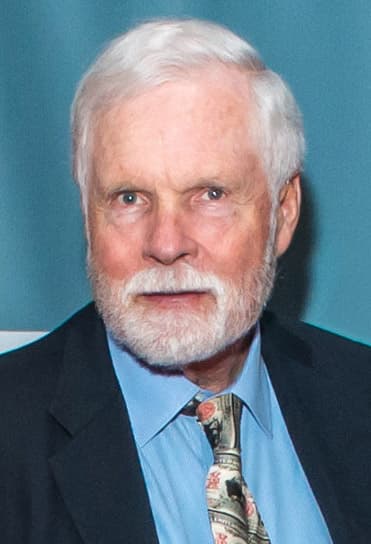
Ted Turner
Turner Broadcasting System
A pioneer in the media and entertainment industry, Ted Turner transformed the landscape of broadcasting by founding Turner Broadcasting System, which introduced the first 24-hour news channel, CNN, in 1980. When faced with a significant debt at the age of 24, he chose innovation over liquidation, creatively negotiating with landowners to keep his father's company afloat. Turner's principles of maintaining separate legal entities during acquisitions and betting on high-growth mediums have become guiding strategies for entrepreneurs navigating competitive markets today. With a bold vision for the future, he famously remarked, "Gee, John, I'm getting rich and Bob's getting rich and the only one that's not getting rich is you," illustrating his knack for seizing opportunities while driving industry evolution.
Core Principles
competitive advantage
Differentiate through scheduling and format mechanics when content is unavailable. Small operational differences create disproportionate competitive advantages.
Ted started his TV station's programming at 7:05 AM and 7:35 AM instead of on the hour, like all competitors. This meant viewers switching channels at the top of the hour would find his programming running instead of commercials, increasing viewership and creating a unique TV Guide listing.
“We're going to extend a program through the end of the hour and start the following one at 7:05. People watching our competition would start flipping around... while the other channels would all be running commercials, we'd be showing programming.”
Combine assets in ways that competitors cannot. Create competitive advantage by merging capabilities from different business lines that others keep separate.
Turner combined unsold billboard inventory to promote his radio stations, giving him a cost-free distribution advantage. He repeated this strategy with TV stations, using billboards to drive viewership. Competitors who only owned radio or TV could not replicate this.
“15% of my ad inventory on my billboard company every month goes unsold. I'm going to put ads for my radio station on these billboards. That's going to increase listenership.”
finance
When acquiring companies, keep them as separate legal entities rather than folding them into the parent company. This preserves optionality for future reorganization and protects against capital gains liabilities.
Ted's father maintained multiple billboard businesses as separate legal entities. Ted applied this strategy when acquiring the Chattanooga billboard company, allowing him to offer the bank equity in that specific entity without diluting his ownership of Turner Advertising.
“My father always maintained many of the different billboard businesses as separate legal entities.”
Be willing to finance deals with no money down by finding creative payment structures. Use seller financing, equity stakes, and third-party funding to bridge capital gaps.
When Ted wanted to buy the Chattanooga billboard company for $1 million, he had no cash. He convinced the seller to finance 75% over seven years and found a bank to lend the rest in exchange for equity in that specific entity.
“I didn't have that kind of cash. So he convinces the seller... Will you finance 75% of the purchase price over seven years at a very high interest rate?”
Identify the most valuable but least strategic asset to sell in order to fund your primary vision. This preserves core business while unlocking necessary capital.
To fund CNN, Ted sold his Charlotte TV station (valued at $20 million, purchased for $1 million eight years earlier) rather than his Atlanta stations, Braves, or Hawks. The station was valuable but not strategically essential to his long-term vision.
“He has this local TV station in Charlotte that eight years before he had bought for a million dollars. Now that business is valued at 20 million. So he sells that for 20 million dollars.”
innovation
Prove your concept with unconventional metrics when traditional measurement is unavailable. The postmark on a customer check is data that demonstrates market reach.
When Nielsen refused to measure Ted's superstation audience across multiple states, he used postmarks on customer checks from direct response products to prove national audience reach. This creative measurement convinced Nielsen to provide official ratings.
“Since many of our orders for direct response products came in the form of personal checks mailed directly to our Atlanta offices, we could tell where they were coming from based on the postmarks.”
leadership
Do not surrender control unless absolutely necessary. Loss of control means loss of decision-making power and susceptibility to external decisions that can destroy value.
When Ted over-leveraged himself in the MGM deal, John Malone's rescue package gave him veto power over certain decisions. This control limitation frustrated Ted throughout his career and contributed to his eventual sale to Time Warner.
“He never really knew how to deal with having sort of a boss. You get up one morning with a wild idea and then you have to think, am I going to get vetoed?”
Charisma and infectious enthusiasm can be as valuable as capital. The ability to hypnotize people with belief in your vision attracts talent and partners.
Multiple people in the book describe Ted Turner's ability to completely convince people of his vision through sheer force of personality and enthusiasm. Like Steve Jobs' reality distortion field, being around him made people believe in seemingly impossible things.
“He's very charismatic and his enthusiasm is very infectious.”
mindset
When you stand up for yourself with integrity to authority figures, especially parents or mentors, respect often follows. Boundaries enable mutual respect.
Ted told his father that his constant control over personal decisions was damaging their relationship and asked for autonomy in his personal life. Days later, his father sent a letter praising Ted's job performance. Within three years, his father was dead, but this conversation shifted their dynamic.
“Dad, it gets tough when you're involved in every aspect of my life... In my business life, I'll do anything you say, but please try not to bug me so much about my personal life.”
Recognize that being early requires believing when others do not believe. Your early belief is your only advantage when the market and competitors are skeptical.
In 1976, at age 38, Ted Turner confidently declared he would become a billionaire by leveraging satellites, news, sports, and movies in 24-hour distribution. This was over a decade before any of this became standard or proven. His belief was his only advantage.
“I'm going to put this station up on a satellite and I'm gonna get a news thing going. Sports, movies, and news, 24 hours a day, all over the world.”
operations
Your job when you own an asset is to maximize its value. Look for creative ways to increase utility, even if unconventional, and measure the financial return to justify the investment.
Ted invested $200,000 to colorize black-and-white films despite criticism that it was unnecessary. The colorized versions attracted six times the viewership, paying for the investment in months through increased ad revenue.
“I could run the black and white version and then I can invest 200,000. Now I have the color version. The color one would get six times the amount of viewers.”
resilience
When the chips are down and pressure is on, people become incredibly creative. Use tight deadlines and constraints to unlock innovative solutions.
Ted Turner faced a 90-day deadline to pay $200,000 to Bob Nagel or lose the company assets. Instead of panicking, he structured the payment using stock in Turner Advertising to provide tax benefits to the buyer, solving both parties' problems creatively.
“When the chips are down and the pressure is on, it's amazing to see how creative people can be.”
Refuse to accept artificial impediments to your vision. Regulatory, legal, and conventional obstacles should be viewed as challenges to overcome, not reasons to quit.
Ted Turner faced constant regulatory and legal obstacles in launching CNN and the superstation. He sued and fought with major broadcasters, studios, and regulators. Rather than accepting these barriers as insurmountable, he pushed through them because he believed in the concept.
“The things that most of us would sit there and ponder, all these regulatory and legal reasons why it might not be something you could do, Ted would just say, oh, hell, you can overcome those kinds of things.”
Success against larger competitors often depends on greater commitment and desire than they possess. They have more resources but less to lose.
Turner repeatedly defeated massive conglomerates like RCA, ABC, and Westinghouse in regulatory and competitive battles. He ascribed his wins to having more at stake, more desire, and more belief in the outcome than opponents who had multiple business divisions.
“I've always been convinced that one of the reasons I've been successful is that I've almost always competed against people who were bigger and stronger, but who had less commitment and desire than I did.”
Exhaustion after 30 years of extreme dedication can lead to accepting deals that sacrifice control. Burnout is a real factor in founder decisions.
Ted Turner sold Turner Broadcasting to Time Warner for $8 billion after 30 years of 18-hour workdays. He explicitly cites exhaustion as a primary reason, acknowledging that ongoing fatigue led him to accept a deal that cost him ultimate control.
“The final reason I agreed to do the deal was a simple one. I was tired. It was now more than 30 years since my father's death and I'd been running the company on my own ever since.”
sales
When you cannot convince traditional buyers, find alternative markets that validate your concept. Use direct response and unconventional customers to prove viability while building toward mainstream adoption.
Traditional advertisers would not buy ads on Ted's superstation satellite channel. He partnered with direct response companies (steak knives, etc.) who could measure sales directly. This generated revenue while proving the concept, which eventually attracted traditional advertisers.
“Direct response advertising could be a solution to our problem... we could tell where they were coming from based on the postmarks on the envelopes.”
strategy
Study history and military strategy to understand business strategy. Historical parallels illuminate solutions to current problems.
Ted compared his CNN launch strategy to Rommel's desert campaign in WWII. Rommel attacked with insufficient fuel but captured enemy fuel dumps to continue. Similarly, Ted launched CNN with insufficient capital but believed proving the concept would unlock future funding.
“I've always been a student of military history. I thought the CNN launch strategy was similar to Rommel's desert campaign during World War Two.”
Long-term relationships with customers and partners compound in value over time. You never know how someone you befriend today might help you tomorrow.
Ted cultivated a relationship with the Atlanta Braves president by positioning themselves as partners in broadcasting games. When the president decided to sell the team, he offered Ted first right of refusal, leading to Ted's acquisition of the franchise.
“My dad taught me early on that long-term relationships with your customers and partners are very important. You never know how the guy who you're friendly with today might be able to help you tomorrow.”
Understand the financial incentives of the person you are buying from or selling to. Structure deals that solve their tax problems or financial constraints, not just yours.
When Ted needed to acquire movie rights from studios, he recognized they were sitting on fully amortized content with no tax liabilities on new revenue. He negotiated favorable long-term deals because any revenue went straight to their bottom line.
“These old films were long since fully amortized by the studios and they don't have to pay any of the talent. So any revenue that is generated by selling these old movies drops straight to their bottom line.”
Understand why competitors are not making obvious moves. Often they are constrained by legacy business models, internal politics, or short-term incentive structures that prevent them from pursuing long-term opportunities.
The big three broadcast networks (ABC, CBS, NBC) all had the resources, talent, and distribution to launch 24-hour news before Ted Turner. They did not because they were focused on protecting current advertising revenue from nightly news broadcasts rather than building new revenue streams.
“They were worrying more about the previous night's ratings and the money that comes from that than the long-term future of their business.”
Be the first friendly competitor to an emerging industry. Establish relationships with industry players before they become established, positioning yourself as a partner rather than a threat.
When cable TV emerged, traditional broadcasters viewed cable operators as enemies. Ted Turner became the first broadcaster to befriend cable operators, viewing them as distribution partners rather than competitors. This early relationship-building gave him access and credibility.
“They told me that I was their first friendly broadcaster that they had ever met.”
Frameworks
Asset Combination Strategy
Combine assets or capabilities across different business lines in ways competitors cannot because they keep those lines separate. Use unsold inventory or underutilized assets from one line to promote another, creating cost-free competitive advantages. This works because you have integrated operations while competitors have siloed ones.
Use case: When you own multiple business lines or assets in related industries. Use it to create distribution advantages, cross-promote, or increase utilization of underused capacity that competitors cannot match.
Direct Response Validation
When traditional channels (like brand advertisers) will not buy your offering, pivot to direct response markets where customers pay directly for products sold via your medium. Use this to generate revenue, build usage metrics, and prove concept viability. Once proven, traditional buyers will follow.
Use case: Use when building a new medium or distribution channel that established advertisers are skeptical about. Find alternative buyers first to prove the channel works, then graduate to premium buyers once data exists.
Competing Against Incumbents with Superior Commitment
When facing larger, better-resourced competitors, you win by having greater commitment, belief, and skin in the game than they do. Their resources mean nothing if they lack the desire or urgency to apply them. Focus on this psychological and motivational advantage rather than trying to match resources directly.
Use case: Use when you are the underdog competing against much larger companies. Rather than trying to outspend them, out-commit them. Make it matter more to you than it matters to them.
Rommel Funding Strategy
Launch a major initiative with insufficient capital, betting that initial success will unlock future funding. Plan to capture your competitors' resources (market share, customer relationships, data) as you grow, using those captured resources to fuel further expansion. Requires belief that the concept will be proven and funding will follow.
Use case: Use when pursuing a truly innovative idea where traditional funding sources do not understand the concept. Launch leanly with whatever capital you can gather, prove the concept quickly, then access capital markets once viability is demonstrated.
Historical Analogy Problem-Solving
When facing unprecedented business challenges, study similar situations in history or military strategy to find solutions. Historical parallels reveal patterns and solutions that may not be obvious in the current context. Use these analogies to guide strategic thinking about resource allocation, timing, and commitment.
Use case: Use when facing complex strategic decisions with no precedent in your industry. Research historical parallels, especially in military history and biography, to find solutions that others in your industry have not considered.
Stories
At 24 years old, Ted Turner inherited his father's company and a pending $200,000 debt to Bob Nagel. Rather than accept the sale, Ted 'jumped the leases' by having his team contact the same landowners and offer higher rates to switch billboard leases to his company. Within weeks, he severely damaged the value of assets Nagel wanted, forcing Nagel to negotiate. Ted couldn't pay the $200,000 settlement in cash due to tax implications, so he offered stock in Turner Advertising instead.
Lesson: Do not accept unfavorable deals simply because you inherit them. Get creative under pressure. Understand the financial incentives of the other party and structure solutions that work for both sides, even if unconventional.
Ted Turner purchased a failing TV station in Atlanta and fired 33 of 35 employees, keeping only the custodian and receptionist. He then used unsold billboard inventory (15% monthly) to promote the TV station with free ads. Once he became the only TV station broadcaster in the market, he negotiated favorable long-term deals for old movies from studios because they were fully amortized and any revenue went straight to their bottom line.
Lesson: Clean house ruthlessly when acquiring bad businesses. Use existing assets creatively to build new ones. Understand the financial constraints of your suppliers and partners, and structure deals that solve their problems while solving yours.
When Nielsen refused to measure Ted Turner's superstation audience across multiple states, calling it too expensive and logistically difficult, Ted used direct response advertising checks to prove his national reach. Customer checks came in from across the country, and postmarks showed the geographic distribution of his audience. This creative use of payment data convinced Nielsen to provide official national ratings.
Lesson: When institutional players refuse to measure or validate your business, find alternative metrics. Be creative with data sources. What appears as a barrier often contains the seeds of its own solution.
Ted Turner spent five years thinking about 24-hour cable news before launching CNN. The big three broadcast networks had all the resources (reporters, studios, bureaus) to build 24-hour news but never did. They were too focused on protecting their current nightly news advertising revenue to imagine a new model. Ted, with fewer resources but more belief, built CNN and eventually defeated their attempts to copy it.
Lesson: Incumbents often fail to pursue obvious innovations because their current business model and incentive structures prevent them from seeing future opportunities. Being early and believing before others do is your advantage. Do not wait for incumbents to validate your vision.
Ted Turner wanted to buy the Atlanta Braves but had no cash. He negotiated a deal where he paid $1 million down and had nine years to pay the remaining $9 million at high interest rates. The sale worked because his TV station had made the team valuable by broadcasting games and generating ratings. The relationship-based trust allowed unusual terms.
Lesson: Relationships compound over time. By being a good partner and understanding mutual interests, you create optionality for future deals. People you work with may eventually offer you opportunities they would not offer to strangers.
When Ted Turner's superstation expanded to satellite distribution reaching multiple states and regions, advertisers would not pay for ads because traditional measurement systems could not quantify the audience. Ted could not convince brand advertisers, but he could convince direct response companies selling steak knives and similar products who could measure their own sales. This alternative revenue sustained the business until Nielsen agreed to measure national audiences.
Lesson: When your target market does not believe in your concept, find an alternative market that does. Build proof and revenue through these alternative channels. Once demonstrated at scale, the original market will follow.
Notable Quotes
“Gee, John, I'm getting rich and Bob's getting rich and the only one that's not getting rich is you.”
Turner's challenge to Malone, pointing out that despite building TCI into the largest cable operator, Malone owned less than one percent of the company and was therefore not becoming as wealthy as his peers.
“Son, you be sure to set your goals so high that you can't possibly accomplish them in one lifetime. That way, you'll always have something ahead of you.”
Reflecting on having achieved all his material goals (millionaire, plantation, yacht) but losing the will to pursue new ones, leading to depression and eventually suicide.
“When the chips are down and the pressure is on, it's amazing to see how creative people can be.”
Describing his 90-day deadline to raise $200,000 to pay off Bob Nagel, during which he devised the stock-based payment solution.
“My dad taught me early on that long-term relationships with your customers and partners are very important. You never know how the guy who you're friendly with today might be able to help you tomorrow.”
Explaining how his relationship with the Atlanta Braves president led to an opportunity to purchase the team.
“You should always bet on the medium that looked like it would grow the fastest.”
Explaining his decision to buy a failing TV station over a failing radio station, believing television would dominate the future.
“I was tired. It was now more than 30 years since my father's death and I'd been running the company on my own ever since. 30 years of long weeks and 18-hour days would get to anyone.”
Explaining his decision to sell Turner Broadcasting to Time Warner for $8 billion after three decades of intensive work.
“I've always been a student of military history. I thought the CNN launch strategy was similar to Rommel's desert campaign during World War Two.”
Explaining his fundraising strategy for CNN by drawing a parallel to Rommel's approach of attacking with insufficient fuel but capturing enemy resources to continue the offensive.
“They were worrying more about the previous night's ratings and the money that comes from that than the long-term future of their business.”
Explaining why the big three broadcast networks (ABC, CBS, NBC) never launched 24-hour news despite having all the resources to do so.
“I've always been convinced that one of the reasons I've been successful is that I've almost always competed against people who were bigger and stronger, but who had less commitment and desire than I did.”
Reflecting on victories against much larger corporations like RCA, ABC, and Westinghouse in regulatory and competitive battles.
“Direct response advertising could be a solution to our problem. Since many of our orders for direct response products came in the form of personal checks mailed directly to our Atlanta offices, we could tell where they were coming from based on the postmarks on the envelopes.”
Describing how he used customer check postmarks to prove his national audience reach when Nielsen refused to measure it.
Frequently Asked Questions
What are Ted Turner's key business principles?▼
Ted Turner's core principles include: Differentiate through scheduling and format mechanics when content is unavailable. Small operational differences create disproportionate competitive advantages.. Combine assets in ways that competitors cannot. Create competitive advantage by merging capabilities from different business lines that others keep separate.. When acquiring companies, keep them as separate legal entities rather than folding them into the parent company. This preserves optionality for future reorganization and protects against capital gains liabilities.. Founder Almanac has cataloged 23 total principles from Ted's career.
What can entrepreneurs learn from Ted Turner?▼
Key lessons from Ted Turner include: Do not accept unfavorable deals simply because you inherit them. Get creative under pressure. Understand the financial incentives of the other party and structure solutions that work for both sides, even if unconventional.. Explore 6 stories and 5 frameworks from Ted's experience.
What is Ted Turner known for in business?▼
A pioneer in the media and entertainment industry, Ted Turner transformed the landscape of broadcasting by founding Turner Broadcasting System, which introduced the first 24-hour news channel, CNN, in 1980. When faced with a significant debt at the age of 24, he chose innovation over liquidation, creatively negotiating with landowners to keep his father's company afloat. Turner's principles of maintaining separate legal entities during acquisitions and betting on high-growth mediums have become guiding strategies for entrepreneurs navigating competitive markets today. With a bold vision for the future, he famously remarked, "Gee, John, I'm getting rich and Bob's getting rich and the only one that's not getting rich is you," illustrating his knack for seizing opportunities while driving industry evolution.
More Media & Entertainment Founders




Want Ted's advice on your business?
Our AI has studied Ted Turner's biography, principles, and decision-making frameworks. Ask any business question.
Start a conversation