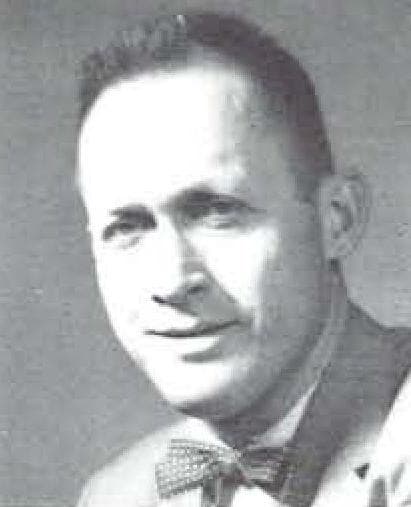
Bill Bowerman
Nike
A pioneer in the sportswear industry, Bill Bowerman co-founded Nike and revolutionized athletic footwear with his innovative approach to design and performance. He believed that optimal training required a balance of stress, recovery, and improvement, a principle that underpinned Nike's ethos. Bowerman's relentless pursuit of lightness in shoe design led to significant advancements, including the iconic Waffle sole, which helped athletes shave crucial seconds off their times. His mantra that "one ounce sliced off a pair of shoes is the equivalent to 55 pounds over one mile" exemplified his commitment to efficiency and speed, making him a lasting inspiration for entrepreneurs and business builders focused on disruption and performance.
Core Principles
competitive advantage
Disagreeable people focused on quality create competitive advantages. Channel your difficult nature toward excellence rather than suppressing it.
Bowerman was widely disliked for his hard-easy method and his refusal to accept mediocrity. But this disagreeable focus on doing things right, not easy, became Nike's competitive moat. His willingness to stand against consensus in pursuit of simple truth made him and the company stronger.
“Bill simply asked, 'Who are you going to believe? Those who don't want to change or the evidence before your own eyes?'”
finance
Avoid giving away equity or taking money you cannot afford to lose early in a venture. The risk of business failure is real even with good ideas and partners.
When Kenny Moore was offered the chance to invest $1,000 to $2,000 in early Nike stock, Bowerman honestly admitted he could not guarantee returns. He acknowledged it was a good idea with a good partner and good shoe, but emphasized the inherent risk. Moore chose not to invest, spending his windfall on a Hawaii vacation instead.
“It's a good idea. Buck's a good partner. The Cortez is a good shoe. That's all I can tell you. But I can't guarantee you will turn 2000 into a lot more. It's a risk.”
focus
Work on one thing at a time with complete focus. The temptation to do multiple things simultaneously will destroy excellence.
Bowerman taught runners to master one element at a time in hour-long sessions dedicated to that single improvement. This sequential approach to development forced deep concentration rather than scattered effort. It applies equally to business and personal development.
Master one element at a time rather than trying to fix multiple problems simultaneously. Sequential focus compounds improvement.
Bowerman taught athletes one element per training session in dedicated focus. He believed you can only think of one thing at a time, and trying to tackle multiple improvements creates confusion and poor execution. This sequential approach to development became central to his coaching method.
“You can only think of one thing at a time.”
hiring
Do not give people handouts. Those who earn access without expecting special treatment will perform better and stay longer.
Bowerman scorned recruiting and almost never gave full scholarships. He believed that athletes who had to earn their place, who did not expect handouts, would be more committed and receptive to teaching. This created a self-selected group of driven, coachable people.
“Anyone can be taught. Those who don't expect a handout, best of all.”
innovation
Consistency and small improvements over time compound into extraordinary results. Rare breakthroughs matter less than constant, intelligent iteration.
Bill's shoe designs grew organically over time. Breakthroughs were brilliant but rare. He made small improvements, tested them with athletes, received feedback, and iterated. Over decades, these marginal gains created shoes that were vastly superior to anything available, establishing Nike's foundation.
“Breakthroughs were brilliant but rare.”
Know your business from A to Z. Deep expertise in every aspect of your craft eliminates unsolvable problems and enables continuous innovation.
Bowerman did not limit himself to coaching. He learned cobbling, made his own shoes, designed clothes from parachute material, and experimented with track surfaces in a cement mixer at his home. His obsession with understanding every detail of athletic performance meant he could innovate at every level and make marginal gains no one else could see.
“If you know your business from A to Z, there's no problem you can't solve.”
leadership
The relationship between teacher and student should maintain professional distance. Care for people as a physician cares for patients, not as a parent cares for children.
Bowerman kept distance from his athletes intentionally. He cared for them as a doctor cares for patients, administering to their needs while maintaining boundaries. This allowed him to issue difficult edicts and correct them when necessary without losing his authority or confusing the relationship.
“We were not his kids. We were, in that phrase he took for medicine, in his care. And the necessary distance of a doctor was part of that.”
You must get people's attention before you can teach them. Disruption of their comfort is necessary to open their minds to new lessons.
Bowerman used the parable of the mule skinner hitting a mule to get its attention as his central organizing principle. He believed you cannot tell someone what is good for them because they won't listen. First, you must break through their stubbornness and complacency so they become receptive to learning.
“First, you have to get their attention.”
Prioritize the motivated and self-driven. Do not waste effort trying to motivate the gifted but casual or those lacking internal drive.
Bowerman refused to motivate talented athletes who lacked ambition. He believed motivation is internal and cannot be manufactured by a coach. His energy went entirely to the eager and ambitious athletes who already possessed the fire within themselves, multiplying his impact.
“I can't make them switch brains, but that left him free to be absorbed by the eager.”
View yourself as a teacher, not a coach. Teach self-reliance and independence rather than dependence on your direction.
Bowerman scorned the title of coach and preferred to call himself a teacher. He believed in giving athletes their workouts and tactics but then releasing them to execute independently. Athletes later set personal bests years after leaving school because he taught them how to train themselves rather than making them dependent on his guidance.
“Anyone can be taught. Those who don't expect a handout, best of all.”
Patience and personal attention to individual needs matter more than scale. Understand the idiosyncrasies of those you lead and coach.
Bowerman refused to apply uniform rules. He spent long hours in silent thought analyzing individual physiology and temperament. Each athlete received a customized program. This personal attention and flexibility made him more effective than coaches applying one-size-fits-all systems.
mindset
Stress, recover, improve is the complete formula for training and growth. You cannot improve by constantly pushing hard without adequate rest and recovery.
Bowerman taught this fundamental principle at the start of each track season. Kenny Moore initially resisted easy days and light training, feeling it was unmanly to rest. Over eight years of properly balanced training, he placed fourth in the 1972 Olympic marathon, validating Bowerman's approach that consistency over intensity drives long-term improvement.
“Stress, recover, improve. That's all training is.”
Control yourself and channel your energy toward productive ends. Self-discipline is the prerequisite for achievement.
As a young troublemaker, Bowerman was told by Principal Ursel Hedrick that fighting would destroy him. Hedrick challenged him to control himself and make his mother proud. Bowerman's dramatic transformation from hellraiser to disciplined student launched his entire trajectory. Self-possession and discipline became his defining characteristics.
“Control yourself. Cut the crap and channel that goddamn energy.”
Live your life on your own terms. Do not accept authority for its own sake, but question and verify it against your own experience.
On his first day of first grade, when the teacher asked if he could write his name, Bowerman cried out, 'That's what I came here to learn.' This early signal that he meant to go through life on his own terms never left him. He was willing to defy the entire athletics establishment when he believed he was right.
Find a great mentor and internalize their approach to life and work. The relationship with a great teacher shapes your entire trajectory.
Bill Hayward became Bowerman's template. Hayward declared his personal life off limits, treated each athlete differently, had been a practical joker, and looked for underlying reasons rather than accepting dogma. Bowerman emulated Hayward's entire approach to coaching and life. Bowerman later refused Nike's Hall of Fame induction until Hayward was inducted first.
“I learned from the master.”
Pioneer mentality means believing nothing is impossible and viewing hardship as a winnowing process. Heritage shapes character.
Bowerman's family crossed the Oregon Trail. He spoke often of how that journey winnowed out the non-industrious, non-enduring, inflexible, and uncooperative. Cowards never started. The weak died along the way. This heritage gave him confidence that obstacles could be overcome through persistence and capability.
“The cowards never started and the weak died along the way.”
product
Lightweight design is faster. Small reductions in weight compound to significant performance gains and apply metaphorically to removing unnecessary complexity.
Bowerman obsessed over shoe weight. He calculated that saving one ounce from a miler's shoe saved 55 pounds of hard labor over a race. He made spikes that weighed three ounces. This obsession with eliminating unnecessary weight became a core principle of Nike's design philosophy and product advantage.
“I wanted the shoes as light as if I drove nails through your bare feet. Save an ounce from his shoe, and you save him 55 pounds of hard labor.”
strategy
Learn from observing what works elsewhere and adapt it to your context. Successful methods proven in other markets can be transplanted.
Bowerman traveled to New Zealand and observed Arthur Lydiard's jogging culture and training methods. He saw everyday people, old folks with three heart attacks, keeping pace with him. He brought this insight back to America and wrote Jogging, which sold over a million copies and created a jogging movement, fundamentally changing American fitness.
“Train, don't strain.”
Optimize for optimum, not maximum. Intelligent training and work means monitoring intensity to find the sweet spot, not always going all out.
Bowerman taught runners to finish workouts exhilarated, not exhausted. Most coaches of his era believed more effort always meant more gain, but Bowerman recognized that the best improvement comes from working intelligently rather than hardest. He tailored stress to the individual to find their optimal output.
“The greatest improvement is made by the man who works most intelligently. He must celebrate optimum rather than maximum.”
Frameworks
Hard-Easy Method
Alternate between hard workouts that stress the system and easy workouts that allow recovery. The formula is stress, recover, improve. This prevents overtraining, reduces injury, and enables long-term progression that intensity-only approaches cannot achieve. Applied individually based on each person's capacity and needs.
Use case: Training regimens, productivity cycles, sustained performance over years or decades
Mule Skinner Principle
Before you can teach someone, you must get their attention. You must break through their complacency or resistance. This requires disruption, sometimes uncomfortable, to open the mind to new ideas. Once attention is secured, learning becomes possible.
Use case: Leadership, coaching, organizational change, teaching
Individual Methodology Development
Do not blindly follow industry dogma. Study underlying principles, observe what works in other contexts, test assumptions against reality, and develop your own approach independent of what others do. This requires courage but produces results that conventional wisdom cannot.
Use case: Product development, strategy, training, scientific inquiry
Physician's Distance Model
Maintain professional distance from those you lead, like a doctor with patients. Care deeply for their wellbeing and progress while avoiding parental or familial entanglement. This distance allows you to deliver difficult feedback and make hard decisions without losing credibility or emotional clarity.
Use case: Leadership, coaching, mentoring
Sequential Element Mastery
Teach or develop one element at a time rather than addressing multiple problems simultaneously. Focus all attention on mastering one component before moving to the next. This prevents cognitive overload and enables deep understanding.
Use case: Training, education, product development, skill acquisition
Stories
Young Bowerman was a hellraiser, constantly fighting and getting into trouble. Principal Ursel Hedrick called him in and told him that his path would lead to dying in a prison or barroom floor, dishonoring his mother Elizabeth Hoover Bowerman. Hedrick's words hit hard, and Bowerman immediately channeled his wild energy into studies, sports, band, drama, and the school paper, transforming completely.
Lesson: A mentor who speaks to your deepest values can redirect destructive energy into productive channels. Sometimes you need someone to show you the real consequences of your path before you change.
Kenny Moore was recovering from the flu with a too-high resting heart rate. Bowerman examined him and told him to run only three-mile easy jogs for three weeks with no hard running. Moore was humiliated by easy days and initially resisted. Over eight years of accepting this balanced approach, Moore finished fourth in the 1972 Olympic marathon. He later reflected that only Bowerman could have convinced him to embrace the counterintuitive approach of rest.
Lesson: The right coaching sometimes means telling people to do less, not more. Consistency and recovery compound over years in ways intensity cannot. It takes a wise voice to get ambitious people to accept this.
While driving home, Bowerman's neighbor John saw Bill pressed against his driveway with a clipboard, wrestling a seven-foot diamondback rattlesnake. John asked if he needed help. Bill calmly said, 'Nope, just taking him a while to quit.' The snake was the largest ever recorded in Lane County. Bowerman killed it with a clipboard.
Lesson: Bowerman was a man of unusual determination and focus, unwilling to back down from challenges no matter how unconventional his method. This intensity shaped his entire approach to life and work.
Kenny Moore was offered $1,000 to $2,000 to invest in Blue Ribbon Sports when the company desperately needed cash. He asked Bowerman directly if the business would succeed. Bowerman told him honestly: 'It's a good idea. Buck's a good partner. The Cortez is a good shoe. That's all I can tell you. I wish I could guarantee you will turn 2000 into a lot more, but I can't. It's a risk.' Moore chose not to invest and used the money for a Hawaii vacation instead.
Lesson: Even a genius mentor cannot eliminate risk or guarantee outcomes. Honest advice sometimes means admitting the limits of what you can promise. Moore's hesitation cost him millions in subsequent Nike appreciation.
Bowerman was in New Zealand learning from coach Arthur Lydiard. During a training run with average people and joggers, he got completely destroyed and was left behind. An old man named Andrew Steedman, age 73 who had suffered three heart attacks, kept stopping and waiting for Bill, encouraging him to keep going. Bowerman was shocked to learn he'd been beaten by a cardiac patient.
Lesson: Ego is expensive. Meeting people doing things differently in other places can completely reshape your understanding of what's possible. Bowerman's humbling experience in New Zealand led to him bringing the jogging movement back to America.
At 6:30 AM, Bowerman called Jeff Johnson in New Jersey to ask about some detail regarding the shoes they were developing. Johnson realized it was 3:30 AM in Oregon. He thought to himself, 'God damn, this man is serious about shoes.' From that moment on, they got along better, and Johnson came to appreciate Bowerman's indifference to criticism from those who opposed the hard-easy method.
Lesson: When someone demonstrates obsessive commitment to quality, it commands respect even from those who initially resist them. Bowerman's willingness to call at 3:30 AM to discuss shoes showed Johnson he wasn't dealing with a casual participant.
Bowerman worked in ventilated spaces with rubber contact cement for 23 years from 1958 to 1981. He sniffed the fumes continuously while assembling his shoes by hand, seeking the lightest, best designs. This caused permanent nerve damage, leaving him with a pronounced drop foot and limp. The man who designed soft, light shoes for runners rendered himself unable to run in them.
Lesson: Innovation and achievement often carry hidden costs. Bowerman's gift to the world came at the price of his own physical ability. Legacy is built through sacrifice that sometimes cannot be fully anticipated.
Notable Quotes
“One ounce sliced off a pair of shoes is the equivalent to 55 pounds over one mile. Lightness directly translated to less burden, which meant more energy, which meant more speed. And speed equaled winning.”
Explaining his obsessive focus on shoe weight and construction to his runners at the University of Oregon, which became a core design principle for Nike.
“Stress, recover, improve. That's all training is. You would think any damn fool could do it, but you won't. You work too hard and you rest too little and you get hurt.”
Opening speech to the University of Oregon track team each season, establishing his fundamental coaching philosophy
“First, you have to get their attention.”
From the mule skinner parable, explaining why you cannot simply tell people what is good for them; they must first be receptive
“I can't make them switch brains, but that left him free to be absorbed by the eager.”
Explaining why he did not waste effort trying to motivate talented but unmotivated athletes
“Anyone can be taught. Those who don't expect a handout, best of all. I'd sure rather be teaching than blowing smoke up some spoiled brat's ass.”
On his approach to recruiting and the type of athletes he preferred to coach
“You can only think of one thing at a time.”
Explaining his sequential approach to teaching, mastering one element at a time rather than trying to fix multiple problems simultaneously
“The greatest improvement is made by the man who works most intelligently. He must celebrate optimum rather than maximum.”
Response to coaches who believed more work always produced better results
“I wanted the shoes as light as if I drove nails through your bare feet. Save an ounce from his shoe, and you save him 55 pounds of hard labor.”
Explaining his obsession with reducing shoe weight and the mathematical basis for his design philosophy
“Train, don't strain.”
The famous dictum that Bowerman brought back from New Zealand and integrated into his coaching
“Never underestimate yourself.”
Final words to Phil Knight at graduation, which Knight deemed his true commencement ceremony
Frequently Asked Questions
What are Bill Bowerman's key business principles?▼
Bill Bowerman's core principles include: Disagreeable people focused on quality create competitive advantages. Channel your difficult nature toward excellence rather than suppressing it.. Avoid giving away equity or taking money you cannot afford to lose early in a venture. The risk of business failure is real even with good ideas and partners.. Work on one thing at a time with complete focus. The temptation to do multiple things simultaneously will destroy excellence.. Founder Almanac has cataloged 28 total principles from Bill's career.
What can entrepreneurs learn from Bill Bowerman?▼
Key lessons from Bill Bowerman include: A mentor who speaks to your deepest values can redirect destructive energy into productive channels. Sometimes you need someone to show you the real consequences of your path before you change.. Explore 7 stories and 5 frameworks from Bill's experience.
What is Bill Bowerman known for in business?▼
A pioneer in the sportswear industry, Bill Bowerman co-founded Nike and revolutionized athletic footwear with his innovative approach to design and performance. He believed that optimal training required a balance of stress, recovery, and improvement, a principle that underpinned Nike's ethos. Bowerman's relentless pursuit of lightness in shoe design led to significant advancements, including the iconic Waffle sole, which helped athletes shave crucial seconds off their times. His mantra that "one ounce sliced off a pair of shoes is the equivalent to 55 pounds over one mile" exemplified his commitment to efficiency and speed, making him a lasting inspiration for entrepreneurs and business builders focused on disruption and performance.
More Sportswear & Athletics Founders


Want Bill's advice on your business?
Our AI has studied Bill Bowerman's biography, principles, and decision-making frameworks. Ask any business question.
Start a conversation