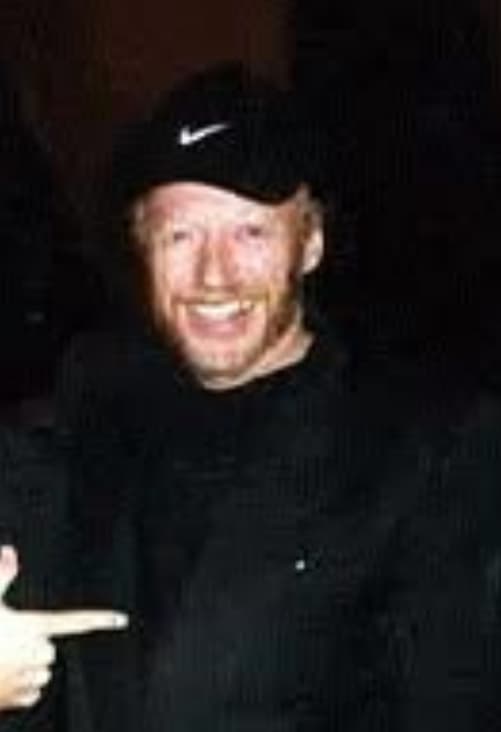
Phil Knight
Nike
A visionary in the sportswear industry, Phil Knight co-founded Nike in 1964, revolutionizing how athletic footwear was marketed and perceived. His belief in running and authentic conviction inspired customers, leading to Nike's explosive growth, with sales skyrocketing from $8,000 in its first year to over $23 billion by 2022. Knight's approach emphasized the importance of pursuing one's passion, allowing talent to flourish without micromanagement, principles that are still relevant for entrepreneurs today. His journey highlights how aligning work with personal values can transform a business and resonate deeply with consumers.
Core Principles
culture
Build company culture around passion and mission, not just compensation. Recruit people who are pursuing their calling and will work with religious intensity.
Most of Nike's early salespeople were ex-runners and eccentrics who believed running was almost a spiritual pursuit. They worked solely on commission, burning up the roads hitting track meets within a thousand mile radius. Jeff Johnson was willing to become the first full-time employee when the company was nearly insolvent, simply for the chance to make a living from running. Their extraordinary efforts boosted sales from $150,000 in 1968 to nearly $300,000 in 1969.
“Most were ex-runners and eccentrics, as only ex-runners can be. But when it came to selling, they were all business. Because they were inspired by what they were trying to do, and because they worked solely on commission, they were burning up the roads.”
customer obsession
Create retail experiences that celebrate and honor your customer base rather than simply transacting with them. Build sanctuaries, not just stores.
Jeff Johnson opened Nike's first retail store in Santa Monica as a church or mecca for runners, not just a transaction point. He filled it with comfortable chairs from yard sales, books every runner should read (many first editions from his collection), photos of tiger-shod runners, and t-shirts for best customers. This created a community gathering space that celebrated running culture, which influenced future retail approaches by brands like Lululemon that built gathering spaces around activities rather than products.
“He created a beautiful space for runners to hang out and talk. In all the world, there had never been such a sanctuary for runners, a place that didn't just sell them shoes, but celebrated them and their shoes.”
Create a sanctuary that celebrates your customer, not just transacts with them. Sacred spaces built around customer passion become communities and generate loyalty.
Jeff Johnson convinced Phil to open the first retail store in Santa Monica, designed as a church for runners. It didn't just sell shoes but celebrated runners and their sport. This approach directly influenced Steve Jobs and Apple's thinking about marketing: celebrate the customer, not the product.
“In all the world, there had never been such a sanctuary for runners. A place that didn't just sell them shoes, but celebrated them and their shoes. Johnson, the aspiring cult leader of runners, finally had his church.”
finance
Liquidity concerns will consume your mind and energy for years. Plan for this obsession and do not expect to think about anything else.
For years, Phil was consumed by the question of liquidity. Every banking relationship was tenuous. Every product order required money he didn't have. Banks constantly threatened to cut him off. Cash flow problems occupied most of his mental energy and kept him in a state of perpetual anxiety.
“I spent most of every day thinking about liquidity, talking about liquidity, looking to the heavens and pleading for liquidity.”
focus
Focus intensely on one primary task rather than dividing attention across multiple priorities. Imbalance in favor of your passion is preferable to balance that dilutes impact.
Phil deliberately chose imbalance, dedicating nearly every waking hour to Nike while holding a day job. He rejected multitasking, stating I've never been a multitasker and I did not see any reason to start now. He wanted to be present and focused on the one task that mattered most.
“I've never been a multitasker and I didn't see any reason to start now. I wanted to be present always. I wanted to focus constantly on the one task that really mattered.”
Maintain focus on core business priorities even when distracted. Competitive success comes from relentless focus on what matters, not divided attention.
During periods of personal challenge and emotional turmoil, Phil maintained his ability to concentrate on Nike's problems. His personality was one of intense internal focus, sometimes to the point of absent-mindedness about other matters. This capacity for singular focus was essential to his survival.
“I spent a fair portion of each day lost in my own thoughts, tumbling down mental wormholes, trying to solve some problem or construct some plan.”
hiring
Choose travel companions who can laugh with joy at ambitious plans, not at you. Discernment in selecting partners for your journey determines whether obstacles become adventures or cause dropout.
When Phil showed Carter his 50-country itinerary, Carter laughed not mockingly but with genuine glee and admiration, saying it took guts. Carter also made quick decisions and didn't hesitate. This quality made him an excellent travel companion until he found love and chose differently.
“Carter never did mess around. See an open shot, take it. That was Carter. I told myself there was much I could learn from a guy like that as we circled the earth.”
Hire missionaries not mercenaries. People driven by belief in your mission will care more, work harder, and innovate further than those only chasing compensation.
Jeff Johnson was Nike's first full-time employee and a missionary for running. He believed runners were God's chosen and that running done right was a mystical exercise. He obsessively tracked customer feedback on index cards, corresponded with customers constantly, and derived innovations from their needs. This missionary zeal could not be purchased with salary alone.
“In his heart of hearts, Johnson believed that runners are God's chosen, that running done right in the correct spirit and with the proper form is a mystical exercise, no less than meditation or prayer.”
Employ people who work solely on commission if you lack capital to pay salaries. Aligning incentives with company success filters for people who truly believe and creates urgency.
Phil hired sales representatives as independent contractors working purely on commission. Because they were inspired by the mission and earned only from sales, they burned up the roads hitting every track meet within 1,000 miles. This structure incentivized effort and belief simultaneously.
“Because they were inspired by what they were trying to do, and because they worked solely on commission, they were burning up the roads, hitting every high school and college track meet within a thousand mile radius.”
leadership
Don't micromanage talented people. Tell them what to achieve, not how to achieve it, and give them freedom to surprise you with their results.
Phil adopted a leadership style influenced by military history and biographies of historical leaders. He deliberately withheld constant communication and encouragement from Jeff Johnson, worried Johnson might be unhinged by his obsessive energy. Instead of managing Johnson closely, Phil set high goals and gave autonomy. Johnson responded with creative solutions, building a customer relationship system on index cards and creating the first Nike retail store as a sanctuary for runners.
“Don't tell people how to do things. Tell them what to do and let them surprise you with their results.”
Set high targets that feel impossible to force team members into excellence and creative problem-solving. When Phil set a target of 3,250 shoe sales before opening a retail store, Johnson thought it impossible but achieved it, proving his own capacity.
Phil wanted to discourage Johnson from pushing for a retail store, so he set what he believed was an impossibly high target of 3,250 pairs sold within six months. Johnson hit that target by end of June and forced Phil to honor his commitment, leading to the Santa Monica store that became a cultural institution for runners.
Lead by example and sparse communication rather than cheerleading or constant motivation. Your restraint creates space for people to prove themselves.
Phil deliberately did not respond to Jeff Johnson's voluminous letters and pleas for encouragement. Rather than resenting the lack of feedback, Johnson saw it as freedom and proof that Phil trusted him to figure things out. Johnson responded with even greater creativity and commitment, building customer databases by hand and expanding the business without permission or praise.
“I didn't answer Johnson and I didn't pester him. Having told him what to do, I hoped that he would surprise me. To Johnson's credit, though he craved more communication, he never let the lack of it discourage him. On the contrary, it motivated him.”
Tolerate disagreement and strong personalities if they deliver superior results. The difficult person who is right deserves your commitment, not your dismissal.
Phil Knight endured Bowerman's repeated resignation threats, his harsh criticism, his resistance to corporate structures. Knight never let the resignations take effect because he understood Bowerman's value and accepted his nature. Knight absorbed his criticism and protected his genius from corporate oversight.
“I had been trained by him. I knew him. I loved him. I simply never took it personally.”
Protect your geniuses from corporate overhead. Allow brilliant but unconventional people to work outside normal structures if that is what makes them productive.
Bowerman chafed under corporate processes and attempted to resign 30 times. Phil Knight never let those resignations take effect and kept him working in his own lab in Eugene with minimal supervision. Knight understood that forcing Bowerman into corporate structure would destroy the thing that made him valuable.
“Bowerman was supposed to do his Bowerman thing, which was to be a genius, a process which knows no supervision or deadlines.”
mindset
Pursue a calling, not just a job or career. Find work that aligns with your authentic interests and values, making fatigue easier to bear and disappointments become fuel for improvement.
Phil Knight struggled to understand what success meant beyond conventional markers. He realized that selling shoes felt natural while selling mutual funds felt dead inside because he genuinely believed in running and could transfer that authentic belief to customers. This principle became central to attracting the right employees, particularly early team members like Jeff Johnson who pursued running with religious fervor.
“Seek a calling. Even if you don't know what that means, seek it. If you're following your calling, the fatigue will be easier to bear. The disappointments will be fuel. The highs will be like nothing you've ever felt.”
Reframe crises as opportunities and liberation. When circumstances force change, interpret them as moments for independence and innovation rather than defeat.
When Onitsuka cut off Blue Ribbon's supply during a recession with gas lines, political gridlock, and general economic malaise, Phil gathered the team who was visibly surrendering. Instead of matching their despair, he reframed the crisis as their moment of independence. He reminded them of their ingenuity, their $2 million in self-generated sales, and their knowledge of Japan. This perspective shift transformed perceived catastrophe into their declaration of independence from supplier control.
“Let's not look at this as a crisis. Let's look at this as our liberation, our independence day. We are definitely going to war, people. But we know the terrain. This is a war we can win.”
Extreme focus and imbalance toward your calling can coexist with later regret about time with loved ones. Acknowledge this tension rather than pretending one path avoids both.
In his memoir written in his mid-70s, Phil Knight simultaneously admits his greatest regret is not spending more time with his sons, particularly Matthew, while also wishing he could do it all over again exactly the same way. He doesn't resolve this contradiction but rather presents it honestly as the reality of choosing a consuming calling.
“Above all, I regret not spending more time with my sons. And yet I know that this regret clashes with my secret regret, that I can't do it all over again.”
Learn from biographies and history rather than business books. Study how leaders performed under extreme conditions, especially in war and adversity.
Phil Knight read extensively about samurai, shoguns, and biographies of Churchill, Kennedy, and Tolstoy to understand leadership under extreme conditions. He believed business paralleled war and that studying how warriors maintained composure under pressure was more valuable than formal business education. This shaped his leadership style and his ability to navigate Nike's existential crises.
“Business is war without bullets, and I tended to agree. Throughout history, men have looked to the warrior for a model of Hemingway's cardinal virtue, pressurized grace.”
Success is measurable in financial terms but satisfaction comes from the journey and creative struggle. Wealth alone does not produce the emotional reward you anticipate.
After Nike's IPO, making Phil Knight worth $178 million, he felt regret rather than joy or relief. The achievement that should have validated decades of sacrifice felt hollow. The real satisfaction came from the daily struggle, the relationships, and the creative problem-solving during the building phase, not the destination.
“I asked myself, what are you feeling? It wasn't joy. It wasn't relief. If I felt anything, it was regret. Because I honestly wished I could do it all over again.”
Frameworks
The Crazy Idea Filter
Phil Knight recommends identifying prodigious, improbable dreams that seem worthy, fun, and a good fit, then pursuing them with athletic single-mindedness. The framework acknowledges that history is a procession of crazy ideas and that giving everyone permission to call your idea crazy while you keep going is the key principle. Rather than trying to predict if an idea will work, focus on whether it's interesting, inspiring, and worth the pursuit.
Use case: When evaluating whether to pursue a business idea that others dismiss as improbable or ridiculous. Useful for entrepreneurs deciding between conventional paths and unconventional callings.
The Pioneer Spirit Selector
Based on Oregon Trail history and the idea that certain rare strains of pioneer spirit combine outside sense of possibility with a diminished capacity for pessimism. This framework identifies whether someone has the psychological makeup for entrepreneurship and extended hardship. The cowards never started, and the weak died along the way, so entrepreneurs must have this uncommon combination of optimism and resilience.
Use case: When assessing whether a team member or employee has the temperament to survive the early phases of a business. Useful for understanding your own psychological capacity for entrepreneurial struggle.
The Play-Work Identity Test
Ask yourself whether your work feels like play in the sense of an exuberant clarity and pulsing half-second before winning and losing are decided. If your work doesn't have this quality, reconsider whether you're pursuing your calling. The framework suggests that the best work is indistinguishable from the best play.
Use case: When evaluating whether to stay in a job or career. A gut-check to determine if your work aligns with your deepest sense of purpose and engagement.
The Control Transfer Framework
When functioning as a distributor or dependent on a supplier, proactively develop your own alternative products or suppliers before your partner becomes able to cut you off. This prevents you from being caught vulnerable. The framework says: don't ask permission, don't announce it, just build it quietly so when disruption comes, you're ready.
Use case: When in a dependent business relationship that could be terminated. Useful for protecting yourself against supplier concentration risk or channel risk.
The Entrepreneurial Emotional Oscillation
Entrepreneurship involves rapid cycling between two states: euphoria when things go well and terror when they don't. With sleep deprivation, both states intensify. Successful founders learn to navigate this oscillation without being paralyzed by either extreme. Understanding that both states are temporary and inevitable reduces their destabilizing impact.
Use case: Managing the psychological challenges of startup leadership and investor negotiations where fortunes change rapidly
The Mission-Over-Mechanics Management Style
Rather than prescribing how people should execute their work, communicate what you want achieved and allow team members to determine methods. This approach requires trust and attracts people who are self-directed. It also gives people permission to innovate within the mission, often producing superior results.
Use case: Leading early-stage teams with limited resources where you cannot afford to hire people who need constant direction
The Customer Index Card System
Maintain an index card for each customer containing personal information, preferences, shoe size, and purchase history. Use this database to maintain constant contact through birthday cards, congratulations notes, and personalized correspondence. This system aggregates customer feedback that informs product development.
Use case: Building customer loyalty and gathering product feedback during early growth phases before digital CRM systems existed
The Belief-Based Sales Approach
Authenticity in sales is irresistible. If you genuinely believe in your product and its benefits, customers sense that belief and want to be part of it. Conversely, if you do not believe in what you are selling, no sales technique will compensate. Only sell products you can truthfully stand behind.
Use case: Early-stage sales where you lack budget for traditional marketing and must rely on direct customer contact and authentic enthusiasm
The Dual-Role Sustainability Strategy
When your startup cannot yet support a full-time salary for its founder, maintain external income through a flexible day job while dedicating all remaining time to the company. Choose the day job strategically: teaching required fewer hours than accounting and freed more energy for Nike.
Use case: Surviving the startup phase when revenue is insufficient to support founders while maintaining company focus and avoiding destructive stress
The Non-Linear Mountain Climb
Clarify that while there are multiple paths down a mountain once you reach the summit, there is only one way up. The ascent requires single-minded focus, patience, and acceptance that descent will be easier. This metaphor applies to building businesses: the hard part is the climb, not the outcomes once you have reached the top.
Use case: Preparing yourself mentally for the grinding difficulty of startup phase, understanding that struggles are front-loaded in the journey
Stories
At 24, Phil Knight went on an early morning run after months of internal struggle about what his life should mean. During the run, he experienced a realization that he wanted his life to feel like athletic competition, that exuberant clarity before winning or losing. This led directly to his idea of importing Japanese running shoes.
Lesson: Clarifying your life's purpose sometimes requires solitude and physical movement. Major insights come not from desk work but from engaging your body and clearing your mind.
When Phil was a sophomore, worn down and fearful he had the flu, he asked Bowerman to skip practice. Bowerman told him to get his ass out there and announced a time trial that day. Phil channeled his emotion into the run and posted one of his best times of the year. Bowerman then nodded silently, neither congratulating nor criticizing.
Lesson: Great coaches test their athletes during moments of weakness and vulnerability. Bowerman proved Phil was one of his men not through praise but by pushing him past his own self-doubt and watching him deliver. The challenge itself was the validation.
Phil set an impossibly high goal for Jeff Johnson: sell 3,250 pairs of Tiger shoes within six months before opening a retail store. Phil fully expected Johnson to give up. Instead, Johnson hit the target by end of June and forced Phil to honor his word.
Lesson: Underestimating your team members' capacity for achievement is a form of leadership failure. Setting high targets that seem impossible to you can unlock capabilities you didn't know existed in them.
During an economic recession with gas lines, political gridlock, and uncertainty, Onitsuka cut off Blue Ribbon's supply chain. Phil called an all-hands meeting where everyone was visibly surrendering to the crisis. Rather than matching their despair, he reframed the cutoff as their moment of independence and declared it a war they could win.
Lesson: Crisis moments reveal leadership. The same facts can be interpreted as catastrophe or opportunity depending on the frame. Leaders who can maintain composure and find agency in apparent powerlessness inspire their teams to do the same.
Jeff Johnson had been working for Nike for two years without a single phone call from headquarters. Phil Knight never communicated with him, never sent updates, never responded to Jeff's daily letters. Sometimes Jeff learned about his company's shoes by seeing them on athletes' feet. Despite this bizarre neglect, Jeff remained enthusiastic about the work.
Lesson: Early-stage companies operate chaotically. Communication failures are frequent. Enthusiasm and belief in the mission matter more than corporate structure. Jeff's persistence despite neglect showed true commitment.
Phil Knight built Blue Ribbon Sports alongside teaching accounting for five years before he could work on the company full-time. He hit $290,000 in sales with a goal of $300,000 before he could quit teaching. He told his wife Penny, pregnant and anxious, 'That's close enough,' and left his job to run Nike full-time. He also personally guaranteed $300,000 in liabilities on letters of credit that he and Penny could never actually pay if the company failed.
Lesson: Building a company from nothing requires years of sacrifice, personal risk, and faith. Knight risked his marriage, his financial security, and his peace of mind. Most founders underestimate how long the early stage lasts.
When Reebok briefly overtook Nike in sales despite making, in Knight's view, terrible shoes that fell apart, Knight closed himself in his office, faced the wall, and sat there weak, sick, and devastated for hours. But he did not stay there. He processed the emotion and returned to competition, eventually leading Nike back to dominance.
Lesson: Even the best leaders experience despair and setback. What matters is the ability to feel the emotion, process it, and return to work with renewed focus. Suppressing emotion or wallowing in it equally destructive.
At age 24, Phil boarded a plane to Japan with $1,000 in his pocket to pitch Tiger Shoes to a manufacturer. He had written a research paper arguing that Japanese running shoes could penetrate the American market like Japanese cameras had. His classmates ignored the idea, but a Japanese shoe manufacturer, Mr. Onitsuka, saw Phil's passion and gave him an exclusive distribution contract for the western United States.
Lesson: Passion and belief attract mentors and opportunities. When you show genuine conviction about your idea, decision-makers respond to that authenticity, even when others dismiss the same idea without passion.
Jeff Johnson, Phil's first full-time employee, bombarded Phil with letters at such frequency that Phil wondered if Johnson was unhinged. Johnson wrote about every customer interaction, every sale, every idea. But Johnson's obsessive cataloging of customer behavior and feedback directly led to product innovations, including the first cushioned shoe sole.
Lesson: Obsessive attention to customer detail, when driven by mission rather than mania, produces innovation that transforms industries. What appears excessive to outsiders can be the exact quality needed for category innovation.
When Phil's Japanese manufacturer attempted to cut off his contract and replace him with other distributors, he discovered the betrayal by stealing documents from the distributor's briefcase. This crisis forced him to develop Nike as his own branded product rather than continue as a distributor. What seemed like a disaster became the best thing that happened to Nike.
Lesson: Forced transitions from control you lack to control you build are often disguised blessings. Loss of a critical supplier or partner can catalyze the pivot that creates your true business.
Notable Quotes
“My sales strategy was simple and I thought rather brilliant. The response was always the same. I couldn't write orders fast enough. Why was selling shoes so different? Because I believed in running. People sensing my belief wanted some of that belief for themselves. Belief is irresistible.”
Explaining his early success selling Tiger shoes directly to runners and coaches at track meets, contrasting with his inability to sell encyclopedias and mutual funds earlier in his career.
“Don't tell people how to do things. Tell them what to do and let them surprise you with their results.”
Describing his leadership philosophy, influenced by military history and biographies of great leaders. Applied to his management of Jeff Johnson.
“I wanted to be me full time. I'd never been a multitasker and I didn't see any reason to start now. I wanted to be present always. I wanted to focus constantly on the one task that really mattered. If my life was to be all work and no play, I wanted my work to be play.”
Explaining why he finally quit his job at Price Waterhouse in 1969 after five years of building Nike nights and weekends, despite the company still barely being able to pay him $18,000 per year.
“I loved Bowerman and feared him, and neither of these initial impulses ever went away. Sometimes the fear was less, sometimes more. Sometimes it went right down to my shoes, which he had probably cobbled with his bare hands.”
Reflecting on his relationship with his track coach and eventual business partner, comparing it to his relationship with his father.
“He was the first college coach in America to emphasize rest, to place as much value on recovery as on work. But when he worked you, brother, he worked you.”
Describing Bowerman's paradoxical coaching philosophy of intense effort balanced with recovery, which contradicted conventional wisdom at the time.
“I remember that we always sat up half the night cataloging the past mapping out the future. I struggle to remember. I close my eyes and think back, but so many precious moments from those nights are gone forever. Faces, numbers, decisions that once seemed pressing and irrevocable, they're all gone. What remains, however, is this one comforting certainty. They've all fallen into the sofa cushions of time.”
Reflecting decades later on early conversations with partners about the company's vision, lamenting how memory fades and the importance of documenting meaningful moments.
“Seek a calling. Even if you don't know what that means, seek it. If you're following your calling, the fatigue will be easier to bear. The disappointments will be fuel. The highs will be like nothing you've ever felt.”
Advice offered to young entrepreneurs in the closing chapter of his memoir, looking back from his mid-70s on what mattered most.
“The world was so overrun with war and pain and misery. The daily grind was so exhausting and often unjust. Maybe the only answer was to find some prodigious, improbable dream that seemed worthy, that seemed fun, that seemed a good fit, and chase it with an athlete's single-minded dedication and purpose.”
From his early morning run at age 24, articulating why he decided to pursue an unusual path rather than settling for a conventional career.
“No more selling someone else's brand. No more working for someone else. If we're going to succeed or fail, we should do so on our own terms, with our own ideas and our own brand. This is the moment we've been waiting for. Our moment.”
Reframing the crisis of being cut off by Onitsuka as an opportunity for independence, delivering this speech to a demoralized team during an economic recession.
“Those who urge entrepreneurs to never give up, charlatans. Sometimes you have to give up. Sometimes knowing when to give up, when to try something else, is genius. Giving up doesn't mean stopping. Don't ever stop.”
Final advice in his memoir, clarifying that persistence doesn't mean inflexible stubbornness, but rather knowing when to change directions while maintaining overall commitment.
Frequently Asked Questions
What are Phil Knight's key business principles?▼
Phil Knight's core principles include: Build company culture around passion and mission, not just compensation. Recruit people who are pursuing their calling and will work with religious intensity.. Create retail experiences that celebrate and honor your customer base rather than simply transacting with them. Build sanctuaries, not just stores.. Create a sanctuary that celebrates your customer, not just transacts with them. Sacred spaces built around customer passion become communities and generate loyalty.. Founder Almanac has cataloged 30 total principles from Phil's career.
What can entrepreneurs learn from Phil Knight?▼
Key lessons from Phil Knight include: Clarifying your life's purpose sometimes requires solitude and physical movement. Major insights come not from desk work but from engaging your body and clearing your mind.. Explore 10 stories and 10 frameworks from Phil's experience.
What is Phil Knight known for in business?▼
A visionary in the sportswear industry, Phil Knight co-founded Nike in 1964, revolutionizing how athletic footwear was marketed and perceived. His belief in running and authentic conviction inspired customers, leading to Nike's explosive growth, with sales skyrocketing from $8,000 in its first year to over $23 billion by 2022. Knight's approach emphasized the importance of pursuing one's passion, allowing talent to flourish without micromanagement, principles that are still relevant for entrepreneurs today. His journey highlights how aligning work with personal values can transform a business and resonate deeply with consumers.
More Sportswear & Athletics Founders
Want Phil's advice on your business?
Our AI has studied Phil Knight's biography, principles, and decision-making frameworks. Ask any business question.
Start a conversation