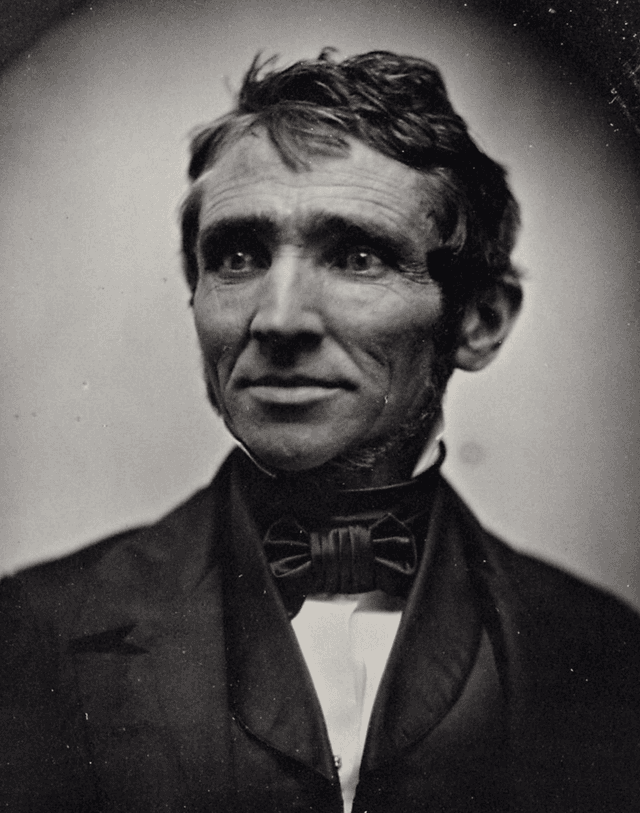
Charles Goodyear
Goodyear Rubber (vulcanized rubber patent and licensing)
A pioneer in the rubber manufacturing industry, Charles Goodyear revolutionized the field with his patent for vulcanized rubber in 1844, a process that significantly enhanced the material's durability and elasticity. His innovative approach to technology emphasized the importance of broadening one's perspective on innovation, which remains relevant for entrepreneurs today. Goodyear's philosophy of avoiding excessive debt and building cash reserves served as a cautionary tale about the pitfalls of leverage, underscoring that sustainable success relies on sound financial principles. Despite facing numerous challenges, including a difficult family background tied to the rubber trade, Goodyear's tenacity and inventive spirit positioned him as a respected figure in American commerce, often regarded as the pioneer in domestic hardware.
Core Principles
finance
Avoid overlevering with debt when your business is successful. Use profits to build cash reserves that protect against inevitable economic downturns.
Goodyear's prosperous hardware business collapsed when he over-extended by granting credit to Southern farmers, investing in real estate, and backing other inventors' patents. When the financial panic of 1837 hit and receivables dried up, he had no cushion and lost everything. This contrasts sharply with the Wright brothers, who built savings from their profitable bicycle shop.
“No ordinary trade or profession could overcome so heavy a debt.”
Many people mistake leverage for genius. They are not the same thing. Unsustainable debt eventually catches up with you regardless of how good your ideas are.
Goodyear repeatedly cycles through boom and bust because he confuses access to borrowed capital with actual wealth and reinvests all income into new experiments rather than servicing debt. He earns $15,000 in patent licensing (substantial sums) but his wealth remains theoretical while his debt remains real.
“His wealth was theoretical. His debt was real.”
Protect your equity ruthlessly. Selling pieces of your invention to pay for legal services or other expenses enriches your creditors while impoverishing you long-term.
Attorney Judson began as a 5 percent partner in Goodyear's patent. Through repeated equity deals as Goodyear ran out of money, Judson eventually accumulated roughly 40 percent ownership. Judson became wealthy from Goodyear's patents while Goodyear himself never achieved significant net worth, even with substantial license revenues.
“His wealth was theoretical. His debt was real.”
focus
Focus your efforts obsessively rather than diversifying opportunistically. Goodyear was a singular inventor but a poor businessman because he constantly pivoted.
After securing his vulcanized rubber patent, licensees urged Goodyear to consolidate and profit from existing product lines. Instead, he imagined 300 different applications and recorded each vision obsessively, reinvesting all income into new experiments rather than into servicing debt or building the core business.
innovation
Ignorance can be an advantage when entering a new field. Not knowing what experts say is impossible may allow you to persist where educated people would quit.
Goodyear had no background in chemistry or molecular science. While other chemists and manufacturers had already tried and failed to solve rubber vulcanization, Goodyear's ignorance allowed him to continue through trial and error without the discouragement of established scientific consensus.
“Years later he would consider himself blessed by ignorance.”
Trial and error without formal scientific background can sometimes outpace educated guesses. When success finally arrives, you may not understand the mechanism fully.
Goodyear discovered that heating rubber with sulfur to approximately 275 degrees created vulcanized rubber with lasting durability. He called it 'heated metallic gum composition' because he didn't understand the molecular science. Other chemists had experimented at lower temperatures and failed, not realizing the specific temperature threshold was critical.
“He never fully understood that what he eventually accomplished by adding chemicals and heat to the pastry raw rubber was one of the auspicious early milestones of the new age of synthetics.”
Understand technology broadly as any innovation that does something new or does more with less, not just information technology. This mindset expands what you recognize as opportunity.
David Senra notes his initial blind spot: when hearing 'technologist,' he only thought of computers and the internet, missing that Goodyear's vulcanized rubber was the high technology of his era. Recognizing rubber as revolutionary technology helps explain why his patent became foundational to an entire industry.
leadership
Charisma and persuasion can convince people to work for you without payment when they believe in your vision. But this power has a dark side when your obsession harms those close to you.
Goodyear's magnetic personality and dead certainty in his eventual triumph mesmerized investors, employees, and family members into following his vision. He convinced neighbors to work for free or deferred wages. However, this same persuasive power that raised capital also drew his family into poverty and caused his father and brothers to attempt the fatal pineapple venture to escape his financial chaos.
“He demanded to be listened to.”
mindset
Articulate and communicate the larger mission behind your work to those around you. A vision bigger than personal enrichment sustains motivation through hardship.
Goodyear kept a small journal with sketches of his visions for rubber applications: life preservers to save drowning sailors, hospital beds for invalids, ear trumpets for the deaf, hernia supporters. He believed that if he died, these innovations would die with him. This mission to benefit humanity was central to maintaining his perseverance through decades of poverty and suffering.
“If he died anytime soon, hospital patients and invalids might never lie down to rest in a rubber air or water bed. The hard of hearing could never benefit from a rubber ear trumpet.”
operations
Maintain meticulous financial records. Carelessness about tracking debts and obligations creates chaos that your heirs must untangle, sometimes for years.
Goodyear kept no systematic records of his debts or business dealings. When he died, his son spent approximately 10 years trying to settle his estate because Goodyear had simply forgotten whom he owed money to. This stands in stark contrast to the Wright brothers' methodical record-keeping.
resilience
Superhuman perseverance combined with manic optimism can sustain you through repeated failures when others would quit. But this requires faith in something larger than yourself.
For nearly 30 years, Goodyear persisted through debtor's prison, poverty so severe his family owned only teacups worth 50 cents, the deaths of his father and brothers, loss of four of five children, and lead poisoning. His religious faith and belief that rubber would save souls (through life preservers preventing drowning) kept him going when every rational observer told him it was impossible.
“I am the man to bring it back again.”
strategy
The pattern of nearly everyone being self-employed or making things in early America shifted over time. The optimal company size is now decreasing again due to technology leverage.
In the 1800s, most people were self-employed farmers, artisans, or shop owners making things. By the 2000s, self-employment and new business formation hit 40-year lows. However, technology now enables smaller teams to accomplish what previously required large organizations, reversing the trend toward scale.
A patent is a legal fence around an idea, not proof that your idea works or has market value. Patents are merely one milestone in a longer marathon toward a sellable product or process.
Goodyear understood that obtaining patent number 3,633 for vulcanized rubber was important but only as one step. The real challenge was convincing manufacturers to license it, protecting it through litigation, and ensuring the process actually delivered the promised durability. Early licensees felt burned when products still decayed, showing that a patent alone guarantees nothing.
“Patents were a species of speculation rather than the culmination of a proven design.”
Frameworks
The Boom-Bust Cycle of Over-Leverage
When a business achieves early success, the temptation to expand rapidly, extend credit aggressively, and invest profits in speculative ventures can eliminate cash reserves. A subsequent financial panic or market correction then triggers a cascade of defaults, seizures, and poverty. The cycle repeats if the founder does not learn the lesson.
Use case: Evaluating whether your growth rate is sustainable and whether you have adequate financial buffers before scaling
The Inventor vs. Businessman Dichotomy
Exceptional inventors often lack the financial discipline, negotiating skills, and business acumen to capture the value they create. They may be charismatic enough to secure capital and inspire others, but reckless enough to squander profits on experiments or give away equity at unfavorable terms. Success requires either developing business skills or partnering with someone who has them.
Use case: Assessing whether you need a business co-founder or should hire experienced operators to manage the financial and commercial side of your invention
Obsessive Visioning in a Hardcover Journal
Record your long-term visions and future applications of your technology in a dedicated journal kept at your bedside. Use sketches, notes, and descriptions to capture epiphanies before they fade. This serves both as motivation during hardship and as intellectual property documentation if you die before realizing all ideas.
Use case: Maintaining motivation during long development cycles and ensuring your vision outlives setbacks or health crises
Stories
Goodyear's family attempted the pineapple trade venture to escape rubber-related poverty. His father, brother, sister-in-law, and three-year-old nephew sailed to Florida, caught malaria in the swamps, and all died. Goodyear was left caring for his surviving mother and his brother's orphaned children while continuing rubber experiments.
Lesson: Your obsessive pursuit of a vision can draw those who love you into life-threatening ventures designed to bail you out. The cost of failure is borne by those closest to you, not just yourself.
When William DeForest visited Goodyear's poverty-stricken workshop around 1836, he found Goodyear surrounded by kettles, gum, shellac, and rubber samples. Goodyear chirped optimistically, 'William, here is something that will pay all my debts and make us comfortable.' DeForest replied that the rubber industry was below par. Goodyear countered, 'And I am the man to bring it back again.'
Lesson: Dead certainty and optimism in the face of expert skepticism can sustain belief, but only if later validated. Goodyear was right, but it took six more years of poverty before his breakthrough.
Gail Borden, another inventor, met Goodyear's sons at the 1851 Great Exhibition and later wrote to them: 'I should have given up in despair if I had not read a sketch of your father's life.' Borden went on to invent condensed milk. Goodyear's published story of perseverance directly inspired the next generation of inventors.
Lesson: Even when an inventor dies impoverished and never fully reaps financial rewards, their story of perseverance can be the deciding factor that prevents other inventors from quitting.
Early rubber mailbags contracted by the U.S. Postal Service seemed like Goodyear's breakthrough. He promised waterproof, durable bags that would last forever. However, his acid gas vulcanization process only delayed decay. Licensees received defective products, felt cheated, and withdrew support just as Goodyear needed their confidence most.
Lesson: A patent without a genuinely working solution is worthless. Licensees will abandon you if early products fail, and that abandonment will come at the moment you are most desperate and have the least options.
Goodyear's family was so poor at one point that their only asset was a set of teacups worth 50 cents. Multiple family members lived in a small salt-box cottage. His wife Clarissa told the children they were being punished for past uncharitableness and must trust God for better days. His parents and siblings demanded he give up rubber and return to blacksmithing.
Lesson: Extreme poverty strips away dignity and forces loved ones to rationalize suffering through religious interpretation. Perseverance in the face of this requires faith in something larger than comfort or security.
Notable Quotes
“The inventor was known in our commercial cities to be the pioneer in domestic hardware and occupied a position in business every way desirable.”
From Goodyear's autobiography written two decades after his hardware store success, referring to himself in the third person and describing his prosperous late twenties.
“And I am the man to bring it back again.”
Goodyear's response to DeForest's skepticism that the rubber industry was ruined, showing his characteristic dead certainty despite no evidence of success.
“No ordinary trade or profession could overcome so heavy a debt.”
Explaining his decision to become a full-time inventor after his hardware business collapsed under $12,000 in debt (equivalent to 24 years of average salary).
“A volume might be written in explanation of the peculiar difficulties and embarrassments to which inventors are subject. As a general rule, their labors begin, continue, and end in necessity.”
Reflecting in his autobiography on the melancholy nature of inventing, written while suffering from gout and lead poisoning.
“If he died anytime soon, hospital patients and invalids might never lie down to rest in a rubber air or water bed. The hard of hearing could never benefit from a rubber ear trumpet.”
Explaining his obsession with recording 300 different rubber applications in his bedside journal so his vision would survive him.
Frequently Asked Questions
What are Charles Goodyear's key business principles?▼
Charles Goodyear's core principles include: Avoid overlevering with debt when your business is successful. Use profits to build cash reserves that protect against inevitable economic downturns.. Many people mistake leverage for genius. They are not the same thing. Unsustainable debt eventually catches up with you regardless of how good your ideas are.. Protect your equity ruthlessly. Selling pieces of your invention to pay for legal services or other expenses enriches your creditors while impoverishing you long-term.. Founder Almanac has cataloged 13 total principles from Charles's career.
What can entrepreneurs learn from Charles Goodyear?▼
Key lessons from Charles Goodyear include: Your obsessive pursuit of a vision can draw those who love you into life-threatening ventures designed to bail you out. The cost of failure is borne by those closest to you, not just yourself.. Explore 5 stories and 3 frameworks from Charles's experience.
What is Charles Goodyear known for in business?▼
A pioneer in the rubber manufacturing industry, Charles Goodyear revolutionized the field with his patent for vulcanized rubber in 1844, a process that significantly enhanced the material's durability and elasticity. His innovative approach to technology emphasized the importance of broadening one's perspective on innovation, which remains relevant for entrepreneurs today. Goodyear's philosophy of avoiding excessive debt and building cash reserves served as a cautionary tale about the pitfalls of leverage, underscoring that sustainable success relies on sound financial principles. Despite facing numerous challenges, including a difficult family background tied to the rubber trade, Goodyear's tenacity and inventive spirit positioned him as a respected figure in American commerce, often regarded as the pioneer in domestic hardware.
More Manufacturing Founders
Want Charles's advice on your business?
Our AI has studied Charles Goodyear's biography, principles, and decision-making frameworks. Ask any business question.
Start a conversation