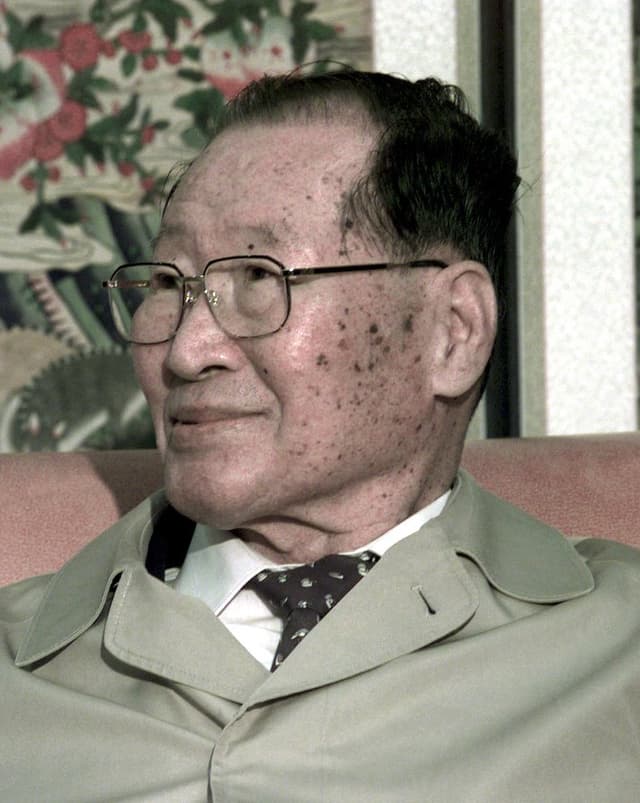
Chung Ju-young
Hyundai
A visionary leader in the automotive industry, Chung Ju-young founded Hyundai in 1967, transforming it into one of the world's largest automobile manufacturers. Despite facing skepticism from his father, who doubted his potential due to a lack of formal education, Chung emphasized the importance of hard work, courage, and creativity over conventional wisdom. Under his leadership, Hyundai became known for its innovative approach and strategic planning, ultimately producing over 1.5 million vehicles annually by the late 1990s. His belief that true knowledge and success can be achieved outside traditional educational paths continues to inspire entrepreneurs today.
Core Principles
culture
Do not covet luxury or special treatment. Executives who demand separate elevators or special privileges distance themselves from workers and corrupt company culture.
When offered a separate executive elevator, Chung rejected it outright. He saw himself as a laborer and builder first, ate with workers rather than in executive dining rooms, and rejected red carpets and formal displays of status as contradicting values of frugality and diligence.
“I truly despise the inflated sense of superiority held by executives who expect different treatment from their workers. Why on earth would you need a separate elevator?”
Companies and countries led by luxury-loving, wasteful leaders do not prosper. After luxury comes corruption.
Chung observed across his experience that prosperous organizations and nations were never led by those who coveted luxury. He connected wasteful spending on executive perks to organizational decline and moral decay, maintaining strict frugality in his own leadership.
“I have never seen a country prosper with a leader who enjoys luxury. I have never come across a company that thrives under a luxury loving, wasteful owner.”
innovation
Reject common sense thinking as a limiting factor. Those who confine themselves to fixed ideas within common sense will never be truly creative.
Chung repeatedly encountered naysayers claiming projects were impossible, wrong, or ridiculous. He believed that people constrained by conventional thinking were unable to innovate. His willingness to challenge assumed limitations enabled breakthrough achievements others thought impossible.
“If a person limits themselves to the fixed ideas inherent in common sense, they will not be very creative.”
leadership
Need others to push you to live up to your commitments. When you abandon goals due to temporary obstacles, accept accountability from those who believe in you.
When Chung told President Park that foreign financing was impossible, the president rebuked him sharply, reminding him of their shared commitment and rejecting his defeatist attitude. This pushed Chung to renew his determination and eventually succeed.
“You've only tried once and you're telling me you can't do it? This must be done.”
Determination and will to succeed unlock unlimited potential. Collective energy of determined people can be unleashed to accomplish seemingly impossible goals.
Chung believed that people with strong will to succeed had unlimited potential. He demonstrated this through projects everyone said were impossible: building highways cheaply, constructing a shipyard with no experience, manufacturing cars domestically. His determination became contagious and mobilized his organization.
“People with a strong will to succeed have unlimited potential. By bringing together all of this potential, the collective energy of a people can be unleashed.”
mindset
Formal education is not required for wisdom and success. What matters is thinking harder, working harder, and having greater courage than others.
Chung received only six years of formal schooling but became one of the wealthiest men in Korea. He explicitly rejected the notion that formal education was necessary for acquiring broad and deep knowledge, instead cultivating wisdom through direct experience and relentless effort.
“It is a mistake to think that broad and deep knowledge can only be obtained through formal schooling.”
Time is the only capital that is distributed equally to everyone. How you use your time determines your success more than any other factor.
Chung frequently referenced time as the most precious resource. He lived with urgency, had no concept of free time, and believed that one's lifetime defines one's potential far more than age or initial circumstances. This philosophy drove his continuous sense of purpose and accomplishment.
“Someone once said that time is a form of capital provided equally to everyone. I couldn't agree more.”
Accentuate the positive rather than focus on the negative. This disposition combined with rigorous work ethic creates resilience through difficult circumstances.
From childhood working in harsh farm conditions, Chung cultivated an ability to find meaning and joy in small moments rather than dwelling on hardship. He was born with a naturally positive disposition, never complained, and found gratitude in small improvements like cool breezes or a single meal.
“I was born with the ability to accentuate the positive rather than the negative.”
Learn from unexpected sources and reframe obstacles as teachers. Even bedbugs demonstrate the power of determination and creative problem-solving.
While staying in a bunkhouse infested with bedbugs, Chung observed how the parasites found creative ways around water traps by climbing walls and dropping from ceilings. He used this observation to reinforce his belief that determination and effort, not intelligence alone, determine success.
“Even bedbugs think long and hard and use every bit of energy they have to achieve their goal. I'm no bedbug. I'm a man. These bedbugs can surely teach a man a few lessons.”
Diligence for sustained periods produces compounding results. One month of diligence improves quality of life noticeably, ten years of diligence produces recognition and accomplishment.
Chung emphasized that diligence was not a sprint but a sustained practice. He lived it daily from age ten onward, never taking days off, never complaining, consistently investing effort. The cumulative effect of decades of diligence created unparalleled accomplishment.
“If you are diligent for a month, the quality of your life will noticeably improve. If you are diligent for two years, ten years, your whole life, your accomplishments will be recognized by all.”
operations
Never slack off or take shortcuts on simple tasks, no matter how humble. Pour all energy into achieving the best possible result.
When Chung took a job as a rice delivery boy, he treated it with the same intensity he would later apply to running a corporation. He learned to ride a bicycle in days, arrived first to work, swept entrances, and sprinkled water to reduce dust. He believed that half measures and cutting corners do not exist in a successful person's world.
“Half measures, compromises, cutting corners are being realistic. Do not exist in my world. Do it until nothing more can be done. Give it all, give it your all until the very end.”
Make shortening time your primary motto. If you search for a method to do something faster, it will come to you.
Throughout his career, Chung emphasized the value of time as equally distributed capital. He moved with urgency and pushed his organization to compress timelines. When asked how to improve, his answer was always to reduce time required for any task.
“My motto is, shorten the time. This was the surest way for improvement. If you search for a method, it will come to you. If you can't come up with a method, it's because you didn't think hard enough.”
product
Think big but build for specific local conditions. Don't assume solutions designed for one market will work in another.
The Cortina car failed partly because it was designed for American conditions and paved highways, not Korean reality with unpaved roads and different economic circumstances. Chung learned to design the Pony specifically for Korean conditions, which became wildly successful.
resilience
If a loss yields experience and knowledge, it is truly not a loss but a gain. Losses can generate more value than profits if lessons are extracted.
Hyundai's construction projects in Thailand resulted in massive financial losses due to outdated technology and poor planning. Rather than treating this as failure, Chung extracted valuable experience and knowledge that helped the company modernize and eventually dominate highway construction in Korea.
“If a loss yields experience, then it's truly not a loss. If you can learn from a loss, then you can turn it into a gain.”
The more people say something is impossible, the more determined you should become. Naysaying should fuel your desire to prove them wrong.
Throughout his career, Chung was repeatedly told his ambitions were impossible: building cheap highways, creating a shipyard with no experience, manufacturing cars as a latecomer. Each rejection strengthened his resolve rather than discouraging him.
“Once I set my mind to a task, no amount of naysaying will hold me back. The more people say I can't do it, the more determined I am to prove them wrong.”
Never give up after a setback or failure. If you encounter debt or loss, determine to push forward rather than surrender.
After a fire destroyed his auto repair shop and left him with debt, Chung could have accepted failure. Instead, he begged the lender for another chance, rebuilt, and eventually grew the business. He repeated this pattern throughout his life, treating each failure as a temporary obstacle rather than a permanent condition.
“I could have easily given up everything under the weight of debt, but I was determined not to give up. I did not want to end up a failure.”
sales
Sell a vision or purchase order before building the product or company. Use committed buyers as leverage for financing and credibility.
With no shipyard, no shipbuilding experience, and limited financing options, Chung found a buyer willing to purchase ships based on a picture of a sandy beach where the shipyard would be built. This purchase order enabled him to secure loans and credibility to proceed.
“I started looking for buyers to purchase ships from a shipyard that didn't even exist.”
strategy
Maintain management control in partnerships. Reject arrangements where you become a subcontractor to wealthier companies despite offered benefits.
When Ford proposed a joint venture to manufacture cars, Chung recognized the arrangement would leave Hyundai as a subordinate subcontractor. He rejected the deal and instead built cars domestically with selective outsourcing while maintaining full control. This preserved Hyundai's independence and long-term viability.
“Ford was planning on using Hyundai as a subcontractor. There was no way I was going to let that happen.”
Identify the most profitable adjacent industries and expand into them strategically. Byproducts and related services multiply revenue opportunities.
Chung recognized that Japanese shipbuilders generated as much revenue from selling excess materials and byproducts as from shipbuilding itself. This insight motivated his entry into shipbuilding, which would supply steel and materials for his construction business.
Pursue ambitious visions that align with national development. Government support accelerates growth when personal ambition serves broader societal needs.
Chung's goals to build Korea's first highway, first domestic car, and first shipyard aligned with national development priorities. When he hesitated on the shipyard, President Park reminded him of his duty and the government's support, reinvigorating his commitment.
Persist through obstacles with creative problem-solving when normal paths are blocked. Visit decision-makers repeatedly until they yield.
When unable to get a license for an unlicensed auto repair shop, Chung visited the chief of police's home every morning for a month until the official relented and allowed the operation with minimal restrictions. This demonstrates using persistence and personal appeal when bureaucratic or legal barriers seem impassable.
“Early each morning, I would visit the home of the chief of police, just show up and knock on the door every day. After a month, the chief, who up to this point had never once acknowledged my presence, finally said, OK, I give up.”
Spend enormous time planning and analyzing every detail before implementation, even though execution may appear spontaneous or reckless.
Before starting any major project, Chung invested significant effort in thinking, analyzing, and planning every detail. This meticulous planning allowed him to move quickly during execution, which outsiders often mistook for recklessness.
“Before starting any project, I spent an enormous amount of time and effort thinking, analyzing, and planning every detail. When it's time to implement these plans, it may look like I'm working off the cuff, or even being reckless, but if I hadn't first sat down and planned everything out, the Hyundai Group of today could have never existed.”
Frameworks
Shorten the Time Framework
Make reducing time required for any task your primary operating principle. When faced with a problem, search intensely for methods to compress timelines. Believe that if you think hard enough, a faster way exists. This applies to planning, execution, and all operational processes. The framework assumes that time efficiency correlates directly with competitive advantage.
Use case: Operations optimization, competitive positioning, and accelerating growth in fast-moving industries
Plan Thoroughly, Execute Urgently
Invest substantial time upfront in detailed analysis, thinking, and planning before beginning execution. This creates clarity of vision and identifies potential obstacles. Once planning is complete, move into execution with speed and apparent recklessness, which is actually informed by the prior planning. The contrast between thorough planning and urgent execution creates competitive advantage.
Use case: Major projects, market entry, product launches, and organizational transformation
Adjacent Market Expansion
Identify profitable adjacent industries or markets that serve your existing customer base or leverage your capabilities. Use emerging or intermediate markets as stepping stones before entering fully developed markets. Extract byproducts and secondary revenue streams from primary business operations.
Use case: Growth strategy, geographic expansion, and revenue diversification in scaling organizations
Maintain Control Framework
In partnerships or joint ventures, insist on maintaining management control even if it requires rejecting attractive terms or offers from larger companies. Avoid arrangements where you become a subcontractor to larger corporations. Use selective outsourcing for specialized functions while preserving strategic control and independence.
Use case: Partnership negotiation, strategic alliances, manufacturing relationships, and technology licensing
Vision Planting Framework
Implant a small idea in your mind (the size of a grain of rice), then nurture and develop it until you can visualize the complete major project. This mental cultivation process bridges the gap between aspiration and action. Visualize thoroughly before beginning execution.
Use case: Long-term strategic planning, innovation, and major organizational initiatives
Stories
Chung's father, a poor farmer, found him attending bookkeeping school in Seoul and harshly told him he was just a farm boy without education who would fail and throw the family into begging. The words seemed cruel, but reflected fear and love. Later, when Chung became successful and brought his father to Seoul, the old man never complained about Chung's grueling 18-hour workdays, instead staying awake to silently demonstrate his love by waiting for him to return home each night.
Lesson: Parental pressure and tough love can motivate growth, and unconditional support from family strengthens resolve during difficult periods. What appears harsh may be rooted in deep care and concern for success.
When Chung was 24 and owned a successful rice shop, he declared he would make it the best rice shop in the entire country. The Japanese authorities then instituted rationing and requisitioned all rice shops, wiping out his business overnight. Despite this external loss, his ambition and mindset had already been shaped by his declared intention.
Lesson: External circumstances beyond your control will destroy your efforts repeatedly. Success requires developing the psychological resilience to maintain high ambitions even when forced to rebuild from zero.
Living in a bunkhouse infested with bedbugs, Chung and other workers tried placing water pots under table legs to stop the parasites from climbing. It worked temporarily until the bedbugs found a new solution: climbing the walls and dropping from the ceiling. Chung realized the bedbugs were thinking hard and using all their energy to achieve their goal, and resolved that men should do the same.
Lesson: Obstacles will find ways around your initial solutions. Real determination means continuously adapting and persisting rather than accepting the first defeat. Even insects demonstrate the power of relentless problem-solving.
After a fire destroyed his auto repair shop and left him in debt, Chung visited the private money lender and begged for another chance, promising to repay the debt if given the opportunity to rebuild. The lender agreed. Chung rebuilt from scratch and eventually achieved success, repaying his obligations.
Lesson: When facing devastating failure and debt, direct personal appeal combined with demonstrated commitment can motivate creditors to reinvest in you. Relationship and character matter as much as collateral.
Unable to obtain a license for an unlicensed auto repair shop due to regulations limiting licenses to manufacturers, Chung visited the chief of police's home every single morning for a month without acknowledgment. After a month of persistence, the exasperated chief relented and allowed the operation with minimal restrictions, simply to stop Chung from showing up.
Lesson: Bureaucratic obstacles can sometimes be overcome through respectful but relentless personal persistence. When normal channels fail, repeated personal appeal to decision-makers can yield exceptions.
Chung's construction company lost massive amounts of money on highway projects in Thailand due to outdated technology, lack of expertise, poor soil conditions, and heavy rainfall. Rather than accepting defeat, he extracted valuable knowledge about modernizing operations. This experience became the foundation for Hyundai becoming Korea's domestic leader in highway construction.
Lesson: Financial losses that generate learning and experience can be reframed as investments rather than failures. The knowledge gained may be more valuable long-term than the money lost short-term.
When Chung suggested to his brother that Hyundai should secure an assembly contract with Ford, his brother asked how that was possible so quickly. Chung's blunt response was simply, 'Have you even tried?' Within six months, they had their first car manufactured. However, the Cortina failed due to bad marketing, bad road conditions, and poor design for Korean circumstances.
Lesson: Speed of action and willingness to attempt what seems impossible can overcome initial obstacles. However, succeeding requires adjusting solutions to local conditions rather than copying foreign designs. The Pony succeeded where the Cortina failed because it was designed for Korean roads and economy.
With no shipyard, no shipbuilding experience, and inability to secure financing from developed countries, Chung searched the world for a buyer. He found Livanos, Aristotle Onassis's brother-in-law and rival, who agreed to purchase ships based on a picture of a sandy beach where the shipyard would be built. This purchase order became the lever to secure financing and begin construction.
Lesson: When traditional paths to financing are blocked, selling a vision or securing committed purchases can serve as leverage to obtain capital. Vision and conviction can substitute for experience or collateral.
Notable Quotes
“It is a mistake to think that broad and deep knowledge can only be obtained through formal schooling.”
Addressing his limited formal education and defending the notion that direct experience and diligent study can provide wisdom equivalent to or superior to institutional education
“My motto is, shorten the time. This was the surest way for improvement. If you search for a method, it will come to you.”
Explaining his fundamental operating principle throughout his career, emphasizing that time efficiency drives competitive advantage
“If a person limits themselves to the fixed ideas inherent in common sense, they will not be very creative.”
Responding to skepticism and naysaying about his ambitious projects, defending his approach of challenging conventional wisdom
“I believe that if a person limits themselves to the fixed ideas inherent in common sense, they will not be very creative. People with a strong will to succeed have unlimited potential.”
Foundational statement of his belief in the power of determination and will over circumstance or conventional thinking
“Half measures, compromises, cutting corners are being realistic. Do not exist in my world. Do it until nothing more can be done.”
Explaining his approach to simple tasks like rice delivery, which he executed with the same intensity and standards he would later apply to running a corporation
“I could have easily given up everything under the weight of debt, but I was determined not to give up. I did not want to end up a failure.”
After his auto repair shop burned down and left him with substantial debt, explaining his decision to rebuild rather than surrender
“Once I set my mind to a task, no amount of naysaying will hold me back. The more people say I can't do it, the more determined I am to prove them wrong.”
Reflecting on how opposition and skepticism strengthened rather than weakened his resolve throughout his career
“If a loss yields experience, then it's truly not a loss. If you can learn from a loss, then you can turn it into a gain.”
Reflecting on expensive failures in international construction projects that generated valuable knowledge and modernization of operations
“I started looking for buyers to purchase ships from a shipyard that didn't even exist.”
Describing his approach to overcoming financing obstacles when developing countries would not lend to him and developed countries dismissed his capabilities
“I truly despise the inflated sense of superiority held by executives who expect different treatment from their workers. Why on earth would you need a separate elevator?”
Rejecting a proposed executive elevator at company headquarters, defending his principle of maintaining connection to laborers and workers
Frequently Asked Questions
What are Chung Ju-young's key business principles?▼
Chung Ju-young's core principles include: Do not covet luxury or special treatment. Executives who demand separate elevators or special privileges distance themselves from workers and corrupt company culture.. Companies and countries led by luxury-loving, wasteful leaders do not prosper. After luxury comes corruption.. Reject common sense thinking as a limiting factor. Those who confine themselves to fixed ideas within common sense will never be truly creative.. Founder Almanac has cataloged 26 total principles from Chung's career.
What can entrepreneurs learn from Chung Ju-young?▼
Key lessons from Chung Ju-young include: Parental pressure and tough love can motivate growth, and unconditional support from family strengthens resolve during difficult periods. What appears harsh may be rooted in deep care and concern for success.. Explore 8 stories and 5 frameworks from Chung's experience.
What is Chung Ju-young known for in business?▼
A visionary leader in the automotive industry, Chung Ju-young founded Hyundai in 1967, transforming it into one of the world's largest automobile manufacturers. Despite facing skepticism from his father, who doubted his potential due to a lack of formal education, Chung emphasized the importance of hard work, courage, and creativity over conventional wisdom. Under his leadership, Hyundai became known for its innovative approach and strategic planning, ultimately producing over 1.5 million vehicles annually by the late 1990s. His belief that true knowledge and success can be achieved outside traditional educational paths continues to inspire entrepreneurs today.
More Automotive Founders
Want Chung's advice on your business?
Our AI has studied Chung Ju-young's biography, principles, and decision-making frameworks. Ask any business question.
Start a conversation