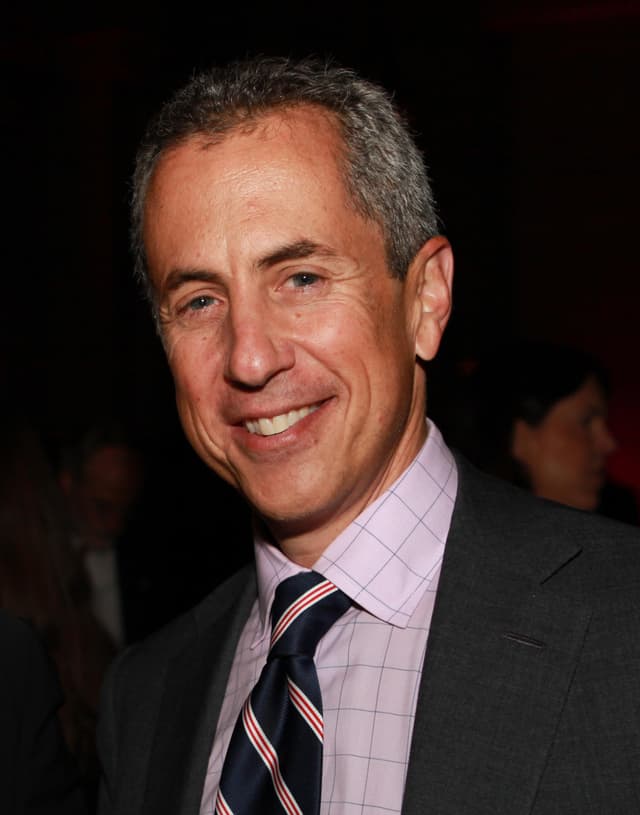
Danny Meyer
Union Square Cafe, Shake Shack
A pioneering figure in the food and restaurant industry, Danny Meyer founded Union Square Cafe in 1985, which became a cornerstone of New York City's dining scene and earned the James Beard Award for Outstanding Restaurant in 2004. He later launched Shake Shack in 2004, transforming it from a humble hot dog cart in Madison Square Park into a global fast-casual phenomenon with over 300 locations worldwide. Guided by the principle that business is fundamentally about how you make people feel, Meyer emphasized the importance of hiring talented individuals who excel in areas beyond his expertise, fostering a culture of collaboration and innovation. His approach to building maximum optionality into business models has inspired countless entrepreneurs seeking to balance risk and growth in an ever-evolving marketplace.
Core Principles
customer obsession
Create shared community and ritual as the central value proposition, not just the product itself.
Danny observed that people don't just go out to eat; they seek to be part of a community experience. He studied how Starbucks made drinking coffee secondary to the ritual of gathering with like-minded people, and applied this insight to Shake Shack, designing the space and experience around community belonging rather than just burger consumption.
“Selling excellent coffee is secondary to creating a sense of community.”
Business is fundamentally about how you make people feel, not just the product or service you deliver.
Danny Meyer built his restaurant empire on the belief that food is secondary to the human experience and relationships created. He explicitly states that creating positive outcomes for human experiences matters more than serving good food, which is why he wrote a book about hospitality rather than cuisine.
“Business, like life, is all about how you make people feel. It's that simple and that hard.”
finance
Be skeptical of rapid expansion and grandiose real estate deals, having learned from observing family business failures.
Danny's father repeatedly failed by over-leveraging himself on real estate and international hotel ventures without proper operational control. Danny applied the opposite approach: he avoided long leases on expensive locations, chose emerging neighborhoods, and remained cautious about expansion. He explicitly credits his fear of repeating his father's mistakes as coloring how he runs his business.
“My deep fear of repeating his mistakes has always colored the way I run mine.”
focus
Establish a clear core brand identity before attempting brand extensions or new initiatives.
When Eleven Madison Park launched, Danny's team created boxed lunches to boost sluggish lunch business without first establishing what the restaurant represented. They ordered 3,000 unused boxes and wasted management attention before returning to basics. Only after clarifying the restaurant's identity and working on fundamentals did lunch revenue double within six months.
“We had made a fundamental mistake of trying to extend an original brand without first having established the core brand.”
hiring
Evaluate human potential and the quality of leadership as seriously as you evaluate business ideas.
Danny's grandfather Irving Harris built his wealth by investing in other people's businesses where he believed in the quality of leadership, rather than operating businesses himself. Danny adopted this philosophy, always prioritizing the people and leadership team he built around him, viewing this as equally important to the business concept itself.
“Evaluating human potential was every bit as important to him as any other business idea.”
Identify your core competency and hire people smarter than you in areas outside your expertise, rather than trying to do everything yourself.
After spending time in Italy and France studying restaurants, Danny realized he was better suited as a restaurant generalist than as a chef, despite initially fantasizing about leading the kitchen. He hired expert chefs and built teams of people with complementary strengths, which he credits as one of his smartest business decisions.
“Firing myself as chef turned out to be one of the smartest business decisions I have ever made.”
innovation
Question inherited assumptions and think from first principles about what customers actually need and value.
Danny repeatedly asked himself, 'Who wrote the rule?' about industry conventions. He applied this to hot dog carts, burger stands, and wine service at casual restaurants, rejecting the assumption that excellence requires high prices or that fast food must be mediocre. This drove him to serve Chicago-style hot dogs boiled with spices, fresh-ground beef burgers, and wine at Shake Shack.
“Whoever wrote the rule that you can't push the envelopes of excellence and hospitality for something as ordinary as a hot dog cart?”
leadership
Become a mentor and teacher for others coming up after you. Sharing knowledge and helping the next generation is both a responsibility and a source of lasting impact.
The cycle of mentorship perpetuates excellence across generations. Pete Newell mentored Bobby Knight, who mentored Coach K. Danny Meyer emphasizes that generosity of spirit and a generous approach to problem solving are the most effective ways to earn lasting goodwill in your business.
“I am convinced that you get what you give and you get more by giving more. Generosity of spirit and a generous approach to problem solving are with few exceptions the most effective way to earn lasting goodwill for your business.”
learning
Do your most important learning and studying outside of formal curricula and traditional settings. Professional research and self-directed learning are what truly develop mastery.
Danny Meyer calls the work he did before opening his first restaurant professional research. He visited 100 locations, tasted 14 variations of chopped pork, studied barbecue elements in Texas and North Carolina, learned sourcing from chefs, and analyzed restaurant decor and wine lists. He was prouder of this self-directed study than any formal education.
“I spent nearly two years doing the best work ever as a student.”
mindset
Success requires understanding that business is fundamentally about problem solving, not avoiding problems or pursuing perfection.
Stanley Marcus told Danny that the road to success is paved with mistakes well handled. Danny's grandfather Irving Harris defined business as problems. Rather than fear mistakes, Danny learned to accept and embrace them as opportunities to learn, grow, and profit. Perfection as a company policy is dangerous because it leads to playing it safe.
“The road to success is paved with mistakes well handled.”
Shape your business by your personal values, passions, and family dynamics rather than following conventional business advice.
Danny created restaurants that reflected his love of food, wine, travel, and hospitality, informed by his family history. He rejected the law school path his uncle questioned and instead pursued the restaurant business he'd thought about since childhood. His restaurants were extensions of his own values and experiences.
“It would reflect the confluence of interest, passion, pleasure, and family dynamics that had shaped my life.”
Frame your early career as ongoing education rather than just employment. Viewing yourself as a perpetual student of your craft justifies investing in learning over immediate compensation.
Danny Meyer spent nearly two years before opening his first restaurant as a student of the restaurant industry, not just an employee. He studied menus, sourcing, preparation methods, service, ambiance, and wine selection with systematic intentionality. This mindset of professional research and student status justified his financial sacrifices and framed his work as developmental rather than merely transactional.
Willingly sacrifice financial security and status in service of pursuing your authentic dream. The short-term financial loss is worth the long-term alignment with your passion.
Danny Meyer went from earning $125,000 a year at Checkpoint to $12,000 a year working in restaurants, then went negative $25,000 paying to work at a European restaurant. Sam Hinky left his lucrative Bain job and worked for free as an unpaid intern with NFL franchises. Bob Dylan hitchhiked across the country with $10 and a guitar. These sacrifices enabled them to immerse themselves fully in their craft.
operations
Remain present and hands-on with core operations until you have fully built the team and systems to support your absence.
When Danny opened Gramercy Tavern while traveling to promote the Union Square Cafe cookbook, both restaurants struggled. Union Square Cafe wasn't used to operating without him at the helm every minute, and he realized he had betrayed his commitment to expand only when confident he wouldn't compromise quality. This taught him that delegation requires first building infrastructure.
“I had betrayed my own commitment to expand only if I was certain I could do so without compromising quality.”
product
Obsess over product details and test extensively before launch, particularly for what becomes your signature offering.
For Shake Shack's burger, Danny's team worked methodically to determine the exact ratio of ground sirloin to brisket, debated burger size to the half ounce, tested bun types, and carefully selected every ingredient. He also studied the best burger and shake stands across the country before building the prototype in Eleven Madison Park's kitchen.
“We debated what the precise size of the burger should be to the half ounce. We argued over the choice of buns, soft potato buns. Tomatoes, plum, lettuce, bib, and sauce are a secret. We chose every one of our ingredients with extreme care and with an eye toward authenticity.”
strategy
Start small and let your concept grow organically through consistent execution before scaling to multiple locations.
Shake Shack began as a temporary hot dog cart in a summer art installation in 2001. Danny operated it unprofitably for multiple summers, refining the model. It became a permanent kiosk in Madison Square Park in 2004, staying as a single location for five years before expansion. This mirrors Jeff Bezos's principle that the biggest oak trees start from acorns.
“We know from our past experiences that big things start small. The biggest oak starts from an acorn.”
Growth in itself is not dangerous, but growing without the infrastructure and people in place to support that growth is.
Danny learned from his father's multiple bankruptcies caused by rapid expansion without adequate systems or personnel. He remained cautious about expansion for years, only growing when he had built the right team and operational infrastructure. This changed later in his career with Shake Shack, which maintained one location for five years before scaling.
“Because each of his doomed experiences was marked by overly rapid expansion, I have always been afraid to expand my business too quickly.”
Build maximum optionality into your business model to protect against downside risk while maintaining upside potential.
Danny insisted on assignable leases that he could transfer to someone else if his restaurant failed, and he deliberately chose emerging neighborhoods with low rent rather than expensive established locations. This approach gave him protection against business failure while allowing him to benefit if the neighborhood developed, letting him offer excellence and value simultaneously.
“To this day, getting an assignable lease is the first piece of advice I give any new restaurateur.”
Frameworks
Who Wrote the Rule
A first-principles thinking approach where you question inherited industry assumptions and conventions. Instead of accepting how things have always been done, you ask 'who wrote the rule that this must be done this way?' and then decide whether that rule actually serves your customers or business. This leads to innovation through rejecting false constraints.
Use case: When entering a new market, designing products, or making decisions about service and pricing. Use it whenever you notice yourself following industry convention without questioning whether it's optimal.
The Acorn to Oak Growth Model
A framework for organic scaling where you start with a small test (the acorn), prove the concept through consistent execution, then gradually expand to a small tree, eventually growing into a mature business. This requires patience, focus on perfecting the core before replicating, and allowing time for each stage to establish itself before moving to the next.
Use case: For any founder considering rapid scaling. Use this to justify staying small longer, focusing on operational excellence at current scale, and only expanding once systems and people are proven to work.
Optionality as Non-Negotiable
A risk management framework where you build maximum flexibility into business agreements and location decisions. This means securing assignable leases you can transfer if needed, choosing emerging neighborhoods with low rent rather than expensive established areas, and structuring deals to protect your downside while maintaining upside potential.
Use case: When negotiating initial restaurant leases, real estate deals, or any long-term commitment with high fixed costs. Particularly valuable for founders learning to manage risk after observing others' failures due to inflexible commitments.
Core Brand First, Extensions Second
A sequencing principle where you establish a clear, coherent identity for your core offering before attempting extensions, partnerships, or adjacent services. Only extend into new areas after customers and team members understand what the original brand represents and stands for.
Use case: When tempted to launch new product lines, services, or business models. Use this to pause and validate that your core brand identity is established and understood before expanding.
Problem-Solving as Business Definition
A reframing of business success from perfection-seeking to problem-solving excellence. Business is defined as the identification and creative, profitable resolution of problems. Success lies not in eliminating problems but in solving them most effectively relative to competitors.
Use case: For building resilience and psychological safety within organizations. Use this framework to shift team culture from fear of failure to embracing problems as the actual work of business.
Professional Research Method
A systematic approach to mastering a craft through deliberate, detailed observation and documentation. This involves identifying key practitioners, studying their methods, traveling to epicenters of excellence, tasting or experiencing variations of elements within the field, documenting observations, and replicating what you learn. The goal is to accumulate more specific knowledge about your domain than anyone else.
Use case: For founders, craftspeople, or professionals who want to develop deep expertise before starting their venture or taking a leadership role
Stories
Danny's father repeatedly expanded his travel and tour businesses into new ventures like Italian hotels and real estate deals, often over-leveraging himself and the company. Despite initial successes with Caesar Associates, he gambled everything on risky real estate deals in St. Louis, eventually going bankrupt multiple times. Each failure devastated the family financially and emotionally, including multiple separations and shame.
Lesson: Rapid expansion without proper infrastructure, excessive leverage on real estate, and lack of the right people to handle complexity leads to business collapse. The personal and family cost of business failure extends far beyond financial loss. This fear of repeating failure should rationally inform conservative expansion practices.
Danny spent months traveling through Italy and France studying restaurants before opening his first one, eating at fine establishments and working in kitchens. During this research he realized that while he loved cooking, he was much better suited to being a restaurant generalist who could communicate with chefs. He consciously 'fired himself' as chef and decided to find an expert instead.
Lesson: Self-awareness about your own strengths and limitations is more valuable than passion alone. The willingness to step aside from a role you love in order to hire someone better at it is crucial to scaling. Your role as founder is to identify the right people, not to be the best at everything.
When Eleven Madison Park's lunch business lagged, rather than understanding the real problem (customers didn't know what the restaurant represented), Danny's team designed beautiful boxed lunches to deliver to nearby Credit Suisse offices. They ordered 3,000 boxes, wasted management time on distribution, and discovered Credit Suisse already had a subsidized cafeteria. The program failed quickly, but taught Danny an expensive lesson about brand clarity.
Lesson: You cannot extend a brand successfully before establishing a clear core identity. Trying to solve a symptom rather than the underlying problem wastes resources. Return to fundamentals and hard work of building the core business rather than chasing adjacencies.
Shake Shack started as a temporary hot dog cart as part of an art installation in Madison Square Park in summer 2001. Danny took the cart seriously and applied rigorous standards to every detail, but lost nearly $5,000 that summer due to overstaffing and inefficiency. Rather than abandon the idea, he returned the next summer with improvements, then the next, gradually refining the model over years before opening the permanent kiosk in 2004.
Lesson: Great businesses often start small and humble with early losses. Consistent execution and refinement over multiple seasons, rather than immediate perfection, builds sustainable success. Be willing to iterate and improve rather than kill an idea after one unsuccessful attempt.
While traveling to Dallas to promote the Union Square Cafe cookbook, Danny confessed to legendary retailer Stanley Marcus that he'd just opened Gramercy Tavern and worried it might be the worst mistake he ever made because Union Square Cafe was struggling without him present. Stanley simply replied, 'The road to success is paved with mistakes well handled.' This reframing became a turning point in how Danny approached business.
Lesson: Mistakes are inevitable and valuable, not catastrophic failures. Success is not about avoiding mistakes but about handling them well and learning from them. Pursuing perfection is more dangerous than making mistakes and improving. This perspective enables calculated risk-taking and resilience.
Danny researched burger and shake stands across the country, visiting Steak and Shake in St. Louis (his childhood favorite), In-N-Out in Los Angeles, Culver's in Michigan, and others. He brought this research back to Eleven Madison Park's kitchen to develop Shake Shack's signature burger, carefully testing ratios of ground sirloin to brisket, debating bun types to the half ounce, and choosing every ingredient with precision.
Lesson: Study the best examples in your category before building your own version. Combine insights from multiple sources with your own refinement to create something distinctive. Excellence in fundamentals like burger composition matters deeply and justifies meticulous attention.
Danny Meyer left a job at Checkpoint where he was earning $125,000 a year (equivalent to $400,000 today) because his uncle asked him why he didn't just go open a restaurant instead of taking the LSAT. He quit, worked in restaurants for one-tenth his former salary, paid $500 a month to work at a European restaurant, spent six to seven months searching for the perfect location, studied barbecue in Texas, tasted 14 variations of chopped pork in North Carolina, and at 27, opened Union Square Cafe.
Lesson: Pursuing your actual passion sometimes requires dropping your income by 90 percent and still not being broke, just investing everything into learning. The financial sacrifice is worth it because your commitment becomes total and your learning becomes comprehensive.
Notable Quotes
“Business, like life, is all about how you make people feel. It's that simple and that hard.”
Opening statement about the core philosophy of Setting the Table, emphasizing that hospitality and human experience matter more than the product itself.
“I was born to go into business for myself, and I was destined to find a business that would allow me to share with others my enthusiasm for things I find pleasurable.”
Describing his fundamental drive toward entrepreneurship and his need to build a business aligned with his passions.
“In the end, what's most meaningful is creating positive, uplifting outcomes for human experiences and human relationships.”
Core statement of values, clarifying that food is secondary to the human impact his restaurants create.
“Firing myself as chef turned out to be one of the smartest business decisions I have ever made.”
Reflecting on the decision after studying restaurants in Europe to hire expert chefs instead of running the kitchen himself.
“To this day, getting an assignable lease is the first piece of advice I give any new restaurateur.”
Advising other entrepreneurs on the most critical non-negotiable business decision, having learned from his father's real estate disasters.
“We had made a fundamental mistake of trying to extend an original brand without first having established the core brand.”
Analyzing the failure of the boxed lunch initiative at Eleven Madison Park, identifying premature brand extension as the root cause.
“Because each of his doomed experiences was marked by overly rapid expansion, I have always been afraid to expand my business too quickly.”
Explaining how his father's multiple bankruptcies shaped his cautious approach to growth and scaling.
“I'm not risk adverse, but I have tight self-control and I am not a gambler.”
Describing his personal business philosophy in contrast to his father's more reckless approach.
“Whoever wrote the rule that you can't push the envelopes of excellence and hospitality for something as ordinary as a hot dog cart?”
Questioning inherited assumptions when first operating the Madison Square Park hot dog cart that would become Shake Shack.
“Evaluating human potential was every bit as important to him as any other business idea.”
Describing his grandfather Irving Harris's investment philosophy, which emphasized betting on leadership quality over business concepts.
Frequently Asked Questions
What are Danny Meyer's key business principles?▼
Danny Meyer's core principles include: Create shared community and ritual as the central value proposition, not just the product itself.. Business is fundamentally about how you make people feel, not just the product or service you deliver.. Be skeptical of rapid expansion and grandiose real estate deals, having learned from observing family business failures.. Founder Almanac has cataloged 18 total principles from Danny's career.
What can entrepreneurs learn from Danny Meyer?▼
Key lessons from Danny Meyer include: Rapid expansion without proper infrastructure, excessive leverage on real estate, and lack of the right people to handle complexity leads to business collapse. The personal and family cost of business failure extends far beyond financial loss. This fear of repeating failure should rationally inform conservative expansion practices.. Explore 7 stories and 6 frameworks from Danny's experience.
What is Danny Meyer known for in business?▼
A pioneering figure in the food and restaurant industry, Danny Meyer founded Union Square Cafe in 1985, which became a cornerstone of New York City's dining scene and earned the James Beard Award for Outstanding Restaurant in 2004. He later launched Shake Shack in 2004, transforming it from a humble hot dog cart in Madison Square Park into a global fast-casual phenomenon with over 300 locations worldwide. Guided by the principle that business is fundamentally about how you make people feel, Meyer emphasized the importance of hiring talented individuals who excel in areas beyond his expertise, fostering a culture of collaboration and innovation. His approach to building maximum optionality into business models has inspired countless entrepreneurs seeking to balance risk and growth in an ever-evolving marketplace.
More Food & Restaurants Founders
Want Danny's advice on your business?
Our AI has studied Danny Meyer's biography, principles, and decision-making frameworks. Ask any business question.
Start a conversation