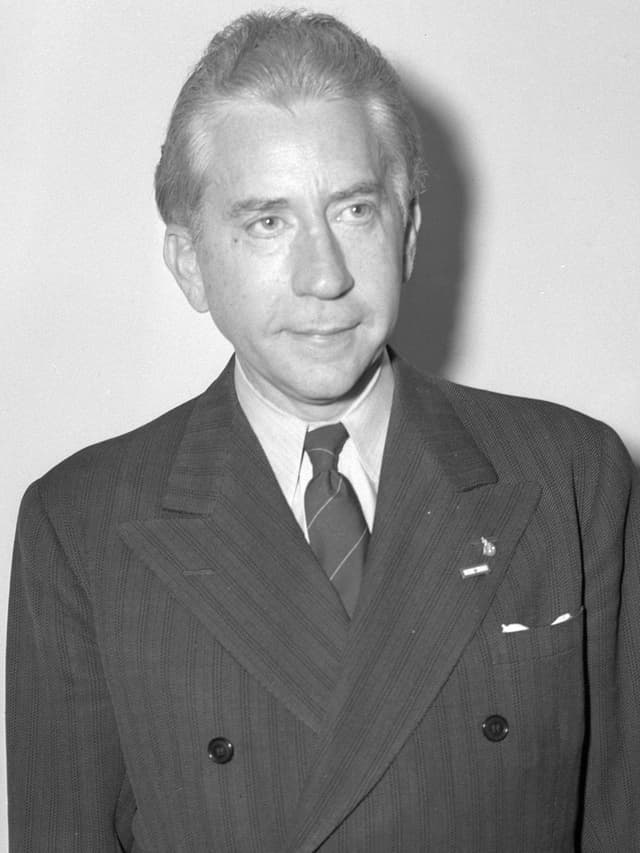
J. Paul Getty
Getty Oil Company
A pioneering figure in the oil and energy industry, J. Paul Getty founded Getty Oil Company, which became one of the largest oil companies in the world. He learned the importance of self-reliance and hard work from his father, George Getty, who encouraged him to observe oil drilling operations in Oklahoma at a young age. This early exposure fueled Getty's entrepreneurial spirit and laid the groundwork for his future success, ultimately leading to his company producing over 1.5 million barrels of oil daily at its peak. Recognized for his belief in mentorship, Getty often emphasized that the encouragement from seasoned entrepreneurs can be invaluable for young business builders navigating their paths. His legacy underscores the significance of foundational guidance and the drive to earn one's success in the competitive landscape of business.
Core Principles
culture
Your father's guidance and your response to it shapes your entire life trajectory. Honor the foundation given to you while building your own competitive advantage.
Getty's father George brought him into the oil fields at age 11 to observe, had him work as a roustabout at 15 with no special treatment, and sent him to military school when needed. These decisions created a leader who knew his business from A to Z. Getty credits this entirely to his father's wisdom and love, and he carried this gratitude his entire life.
“Without the love and training of my father, I would not be the man I became.”
Self-reliance and work ethic cannot be taught through lectures, only through requiring young people to start at the bottom and earn their way. Make them hold their own.
Getty's father explicitly told him he would receive the roustabout's wage ($3/day for 12-hour shifts) with no preferential treatment. This forced Getty to adapt to bunkhouse living and prove himself to experienced oil men. Getty later applied this same principle, attempting to involve his own sons in the business.
“It is all right with me if you're willing to start at the bottom... I would receive the roustabout's going wage, which was $3 a day for a 12-hour shift. I could expect no preferential treatment because I was the boss's son.”
Do not try to predetermine your children's careers or force them into your business. Influence is not control. Let them choose their path.
Getty wished to perpetuate a dynasty like his father did, but his fractured family life (five marriages, absent physical presence) prevented the influence his father had on him. Only one son, George, showed interest in the business. Getty eventually learned he could not predetermine his children's careers.
“Unfortunately, I had no like degree of influence and control over the lives of my own sons. I would experience many disappointments before learning that I could not predetermine their careers or the course of their lives.”
customer obsession
Guarantees should always be honored in the customer's favor. The business known to be completely reliable will have little difficulty filling its order books and keeping them filled. Reputation compounds over time.
Getty believed that a reputation for reliability was worth more than short-term profit. Standing behind guarantees even when inconvenient builds trust that allows the business to operate with full order books and minimal sales friction.
“Guarantees should always be honored in the customer's favor. The business that is known to be completely reliable will have little difficulty filling its order books and keeping them filled.”
finance
Keep a fortress of cash. Reinvest heavily in your business. Use debt sparingly. Do not live like a Roman emperor.
Getty spent 95% of his money reinvesting in the business while William Randolph Hearst lived extravagantly. Getty's $100,000 house contrasted with Hearst's $3 million beach house. In 1935 Getty was one third as rich as Hearst. By 1950 he was twice as rich. The difference was not brilliance, but discipline in capital allocation.
“I like to keep a lot of financial fat under my belt. There's nothing that can ever take the place of cash. The businessman who uses credit the most sparingly is the one who has the greatest chance for achieving success.”
The habitually thrifty person will always have a fluid reserve to meet contingencies and carry him through slack periods. Thrift builds cash reserves that provide strategic flexibility during crises.
Getty maintained cash reserves throughout his career, allowing him to capitalize on opportunities during the Depression when others were liquidating. The habit of thrift forced discipline in spending and created the fortress balance sheet that gave him options.
“The person who has formed thrifty habits will always have a fluid reserve to meet contingencies and carry him through slack periods.”
A sense of thrift is essential for success in business. The businessman must discipline himself to practice economy wherever possible. Thrift is a habit that reveals itself in small savings that compound into massive advantages.
Getty repeatedly emphasizes thrift throughout his essays. He describes how he and other wildcatters minimized administrative overhead, kept costs low, and personally supervised all aspects of operations. This habit of looking for small savings compounds over time, differentiating successful operators from those who fail.
“A sense of thrift is essential for success in business. The businessman must discipline himself to practice economy wherever possible.”
Borrowed money must always be promptly repaid. Nothing will destroy a career faster than a bad credit rating. Use debt sparingly and only to fund productive assets that generate returns exceeding the cost of debt.
Getty built his wealth through retained earnings and careful reinvestment rather than speculation or leverage. He viewed debt as a tool, not a growth accelerant, and prioritized maintaining creditworthiness and financial flexibility above all else.
“Borrowed money must always be promptly repaid. Nothing will destroy a career faster than a bad credit rating.”
The habitually thrifty person has a greater chance for success than another of equal ability who does not possess this quality. Thrift is a habit, and it reveals itself in recognizing and capturing opportunities for cost reduction.
Thrift is not stinginess but rather a systematic discipline of looking for ways to reduce costs without sacrificing quality. Rockefeller saved hundreds of thousands by reducing solder on cans from 40 drops to 39 drops. The habitually thrifty person sees such opportunities constantly.
“An individual who is naturally thrifty will have an infinitely greater chance for success than another of equal ability who does not possess this quality.”
focus
Concentration on the task at hand, with a long attention span, is a critical competitive advantage. Do not allow yourself to be easily distracted.
Getty emphasized his ability to concentrate on whatever was before him without distraction. He spent hours reviewing drilling reports, cable, telex, and letters from every corner of the globe. His long attention span allowed him to master detail and remain engaged in complex businesses for 60+ years.
“My own nature is such that I'm able to concentrate on whatever is before me and I'm not easily distracted from it.”
Choose a field you know and understand. Never lose sight of the central aim of all business: to produce more and better goods to more people. This focus prevents distraction and misalignment.
Getty lists this as rule number one and number two for business success. He spent his entire life in the oil industry, which he knew intimately from childhood exposure. He never strayed from understanding that business exists to serve customers better, not to maximize profit as an end unto itself.
“Number one, choose a field which he knows and understands. Number two, you should never lose sight of the central aim for all businesses, which is to produce more and better goods to more people.”
hiring
Expose young people to business operations early and regularly, even if they cannot grasp all details immediately. Repeated exposure stretches their understanding over time.
Getty's father exposed him to oil fields at age 10-11. Though a child could not understand everything about building an oil business, this constant exposure allowed Getty to gradually absorb ideas and principles that shaped his career.
Align incentives for talented executives who possess founder mentality or millionaire mentality. Offer profit sharing rather than fixed salaries so their eyes sharpen to opportunities for savings and increased profitability.
Getty had a superintendent who could not see inefficiencies that Getty spotted in an hour. Getty realized the superintendent lacked ownership incentive. He offered profit sharing, and within 60 days the superintendent's site was running flawlessly because he now thought like an owner with a direct personal interest in results.
“You have a direct personal interest in everything that happens. That's enough to sharpen any man's eyes to ways of saving and thereby making more money.”
Many people claim years of experience when they actually have one year of experience repeated many times. Look for people who are constantly learning and improving, not those repeating the same patterns.
Getty observed this tendency in people who had not grown or changed despite decades in business. True experience comes from learning and adaptation, not merely time served. Such people become liabilities because they cannot see new opportunities or improve operations.
“Many a man who is supposed to have 10 years experience really has only one year's experience repeated 10 times over.”
Identify talent with founder or millionaire mentality, which reveals itself through meticulous attention to small details and constant cost reduction. Think small while achieving large scale. People with this mentality create value disproportionate to their title.
A junior executive devised a shortcut saving half a cent per unit, totaling $25,000 yearly savings, more than double his salary. Getty recognized this as founder mentality. Such individuals see opportunities others miss because they instinctively think like owners, not employees.
“This young man quite definitely has what I term the millionaire mentality.”
There are categories of people in organizations. Focus on cultivating the second group: talented people who achieve spectacular results when given profit sharing and incentives, even if they would never start their own business.
Getty identifies that some people want to be completely independent entrepreneurs, some want to work for others but share profits, some are mediocre, and some are deadweight. The second group is underutilized in most organizations but represents tremendous leverage if incentivized correctly.
“Next are the men who do not want to go into business for themselves, but who achieve the best and sometimes spectacular results when they are employed by others and share in the profits of the business.”
innovation
Be constantly alert for new ways to improve products, services, production, and sales. Invest in technology. The savings compound over time and provide competitive advantage over slow-moving competitors.
Getty was among the few wildcatters who believed in petroleum geology when other oilmen sneered at it. He studied the subject avidly and applied what he learned to his operations. Andrew Carnegie also emphasized technology investment, with savings compounding to mean the difference between profit and loss.
“I was among the few who believed in geology. I studied the subject avidly at every opportunity and applied what I learned to my operations.”
The successful businessman is essentially a dissenter and rebel who is seldom satisfied with the status quo. He creates wealth by constantly seeking and often finding new and better ways to do and make things.
Getty contrasts the conformist with the true entrepreneur, who must reject prevailing orthodoxy and conventional thinking. The dissenter with imagination creates competitive advantages through unorthodox approaches. In business, the nonconformist who thinks independently has the advantage.
“The truly successful businessman is essentially a dissenter, a rebel who is seldom, if ever, satisfied with the status quo.”
leadership
Being in the details and knowing your business from A to Z is not a limitation, it is a competitive advantage. The leader must be a working boss who can perform any task.
Getty was a micromanager by necessity. He chose to be his own drilling superintendent because it was the only way to ensure his crews did exactly what he wanted. Oil field workers respected him because he could perform any task and wasn't a faraway suit. This gave him unique control and accountability.
“My tendency is to be autocratic. I chose to be my own drilling superintendent because it was the only way that I could be sure that my crews did exactly what I wanted.”
Accept direct final responsibility for everything. The buck stops with you. This creates accountability and prevents blame-shifting.
Getty quoted Harry Truman's famous sign: 'The Buck Stops Here.' He believed that when a leader accepts direct final responsibility, he makes full advancement payment for the rewards he receives. Getty never had to search further than himself when assigning blame for mistakes.
“The buck stops here. When the man in charge accepts direct final responsibility, he makes full advanced payment for the rewards and privileges he receives.”
Great entrepreneurs know their business inside and out, reinvest heavily, and are always personally involved. They think in immense terms.
Getty observed this pattern in every great entrepreneur he knew, especially his friend Aristotle Onassis. Onassis would show up alone to meetings with 10 executives and hold his own because he knew every detail of his businesses. He read shipping journals daily, memorized tonnage and prices, and was personally involved in every decision.
“They are always personally involved. Aristotle Onassis was an outstanding example. Every enterprise he owned or controlled was his personal business. He was the business.”
A businessman must run his own business. He cannot expect his employees to think or do as well as he can. He must maintain close and constant supervision over the entire business.
Getty made his first million in the front seat of a battered Model T Ford that served as his executive office and field headquarters. He spent most of his time in the field, working alongside his men, familiar with all aspects of operations. This hands-on supervision is why he could spot inefficiencies quickly.
“A businessman must run his own business. He cannot expect his employees to think or do as well as he can.”
The best leader never asks anyone under him to do anything he is unwilling to do himself. Know your business from A to Z so you can credibly direct others and solve any problem.
Getty prided himself on being able to perform every job in the oil business. This knowledge allowed him to direct operations authoritatively, understand bottlenecks, spot inefficiencies, and solve problems that less knowledgeable managers could not see. His comprehensive knowledge gave him credibility and capability.
“The best leader never asks anyone under him to do anything that he is unwilling to do himself.”
Frameworks
The Liaison Center Model
Create a physical headquarters designed specifically to build relationships with world-class entrepreneurs, leaders, and executives. Invite them to stay, work, and meet in a relaxed atmosphere where no formal business occurs but where partnerships naturally develop. Getty's Sutton Place served this purpose, hosting presidents, kings, and billionaires in an environment that fostered informal deal-making.
Use case: When you need to develop strategic relationships with powerful people or when you want to create unexpected partnerships that formal meetings would never produce. Useful at the growth and scaling stages.
The Working Boss Framework
Position yourself as a working boss who can perform any task in the organization, not just executive functions. Be on site where the actual work happens. Know your business from A to Z so you can supervise directly and train workers. This creates respect from employees and unique control over quality.
Use case: Especially valuable in early-stage operations and in industries where hands-on knowledge creates competitive advantage. Builds employee respect and prevents disconnection between leadership and operations.
The Crisis Opportunity Framework
When financial panics occur and prices of assets crash dramatically, while competitors retreat, advance aggressively to acquire undervalued companies or assets. This requires courage to act against fear and the capital discipline to have cash available when panic strikes.
Use case: During economic downturns, market crashes, or industry-specific crises. Requires maintaining fortress cash reserves during good times so capital is available when panic creates opportunity. Getty applied this in 1930s Depression and again with Tidewater.
The Tennis Player Metaphor
View business as a competitive sport where your job is to always return the ball, no matter the direction or velocity. Stay in the game, compete hard, and never quit. Each obstacle is just another ball to return, not a signal to exit.
Use case: For maintaining resilience and competitive drive over a long career. Helps reframe setbacks as normal game conditions rather than reasons to quit. Particularly useful for founders in decade-long ventures.
The Detail Mastery Framework
Know every detail of your business and oversee them personally. From oil well operations to museum air conditioning usage, treat no detail as too small. This prevents leakage, maintains quality standards, and creates accountability. It also gives you credibility with employees.
Use case: For building efficient operations and maintaining high standards. Works best when combined with hiring excellent people who understand you care about details. Prevents the 'distant executive' problem that alienates workers.
Ten Rules for Business Success
Getty lists ten fundamental rules that he believes all successful business people follow. These rules include choosing a field you know, focusing on producing more and better goods, practicing thrift, guarding against over-expansion, running your own business, constantly improving products and services, promptly repaying debt, seeking untapped markets, honoring guarantees, and considering wealth as a means to improve living conditions. These rules form a comprehensive framework for building lasting business value.
Use case: Use this framework when starting a business or evaluating whether a business practice aligns with time-tested principles. Each rule can be applied to specific business decisions.
Five Leadership Traits
Getty identifies five core leadership qualities: lead by example and instruction, accept full responsibility for subordinates' actions, never ask others to do what you will not do, be fair but firm without pampering, and give praise publicly while delivering criticism privately. These traits form a comprehensive approach to managing people effectively and building respect through personal credibility and consistency.
Use case: Apply this framework when evaluating your own leadership approach or when hiring and developing managers. Each trait can be incorporated into management practices and cultural expectations.
Four Categories of Organizational Talent
Getty categorizes employees into four types: true entrepreneurs who want complete independence and ownership, profit-sharing performers who excel when incentivized with ownership stakes but would not start their own business, mediocre employees with limited growth potential, and deadweight who do not care about the business and only want their paycheck. Understanding these categories allows leaders to properly incentivize, deploy, and manage different talent segments.
Use case: Use this framework to assess your team members and determine appropriate roles, compensation structures, and expectations for each person. Focus organizational resources on cultivating the second category, which represents the highest leverage.
Stop the Bleeding, Then Strike
When facing a competitive squeeze or market crisis, first take defensive action to stabilize the situation and preserve resources (stop the bleeding). Then take proactive offense by going directly to decision-makers and pursuing strategic solutions. This two-stage approach prevents panic-driven mistakes while positioning you for decisive action once the immediate threat is contained.
Use case: Apply this framework during competitive threats or market downturns. First, identify and execute stabilizing actions that preserve cash and resources. Once stabilized, pursue high-leverage strategic actions rather than reactive short-term fixes.
Contrarian Decision-Making During Crises
When faced with consensus pessimism and pressure to liquidate during economic downturns, make the contrarian decision to invest and build if you have faith in the fundamental demand for your product or service. This requires accepting that you will be obstructed, derided, and damned by friends and professionals. The contrarian decision made at the bottom of a crisis positions you to capture extraordinary returns when conditions recover.
Use case: Use this framework during major economic downturns or market dislocations when consensus opinion says to exit. Evaluate whether the fundamental demand for your business will persist. If yes, consider contrarian investments that position you for the recovery.
Stories
Getty's father George sent his 11-year-old son to observe oil drilling operations in Oklahoma. Instead of putting him to work, George let the boy observe and ask questions. Years later, when Getty was 15, his father offered him a roustabout job at $3/day for 12-hour shifts with no special treatment. This foundation of hands-on learning over a decade prepared Getty completely for his independent career.
Lesson: Early, prolonged exposure to real work in your industry, combined with mentorship from someone who loves you, creates the ultimate competitive advantage. A decade of summer jobs starting at age 15 is worth more than any MBA.
At age 22, Getty's father proposed a deal: if Getty found promising oil leases, the father would fund them. Getty would do all the work and get 30% of profits while his father got 70%. Getty accepted and immediately began drilling. For over a year, 42 of 43 wells produced nothing. Getty was ready to quit multiple times, but older oil men like R.M. McFarlane encouraged him to keep going. Eventually he drilled a well that produced 700 barrels per day.
Lesson: Encouragement from seasoned professionals during your lean early years can be the difference between success and quitting. Also, your father's patient support (not pressure) is more valuable than control.
Getty made his first million dollars quickly at age 23 and immediately retired, thinking he had all the money he'd ever need. Within months, despite dating women and popping champagne bottles, he became depressed. He realized that money wasn't the issue, the game was. He unretired at 26 and never stopped working again for 57 years.
Lesson: The challenge and engagement of work itself is more satisfying than the money it produces. Retirement without purpose is a trap for driven people. The game, not the scoreboard, is what matters.
During the Great Depression with the oil industry in panic and crude at 10 cents per barrel, Getty proposed that his company expand into refining and marketing through vertical integration. The estate executors were terrified and opposed him. Getty argued that the time was ideal to buy undervalued assets. He proceeded anyway, accumulating shares in Tidewater at 1/20th of their underlying asset value. By 1950, his gamble had multiplied his wealth.
Lesson: When others panic, the intelligent contrarian acts. Courage to deploy capital when fear is highest is a core founder trait. Economic downturns create the best opportunities for the prepared.
Getty accidentally began buying control of Tidewater, not knowing it was secretly owned by Standard Oil and the Rockefeller family. Once he discovered this, he was too committed to back out. On New Year's Day from Hearst Castle, he received a call from Jay Hopkins (soon to found General Dynamics) who represented John D. Rockefeller Jr. offering to sell his Tidewater rights because Rockefeller Jr. was unreachable on a train. Getty closed the deal on the phone. This single transaction unraveled the Rockefeller control structure.
Lesson: Sometimes not knowing the full competition landscape allows you to act boldly. Timing, relationships, and being reachable matter more than you'd think. A single transaction with one decision-maker can change everything.
Getty's geologist inspected the neutral zone between Saudi Arabia and Kuwait and sent back a three-word cable: 'Structures indicate oil.' Despite the enormous expense of the deal (it looked like financial suicide to every competitor), Getty immediately understood this signal and agreed to terms. He paid $10.5 million upfront plus 55% per barrel royalties. Every oil company said he'd gone insane. Instead, this single deal made him the world's richest man.
Lesson: Great assets are worth seemingly outrageous prices. When a great opportunity appears, the cost becomes irrelevant. A world-class signal from a trusted expert should trigger decisive action, not negotiation.
Getty and Aristotle Onassis became close friends during the 1950s. When Onassis gained a virtual monopoly on Saudi Arabian oil tanker transportation, which threatened Getty's large-scale tanker construction program, Getty was initially concerned. Rather than litigate or compete fiercely, he sat down with Onassis. Because they were friends with mutual trust, they resolved the issue through conversation and a handshake. This friendship prevented a costly conflict and instead created partnership.
Lesson: Relationships with other great entrepreneurs can solve conflicts more elegantly than competition. Building friendships with peers across industries creates optionality and reduces conflict. A handshake from a trusted friend is more valuable than a signed contract with a stranger.
Getty's son George, who had become interested in the family business, died from a combination of alcohol and barbiturates. Getty anguished over whether the pressure to live up to his father and grandfather's legacy contributed to the death. In his diary, Getty admitted his regret: 'Did I cause the pressure that killed my son?' The incident haunted him for the rest of his life.
Lesson: Success in business can come at the cost of family. The work that creates wealth can also create pressures that harm those close to you. No business empire is worth the life of your child. Awareness of this tradeoff is necessary, even if the answer isn't simple.
Getty contrasted his own wealth accumulation with that of William Randolph Hearst, who was his neighbor in Santa Monica. Hearst built a $3 million beach house (for his mistress). Getty built a $100,000 house. Hearst lived like a Roman emperor, spending lavishly. Getty spent 95% of his profits on reinvestment. In 1935, Hearst was three times richer than Getty. By 1950, Getty was twice as rich as Hearst.
Lesson: Capital discipline and reinvestment compound more powerfully than consumption ever can. The person who spends on the business, not on lifestyle, will eventually dominate. Humility in personal spending creates fortress wealth.
When competitors boycotted Getty's oil to force a discounted sale, he first leased storage tanks to preserve cash rather than panic-selling. He then met directly with the Shell Oil president, who listened and immediately committed to buying 1.7 million barrels and building a pipeline to Getty's wells by the next day.
Lesson: When facing competitive pressure, first stabilize your position before taking offensive action. Go directly to decision-makers who can move quickly and solve problems at scale rather than negotiating with intermediaries.
Notable Quotes
“Without the love and training of my father, I would not be the man I became.”
Getty reflecting on the foundation his father George provided through early exposure, hands-on work, and character development. This was said 45+ years after his father's death.
“There is always something wrong everywhere.”
Emphasizing that continuous improvement is necessary because the status quo is never perfect.
“Comparing me to John D. Sr. was like comparing a sparrow to an eagle. My words were not inspired by modesty, but by facts.”
Getty responding to Nelson Rockefeller's comparison of Getty's achievements to John D. Rockefeller Sr.'s. Getty insisted on acknowledging his advantages (wealthy family, inherited company) versus Rockefeller Sr.'s creation from nothing.
“I opened up nothing that could possibly gush except for far too many champagne bottles.”
Getty describing his retirement at age 24 after making his first million. He was popping bottles with women but feeling depressed and purposeless. This led to his 'unretirement' at age 26.
“I like to keep a lot of financial fat under my belt. There's nothing that can ever take the place of cash.”
Getty's advice to entrepreneurs on capital discipline. He contrasted his approach to Hearst's lavish spending and demonstrated that cash reserves are the foundation of survival and expansion.
“The buck stops here.”
Getty cited Truman's famous desk sign as the clearest explanation of how he operated. When you accept direct final responsibility, you can't blame others.
“Entrepreneurs are peoples whose mind and energies are constantly being used at peak capacity.”
Getty rejecting the idea that he was motivated by money to continue working into his 80s. Instead, he was motivated by engagement at full capacity.
“Once into the game, I did my damnedest to be competitive. I always sought to return the ball, no matter from which direction or with what velocity it came into my side of the court.”
Getty's tennis metaphor for his 60+ year career. He viewed business as a competitive game where you must always stay engaged and respond to challenges.
“A hatred of failure has always been part of my nature and I suppose one of the more pronounced motivating forces in my life.”
Getty identifying his primary motivational driver. Not love of success, but fear of failure, pushed him. This is consistent with Warren Buffett's observation that envy (or fear) drives the world more than greed.
“I was convinced of eventual economic recovery, and I firmly believed in the business dictum that you should buy when prices are low.”
Getty explaining his contrarian strategy during the Great Depression. When everyone else was fearful, he was buying undervalued assets.
Frequently Asked Questions
What are J. Paul Getty's key business principles?▼
J. Paul Getty's core principles include: Your father's guidance and your response to it shapes your entire life trajectory. Honor the foundation given to you while building your own competitive advantage.. Self-reliance and work ethic cannot be taught through lectures, only through requiring young people to start at the bottom and earn their way. Make them hold their own.. Do not try to predetermine your children's careers or force them into your business. Influence is not control. Let them choose their path.. Founder Almanac has cataloged 30 total principles from J.'s career.
What can entrepreneurs learn from J. Paul Getty?▼
Key lessons from J. Paul Getty include: Early, prolonged exposure to real work in your industry, combined with mentorship from someone who loves you, creates the ultimate competitive advantage. A decade of summer jobs starting at age 15 is worth more than any MBA.. Explore 10 stories and 10 frameworks from J.'s experience.
What is J. Paul Getty known for in business?▼
A pioneering figure in the oil and energy industry, J. Paul Getty founded Getty Oil Company, which became one of the largest oil companies in the world. He learned the importance of self-reliance and hard work from his father, George Getty, who encouraged him to observe oil drilling operations in Oklahoma at a young age. This early exposure fueled Getty's entrepreneurial spirit and laid the groundwork for his future success, ultimately leading to his company producing over 1.5 million barrels of oil daily at its peak. Recognized for his belief in mentorship, Getty often emphasized that the encouragement from seasoned entrepreneurs can be invaluable for young business builders navigating their paths. His legacy underscores the significance of foundational guidance and the drive to earn one's success in the competitive landscape of business.
More Oil & Energy Founders
Want J.'s advice on your business?
Our AI has studied J. Paul Getty's biography, principles, and decision-making frameworks. Ask any business question.
Start a conversation