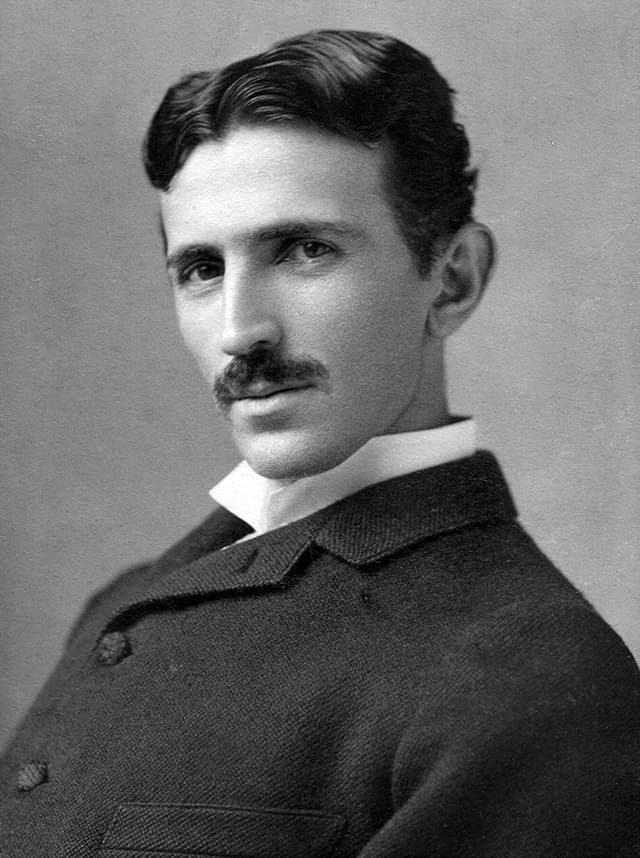
Nikola Tesla
Tesla Electric Company
A visionary inventor and electrical engineer, Nikola Tesla founded Tesla Electric Company in the late 19th century, pioneering the development of alternating current (AC) electrical systems that revolutionized the energy industry. His intense passion for innovation and unwavering focus allowed him to overcome skepticism from established authorities, turning public dismissal into motivation for breakthrough achievements. One of his most notable accomplishments was the creation of the Tesla coil, which laid the groundwork for modern radio technology. Tesla's relentless pursuit of knowledge and his ability to transform challenges into opportunities continue to inspire entrepreneurs and business builders today.
Core Principles
innovation
Visualize and daydream about solutions to difficult problems. The mind's ability to see solutions before they are built is a powerful tool for invention.
Tesla worked on the alternating current motor problem for over five years. During this time, he visualized the solution in his mind, daydreaming about how it would work. Once he saw it mentally, he knew he had to build it. This pattern of mental visualization preceding physical creation was core to his method.
“I have solved the problem. Now I can die happy. Now I must live. I must return to work and build a motor so I can give it to the world.”
Recognize that different problem-solving approaches both have merit. Empirical trial-and-error methods and theoretical calculation-based methods can each be superior depending on context.
Tesla criticized Edison's brute-force empirical approach to invention, claiming theory and calculation could save 90% of labor. Edison dismissed Tesla as a poet of science with impractical ideas. Both approaches succeeded, but in different ways. Edison's persistence solved practical problems; Tesla's theory enabled fundamental breakthroughs.
“If Edison had a needle to find in a haystack he would proceed at once with the diligence of the bee to examine straw after straw. A little theory and calculation would have saved 90% of his labor.”
marketing
Use dramatic demonstrations and showmanship to build fame and attract patrons. Spectacular public experiments create visibility that leads to capital and partnership opportunities.
Tesla made his reputation through dramatic public demonstrations of his inventions. He would perform experiments that astonished audiences and created the opportunity to meet potential patrons. These demonstrations led directly to his meeting with Westinghouse and other key partnerships.
mindset
Intense passion for your life work is a prerequisite for innovation. The ability to become completely absorbed and fascinated by a field is what separates inventors from mere workers.
Tesla described his fascination with electricity as beyond rational explanation. A physics demonstration produced a thousand echoes in his mind. When he solved the alternating current motor problem after five years of work, he said he could die happy, then immediately committed to building it. This consuming passion was the engine of his innovation.
“It is impossible for me to convey an adequate idea of the intensity of feeling I experienced in witnessing my physics teacher's exhibitions of these mysterious phenomenon.”
operations
Extreme focus and discipline, even when expressed in unusual ways, channels creative energy toward breakthrough innovation. Constraints and routines enable, rather than limit, productivity.
Tesla had extreme daily rituals: 5 a.m. wake-up, plunge into the Seine 27 times (divisible by three), one-hour walk to the factory. He counted his steps and required all activities to be divisible by three. While his habits were eccentric, they provided the structure and mental discipline that enabled his revolutionary inventions.
resilience
When professors and established authorities tell you something is impossible, treat it as motivation, not fact. Public dismissal of your ideas can become fuel for proving them wrong.
Tesla's physics teacher publicly declared that converting steady pulling force into rotary effort was impossible, a perpetual motion scheme. Tesla took this public rebuke as motivation rather than discouragement. Years later, he accomplished exactly what his professor said could never be done.
Talent and intelligence alone are insufficient without resilience through poverty and hardship. Overcoming material want builds character and strategic flexibility.
Tesla went through periods of destitution after his first company failed. He worked in labor gangs and lived through bitter suffering. These experiences of material want and hardship, combined with his genius, made him more resourceful and determined than he might have been if success came easily.
“I have lived through a year of terrible heartaches and bitter tears, my sufferings being intensified by material want.”
Stories
Tesla's physics professor publicly declared that converting steady gravitational force into rotary motion was impossible, a perpetual motion scheme. Years later, Tesla accomplished precisely this feat by inventing the polyphase induction motor, one of the most important electrical innovations ever created.
Lesson: Public declarations of impossibility from authorities should motivate rather than discourage. Those who see what others cannot yet comprehend have an advantage. The professor's own limited understanding made his pronouncement worthless.
Tesla worked on the alternating current motor for over five years, often in poverty and hardship. During this extended period, he visualized the solution in his mind through daydreaming and mental concentration. When the solution finally came to him clearly, he rushed to tell his friend that he had solved it and could now die happy, then immediately committed to building it so he could give it to the world.
Lesson: Sustained mental focus on difficult problems, combined with daydreaming and visualization, can produce breakthroughs that pure empirical trial-and-error misses. The internal vision often precedes external construction.
Notable Quotes
“It is impossible for me to convey an adequate idea of the intensity of feeling I experienced in witnessing my physics teacher's exhibitions of these mysterious phenomenon.”
Tesla describing his childhood fascination with electricity. This level of passionate obsession was foundational to his later breakthroughs and willingness to endure hardship for his vision.
“Isn't it beautiful? Isn't it sublime? Isn't it simple? I have solved the problem. Now I can die happy. Now I must live. I must return to work and build a motor so I can give it to the world.”
Tesla's response upon solving the alternating current motor problem after five years of work. The quote reveals his missionary mindset: the solution was beautiful because it would liberate humanity from drudgery.
“If Edison had a needle to find in a haystack he would proceed at once with the diligence of the bee to examine straw after straw until he found the object of his search. His method was inefficient in the extreme, for the immense ground had to be covered to get anything at all unless blind chance intervened. A little theory and calculation could have saved 90% of his labor.”
Tesla's critique of Edison's empirical problem-solving approach. This highlights the contrast between Edison's trial-and-error method and Tesla's theoretical framework approach.
“Once no fiercer adversary than Westinghouse could have been found when he was aroused. An athlete in ordinary life, he was transformed into a giant when confronted with difficulties which seem insurmountable. When others would give up in despair, he triumphs. Had he been transferred to another planet with everything against him, he would have worked out his salvation.”
Tesla's assessment of Westinghouse after their partnership. This describes the adaptability and resourcefulness that made Westinghouse capable of succeeding in any circumstance.
“In my opinion, the only man on this globe who could have taken my alternating system under the circumstances then existing and win the battle against prejudice and money and power.”
Tesla's praise for Westinghouse's role in winning the War of the Currents. Tesla believed Westinghouse possessed the unique combination of vision, determination, and resources to prevail against Edison's established position.
“I was amazed at this wonderful man who without early advantages and scientific training had accomplished so much. I had studied a dozen languages, delved into literature and art, and had spent my best years in libraries reading all sorts of things. But it did not take long before I recognized that that was the best thing I could have done.”
Tesla reflecting on meeting Edison. Despite Edison's lack of formal education, Tesla realized that his own broad liberal education had actually prepared him better for seeing the deficiencies in Edison's approach.
Frequently Asked Questions
What are Nikola Tesla's key business principles?▼
Nikola Tesla's core principles include: Visualize and daydream about solutions to difficult problems. The mind's ability to see solutions before they are built is a powerful tool for invention.. Recognize that different problem-solving approaches both have merit. Empirical trial-and-error methods and theoretical calculation-based methods can each be superior depending on context.. Use dramatic demonstrations and showmanship to build fame and attract patrons. Spectacular public experiments create visibility that leads to capital and partnership opportunities.. Founder Almanac has cataloged 7 total principles from Nikola's career.
What can entrepreneurs learn from Nikola Tesla?▼
Key lessons from Nikola Tesla include: Public declarations of impossibility from authorities should motivate rather than discourage. Those who see what others cannot yet comprehend have an advantage. The professor's own limited understanding made his pronouncement worthless.. Explore 2 stories and 0 frameworks from Nikola's experience.
What is Nikola Tesla known for in business?▼
A visionary inventor and electrical engineer, Nikola Tesla founded Tesla Electric Company in the late 19th century, pioneering the development of alternating current (AC) electrical systems that revolutionized the energy industry. His intense passion for innovation and unwavering focus allowed him to overcome skepticism from established authorities, turning public dismissal into motivation for breakthrough achievements. One of his most notable accomplishments was the creation of the Tesla coil, which laid the groundwork for modern radio technology. Tesla's relentless pursuit of knowledge and his ability to transform challenges into opportunities continue to inspire entrepreneurs and business builders today.
More Oil & Energy Founders
Want Nikola's advice on your business?
Our AI has studied Nikola Tesla's biography, principles, and decision-making frameworks. Ask any business question.
Start a conversation