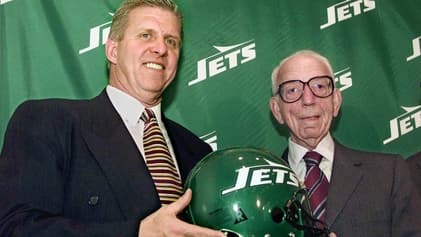
Leon Hess
Hess Corporation
A pioneering figure in the oil and energy industry, Leon Hess founded Hess Corporation in 1933 after the collapse of his father's coal business left him without resources for college. At just 19, he demonstrated resilience by purchasing a secondhand truck to collect and sell discarded fuel oil, effectively turning competitors' waste into profit. Under his leadership, Hess Corporation grew into a major player, achieving significant milestones such as becoming one of the top 10 oil companies in the United States by the 1990s. His approach emphasized understanding customer needs and controlling the value chain, principles that remain relevant for entrepreneurs today. Leon's enduring belief in the importance of reputation is encapsulated in his quote, "Treasure a good name."
Core Principles
culture
Train your successor from childhood by exposing them to all levels of the business. Build the next generation through trenches experience, not classroom learning.
From age seven, John Hess was being groomed to take over. He pumped gas at stations, did accounting for refineries, participated in operations in St. Croix and Oklahoma, studied Arabic and Farsi in college, and attended Harvard and business school. This hands-on, multi-level exposure prepared him better than any executive training program.
Run a publicly traded company with the mindset and personal touch of a family business. Personal attention and loyalty can coexist with public ownership.
Despite going public through a merger with ClearTrack in 1962, Leon continued to run Hess with family-business values. He ate dinner with employees, shook their hands nightly, knew people by name, and fostered loyalty that made employees not want to disappoint him. This family-business culture within a large public company created competitive advantage.
Balance ambition with family. Integrate family into your work and work into your family time, rather than treating them as separate domains.
Leon learned from David Willens, his father-in-law and mentor, to balance work with family dinner at home each evening. He would return to the office for long hours after spending time with wife and children. He brought his daughters to the office in their pajamas after dinner, shared summer swim meets with his son, and integrated family into his business culture.
finance
Obsess over controlling costs and maintaining operational efficiency. Costs can be strictly controlled and permanent savings achieved through cost discipline are more reliable than chasing price increases.
Andrew Carnegie's principle that costs could be strictly controlled became a central tenet of Hess operations. Leon ran facilities with 400 people where competitors used 800. This cost discipline gave him lasting competitive advantage because while prices are cyclical and subject to market forces, costs remain under management control.
leadership
Build relationships based on personal knowledge, not just business transactions. Know your counterparties' families, their lives outside business, and invest time in relationships.
Leon would take time to know people's wives, children, and lives outside the office. He knew employees by name, even the person who fixed his air conditioning. He built strong relationships globally by taking trouble to understand counterparties personally, not just their business propositions. This relationship depth gave him access to opportunities others missed.
Maintain obsessive attention to operational detail at every level. Know the specific metrics of every location, asset, and operation in your company.
Leon could recite the profit margins of every gasoline station on the East Coast from memory. At budget meetings, he would quiz the trucking division head on tire life remaining. He flew to his St. Croix refinery every Friday to inspect operations and would show up at 2 a.m. to check units. This encyclopedic knowledge mirrored John Mackey's knowledge of every Whole Foods store.
mindset
Honor your commitments and operate on handshake agreements between gentlemen. A man of your word is your most valuable asset.
Leon came from a school where a handshake was sufficient for a deal. He expected loyalty and gave it in return. Even when bribing foreign officials, he did it with his own money, sought no reimbursement, and disclosed it to shareholders. This code of honor was central to how he built trust and lasting relationships.
operations
Maintain standards of cleanliness and appearance as a business advantage. Customers respond to clean facilities and this creates competitive differentiation.
Leon was obsessed with cleanliness from 1933 through 1987. He inspected bilges for cleanliness, insisted trucks be kept clean, and had employees constantly paint and repaint everything. Hess gas stations had the cleanest bathrooms, which appealed to families taking car trips and gave Hess an advantage over rivals who neglected appearances.
“The first thing I look at in an oil tanker is the engine room bilge. Clean bilges mean good housekeeping.”
Use military and logistics experience as an accelerant for business success. Wartime supply chain mastery translates directly to peacetime competitive advantage.
Leon served as fuel supply officer for General Patton during WWII, working on the Red Ball Express logistics operation that moved 412,000 tons of supplies in 81 days using 6,000 trucks and 23,000 personnel. When he returned to civilian business, he possessed world-class expertise in moving fuel efficiently that competitors lacked.
product
Start by serving the unwanted, the discarded, the rejected. Build your business by finding value in what competitors throw away.
Leon's breakthrough was realizing he could collect residual oil, number six fuel oil, that refineries were discarding as waste. He would collect this black, molasses-thick oil, perform light refining or boiling, and resell it to manufacturers and power plants. This created a 80% market share in fuel oil distribution.
simplicity
Simplify your offering and focus on what competitors neglect. Success often comes from doing one thing exceptionally well rather than trying to do everything.
Unlike competitors, Hess gas station attendants did not change oil, carry batteries, tires, windshield wipers, or have mechanics on site. For a long time they would not even accept credit cards because Leon felt this slowed the refueling process. This simplification gave Hess a competitive edge: clean bathrooms and quick service appealed to families.
strategy
Invest for control, not just returns. When you need a supplier or need to de-risk your business, buy a stake and gain a seat at the table.
Leon invested $100 million for a 9.7% stake in Amerida to join the board, ensuring he could eventually merge the companies. He did not want his company held captive to oil producers like Shell, which was his largest supplier. This strategic investment for control led to a transformative merger.
Work backwards from the customer to the source. Control more of the value chain by progressively integrating upstream and downstream operations.
Leon started with fuel delivery, then added storage terminals, then built refineries in New Jersey and Texas, then merged with Amerida to gain oil exploration and production. He progressed from middleman to vertically integrated energy company controlling every stage from discovery to gas tank.
Study regulations and laws to identify legal but unconventional advantages. A minute reading of regulations that impact your business can yield massive competitive moats.
Leon built the largest refinery in the Western Hemisphere in the US Virgin Islands by identifying a unique regulatory advantage: the location allowed foreign refiner status while also receiving domestic subsidies. He even found a loophole on oil classification, taking apart ships and converting them to technically qualify as barges to avoid import taxes.
Seek opportunity actively rather than waiting for it to find you. Be a tireless traveler and encourage your team to search relentlessly for new prospects.
Leon traveled constantly and encouraged his employees to do the same. This contrasted with larger oil companies that waited for opportunities to come to them. His active prospecting and risk-taking mindset, combined with startup mentality, allowed him to find opportunities in far-flung locations like Indonesia, Libya, and the Caribbean.
Be unpredictable and use that unpredictability as a negotiating advantage. Counterparties cannot easily predict or prepare against your moves.
Leon's unpredictability was noted as a characteristic he used to advantage in negotiations. Combined with his knowledge of counterparties and willingness to take risks, this made him an effective dealmaker. He could see regulatory angles others missed and move where competitors were slow.
Frameworks
Working Backwards to the Source
Begin by serving customers at the end of the value chain. Progressively integrate backwards toward the source: from distribution to storage to refining to production to exploration. Each step builds on expertise and relationships from the previous step, reducing risk and increasing control.
Use case: When building vertically integrated businesses or seeking to reduce dependence on suppliers
Stories
During the Great Depression, Leon's father's coal business went bankrupt, preventing Leon from attending college. Instead of giving up, Leon at age 19 bought a secondhand truck and started collecting residual fuel oil that refiners were throwing away. He performed light refining and resold it, ultimately controlling 80% of the fuel oil market.
Lesson: Constraints and setbacks can become the seed of greatest opportunity. What others discard can become your business foundation. Desperation combined with observation of what competitors overlook creates powerful competitive advantage.
During WWII, Leon served as fuel supply officer for General Patton on the Red Ball Express, coordinating 6,000 trucks and 23,000 personnel to move 412,000 tons of supplies in 81 days. When he returned to civilian life, this logistics expertise became his greatest competitive advantage in the fuel oil business, allowing him to move product faster and more efficiently than competitors.
Lesson: Military and wartime experience builds capabilities that transfer directly to business. The ability to move supplies under pressure, coordinate massive operations, and solve logistics problems becomes a durable competitive advantage that others cannot easily replicate.
Leon identified that the US Virgin Islands had a unique combination of federal tax benefits and regulatory advantages. He built the largest refinery in the Western Hemisphere there, securing foreign refiner status while receiving domestic subsidies simultaneously. He also discovered that technically converting ships into barges by disconnecting propulsion from cargo allowed him to avoid import taxes on massive quantities of oil.
Lesson: A minute reading of regulations and laws reveals competitive moats that most businesses miss. Study the regulatory environment of your industry obsessively; embedded in the rules are advantages waiting to be discovered by those willing to exploit them legally.
Leon hired David Willens (New Jersey attorney general, later his father-in-law) as a trusted advisor. David introduced him to Chase Manhattan Bank and David Rockefeller, oversaw his business during WWII, and taught him to balance ambition with family. Leon remained loyal to Chase Bank his entire life because they were the only bank that paid attention to him initially.
Lesson: Choose mentors wisely and reward loyalty. A single trusted advisor who believes in you early can open doors and provide guidance that multiplies your effectiveness. Long-term relationships built on genuine connection matter more than transactional banking relationships.
Leon kept his gas station concept simple, refusing to add services competitors offered like oil changes, batteries, tires, or mechanics. For a long time he did not even accept credit cards, believing it slowed service. This simplification, combined with obsession over cleanliness and bathrooms, appealed to families taking car trips and gave Hess a competitive edge.
Lesson: Simplicity and focus create competitive advantage. Do one thing exceptionally well rather than trying to serve every customer need. Identify what competitors are overcomplicating and simplify it.
Leon trained his son John from age seven by exposing him to all levels of the business: pumping gas, doing accounting, working in refineries and oil fields, studying Arabic and Farsi in college, and attending Harvard and business school. John was prepared through hands-on experience, not classroom theory alone.
Lesson: The next generation is best trained through direct exposure to all levels of the business. Classroom education must be supplemented with trenches experience. Early and sustained immersion in family business builds both capability and cultural understanding.
Leon could recite from memory the profit margins of every gasoline station on the East Coast. He flew to his St. Croix refinery every Friday to inspect operations and would show up at 2 a.m. to check units. At budget meetings he quizzed the trucking division head on tire life remaining. This encyclopedic knowledge of operational details extended to knowing every employee by name.
Lesson: Obsessive attention to detail at all levels creates both competitive advantage and organizational culture. When leaders know details deeply and unexpectedly verify quality, employees maintain higher standards. This detailed knowledge also enables faster decision-making.
When Coach Bill Parcells told Leon another expensive player contract was needed, Leon replied, 'I don't give a shit. If you run out of money, come over here to the oil company and we'll get you some more money this afternoon.' Yet Leon insisted the Jets be sold after his death and threatened to cut family inheritance by a third if any family member tried to own part of it, to prevent distraction from the oil business.
Lesson: Support your passions and people generously, but subordinate secondary interests to core mission. Family focus must not extend to letting non-core ventures distract from the primary business.
Notable Quotes
“Treasure a good name.”
A repeated mantra to his children and family, emphasis on reputation as lasting value
“I bought a secondhand truck and I started selling heating oil and I built this company up over a number of years.”
Describing the humble origins of his oil company, started at age 19 in 1933 with a single used truck and residual oil from refiners
“The first thing I look at in an oil tanker is the engine room bilge. Clean bilges mean good housekeeping.”
Spoken in 1987, demonstrating 54 years of consistent obsession with cleanliness and operational standards
“I don't give a shit. If you run out of money, come over here to the oil company and we'll get you some more money this afternoon.”
Response to Coach Bill Parcells requesting funds for a player contract for the New York Jets
“In the hope of obtaining a benefit for our corporation, I made a series of payments substantial in the aggregate to a foreign government official. The bribery was unsuccessful. The payments were made in the hope of promoting a project which never materialized and the company received nothing as a result of the payments.”
From a shareholder letter disclosing payments made with his own money, before the Foreign Corrupt Practices Act made such payments illegal
Frequently Asked Questions
What are Leon Hess's key business principles?▼
Leon Hess's core principles include: Train your successor from childhood by exposing them to all levels of the business. Build the next generation through trenches experience, not classroom learning.. Run a publicly traded company with the mindset and personal touch of a family business. Personal attention and loyalty can coexist with public ownership.. Balance ambition with family. Integrate family into your work and work into your family time, rather than treating them as separate domains.. Founder Almanac has cataloged 18 total principles from Leon's career.
What can entrepreneurs learn from Leon Hess?▼
Key lessons from Leon Hess include: Constraints and setbacks can become the seed of greatest opportunity. What others discard can become your business foundation. Desperation combined with observation of what competitors overlook creates powerful competitive advantage.. Explore 8 stories and 1 frameworks from Leon's experience.
What is Leon Hess known for in business?▼
A pioneering figure in the oil and energy industry, Leon Hess founded Hess Corporation in 1933 after the collapse of his father's coal business left him without resources for college. At just 19, he demonstrated resilience by purchasing a secondhand truck to collect and sell discarded fuel oil, effectively turning competitors' waste into profit. Under his leadership, Hess Corporation grew into a major player, achieving significant milestones such as becoming one of the top 10 oil companies in the United States by the 1990s. His approach emphasized understanding customer needs and controlling the value chain, principles that remain relevant for entrepreneurs today. Leon's enduring belief in the importance of reputation is encapsulated in his quote, "Treasure a good name."
More Oil & Energy Founders
Want Leon's advice on your business?
Our AI has studied Leon Hess's biography, principles, and decision-making frameworks. Ask any business question.
Start a conversation