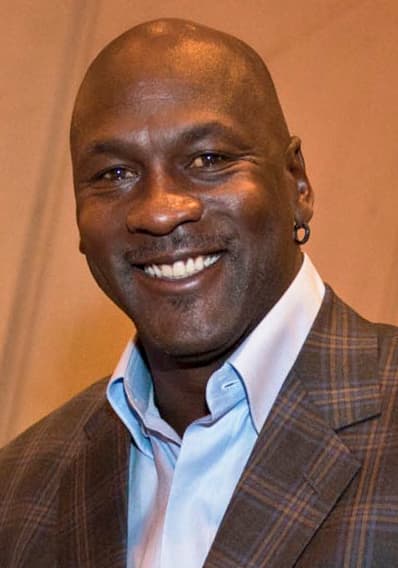
Michael Jordan
Jordan Brand (Nike)
A transformative figure in the sportswear and athletics industry, Michael Jordan founded and led Jordan Brand under Nike, turning it into a billion-dollar enterprise by 2019. Known for channeling early rejections, such as being cut from his high school basketball team, he used those experiences as fuel for his relentless pursuit of excellence. His journey from a young athlete lacking confidence to a global icon exemplifies the power of belief, as he transformed initial self-doubt into a mindset of mastery. Jordan's singular focus on basketball and his refusal to be distracted by other opportunities, including a brief stint in baseball, solidified his legacy as one of the greatest athletes of all time, inspiring entrepreneurs to harness their challenges as motivation for success.
Core Principles
competitive advantage
Test yourself against the absolute best competition available. Competing against superior opponents reveals your true capacity and provides the data you need to grow.
At the Five Star basketball camp, Jordan encountered top recruits he'd never faced. He was initially terrified and ranked lowest. But competing against these elite players showed him he belonged. He said he sensed immediately he had something the others didn't. This competitive testing became a turning point he later referenced as crucial to his development. Throughout his career, he sought out the best opponents and learned from how they played.
“I was so nervous my hands were sweating. I saw all these all-americans and I was just the lowest thing on the totem pole. But the more I played, the more confident I became. I thought to myself, maybe I can play with these guys.”
culture
Expect excellence from everyone around you. Do not tolerate mediocre effort or defense in practice. Excellence is a standard, not an aspiration.
Jordan took pride in defense and was furious when teammates didn't play good defense in practice. Coaches noted he was extremely hard on teammates, sometimes described as a bully. He understood that the environment you create determines the standard others will meet. By demanding excellence in practice, he elevated the entire team's baseline performance.
“Nobody had ever had this kid's drive. Some people are not used to an environment where excellence is expected.”
Loyalty is absolute. You cannot ride the fence or maintain partial commitments. Choose fully or do not be part of the team.
Michael Jordan visited a teammate's apartment and found a closet half Puma, half Nike. He took a butcher knife and cut up all the Puma gear, then told the teammate to call Nike for replacements. His message: you cannot ride the fence.
“You can't ride the fence. Don't ever let me see you in anything other than Nike.”
Be willing to cut out those who do not align with your mission, even if they are talented or close to you. Misalignment is more costly than lost talent.
Michael Jordan would take a butcher knife to clothing, remove teammates who did not meet standards, and bench players who did not commit fully. Alignment with the mission was non-negotiable.
“Call Howard from Nike tomorrow and tell him to replace all this. But don't ever let me see you in anything other than Nike.”
customer obsession
Serve the customer or audience first, and let your personal feelings be secondary. When people pay for your service, you have an obligation to give your best effort regardless of how you feel.
Jordan believed that people worked hard all week to buy tickets to watch him play, so he had an obligation to entertain them at his highest level regardless of whether his knee hurt or his ankle was sore. This obligation to others provided a motivational force stronger than personal preference.
“Somebody paid their hard-earned money to buy a ticket to watch me and to play to entertain them. To that degree, I think it's smart to have a motivation that's bigger than yourself.”
finance
Negotiate for equity and partnership, not just wages. Structure deals so both parties are deeply committed and invested in shared success.
When Nike proposed the Jordan endorsement deal, they explained it as a partnership with royalties on each shoe sold, not a flat wage. Dolores Jordan's reaction to this structure was key. By making Michael a partner betting alongside Nike on his success, both parties had aligned incentives. This principle of equity led to the Jordan brand becoming a $3.6 billion annual revenue business paying Jordan $180 million yearly.
“We are all in. I was betting my job. Nike was betting their future. Michael, we're going to go broke if you bust out. We're partners, not paying you a wage.”
Be financially conservative and focused on avoiding financial mistakes, even when you become wealthy. The fear of having to get a regular job should drive fiscal discipline.
Jordan was terrified of the idea of ever having to get a real job, so he listened to financial advisors and made conservative choices. He did not spend lavishly despite his wealth. He had observed people who had opportunities to be successful but made critical financial mistakes, and he studied those failures to avoid them.
“I've always been very conservative financially. That came from my advisors. I was scared. You don't want to be like some of the guys at the end of their career with nothing to show looking for work.”
focus
Obsess over a single goal and reject distractions, even opportunities that look attractive. Singular focus enables the depth of practice required for mastery.
From high school onward, Jordan had one goal: to become a professional athlete. He refused to work jobs like his siblings, rejected partying and distractions in college, and later had only one NBA goal: win championships. This singular obsession freed him from divided attention and allowed him to dedicate every resource to that objective. He later applied the same singular focus to building the Jordan brand.
“A guy that was totally focused on one thing and one thing only.”
Create ruthless boundaries around your focus time. Eliminate all distractions unrelated to your core mission. By Labor Day, shut down everything else and dedicate yourself fully to your craft.
Michael Jordan would shut down all commercial appearances, promotional tours, and events by Labor Day each year. He would then work three times daily: workout, golf, workout, lunch, golf break, workout, dinner, bed. Nothing else existed.
“Shoe deals and commercials don't make you an icon. Being unstoppable makes you an icon. And being unstoppable only comes with hard work.”
When you have identified your passion and gift, do not dilute it by chasing other opportunities. Your name and identity should be synonymous with your primary creation.
Despite owning an NBA team and having various business interests, Jordan's strongest passion is the Jordan Brand because it is his DNA. It allows him to impact consumers in a way that is deeper and more sustained than other ventures.
“If I had to pick of all the things I'm involved in, the most important is the Jordan Brand because it's my DNA. It's in my DNA. It is who I am.”
hiring
You cannot indulge inferior performers. Elite performers will leave if surrounded by B players. You must maintain A player standards throughout your organization or lose your top talent.
Steve Jobs made this principle explicit: you cannot keep B players around A players because the A players will leave. Michael Jordan applied this ruthlessly by demanding that every teammate rise to his standard or be removed.
“A players only want to work with A players. If you indulge B players, you're going to lose your A players.”
Understand your competitors by seeing what they can do, not what they cannot do. Talent is the best asset class. Hire or recruit exceptional people now, even if you do not have an immediate role.
When Portland asked Bobby Knight whether to draft Sam Bowie or Michael Jordan, Knight said to play Jordan at center. He was not limited by position; he saw potential. This is how elite leaders think about talent.
“Take Jordan. But we need a center. Then play him at center.”
innovation
Identify weaknesses in your craft and become obsessed with mastering them. The method is complete dedication to practice and study, not occasional effort.
If Jordan found something he wasn't naturally good at, he would make it a mission to become the best at it. Rather than accepting limitations, he would dedicate himself to practice and fundamentals. When high school coaches gave him feedback, he immediately asked what he needed to do to improve. This pattern of identifying gaps and obsessively closing them defined his entire trajectory.
“He worked at his game. And if he wasn't good at something, he had the motivation to be the best at it and the method he used for improvement was a complete and utter dedication to practice.”
Study the fundamentals relentlessly and demand excellence in every phase, not just your specialty. Become complete rather than specialized.
Jordan's college coach Dean Smith's system required excellence in scoring, rebounding, passing, and defense, not just the areas where a player naturally excelled. This forced completeness is what separated great players from good ones and elevated Jordan's game.
leadership
Your greatest skill should be coachability. The ability to listen, absorb feedback without ego, and implement immediately separates extraordinary performers from merely talented ones.
Every coach Jordan played for emphasized his willingness to listen and implement feedback. At 17, when introduced to a high school coach, his first question was: What do I need to do to be a better player? At college, Dean Smith noted that Jordan listened more closely than any player he'd encountered and then went and did exactly what was taught. This receptivity to coaching was considered his single most impressive attribute, even beyond his physical gifts.
“My greatest skill was being teachable. Jordan later observed. I was like a sponge.”
Recognize when you cannot win alone. Pivot from individual dominance to team success by trusting your teammates and running a system.
Jordan initially wanted the team to lose after being cut, wanting to prove his worth individually. A high school coach challenged this selfishness. Years later, he struggled to accept Tex Winter's triangle offense and Phil Jackson's team-focused system. Only when he accepted that teams win championships, not individuals, did the dynasty emerge. This required releasing ego and trusting the system.
“That experience brought Jordan face to face with his own selfishness for the first time. It would be one of the dominant themes of his career, learning to channel the tremendous drive and ego of his competitive nature into a team game.”
Bring coachability and humility to conversations with people who have different expertise. A legendary performer can still defer to specialist knowledge.
Despite his dominance, Jordan listened to Tex Winter's triangle offense strategy and Phil Jackson's Zen practices, even when initially resistant. He appreciated their specialized expertise and eventually became convinced. His ability to set aside ego and learn from coaches with different approaches accelerated his growth beyond pure physical talent.
“Tex taught me a lot about basketball. I loved him.”
Do not lower your standards for anyone. Your strategy is to raise everyone else to your level or move on. You are not competing with others; they must compete with you.
Michael Jordan refused to accept mediocrity from his teammates. When joining the Bulls, he made it clear that the organization had struggled without his standards. He demanded everyone rise to championship-level excellence or leave.
“We were shit when I got here. And we elevated to being a championship quality team. There are certain standards that you have to live by. Your strategy is to make everyone else get on your level. You're not going down to theirs.”
Earn the right to lead by standards you set for yourself first. Do not ask teammates to do anything you do not do. This gives you credibility to demand excellence.
Michael Jordan's credibility came from the fact that he never asked a teammate to do something he was not willing to do himself. When he demanded 48 minutes of effort, he had just played 48 minutes.
“You ask all my teammates. The one thing about Michael Jordan was that he never asked me to do something that he didn't fucking do.”
marketing
Market a team sport player as an individual. Build a personal brand and product line around a singular athlete rather than spreading visibility across the team.
Nike and Jordan's agent David Falk innovated by marketing Jordan similarly to how tennis players are marketed, as individuals despite basketball being a team sport. This led to the Jordan brand, Air Jordan shoes, and apparel lines that made Jordan a consumer brand separate from the Bulls. This approach created exponential wealth compared to team-wide marketing.
“They agreed that Jordan should be marketed as they might market a tennis player as an individual more than as a basketball player.”
When told something is forbidden, use that restriction as marketing fuel. Public bans create curiosity and demand among consumers.
The NBA banned Jordan's red and black shoes, fining him $5,000 per game. Nike paid the fines and had him wear the shoes anyway. The ban became a major marketing story, driving demand. What was intended to suppress the shoes actually accelerated their adoption. Nike turned a regulatory restriction into a competitive advantage.
“When you tell the public that something is banned, what does the public always do? Tell them they're not allowed to do something and they do it.”
mindset
Develop false confidence early that eventually becomes real confidence once your skill matches your belief. Use external posturing as fuel to convince yourself you can compete with the very best.
As a teenager and early college player, Jordan projected supreme confidence that exceeded his actual ability. He would talk trash and hype himself up despite internal doubts. Over time, through relentless practice and competition, his confidence transformed from false bravado into genuine capability. By his career peak, confidence and competence were aligned.
“At least part of that was his youthful fear. Jordan would admit. And so he's saying that false confidence, false confidence comes out of fear.”
Study the greats who came before you through available media. Rare access to great instructors can be obtained through television, books, and observation rather than waiting for personal mentorship.
Jordan couldn't attend coaching camps or access most players. Instead, he studied great players on television, modeling David Thompson and Dr. J. Later, he explicitly credited learning from those who came before him and encouraged Kobe Bryant to do the same. This willingness to learn from predecessors without ego shaped his approach to both basketball and business.
“Of course you know stop saying that Kobe's copying me. We all copied somebody.”
Be completely present in the moment. Avoid projecting fear from past failures into future outcomes. Stay focused on what you can control right now.
Phil Jackson's Zen Buddhism practice taught Jordan to be fully present rather than anxious about future results. Jordan adopted this mindfulness, refusing to think about missing a shot he hadn't taken yet. In the final championship, he described the key as staying in the moment and keeping that focus through each season. This mental discipline complemented his physical preparation.
“It's the moment, man. It's the moment. That Zen Buddhism shit. Get in the moment and stay there.”
Respect and learn from those who came before you, even those you aspire to exceed. Acknowledge predecessors without diminishing your own achievements.
Jordan constantly referenced learning from David Thompson and Dr. J. When Larry Bird complimented him as God disguised as Michael Jordan, Jordan internalized this as validation that he was on the right track. Later, when Kobe Bryant was said to be copying him, Jordan said we all copied somebody. This perspective freed him from defensive ego while maintaining ambition.
“I earned larry bird's respect. To me that showed me I was on the right track. That was the biggest compliment I had at that particular time.”
Frameworks
The Fundamentals Mastery Loop
Work relentlessly on basic, foundational moves or skills. Do not add complexity. Master the simple things so thoroughly that they become unshakeable. Even the greatest practice basic chest passes.
Use case: Skill development, product refinement, and maintaining long-term competitive advantage
The Pressure Amplification Method
Seek out difficulty and create artificial pressure through bold declarations or self-imposed standards. Once you have publicly committed to a high standard, you must deliver, which heightens motivation and forces excellence.
Use case: Self-motivation, competitive strategy, and maintaining drive during monotonous preparation
The Strength Demonstration Principle
When someone attempts to dominate you, respond with strength, not submission. Stand up and push back. Weakness invites intensified control. Strength earns respect and shifts the dynamic.
Use case: Leadership, team dynamics, and establishing authority when challenged
The Loyalty Line
Do not allow partial commitments or fence-riding. People must choose fully or leave. Once they choose, loyalty is absolute. This creates clarity and removes the ambiguity of mixed signals.
Use case: Team culture, partnership formation, and organizational alignment
The Present Moment Practice
Train your mind to occupy only the current moment without projecting past failures or future outcomes into it. Do not think about shots you have not taken or outcomes you cannot control. Stay fully present until it is time to move to the next moment.
Use case: High-pressure situations, competition, and moments requiring peak mental clarity
The Routine Reduction System
Plan and systematize every detail of your day that does not require strategic thinking: meals, workout times, clothing, travel. This frees your mental energy for what actually matters by eliminating small decisions.
Use case: Operations, daily optimization, and protecting mental energy for high-value work
Progressive Goal Setting and Confidence Building
Start with low expectations you can achieve, then use each success as a foundation for a slightly higher goal. Each win builds confidence for the next challenge. This prevents becoming overwhelmed while maintaining motivation and momentum. Jordan moved from dominating the park to his neighborhood to his high school team to college to the NBA.
Use case: When starting a new business or mastering a new skill, set initial targets that are achievable but meaningful to build momentum and confidence.
The Preparation-Confidence Bridge
Thorough preparation eliminates fear and stress by allowing you to know that you have done everything possible. Once you have prepared fully, there is nothing left to fear in the moment. You are the sum total of all your work up to that point. This shifts focus from outcome anxiety to process confidence.
Use case: Before major presentations, business negotiations, or decisions, use preparation as the antidote to stress. If you have prepared thoroughly, trust that preparation in the critical moment.
Mental Trickery for Sustained Motivation
After achieving initial success, you must mentally trick yourself into finding new tests and challenges within your existing goals. This prevents complacency and keeps your mind engaged. Find a test within the test to maintain the same intensity after the external rewards have accumulated.
Use case: When maintaining motivation after early success or after removing external deadlines, create internal competitions or new dimensions of excellence within your existing work.
The Blinders Philosophy
Like horses wearing blinders on a racetrack, focus entirely on your goal straight ahead without looking left or right at distractions, competitors, or noise. This single-minded focus prevents you from being detered by external events or other people's opinions.
Use case: When building a business or pursuing a goal, maintain blinders to competitors' moves, social media noise, and other people's timelines. Keep your eyes forward.
Stories
At 15, Jordan tried out for his high school varsity basketball team and was cut. He walked home alone avoiding everyone, went to his room, and cried for a long time. This rejection became the most important moment of his life, transforming into radioactive fuel that powered his competitive drive for decades.
Lesson: Early rejection, properly processed, becomes your greatest motivator. Don't move on from setbacks, don't let them go, embed them as identity-level motivators. The pain of rejection can be converted into excellence if channeled correctly.
Jordan attended the Five Star basketball camp as an unknown country boy from Wilmington, North Carolina. Against elite recruits, he was initially the lowest on the totem pole. But as he played, he sensed he had something the others didn't. The more he competed, the more confident he became, realizing he could play with the best.
Lesson: Test yourself against elite competition to get real data about your capabilities. Fear before competing is normal. Competing itself is the cure, not avoidance. Discovering you belong at a level you thought was unreachable is transformative.
Before a crucial Nike deal meeting, 18-year-old Jordan told his parents he didn't want to go. He was tired of traveling and didn't even like Nike shoes. His mother, Dolores Jordan, insisted he attend. At the meeting, his mother's reaction to Nike's partnership pitch (not a wage) was decisive. Without her insistence, there would be no Jordan brand empire.
Lesson: Key people in your life can recognize opportunities you're too young or tired to see. Don't dismiss guidance from those who know you. Their insistence can redirect your entire trajectory. The person who says yes to the right opportunity at the right time matters as much as your own talent.
As a rookie, Jordan showed up 45 minutes early to practice every day and treated every practice like it was game seven of the NBA finals. He would pull in coaches and teammates after practice asking them to teach him more. His roommate was struck by how silently Jordan would watch game film for hours without saying a word, just absorbing and analyzing.
Lesson: Excellence at the professional level requires intensity beyond what's required. The depth of your preparation becomes invisible but determines your capability. Listen more than you speak when studying. The person who shows up early and stays late often becomes invisible but ends up being the standard-setter.
When Roy Williams challenged young Jordan on his casual effort in practice, saying if he wanted to accomplish great things he had to work harder than the others, Jordan took it to heart. From that single conversation, Williams noted no one would ever outwork Jordan again. One piece of coaching feedback fundamentally shifted his trajectory.
Lesson: Receptiveness to critical feedback at an early stage can dramatically accelerate growth. The ability to receive a challenge and immediately change your behavior is rare and valuable. One good conversation with the right person can reshape your work ethic permanently.
The Detroit Pistons developed the Jordan Rules, a defensive strategy that brutally exposed Jordan's weaknesses and beat the Bulls 14 of 17 times over two seasons. Jordan cried and screamed on the team bus after losses, unable to accept the failure. That summer, he started lifting weights to match the physical punishment he received.
Lesson: Losses that expose your actual limitations are valuable. The pain of repeated failure can either break you or upgrade you. Use the specific ways competitors beat you as a blueprint for improvement. Physical pain from competition can be transformed into physical preparation.
When Tex Winter told Jordan there's no I in team, Jordan replied, Yeah, but there's an I in win. This tension between individual excellence and team success took years to resolve. Only after multiple playoff failures did Jordan accept the triangle offense system and Phil Jackson's philosophy, leading to six championships.
Lesson: Your best individual approach may be incompatible with team success. Sometimes the person who knows the least about your game is right about what's needed. The journey from individual dominance to team success is not quick. Accepting a system designed by someone else requires multiple failures to validate.
In Venezuela for Pan Am Games, the athlete dorm was an incomplete concrete shell without windows or doors. Jordan looked at the accommodations and simply said, Let's get to work. He showed no whining, no complaints, no expectation for better conditions. He was completely focused on the mission.
Lesson: Your environment and circumstances do not determine your effort level. All-business focus means you don't let external conditions distract from goals. This attitude, modeled repeatedly, sets the standard for everyone around you.
When asked who the next Michael Jordan would be, Jordan replied, Don't be in a rush to try to find the next Michael Jordan. First of all, you didn't find me. I just happened to come along. You won't have to find that next person. It's going to happen.
Lesson: Exceptional talent is unpredictable and can't be manufactured on schedule. Trying to actively search for the next great person is often unsuccessful. Great people emerge when conditions allow, not on demand. Don't assume you can replicate success by looking for similar profiles.
During the final championship in 1998, playing piano in his hotel room after winning the title, Jordan was asked if he had another championship in him. His answer was simply, It's the moment, man. It's the moment. That Zen Buddhism shit. Get in the moment and stay there.
Lesson: Sustained excellence at the highest level requires presence, not planning. Overthinking future outcomes or past failures degrades performance. The mental skill of staying present is as important as physical preparation. This mindfulness allowed Jordan to maintain peak performance across multiple championship runs.
Notable Quotes
“At 12, I was not doing fancy basketball tricks. Michael Jordan wasn't even playing basketball, he was playing baseball.”
Referenced by Ogilvy's philosophy that fundamentals matter more than complicated tricks. The greatest athletes focus on basics before advancing.
“It's the moment, man. It's the moment. That Zen Buddhism shit. Get in the moment and stay there.”
After winning his final championship, explaining his mental approach to sustained excellence.
“His competence was exceeded only by his confidence.”
Description of Jordan's approach throughout his career, noting that confidence often preceded demonstrated ability, especially early in his career.
“Don't be in a rush to try to find the next Michael Jordan. First of all, you didn't find me. I just happened to come along. You won't have to find that next person. It's going to happen.”
When asked in interviews about finding the next great basketball player, emphasizing unpredictability of talent emergence.
“My goal is to be a pro athlete.”
At 17 years old, expressing his singular focus publicly, showing clarity of purpose from youth.
“I started to do things other people couldn't do. And that intrigued me more because of the excitement I got from the fans, from the people, and still having the ability to do things that other people can't do but want to do. That drives me.”
On what motivated him beyond winning, the appeal of doing things unique to him that others could only witness.
“Whenever I was working out and got tired and figured I ought to stop, I'd close my eyes and see that list in the locker room without my name on it. And that usually got me going again.”
Explaining his method for pushing through fatigue during training, using the memory of being cut from the varsity team.
“That experience brought Jordan face to face with his own selfishness for the first time. It would be one of the dominant themes of his career, learning to channel the tremendous drive and ego of his competitive nature into a team game.”
Reflection on the high school experience where he wanted his former team to lose, recognizing the need to evolve toward team play.
“My greatest skill was being teachable. I was like a sponge.”
On his approach to learning and development throughout his career, emphasizing receptivity over natural talent.
“There's no I in team. Jordan looked at winner and replied, yeah, but there's an I in win.”
In response to Tex Winter's coaching, before eventually accepting the triangle offense system.
Frequently Asked Questions
What are Michael Jordan's key business principles?▼
Michael Jordan's core principles include: Test yourself against the absolute best competition available. Competing against superior opponents reveals your true capacity and provides the data you need to grow.. Expect excellence from everyone around you. Do not tolerate mediocre effort or defense in practice. Excellence is a standard, not an aspiration.. Loyalty is absolute. You cannot ride the fence or maintain partial commitments. Choose fully or do not be part of the team.. Founder Almanac has cataloged 30 total principles from Michael's career.
What can entrepreneurs learn from Michael Jordan?▼
Key lessons from Michael Jordan include: Early rejection, properly processed, becomes your greatest motivator. Don't move on from setbacks, don't let them go, embed them as identity-level motivators. The pain of rejection can be converted into excellence if channeled correctly.. Explore 10 stories and 10 frameworks from Michael's experience.
What is Michael Jordan known for in business?▼
A transformative figure in the sportswear and athletics industry, Michael Jordan founded and led Jordan Brand under Nike, turning it into a billion-dollar enterprise by 2019. Known for channeling early rejections, such as being cut from his high school basketball team, he used those experiences as fuel for his relentless pursuit of excellence. His journey from a young athlete lacking confidence to a global icon exemplifies the power of belief, as he transformed initial self-doubt into a mindset of mastery. Jordan's singular focus on basketball and his refusal to be distracted by other opportunities, including a brief stint in baseball, solidified his legacy as one of the greatest athletes of all time, inspiring entrepreneurs to harness their challenges as motivation for success.
More Sportswear & Athletics Founders


Want Michael's advice on your business?
Our AI has studied Michael Jordan's biography, principles, and decision-making frameworks. Ask any business question.
Start a conversation