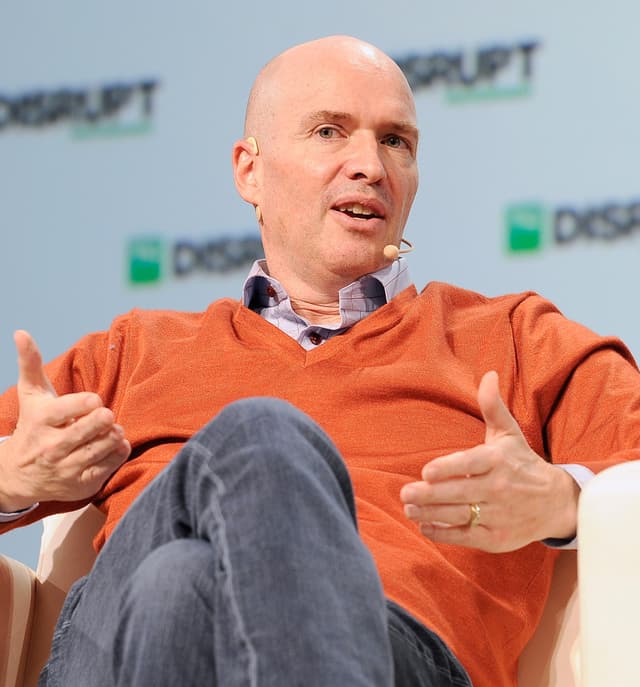
Ben Horowitz
Andreessen Horowitz
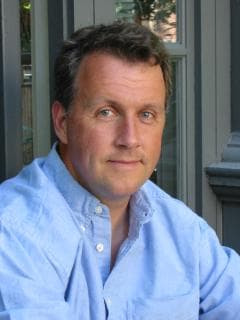
A prominent figure in the venture capital industry, Ben Horowitz co-founded Andreessen Horowitz in 2009, which has since become one of Silicon Valley's leading firms, managing over $16 billion in assets. Known for his candid insights into the challenges of entrepreneurship, he emphasizes the absence of formulas in navigating complex business landscapes, urging founders to learn through experience and share their lessons. Horowitz champions the importance of recognizing overlooked opportunities and advocates for maintaining productive tension in co-founder relationships, which he believes fosters innovation and mutual success. His book, "The Hard Thing About Hard Things," resonates with entrepreneurs today, illustrating the tough realities of building and leading high-tech companies.
Core Principles
customer obsession
Frame problems as opportunities to solve customer pain. A business idea emerges when you identify a specific problem that others face and create a solution. The best ideas come from observing real friction in existing systems.
LoudCloud was born when Horowitz's team noticed that deploying software to scale for millions of users was completely different and vastly more complex than running it for thousands. They recognized EDS and other partners had this problem and built a company around solving it.
“As we discussed ideas, InSeek complained that every time we tried to connect an AOL partner to the AOL e-commerce platform, the partner's site would crash because it couldn't handle the traffic load. There ought to be a company that does that all for them.”
Frame problems as opportunities to solve customer pain. A business idea emerges when you identify a specific problem that others face and create a solution. The best ideas come from observing real friction in existing systems.
LoudCloud was born when Horowitz's team noticed that deploying software to scale for millions of users was completely different and vastly more complex than running it for thousands. They recognized EDS and other partners had this problem and built a company around solving it.
“As we discussed ideas, InSeek complained that every time we tried to connect an AOL partner to the AOL e-commerce platform, the partner's site would crash because it couldn't handle the traffic load. There ought to be a company that does that all for them.”
finance
Avoid the trap of capital abundance. When capital is plentiful, entrepreneurs make poor decisions driven by the ability to spend rather than the discipline to build. Constraints force creative problem-solving.
After raising $45 million in debt with no payments required for three years, Horowitz's team abandoned frugality and made wasteful decisions. This contrasts with how companies that start with scarce resources tend to develop more sustainable business practices.
“The thinking this question leads to can be extremely dangerous... The only way to do that was to ship and try to sell the wrong product. We would fall on our faces, but we would learn fast.”
Avoid the trap of capital abundance. When capital is plentiful, entrepreneurs make poor decisions driven by the ability to spend rather than the discipline to build. Constraints force creative problem-solving.
After raising $45 million in debt with no payments required for three years, Horowitz's team abandoned frugality and made wasteful decisions. This contrasts with how companies that start with scarce resources tend to develop more sustainable business practices.
“The thinking this question leads to can be extremely dangerous... The only way to do that was to ship and try to sell the wrong product. We would fall on our faces, but we would learn fast.”
hiring
Hire for strength, not for lack of weakness. Focus your hiring and management energy on what people do well, not on correcting their shortcomings. Raw capability matters more than well-roundedness.
Horowitz learned as a founder that the most important lesson was to focus on what he needed to get right and stop worrying about all the things he could do wrong or might do wrong. This applies equally to hiring decisions.
“Perhaps the most important thing I learned as an entrepreneur was to focus on what I needed to get right and stop worrying about all the things that I did wrong or might do wrong.”
Hire for strength, not for lack of weakness. Focus your hiring and management energy on what people do well, not on correcting their shortcomings. Raw capability matters more than well-roundedness.
Horowitz learned as a founder that the most important lesson was to focus on what he needed to get right and stop worrying about all the things he could do wrong or might do wrong. This applies equally to hiring decisions.
“Perhaps the most important thing I learned as an entrepreneur was to focus on what I needed to get right and stop worrying about all the things that I did wrong or might do wrong.”
innovation
Recognize invisible opportunities hiding in plain sight. When almost everyone dismisses something as insignificant, it may actually be transformative. Great founders spot what others overlook.
In the early days of the internet, most technology leaders and companies like Oracle and Microsoft missed the internet's significance. Scientists thought it was too arcane and slow for business use. Horowitz recognized this as a massive blind spot that presented opportunity.
“Almost no one thought the internet would be significant beyond the scientific community. In our modern day, if the most significant invention of the last 50 years is the internet, and almost no one thought that it would be significant, there's clearly things that are hiding in plain sight in front of us.”
Find creative solutions to seemingly unsolvable problems. The Tangram acquisition solved a $20 million annual contract cancellation risk by buying a $6 million company for $10 million and bundling its product.
When EDS threatened to cancel a $20 million annual contract due to software bugs, Horowitz's team discovered that the real issue was the upcoming forced switch to an inferior product. By identifying what the customer actually wanted (Tangram software), Horowitz found a counterintuitive solution: acquire Tangram and bundle it free with Opsware.
“If Tangram can come free with Opsware, then Frank will love us.”
Copy great ideas from other successful founders and then add your own unique perspective. Innovation comes from learning what works, then making it your own.
Horowitz and Andreessen built Andreessen Horowitz by copying Michael Ovitz's strategy for building CAA. Ovitz created an integrated network that made the firm a hundred times more powerful than any individual agent. They applied this same model to venture capital, creating value through connection rather than individual performance.
“We decided to copy CAA's operating model nearly exactly.”
Recognize invisible opportunities hiding in plain sight. When almost everyone dismisses something as insignificant, it may actually be transformative. Great founders spot what others overlook.
In the early days of the internet, most technology leaders and companies like Oracle and Microsoft missed the internet's significance. Scientists thought it was too arcane and slow for business use. Horowitz recognized this as a massive blind spot that presented opportunity.
“Almost no one thought the internet would be significant beyond the scientific community. In our modern day, if the most significant invention of the last 50 years is the internet, and almost no one thought that it would be significant, there's clearly things that are hiding in plain sight in front of us.”
Find creative solutions to seemingly unsolvable problems. The Tangram acquisition solved a $20 million annual contract cancellation risk by buying a $6 million company for $10 million and bundling its product.
When EDS threatened to cancel a $20 million annual contract due to software bugs, Horowitz's team discovered that the real issue was the upcoming forced switch to an inferior product. By identifying what the customer actually wanted (Tangram software), Horowitz found a counterintuitive solution: acquire Tangram and bundle it free with Opsware.
“If Tangram can come free with Opsware, then Frank will love us.”
leadership
Maintain productive tension in co-founder relationships. The best partnerships have both challenge and respect. Partners should upset each other by finding flaws in thinking, but do so out of commitment to mutual success.
Horowitz and Andreessen maintained an effective partnership across three companies over 18 years. They regularly challenged each other's thinking, which created tension but also kept both sharp. Most relationships either become too tense or too complacent, but theirs stayed productive.
“With Mark and me, even after 18 years, he upsets me almost every day by finding something wrong in my thinking, and I do the same for him. It works.”
Two successful leaders can arrive at opposite conclusions about the same decision and both be right. Context and goals determine the right approach. There is rarely one universally correct way.
Mark Andreessen gives high titles cheaply because they cost nothing and boost morale. Mark Zuckerberg deliberately uses lower titles than industry standard to maintain a consistent leveling system and keep engineers at the cultural core. Both approaches work in their contexts.
“There are two schools of thought regarding this. One represented by Mark Andreessen and the other by Mark Zuckerberg.”
Maintain productive tension in co-founder relationships. The best partnerships have both challenge and respect. Partners should upset each other by finding flaws in thinking, but do so out of commitment to mutual success.
Horowitz and Andreessen maintained an effective partnership across three companies over 18 years. They regularly challenged each other's thinking, which created tension but also kept both sharp. Most relationships either become too tense or too complacent, but theirs stayed productive.
“With Mark and me, even after 18 years, he upsets me almost every day by finding something wrong in my thinking, and I do the same for him. It works.”
Two successful leaders can arrive at opposite conclusions about the same decision and both be right. Context and goals determine the right approach. There is rarely one universally correct way.
Mark Andreessen gives high titles cheaply because they cost nothing and boost morale. Mark Zuckerberg deliberately uses lower titles than industry standard to maintain a consistent leveling system and keep engineers at the cultural core. Both approaches work in their contexts.
“There are two schools of thought regarding this. One represented by Mark Andreessen and the other by Mark Zuckerberg.”
mindset
There is no formula for hard things. Business challenges that are complex and dynamic require experience and judgment, not recipes or formulas. Success comes from learning through doing and sharing those lessons with others.
Horowitz opens his book by acknowledging that many business books attempt to provide recipes for situations that have no recipes. Instead of formulas, he shares his personal stories and experiences as an entrepreneur and CEO to provide clues and inspiration rather than step-by-step solutions.
“There is no recipe for building a high-tech company. There is no recipe for leading a group of people out of trouble... There is no formula for dealing with them.”
Don't play the odds. Believe there is an answer and find it, regardless of probability. Your job is the same whether success is 9 in 10 or 1 in 1,000.
Founders often become paralyzed by statistics about startup failure. Horowitz argues that obsessing over odds is counterproductive. Whether your odds are terrible or excellent, your task remains: find a way forward and execute.
“Founders should not play the odds. When you are building a company, you must believe there is an answer and you cannot pay attention to your odds of finding it.”
There is no founder school. No job or education prepares you to run a company except running a company. You will face countless situations where you lack skills and knowledge, yet everyone will expect you to know what to do.
Unlike doctors or engineers with formal training and apprenticeships, founders learn only through doing. This creates both the challenge and the opportunity of entrepreneurship, where raw learning and adaptation are continuous.
“The first problem is that everybody learns to be a founder by being a founder. No training as a manager, general manager, or in any other job actually prepares you to run a company.”
Embrace your weirdness and unique background as your competitive advantage. The unusual parts of your story, instincts, and perspective are what will give you solutions others cannot find.
As Horowitz built Andreessen Horowitz, he realized that his non-traditional path, his experiences with failure, and his unique perspective were his strengths, not weaknesses. He tells entrepreneurs that their unique perspectives are where the keys to success live.
“Embracing the unusual parts of my background would be key to making it through. It would be those things that would give me unique perspectives and approaches to the business.”
There is no formula for hard things. Business challenges that are complex and dynamic require experience and judgment, not recipes or formulas. Success comes from learning through doing and sharing those lessons with others.
Horowitz opens his book by acknowledging that many business books attempt to provide recipes for situations that have no recipes. Instead of formulas, he shares his personal stories and experiences as an entrepreneur and CEO to provide clues and inspiration rather than step-by-step solutions.
“There is no recipe for building a high-tech company. There is no recipe for leading a group of people out of trouble... There is no formula for dealing with them.”
resilience
Focus exclusively on what you can control and influence. Mental energy spent elaborating on problems or past mistakes is wasted. Channel all effort toward finding one possible solution to your current situation.
When facing near-bankruptcy, Horowitz realized that spending time on regret or worry was unproductive. He redirected all energy toward finding ways to survive, which led to pivoting from hardware to software and eventually the Opsware strategy.
“All of the mental energy used to elaborate your misery would be far better used trying to find one seemingly impossible way out of your current mess... Just run your company.”
Ask yourself a different question when facing seemingly impossible situations. Instead of asking 'what's the worst that could happen,' ask 'what would I do if the worst happened.' This unlocks creative solutions.
When LoudCloud was failing, Horowitz first asked what the worst outcome was (bankruptcy, losing everyone's money). This paralyzed him. When he instead asked 'what would I do if we went bankrupt,' he realized he could buy back the software division and start a pure software company. This reframing led to Opsware.
“Then one day, I asked myself a different question. What would I do if we went bankrupt? The answer that came up would surprise me.”
Stay alive long enough to see the future. The technology game changes dramatically. If you survive long enough, tomorrow may bring solutions that seem impossible today.
Many technology shifts look impossible until they happen. Companies that stay operating long enough to see market changes often find that previous unsolvable problems become trivial with new technologies.
“If you survive long enough to see tomorrow, it may bring you the answer that seems impossible today.”
Never quit, even when the stress is overwhelming. Great founders are remarkable for their consistency in saying one thing: 'I didn't quit.' This is the distinguishing factor between great and mediocre founders.
Horowitz notes that many founders cope with stress through drinking, checking out, or quitting. When he asks successful founders how they did it, they point to various strategies and insights. But great founders all share one answer: they didn't quit.
“Whenever I meet a successful founder, I ask them how they did it... The great founders tend to be remarkably consistent in their answers. They all say, I didn't quit.”
Focus exclusively on what you can control and influence. Mental energy spent elaborating on problems or past mistakes is wasted. Channel all effort toward finding one possible solution to your current situation.
When facing near-bankruptcy, Horowitz realized that spending time on regret or worry was unproductive. He redirected all energy toward finding ways to survive, which led to pivoting from hardware to software and eventually the Opsware strategy.
“All of the mental energy used to elaborate your misery would be far better used trying to find one seemingly impossible way out of your current mess... Just run your company.”
Frameworks
Market of One Sales Strategy
When facing rejection or fundraising challenges, identify one potential customer or investor who might say yes and focus all energy there. Ignore the many who say no and concentrate on finding the one person who will. This reframes sales and fundraising from a numbers game to a targeted search.
Use case: Fundraising rounds, enterprise sales, partnership negotiations when facing widespread rejection
Problem-to-Solution Bridge
Identify a specific customer pain point, build a solution directly addressing that pain, and validate it by shipping imperfect product and learning fast. The worst outcome is going bankrupt while learning what customers actually need, not failing to perfect a non-essential product.
Use case: Early stage product development, identifying business opportunities, validating business models
Impossible Question Reframing
When a question paralyzes you (What's the worst that could happen?), replace it with a different question that unlocks action (What would I do if the worst already happened?). This shifts thinking from fear to problem-solving.
Use case: Leadership decision-making during crises, unlocking creative solutions to seemingly impossible situations
Market of One Sales Strategy
When facing rejection or fundraising challenges, identify one potential customer or investor who might say yes and focus all energy there. Ignore the many who say no and concentrate on finding the one person who will. This reframes sales and fundraising from a numbers game to a targeted search.
Use case: Fundraising rounds, enterprise sales, partnership negotiations when facing widespread rejection
Problem-to-Solution Bridge
Identify a specific customer pain point, build a solution directly addressing that pain, and validate it by shipping imperfect product and learning fast. The worst outcome is going bankrupt while learning what customers actually need, not failing to perfect a non-essential product.
Use case: Early stage product development, identifying business opportunities, validating business models
Impossible Question Reframing
When a question paralyzes you (What's the worst that could happen?), replace it with a different question that unlocks action (What would I do if the worst already happened?). This shifts thinking from fear to problem-solving.
Use case: Leadership decision-making during crises, unlocking creative solutions to seemingly impossible situations
Stories
A founder started something new, publicized it for feedback, received mixed responses, and gave up because the negative feedback discouraged him. But even the most successful products like Facebook (2 billion users out of 7 billion people) have more non-users than users.
Lesson: Focus on the market of one: the customers who love your product. Ignore the larger market that doesn't use it. Every product has more non-buyers than buyers.
Two weeks before a major product launch, Mark Andreessen revealed the entire launch strategy to Computer Reseller News without telling Ben or Mike. Ben sent an angry email. Mark replied explaining the dire market situation and why he had acted, ending with a provocative challenge. This interaction launched one of the most productive partnerships in technology.
Lesson: The best partnerships require both mutual respect and willingness to challenge each other. Tension and disagreement can be signs of a healthy relationship, not dysfunction.
When LoudCloud struggled with $20 million in annual revenue from a single EDS contract that the customer wanted to cancel, Horowitz's team discovered the real problem wasn't the software bugs, but the forced switch to an inferior product. They bought Tangram, a small company, for $10 million and bundled it free with Opsware, solving the customer's real problem.
Lesson: Listen to what customers actually want, not just what they say they want. The solution often lies in understanding the underlying need beneath the stated complaint.
When LoudCloud appeared to be failing, Horowitz first asked himself 'What's the worst thing that could happen?' (bankruptcy, losing everyone's money). This paralyzed him. When he instead asked 'What would I do if we went bankrupt?', he realized he could buy back the software division and start a pure software company. This reframing led to the Opsware pivot.
Lesson: When paralyzed by fear of outcomes you can't control, shift your thinking to actions you can take. Focus on what you would do if your worst fear came true.
Mark Andreessen, at age 22, conducted Horowitz's job interview by asking about the history of email and collaboration software rather than reviewing his resume. Horowitz was struck that a 22-year-old understood technology history better than most senior people he'd met.
Lesson: Understanding the history and context of your field provides perspective that pure technical knowledge cannot. Foundation knowledge compounds over a career.
After selling Opsware for $1.65 billion after eight years of building it from nothing, seeing it nearly fail, and rebuilding it, Horowitz felt sick and cried. Then he realized it was the smartest thing he'd ever done because he'd learned more than almost anyone in business.
Lesson: The hardest work and greatest stress often precedes the greatest rewards. The value of experience gained through struggle exceeds the monetary value of the exit.
Two weeks before a major product launch, Mark Andreessen revealed the entire launch strategy to Computer Reseller News without telling Ben or Mike. Ben sent an angry email. Mark replied explaining the dire market situation and why he had acted, ending with a provocative challenge. This interaction launched one of the most productive partnerships in technology.
Lesson: The best partnerships require both mutual respect and willingness to challenge each other. Tension and disagreement can be signs of a healthy relationship, not dysfunction.
Mark Andreessen, at age 22, conducted Horowitz's job interview by asking about the history of email and collaboration software rather than reviewing his resume. Horowitz was struck that a 22-year-old understood technology history better than most senior people he'd met.
Lesson: Understanding the history and context of your field provides perspective that pure technical knowledge cannot. Foundation knowledge compounds over a career.
When LoudCloud struggled with $20 million in annual revenue from a single EDS contract that the customer wanted to cancel, Horowitz's team discovered the real problem wasn't the software bugs, but the forced switch to an inferior product. They bought Tangram, a small company, for $10 million and bundled it free with Opsware, solving the customer's real problem.
Lesson: Listen to what customers actually want, not just what they say they want. The solution often lies in understanding the underlying need beneath the stated complaint.
A founder started something new, publicized it for feedback, received mixed responses, and gave up because the negative feedback discouraged him. But even the most successful products like Facebook (2 billion users out of 7 billion people) have more non-users than users.
Lesson: Focus on the market of one: the customers who love your product. Ignore the larger market that doesn't use it. Every product has more non-buyers than buyers.
Notable Quotes
“There is no recipe for building a high-tech company. There is no recipe for leading a group of people out of trouble. There is no recipe for making a series of hit songs... That's the hard thing about hard things. There is no formula for dealing with them.”
Opening argument of the book, establishing that complex dynamic problems cannot be solved with templates or recipes
“I share my experiences in the hopes of providing clues and inspiration for others who find themselves in the struggle to build something out of nothing.”
Explaining the purpose of sharing his story rather than prescriptive formulas
“People often ask me how we've managed to work effectively across three companies over 18 years. Most business relationships either become too tense to tolerate or not tense enough to be productive after a while. With Mark and me, even after 18 years, he upsets me almost every day by finding something wrong in my thinking, and I do the same for him. It works.”
Reflecting on the unusual longevity and productivity of his partnership with Mark Andreessen
“What would you do if capital were free? Two months later, we would raise an additional $45 million from Morgan Stanley in debt and no payments for three years. So Andy's question was more reality-based than you might think. Nonetheless, what would you do if capital were free is a dangerous question to ask an entrepreneur.”
Explaining how capital abundance leads to poor decisions and lack of frugality
“Look for a market of one. You only need one investor to say yes. It's best to ignore the other 30 who say no.”
Lesson learned during fundraising when nearly bankrupt with 300 employees
“In contrast when you're a founder nothing happens unless you make it happen. In the early days of a company there is no inertia that's putting the company in motion without massive input from you the company will stay at rest.”
Contrasting the founder role to big company executive roles
“Founders should not play the odds. When you are building a company, you must believe there is an answer and you cannot pay attention to your odds of finding it. It matters not whether your chances are 9 in 10 or 1 in 1,000. Your task is the same.”
Advising founders not to become paralyzed by statistics about startup failure
“All of the mental energy used to elaborate your misery would be far better used trying to find one seemingly impossible way out of your current mess. Spend zero time on what you could have done and devote all of your time on what you might do because in the end, nobody cares. Just run your company.”
Advising on where to direct mental energy during crises
“Perhaps the most important thing I learned as an entrepreneur was to focus on what I needed to get right and stop worrying about all the things that I did wrong or might do wrong.”
Core lesson about hiring and management focus
“Then one day, I asked myself a different question. What would I do if we went bankrupt? The answer that came up would surprise me. I'd buy our software, Opsware, which runs in Loud Cloud, out of bankruptcy and start a software company.”
Describing the moment when reframing a question unlocked the Opsware strategy
Frequently Asked Questions
What are Ben Horowitz's key business principles?▼
Ben Horowitz's core principles include: Frame problems as opportunities to solve customer pain. A business idea emerges when you identify a specific problem that others face and create a solution. The best ideas come from observing real friction in existing systems.. Frame problems as opportunities to solve customer pain. A business idea emerges when you identify a specific problem that others face and create a solution. The best ideas come from observing real friction in existing systems.. Avoid the trap of capital abundance. When capital is plentiful, entrepreneurs make poor decisions driven by the ability to spend rather than the discipline to build. Constraints force creative problem-solving.. Founder Almanac has cataloged 30 total principles from Ben's career.
What can entrepreneurs learn from Ben Horowitz?▼
Key lessons from Ben Horowitz include: Focus on the market of one: the customers who love your product. Ignore the larger market that doesn't use it. Every product has more non-buyers than buyers.. Explore 10 stories and 6 frameworks from Ben's experience.
What is Ben Horowitz known for in business?▼
A prominent figure in the venture capital industry, Ben Horowitz co-founded Andreessen Horowitz in 2009, which has since become one of Silicon Valley's leading firms, managing over $16 billion in assets. Known for his candid insights into the challenges of entrepreneurship, he emphasizes the absence of formulas in navigating complex business landscapes, urging founders to learn through experience and share their lessons. Horowitz champions the importance of recognizing overlooked opportunities and advocates for maintaining productive tension in co-founder relationships, which he believes fosters innovation and mutual success. His book, "The Hard Thing About Hard Things," resonates with entrepreneurs today, illustrating the tough realities of building and leading high-tech companies.
More Venture Capital Founders
Want Ben's advice on your business?
Our AI has studied Ben Horowitz's biography, principles, and decision-making frameworks. Ask any business question.
Start a conversation