
Naval Ravikant
AngelList
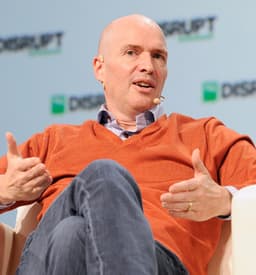
A prominent figure in the venture capital industry, Naval Ravikant co-founded AngelList in 2010, revolutionizing startup fundraising by connecting entrepreneurs with investors and facilitating over $1 billion in investments. Growing up in a single-parent household as an immigrant, he developed a deep understanding of wealth and freedom, advocating for equity ownership as a path to financial independence. Ravikant's principles emphasize the importance of long-term thinking and the pursuit of wisdom, asserting that true wealth comes from assets that generate passive income rather than money or status. His insights, such as "The best jobs are neither decreed nor degreed," inspire a new generation of entrepreneurs to embrace creative learning and innovation in free markets.
Core Principles
competitive advantage
Escape competition through authenticity. Competition exists when you copy others. When you're authentic, you have a monopoly of one.
Naval argues that copying others leads to commoditization. True differentiation comes from being uniquely yourself, which no one else can replicate. This is why authenticity is the only sustainable competitive advantage.
“Escape competition through authenticity.”
culture
Make an important effort to be honest at all times. You can almost always find a way to be both honest and positive.
Naval combines radical honesty with radical positivity. Honesty without kindness is cruelty. Positivity without honesty is delusion. The skill is finding the honest truth that also points forward constructively.
“Total honesty at all times. It's almost always possible to be honest and positive.”
Praise specifically, criticize generally. This approach maintains relationship and morale while still providing feedback.
Naval applies Warren Buffett's principle: when praising, be precise about what was good so the recipient knows what to repeat. When criticizing, speak in general terms to avoid ego bruising, which shuts down learning.
“Praise specifically, criticize generally.”
customer obsession
You must understand what society wants but does not yet know how to get. Deliver it and deliver it at scale.
Naval defines the core challenge of value creation. The opportunity lies in identifying latent demand and building the solution before others recognize the need. Steve Jobs and Apple exemplified this with smartphones.
“Think about what product or service society wants but does not yet know how to get.”
decision-making
If you can't decide between options, the answer is no. Say yes only when you are quite certain, understanding that major decisions lock you in for years.
Naval advises applying this heuristic to marriage, career, business partnerships, and location choices. These decisions have long time horizons (5-20 years), so the default should be to decline uncertain opportunities. Only strong signals warrant commitment.
“If you cannot decide, the answer is no. When you choose something, you get locked in for a long time.”
finance
Seek wealth as assets that earn while you sleep, not money or status. Wealth is fundamentally different from the transfer medium (money) or social position.
Naval distinguishes between three concepts that people often conflate. Wealth compounds through ownership and passive income. Money is merely the exchange mechanism. Status games distract from actual value creation.
“Wealth is having assets that earn while you sleep. Money is how we transfer time and wealth. Status is your place in the social hierarchy.”
You cannot get rich renting out your time. You must own equity, a piece of a business, to achieve financial freedom. Without ownership, your inputs are tightly tied to your outputs.
Naval emphasizes the fundamental asymmetry: salary work trades hours for money, meaning you don't earn while sleeping, on vacation, or retired. Building wealth requires decoupling your labor from your income through business ownership.
“Without ownership, your inputs are very closely tied to your outputs. In almost any salary job, even one paying a lot per hour, like a lawyer or doctor, you're still putting in the hours.”
focus
Pick one thing to suffer for, not many. Cultivate desire for it and visualize it. Suffer for the most important thing in your life.
Naval argues that sacrifice is necessary for achieving meaningful goals. However, spreading effort across many goals dilutes impact. Concentration of sacrifice on one central mission compounds results much faster.
“Pick one thing, cultivate a desire and visualize it.”
innovation
To make an original contribution, you must be irrationally obsessed with something. Rational pursuit of known problems does not lead to breakthroughs.
Naval observes that innovation requires passion beyond what rational analysis would justify. The most important discoveries come from people willing to pursue 'irrational' obsessions that turn out to be deeply important.
“To make an original contribution you have to be irrationally obsessed with something.”
The democratization of technology allows anyone to be a creator, entrepreneur, and scientist. The future is brightening.
Naval sees the internet and digital tools as fundamentally liberating. Barriers to entry in most fields have collapsed. Anyone with curiosity and effort can build, teach, and create on a global scale.
“The democratization of technology allows anyone to be a creator, entrepreneur, scientist. The future is brighter.”
leadership
Embrace accountability and take business risks under your own name. Society will reward you with responsibility, equity, and leverage.
Naval observes that people like Elon Musk, Oprah, and Joe Rogan build their brands by staking their reputations on their work. This accountability creates trust and credibility, attracting leverage and opportunity that flows toward those willing to put their names on their work.
“Embrace accountability and take business risks under your own name. Society will reward you with responsibility, equity, and leverage.”
Demonstrate judgment and build credibility through public accountability over a long time. Leverage flows to those with proven track records.
Naval uses Warren Buffett as the ultimate example. Buffett's decades of public success, integrity, and consistent judgment earned him a level of credibility that allows unlimited leverage to flow his direction without question. Judgment is only credible when tested and proven.
“Warren Buffett wins here because he has massive credibility. He has been highly accountable. He's been right over and over again in the public domain.”
learning
When specific knowledge is taught, it is through apprenticeships, not schools. Specific knowledge is often highly technical or creative and cannot be outsourced or automated.
Naval explains that formal education systems teach generalizable knowledge. Specific knowledge, by definition, cannot be systematized or taught in a classroom. It must be learned through mentorship and hands-on practice in real-world contexts.
“When specific knowledge is taught, it's through apprenticeships, not schools.”
Reading is faster than listening. Doing is faster than watching. Prioritize the most efficient ways of learning and building.
Naval ranks learning modalities by effectiveness. Reading allows you to set your own pace and revisit material. Doing provides the fastest feedback loops. Watching or listening are passive and slower than active learning methods.
“Reading is faster than listening. Doing is faster than watching.”
Study microeconomics, game theory, psychology, persuasion, ethics, mathematics, and computers. These are the foundational tools for thinking clearly.
Naval identifies a curriculum of mental models and disciplines that enable better decision-making. These subjects provide frameworks for understanding human behavior, incentives, systems, and logic that apply across domains.
“Study microeconomics, game theory, psychology, persuasion, ethics, mathematics, and computers.”
A genuine love for reading is a superpower. In the age of infinite information, the desire to learn is the scarce resource.
Naval notes that knowledge is abundant and accessible now, but the motivation to learn is rare. Those who genuinely love reading and learning compound their advantages faster than anyone else, since they are constantly upgrading their mental models.
“A genuine love for reading itself is a superpower. We live in the age of Alexandria, where every book and every piece of knowledge ever written down is a fingertip away.”
Read old books and ancient wisdom for timeless problems like health, happiness, family, and values. Time is the best filter of truth.
Naval distinguishes between modern problems (how to fly a plane) which need modern solutions, and ancient problems (how to stay calm, raise a family) where ancient solutions have been filtered through centuries of trial and error. A book surviving 2,000 years has been refined by many minds.
“Any book that survived for 2,000 years has been filtered through many people. The general principles are more likely to be correct.”
mindset
Develop wisdom by understanding the long-term consequences of your actions. Wisdom is judgment applied to external problems.
Naval defines wisdom as future-oriented thinking. Judgment is the skill of making decisions with long-term consequences in mind. This requires modeling cause and effect across time, not just optimizing for immediate outcomes.
“My definition of wisdom is knowing the long-term consequences of your actions.”
Find work that feels like play to you but looks like work to others. If what you do feels like work to you and play to them, you cannot compete.
Naval uses examples like Warren Buffett reading annual reports for fun, Steve Jobs obsessing over product design, and historical figures like David Ogilvy and Thomas Edison. When your passion aligns with your work, you gain an insurmountable competitive advantage through sustained effort.
“Building specific knowledge will feel like play to you, but will look like work to others.”
Judgment requires experience but can be built faster by learning foundational skills. Leverage is a force multiplier for your judgment.
Naval emphasizes that leverage amplifies whatever judgment you have. Poor judgment with leverage creates disasters, while good judgment with leverage creates wealth. This makes developing sound judgment a prerequisite for responsible leverage.
“Judgment requires experience, but can be built faster by learning foundational skills. Leverage is a force multiplier for your judgment.”
Do not try to be brilliant, try to be consistently not dumb. If you can avoid mistakes over decades, you will appear brilliant.
Naval applies Charlie Munger's inversion principle to decision-making. Rather than trying to make perfect decisions, focus on eliminating obviously bad decisions. This defensive approach, sustained over time, creates the appearance and reality of brilliance.
“I don't believe I have the ability to say what is going to work. Rather, I try to eliminate what's not going to work.”
When facing a difficult decision that is evenly split, take the path more painful in the short term. Long-term gains come from short-term suffering.
Naval identifies a cognitive bias where people overvalue short-term comfort. By deliberately choosing the harder path when genuinely uncertain, you correct for this bias and align yourself with compound interest, which rewards delayed gratification.
“If you're evenly split on a difficult decision, take the path more painful in the short term. Most of the gains in life come from suffering in the short term.”
Frameworks
The Hourly Rate Framework
Set an aspirational hourly rate for yourself based on your highest-value activities. Any task that costs less than this rate to outsource should be delegated. Any task that costs more than this rate to fix should be ignored. This forces prioritization.
Use case: Time management, scaling operations, delegating work; making outsourcing and prioritization decisions based on opportunity cost
The Three Pillars of Wealth Creation
Specific knowledge plus accountability plus leverage equals wealth. You need domain expertise, willingness to stake your reputation, and force multipliers. These three elements combined create non-linear returns. Without all three, your returns will be limited to linear scaling of effort.
Use case: Evaluating your path to wealth creation; identifying which pillars you are missing and need to develop
The Leverage Hierarchy
Capital leverage requires permission and getting others to give you money. Labor leverage requires getting others to work for you. Code and media leverage are permissionless and scalable with no marginal cost. Each level up in the hierarchy allows exponentially greater returns for the same effort.
Use case: Choosing how to scale your business; deciding which leverage multiplier to develop based on your constraints and goals
The Three Life Decisions
Your location, your partner, and your work are the three decisions that dominate the arc of your life. Each locks you in for years or decades. Spend one to two years carefully deciding each rather than rushing. These three decisions compound their effects for the rest of your life.
Use case: Career transitions, relationship milestones, relocation decisions; applying deep thinking to decisions with long time horizons
Inversion Decision-Making
Instead of deciding what will work, eliminate what will not work. This is defensive thinking that compounds when sustained over decades. By avoiding obviously bad decisions consistently, you will appear brilliant. Success is more about not failing than about perfect analysis.
Use case: Risk management, decision-making under uncertainty; reframing success as avoidance of major mistakes rather than prediction of winners
The Uphill Heuristic
When facing a difficult decision that is even, choose the path more painful in the short term. This counteracts the brain's tendency to overvalue short-term comfort. Short-term pain usually signals long-term gain due to compound interest.
Use case: Choosing between two options when truly undecided; career decisions like staying in difficult job versus starting risky business
Productizing Yourself
Combine your uniqueness with leverage. Take what is distinctive about you (your specific knowledge, skills, interests) and build leverage around it through code, media, or capital so it scales. This is the modern path to wealth without copying others.
Use case: Building a personal brand, starting a business, or creating a career; creating a monopoly of one through authentic differentiation
The Content Consumption Model
Reading is faster than listening. Doing is faster than watching. Prioritize modalities by speed and effectiveness. Reading allows pacing, rewinding, and note-taking. Doing provides fastest feedback. Watching is passive and slowest.
Use case: Choosing learning methods; allocating time to education based on effectiveness rather than convenience
The Yes or No Decision Rule
If you cannot decide, the answer is no. When choosing something, say yes only when you are quite certain, since major commitments lock you in for years. Use this heuristic for marriage, job, business partnership, location moves.
Use case: Major life decisions, startup partnerships, accepting opportunities; default to declining when uncertain
The Authenticity Advantage
When you copy others, you compete. When you are authentic, you have a monopoly of one. Competition exists only between similar things. By being uniquely yourself, no one can compete with you on being you.
Use case: Differentiating in crowded markets, developing brand strategy, personal positioning; escaping competition through authenticity
Stories
Naval grew up in a single-parent household as a poor immigrant, where his mother provided unconditional love despite hardship. He spent his after-school time in the library reading, treating books as his best friends. Passing a test into Stuyvesant High School provided the brand signal that allowed him to break the cycle and later attend an Ivy League school, leading to his eventual success in tech.
Lesson: Unconditional love and access to knowledge can transform a child's trajectory. Getting one credible signal or opportunity can open doors to exponentially better futures. The library as an equalizer shows how intellectual access can overcome economic disadvantage.
Kobe Bryant called Michael Jordan to discuss coaching young basketball players who were being taught advanced techniques. Jordan said he was playing baseball at 12, not learning advanced basketball plays. Kobe realized the coaches were overcomplicating things. The greatest basketball player ever did not focus on advanced concepts as a kid.
Lesson: Master fundamentals first. Advanced concepts are less proven and often a distraction from depth. The best performers spend decades perfecting basics rather than constantly learning new techniques.
Edwin Land, founder of Polaroid, described his company as selling the results of their trial and error. Every experiment that failed was part of the product they eventually sold. A company is the accumulation of all failures that led to success.
Lesson: Your real resume is a catalog of all your suffering. Products and solutions are the visible results of thousands of invisible experiments and failures. The sacrifice and iteration are what create value.
MrBeast, a young YouTuber, outsources everything except video creation. He does not think about what he eats or buys his clothes. He consciously applies Naval's principle about hourly rates: the single most valuable thing he can do is think about making better videos. Everything else gets delegated.
Lesson: Know what your highest-value activity is and ruthlessly protect your time for it. Everything else, no matter the cost, should be outsourced or eliminated if the cost is less than your hourly rate.
Naval describes the future where instead of massive companies, there might be seven billion companies, one for each person. The internet enables anyone to work for themselves, moving back toward the hunter-gatherer model of independent work. Technology is democratizing entrepreneurship.
Lesson: The future of work is individuals creating value independently, not hierarchical employment. The internet has removed barriers to entry for most fields, enabling anyone with skill and determination to build their own venture.
Warren Buffett was asked by college students how to start investing successfully. He pointed to a stack of company reports and told them to read 500 pages a day for years. His point was that knowledge compounds just like money. Most people seek shortcuts, but Buffett's real competitive advantage came from building this habit when he was young.
Lesson: Compound knowledge through sustained reading creates non-linear returns. There are no shortcuts to becoming exceptional at anything. Consistency over decades in the fundamentals beats any clever strategy.
Ed Thorp was a legendary investor and founder of the first quantitative hedge fund. Though fabulously wealthy, he turned down opportunities to make billions more because he preferred independence and control. He optimized for time with family, daily workouts, learning, and a balanced life over maximum financial accumulation.
Lesson: Optimization for independence and control creates a richer life than pure financial maximization. The freedom to work on what you choose and live how you want is worth more than additional billions. Success across multiple life domains compounds.
Elon Musk was asked how to build a successful company. He pointed to reading biographies of people like Benjamin Franklin, noting that Franklin figured out what needed to be done at the time and did it. He then moved to the next important thing. This iterative focus on the most important current problem is what Musk admired and applied.
Lesson: Study what people actually did in biographies, not abstract theory. The pattern of identifying and focusing on the most important current problem, then moving to the next, is a transferable mental model across contexts.
Jeff Bezos was shown iTunes and the iPod by Steve Jobs, who warned that music would become obsolete. Rather than try to out-Apple Apple in music, Bezos copied the how of Apple's digitization strategy and applied it to reading with the Kindle, creating a new market.
Lesson: Do not copy the what, copy the how. Learn the underlying principles from successful people and apply them to your own domain. This avoids direct competition and creates new categories.
Notable Quotes
“The best jobs are neither decreed nor degreed. They are creative expressions of continuous learners in free markets.”
Perfectly describes Arnold's approach to film, real estate, and politics. He was a continuous learner who created his own path rather than following prescribed routes.
“Seek wealth, not money or status. Wealth is having assets that earn while you sleep.”
Opening of his famous 'How to Get Rich Without Getting Lucky' tweet storm, distinguishing wealth from money and status
“Pick an industry where you can play long term games with long term people.”
Emphasizing the importance of choosing partners and industries that allow compounding over decades
“Building specific knowledge will feel like play to you, but will look like work to others.”
Illustrating why people with specific knowledge aligned to their interests are unbeatable competitors
“No one can compete with you on being you.”
Emphasizing authenticity as the only sustainable competitive advantage
“I don't believe I have the ability to say what is going to work. Rather, I try to eliminate what's not going to work.”
Describing his approach to decision-making through inversion rather than prediction
“When you choose something, you get locked in for a long time.”
Justifying why major decisions should only be made with high conviction
“The Internet has massively broadened the possible space of careers. Most people haven't figured this out yet.”
Describing the structural opportunity of the internet age that remains largely untapped
“Wealth is having assets that earn while you sleep.”
Foundational definition of wealth that guides all other principles
“Praise specifically, criticize generally.”
Citing Warren Buffett's principle of constructive feedback that maintains relationships while improving performance
Frequently Asked Questions
What are Naval Ravikant's key business principles?▼
Naval Ravikant's core principles include: Escape competition through authenticity. Competition exists when you copy others. When you're authentic, you have a monopoly of one.. Make an important effort to be honest at all times. You can almost always find a way to be both honest and positive.. Praise specifically, criticize generally. This approach maintains relationship and morale while still providing feedback.. Founder Almanac has cataloged 30 total principles from Naval's career.
What can entrepreneurs learn from Naval Ravikant?▼
Key lessons from Naval Ravikant include: Unconditional love and access to knowledge can transform a child's trajectory. Getting one credible signal or opportunity can open doors to exponentially better futures. The library as an equalizer shows how intellectual access can overcome economic disadvantage.. Explore 9 stories and 10 frameworks from Naval's experience.
What is Naval Ravikant known for in business?▼
A prominent figure in the venture capital industry, Naval Ravikant co-founded AngelList in 2010, revolutionizing startup fundraising by connecting entrepreneurs with investors and facilitating over $1 billion in investments. Growing up in a single-parent household as an immigrant, he developed a deep understanding of wealth and freedom, advocating for equity ownership as a path to financial independence. Ravikant's principles emphasize the importance of long-term thinking and the pursuit of wisdom, asserting that true wealth comes from assets that generate passive income rather than money or status. His insights, such as "The best jobs are neither decreed nor degreed," inspire a new generation of entrepreneurs to embrace creative learning and innovation in free markets.
More Venture Capital Founders



Want Naval's advice on your business?
Our AI has studied Naval Ravikant's biography, principles, and decision-making frameworks. Ask any business question.
Start a conversation