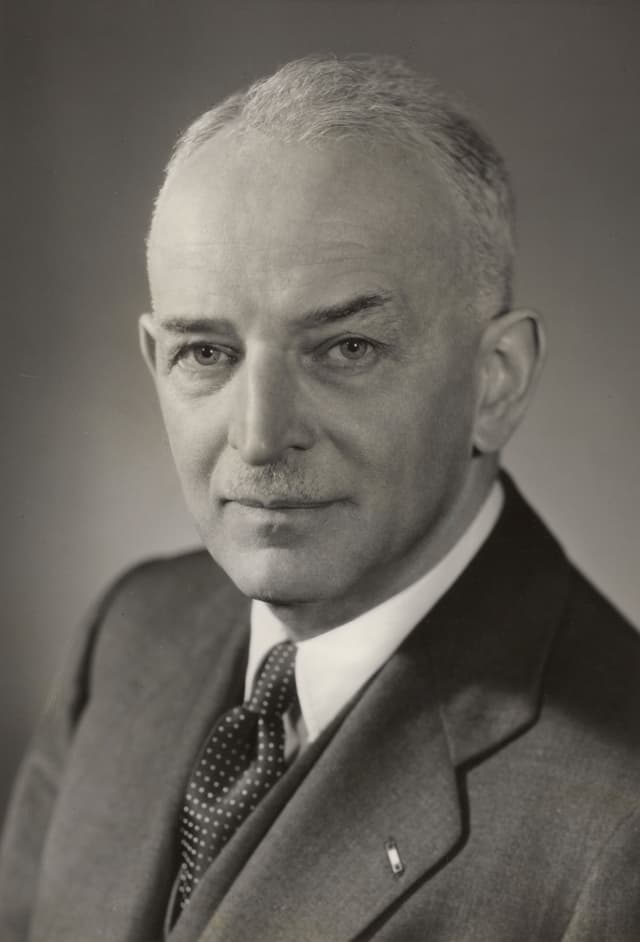
Georges Doriot
American Research and Development Corporation (ARD)
A pioneer in the venture capital industry, Georges Doriot founded the American Research and Development Corporation (ARD) in 1946, transforming the landscape for entrepreneurs by investing in innovative startups. He was instrumental in the early financing of companies like Digital Equipment Corporation, which became a significant player in the computer revolution, resulting in substantial returns for ARD and paving the way for future venture funding. Doriot believed that people mattered more than ideas or financial returns, emphasizing the importance of nurturing talent and building relationships within the business community. His principle that "an average idea executed by an able person outperforms an outstanding idea executed by an average person" continues to resonate with entrepreneurs today, as does his vision of creating new asset classes by addressing market gaps. Doriot's commitment to funding the unprecedented is encapsulated in his belief that "a commercial bank lends only on the strength of the past; I want money to do things that have never been done before."
Core Principles
culture
Strong work ethic is a character trait worth building into organizational culture and evaluating in people.
Doriot believed his students needed to understand what an honest day's work means. He intentionally hired hardworking people (like Scandinavians who work very hard), modeled extreme work hours himself, and made work ethic a core value.
“I do believe that the men leave my class, they have a definitive notion of what an honest day's work means.”
finance
Patient capital that nurtures companies over a decade or more generates greater returns than short-term speculation.
Doriot referred to his portfolio companies as his children and often worked with companies for 10+ years before realizing returns. While this approach created pressure from public markets wanting immediate earnings, it proved far more profitable in the long term.
“George often worked with the company for a decade or more before realizing any return. That is why he often referred to his company as his children.”
Raise money when you do not need it, because opportunities appear when credit is scarce or expensive.
Doriot emphasized maintaining financial firepower during good times to capitalize on opportunities when markets contract and others cannot access capital. This allowed ARD to continue investing when competitors withdrew.
“You should always raise money when you do not need it. Having learned through hard experience that when you do not need money, chances are you are unlikely to get it.”
Accumulate and concentrate your wealth in a few high-conviction positions rather than diversifying broadly.
Doriot's greatest wealth came not from ARD's many investments, but from his concentrated stake in Digital Equipment Corporation, following the pattern of Rockefeller with Standard Oil and the Rothschilds with gold. Focused accumulation in truly valuable assets beat diversification.
hiring
Recruit talented people from your extended network of former students and mentees built over decades.
Doriot maintained relationships with thousands of Harvard students over 40 years, detailed records of their careers, and directly recruited the best into ARD and his portfolio companies. This network proved invaluable for staffing ventures.
When you have multiple opportunities, choose to work with the smartest, most capable people you know.
Doriot had several military offers during WWII but chose the Quartermaster Corps because he considered General Gregory the most intelligent officer he knew. He believed capability of people was the limiting factor in any endeavor.
“I had several other offers, but the only reason I went to the Quartermasters is that I considered General Gregory the most intelligent officer I knew.”
Look for resourceful people who can make ideas practical rather than just creative people with ideas.
Doriot distinguished between creative people (who have ideas) and resourceful people (who make them practical). He actively sought resourceful individuals like Ken Olson who could translate vision into executable reality.
“A creative man merely has ideas. A resourceful man makes them practical. I look for resourceful men.”
An average idea executed by an able person outperforms an outstanding idea executed by an average person.
Doriot emphasized that talent and capability matter more than the brilliance of the initial concept. This shaped his investment philosophy and hiring practices, leading him to focus relentlessly on finding resourceful, capable individuals rather than chasing trendy ideas.
“An average idea in the hands of an able man is worth much more than an outstanding idea in the possession of a person with only average ability.”
innovation
Always remember that new products will make your current products obsolete. Embrace disruption.
Doriot taught this maxim to students at Harvard, understanding that complacency was death. This principle informed his investment in companies specifically designed to disrupt existing industries.
“Always remember that someone somewhere is making a product that will make your product obsolete.”
leadership
Use teaching as your primary leadership tool to develop people's thinking rather than simply directing them.
Doriot framed his entire career as teaching: at Harvard, in the military, and at ARD. He believed effective leadership was about asking questions that made people think, not dictating answers. Students and employees describe him as Yoda-like in dispensing wisdom.
Form close personal bonds between teacher and student rather than maintaining institutional distance.
Doriot rejected the traditional model of professorial aloofness. He formed personal relationships with each student, provided individualized attention, and continued mentoring relationships for life.
People are more important than ideas or financial returns. Build relationships and nurture talent above all else.
Doriot famously said he was building men and companies, not just seeking returns. He maintained detailed files on students and mentees for decades, directly recruited talented individuals into ventures, and prioritized loyalty and character over short-term profits.
“I am building men and companies. If a man is good and loyal and does not achieve a so-called good rate of return, I will stay with him.”
mindset
Develop a personal philosophy of business and life that is uniquely yours and reflects your values.
Doriot called his Harvard course Manufacturing, but it was really his philosophy of life and business. He spent decades refining a set of principles around hard work, integrity, self-improvement, and contribution to society that he taught to thousands of students.
Courage is doing something difficult when no one is watching or when society isn't celebrating it.
Doriot taught that real courage wasn't public heroism but private integrity. This reflected his own behavior: maintaining conviction in ventures that were publicly ridiculed, fighting regulations no one else challenged, pursuing opportunities others abandoned.
“A real courageous man is a man who does something courageous when no one is watching him.”
Balance perfectionism and high standards with the ability to move forward despite imperfection.
Doriot was trained by his father to never settle for second place and to see contentment as stagnation. Yet he also understood that endless perfectionism prevented action. The balance was pursuing excellence while remaining pragmatic about execution.
Study deep business and human history to understand that principles repeat even when circumstances change.
Doriot observed patterns across centuries of human enterprise: the Rothschilds creating the bond market, Rockefeller accumulating Standard Oil stock, Ford revolutionizing manufacturing. Understanding these patterns informed his belief that history repeats in human nature, revealing where future opportunities lie.
operations
Bypass bureaucratic channels to get unfiltered information directly from frontline sources.
Doriot encouraged employees to write him directly rather than going through chain of command, believing managers filter and distort information. He wanted raw, immediate feedback from people closest to the problems.
“He wanted us to violate all kinds of rules and regulations and just write a letter and put a stamp on it.”
Pay attention to details others miss, especially those affecting frontline execution and user experience.
During WWII, Doriot measured foot space in tanks to ensure soldiers' shoes would fit comfortably, and requisitioned water-repellent fabrics and cold-weather uniforms. These small details determined whether soldiers survived in harsh conditions.
resilience
Invest in people and companies you believe in despite market skepticism and short-term returns.
ARD's stock price was destroyed for years while the company was actually building successful ventures and a new industry. Doriot maintained conviction in his strategy despite external pressure to sell out or produce immediate earnings.
Recognize that beginning endeavors are always misunderstood by outsiders and maintain conviction despite criticism.
Wall Street called ARD a philanthropic enterprise, a financial mouse, and a freak. Fortune magazine mocked it. Doriot maintained conviction that venture capital was important even when all external signals suggested failure.
Be willing to defy conventional wisdom and break the rules when pursuing something important.
Doriot fought with the SEC and IRS, lobbied to change investment laws that precluded new ventures, resisted military orders to ensure soldiers had proper equipment, and upset Wall Street by proving small unproven companies could generate huge returns.
strategy
Apply scientific and engineering thinking to solve problems in any domain, not just technical fields.
Doriot brought systematic problem-solving from engineering and science to military logistics, education, and finance. His father's engineering background and his observation of Henry Ford's manufacturing innovations showed him how to apply these principles across domains.
The riskiest investments in emerging technology hold the greatest potential for both financial returns and personal satisfaction.
After years of moderate success with safer investments, ARD discovered that early-stage investments in unproven technology companies generated the highest returns. They learned internally what outsiders called crazy that the most promising opportunities appeared as long-haired, risky projects.
“Now we realize that our best things are longhaired.”
Combine deep historical knowledge with close attention to the cutting edge of technology to identify emerging asset classes and opportunities.
Doriot's unique insight came from studying centuries of business history while observing emerging technologies and entrepreneurial ventures of his time. This combination allowed him to recognize that innovation and entrepreneurship were where future wealth would be created.
Believe in and invest in technology and innovation decades before mainstream acceptance.
Doriot recognized in the early 1940s that innovation was the key to economic progress and that value would flow to startups and entrepreneurs, not incumbents. This was counterintuitive when all value appeared concentrated in established corporations.
Create new asset classes by identifying market gaps and systemic deficiencies that prevent value creation.
Doriot observed that banks were ultra-conservative and unwilling to lend to unproven ventures, leaving entrepreneurs without capital. This gap inspired him to create ARD as the first professional venture capital firm, inventing an entirely new asset class that eventually grew into a $100+ trillion market.
“A commercial bank lends only on the strength of the past. I want money to do things that have never been done before.”
Frameworks
Creative Capital Framework
A venture capital investment philosophy based on three core tenets: the riskiest investments in emerging technology generate the greatest returns, early-stage companies benefit most from hands-on nurturing and guidance over years, and the combination of younger innovators with older experienced operators creates optimal teams. The framework requires patience, deep involvement, and belief in entrepreneurs before results are visible.
Use case: Identifying and nurturing early-stage technology companies; structuring VC fund investment strategies; developing portfolio company support approaches
Team-First Investment Thesis
When evaluating investment opportunities, prioritize the capability and character of the team above all other factors. Believe that good people can succeed with average ideas, but average people will fail with great ideas. Maintain detailed knowledge of potential team members from your extended network and recruit accordingly. This framework treats team quality as the primary predictor of success.
Use case: Due diligence process for startup investments; hiring decisions; early-stage company evaluation
Educational Leadership Model
Lead organizations through teaching rather than directing. Ask questions that develop people's thinking, maintain close personal relationships with team members, provide individualized attention, and frame your role as developing people rather than controlling outcomes. Repeat core principles and values consistently over decades. Record and track people's growth over time.
Use case: Building organizational culture; developing talent within companies; mentoring relationships; long-term relationship management
Unfiltered Information Acquisition
Establish direct communication channels with frontline sources rather than relying on hierarchical reporting. Encourage employees to bypass normal chains of command to surface problems and opportunities. Personally investigate details others miss that affect user experience or execution. Minimize information distortion caused by management layers.
Use case: Organizational problem-solving; quality control; venture capital portfolio company management; military logistics
Asset Class Creation Strategy
Identify systemic gaps or imperfections in how capital flows to promising opportunities. Design new financial structures and investment mechanisms to solve these gaps. Work to change regulatory frameworks that prevent innovation. Build the entire infrastructure needed for a new asset class to function, from legal structures to operational processes.
Use case: Entrepreneurial finance; identifying new investment categories; regulatory innovation; creating markets that don't yet exist
History-Technology Synthesis
Combine deep study of historical business patterns with close observation of emerging technologies and trends. Use historical patterns to recognize that while circumstances change, human nature and organizational dynamics repeat. Apply historical lessons to identify where future value creation will occur. Follow the edge of technology while grounded in timeless principles.
Use case: Strategic foresight; identifying emerging opportunities; investment thesis development; understanding long-term trends
Stories
Young Georges returns home with his report card showing second place in his class, expecting praise. His father simply asks 'Why second?' and explains that celebrating anything less than the best is contentment, and contentment is a state that recognizes no need for improvement. This lesson shapes George's lifelong drive for excellence and high standards.
Lesson: High standards and dissatisfaction with mediocrity, when instilled early, become a driving force for achievement and continuous improvement. Settling for second creates complacency.
After WWI destroyed his father's automobile factory through a partnership loss and French government seizure, the family sends young George to America alone with minimal resources. Standing on a ship's deck looking into the void, George faces profound uncertainty about his future and whether he will succeed or fail.
Lesson: Fear of failure, while painful, can become fuel for extraordinary effort and caution. Life-changing challenges often arrive without warning, requiring adaptability and resilience.
George is hired as assistant dean at Harvard Business School despite doubts about his ability to teach. To increase his chance of success, he spends months studying intensely at night and taking additional courses to master the subject. His students recognize his extraordinary effort and personal investment in their success.
Lesson: When you take on a new challenge you're uncertain about, investing in preparation and continuous learning increases confidence and effectiveness. Visible effort builds trust.
One of George's students requests advice about taking a high-paying job to support his young family instead of pursuing an MBA. George advises against it, but the student takes the job anyway. Nine years later, the student is promoted to company president. George sends a note: 'You were right, I was wrong. Congratulations.'
Lesson: Willingness to admit mistakes and celebrate others' success despite your initial skepticism builds deep loyalty and teaches humility. Life paths are individualized.
During WWII, Doriot measures foot space in tanks to ensure soldiers' shoes fit comfortably in cramped quarters. Other officers hadn't considered this detail. He requisitions water-repellent fabrics, cold-weather shoes, and compact nutritious food. For these innovations, he's promoted to Brigadier General.
Lesson: Attention to small details affecting frontline experience often determines success or failure. Don't assume others have noticed what matters most.
George is offered several military positions during WWII but chooses the Quartermaster Corps because he considers General Gregory the most intelligent officer he knows. This decision proves pivotal in his development of systematic thinking about resource allocation and innovation.
Lesson: When choosing where to invest your time and talent, the quality of people you'll work with matters more than the position's title or immediate prestige.
ARD is founded in 1946 after a decade of planning. In May 1940, an initial group agrees to fund National Research Company. Three days later, Germany invades Belgium and the Netherlands. Investors panic and withdraw. This teaches Doriot that companies need their own capital independent of external conditions.
Lesson: External events you cannot control will disrupt funding plans. Companies must be capitalized with their own reserves rather than just passing the hat when needed.
After years of building ARD through steady success, the company's stock price is crushed despite portfolio companies generating $40 million in revenue and 3,000 employees. ARD shares drop 25% in five years. George writes letters explaining that investors must be patient, that creation takes time.
Lesson: The market will misunderstand patient capital strategies. Conviction and clear communication about your thesis matter more than short-term stock performance.
When ARD's treasurer suggests selling the company and giving up, George responds that the treasurer is a weak and uninteresting man who never believed in ARD. Years later, the patient capital strategy generates massive returns, validating George's conviction.
Lesson: Surround yourself with people who believe in your mission. Those who doubt will counsel surrender at exactly the moment perseverance would have paid off.
Late in life, George finally retires and plans to enjoy his wealth with his wife. She writes him a loving letter about all the time they'll finally spend together. The next year, she's diagnosed with cancer. Two years later, she dies. George writes poems and letters expressing devastation at missed time. He lives 10 more years in grief.
Lesson: Putting off living your life for future retirement is a profound mistake. The future is uncertain. Time with loved ones cannot be recovered.
Notable Quotes
“A commercial bank lends only on the strength of the past. I want money to do things that have never been done before.”
Explaining the fundamental difference between traditional banking and venture capital, and why venture capital needed to exist as a new asset class
“I am building men and companies.”
Describing his core philosophy of investment and leadership, emphasizing that people and relationships matter more than financial returns
“An average idea in the hands of an able man is worth much more than an outstanding idea in the possession of a person with only average ability.”
Written in ARD's annual report, explaining why he prioritized team quality over idea quality in investment decisions
“A creative man merely has ideas. A resourceful man makes them practical. I look for resourceful men.”
Describing Ken Olson and explaining what kind of entrepreneurs he wanted to invest in
“A real courageous man is a man who does something courageous when no one is watching him.”
One of his maxims taught to Harvard Business School students, distinguishing between public heroism and private integrity
“Always remember that someone somewhere is making a product that will make your product obsolete.”
Teaching students about the necessity of embracing disruption and continuous innovation
“You should always raise money when you do not need it. Having learned through hard experience that when you do not need money, chances are you are unlikely to get it.”
Financial wisdom about maintaining capital reserves during good times to have firepower for opportunities during downturns
“I do believe that the men leave my class, they have a definitive notion of what an honest day's work means.”
Describing his educational mission at Harvard Business School to instill strong work ethic in students
“I had several other offers from different parts of the Army and Air Force, but the only reason I went to the Quartermasters is that I considered General Gregory the most intelligent officer I knew.”
Explaining his choice of where to serve during WWII, illustrating his belief that the quality of people matters most
“Now we realize that our best things are longhaired.”
ARD's internal realization that the riskiest, most misunderstood early-stage technology investments generated the highest returns
Frequently Asked Questions
What are Georges Doriot's key business principles?▼
Georges Doriot's core principles include: Strong work ethic is a character trait worth building into organizational culture and evaluating in people.. Patient capital that nurtures companies over a decade or more generates greater returns than short-term speculation.. Raise money when you do not need it, because opportunities appear when credit is scarce or expensive.. Founder Almanac has cataloged 26 total principles from Georges's career.
What can entrepreneurs learn from Georges Doriot?▼
Key lessons from Georges Doriot include: High standards and dissatisfaction with mediocrity, when instilled early, become a driving force for achievement and continuous improvement. Settling for second creates complacency.. Explore 10 stories and 6 frameworks from Georges's experience.
What is Georges Doriot known for in business?▼
A pioneer in the venture capital industry, Georges Doriot founded the American Research and Development Corporation (ARD) in 1946, transforming the landscape for entrepreneurs by investing in innovative startups. He was instrumental in the early financing of companies like Digital Equipment Corporation, which became a significant player in the computer revolution, resulting in substantial returns for ARD and paving the way for future venture funding. Doriot believed that people mattered more than ideas or financial returns, emphasizing the importance of nurturing talent and building relationships within the business community. His principle that "an average idea executed by an able person outperforms an outstanding idea executed by an average person" continues to resonate with entrepreneurs today, as does his vision of creating new asset classes by addressing market gaps. Doriot's commitment to funding the unprecedented is encapsulated in his belief that "a commercial bank lends only on the strength of the past; I want money to do things that have never been done before."
More Venture Capital Founders
Want Georges's advice on your business?
Our AI has studied Georges Doriot's biography, principles, and decision-making frameworks. Ask any business question.
Start a conversation