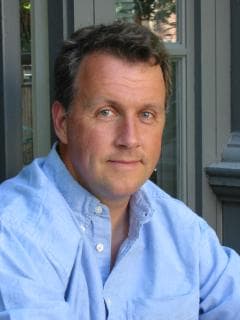
Paul Graham
Y Combinator
A pivotal figure in the venture capital landscape, Paul Graham co-founded Y Combinator in 2005, revolutionizing how startups secure funding and mentorship. Under his leadership, Y Combinator has backed over 2,000 startups, including notable names like Airbnb and Dropbox, which have collectively achieved valuations exceeding $100 billion. Graham's philosophy emphasizes the synergy of talent and hard work, famously stating that "if great talent and great drive are both rare, then people with both are rare squared." His insights on pursuing passion rather than convention have inspired countless entrepreneurs to align their careers with their true interests, significantly shaping the startup culture today.
Core Principles
competitive advantage
If you discover work that feels easier to you than to others, due to natural ability or a novel approach, prioritize it ruthlessly.
Your competitive advantage often lies in what feels natural or obvious to you but remains hard for others. This compounds over time. Finding and exploiting this asymmetry is how some of the best work gets done.
“Some of the best work is done by people who find an easy way to do something hard.”
Ambitious ideas that involve scary schleps are undervalued because fewer founders compete for them. This creates asymmetric opportunity.
Founders are frightened off by the challenges involved in tackling real schleps. This fear creates less competition and higher potential returns for those willing to face it.
“That scariness makes ambitious ideas doubly valuable. They're like undervalued stocks in the sense that there's less demand for them among founders.”
The best businesses have hard-to-replicate technical advantages that competitors do not understand. Keep your edge secret and do not publicize it.
At ViaWeb, Graham used Lisp, an advanced programming language that competitors did not understand. This gave them the ability to build features faster than competitors could copy them. Talking about your advantage alerts competitors.
“In business, there is nothing more valuable than a technical advantage your competitors don't understand.”
culture
Community and peer learning from other founders facing similar problems is extremely valuable. Bring ambitious people together and they bloom.
Y Combinator's structure recognizes that ambitious people are rare and often isolated. When you bring them together, their ambition multiplies. Peer support and learning from similar-stage founders accelerates growth and prevents isolation.
“When you take people like this and put them together with other ambitious people, they bloom like dying plants given water.”
Good colleagues make you better regardless of how good you already are. Ambitious people need colleagues more than most because they are starved for peers.
Great work clusters around institutions and places where ambitious people concentrate. Peers push you to think bigger and work harder. For founders, especially, isolation is dangerous because few people understand the startup experience.
“However good you are, good colleagues make you better. Indeed, very ambitious people probably need colleagues more than anyone else because they're so starved for them in everyday life.”
The most remarkable thing about startup founders is their generosity in helping one another. Cultivate and sustain this culture.
Unlike many industries where people hoard knowledge, founders freely share lessons learned. This creates an enabling environment where information flows and everyone rises. It's a distinguishing feature of founder culture.
“That's the happiest thing I've learned about startup founders, how generous they can be in helping one another.”
The people you spend time with will have a big effect on your morale. Seek out people who increase your energy and avoid those who decrease it.
Energy is contagious. Pessimistic, doubtful people drain energy. Optimistic, supportive people amplify it. Be intentional about your social environment.
“Seek out the people who increase your energy and avoid those who decrease it.”
Do not marry someone who does not understand that you need to work or sees your work as competition for your attention. If you are ambitious, you need to work. It is almost like a medical condition.
This is a strong statement about the importance of alignment in intimate partnerships. For ambitious people, work is not optional, it is intrinsic. A partner who opposes this or sees it as a threat creates constant conflict.
“If you're ambitious, you need to work. It's almost like a medical condition.”
customer obsession
Do things that don't scale. Personal, manual effort to acquire early users and customers is not a waste of time; it's essential.
Most startups must manually recruit users initially. The Collison brothers (Stripe) would set up customers on the spot rather than sending a link. This unscalable work provides direct feedback and builds the strong customer relationships that form a startup's foundation.
“Startups take off because the founders make them take off. You cannot wait for users to come to you. You have to go out and get them.”
Wealth is what people want, not money. Money is a tool to move wealth. Focus on creating genuine value that people desire, and the money follows naturally.
Graham distinguishes between wealth (actual goods and services people value) and money (the medium of exchange). This foundational understanding shapes how entrepreneurs should think about their business. If you could create anything people wanted without needing money, that's true wealth creation.
“Wealth is the stuff we want. Food, clothes, houses, cars, gadgets, travel to interesting places, and so on.”
In a free market, prices reflect what people want. Higher-paying professions are not unfairly compensated, they are meeting greater demand. Create what people want to increase your earnings.
Graham dismisses the notion that some fields are underpaid. Baseball players earn more than poets because society values baseball more. If you want higher income, find the intersection of what you are good at and what people want.
“To say that a certain kind of work is underpaid is thus identical with saying that people want the wrong thing.”
One sign you are suited for some work is when you like even the parts that others find tedious or frightening. If you find a domain where work feels like play, you have found a good fit.
While most people avoid difficult or repetitive tasks, those suited for certain work find pleasure in them. This distinction indicates genuine alignment between person and problem. Look for domains where the mundane aspects appeal to you.
“One sign that you're suited for some kind of work is when you like even the parts that other people find tedious or frightening.”
If you are making something for people, make sure it is something they actually want. The best way to ensure this is to make something you yourself want. Write the story you want to read. Build the tool you want to use.
Many founders fail because they try to solve problems they do not experience or build for imaginary sophisticated audiences. The antidote is simple: your own genuine needs are usually good indicators of broader market needs. Build for yourself first.
“Write the story you want to read. Build the tool that you want to use.”
finance
Run your startup as cheaply as possible. The cheaper you operate, the harder you are to kill and the longer you can stay in the game.
Graham describes this as making your company a cockroach: the ability to survive on minimal resources. The immediate cause of startup death is running out of money. Frugality provides a buffer that allows you to iterate, learn, and eventually succeed even when luck doesn't break your way initially.
“The way to make a startup recession proof is to do exactly what you should do anyway. Run it as cheaply as possible. Be hard to kill.”
Avoid raising large amounts of capital early. Assume you'll never get additional funding and stay small as long as possible.
Graham would raise only $500,000 initially and work toward profitability before raising more. Large rounds create obligations and pressure that distract from building product and understanding users. Being lean and self-sufficient keeps founders in control of their company's destiny.
“At every point in the company's growth, I'd keep the company as small as I could. I'd always want people to be surprised by how few employees we had.”
Be pessimistic about things you can't control, especially external capital. Assume you'll never get additional funding and design accordingly.
Founders ignore this advice because they're naturally optimistic. But optimism about what you control is productive, while optimism about external events is dangerous. Founders should assume they must reach profitability on initial capital and then choose to raise more.
“My advice is generally pessimistic. Assume you won't get money. And if someone does offer you any, assume you'll never get any more of it.”
Most fortunes are lost through bad investments, not through spending. Investment language bypasses financial alarms that spending language activates.
People feel visceral discomfort when spending money visibly. But when that same money is reframed as an investment, the psychological alarm system shuts down even if the outcome is identical. This cognitive blind spot is why wealthy people lose fortunes.
“In fact, the way most fortunes are lost is not through excessive expenditure, but through bad investments.”
The cheaper your company is to operate, the harder it is to kill. Frugality is the surest path to longevity and independence.
Graham advises startups to operate with minimal burn rate. This has two effects: it extends runway significantly, and it forces ruthless prioritization of what matters. Expensive companies are always fighting survival pressure.
“So the cheaper your company is to operate, the harder it is to kill.”
focus
The most dangerous way to lose time is not through obvious idleness but through fake work that bypasses your internal alarms.
Watching TV creates obvious guilt. But spending a day on email, meetings, and shallow tasks feels productive while delivering nothing. This is time-wasting disguised as work, the mirror image of bad investments.
“The most dangerous way to lose time is to not spend it having fun, but to spend it doing fake work.”
Focus is doubly important for early-stage startups because they have a hundred problems and only founders to solve them.
Early startups can't hire specialists to handle each problem. Founders must focus ruthlessly on the few problems that will determine survival. Lack of focus means tackling many things half-heartedly.
“Focus is doubly important for early stage startups because not only do they have a hundred different problems, but they don't have anyone to work on them except the founders.”
Small companies succeed by doing one thing well that large companies cannot do. You do not need to compete across a broad front, only excel in your domain.
At ViaWeb, Graham's team had no experience in business, marketing, or hiring. They were excellent only at writing software. This focus was their strength. Large companies must do many things adequately. Startups can do one thing exceptionally well.
“The only thing we were good at was writing software, and we hoped that would save us.”
Great work requires three preconditions: you must have a natural aptitude for it, a deep interest in it, and it must offer scope to do excellent work. In practice, focus on aptitude and interest and the scope will follow.
Graham frames the initial challenge of selecting what to work on. Most people struggle because they lack clarity on their aptitudes or interests, and society provides little guidance. The key is to identify what comes naturally and what genuinely fascinates you.
“Number one, it has to be something you have a natural aptitude for. Number two, you have to have a deep interest in it. And number three, it offers the scope to do great work.”
Always preserve excitingness in your projects. Excited curiosity is both the engine and the rudder of great work. It will drive you forward and show you what to work on.
Graham emphasizes that excitement serves a dual purpose: it provides motivation to persist through difficulty and acts as an internal compass directing you toward problems worth solving. When you feel genuinely excited about something, follow that signal.
“Always preserve excitingness. There's a kind of excited curiosity that's both the engine and the rudder of great work.”
Frameworks
Relentlessly Resourceful
A two-word framework for identifying and evaluating startup founders. Combines relentless determination with resourceful problem-solving. Relentless alone fails in complex domains where obstacles are novel; resourceful alone lacks the drive to push through difficulty. Together they describe the ability to adapt plans while maintaining forward progress.
Use case: Evaluating founder quality, personal development for founders, understanding what makes some founders succeed where others fail
Collison Installation
A sales and customer onboarding technique where founders personally set up customers on the spot rather than sending them a link or documentation. Named after Patrick and John Collison of Stripe. Represents the principle of doing unscalable things manually to build strong early customer relationships.
Use case: Early stage customer acquisition, especially B2B SaaS, when founders need to understand customer needs deeply and build credibility
Determination Framework
A three-component model of determination: willfulness (wanting something no matter what), discipline (restraining base impulses), and ambition (choosing meaningful goals). Willfulness and discipline must be balanced; the stronger your will, the more dangerous it is to be undisciplined. Ambition is the most malleable component and increases through achievement and peer exposure.
Use case: Understanding what drives long-term achievement, developing personal determination, evaluating founder commitment
Outcome Equation
A multiplicative formula understanding startup success: Outcome = Skill + Determination + Luck. Founders can control skill and determination but not luck. Understanding luck's role helps founders focus effort on what they can control while avoiding paralysis about external factors.
Use case: Setting realistic expectations for startup outcomes, understanding risk and resilience, deciding where to allocate effort
Independent-Mindedness Spectrum
A framework for understanding whether you're naturally conventional or independent-minded, which determines what type of work will be fulfilling. Conventional-minded people don't realize they're conventional, while independent-minded people are often unaware how different they are from peers until stating ideas publicly. You can develop more independent-mindedness by surrounding yourself with independent-minded peers and reading history.
Use case: Career choice, team building, determining work environment fit
The Three Ingredients of Great Work
Great work requires natural ability, practice, and effort. You can do well with two of three, but exceptional work requires all three. This framework explains why raw talent alone doesn't guarantee success, and why even brilliant people must work hard.
Use case: Understanding requirements for excellence, evaluating competitive advantages, setting expectations for improvement
Schlep Blindness Detection
A method for identifying valuable business ideas by recognizing the problems that make you uncomfortable thinking about. Problems involving major schleps (tedious, painful work) are systematically underexplored because founders unconsciously avoid them. Overcome this by asking what problem you wish someone else would solve, removing yourself from the equation.
Use case: Opportunity identification, competitive strategy, innovation discovery
The Hard Core Framework
Most problems have a hard core at the center with easier peripheral tasks surrounding it. Most people work on the edges. Working hard means aiming toward the center, though you should aim as close as possible without completely stalling. This creates a hierarchy of problems where real progress comes from tackling the core difficulty.
Use case: Problem prioritization, effort allocation, quality improvement
Problem Diagnosis for Founders
A diagnostic process for identifying the actual problems a startup faces beneath what founders report worrying about. Involves asking: Are you working hard but not getting results? Would you use your own product if you hadn't built it? Which of your problems will kill the company? This surfaces hidden problems and prioritizes them correctly.
Use case: Founder coaching, startup diagnosis, course correction
The Correction Frequency Framework
By correcting course at high frequency (making small, quick decisions), you can be simultaneously decisive at the micro scale and tentative at the macro scale. This creates a winding path executed rapidly, like a running back moving downfield. Each correction generates new information for the next decision.
Use case: Strategy execution in uncertain environments, startup navigation, learning velocity
Stories
The founders of Octopart ended up on the cover of Newsweek with the word billionaire printed across their chest. Suddenly they couldn't fail publicly; everyone they knew had seen it. Their demeanor shifted from lighthearted and cheery to grimly determined.
Lesson: Public commitment creates accountability that drives persistence through difficulty. Using social pressure strategically can overcome natural motivation limits.
Stripe's founders pioneered what became known as the Collison installation for customer onboarding. Instead of sending a link, when customers agreed to try Stripe, they'd say, right then, give me your laptop, and set them up on the spot.
Lesson: Doing things that don't scale by hand creates better customer relationships and direct product feedback than any scalable alternative in early stages.
Graham's father, a mathematician, grew up in a small Welsh seacoast town and discovered his passion for mathematics around age 12. By the time Graham asked if things got boring at 15, his father was already deep into math. This watershed moment of early discovery contrasts with most people who never find work they love.
Lesson: Early discovery of what you love is rare. Most people must actively search for it using hints like what seems like work to others but not to you.
A successful doctor went to medical school because she wanted to be a doctor in high school and was ambitious and determined enough to overcome every obstacle. Now she complains constantly about her work. She wants to shake applicants and yell don't do it, but never does.
Lesson: Making career decisions too early with incomplete information locks you into paths chosen by a younger version of yourself. Use flexible media and optionality.
Patrick Collison, founder of Stripe, told Paul Graham that building Stripe was extremely hard and required intense work from the team. Patrick noted that perhaps better founders could build something great without working hard, but they couldn't find a way. Paul's response was that this is an empty set: there are no founders good enough to avoid hard work.
Lesson: No one, regardless of talent, can escape the requirement to work hard. This cuts through the myth that genius can bypass effort.
P.G. Wodehouse, considered the best English writer of the 20th century, wrote at age 74 that with each new book he has the feeling he's picked a lemon from the garden of literature. This feeling keeps him on his toes and makes him rewrite every sentence 10 to 20 times. Despite his mastery and decades of experience, he still laboriously reworked each sentence.
Lesson: Excellence at the highest level never becomes easy. Even the most skilled practitioners must maintain rigor and be willing to do the hard work of iteration.
Bill Gates stated that he never took a single day off in his 20s. Combined with his exceptional intelligence, this relentless work ethic gave him a compounding advantage. He had both natural talent and extraordinary effort, making him exponentially more powerful than others with only one.
Lesson: When you combine rare talent with rare effort, you create a compounding effect that few can match. This is how people reach the very top of their fields.
Paul Graham stopped watching television at age 13, marking a precise turning point when he got serious about his work. Patrick Collison reported a similar memory from age 13 or 14, sitting in the sitting room and wondering why he was wasting his summer holiday. Both experienced a shift from idleness feeling normal to feeling distasteful.
Lesson: The transition from amateur to serious practitioner often involves a single moment when you stop tolerating idleness and start finding it uncomfortable. This internal shift is observable across high achievers.
A startup came to Y Combinator with no current problems. They were profitable, growing revenue 20 times a year, and had only nine employees. Paul didn't know what to do and ended up discussing potential future problems with them, advising them to stay small and never raise another round to maintain founder control.
Lesson: Most startups are drowning in immediate problems, making this case remarkable. It illustrates how rare it is to reach a state of genuine health, and how important founder control becomes when a company truly works.
Founders repeatedly come to Y Combinator worried about fundraising when the actual problem is that their company is doing badly and investors can sense it. Other founders worry about user acquisition when the real issue is product quality. When asked would you use this yourself if you hadn't built it, several founders said no after thinking about it.
Lesson: Founders often misdiagnose their problems. What seems like a sales or fundraising problem is often a product problem. The most reliable diagnostic is honest self-assessment.
Notable Quotes
“If great talent and great drive are both rare, then people with both are rare squared.”
Explaining why exceptional work is so rare. Since you can't easily change natural talent, doing great work reduces to working very hard.
“Independent-mindedness seems to be more a matter of nature than nurture, which means if you pick the wrong type of work, you're going to be unhappy.”
Discussing how personality type determines job fit and long-term satisfaction
“The best place to find undiscovered ideas is where no one else is looking.”
Explaining how unfashionable ideas lead to interesting discoveries because they have less competition
“Perhaps if your goal is to discover novel ideas, your motto should not be do what you love so much as do what you're curious about.”
Proposing that curiosity, not passion, is the better guide for discovering novel ideas
“The only way to find your limit for working is by crossing it.”
Discussing how to determine sustainable work limits for different types of tasks
“Many problems have a hard core at the center surrounded by easier stuff at the edges. Working hard means aiming towards the center.”
Explaining how most people work on the easy periphery while real progress comes from tackling the central difficulty
“The consensus about which problems are the most important is often mistaken, both in general and within specific fields.”
Explaining why disagreeing with consensus creates opportunity if you're right
“Some of the best work is done by people who find an easy way to do something hard.”
Discussing how competitive advantage comes from doing difficult things in easier ways
“A deep interest in a topic makes people work harder than any amount of discipline can.”
Explaining the power of intrinsic motivation over willpower
“In fact, the way most fortunes are lost is not through excessive expenditure, but through bad investments.”
Discussing how wealthy people often lose money through investment failures, not spending
Frequently Asked Questions
What are Paul Graham's key business principles?▼
Paul Graham's core principles include: If you discover work that feels easier to you than to others, due to natural ability or a novel approach, prioritize it ruthlessly.. Ambitious ideas that involve scary schleps are undervalued because fewer founders compete for them. This creates asymmetric opportunity.. The best businesses have hard-to-replicate technical advantages that competitors do not understand. Keep your edge secret and do not publicize it.. Founder Almanac has cataloged 30 total principles from Paul's career.
What can entrepreneurs learn from Paul Graham?▼
Key lessons from Paul Graham include: Public commitment creates accountability that drives persistence through difficulty. Using social pressure strategically can overcome natural motivation limits.. Explore 10 stories and 10 frameworks from Paul's experience.
What is Paul Graham known for in business?▼
A pivotal figure in the venture capital landscape, Paul Graham co-founded Y Combinator in 2005, revolutionizing how startups secure funding and mentorship. Under his leadership, Y Combinator has backed over 2,000 startups, including notable names like Airbnb and Dropbox, which have collectively achieved valuations exceeding $100 billion. Graham's philosophy emphasizes the synergy of talent and hard work, famously stating that "if great talent and great drive are both rare, then people with both are rare squared." His insights on pursuing passion rather than convention have inspired countless entrepreneurs to align their careers with their true interests, significantly shaping the startup culture today.
More Venture Capital Founders




Want Paul's advice on your business?
Our AI has studied Paul Graham's biography, principles, and decision-making frameworks. Ask any business question.
Start a conversation