
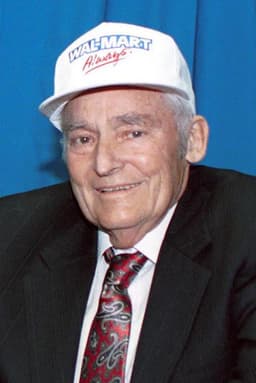
Bernie Marcus
The Home Depot
As a co-founder of The Home Depot in the late 1970s, Bernie Marcus revolutionized the retail industry by focusing on customer needs rather than internal politics or competitor strategies. Under his leadership, The Home Depot grew from a single store in Atlanta to a retail giant with over 2,200 locations and revenues exceeding $110 billion in 2022. Marcus emphasized the importance of loyalty and meaningful relationships, believing that a banker who invests in people can unlock opportunities not found in traditional financing. His philosophy on equity as a means of building true wealth has inspired countless entrepreneurs to prioritize ownership over mere salary. In a stark contrast to leaders like Sandy Sigaloff, Marcus championed a customer-first approach, stating, "People in the company focused on their own careers, not the customers. As a result, the customers disappeared and careers sank."
Core Principles
culture
Never partner with people who don't understand what it means to care for employees. Poor treatment of people is a value signal that predicts future conflict.
An investor demanded company cars be eliminated, salaries cut 10%, and no health insurance for employees. Bernie, who had personally recruited team members with promises of opportunity, ejected the investor from the car when he refused to budge on principle. The investor's $3 million stake would be worth $12 billion today.
“Here again was someone with whom I was going to have to live with who had no clue what it meant to care about people.”
Treat people with dignity and respect, even in conflict. How you handle people reveals your true character.
Singaloff wanted to destroy people who left his company economically, emotionally, and physically. Bernie learned to never operate this way. When conflicts arose, even with Singaloff himself, Bernie maintained his principles about human treatment. This became core to Home Depot culture.
“When people leave Sigaloff, it was very important that he affect them economically, emotionally, and physically... When you treat people like that, it comes back to haunt you.”
Never partner with people who don't understand what it means to care for employees. Poor treatment of people is a value signal that predicts future conflict.
An investor demanded company cars be eliminated, salaries cut 10%, and no health insurance for employees. Bernie, who had personally recruited team members with promises of opportunity, ejected the investor from the car when he refused to budge on principle. The investor's $3 million stake would be worth $12 billion today.
“Here again was someone with whom I was going to have to live with who had no clue what it meant to care about people.”
Treat people with dignity and respect, even in conflict. How you handle people reveals your true character.
Singaloff wanted to destroy people who left his company economically, emotionally, and physically. Bernie learned to never operate this way. When conflicts arose, even with Singaloff himself, Bernie maintained his principles about human treatment. This became core to Home Depot culture.
“When people leave Sigaloff, it was very important that he affect them economically, emotionally, and physically... When you treat people like that, it comes back to haunt you.”
customer obsession
Focus on what is best for the customer, not on competitors or internal career advancement. Companies that prioritize internal politics and competitor-watching over customer needs collapse.
Bernie Marcus witnessed Two Guys, a once-great retail company, disappear because employees focused on their own careers rather than customers. This lesson stayed with him throughout his career and influenced how he ran Home Depot.
“People in the company focused on their own careers, not the customers. As a result, the customers disappeared and careers sank.”
Focus on what is best for the customer, not on competitors or internal career advancement. Companies that prioritize internal politics and competitor-watching over customer needs collapse.
Bernie Marcus witnessed Two Guys, a once-great retail company, disappear because employees focused on their own careers rather than customers. This lesson stayed with him throughout his career and influenced how he ran Home Depot.
“People in the company focused on their own careers, not the customers. As a result, the customers disappeared and careers sank.”
finance
Equity, not salary, is how wealth is truly built. High-paying titles without ownership stake leave executives perpetually broke and vulnerable.
Despite holding executive titles at major retail companies, Bernie Marcus had no real money until age 49 because he owned no equity. He supported two ex-wives, sent children to college, and remained cash-poor. This drove home the importance of equity ownership.
“I never had any real money to speak of in those days, despite holding lofty titles in some of America's best retail companies... Real money is in equity and that I didn't have.”
Going public provides necessary capital for rapid scaling but requires accepting loss of secrecy and control. The trade-off is necessary but comes with costs.
Home Depot needed to go public to fund expansion beyond borrowed capital limits. Going public meant losing anonymity, revealing financial success to competitors, and listening to Wall Street. But without public capital, the company would have remained a four-store operation in Atlanta.
“Going public meant losing the anonymity and cloak of secrecy a privately held business enjoyed... But if we were going to grow, there was no other way.”
Equity, not salary, is how wealth is truly built. High-paying titles without ownership stake leave executives perpetually broke and vulnerable.
Despite holding executive titles at major retail companies, Bernie Marcus had no real money until age 49 because he owned no equity. He supported two ex-wives, sent children to college, and remained cash-poor. This drove home the importance of equity ownership.
“I never had any real money to speak of in those days, despite holding lofty titles in some of America's best retail companies... Real money is in equity and that I didn't have.”
Going public provides necessary capital for rapid scaling but requires accepting loss of secrecy and control. The trade-off is necessary but comes with costs.
Home Depot needed to go public to fund expansion beyond borrowed capital limits. Going public meant losing anonymity, revealing financial success to competitors, and listening to Wall Street. But without public capital, the company would have remained a four-store operation in Atlanta.
“Going public meant losing the anonymity and cloak of secrecy a privately held business enjoyed... But if we were going to grow, there was no other way.”
leadership
Loyalty and relationships matter more than process. A banker willing to stake his career on you can unlock capital when traditional channels close.
Rip Fleming at Security Pacific bank was rejected three times on Home Depot's loan request. Rather than accept the rejection, Rip resigned on principle, threatening to take $400 million in client accounts with him. The CEO reversed the decision rather than lose Rip. Home Depot got its $3.5 million loan.
“I buy people. Bernie Marcus and Arthur Blank are good people, and you have turned them and me down three times.”
Leadership must work in the stores to understand reality. Executives who hide in offices lose connection to customer and associate problems.
Home Depot required all executives, including attorneys, to work in stores for extended periods before assuming office duties. This contrasted with Sears, where leadership sat in a Chicago tower and never understood what customers actually needed.
“Arthur and I go into the stores alone and walk around, talking to customers and associates on the sales floor, learning what's really important to the Home Depot. I love being there because that's where the real action is, not in my office.”
Own your mistakes publicly to investors and stakeholders. Blame no one else. This builds credibility more than any excuse.
When Bowater became a disaster affecting quarterly results, Bernie personally met with fund managers and analysts. He opened by saying 'I am the CEO of this company and I am a schmuck. We screwed it up.' He explained corrective measures. Investors believed him and the stock recovered.
“Standing before each group, Bernie stood up and bluntly announced, 'I am the CEO of this company and I am a schmuck.' In precisely those words, we screwed it up.”
Speed of movement and decisiveness are rare talents that signal operator quality. Slow deliberation loses opportunities.
Ken Langone moved with extraordinary speed throughout the story: took first flight to meet Bernie same day, bought 400,000 shares across price range, negotiated stock buyback, coordinated investor group, all while Bernie took a more cautious approach. This speed was one of Ken's defining competitive advantages.
“Still overwhelmed by the speed with which Langone operated, I took a more cautious approach... Langone was like a fire hydrant let loose.”
Speed of movement and decisiveness are rare talents that signal operator quality. Slow deliberation loses opportunities.
Ken Langone moved with extraordinary speed throughout the story: took first flight to meet Bernie same day, bought 400,000 shares across price range, negotiated stock buyback, coordinated investor group, all while Bernie took a more cautious approach. This speed was one of Ken's defining competitive advantages.
“Still overwhelmed by the speed with which Langone operated, I took a more cautious approach... Langone was like a fire hydrant let loose.”
mindset
Success breeds arrogance and overestimation of your abilities. Stay humble and reassess your capacity realistically with each new venture.
Home Depot acquired Bowater Home Centers for $38.4 million thinking their management talent could fix any business. Instead, they sent their best people to fix the troubled acquisition, weakening their core stores. Sales went flat in existing locations. They eventually closed all Bowater stores and built new ones nearby.
“Success was breeding a little arrogance and we learned that sometimes you believe you can do more than you really can do. Bowater was a great and hard lesson learned.”
Success breeds arrogance and overestimation of your abilities. Stay humble and reassess your capacity realistically with each new venture.
Home Depot acquired Bowater Home Centers for $38.4 million thinking their management talent could fix any business. Instead, they sent their best people to fix the troubled acquisition, weakening their core stores. Sales went flat in existing locations. They eventually closed all Bowater stores and built new ones nearby.
“Success was breeding a little arrogance and we learned that sometimes you believe you can do more than you really can do. Bowater was a great and hard lesson learned.”
resilience
Never compromise on values or cede control to partners who don't respect you. Walking away from bad deals, no matter how much capital is involved, preserves your ability to execute.
Bernie walked away from Ross Perot's $2 million investment when Perot insisted he not drive a Cadillac and demanded control. Bernie recognized this mirrored his experience with Singaloff and knew working with such a controlling partner would be impossible. They raised $2 million elsewhere.
“I would rather starve to death... If we can't be free to run the business the way we know it has to be run, it isn't going to work.”
Never compromise on values or cede control to partners who don't respect you. Walking away from bad deals, no matter how much capital is involved, preserves your ability to execute.
Bernie walked away from Ross Perot's $2 million investment when Perot insisted he not drive a Cadillac and demanded control. Bernie recognized this mirrored his experience with Singaloff and knew working with such a controlling partner would be impossible. They raised $2 million elsewhere.
“I would rather starve to death... If we can't be free to run the business the way we know it has to be run, it isn't going to work.”
strategy
Diluting focus and talent to pursue secondary opportunities weakens your core business. Maintain focus on what makes you great.
Acquiring Bowater diverted Home Depot's best talent to Louisiana and Texas when they should have been running Atlanta and South Florida stores. This identical mistake is what destroyed Sears when leadership pursued insurance and real estate instead of stores.
“When you do that, you weaken yourself... The Bowater stores were in such disarray that we immediately sent some of our best talent from Atlanta and South Florida to fix them. That left gaping holes back in our own stores.”
Read the lessons embedded in the failures and mistakes of other companies. Study what not to do by examining how great companies decline.
Bernie insisted that every Home Depot executive read 'The Big Store' about Sears' decline. By understanding how Sears diluted its core business with insurance and real estate while leadership avoided stores, Home Depot's leaders learned to stay focused on core retail operations.
“I read The Big Store, Inside the Crisis and Revolution at Sears... It had a big effect on me. And for a number of years, I insisted that every executive in our company read the book.”
Read the lessons embedded in the failures and mistakes of other companies. Study what not to do by examining how great companies decline.
Bernie insisted that every Home Depot executive read 'The Big Store' about Sears' decline. By understanding how Sears diluted its core business with insurance and real estate while leadership avoided stores, Home Depot's leaders learned to stay focused on core retail operations.
“I read The Big Store, Inside the Crisis and Revolution at Sears... It had a big effect on me. And for a number of years, I insisted that every executive in our company read the book.”
Diluting focus and talent to pursue secondary opportunities weakens your core business. Maintain focus on what makes you great.
Acquiring Bowater diverted Home Depot's best talent to Louisiana and Texas when they should have been running Atlanta and South Florida stores. This identical mistake is what destroyed Sears when leadership pursued insurance and real estate instead of stores.
“When you do that, you weaken yourself... The Bowater stores were in such disarray that we immediately sent some of our best talent from Atlanta and South Florida to fix them. That left gaping holes back in our own stores.”
Frameworks
The Store Immersion Requirement
Require all executives and staff, including those in headquarters roles like attorneys, to work in stores for 1-3 months before assuming their regular duties. This creates empathy for customer and associate problems and prevents disconnection from operational reality.
Use case: In retail operations, particularly when scaling from startup to large organization where headquarters can become disconnected from stores
The Store Immersion Requirement
Require all executives and staff, including those in headquarters roles like attorneys, to work in stores for 1-3 months before assuming their regular duties. This creates empathy for customer and associate problems and prevents disconnection from operational reality.
Use case: In retail operations, particularly when scaling from startup to large organization where headquarters can become disconnected from stores
Stories
Sandy Sigaloff, CEO of Dalen Corporation, proudly called himself 'Ming the Merciless' after the Flash Gordon villain. He believed in destroying people who left his company economically, emotionally, and physically. Ken Langone warned Bernie that despite his strong performance at Handy Dan, Sigaloff would eventually fire him because his ego could not tolerate Bernie's success. Bernie disagreed, believing his financial results would protect him.
Lesson: Understand that irrational human ego and pride can override rational business logic. Never assume good performance guarantees job security under an insecure leader.
Ross Perot offered to invest $2 million for 70% of Home Depot when the founders were desperate for capital. During discussions about Bernie's car, Perot insisted Bernie drive a Chevrolet, not a Cadillac, because 'My people don't drive Cadillacs.' When Bernie pushed back, Perot repeated the statement three times, making clear he was establishing dominance. Bernie recognized this mirrored Singaloff's behavior and walked away despite the massive capital offer.
Lesson: The early signals of how a partnership will actually function are more important than the capital on offer. Never partner with someone who needs to establish dominance over you.
A venture capitalist agreed to invest $3 million in Home Depot. But on the drive to the airport, he demanded they eliminate company cars, cut all salaries 10%, and provide no health insurance to employees. Bernie, who had personally recruited his team with promises of opportunity, pulled the car to the shoulder, told the investor to get out, threw his luggage on the road, and told him he would rather starve than work with someone who doesn't understand caring for people.
Lesson: Values about how you treat people are non-negotiable, even when capital is desperately needed. Partners who don't value employees will eventually destroy the culture you're building.
Home Depot acquired Bowater Home Centers for $38.4 million, believing their management talent could fix the troubled chain. They sent their best people to Louisiana and Texas to turn around Bowater stores. This left gaping holes in their core Atlanta and South Florida locations. Sales went flat in the profitable stores while Bowater remained a disaster. Eventually, they closed all Bowater locations and built new Home Depot stores nearby, effectively throwing away the $38.4 million.
Lesson: Success breeds arrogance and overestimation of your ability to fix broken operations. Dividing your best talent between core business and troubled acquisitions weakens both. Focus matters more than expansion.
When Bowater became a public relations disaster, Bernie personally met with fund managers and investment analysts. He opened each presentation by saying 'I am the CEO of this company and I am a schmuck. We screwed it up.' He then outlined the corrective measures and timeline. Investors believed him and supported the company through the crisis.
Lesson: Taking full responsibility for failures, with no excuses or blame, builds credibility with stakeholders. Honesty about past mistakes creates confidence in future judgment.
Sandy Sigaloff, CEO of Dalen Corporation, proudly called himself 'Ming the Merciless' after the Flash Gordon villain. He believed in destroying people who left his company economically, emotionally, and physically. Ken Langone warned Bernie that despite his strong performance at Handy Dan, Sigaloff would eventually fire him because his ego could not tolerate Bernie's success. Bernie disagreed, believing his financial results would protect him.
Lesson: Understand that irrational human ego and pride can override rational business logic. Never assume good performance guarantees job security under an insecure leader.
Ross Perot offered to invest $2 million for 70% of Home Depot when the founders were desperate for capital. During discussions about Bernie's car, Perot insisted Bernie drive a Chevrolet, not a Cadillac, because 'My people don't drive Cadillacs.' When Bernie pushed back, Perot repeated the statement three times, making clear he was establishing dominance. Bernie recognized this mirrored Singaloff's behavior and walked away despite the massive capital offer.
Lesson: The early signals of how a partnership will actually function are more important than the capital on offer. Never partner with someone who needs to establish dominance over you.
A venture capitalist agreed to invest $3 million in Home Depot. But on the drive to the airport, he demanded they eliminate company cars, cut all salaries 10%, and provide no health insurance to employees. Bernie, who had personally recruited his team with promises of opportunity, pulled the car to the shoulder, told the investor to get out, threw his luggage on the road, and told him he would rather starve than work with someone who doesn't understand caring for people.
Lesson: Values about how you treat people are non-negotiable, even when capital is desperately needed. Partners who don't value employees will eventually destroy the culture you're building.
Home Depot acquired Bowater Home Centers for $38.4 million, believing their management talent could fix the troubled chain. They sent their best people to Louisiana and Texas to turn around Bowater stores. This left gaping holes in their core Atlanta and South Florida locations. Sales went flat in the profitable stores while Bowater remained a disaster. Eventually, they closed all Bowater locations and built new Home Depot stores nearby, effectively throwing away the $38.4 million.
Lesson: Success breeds arrogance and overestimation of your ability to fix broken operations. Dividing your best talent between core business and troubled acquisitions weakens both. Focus matters more than expansion.
When Bowater became a public relations disaster, Bernie personally met with fund managers and investment analysts. He opened each presentation by saying 'I am the CEO of this company and I am a schmuck. We screwed it up.' He then outlined the corrective measures and timeline. Investors believed him and supported the company through the crisis.
Lesson: Taking full responsibility for failures, with no excuses or blame, builds credibility with stakeholders. Honesty about past mistakes creates confidence in future judgment.
Notable Quotes
“People in the company focused on their own careers, not the customers. As a result, the customers disappeared and careers sank.”
Reflecting on why Two Guys, a once-great retail company, disappeared. This lesson stayed with him throughout his career.
“Real money is in equity and that I didn't have.”
Explaining why despite holding executive titles and high salaries, he remained perpetually broke and vulnerable to losing his job.
“I would rather starve to death... If we can't be free to run the business the way we know it has to be run, it isn't going to work.”
Explaining why he walked away from Ross Perot's $2 million investment when Perot demanded control over how Bernie drove his car.
“Here again was someone with whom I was going to have to live with who had no clue what it meant to care about people.”
After ejecting a venture capitalist from his car for demanding elimination of health insurance and salary cuts for employees.
“I am the CEO of this company and I am a schmuck. In precisely those words, we screwed it up.”
Opening his presentation to investors about the Bowater disaster. Taking full responsibility rather than making excuses.
“It took an insane ad to bring folks into our stores to discover the Home Depot secret.”
Reflecting on how Pat Farrah's aggressive $59 pricing on fireplace screens (retailing elsewhere for $139) drove massive foot traffic.
“Arthur and I go into the stores alone and walk around, talking to customers and associates on the sales floor, learning what's really important to the Home Depot. I love being there because that's where the real action is, not in my office.”
Explaining Home Depot's culture of leadership working in stores, contrasting with Sears executives who hid in their Chicago tower.
“Success was breeding a little arrogance and we learned that sometimes you believe you can do more than you really can do. Bowater was a great and hard lesson learned.”
Reflecting on the Bowater acquisition, where overconfidence in their ability to fix any business led to diverted resources and flat sales.
“Langone was the single brightest, most energetic person that I have ever met.”
High praise from someone with decades of experience in business, reflecting on Ken Langone's exceptional qualities.
“Going public meant losing the anonymity and cloak of secrecy a privately held business enjoyed... But if we were going to grow, there was no other way.”
On the tradeoff of going public: you get capital for growth but lose confidentiality and investor management becomes necessary.
Frequently Asked Questions
What are Bernie Marcus's key business principles?▼
Bernie Marcus's core principles include: Never partner with people who don't understand what it means to care for employees. Poor treatment of people is a value signal that predicts future conflict.. Treat people with dignity and respect, even in conflict. How you handle people reveals your true character.. Never partner with people who don't understand what it means to care for employees. Poor treatment of people is a value signal that predicts future conflict.. Founder Almanac has cataloged 26 total principles from Bernie's career.
What can entrepreneurs learn from Bernie Marcus?▼
Key lessons from Bernie Marcus include: Understand that irrational human ego and pride can override rational business logic. Never assume good performance guarantees job security under an insecure leader.. Explore 10 stories and 2 frameworks from Bernie's experience.
What is Bernie Marcus known for in business?▼
As a co-founder of The Home Depot in the late 1970s, Bernie Marcus revolutionized the retail industry by focusing on customer needs rather than internal politics or competitor strategies. Under his leadership, The Home Depot grew from a single store in Atlanta to a retail giant with over 2,200 locations and revenues exceeding $110 billion in 2022. Marcus emphasized the importance of loyalty and meaningful relationships, believing that a banker who invests in people can unlock opportunities not found in traditional financing. His philosophy on equity as a means of building true wealth has inspired countless entrepreneurs to prioritize ownership over mere salary. In a stark contrast to leaders like Sandy Sigaloff, Marcus championed a customer-first approach, stating, "People in the company focused on their own careers, not the customers. As a result, the customers disappeared and careers sank."
More Retail Founders



Want Bernie's advice on your business?
Our AI has studied Bernie Marcus's biography, principles, and decision-making frameworks. Ask any business question.
Start a conversation