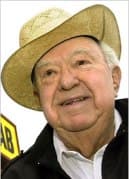
Les Schwab
Les Schwab Tire Centers
A pioneer in the retail industry, Les Schwab founded Les Schwab Tire Centers in the 1950s, transforming it into one of the largest tire retail chains in the United States, with over 450 locations by the time of his passing in 2007. Emphasizing the importance of sharing profits openly with employees, he believed that fostering their success was integral to his own. Schwab's commitment to customer service and ethical business practices, coupled with his relentless pursuit of knowledge about the tire industry, positioned his company as a market leader. His notable quote, "Carnegie never wanted to know the profits. He always wanted to know the costs," reflects his focus on efficiency and cost management, a philosophy that continues to resonate with entrepreneurs today.
Core Principles
competitive advantage
Never take advantage of customers or employees, but take full advantage of suppliers who are unfair to you. This is justified self-defense in asymmetrical business relationships.
When major tire manufacturers colluded to milk their dealers through unfair pricing policies, Les aggressively negotiated with Japanese tire suppliers and refused to accept the manufacturers' terms. He called his philosophy earning their failure when large companies treated dealers dishonestly.
“Never take advantage of a customer. Never take advantage of an employee. But take all the advantage you possibly could of a rubber company because they were not being fair and honest.”
Know more about your specific domain than anyone else. Accumulate detailed knowledge in one area to gain a decisive competitive advantage.
While working in newspaper circulation, Les realized he knew more about circulation operations than his bosses. This depth of knowledge gave him massive leverage and confidence, even though circulation was considered lower-status work.
“The one thing I did know was newspaper circulation work, and I knew more about it than the two other minority owners who were technically my bosses.”
culture
Share profits openly and honestly with employees, and don't be jealous if they become successful. Making people under you successful is the path to your own success.
Les implemented a profit-sharing system where employees in each store received 50% of that store's profits through partnership agreements. He believed this was the single most important thing he ever discovered in business and that it directly contributed to the company's long-term success and employee loyalty.
“I encourage you to share profits with your employees. I encourage you in every way possible to build people. This is good for America. It is good for you. And it is good for your employees.”
customer obsession
Fix customer problems for free as a gesture of goodwill. The reciprocal tendency in human nature will drive future business.
Les decided to fix flat tires for free as a service gesture. Customers would return when they needed new tires, specifically asking for the store that had helped them previously. This built customer loyalty without explicit marketing costs and grew his business organically.
finance
Cap your downside and leave your upside uncapped. Use contracts and negotiation to protect yourself while maintaining optionality for growth.
Les used escape clauses in leases and structured five-year lease agreements with five-year options to buy. This protected him early while allowing ownership over time. He also refused to build on others' property to maintain control of his assets.
“I had an escape clause in the contract that I could turn it back to him and not have to pay it off. I wanted a contract so that I could own it someday if I made it.”
Start with what you have and upgrade incrementally. Build the business with your own money through reinvestment rather than relying on outside capital.
Les started his tire business with just under $15,000 raised by selling his home, borrowing against life insurance, and getting help from his brother-in-law. He built his newspaper delivery business by walking routes on foot until he saved enough for a bike, then upgraded to a car as profits grew.
“I got $11,000 from my brother-in-law, sold my home, and borrowed on my life insurance. Altogether, I raised $3,500.”
Avoid the temptation to sell prematurely for cash. Long-term wealth creation from compound business ownership far exceeds one-time exits.
Les turned down offers from Buffett, Michelin, and KKR to buy his company. While each offer represented millions, the business was growing exponentially. His partners who took $225,000-$300,000 buyouts missed out on equity worth $12 million and annual dividends of $1 million.
“I could come out with an astronomical bundle of money if I sold the company. But what would I do with it? What good is money beyond a certain point?”
focus
Maintain maniacal focus on your core business. Pursuing adjacent businesses outside your expertise will cost you millions regardless of personal fulfillment.
Les attempted to become a cattle rancher despite his obvious expertise in tires. He estimates this cost him 3-5 million dollars over decades. He regrets the financial outcome but not the experience, highlighting the tension between business optimization and life fulfillment.
“I'm one of the very best tire dealers in America, but without a doubt, I'm probably about the worst cattle rancher in America. Attempting to be a cattle rancher has cost me millions of dollars.”
Stay focused on fundamentals. Do the day-to-day work excellently, which naturally leads to outsize results over decades.
Les reflected that his growth could have been stopped by countless points of failure. By keeping focus on basic execution, he created resilience. Success compounded from thousands of small decisions made right, not from one brilliant strategy.
“Keep the main thing the main thing. Focus on doing the job to your best of your ability today that gets you to tomorrow.”
hiring
Incentivize the behavior you want by aligning financial interests. Use profit-sharing clawbacks to prevent dishonesty without heavy-handed controls.
Rather than hiring controllers and implementing strict oversight, Les used profit-sharing contracts that employees would forfeit if caught stealing. This created peer-enforced honesty because employees policed each other to protect their own nest eggs, allowing the company to operate with minimal formal controls.
“Now that we share with all people, if any one employee sees another employee steal anything, they are a weak kitten if they don't report it. Why? Because this man is stealing from them, from his children.”
Hire assistant managers and require continuous reinvestment in people development. Use contract terms to enforce this if managers resist giving up near-term profits.
Store managers initially resisted hiring assistant managers because it reduced their short-term profit share. Les changed the contract terms: managers would receive 45% if they hired an assistant manager, or the company would take 55%. The problem disappeared immediately and improved long-term performance.
“Since our managers didn't volunteer I made a rule. The manager's contract was going to be changed to 45% if he didn't have an assistant manager, the company got 55%. We never had a problem after that.”
Promote exclusively from within. People who started at the bottom understand every part of the business and are intrinsically motivated to improve it.
After 34 years, every one of Les's 250+ managers and assistant managers started by changing tires. This deep experience gave them credibility, humility, and comprehensive business understanding that outside hires could never replicate.
“In our 34 years of business, we have never hired a manager from the outside. Every single one of our more than 250 managers and assistant managers started at the bottom changing tires.”
Pay premium wages even when competitors cut costs. Higher wages attract better employees, which creates better customer service and ultimately beats low-cost operators.
Nelson Tire Warehouses undercut Les by paying low wages. Despite having more stores briefly, they went bankrupt. Les paid the highest wages in his industry. He won because his superior employees created superior customer experiences.
“If I couldn't be proud of my company, if I couldn't pay good wages, if I couldn't have good benefits, and if I couldn't have the best employees, then why would I want to stay in business?”
innovation
Invert competitive norms to create differentiation. Reverse your industry's standard practices to stand out.
Tire shops hid inventory in warehouses and had small showrooms. Les inverted this: he made the showroom the warehouse, displaying thousands of tires where customers could see them. He also kept all displayed tires clean daily, a practice competitors never matched.
“Most tire businesses had a small showroom and all the tires were hidden in the warehouse. My thinking was to reverse this, to invert, to make the showroom the warehouse. It would impress people.”
Seek out larger companies' processes and copy what works. You can innovate by studying what the giants do and adapting it to your scale.
Les studied Lucky Strike's LSMFT advertising campaign and created his equivalent: LSMFT means 'Les Schwab Means Fine Tires.' He watched Safeway's approach to purchasing and applied it to tires. He wasn't too proud to learn from anyone.
“Lucky Strike means fine tobacco. Les Schwab means fine tires. I started to use this slogan immediately and it was very effective.”
leadership
The office serves only the stores. Structure compensation and respect to flow to those closest to the customer, not to bureaucracy.
Les paid store managers significantly more than office staff despite their credentials. He was adamant that MBA-holders and CPAs should not question this structure. He believed the value was created in the stores by people doing the actual work, not in offices analyzing results after the fact.
“Our store managers make more money than our office people. Some of our office people, especially some people with MBA degrees or CPA certificates, sometimes wonder about this. But I've warned them, don't bitch to me because that is the way I want it.”
Buy out partners who prioritize short-term consumption over long-term growth. Their misalignment with your vision will eventually destroy the company.
When partners Norm Nelson and Don Miller demanded dividends instead of reinvesting profits, Les bought them out for $225,000 and $300,000. Twenty years later, their stakes would have been worth $12 million each. The buyout was one of the best things that happened to the company because it eliminated greed-driven decision-making.
“Greed was entering into the company and greed destroys. It turned out to be by far one of the best things that could have happened to the company.”
Constantly remind yourself and your organization why you are successful and what you must do to continue being successful. Complacency is the enemy of sustained performance.
Les included reminders in company bulletins about the importance of focus and the dangers of becoming complacent. He believed that if the organization lost sight of its founding principles, success would disappear.
“We must constantly remind ourselves as to just why we are successful, and we must do something, and we must do, and what we must do to continue to be successful, because if we become complacent, brother, it's all over with.”
Seek out wise counsel from your spouse on major decisions. Sometimes an outside perspective from someone who knows you sees solutions you don't.
When Les was fighting with his partners Norm Nelson and Don Miller for months about profit distribution, his wife Dorothy suggested he simply buy them out using the contract clause. This simple insight resolved the situation and became one of the best decisions in company history.
“Dorothy suggested, why don't you buy them both out? You'll get by some way. Something hit me. I hit the table, dishes fell off, and I said, that's the best damn idea we've had in the six months we've been talking about it.”
Profit sharing and incentive alignment is more valuable than traditional management controls. When employees own a piece of success, they self-regulate and police the business.
From his second store forward, Les shared 50% of store profits with managers. This created unprecedented alignment: dishonesty became theft from their own family, so employees voluntarily reported problems. With 163 stores, he needed almost no traditional controls because incentives controlled behavior.
“Never, ever think about something else when you should be thinking about the power of incentives. The most important rule in management is get the incentives right.”
marketing
Understand that value in advertising comes from consistency and repetition, not from making false claims. Advertising claims that don't hold up erode trust.
Les observed Lucky Strike cigarettes' success with their LSMFT slogan and copied the technique with LSMFT meaning Les Schwab Means Fine Tires. However, he was critical of competitors who claimed lowest prices in their ads, which created disappointed customers when prices varied or competitors had better deals.
“I personally think it's very foolish and poor business to say we have the lowest prices in town.”
Create a unique product story through small innovations and aggressive marketing. One clever idea amplified through repetition can drive growth for decades.
Les watched tire manufacturing and noticed they mixed walnut shells or sawdust into rubber. He had them blend both: walnut for ice, sawdust for snow. He then promoted this heavily: 'Specially designed for Les Schwab.' This simple story drove business for years.
“The new rubber, especially designed for the Les Schwab company, walnut for ice, sawdust for snow.”
mindset
Become the most knowledgeable person in your field by obsessively studying your craft and competitors. Knowledge gives you a durable advantage that can't be easily replicated.
Les knew newspaper circulation better than the owners of the newspaper he worked for, which gave him confidence and competitive advantage. He constantly analyzed other tire businesses to spot where they were making mistakes, then avoided those mistakes. He drove 600 miles or more in a single day visiting stores to ensure execution.
“I knew more about newspaper circulation work than the two minority owners. This cockiness helped me a lot going through life.”
Recognize that cockiness paired with work ethic is a competitive advantage. Confidence in yourself allows you to move faster than more cautious competitors.
Les was extremely confident and called himself cocky repeatedly. He credits this confidence with helping him succeed throughout his career. He didn't hide this trait but rather acknowledged it as useful, distinguishing between cocky arrogance and the justified confidence that comes from knowing your field deeply.
“I was young, sometimes cocky, but this cockiness helped me a lot going through life.”
Wait patiently for your opportunity while executing excellently in your current role. Ambition without action and patience will keep you stuck forever.
Les wanted to start a business at age 16 but didn't get the capital until age 33. During those 17 years, he mastered newspaper circulation, then worked in the newspaper industry. He excelled at every role, which prepared him and created the credibility and opportunity to eventually start his own business.
“The one thing I did know was newspaper circulation work, and I knew a lot more about it than the two minority owners.”
Frameworks
The Supermarket Tire Store Model
Invert the traditional tire dealer model by creating a warehouse-like display where customers can see all inventory, attracting them to come to you rather than having service trucks visit them. Combine this with a clean, impressive presentation of products, open hours six days a week, and convenient locations. This eliminates massive truck fleet costs while improving customer convenience and perceived abundance.
Use case: When entering a market where competitors use capital-intensive service models, use inversion and convenience to compete with lower costs and better customer experience
The Profit-Sharing Partnership Structure
Rather than traditional employment, create partnership agreements where store employees collectively receive 50% of store profits. Each store operates as an independent business entity. Employees forfeit their profit-sharing account if caught being dishonest. This aligns incentives, reduces need for formal controls, and creates peer enforcement of standards.
Use case: When scaling a multi-unit business and you want to maintain culture and honesty without extensive management overhead. Works best in businesses with clear unit economics and measurable profit centers.
The Contract-Based Incentive Enforcement
When voluntary behavior change doesn't work (like hiring assistant managers), embed the desired behavior into contract terms with significant financial consequences. For example, managers get 45% profit share if they hire an assistant manager, but company takes 55% if they don't. This makes the choice economically rational rather than relying on persuasion.
Use case: When you need specific behaviors from managers or employees and voluntary adoption is slow or incomplete. The financial consequence must be large enough to matter to the individual.
The Competitor Analysis Through Inversion
Study competitors not to copy them but to identify what they're doing wrong. Look for mistakes in their model, their value proposition claims, and their resource allocation. Then do the opposite or avoid those mistakes entirely. This prevents you from following false success signals.
Use case: In competitive markets, use competitor failures to inform your strategy rather than copying their tactics. Most useful when a competitor is gaining market share quickly but has structural flaws.
The Lease-to-Own Real Estate Strategy
Structure property deals with five-year leases that include five-year options to buy. Provides flexibility early while maintaining the path to ownership. Include escape clauses so you can exit if the business fails. Never build on someone else's property without a clear path to ownership.
Use case: When expanding early-stage businesses that might not survive, or when you want to preserve capital while maintaining optionality for growth and eventual asset ownership
The Core vs Adjacent Business Clarity
Know which businesses are your core competency (where you should double down) versus adjacent businesses you pursue for personal fulfillment. Be honest about the financial cost of pursuing adjacent businesses. You can do both but acknowledge the opportunity cost explicitly.
Use case: For founders considering diversification or pursuing passion projects alongside their main business. Helps clarify whether to pursue adjacent businesses as hobbies or integrated ventures.
Profit-Sharing Partnership Model
Share 50% of individual store profits with the manager and staff. Employees share in profits only from their store, not company-wide. Contracts include forfeiture of all accumulated profit-share on dishonesty, creating peer policing. This structure replaces traditional management controls with incentive alignment.
Use case: Scaling retail or service businesses where local managers need autonomy but owners cannot personally oversee all locations. Works best when you want to eliminate corporate overhead and leverage human nature.
Supermarket Tire Store Model
Display large quantities of tires prominently in the showroom (not in warehouse). Keep all display tires clean and waxed daily. Offer free flat repair service with home pickup to build reciprocity. Buy tires like a supermarket buys groceries: best quality, lowest price, from any supplier.
Use case: Retail operations where standard industry practice hides inventory. Inverting normal operations creates visible differentiation and customer impression. Pair with free or low-margin services to drive high-margin business later.
Supplier Sourcing Inversion
Rather than being locked into one or two tire brands, source independently from multiple suppliers based on quality and price. Position yourself as a buyer like Safeway, not as a franchisee. This breaks supplier collusion and creates competitive advantage through better product.
Use case: Industries with dominant suppliers colluding on pricing. When suppliers treat you unfairly, seek alternatives. Be willing to shift suppliers entirely to reward fair partners and punish unfair ones.
Property Lease with Purchase Option
Never lease retail space without securing multi-year lease terms (5 years) with explicit 5-year purchase options. Include escape clauses allowing you to return property without payment if the store fails. This caps downside while preserving expansion optionality.
Use case: Retail expansion where you need to cap financial risk and avoid displacement. Protects against landlords capturing your business success and prevents catastrophic losses on failed locations.
Stories
As a high school student, Les worked a dishwashing job for $1.50 per week plus meals, working early mornings delivering newspapers and then until 8:30 PM dishwashing. He realized he could make more in a few hours selling newspaper subscriptions on his route than he made all week washing dishes. He immediately quit dishwashing and focused entirely on building his newspaper business.
Lesson: The moment you recognize a direct path to making more money through selling versus other work, double down on selling. This clarity about where the money comes from can become the defining realization that launches an entrepreneurial career.
Norm Nelson and Don Miller, Les's key partners, began demanding profit distributions instead of reinvestment. Les and his wife spent months fighting about it. When Les was frustrated and stuck, his wife Dorothy simply suggested he buy them out using the buyout clause in their contracts. He paid them $225,000 and $300,000 respectively. Twenty years later, those same stakes would have been worth $12 million each.
Lesson: Short-term thinking among partners will destroy long-term value creation. Sometimes the kindest thing you can do is buy out partners whose time horizons don't align with yours. Also, sometimes the solution to a months-long problem comes from a fresh perspective from someone close to you.
Nelson Tire Company, a competitor, expanded rapidly with 24 locations by cutting employee wages dramatically and advertising lowest prices in town. Les considered following suit but ultimately refused. Within a few years, Nelson went bankrupt due to poor employee quality and broken customer trust from false advertising. Les won by maintaining his values through the competitive pressure.
Lesson: Resisting the temptation to compete on your competitor's terms, even when they appear to be winning, is often the winning strategy. When a competitor's success relies on values misalignment with yours, trust that their model will eventually fail. Patience and principle beat short-term panic.
As a teenager, Les was extremely poor but delivered newspapers efficiently and built a route so successful he was making $175-200 per month at age 16-17, more than his high school principal made during the Depression. He studied circulation systems more deeply than the owners of the newspaper itself. His confidence in this deep knowledge convinced him he could run a business.
Lesson: Obsessively studying one domain until you know more than the people officially in charge gives you the confidence to believe you can build a business. This earned confidence is different from arrogance and becomes a competitive advantage.
When Les's son Harlan was going through financial difficulties and feeling defeated, Les was harsh with him, telling him I told you so instead of offering support. Shortly after, Harlan died at age 31 in what may have been a deliberate collision with a log truck while severely depressed. Les wrote that he wondered if maybe he was too harsh.
Lesson: Be aware that people struggling with financial failure may be in psychological danger. Harshness in those moments may push them further down rather than motivate them. The entrepreneur mindset of never making excuses can become cruel when applied to people in crisis.
When OK Tire Stores, the company whose franchise agreement Les operated under, threatened to take away his equipment and cancel his franchise, Les lost his temper but made a strategic decision. He refused to accept the cancellation in writing via registered letter, repeated this refusal each time they tried to cancel, and eventually wore them down. They likely backed off because invalidating his franchise would have risked problems with thousands of other franchisees.
Lesson: When threatened by a much larger company, sometimes refusing to accept the cancellation and forcing them to take you to court is the right play. The cost to them of enforcing the cancellation against you may exceed the cost of leaving you alone. Stubbornness and legal clarity can be as valuable as negotiation.
Les fixed flat tires for free as a service gesture at his stores. Customers would return 6 months later needing two new rear tires and specifically request to buy from Les Schwab because he had helped them previously without charge. This led him to realize he had discovered a powerful growth mechanism through the reciprocal tendency in human nature.
Lesson: Small generous acts that don't directly drive immediate revenue often create the strongest customer loyalty and lifetime value. People remember who helped them in a time of need and reciprocate when they're in a position to spend money.
Les called the vice president of a major tire company at 2:30 in the morning in anger over a broken agreement about profit margins. His wife later told him it was probably 2:30, though he thought it was earlier. He was mad enough to wake up the executive. He got his 5% back.
Lesson: Sometimes showing your genuine anger and willingness to escalate signals that you're serious about enforcement and won't be pushed around. However, this tactic only works if you have a legitimate grievance and some leverage. The company valued keeping him happy more than teaching him a lesson.
At age 12, Les took over three newspaper routes by working harder than everyone else. He ran the routes on foot for two months without a bike, saving the money from the routes to buy his first used bike at 14. By age 16, he was making $175-200 per month, more than his high school principal.
Lesson: Extreme execution on small opportunities creates compound advantages. Willingness to do things others won't do positions you for larger opportunities.
Les's parents decided to move the family back to Oregon to help his father's drinking problem. It didn't work. His father died when Les was 16, found dead in front of a moonshine bar, working for 50 cents a day. His mother had died the year before from exhaustion, unable to handle the stress of poverty and his father's alcoholism.
Lesson: Trauma and disadvantage are powerful motivators when channeled into determination. Les's poverty and family dysfunction created absolute clarity that he would not repeat his father's fate.
Notable Quotes
“Carnegie never wanted to know the profits. He always wanted to know the costs.”
Describing Carnegie's obsessive focus on expense tracking over profit reporting. This was the operational secret of his competitive dominance.
“He seemed more like a machine, without emotion or impulses, absolutely cold-blooded. He had good foresight and was an excellent bargainer. His assets were that he was a thinking machine.”
Describing Henry Clay Frick's personality and approach to business in an interview during the 1930s
“I encourage you to share profits with your employees. I encourage you in every way possible to build people. This is good for America. It is good for you. And it is good for your employees.”
From his foreword to Pride and Performance, stating his core business philosophy of profit sharing and building people.
“My thinking was to reverse it. It would impress people, but I had to wait until I can get the right buildings to work out of.”
Describing how he inverted the tire store model by making the showroom the warehouse instead of hiding inventory in the back.
“Never take advantage of a customer. Never take advantage of an employee. But take all the advantage you possibly could of a rubber company because they were not being fair and honest.”
Articulating his ethical stance toward different stakeholders, justifying aggressive tactics against unfair suppliers.
“If I couldn't be proud of my company, if I couldn't pay good wages, if I couldn't have good benefits, if I couldn't have the best employees, then why would I even want to stay in business?”
When considering whether to cut wages to compete with Nelson Tire Company, deciding his values mattered more than matching low-cost competition.
“I'm so glad I resisted the urge to have our stock on the market. I don't want a few investors around the country club asking about our business and questioning some of our decisions.”
Explaining why he refused to go public and turned down acquisition offers, preferring private ownership and decision-making autonomy.
“Greed was entering into the company and greed destroys. It turned out to be by far one of the best things that could have happened to the company.”
Reflecting on buying out partners Norm Nelson and Don Miller who wanted to extract profits rather than reinvest in growth.
“We must constantly remind ourselves as to just why we are successful, and we must do something, and we must do, and what we must do to continue to be successful, because if we become complacent, brother, it's all over with.”
From a company bulletin, emphasizing the danger of losing focus on founding principles and customer obsession.
“I probably am about the worst cattle rancher in America. Attempting to be a cattle rancher has cost me millions of dollars.”
Acknowledging that excellence in one domain doesn't transfer to unrelated businesses, despite his curiosity and willingness to try.
Frequently Asked Questions
What are Les Schwab's key business principles?▼
Les Schwab's core principles include: Never take advantage of customers or employees, but take full advantage of suppliers who are unfair to you. This is justified self-defense in asymmetrical business relationships.. Know more about your specific domain than anyone else. Accumulate detailed knowledge in one area to gain a decisive competitive advantage.. Share profits openly and honestly with employees, and don't be jealous if they become successful. Making people under you successful is the path to your own success.. Founder Almanac has cataloged 30 total principles from Les's career.
What can entrepreneurs learn from Les Schwab?▼
Key lessons from Les Schwab include: The moment you recognize a direct path to making more money through selling versus other work, double down on selling. This clarity about where the money comes from can become the defining realization that launches an entrepreneurial career.. Explore 10 stories and 10 frameworks from Les's experience.
What is Les Schwab known for in business?▼
A pioneer in the retail industry, Les Schwab founded Les Schwab Tire Centers in the 1950s, transforming it into one of the largest tire retail chains in the United States, with over 450 locations by the time of his passing in 2007. Emphasizing the importance of sharing profits openly with employees, he believed that fostering their success was integral to his own. Schwab's commitment to customer service and ethical business practices, coupled with his relentless pursuit of knowledge about the tire industry, positioned his company as a market leader. His notable quote, "Carnegie never wanted to know the profits. He always wanted to know the costs," reflects his focus on efficiency and cost management, a philosophy that continues to resonate with entrepreneurs today.
More Retail Founders


Want Les's advice on your business?
Our AI has studied Les Schwab's biography, principles, and decision-making frameworks. Ask any business question.
Start a conversation