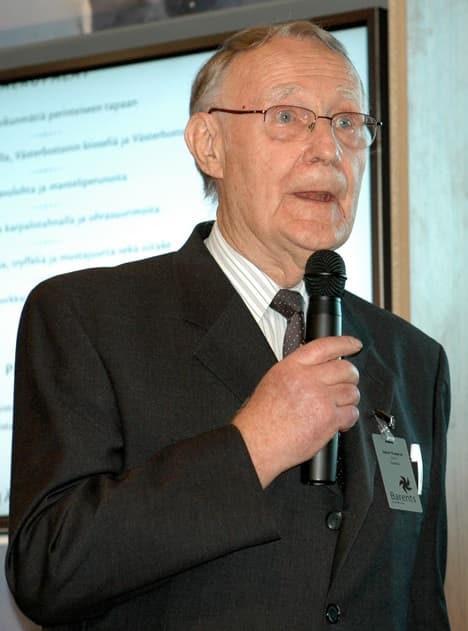
Ingvar Kamprad
IKEA
A visionary entrepreneur, Ingvar Kamprad transformed the retail landscape by founding IKEA in 1943, establishing a global brand synonymous with affordable, stylish furniture. His early foray into business began at the age of five when he sold matchboxes, igniting a lifelong passion for profit as a tool for mission-driven growth. Under his leadership, IKEA expanded to over 400 stores in 52 countries, embodying his belief that “what is good for our customers is also in the long run good for us.” Kamprad emphasized the importance of cash reserves and property ownership, principles that continue to guide entrepreneurs today in navigating business challenges and ensuring long-term success.
Core Principles
competitive advantage
Treat suppliers as partners, not transactional relationships. Pay them quickly and fairly to build loyalty, and they will find creative ways to help you even when others try to exclude you.
When competitors boycotted suppliers to prevent them from selling to IKEA, Ingvar's practice of paying suppliers within 10 days instead of 3-4 months created enough goodwill that suppliers made midnight deliveries with unmarked trucks to honor their commitments to IKEA. This loyalty became a crucial advantage during the boycott.
“IKEA paid within 10 days while others did not pay for three or four months.”
culture
Maintain the company spirit and culture even as you scale. The founder must act as a guardian of the company's soul by continuously reinforcing core values, even if it requires repetition for decades.
As IKEA grew from a small family operation to a global enterprise, Ingvar repeated the same sermon about IKEA's philosophy to executives for 43 straight years. He recognized that keeping company spirit alive becomes harder as organizations grow, so he made cultural reinforcement a deliberate, ongoing practice rather than assuming culture would maintain itself.
“The true IKEA spirit is built on our enthusiasm, our constant striving for renewal, from our cost consciousness, from our readiness to take responsibility, from our humbleness in approaching our tasks, and from the simplicity of our way of doing things.”
People are not just economic units, they are human beings who need meaning and enthusiasm in their work. Leadership must actively cultivate motivation and develop coworkers as a core responsibility.
Ingvar recognized that some people view their job merely as a means of livelihood, but he believed this was a failure of leadership. He saw it as the captain's responsibility to motivate people and infuse warmth into the work. A job must never be just a paycheck, he insisted, because a third of your life is wasted if you are not enthusiastic about it.
“A job must never be just a livelihood. If you are not enthusiastic about your job, a third of your life goes to waste.”
customer obsession
Build the business model around customer trust. When customers cannot touch or inspect goods, the business model breaks down and must evolve.
Mail order furniture suffered from quality complaints because customers could not see products before purchase. This insight led Kamprad to create the showroom plus catalog model, solving the trust problem and becoming the foundation of modern IKEA.
“The core problem with mail order was that customers themselves could not touch the goods.”
Side with the many, not the powerful. Commit to serving mass market customers and build all operations around that obligation.
IKEA's foundational philosophy was to serve the common person with affordable furniture. This shaped every decision from product design to supplier relationships to store location.
“We have decided once and for all to side with the many. What is good for our customers is also in the long run good for us.”
Commit your organization to serve the majority of people, not the elite. This mission should shape every product decision, pricing strategy, and business process you make.
Ingvar's foundational principle was to create a better everyday life for many people by offering well-designed, functional products at prices so low that as many people as possible could afford them. He explicitly chose to side with the many over the few and repeated this principle in sermons to executives for 43 consecutive years.
“We have decided once and for all to side with the many. To create a better everyday life for the many people by offering a wide range of well-designed functional home furnishing products at prices so low that as many people as possible will be able to afford them.”
finance
Build a good cash reserve as a foundational law of business. Cash reserves enable bold decisions and survival through cycles.
Maintaining strong cash reserves was the first law of IKEA, enabling Kamprad to make major investments and weather disruptions without external pressure.
“A good cash reserve must always be insured.”
Own your property rather than lease. Control of real estate ensures independence and long-term value creation.
All property expansion must be largely self-financed and owned outright. This was the second law of IKEA, ensuring the company controlled its destiny.
“All property must be owned.”
Never borrow money if you can avoid it. Build wealth slowly within your means and reinvest profits rather than taking on debt.
Kamprad took only one significant loan in his entire life to buy fountain pens early in his trading career. For IKEA's expansion, he financed growth through retained earnings and built a $58 billion net worth by staying debt-free.
“This was essentially the only real loan I have taken out in my life.”
Cost awareness must be an obsession that permeates every level of the organization. This is not just about cutting expenses, but about fundamentally believing that controlling costs is your primary competitive advantage.
Ingvar described pushing cost awareness at all levels with almost manic frenzy. He repeated this principle for over six decades and made it IKEA's anthem. He believed that every dollar wasted comes directly out of the customer's pocket, and every dollar saved puts you one step ahead of competition.
“We pushed cost awareness at all levels with almost manic frenzy.”
Stay financially independent and self-reliant. All expansion should be self-financed, which means you must make a profit not as an end in itself, but as the resource that enables your mission.
Ingvar established it as an iron law of IKEA that all expansion must be self-financed. He believed that profit gives you resources to achieve your larger mission of serving the many. This approach meant slower growth than competitors with access to unlimited capital, but it preserved independence and forced disciplined decision-making.
“Profit gives us resources. Let us be self-reliant in the matter of building up financial resources.”
focus
Concentrate resources for maximum impact. Accept that concentration means neglecting other areas rather than spreading resources thin.
Kamprad believed that forcing choices about where to concentrate made the organization sharper. If a trade-off is easy, it is probably not important enough to decide.
“The general who divides his resources will be defeated.”
Concentrate your resources on vital goals rather than spreading yourself thin. The general who divides his resources will be defeated, and focus is what creates strength.
Ingvar recognized that no company can do everything everywhere at all times or satisfy all tastes. Concentration means accepting that at certain vital stages you must neglect otherwise important aspects. This focus was essential to achieving maximum impact with small means.
“Concentration means that at certain vital stages we are forced to neglect otherwise important aspects. Concentration, the very word implies strength.”
hiring
Hire mavericks and independent thinkers. Give them room to make mistakes and prove out ideas, even when their approach conflicts with yours.
Kamprad employed Jan, a rebellious entrepreneur who challenged him repeatedly. Rather than firing him, Kamprad trusted him to find his own sphere of influence and make mistakes in service of growth.
“Kamprad preferred them to make mistakes rather than be idle.”
innovation
Make the early showroom a laboratory for learning. Test new ideas in a contained environment before scaling widely.
Kamprad treated the first showroom as a workshop for learning to build the perfect selling machine. This allowed experimentation with catalog, business sense, and contrarian approaches.
“A renovated two-story wooden building became the superb laboratory for everything new.”
View every business problem as an opportunity to innovate and differentiate. Constraints force creative solutions that competitors cannot easily replicate.
When suppliers blocked IKEA due to competitor pressure, Kamprad expanded to Poland. When mail order faced quality issues, he created the showroom model. When transport damaged furniture, he invented flat-pack self-assembly.
“Regard every problem as a possibility. New problems created a dizzying chance.”
Do things differently and challenge convention deliberately. Refusing to accept established patterns is how progress happens.
IKEA challenged furniture retail conventions by combining mail order with showrooms, using self-assembly to reduce costs, and bypassing traditional distribution. Each innovation came from questioning why things had to be done the conventional way.
“By refusing to accept a pattern simply because it is well established, we make progress.”
Break free from convention and do things differently as a deliberate strategy. Question why established patterns exist and use that questioning to discover new competitive advantages.
Ingvar repeatedly emphasized doing things a different way, not as rebellion for its own sake, but as a systematic approach to finding better solutions. IKEA was the first to combine mail order catalogs with physical showrooms, the first to systematically develop flat-pack furniture, and maintained a policy that no two stores should be identical to encourage continuous experimentation.
“Our protest against convention is not protest for its own sake. It is deliberate expression of our constant search for development and improvement.”
leadership
Do not boast or draw unnecessary attention. Humility and work ethic speak louder than marketing and self-promotion.
The fourth law of IKEA was no boasting. Kamprad's philosophy emphasized getting results and letting the work speak for itself rather than promoting oneself.
“There should be no boasting.”
Let ambitious young people take responsibility early. Imagination, common sense, and trust in employees drive success more than hierarchy.
In Poland, IKEA attracted young academics to private enterprise by giving them real responsibility and permission to use imagination. This created energy and commitment that rigid hierarchies could never produce.
“Because young people were given responsibility, because employees were permitted to use both imagination and common sense.”
Gather unfiltered intelligence directly from the front line by doing unexpected site visits. Leaders must talk directly with people closest to the work to understand what is really happening.
Ingvar practiced what IKEA called owner's dawn raids, appearing unexpectedly at stores at 5:30 AM to talk with delivery workers. He wanted to know what annoyed them, whether they received morning coffee, and what the real operational challenges were. This direct feedback was invaluable and showed employees that leadership cared about their experience.
Taking responsibility is a privilege, not a burden. Encourage people at all levels to make decisions rather than hide behind committees. The fear of making mistakes is the root cause of bureaucracy.
Ingvar believed that people who prefer making their own decisions are vital to keeping a company from becoming bureaucratic. He noted that constant meetings and group discussions are often signs that leaders fear making decisions. He famously said that only those who are sleeping make no mistakes, and encouraged people to constantly practice making decisions.
“Only while sleeping, one makes no mistakes. Making mistakes is the privilege of the active.”
mindset
Profit enables resources for long-term vision. Strip profit of its emotional and political baggage and see it as a tool for serving your mission.
Kamprad defended profit as necessary to fund growth and improvements. Profit forces efficiency in product development, purchasing, and cost discipline across all operations.
“Profits give us resources.”
Start selling early and learn through direct experience. Entrepreneurship is a practice that teaches lessons no classroom can provide.
Kamprad began trading at age five, selling matchboxes for profit. He learned the mechanics of commerce through hands-on experimentation rather than formal training, discovering early that buying cheap and selling for a small markup created real value.
“I suppose I was slightly peculiar in that I started tremendously early doing business deals.”
Never be cocky in moments of triumph. Always prepare for harder times and maintain humbleness, regardless of current success. This keeps you grounded and ready for challenges.
Despite building a multibillion-dollar enterprise, Ingvar repeatedly warned against complacency and arrogance. He believed humbleness was a core value of the IKEA spirit and regularly reminded executives and employees that success is temporary and constant vigilance is necessary.
“Never be cocky in a moment of triumph. Always prepare for harder times.”
Never accept that you are finished. The feeling of having completed something is dangerous because it leads to stagnation. Happiness comes from being on the way, not from reaching the destination.
Even after building IKEA into the world's largest furniture retailer, Ingvar maintained that they were just at the beginning of their journey. He believed that retirement and completion lead to withering away, while the feeling of having more to do kept companies and people vital.
“Happiness is not reaching your goal. Happiness is being on the way. It is our wonderful fate to be just at the beginning.”
Craftiness, the ability to be content with the resources you have and find ways out of tight spots, is a core competency worth developing. This is different from trickery, it is resourcefulness.
Ingvar defined craftiness as the ability to work with limited resources and solve problems creatively. During the boycott, IKEA employees showed craftiness by making night deliveries, altering designs slightly to work around restrictions, and finding international sources. This quality became embedded in IKEA's culture.
“The craftiness is the ability both to be content with the resources one has and to find ways out of tight spots.”
operations
Pay suppliers on time and honor agreements. Treating suppliers well builds loyalty that competitors cannot buy, creating sustainable advantage.
IKEA paid suppliers within 10 days with cash discounts, while competitors paid in 3-4 months without discounts. This practice built supplier relationships that gave IKEA better service and pricing.
“Nursing the suppliers is one of Kamprad's hobby horse principles, one that he still imparts to his staff.”
Translate all expenses into customer cost. Make visible how internal waste directly harms the customer through higher prices.
IKEA published the cost of printing advertising brochures and noted that the customer ultimately pays for waste. This practice kept the entire organization conscious of cost discipline.
“The customer who has to pay for whatever we waste.”
Achieve good results with small means by treating resource scarcity as a design constraint, not a limitation. Wasting resources is a mortal sin that applies to money, time, and effort.
Ingvar made it clear that reaching targets without counting costs is easy, but the challenge is achieving them with minimal resources. He extended this principle beyond financial waste to include wasting time through unnecessary paperwork, meetings, postponed decisions, and other bureaucratic activities.
“Wasting resources is a mortal sin at IKEA. It is not all that difficult to reach set targets if you do not have to count the cost.”
Frameworks
Problem as Possibility Framework
When facing a business constraint or competitor opposition, reframe it as an opportunity to innovate in a way competitors cannot easily replicate. Rather than accepting limitations, ask how the constraint forces a fundamentally better solution. Use the constraint to create differentiation and competitive advantage.
Use case: When facing supplier boycotts, regulatory restrictions, or market challenges that seem like they should kill the business
Showroom Plus Catalog Model
Combine direct mail order catalogs to drive awareness with a physical showroom where customers can touch and compare products at different quality levels and price points. This solves the trust problem inherent in mail order while maintaining reach through the catalog.
Use case: For products where physical inspection matters to purchase decisions but geography limits store reach
Quality Matching Framework
Determine required quality level by studying customer use, not by maximizing quality as a principle. Different components require different durability levels. Over-engineering wastes money and raises prices without adding customer value.
Use case: In product design and manufacturing decisions where cost control and customer value must be balanced
IKEA Way Philosophy
A documented set of nine principles covering product range, company spirit, profit, resourcefulness, simplicity, doing things differently, concentration, reaching goals with small means, and humility. Used to train managers as cultural ambassadors and guide decisions across the organization.
Use case: Creating and scaling a distinct organizational culture across geographies and generations
Step-by-Step Ferocious Expansion
Build deliberately at intentional pace rather than explosive growth. Each step funds the next through retained earnings. Take time to develop people and culture, but maintain constant forward momentum without dilly-dallying or lollygagging.
Use case: For founders seeking to build sustainable companies with strong culture rather than venture-backed scaling
The Four Laws of IKEA
Foundational business rules: maintain good cash reserves, own all property outright, finance all expansion internally, and avoid boasting. These laws ensure independence and long-term survival.
Use case: Setting guardrails for financial and operational strategy from company inception
Supplier Nurturing Framework
Build supplier relationships through fair dealing and financial advantage. Pay on time with cash discounts, honor agreements, and treat suppliers as partners rather than costs to minimize. This creates loyalty and better terms than larger competitors can achieve through leverage.
Use case: When building supplier networks in industries with oligopolistic competitors
The Combined Model: Catalog Plus Physical Store
Instead of pure mail order or pure retail, combine both. Use catalogs to drive traffic to physical locations where customers can see, touch, and take home products the same day. This solves the mail order problem of customers not being able to touch goods before buying and eliminates the shipping delays and damage of pure mail order. The model creates multiple revenue streams and reduces inventory pressure at any single location.
Use case: Any product category where customers want to inspect before purchase and immediate gratification is valuable. Works especially well for furniture, home goods, and large items.
The Nine Principles of IKEA
A codified set of nine operating principles that guide all decisions: serve the many, low prices through cost control, profit enables resources, achieve good results with small means, simplicity is a virtue, do it a different way, concentrate resources, taking responsibility is a privilege, and most things still remain to be done. These principles are taught systematically and repeatedly across the organization to ensure cultural alignment even as the company scales.
Use case: Establishing a durable company culture that can survive leadership transitions and rapid scaling. Use when you want to codify founder values into teachable principles.
Iron Laws of IKEA
Unbreakable rules that preserve financial independence and long-term viability: maintain a good cash reserve always, own all property rather than rent, finance all expansion from internal cash flow only, and never boast. These constraints force disciplined decision-making and prevent the company from becoming dependent on external capital or overconfident.
Use case: Ensuring long-term independence and resilience. Particularly valuable for founders who want to avoid the pressure and loss of control that comes with external investors.
Stories
At age five, Kamprad's aunt helped him buy his first hundred matchboxes for 88 ores. He sold them for 2 to 3 ores each, remembering the lovely feeling of turning a profit. This early experience showed him that buying cheap and selling at a small markup created real value.
Lesson: Entrepreneurship starts young when you observe that small transactions compound into meaningful profits. Early wins build the obsession with business that drives later success.
A furniture competitor named Gunner taught Kamprad a lesson in negotiation. Kamprad quickly accepted Gunner's price offer of 55 for watches when he said he could only pay 50. Gunner told him he should have negotiated more fiercely: try for 51 before accepting 52. Kamprad never forgot the lesson.
Lesson: A single dollar in price negotiation can mean everything. Master negotiators extract value through persistence rather than quick capitulation. This applies across all business transactions.
When competitors pressured IKEA to stop selling directly to customers at furniture exhibitions, they instituted bans that prevented IKEA from displaying prices. They referred to IKEA as a monster with seven heads: cut off one head and another grows. But IKEA kept finding workarounds, and eventually grew so fast that competitors no longer bothered battling.
Lesson: Competitive restrictions are short-term bandages that cannot stop a better-run company. The solution is not to fight the restrictions but to grow faster and become the dominant player. Adaptation beats legal battle.
Kamprad employed a creative young entrepreneur named Jan who frequently challenged him and made mistakes. Jan considered himself fired at least four times but Kamprad kept him around, saying mavericks should be allowed to make mistakes rather than remain idle. Jan eventually became a compulsory lecturer in the IKEA Way training.
Lesson: Recognize misfits and independent thinkers in your organization, especially those who remind you of yourself. Give them rope to learn and prove their value, even when they conflict with you.
When mail order furniture sales suffered from complaints because customers could not inspect products before purchase, Kamprad realized the business model was unsustainable. He bought a small closed store and created a showroom where customers could see furniture at different quality and price levels side by side. Success was immediate and created the foundation of modern IKEA.
Lesson: When a business model breaks, do not iterate infinitely. Fundamentally reimagine how customers interact with your product. The showroom plus catalog model solved a structural problem that marginal improvements could never fix.
Transport damage was a chronic problem for IKEA furniture shipments. Broken table legs and damaged pieces created customer complaints and costs. Rather than over-engineer packaging, Kamprad realized that having customers assemble furniture themselves eliminated transport damage, reduced factory costs, and lowered customer prices.
Lesson: Constraints force better solutions than have unlimited resources. Self-assembly was born from a problem, but it created competitive advantage through lower cost, lower prices, and customer engagement.
Kamprad was obsessed with work and admitted that he neglected his three sons during their childhood to build IKEA. He called this one of his greatest sorrows. Even with successful relationships as an adult with his sons, he acknowledged that childhood cannot be reconquered once it is lost.
Lesson: Entrepreneurial success at the cost of family relationships is a pyrrhic victory. The time you miss with your children is gone forever. Fame and wealth cannot buy back a childhood with your father.
When Ingvar's economist CFO Cronwall began acting like the strongman of IKEA and would not make time to see Ingvar for appointments, tensions arose. Cronwall came from academic and bureaucratic backgrounds and tried to impose hierarchy. This conflicted with Ingvar's culture of loose structure and innovation. Eventually Cronwall was dismissed in front of the board for betraying Ingvar's confidence in a shady property deal.
Lesson: Hiring someone for a critical function does not mean they understand the culture or can lead it forward. Poor cultural fit and growing arrogance can poison a company quickly. Be willing to remove people who betray trust.
At age 10, Ingvar walked through a meadow with his father who pointed out a perfect location for a forest track but said it would cost too much. His father's financial limitations prevented him from pursuing his vision. Young Ingvar realized that to help his father and carry out plans, you need money.
Lesson: Financial constraints are fundamental to understanding entrepreneurial motivation. Ingvar's drive to make money was rooted in witnessing his father's helplessness in the face of financial limitations. Understanding the psychological origins of an entrepreneur's ambition reveals what will drive them forward.
At age 5, Ingvar bought 100 boxes of matches for 88 cents and sold them at 2-3 cents each. He remembers the lovely feeling of the profit. This became an obsession, and he sold Christmas cards, fish, garden seeds, and later fountain pens he bought with a bank loan. Selling things and profit margins captivated him from earliest childhood.
Lesson: True entrepreneurial drive often emerges very early and reveals itself through consistent behavior patterns. Early commercial success, no matter how small, creates positive reinforcement loops that shape lifelong orientation toward business building.
Notable Quotes
“We have decided once and for all to side with the many. What is good for our customers is also in the long run good for us.”
Foundational principle written in A Furniture Dealer's Testament, explaining IKEA's mission
“Regard every problem as a possibility. New problems created a dizzying chance.”
Explaining his philosophy on how constraints and opposition lead to innovation
“Quality must never be an end in itself. It must be adjusted to the consumer's needs.”
Defining the difference between over-engineering and matching quality to customer value
“Still today, we want to grow at our own pace so that we keep up, not just with what is new, but also develop what we already have.”
Explaining why IKEA remained private and rejected rapid growth
“Any architect can design a desk that will cost $5,000, but only the most highly skilled can design a good functional desk that will cost $100.”
From A Furniture Dealer's Testament, explaining that expensive solutions are usually mediocre
“Exaggerated planning is the most common cause of corporate death.”
Warning against bureaucracy and over-complicated rules that paralyze decision-making
“The customer who has to pay for whatever we waste.”
Explaining why IKEA published the cost of printing brochures, making waste visible to the organization
“Profits give us resources.”
Defending profit as a tool for serving the mission rather than an end in itself
“By refusing to accept a pattern simply because it is well established, we make progress.”
From A Furniture Dealer's Testament, on challenging convention as deliberate strategy
“By chance, the furniture trade, which I entered in an attempt to imitate competitors, decided my destiny. No other event in life pleases me more than the fact that I ended up there.”
Reflecting on how imitating competitors led him to discover his true calling in furniture
Frequently Asked Questions
What are Ingvar Kamprad's key business principles?▼
Ingvar Kamprad's core principles include: Treat suppliers as partners, not transactional relationships. Pay them quickly and fairly to build loyalty, and they will find creative ways to help you even when others try to exclude you.. Maintain the company spirit and culture even as you scale. The founder must act as a guardian of the company's soul by continuously reinforcing core values, even if it requires repetition for decades.. People are not just economic units, they are human beings who need meaning and enthusiasm in their work. Leadership must actively cultivate motivation and develop coworkers as a core responsibility.. Founder Almanac has cataloged 30 total principles from Ingvar's career.
What can entrepreneurs learn from Ingvar Kamprad?▼
Key lessons from Ingvar Kamprad include: Entrepreneurship starts young when you observe that small transactions compound into meaningful profits. Early wins build the obsession with business that drives later success.. Explore 10 stories and 10 frameworks from Ingvar's experience.
What is Ingvar Kamprad known for in business?▼
A visionary entrepreneur, Ingvar Kamprad transformed the retail landscape by founding IKEA in 1943, establishing a global brand synonymous with affordable, stylish furniture. His early foray into business began at the age of five when he sold matchboxes, igniting a lifelong passion for profit as a tool for mission-driven growth. Under his leadership, IKEA expanded to over 400 stores in 52 countries, embodying his belief that “what is good for our customers is also in the long run good for us.” Kamprad emphasized the importance of cash reserves and property ownership, principles that continue to guide entrepreneurs today in navigating business challenges and ensuring long-term success.
More Retail Founders



Want Ingvar's advice on your business?
Our AI has studied Ingvar Kamprad's biography, principles, and decision-making frameworks. Ask any business question.
Start a conversation