Sol Price
FedMart, Price Club
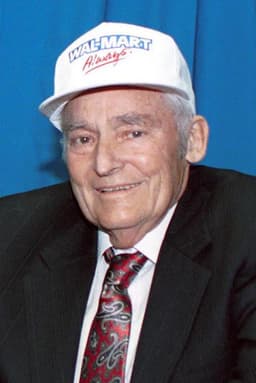
A pioneer in the retail industry, Sol Price founded FedMart and Price Club, two influential warehouse-style retail chains, during the 1950s to 1990s. He revolutionized the shopping experience by offering customers bulk goods at discounted prices, leading to the establishment of the first membership-based warehouse club model, which would later inspire giants like Costco. Price's commitment to transparency and open communication fostered a culture of honesty among employees, while his belief that adversity could drive excellence motivated him to overcome early challenges in his life. By prioritizing real-world learning and mentorship over traditional education, he exemplified the entrepreneurial spirit that continues to resonate with business builders today. His notable quote, "I should have worn a condom," reflects his candid approach to life's challenges, underscoring the importance of accountability and personal growth in achieving success.
Core Principles
customer obsession
See your business through the eyes of a demanding, cranky customer. Design every process around customer frustration points, not operational convenience.
Sol believed that understanding the perspective of a difficult customer revealed true business needs. He used this lens to question every standard retail practice and identify where customers were being shortchanged.
“If you want to be successful in retail just put yourself in the place of a cranky demanding customer.”
Build loyalty by representing the customer's interest, not the retailer's. Treat customers as members, not transactions.
Sol described FedMart's approach as a professional fiduciary relationship where the retailer represented customer interests. This meant avoiding sales pitches, advertising minimally, and relying on satisfied customers to generate word-of-mouth growth.
“We felt we were representing the customer. You had a duty to be very, very honest and fair with them, so we avoided sales and advertising.”
finance
Cap your downside while keeping upside unlimited. Negotiate terms that protect you if the venture fails.
When starting FedMart with $50,000 seed capital, Sol negotiated a 10-year lease with the option to cancel after one year if the business wasn't working. This protected him from long-term obligations while building an expensive new concept.
“We negotiated a lease for 10 years. We were so uncertain as to the future of this enterprise that we reserved the right to cancel the lease at the end of one year if it didn't work.”
Start your business while maintaining another income source. Cap financial risk and give yourself time to prove the concept.
Sol continued practicing law for several years after opening FedMart. This provided income to support his family while he transitioned, and reduced the pressure to make FedMart profitable immediately.
hiring
Pay employees significantly more than competitors pay. Wages that are double the market rate attract better talent, reduce turnover, and create better customer service.
When competitors paid 50 cents per hour, Sol insisted on paying a dollar per hour across all FedMart locations, regardless of local market rates. Everyone wanted to work at FedMart, and the higher wages were offset by reduced turnover and better productivity.
“Employers were paying their employees 50 cents per hour. Sol knew that people could not live on 50 cents an hour. He decided that the wage rate at FedMart would be a dollar per hour.”
innovation
Ignorance of what cannot be done allows you to attempt what experts think is impossible. Avoid hiring experts fully formed in conventional thinking.
Sol noted that most FedMart founders lacked retail backgrounds, which was beneficial because they didn't know the supposed rules of retail. They experimented and broke conventions, creating innovations that experienced retailers thought impossible.
“Fortunately most of us had backgrounds that were alien to retailing. We didn't know what wouldn't work or what we couldn't do.”
When a business is maturing and growth plateaus, refresh your innovation by studying how other founders solved similar problems. Travel and observe competitors globally.
After 20 years running FedMart successfully, Sol felt the business stagnating under competitive pressure. He traveled to Europe to study retailers like Marco (in Holland) and Hugo Mann's hypermarkets in Germany. These observations led to Price Club's warehouse format.
leadership
Expect to be fully informed openly and honestly, even if you dislike what you hear. Create an environment where people share unfiltered truth.
Sol's son Robert noted that working together for 40 years meant his father demanded complete honesty in all communications. This openness prevented blind spots and enabled better decision-making across the organization.
“I had learned that my father expected to be fully informed openly and honestly, even if he did not like what he heard.”
Teaching is the core responsibility of leadership. Train employees to think, not to follow procedures. Help them understand why their work matters.
Sol believed that training manuals substituted for thinking and limited employee growth. Instead, he emphasized teaching employees to understand the business logic behind decisions so they could adapt and improve processes independently.
“You train an animal. You teach a person.”
Develop alter egos by teaching employees to do their jobs as well as or better than you would. Delegate responsibility, not just tasks.
Sol believed the owner's job was to teach employees to think and act as if they owned the business. They should understand decision-making logic so thoroughly that they could run departments independently while the owner focused on higher-value work and oversight.
marketing
Give value away for free early on to build relationships and establish your reputation. Free services create the client base that generates future income.
Sol did extensive pro bono legal work when starting his law practice, despite struggling financially. These free services introduced him to community members who eventually became paying clients and business contacts that shaped his retail career.
“Not charging for one's legal services, especially for a young attorney struggling to earn a living, might not have been so obvious. However, his pro bono legal work introduced him to many people in the community, some of whom eventually became his clients.”
Word-of-mouth advertising from satisfied customers is superior to paid advertising. Invest money in product quality and customer experience rather than marketing campaigns.
Sol avoided sales tactics and advertising, believing the best marketing was unsolicited testimonials from happy members. This meant investing savings into better prices and benefits rather than marketing budgets.
“We have, in effect, said that the best advertising is by our members, the unsolicited testimonial of the satisfied customer.”
Solve customer acquisition challenges by finding organizations with aligned missions and member bases. Partner for mutual benefit rather than paid advertising.
Price Club was failing until Sol discovered that credit union members align with warehouse club members (both seeking to save money). He offered free flyers in credit union statements. The result was explosive growth as credit union members embraced the new value proposition.
mindset
Pack your days with productive work and understand the scarcity of time. Optimize every hour because time waste compounds quickly.
During World War II, Sol worked his law office until noon then an airplane manufacturing plant until 11:15 p.m. six days a week. This habit of maximizing time became central to his philosophy. Late in life he frequently asked people about their sleep duration and daily routines, emphasizing that 168 hours per week provides ample time if not wasted.
“We always have more time than we think. How much sleep do you get? How long does it take you to study? We just waste so much of it. There are 24 hours in a day, 168 hours in a week.”
Do what is right even when it costs money and attracts opposition. Stand against segregation, exploitative pricing, and unfair business practices regardless of consequences.
Sol refused to accept a mortgage agreement that required segregated bathrooms. He withstood death threats, lost wholesale suppliers, was expelled from pharmacy organizations, and faced sabotage when he sold prescriptions at low prices. He persisted because the practices were wrong.
“Sol told the lender that the separate bathroom provision was unacceptable and that he would not enter into the mortgage agreement unless the provision was removed.”
Build business models that serve societal needs, not just extract wealth. Companies run with social responsibility wind up with more money anyway.
Sol believed business had an obligation to serve society, influenced by witnessing the Great Depression and potential revolution. He paid double-market wages, provided benefits, and kept prices low. The result was not lower profits but stronger loyalty and efficiency.
Learn more from real-world clients and mentors than from formal education. Education comes through the discipline of life, not classrooms.
Sol practiced law and learned far more from his entrepreneurial clients than from law school. He later applied this philosophy throughout his career, believing that working alongside skilled people taught lessons that schools never could.
“I really learned far more from my clients than I ever learned in law school.”
Physical or social disadvantage can become a driver for overachievement. Use adversity as motivation to prove yourself through excellence.
Sol had a drooping eyelid that caused childhood bullying, making him shy. He compensated by becoming an overachiever in school, skipping two grades. This pattern of using obstacles as fuel for success continued throughout his life and business career.
“When I was three or four years old, I had an infirmity in my left eye that caused a drooping eyelid. It was something that bothered me and made me self-conscious. The kids teased me a lot and consequently, I was shy and I compensated this by being an overachiever in school.”
operations
Maintain consistent operating philosophy across all departments and locations. Do not allow independent operators or franchisees to deviate from your standards.
FedMart initially considered renting space to independent operators within the warehouse. Sol rejected this approach, deciding that consistent merchandising philosophy throughout the entire store was essential. He bought out all independent operators to maintain control.
Run your operation actively, not reactively. Stay ahead of problems instead of constantly reacting to crises. Take control of your business.
Sol told a busy employee being crushed by daily tasks: 'You're not running this place. It's running you.' The lesson was that reactive management exhausts you and prevents strategic thinking. You must proactively manage the business instead of being managed by it.
“You're not running this place. It's running you.”
Keep fixed costs minimal in early stages. Have employees park in customer spaces and use other creative tactics to signal business activity if sales are initially slow.
When Price Club's opening week produced only $30,000 in sales instead of target $200,000, Sol had employees park their cars in customer spaces to make the store appear busy. This simple tactic helped communicate that the business was operating.
resilience
When suppliers cut you off for underpricing, create an alternate supply chain. Use creativity and legal structures to circumvent unfair industry practices.
Gasoline suppliers cut FedMart off when Sol began selling premium gas at regular prices. Sol created a subsidiary company that imported gasoline through the Panama Canal and distributed from Long Beach, California. This maintained supply and defeated the boycott.
sales
Membership-based pricing models create customer commitment. The upfront fee ensures members are invested in using the service and recouping their investment.
FedMart required a $2 lifetime membership card. Price Club charged annual membership fees. These upfront costs created psychological commitment: members were more likely to shop frequently to justify the fee. This model aligned member and retailer interests.
Create business membership tiers with additional discounts to incentivize higher commitment and spending. This turns casual shoppers into invested members.
Price Club offered 5% additional discounts to business owners. This motivated credit union members to claim business status (actual or through family), increasing both membership count and purchase frequency. The strategy turned potential one-time shoppers into committed members.
simplicity
Limited selection creates efficiency and lower prices. Deliberately lose sales on items where customers don't buy the best value, allowing you to stock only the optimal size or variant.
Sol proved that carrying three sizes of 3-in-1 oil was inefficient. By stocking only the 8-ounce size (best value per ounce), stores sold more volume to customers who valued price, lost sales from customers wanting other sizes, but achieved massive labor savings across ordering, receiving, stocking, and checkout.
Focus inventory ruthlessly. Fewer items reduce labor throughout the entire supply chain: ordering, receiving, distribution, stocking, and checkout.
Price Club carried 3,000 items compared to 50,000 in traditional stores. Managing 4,500 items costs far less than managing 50,000. Since payroll represents 80% of retail operating costs, labor productivity from limited selection drives pricing advantage.
“Payroll and benefits represent approximately 80% of retailers' cost of operations. Fewer items result in reduced labor hours throughout all of the product supply channels.”
strategy
Allow successful business concepts to compound by not selling them. Founders who retain control and let businesses mature create greater wealth and impact.
Sol sold FedMart and later sold Price Club to Costco. Contrast this with Sam Walton (never sold, became one of history's richest people), Jeff Bezos (never sold, created enormous wealth), and Jim Sinegal (never sold, Costco thrived). Sol's entrepreneurial restlessness meant he missed the exponential growth phase of his own ideas.
Model your business by observing similar successful models in adjacent categories. A niche business that solves a specific problem contains lessons transferable to other niches.
Sol observed Seven Seas Locker Club serving sailors' specific needs. He then saw Fedco serving federal employees. He realized that focusing on a specific customer segment with distinct needs was more profitable than trying to serve everyone.
Maintain control of your company when possible. Selling to investors or acquirers gives them decision-making authority over your vision and strategy.
Sol sold FedMart to German billionaire Hugo Mann, thinking Mann's capital would accelerate growth. Hugo immediately dominated a board meeting and humiliated Sol and his son, revealing his true character. Sol's loss of control meant losing influence over the company he built.
Frameworks
Professional Fiduciary Relationship
The retailer acts as the customer's representative rather than trying to extract maximum profit from each transaction. This means avoiding misleading sales, advertising minimally, pricing fairly, and maintaining absolute honesty. The framework assumes that loyal customers who trust you generate more lifetime value than customers seeking short-term deals.
Use case: Any customer-facing business, especially retail or subscription models where repeat business is critical.
Intelligent Loss of Sales
Deliberately limit product selection to the items that deliver the best value per unit. This allows you to lose sales on lower-value variants while achieving massive efficiency gains throughout the supply chain. The framework assumes customer demand responds more to price than to selection.
Use case: Any high-volume, low-margin business where labor efficiency determines profitability. Particularly effective in retail, distribution, and commoditized services.
Alter Ego Development
Train employees to think and act as you would if you had time to do every job yourself. Teach them to understand the business logic behind decisions rather than follow rote procedures. The goal is to create junior versions of yourself who can independently manage their domain while you focus on strategy and oversight.
Use case: Any business needing to scale without proportional increase in management overhead. Most effective in businesses where judgment and problem-solving matter more than rule-following.
Membership-Based Incentive Alignment
Charge upfront membership fees to customers and align your business model around maximizing member benefits rather than transaction margins. The upfront fee creates psychological commitment and ensures members are motivated to use the service, aligning their incentives with yours.
Use case: Wholesale clubs, subscription services, community organizations, and any business where repeat customer engagement is the profit driver.
Stories
A school teacher told Sol's mother that her son was very smart but could go in one of two directions: a career as a gangster or as someone who would do great good. Sol chose the path of building legitimate businesses that created societal value.
Lesson: Misfits and rule-breakers can become either destructive or transformative. The difference is whether they channel their restlessness toward improving systems or exploiting them. Sol's physical insecurity and non-conformist nature, when directed toward business innovation, created enormous value.
During World War II, Sol worked simultaneously as a lawyer (8 a.m. to noon) and at an airplane manufacturing plant (5 p.m. to 11:15 p.m.) six days a week. Unlike his father who found ways to avoid work, Sol thrived on productivity and learned the permanent value of time optimization.
Lesson: Extreme circumstances reveal character. Sol's wartime work ethic established a lifelong commitment to maximizing every hour. Founders who learn to value time early in their careers compound this advantage across decades of work.
When grocery suppliers cut off FedMart's supply after Sol began selling prescriptions at unprecedented low prices, Sol created a subsidiary that imported gasoline through the Panama Canal. Rather than accepting the industry's artificial constraints, he found a way around them.
Lesson: When competitors or suppliers try to defeat you through boycotts or cutoffs, respond by creating an alternate system that serves customers better. Creativity and legal structures can overcome collusion and unfair industry practices.
Price Club was failing with $30,000 first-week sales instead of target $200,000. Sol discovered that credit union members had aligned interests with warehouse club members (both seeking savings). He offered free flyers in credit union statements, and the business exploded into profitability.
Lesson: When your direct marketing isn't working, find organizations with aligned missions and complementary member bases. Partner for mutual benefit. The right distribution channel can transform a failing business into a success.
An employee was drowning in daily reactive tasks, pulling cardboard and restocking shelves constantly. Sol grabbed him by the shoulder and yelled: 'You're not running this place. It's running you.' The employee changed his approach entirely, staying ahead of problems instead of constantly reacting to them.
Lesson: Reactive management exhausts you and prevents strategic thinking. Leaders must take active control of their business, anticipating problems and setting direction rather than constantly firefighting. This distinction separates managers from leaders.
Sol's law practice took off after years of struggle when he began doing pro bono legal work. These free services connected him to community members who later became paying clients and business partners, including the person who introduced him to retail.
Lesson: Give value away early in your career. The relationships and trust you build through free work often generate more lifetime value than the immediate cost. Reputation and connections compound in ways money cannot.
Sol sold FedMart to German billionaire Hugo Mann, thinking Mann's capital would accelerate growth. At the first board meeting, Hugo spent 90 minutes humiliating Sol and his son without ever looking at them directly, revealing his true character.
Lesson: Founders who sell lose control of their vision and become subordinate to owners. What seems like a good deal (capital and expansion) can turn into loss of autonomy and respect. The character of your buyer becomes your boss.
Sol worked alongside his son Robert for nearly 45 years. Robert later said: 'My father taught me how to think, how to question, and not to fall into the trap of assuming rather than checking things out for myself.' The greatest gift was teaching his son to learn independently.
Lesson: The deepest legacy you leave is not the company you build but how you teach others to think. Teaching your children (literal or figurative) to question, verify, and think independently has impact far beyond your lifetime.
Notable Quotes
“I should have worn a condom.”
Sol's sardonic reply when a reporter asked how it felt to be the father of an industry (warehouse clubs). Reflects his irreverent humor and ambivalence about his legacy.
“Do it now.”
The phrase on Sol's desk, reflecting his extreme impatience with delays and his belief that time should not be wasted.
“You're not running this place. It's running you.”
Sol's rebuke to an employee drowning in reactive daily tasks. Captures his philosophy about the difference between active leadership and being controlled by circumstances.
“You train an animal. You teach a person.”
Sol's philosophy distinguishing between procedural training and genuine education. He believed in teaching employees to think rather than follow manuals.
“We have, in effect, said that the best advertising is by our members, the unsolicited testimonial of the satisfied customer.”
Sol's belief that word-of-mouth from happy customers is superior to paid advertising, so investment should go into customer experience rather than marketing.
“Although we are all interested in margin, it must never be done at the expense of our philosophy. Margin must be obtained by better buying, operating efficiencies, lower markdowns, greater turnover.”
Written in a 1967 memo to Jim Sinegal, framing the philosophical foundation for scale economies shared model
Frequently Asked Questions
What are Sol Price's key business principles?▼
Sol Price's core principles include: See your business through the eyes of a demanding, cranky customer. Design every process around customer frustration points, not operational convenience.. Build loyalty by representing the customer's interest, not the retailer's. Treat customers as members, not transactions.. Cap your downside while keeping upside unlimited. Negotiate terms that protect you if the venture fails.. Founder Almanac has cataloged 30 total principles from Sol's career.
What can entrepreneurs learn from Sol Price?▼
Key lessons from Sol Price include: Misfits and rule-breakers can become either destructive or transformative. The difference is whether they channel their restlessness toward improving systems or exploiting them. Sol's physical insecurity and non-conformist nature, when directed toward business innovation, created enormous value.. Explore 8 stories and 4 frameworks from Sol's experience.
What is Sol Price known for in business?▼
A pioneer in the retail industry, Sol Price founded FedMart and Price Club, two influential warehouse-style retail chains, during the 1950s to 1990s. He revolutionized the shopping experience by offering customers bulk goods at discounted prices, leading to the establishment of the first membership-based warehouse club model, which would later inspire giants like Costco. Price's commitment to transparency and open communication fostered a culture of honesty among employees, while his belief that adversity could drive excellence motivated him to overcome early challenges in his life. By prioritizing real-world learning and mentorship over traditional education, he exemplified the entrepreneurial spirit that continues to resonate with business builders today. His notable quote, "I should have worn a condom," reflects his candid approach to life's challenges, underscoring the importance of accountability and personal growth in achieving success.
More Retail Founders



Want Sol's advice on your business?
Our AI has studied Sol Price's biography, principles, and decision-making frameworks. Ask any business question.
Start a conversation