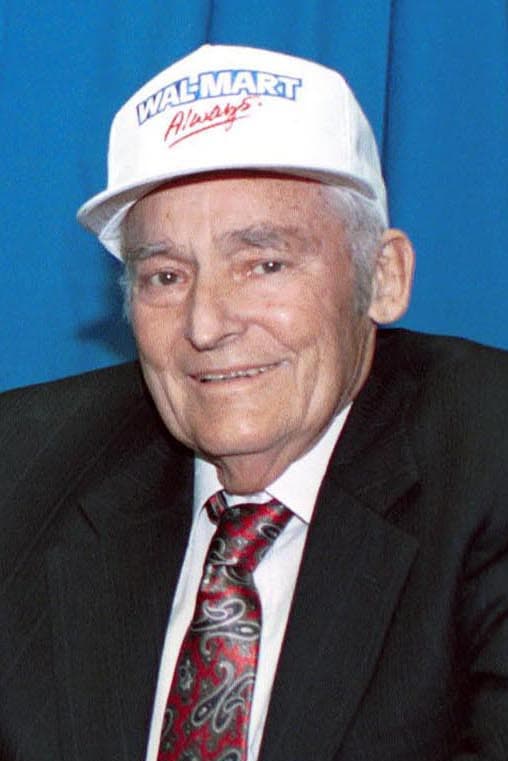
Sam Walton
Walmart
A pioneer in the retail industry, Sam Walton founded Walmart in the 1960s, transforming it into the world's largest retailer by 1992. Despite early skepticism regarding his suitability for retail, he persevered and achieved remarkable success, including opening his first store in Newport, Arkansas, and making it the most profitable variety store in the state within five years. Walton's relentless study of competitors and commitment to ambitious goals set him apart as a visionary leader. His belief that critics are unreliable predictors of success and his relentless pursuit of improvement continue to inspire entrepreneurs today. With a legacy of innovation, Walton's methods of learning from others and setting high standards remain relevant for business builders navigating today's competitive landscape.
Core Principles
competitive advantage
Study your competition obsessively. Sam visited more retail stores worldwide than perhaps anyone in history, constantly learning from how others operated and adapting their best practices.
From reading every retailing book in a Salt Lake City library after WWII to later visiting competitor stores globally, Sam made information gathering a core business practice. He would study competitors' operations, pricing, and layouts to improve his own stores.
“Most everything I've done, I've copied from somebody else.”
Embrace competition as a sharpening tool rather than a threat. Competitors push you to innovate and improve, making your company stronger.
Sam intentionally opened stores in markets where competitors operated, viewing competition as beneficial rather than destructive. He credited Kmart and others with forcing Walmart to continuously improve.
“We decided that instead of avoiding our competition or waiting for them to come to us, we would meet them head on. Our competitors have honed and sharpened us to an edge we wouldn't have without them.”
A passion to compete and an obsessive focus on one or two core variables can drive extraordinary business success.
Sam's primary motivator was not money but the desire to be on top of the heap. He and Walmart became obsessed with keeping prices below everyone else's, pursuing this single goal with total dedication and fanaticism. This extreme focus on one variable, price, became the foundation of Walmart's competitive advantage.
“What we were obsessed with was keeping our prices below everybody else's. Our dedication to that idea was total.”
Margin of safety and competitive advantage are built through relentless cost control. Being a 'demon on costs,' as Warren Buffett described it, creates a structural advantage that compounds over decades and allows you to serve customers better.
Sam Walton, Jeff Bezos, and Jim Sinegal all obsessed over cost control. Walton's autobiography states 'our money was made by controlling expenses.' By 2006, Nick Sleep recognized that Amazon's cost structure was so efficient the competitive game was already decided, even though Amazon's stock was out of favor.
“Our money was made by controlling expenses. You can make a lot of different mistakes and still recover if you run an efficient operation, or you can be brilliant and still go out of business if you're too inefficient.”
culture
Employee treatment directly determines customer satisfaction and profit margins. The more you share profits with employees through wages, bonuses, and incentives, the more profit the company generates.
Early in his career, Sam kept employee wages artificially low to maintain profit margins. He later realized this was counterproductive. When employees were treated well, they treated customers better, driving loyalty and repeat purchases.
“The more you share profits with your associates, whether it's in salaries or incentives or bonuses or stock discounts, the more profit will accrue to the company. The way management treats the associates is exactly how the associates will then treat the customers.”
Create profit-sharing structures that align employees and store managers with financial success. Distribute ownership to drive commitment and performance.
Sam observed a J.C. Penney manager receive a sixty-five thousand dollar bonus check while Sam earned only eighty-five dollars monthly. This inspired Sam to create a system where store managers could raise capital to invest in their stores and receive profit-sharing percentages, often twenty-five percent or more. This alignment created intense commitment that rival retailers could not replicate.
Decentralization and local autonomy, combined with shared economics, create entrepreneurial energy throughout an organization.
Sam gave store managers equity in their locations and autonomy to try new ideas, while also providing them with transparent profit and loss data. This alignment of interests and freedom created a culture of ownership. Each manager operated like an independent entrepreneur while staying aligned with Walmart's core pricing philosophy.
“Each of them had lots of freedom to try all kinds of crazy ideas themselves.”
Involve your family in the business early, not to force them into it, but to align incentives and pass down values.
Sam gave his children stock in the company when it was worthless, had them work in stores starting at age five, and included business discussions in family dinner conversations. This created shared ownership and values rather than entitlement. His children understood the hard work required to build wealth.
“They worked in the stores, invested in the stores, and shopped in the stores.”
Maintain low resistance to change as an organizational value. Repeat this message constantly. Be willing to abandon what works if something better is proven.
Sam initially thought computers were overhead cost. When his lieutenants convinced him otherwise with data, he invested $500 million. He called this the RC factor, resistance to change, and made low RC a core value repeated monthly in company newsletters.
“We have a low resistance to change. We call it our RC factor. Every day is a different situation in the retail business. We have to be flexible.”
customer obsession
Put customer satisfaction ahead of short-term profits. This principle compounds over decades and outlasts competitors focused on margin extraction.
Sam learned this from John Cash Penney at J.C. Penney, where Penney demonstrated that obsessing over the cost of wrapping paper and string mattered less than customer experience. Sam adopted this frugality and customer focus as his core philosophy, making it the foundation of Walmart's competitive advantage.
“We only make our profit out of the paper and string we save.”
Money is a byproduct of serving customers well, not the primary goal. Focus on service and let wealth follow naturally.
Sam Walton repeatedly emphasized that he was not primarily motivated by personal wealth accumulation. His focus remained on serving customers through lower prices and better value. He believed money came naturally as a result of consistently executing on customer service and never wasting resources.
“Money comes naturally as a result of service.”
You can learn from studying everyone in your field, especially competitors. Make this a daily practice.
Sam visited more retail stores than anyone in history. He would stop at every store during family vacations, study competitor displays and prices, and fly his own plane to observe parking lots and traffic patterns at distant locations. This obsessive benchmarking gave him insights that informed every decision Walmart made.
“I'm pretty sure that no one in the history of mankind has visited more retail stores than I have.”
Price reduction combined with understanding customer economics creates a virtuous cycle of market share and profitability.
Sam discovered that if women would walk through chaotic stores and watermelon-stained floors just to save a few dollars, they would do almost anything for meaningful savings. This insight drove Walmart's strategy of accepting less polished stores in exchange for dramatically lower prices that customers valued more than appearance.
“We were trying to figure out if customers in a town of 6,000 people would come out to our kind of barn and buy the same merchandise strictly because of price. The answer was yes.”
Obsess over customer satisfaction and exceed customer expectations consistently. A satisfied customer returns for decades and tells others, creating compounding network effects.
Sam made customer satisfaction the golden rule at Walmart: the customer is always right. If someone returned shoes that didn't fit, the store would cheerfully replace them and add socks as compensation for the hassle. He understood that lifetime customer value far exceeds the cost of a single transaction.
“The customer is always right. If the customer isn't right, refer to rule number one.”
finance
Maintain frugality in personal and corporate spending regardless of wealth. Excessive lifestyle spending by executives signals that the company tolerates waste throughout.
Even as a billionaire, Sam drove an old pickup truck, bought clothes at Walmart, and refused to fly first class. This personal frugality reflected company-wide discipline on costs and set a tone for employee frugality.
“What am I supposed to do? Haul my dogs around in a Rolls Royce. I think it's a real statement that Walmart never bought a jet until we were approaching $40 billion in sales.”
Build family wealth structures that outlast generations by distributing assets to the next generation before they appreciate. Use partnerships and trusts to preserve capital.
Sam created a partnership in 1953 that included his children before Walmart's explosive growth. This structure allowed wealth to compound across generations while minimizing estate taxes, creating generational stability.
“The principle behind this is simple. The best way to reduce paying estate taxes is to give your assets away before they appreciate.”
Control costs obsessively in every dimension, even in decisions others consider negligible. The sum of small economies creates outsized competitive advantage.
Sam chose the name Walmart partly because the shorter name required fewer letters for signs, reducing both initial installation and maintenance costs. He approached cost reduction with fanatical attention to detail. He personally studied how competitors wrapped packages and counted the cost of paper and string. This penny-counting mentality scaled across thousands of stores.
“You've had me buying the letters to go up on our Ben Franklin stores, and I know how much they cost and how much they cost to repair and how much they cost to light. It's expensive to put that many words in a name.”
Plan estate succession and distribute ownership to heirs decades before your death. Early wealth transfer provides heirs with long-term perspective and compound growth.
Sam and his wife distributed equal shares of stock to their four children in nineteen fifty-four, when Walmart did not yet exist and the shares were worth only about five thousand dollars each. Forty years later, these same shares were worth nearly two billion dollars each. This early foresight allowed heirs to think generationally and avoid wealth concentration risks.
“I could see that this was the thing to do.”
Frugality is not just for startup phases, it is a permanent competitive advantage and reflects your values.
Even when Walmart reached $50 billion in annual revenue, Sam maintained strict cost discipline. He drove a pickup truck, got haircuts at a barbershop, and delayed buying a corporate jet until sales approached $40 billion. He viewed every dollar wasted as money directly stolen from customers and believed this discipline kept Walmart steps ahead of competitors.
“Every time Walmart spends $1 foolishly, it comes right out of our customers' pockets. Every time we save them a dollar, that puts us one more step ahead of the competition.”
focus
Carry a simple system for capturing and prioritizing ideas. A list of 10-15 priority items drives focus and execution better than sophisticated planning systems.
Sam carried yellow legal pads with lists of priority items he wanted the company to work on. While executives found this chaotic, Sam credits these lists as one of his most important contributions to the company.
“I usually have my yellow legal pad with me with a list of 10 or 15 things we need to be working on as a company. My lists drive the executives around here crazy, but it's probably one of my more important contributions.”
Extreme focus on one goal, pursued with fanaticism, beats moderate effort on many goals.
While other retailers pursued multiple strategies, Walmart became obsessed with one thing: keeping prices below everyone else's. Charlie Munger observed that winning systems often go to extremes on one or two variables. Walmart's extreme focus on price discipline, executed with total dedication, became the company's defining characteristic.
“In business, we often find that the winning system goes almost ridiculously far in maximizing and or minimizing one or a few variables.”
goal-setting
Start with ambitious goals even when starting small. Sam set a goal to make his first Newport Ben Franklin store the best, most profitable variety store in Arkansas within five years, despite its humble beginnings.
Working from a small town of 7,000 people with limited capital, Sam established a clear five-year goal. He achieved it by doubling sales and becoming the number one Ben Franklin store across six states.
“I've always believed in goals, so I set myself one. I wanted my little Newport store to be the best, most profitable variety store in Arkansas within five years.”
hiring
Align incentives with store managers by sharing profits. Give local managers responsibility and reward them generously for results.
At JCPenney, Sam learned that his manager had a 25 percent bonus contract worth $65,000 annually, which motivated harder work. Sam replicated this at Walmart's inception, setting up all store managers with 25 percent of store profits, aligning their interests with the company's growth.
innovation
Your business model is an evolution of accumulated experiments, not a single eureka moment. Walmart wasn't invented overnight but rather emerged from 20 years of testing variety stores and discount concepts.
Sam spent two decades running Ben Franklin franchises before opening the first Walmart at age 44. He continuously innovated with merchandising, pricing, and store layouts, treating each iteration as an experiment.
“Somehow over the years, folks have gotten the impression that Walmart was something I dreamed up out of the blue as a middle-aged man. Like most overnight successes, it was about 20 years in the making.”
Capitalize on constraints and limitations. Being undercapitalized and operating in remote small towns forced innovations that became Walmart's competitive advantages.
Sam started in small Arkansas towns with limited capital. He was forced to develop unique approaches like using airplanes to scout real estate and studying customers intensely. These constraints, not capital abundance, created his edge.
“Many of our best opportunities were created out of necessity. The things that we were forced to learn and do because we started out underfinanced and undercapitalized in these remote, small communities contributed mightily to the way we've grown as a company.”
Recognize breakthrough ideas from others and adapt them to your market. Wholesale clubs, discount retail, and other successful models often originated elsewhere and can be applied in new contexts.
Sam visited Sol Price's membership wholesale club in San Diego and recognized that the model could work in Walmart stores, leading to Sam's Wholesale Clubs. Rather than viewing Price as competition, Sam saw him as a teacher and borrowed his low-margin, high-volume model. This ability to recognize and adapt external ideas kept Walmart continuously innovative.
“I learned more from Sol Price than any other individual.”
Copy successful ideas from others and execute them with more fanaticism and discipline than competitors.
Sam Walton rarely invented new concepts but was obsessive about identifying what worked elsewhere and implementing it better. He studied Sol Price's discount model, adopted self-service checkout from Minnesota stores, and systematically applied these ideas across Walmart with greater consistency and rigor than any competitor.
“Most everything I've done, I've copied from somebody else.”
Constant experimentation and refusal to accept the status quo can become your greatest competitive advantage.
Sam refused to follow retail industry conventions. He adopted self-service checkout, sourced from non-approved suppliers, and opened stores in small towns others ignored. This maverick approach confused competitors and allowed Walmart to develop unique capabilities before others understood what was happening.
“We paid absolutely no attention whatsoever to the way things were supposed to be done. You know, the way the rules of retail said it had to be done.”
Frameworks
Information Collection System
Systematically gather competitive intelligence and best practices through reading, store visits, conversations, and documentation. Maintain a record of what competitors are doing and who the successful operators are. Use this data to identify gaps and opportunities in your own business model.
Use case: Building competitive advantage and identifying innovation opportunities in any industry
Aerial Real Estate Scouting
Use unconventional observation methods to gather market data. Flying low over towns to study traffic patterns, city growth trends, competitor locations, and infrastructure provided site selection advantages a decade ahead of competitors.
Use case: Physical retail expansion and real estate selection
Constraint-Driven Innovation
View limitations in capital, geography, and infrastructure as forcing functions for innovation. Being undercapitalized in remote towns forced Sam to develop unique operational approaches that became competitive advantages.
Use case: Building defensible advantages when resources are limited
Open Door Leadership
Make leadership completely accessible to any employee without intermediaries. Allow employees to request meetings with the top executive directly to surface problems and concerns that managers might filter out.
Use case: Building trust, surfacing real problems, and maintaining organizational alignment
Priority List Management
Maintain a short list of 10-15 priority items that represent the company's focus areas. Review and update this list regularly as a tool for driving execution and maintaining focus.
Use case: Maintaining focus and alignment in growing organizations
Layering Elimination Discipline
Regularly conduct reviews to identify and eliminate unnecessary organizational layers and bureaucratic positions. When a new problem emerges, solve the root cause rather than adding oversight positions. Commit to repeating this discipline annually.
Use case: Maintaining operational efficiency and speed as companies scale
Generational Wealth Architecture
Structure family businesses as partnerships or corporations with ownership distributed to the next generation early, before major appreciation occurs. This minimizes estate taxes and preserves capital across generations.
Use case: Family business succession and multigenerational wealth preservation
The Opportunity Arbitrage Model
Identify market segments that larger competitors ignore due to perceived low profitability or complexity. Develop a superior operating model within that segment, then scale outward when competitors finally notice. Sam applied this by targeting small towns that Kmart ignored, achieving a ten-year head start before facing direct competition. Geography and market segmentation became protective moats.
Use case: When entering markets with established, well-resourced competitors. Identify what they are ignoring rather than competing head-to-head.
The Obsessive Competitor's Daily Grind
Combine extreme personal intensity with relentless field observation and incremental improvement. Work longer hours than competitors, study their operations personally, and identify small inefficiencies others accept. Compound these improvements daily over decades. This creates competitive advantages that scale because most competitors cannot sustain the intensity required.
Use case: Building lasting competitive advantage in mature, capital-intensive industries where operational excellence matters more than innovation.
The Idea Theft Framework
Systematically visit competitors and study their successful practices. Copy the ideas that work, adapt them to your context, and execute them better. Do not originate; refine and execute existing ideas with greater focus and discipline. This reduces innovation risk while allowing rapid competitive moves.
Use case: When you lack proprietary technology or unique insights but can execute existing models better than competitors through discipline and attention to detail.
Stories
Sam's training manager Blake told him at JCPenney that he would fire him if he weren't such a good salesman because Sam was bad at paperwork and cash register procedures. Years later, when Blake visited a town where Sam had built the number-one Ben Franklin store across six states, he was shocked. Sam showed Blake his success and they laughed about the old judgment.
Lesson: Critics and naysayers don't have the information or judgment to predict who will succeed. Focus on execution rather than defending yourself against doubters.
Sam's landlord saw how profitable his Newport Ben Franklin store had become and refused to renew his lease, forcing Sam to sell his successful business. Rather than dwelling on the loss, Sam immediately began searching for a new town and opened a new store with just $32,000 in annual sales that he transformed into an even bigger success.
Lesson: Setbacks are temporary if you reframe them as challenges rather than failures. The path to success often requires multiple restarts.
David Glass came to inspect what he thought would be a small operation and witnessed Sam's first Walmart opening in Harrison, Arkansas. It was 115 degrees, Sam had stacked watermelons outside, put donkey rides in the parking lot, and the watermelons popped while donkeys left waste all over the parking lot. Glass wrote him off as a failure, but the store succeeded because customers came for the low prices.
Lesson: Humble beginnings and rough execution don't predict failure if the core value proposition (price, in this case) is compelling. Don't judge early-stage ventures by polished presentation.
Kurt Barnard, a retailing consultant, gave Sam 10 minutes in his office. Sam extracted every piece of information Barnard possessed through intense questioning, took notes, and pressed deeper. After two and a half hours, Barnard was drained but knew he'd met someone exceptional.
Lesson: Intense curiosity and information gathering are hallmarks of exceptional operators. People who ask deep questions stand out.
Abe Marks, a retail industry figure, was approached by Sam at a conference. Sam had collected every article and speech Marks had published. He opened an attaché case with his entire financial operating structure handwritten and asked Marks for criticism. Marks reviewed the numbers and told Sam not to unpack his bags: 'You are a genius. Go home and keep doing exactly what you're doing.'
Lesson: Preparation and humility combined with demonstrated excellence attract mentorship and validation. Even massive success benefits from seeking external perspective.
Charlie Baum raised employee wages from 50 cents to 75 cents an hour without authorization at his store. Sam initially called to discipline him for giving quarter-hour raises instead of nickel raises. But Baum held firm because the store was high-volume and making good money. Sam later realized Baum was right and changed his entire philosophy.
Lesson: Be willing to be wrong and change quickly when presented with evidence. The best subordinates will push back on bad policies, and you should listen.
Sam entered high school as a shy, quiet boy but became quarterback of the undefeated football team, student body president, lettered in basketball, and was voted most versatile boy while maintaining excellent grades and working part-time jobs. He demonstrated that extreme drive and execution can be channeled into every domain simultaneously, not just one area of excellence.
Lesson: Exceptional people compound their advantages by excelling across multiple domains. Do not accept single-domain dominance; apply the same intensity to athletics, academics, leadership, and work ethic.
John Cash Penney showed young Sam Walton how to wrap a box efficiently, demonstrating that profit comes from saved materials, not merchandise markup. This lesson became foundational to Sam's entire business philosophy and shaped his obsession with cost reduction that later defined Walmart's competitive advantage.
Lesson: Small operational details compound into major competitive advantages when obsessed over consistently. Learn from mentors who have achieved scale before you and adopt their principles as your foundation.
Sam's landlord refused to renew his Newport store lease after witnessing five and a half years of explosive sales growth. Rather than viewing this as defeat, Sam immediately began scouting new locations with his family in tow, discovering Bentonville, Arkansas within weeks. This forced failure accelerated his trajectory by placing him in a location where he could eventually build Walmart.
Lesson: Do not allow external setbacks to derail your commitment. Recover quickly, apply lessons learned, and move forward with increased intensity. Sometimes forced relocations or rejections lead to better outcomes than you would have achieved otherwise.
While observing a Kmart store, a Kmart executive found Sam on his knees examining merchandise displays and taking notes, asking what he was doing. Sam replied, 'This is just part of the educational process. I'm still learning.' This illustrates his refusal to accept that he had mastered retail, even after decades of success.
Lesson: Maintain a student mentality regardless of your past success. Continuous learning from competitors and observation of frontline operations is the path to sustained competitive advantage, not past achievements or accolades.
Notable Quotes
“I've always believed in goals, so I set myself one. I wanted my little Newport store to be the best, most profitable variety store in Arkansas within five years.”
Setting ambitious goals for his first retail store despite starting with limited capital in a small town
“The more you share profits with your associates, whether it's in salaries or incentives or bonuses or stock discounts, the more profit will accrue to the company.”
Reflecting on the fundamental principle that drove Walmart's success: treating employees well leads to better customer service and higher profits
“Most everything I've done, I've copied from somebody else.”
Emphasizing the importance of learning from competition and other successful operators
“Like most overnight successes, it was about 20 years in the making.”
Reflecting on how Walmart's founding wasn't a sudden idea but the result of two decades of experimentation with variety stores
“I've never been one to dwell on reverses. The challenge at hand was simple enough to figure out. I had to pick myself up and get on with it, do it all over again, only even better this time.”
After being forced to sell his Newport store by a landlord who refused to renew his lease
“We decided that instead of avoiding our competition or waiting for them to come to us, we would meet them head on. Our competitors have honed and sharpened us to an edge we wouldn't have without them.”
Explaining Walmart's strategy of directly competing in markets with other discounters rather than avoiding them
“If you're not serving the customer or supporting the folks who do, we don't need you. You have to think small to grow big.”
On eliminating unnecessary organizational layers and bureaucracy to maintain focus and efficiency
“Many of our best opportunities were created out of necessity. The things that we were forced to learn and do because we started out underfinanced and undercapitalized in these remote, small communities contributed mightily to the way we've grown as a company.”
Explaining how constraints and limitations forced innovations that became Walmart's competitive advantages
“The principle behind this is simple. The best way to reduce paying estate taxes is to give your assets away before they appreciate.”
On structuring family wealth to outlast generations and preserve capital
“There's absolutely no limit to what plain, ordinary working people can accomplish if they're given the opportunity and the encouragement and the incentive to do their best.”
Reflecting on the potential for ordinary people to achieve extraordinary results through effort and opportunity
Frequently Asked Questions
What are Sam Walton's key business principles?▼
Sam Walton's core principles include: Study your competition obsessively. Sam visited more retail stores worldwide than perhaps anyone in history, constantly learning from how others operated and adapting their best practices.. Embrace competition as a sharpening tool rather than a threat. Competitors push you to innovate and improve, making your company stronger.. A passion to compete and an obsessive focus on one or two core variables can drive extraordinary business success.. Founder Almanac has cataloged 30 total principles from Sam's career.
What can entrepreneurs learn from Sam Walton?▼
Key lessons from Sam Walton include: Critics and naysayers don't have the information or judgment to predict who will succeed. Focus on execution rather than defending yourself against doubters.. Explore 10 stories and 10 frameworks from Sam's experience.
What is Sam Walton known for in business?▼
A pioneer in the retail industry, Sam Walton founded Walmart in the 1960s, transforming it into the world's largest retailer by 1992. Despite early skepticism regarding his suitability for retail, he persevered and achieved remarkable success, including opening his first store in Newport, Arkansas, and making it the most profitable variety store in the state within five years. Walton's relentless study of competitors and commitment to ambitious goals set him apart as a visionary leader. His belief that critics are unreliable predictors of success and his relentless pursuit of improvement continue to inspire entrepreneurs today. With a legacy of innovation, Walton's methods of learning from others and setting high standards remain relevant for business builders navigating today's competitive landscape.
More Retail Founders



Want Sam's advice on your business?
Our AI has studied Sam Walton's biography, principles, and decision-making frameworks. Ask any business question.
Start a conversation