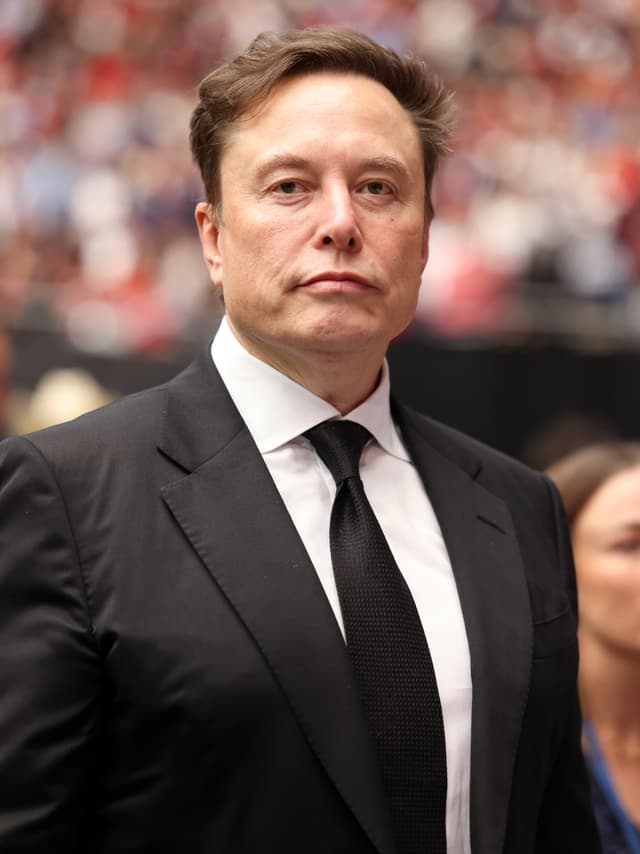
Elon Musk
SpaceX
A visionary in the Aviation and Aerospace industry, Elon Musk founded SpaceX in 2002 after encountering obstacles in purchasing rockets from Russian companies. Rejecting conventional wisdom, he famously declared, "I think we can build this rocket ourselves," which led to the development of the Falcon 1 rocket, marking the first privately-funded liquid-fueled rocket to reach orbit in 2008. By prioritizing first principles thinking, Musk transformed the space industry, demonstrating that innovative solutions could emerge from a willingness to challenge the status quo. Under his leadership, SpaceX achieved a groundbreaking milestone in 2012 by successfully delivering cargo to the International Space Station, paving the way for future commercial space endeavors. His approach continues to inspire entrepreneurs today to embrace bold, unconventional strategies in their own ventures.
Core Principles
competitive advantage
Challenge industry gatekeepers directly when their interests conflict with innovation. Be prepared for fierce resistance from incumbent power structures.
Musk's SpaceX directly threatened Lockheed Martin and Boeing's space monopolies and various nations' space industries. Tesla's direct sales model threatened car dealers' profitable maintenance model. SolarCity undercut utility companies. Musk anticipated and accepted that these incumbents would become enemies. He said, 'The list of people who would not mind if I was gone is growing.'
“The list of people who would not mind if I was gone is growing”
Challenge industry gatekeepers directly when their interests conflict with innovation. Be prepared for fierce resistance from incumbent power structures.
Musk's SpaceX directly threatened Lockheed Martin and Boeing's space monopolies and various nations' space industries. Tesla's direct sales model threatened car dealers' profitable maintenance model. SolarCity undercut utility companies. Musk anticipated and accepted that these incumbents would become enemies. He said, 'The list of people who would not mind if I was gone is growing.'
“The list of people who would not mind if I was gone is growing”
Challenge industry gatekeepers directly when their interests conflict with innovation. Be prepared for fierce resistance from incumbent power structures.
Musk's SpaceX directly threatened Lockheed Martin and Boeing's space monopolies and various nations' space industries. Tesla's direct sales model threatened car dealers' profitable maintenance model. SolarCity undercut utility companies. Musk anticipated and accepted that these incumbents would become enemies. He said, 'The list of people who would not mind if I was gone is growing.'
“The list of people who would not mind if I was gone is growing”
Challenge industry gatekeepers directly when their interests conflict with innovation. Be prepared for fierce resistance from incumbent power structures.
Musk's SpaceX directly threatened Lockheed Martin and Boeing's space monopolies and various nations' space industries. Tesla's direct sales model threatened car dealers' profitable maintenance model. SolarCity undercut utility companies. Musk anticipated and accepted that these incumbents would become enemies. He said, 'The list of people who would not mind if I was gone is growing.'
“The list of people who would not mind if I was gone is growing”
culture
Maintain a strict no-asshole policy. Team cohesion and willingness to work long hours depend on employees actually wanting to be around their colleagues.
Musk established that if you hate your colleagues or boss, you won't want to come to work or stay for long hours. This policy was fundamental to SpaceX's early hiring culture.
“If you hate your colleagues or boss, you won't want to come to work and stay for long hours.”
Expect extreme loyalty and extraordinary effort from employees by inspiring them with a vision so clear it becomes hypnotic. Create a sadomasochistic dynamic where people endure punishing conditions for a cause larger than themselves.
SpaceX employees worked crushing hours and dealt with Musk's blunt management style, yet remained devoted. His vision clarity created a Steve Jobs-like zeal. Even fired employees spoke of him in terms reserved for superheroes. The emotional connection to the mission overrode the pain of the work itself.
“His vision is so clear, he almost hypnotizes you. He gives you the crazy eye, and it's like, yes, we can get to Mars.”
Build organizational structures and cultures that avoid bureaucratic friction. Keep teams small, empower individuals with creative license, and minimize hierarchy to maintain agility.
SpaceX hired industry veterans and brilliant young people with no rocket experience, giving them creative freedom and avoiding stifling bureaucracy. The culture was described as free-wheeling and hard-charging. This contrasted with traditional aerospace companies where innovation moved through layers of approval.
“This is not heritage aerospace. We're lean and mean. If you come work for us you're going to have a lot of creative license.”
Align employee incentives with company success through equity ownership. When employees benefit directly from cost savings and efficiency, they guard the company's money as their own.
Musk gave early SpaceX hires large stock options so that if they saved the company money by building parts in-house instead of using suppliers, everyone benefited. This created powerful incentive alignment and made employees invested in frugality.
“if you save the company $100,000 by building a part in-house instead of ordering one from a traditional supplier, then everyone benefits.”
Maintain a lean, collaborative workspace where hierarchy is minimal and every person pitches in across departments. No job is beneath founders or leaders.
SpaceX kept a small team in close quarters with few formal rules, working long hours late into the night. Musk was physically present doing the same work he asked others to do, not issuing orders from on high. This broke down silos and enabled rapid problem-solving.
“No job was beneath us. Everybody was expected to carry their own weight and then a bunch more.”
finance
When facing financial scarcity, use constraints creatively. Limitation forces innovation and efficient resource allocation.
SpaceX had to build Falcon 9 and Dragon Capsule simultaneously with a fraction of what it historically cost. Tesla had to deliver vehicles while managing severe cash constraints. Rather than slow down, Musk accelerated hiring and projects. The constraint forced efficiency and eliminated bureaucracy.
When facing financial scarcity, use constraints creatively. Limitation forces innovation and efficient resource allocation.
SpaceX had to build Falcon 9 and Dragon Capsule simultaneously with a fraction of what it historically cost. Tesla had to deliver vehicles while managing severe cash constraints. Rather than slow down, Musk accelerated hiring and projects. The constraint forced efficiency and eliminated bureaucracy.
When facing financial scarcity, use constraints creatively. Limitation forces innovation and efficient resource allocation.
SpaceX had to build Falcon 9 and Dragon Capsule simultaneously with a fraction of what it historically cost. Tesla had to deliver vehicles while managing severe cash constraints. Rather than slow down, Musk accelerated hiring and projects. The constraint forced efficiency and eliminated bureaucracy.
When facing financial scarcity, use constraints creatively. Limitation forces innovation and efficient resource allocation.
SpaceX had to build Falcon 9 and Dragon Capsule simultaneously with a fraction of what it historically cost. Tesla had to deliver vehicles while managing severe cash constraints. Rather than slow down, Musk accelerated hiring and projects. The constraint forced efficiency and eliminated bureaucracy.
Design your business model so that R&D and innovation are funded through profitable operations. Make your revenue-generating service and your research and development reinforce each other.
SpaceX funds its long-term Mars colonization research through profitable satellite and cargo launch services. Government and commercial customers pay for launches, which funds the innovation needed for eventual Mars missions. This two-birds-with-one-stone approach solved the problem of funding a 30-plus year moonshot with no guaranteed return.
“You pay for it by making your research and development operation double as a profitable space delivery service, which is what SpaceX is today.”
focus
Recognize that time is the scarcest resource. Every day of delay translates directly to lost future revenue and represents an opportunity cost that compounds over years.
Musk structured SpaceX with extreme daily burn rate awareness, calculating that if the company would eventually generate $10 million per day in revenue, each day of slower progress meant $10 million in permanently lost revenue. This converted abstract urgency into concrete financial logic, driving faster decision-making than most organizations achieve.
Maintain extreme focus on your core mission. Don't get distracted by what competitors are doing or what's politically expedient. Move relentlessly toward the primary goal.
For SpaceX, the mission was making rockets cheaper so humanity could become a multi-planetary species. Everything else, from manufacturing choices to launch site selection to lawsuit strategy, flowed from this single focus. This clarity helped the small team outmaneuver much larger competitors.
Identify and attack the single biggest limiter. Do not spread effort across secondary problems. When a bottleneck appears, give it disproportionate resources until it breaks through.
When Starship development was bottlenecked on Raptor engine production, that became the company's dominant focus. Not propellant loading, not heat shields, not launch infrastructure. Resources redirected from elsewhere, daily updates issued, and attention shifted to the next constraint only after the limiter was resolved.
hiring
Hire proven talent from established competitors even if it requires them to take career risks. Great designers and engineers will join an uncertain venture if the mission and product vision are compelling enough.
Franz von Holzhausen, a celebrated design director at General Motors and Mazda, left the security of an established company to become Tesla's chief designer when the company was barely surviving. The clarity of Tesla's vision and the freedom to design from first principles was compelling enough to overcome the financial risk.
Frameworks
First Principles Analysis
Break a problem into its fundamental components (raw materials, physics, economics) rather than accepting industry conventions. Calculate the true cost and feasibility from base elements. This approach reveals opportunities others miss because they inherit outdated assumptions. Musk applied this to rocket manufacturing (sourcing materials from the London Materials Exchange) and battery costs (direct component pricing rather than manufacturer markup).
Use case: When entering established industries where conventional wisdom limits innovation, or when you believe incumbent pricing is inflated
Mission-Driven Organizational Alignment
Establish an audacious, emotionally resonant long-term goal (e.g., making humanity multi-planetary) as the unifying principle for all organizational decisions. This goal becomes the filter for hiring, strategy, and daily work. It attracts mission-driven talent who accept high stress and sacrifice because they believe in the outcome. Some employees may resent the demanding culture but stay due to loyalty to the mission itself.
Use case: Building organizations that need to attract and retain top talent despite lower compensation or higher risk than competitors, especially in foundational industries
Accelerated Bankruptcy Preparation
During existential financial crisis, move faster rather than slower. Immediately identify which core projects provide revenue and survival, restructure financing creatively (debt vs. equity, bluffing), access personal capital, and approach investors with artificial scarcity and urgency. Musk used this during 2008: he restructured Tesla funding as debt to bypass Vantage Point's objections, bluffed about funding entirely from personal capital, and closed the round on Christmas Eve hours before bankruptcy.
Use case: When a company is weeks or days from bankruptcy and traditional fundraising has failed
Redefining Industry Economics
Rather than competing on the same metrics as incumbents, redesign the entire value chain to be fundamentally cheaper or better. Tesla didn't compete on luxury features; it built an end-to-end system (manufacturing, sales, charging, service model). SpaceX didn't compete on payload capacity; it focused on reusability and cost per launch. This creates a new competitive dynamic where incumbents cannot respond without abandoning their existing business model.
Use case: When attempting to disrupt mature industries with entrenched competitors, particularly those with regulatory protection
First Principles Analysis
Break a problem into its fundamental components (raw materials, physics, economics) rather than accepting industry conventions. Calculate the true cost and feasibility from base elements. This approach reveals opportunities others miss because they inherit outdated assumptions. Musk applied this to rocket manufacturing (sourcing materials from the London Materials Exchange) and battery costs (direct component pricing rather than manufacturer markup).
Use case: When entering established industries where conventional wisdom limits innovation, or when you believe incumbent pricing is inflated
Mission-Driven Organizational Alignment
Establish an audacious, emotionally resonant long-term goal (e.g., making humanity multi-planetary) as the unifying principle for all organizational decisions. This goal becomes the filter for hiring, strategy, and daily work. It attracts mission-driven talent who accept high stress and sacrifice because they believe in the outcome. Some employees may resent the demanding culture but stay due to loyalty to the mission itself.
Use case: Building organizations that need to attract and retain top talent despite lower compensation or higher risk than competitors, especially in foundational industries
Accelerated Bankruptcy Preparation
During existential financial crisis, move faster rather than slower. Immediately identify which core projects provide revenue and survival, restructure financing creatively (debt vs. equity, bluffing), access personal capital, and approach investors with artificial scarcity and urgency. Musk used this during 2008: he restructured Tesla funding as debt to bypass Vantage Point's objections, bluffed about funding entirely from personal capital, and closed the round on Christmas Eve hours before bankruptcy.
Use case: When a company is weeks or days from bankruptcy and traditional fundraising has failed
Redefining Industry Economics
Rather than competing on the same metrics as incumbents, redesign the entire value chain to be fundamentally cheaper or better. Tesla didn't compete on luxury features; it built an end-to-end system (manufacturing, sales, charging, service model). SpaceX didn't compete on payload capacity; it focused on reusability and cost per launch. This creates a new competitive dynamic where incumbents cannot respond without abandoning their existing business model.
Use case: When attempting to disrupt mature industries with entrenched competitors, particularly those with regulatory protection
First Principles Analysis
Break a problem into its fundamental components (raw materials, physics, economics) rather than accepting industry conventions. Calculate the true cost and feasibility from base elements. This approach reveals opportunities others miss because they inherit outdated assumptions. Musk applied this to rocket manufacturing (sourcing materials from the London Materials Exchange) and battery costs (direct component pricing rather than manufacturer markup).
Use case: When entering established industries where conventional wisdom limits innovation, or when you believe incumbent pricing is inflated
Mission-Driven Organizational Alignment
Establish an audacious, emotionally resonant long-term goal (e.g., making humanity multi-planetary) as the unifying principle for all organizational decisions. This goal becomes the filter for hiring, strategy, and daily work. It attracts mission-driven talent who accept high stress and sacrifice because they believe in the outcome. Some employees may resent the demanding culture but stay due to loyalty to the mission itself.
Use case: Building organizations that need to attract and retain top talent despite lower compensation or higher risk than competitors, especially in foundational industries
Stories
After failing to negotiate rocket purchases with Russian space companies across three trips to Moscow (March-February 2002), Musk was driving away from a final failed meeting through snowy streets toward the airport, visibly defeated. While flying back, he created a detailed spreadsheet calculating that SpaceX could build rockets internally for far less than Russian quotes. He wheeled around to show Griffin and Cantrell the spreadsheet, saying 'I think we can build this rocket ourselves.'
Lesson: When gatekeepers refuse to do business on your terms, immediately pivot to building the solution yourself. The setback that appears final is often the moment clarity emerges. Constraints force innovation.
Musk's friend Adio Ressi accompanied him to Russia as a self-appointed guardian, seriously concerned Musk was losing his mind. Friends made compilation videos of rockets exploding and held interventions to talk him out of wasting money. Yet Musk stayed committed. Years later, in September 2008, after three consecutive launch failures, SpaceX achieved orbit on the fourth attempt. Musk broke down in tears. His perseverance through seeming insanity proved prescient.
Lesson: The people around you will doubt audacious missions. This doubt is often justified by conventional metrics. Continue anyway if your first principles analysis supports the mission. Time and execution eventually prove the doubters wrong.
On December 23, 2008, after six years of near-constant failures and financial exhaustion, Musk received word that SpaceX won a $1.6 billion NASA contract for 12 resupply missions to the ISS. The same day, Tesla's $40 million funding round closed, saving the company hours before bankruptcy. Musk was staying with his brother Kimbal in Boulder when both deals processed. He broke down in tears again, this time from relief and vindication.
Lesson: Perseverance through multiple simultaneous crises can result in disproportionate rewards. The moment when everything seems lost is often the inflection point. Strategic patience combined with urgent execution creates luck.
In 2008, facing financial ruin with both Tesla and SpaceX on the brink of collapse, Musk had to choose: split remaining capital between both companies (likely killing both) or bet everything on one (guaranteeing the other dies). Rather than delay or panic, he immediately became hyper-rational. He methodically called investors, threatened bluffing tactics, restructured financing, and made clear-headed long-term decisions under extreme time pressure. His friend noted: 'The harder it gets the better he gets.'
Lesson: Extreme pressure reveals character and capability. Rather than clouding judgment, existential crisis can clarify thinking for people with sufficient mental discipline. Rationality under pressure is a rare competitive advantage.
After selling PayPal for $1.5 billion in 2002 and making $180 million personally, Musk rejected the conventional Silicon Valley playbook. Instead of enjoying wealth or waiting for the next obvious opportunity, he deployed nearly all capital into three companies in heavily regulated industries with high capital costs and low probability of success (aerospace, automotive, clean energy). Most observers thought he was insane. By 2008, he had nearly nothing left.
Lesson: Extreme conviction in your thesis, combined with willingness to risk financial ruin, can be a competitive advantage if you're correct. The appearance of insanity to observers can be a sign you've seen something they haven't.
After failing to negotiate rocket purchases with Russian space companies across three trips to Moscow (March-February 2002), Musk was driving away from a final failed meeting through snowy streets toward the airport, visibly defeated. While flying back, he created a detailed spreadsheet calculating that SpaceX could build rockets internally for far less than Russian quotes. He wheeled around to show Griffin and Cantrell the spreadsheet, saying 'I think we can build this rocket ourselves.'
Lesson: When gatekeepers refuse to do business on your terms, immediately pivot to building the solution yourself. The setback that appears final is often the moment clarity emerges. Constraints force innovation.
Musk's friend Adio Ressi accompanied him to Russia as a self-appointed guardian, seriously concerned Musk was losing his mind. Friends made compilation videos of rockets exploding and held interventions to talk him out of wasting money. Yet Musk stayed committed. Years later, in September 2008, after three consecutive launch failures, SpaceX achieved orbit on the fourth attempt. Musk broke down in tears. His perseverance through seeming insanity proved prescient.
Lesson: The people around you will doubt audacious missions. This doubt is often justified by conventional metrics. Continue anyway if your first principles analysis supports the mission. Time and execution eventually prove the doubters wrong.
On December 23, 2008, after six years of near-constant failures and financial exhaustion, Musk received word that SpaceX won a $1.6 billion NASA contract for 12 resupply missions to the ISS. The same day, Tesla's $40 million funding round closed, saving the company hours before bankruptcy. Musk was staying with his brother Kimbal in Boulder when both deals processed. He broke down in tears again, this time from relief and vindication.
Lesson: Perseverance through multiple simultaneous crises can result in disproportionate rewards. The moment when everything seems lost is often the inflection point. Strategic patience combined with urgent execution creates luck.
In 2008, facing financial ruin with both Tesla and SpaceX on the brink of collapse, Musk had to choose: split remaining capital between both companies (likely killing both) or bet everything on one (guaranteeing the other dies). Rather than delay or panic, he immediately became hyper-rational. He methodically called investors, threatened bluffing tactics, restructured financing, and made clear-headed long-term decisions under extreme time pressure. His friend noted: 'The harder it gets the better he gets.'
Lesson: Extreme pressure reveals character and capability. Rather than clouding judgment, existential crisis can clarify thinking for people with sufficient mental discipline. Rationality under pressure is a rare competitive advantage.
After selling PayPal for $1.5 billion in 2002 and making $180 million personally, Musk rejected the conventional Silicon Valley playbook. Instead of enjoying wealth or waiting for the next obvious opportunity, he deployed nearly all capital into three companies in heavily regulated industries with high capital costs and low probability of success (aerospace, automotive, clean energy). Most observers thought he was insane. By 2008, he had nearly nothing left.
Lesson: Extreme conviction in your thesis, combined with willingness to risk financial ruin, can be a competitive advantage if you're correct. The appearance of insanity to observers can be a sign you've seen something they haven't.
Notable Quotes
“I think we can build this rocket ourselves”
Said while showing a spreadsheet to Mike Griffin and Jim Cantrell on a plane from Moscow after failing to negotiate rocket purchases with Russian companies (February 2002)
“The list of people who would not mind if I was gone is growing. My family fears that the Russians will assassinate me.”
Reflecting on the enemies SpaceX had made by threatening incumbent aerospace and military interests
“I could either pick SpaceX or Tesla or split the money I had left between them. That was a tough decision. If I split the money, maybe both of them would die. If I gave the money to just one company, the probability of it surviving was greater, but then it would mean certain death for the other company. I debated this over and over.”
December 2008, facing financial crisis with both companies on the verge of collapse and nearly no personal capital remaining
“It was like the fucking Matrix. The EverDream deal really saved my butt.”
Describing the fortunate timing of Dell acquiring EverDream (a data center software startup in which he had invested) which gave him $15 million when he desperately needed to raise funding
“I've got an excellent solution then. Take my entire portion of the deal. I had a real hard time coming up with the money. Based on the cash we have in the bank right now, we will bounce payroll next week. So unless you got another idea, can you either just participate as much as you'd like or allow the round to go through because otherwise we will be bankrupt.”
Ultimatum delivered to Alan Salzman of Vantage Point Capital Partners who was refusing to sign the final page of Tesla's $40 million funding round on December 3, 2008, claiming it undervalued Tesla
“Well, that was freaking awesome. There are a lot of people who thought we couldn't do it. A lot, actually. But as the saying goes, the fourth time is the charm, right? There are only a handful of countries on earth that have done this. It's normally a country thing, not a company thing.”
Immediately after SpaceX's successful Falcon 1 orbit achievement on September 28, 2008, the fourth launch attempt
“I was just getting pistol whipped. There was a lot of schred and fraud at the time, and it was bad on so many levels. Justine was torturing me in the press. There were all these negative articles about Tesla and the stories about SpaceX's third failure hurt really bad. You have these huge doubts that your life is not working, your car is not working, you're going through a divorce and all those things. I felt like a pile of shit. I didn't think we would overcome it. I thought things were probably fucking doomed.”
Describing the emotional and financial nadir in 2008 when both companies were failing and he was facing divorce and public criticism
“Why are there no plans? No schedule? There was nothing. It seemed crazy.”
Reaction after visiting NASA's website looking for detailed Mars exploration plans and finding none, which inspired the creation of SpaceX
“I think this space internet needs to be done and I don't see anyone else doing it.”
Explaining his motivation for pursuing a global communication satellite network to surround Earth and eventually enable Mars communication
“I think we can build this rocket ourselves”
Said while showing a spreadsheet to Mike Griffin and Jim Cantrell on a plane from Moscow after failing to negotiate rocket purchases with Russian companies (February 2002)
Frequently Asked Questions
What are Elon Musk's key business principles?▼
Elon Musk's core principles include: Challenge industry gatekeepers directly when their interests conflict with innovation. Be prepared for fierce resistance from incumbent power structures.. Challenge industry gatekeepers directly when their interests conflict with innovation. Be prepared for fierce resistance from incumbent power structures.. Challenge industry gatekeepers directly when their interests conflict with innovation. Be prepared for fierce resistance from incumbent power structures.. Founder Almanac has cataloged 30 total principles from Elon's career.
What can entrepreneurs learn from Elon Musk?▼
Key lessons from Elon Musk include: When gatekeepers refuse to do business on your terms, immediately pivot to building the solution yourself. The setback that appears final is often the moment clarity emerges. Constraints force innovation.. Explore 10 stories and 10 frameworks from Elon's experience.
What is Elon Musk known for in business?▼
A visionary in the Aviation and Aerospace industry, Elon Musk founded SpaceX in 2002 after encountering obstacles in purchasing rockets from Russian companies. Rejecting conventional wisdom, he famously declared, "I think we can build this rocket ourselves," which led to the development of the Falcon 1 rocket, marking the first privately-funded liquid-fueled rocket to reach orbit in 2008. By prioritizing first principles thinking, Musk transformed the space industry, demonstrating that innovative solutions could emerge from a willingness to challenge the status quo. Under his leadership, SpaceX achieved a groundbreaking milestone in 2012 by successfully delivering cargo to the International Space Station, paving the way for future commercial space endeavors. His approach continues to inspire entrepreneurs today to embrace bold, unconventional strategies in their own ventures.
More Aviation & Aerospace Founders
Want Elon's advice on your business?
Our AI has studied Elon Musk's biography, principles, and decision-making frameworks. Ask any business question.
Start a conversation