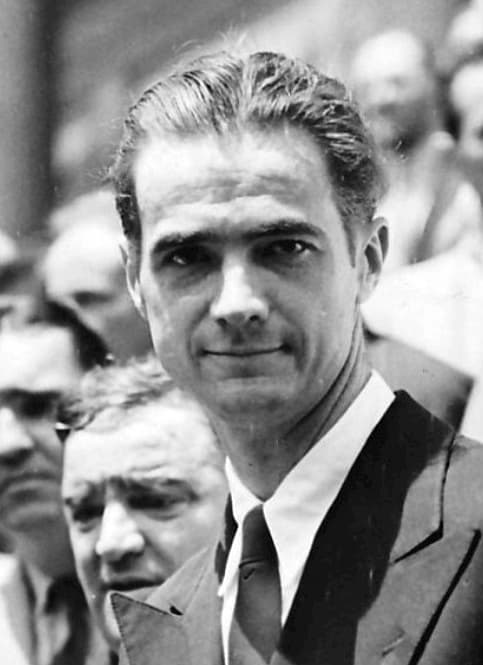
Howard Hughes Jr.
Hughes Tool Company, Hughes Aircraft, RKO Pictures
A pioneering entrepreneur in aviation and entertainment, Howard Hughes Jr. founded and led several influential companies, including Hughes Tool Company and Hughes Aircraft, while also controlling RKO Pictures. At just 19, he demonstrated remarkable legal acumen by safeguarding his $40 million inheritance from relatives seeking control, showcasing his belief in the importance of understanding the law to maintain independence. Hughes pushed boundaries in the aerospace industry, developing innovations that contributed to the U.S. space program and revolutionizing commercial aviation, making him a vital figure for today’s entrepreneurs striving for innovation and autonomy. His legacy underscores the significance of passion-driven pursuits and hands-on learning, principles that continue to resonate with business builders today.
Core Principles
finance
Do not catastrophically overspend relative to your actual cash flow and reinvestment needs, even if you have access to large pools of borrowed wealth. Spending discipline matters more when times are good because downturns will expose unsustainable burn rates.
In the early 1930s while the oil industry boomed, Hughes Jr. was spending $250,000 per week on luxury purchases, staff, homes, and gifts while his primary cash cow (Hughes Tool Company) became unprofitable during the Great Depression. He went from extraordinarily wealthy to broke within a few years, requiring Noah Dietrich to restructure the business. This teaches the danger of lifestyle inflation.
focus
Early exposure to passionate interests shapes career direction far more than family pressure or logical career planning. A child's genuine fascination should guide educational and professional choices.
Hughes Jr. was uninterested in school and the family oil business despite massive inherited wealth. One seaplane ride at age 9 or 10 sparked a lifelong obsession with aviation that drove all his major business decisions. He pursued film and aviation despite having no external pressure to do so.
“The 10-minute flight was agreeably short for the elder Hughes who felt sick from the ride. As for his son, he was exhilarated and inspired by the sensation of flying and he knew he had found his calling in life.”
innovation
Learn by direct observation and questioning rather than relying solely on formal instruction. Hands-on participation in operations teaches faster and deeper than classroom learning.
When Hughes Jr. first entered the film business, he haunted the movie sets taking copious notes and asking cameramen and actors detailed questions about every decision and technique. This direct observation method allowed him to teach himself filmmaking fast enough to eventually take over as director when the hired director failed.
“Hughes haunted the set. He took copious notes and asked the actors and cameramen questioning everything.”
leadership
Do not allow subordinates or associates to become yes-men who only tell you what you want to hear. Surround yourself with people willing to challenge your decisions and point out when behavior is deteriorating.
As Hughes Jr. descended into mental illness and drug addiction, he surrounded himself with doctors and employees who were compensated generously to never contradict him or suggest he seek real help. Noah Dietrich was the exception, eventually urging Hughes to see a doctor when he began repeating himself 33 times in a minute. Without Dietrich's willingness to challenge him, the decline accelerated.
“When you are being paid tons and tons of money by the world's richest person, you kind of unfortunately look the other way and don't put the care of your patient first.”
Uncontrolled need for personal control over all aspects of an organization leads to decision paralysis and organizational dysfunction. Leaders must distinguish between strategic control and operational micromanagement.
During the Hercules plane project, Henry Kaiser spent weeks trying to reach Hughes to discuss the partnership. Hughes, obsessed with editing The Outlaw and developing his D-2 fighter plane, refused to return calls or delegate conversations to subordinates. This pattern repeated throughout his organizations: brilliant ideas delayed by his need to personally oversee every detail.
“The world of Howard Hughes was one of his own creation. Every person, every costume, every scrap of scene decoration, all became his personal domain.”
mindset
Do not make business decisions based on proving someone wrong or seeking vindication from critics. Ego-driven decisions consume resources without generating genuine strategic value.
Hughes Jr. quit the film business after early losses but returned only to prove his uncle Rupert wrong after the uncle told him to quit. This vindictive motivation led him to make films and continue spending rather than exit a business he didn't genuinely care about. The motivation was pure ego, not customer value or long-term vision.
“Hughes was no longer as interested in the money-hungry movie business. He had learned his lesson and might not have ever made another film if it had not been for a call from his drunken uncle Rupert.”
operations
Extreme work hours without sleep, food, or rest deteriorate physical and mental health exponentially. The productivity gains from extended work sessions are overwhelmed by cognitive decline and health consequences.
Throughout his 40s and 50s, Hughes Jr. worked 48-hour stretches without eating or sleeping, particularly during his D-2 development and The Outlaw editing. This pattern continued during plane test flights and film production. By comparing photographs of him at age 30 versus age 40, the aging effect was dramatic. His health collapsed, making him vulnerable to infections and eventually driving codeine addiction.
“At times caught up in the editing process he worked 48 hours straight without sleeping or eating.”
Extreme perfectionism and unwillingness to delegate responsibility creates bottlenecks that slow production and burn out leadership. High standards are valuable, but they must be balanced against the need to ship and move forward.
Hughes Jr. personally oversaw every decision on his film productions, refusing to let directors work without constant interference. While this sometimes improved quality, it also caused delays and cost overruns. He spent 18 months editing The Outlaw only to end up with a 4 hour 16 minute film that still needed to be cut in half.
“Hughes was working at a pace unmatched by even the major studios. At one point in early 1931, he had formed four films in various stages of production and insisted on producing each one himself.”
resilience
Severe mental illness combined with extreme wealth and power creates conditions for self-destruction. Without accountability structures or people willing to enforce boundaries, illness spirals unchecked.
Hughes Jr. displayed obsessive-compulsive patterns, paranoia, and control-seeking behavior throughout his life. After his third plane crash in 1944 killed two people, he began burning all possessions and personal letters. By the 1970s, he weighed 80 pounds, had broken needles embedded in his body from decades of opiate use, and hadn't seen sunlight in 30 years. His wealth and power meant no one could intervene.
strategy
Use legal knowledge strategically to protect yourself from others' control. Understanding the laws that apply to your situation can provide pathways to independence that others overlook.
At age 19, Hughes Jr. was unable to control his own inheritance due to Texas law requiring guardians until age 21. Rather than wait, he studied Texas inheritance law, discovered a statute allowing 19-year-olds to petition courts for adult status, filed successfully, and immediately bought out his relatives' shares at favorable terms.
“Howard began a detailed and organized effort to take control of both his life and his money. They were unaware that away from the course, Howard was studying the inheritance laws of Texas.”
Winning through bribery and political manipulation creates fragile, unsustainable business models. True competitive advantage comes from offering genuine customer value, not from corrupting officials.
Hughes Jr. built Hughes Aircraft into a multi-billion dollar defense contractor largely through bribing politicians and government officials. He gave money to FDR's son, sent women to hotel rooms, provided loans to Nixon's brother, and paid off IRS officials. This generated wealth but was based on crony capitalism rather than product excellence, ultimately requiring constant vigilance to protect.
“Every man has his price. If that wasn't true, men like me wouldn't be able to exist.”
Frameworks
The Legal Pathway Strategy
When facing restrictions imposed by law or guardianship, research the legal codes thoroughly to find alternative pathways to the outcome you need. Often specific statutes or provisions exist that most people overlook because they don't bother to study the law itself.
Use case: Useful in situations where bureaucratic or legal obstacles appear insurmountable. Requires patience, research capability, and willingness to engage with legal documents directly.
The Learning Through Observation Method
Enter a new business by directly observing operations in detail, asking practitioners about their decisions, and taking systematic notes. Rather than reading about the business or hiring experts, embed yourself in actual operations and learn by questioning everyone doing the work. This builds intuitive understanding faster than formal education.
Use case: Effective when entering a new industry or skill domain where you have significant capital but no prior experience. Works best in hands-on fields like film, manufacturing, or technology development.
Stories
At age 19, Hughes Jr. faced losing control of his $40 million inheritance to relatives who wanted access to the money. Rather than accept his legal status as a minor requiring a guardian, he studied Texas law, discovered a statute allowing teenagers to petition for adult status, filed successfully, and immediately bought out his relatives' shares at favorable prices they accepted.
Lesson: Strategic use of legal knowledge can bypass power structures that appear immovable. Understanding your jurisdiction's laws opens pathways that others miss because they don't bother to research thoroughly.
Hughes Jr. hired director Ralph Graves for his first film with a $40,000 budget. Graves spent all the money and asked for another $40,000. When Hughes screened the finished product called Swell Hogan, it was so poor he ordered the only prints burned and told everyone to never mention it. He had lost $80,000 but gained knowledge that transformed his approach on the next film.
Lesson: Expensive failures teach more than cheap successes. Hughes understood the cost as tuition in learning the film business and applied those lessons immediately on subsequent projects that became profitable.
During the Hercules flying boat project, Henry Kaiser spent weeks trying to reach Hughes through phone calls and intermediaries. Hughes was obsessed with editing The Outlaw film while hospitalized with pneumonia from overwork and malnutrition. Kaiser eventually showed up in person at Hughes' hospital suite, lifted his hands and boomed, 'Get up man, we got a war to win.' Hughes reluctantly agreed.
Lesson: Sometimes direct personal appeal bypasses bureaucratic delays. But the pattern also illustrates how one person's obsession (Hughes with his film) can disrupt larger initiatives others need to accomplish.
After his third plane crash in 1944 killed two crew members (including his mechanic Felt), Hughes returned to Bel Air transformed. His girlfriend Faith urged him to save at least one letter from his deceased parents as a memento. Instead, Hughes ensured those letters were completely burned. He methodically destroyed all physical possessions connected to his past.
Lesson: Trauma can trigger destructive coping mechanisms. While some people heal through processing grief, Hughes responded to confronting mortality by erasing his history. This became a psychological inflection point toward increasing isolation and control-seeking.
Notable Quotes
“Every man has his price. If that wasn't true, men like me wouldn't be able to exist.”
Expressing his cynical worldview that all people are corruptible, which justified his approach of bribing politicians and officials to gain preferential contracts.
“You gotta catch me first, shit ass, shit ass.”
Hughes' response upon hearing that Senator Owen Brewster planned to find and subpoena him. He danced around the room chanting this newly acquired curse phrase while evading government investigators, illustrating his increasingly unhinged behavior.
Frequently Asked Questions
What are Howard Hughes Jr.'s key business principles?▼
Howard Hughes Jr.'s core principles include: Do not catastrophically overspend relative to your actual cash flow and reinvestment needs, even if you have access to large pools of borrowed wealth. Spending discipline matters more when times are good because downturns will expose unsustainable burn rates.. Early exposure to passionate interests shapes career direction far more than family pressure or logical career planning. A child's genuine fascination should guide educational and professional choices.. Learn by direct observation and questioning rather than relying solely on formal instruction. Hands-on participation in operations teaches faster and deeper than classroom learning.. Founder Almanac has cataloged 11 total principles from Howard's career.
What can entrepreneurs learn from Howard Hughes Jr.?▼
Key lessons from Howard Hughes Jr. include: Strategic use of legal knowledge can bypass power structures that appear immovable. Understanding your jurisdiction's laws opens pathways that others miss because they don't bother to research thoroughly.. Explore 4 stories and 2 frameworks from Howard's experience.
What is Howard Hughes Jr. known for in business?▼
A pioneering entrepreneur in aviation and entertainment, Howard Hughes Jr. founded and led several influential companies, including Hughes Tool Company and Hughes Aircraft, while also controlling RKO Pictures. At just 19, he demonstrated remarkable legal acumen by safeguarding his $40 million inheritance from relatives seeking control, showcasing his belief in the importance of understanding the law to maintain independence. Hughes pushed boundaries in the aerospace industry, developing innovations that contributed to the U.S. space program and revolutionizing commercial aviation, making him a vital figure for today’s entrepreneurs striving for innovation and autonomy. His legacy underscores the significance of passion-driven pursuits and hands-on learning, principles that continue to resonate with business builders today.
More Aviation & Aerospace Founders
Want Howard's advice on your business?
Our AI has studied Howard Hughes Jr.'s biography, principles, and decision-making frameworks. Ask any business question.
Start a conversation